Call Us What We Carry

I keep telling myself I want to read more poetry. But I don’t do it. Why? I think in part it is because for me it is hit or miss. I love it or I don’t get it. And when I don’t get it, I feel less than. It feels unsatisfying. With a book, it is different. I may like the story or the writing, or I may not, but I don’t often feel a sense of failure. With modern art, or even classical paintings, if I don’t appreciate something, I just move on without judgment – not of the artist and not of myself. Why does poetry that goes over my head, or if it doesn’t move me, make me feel like it is a personal failure? I think I need to adopt the attitude I have about other art forms – enjoy what resonates and let the rest go. Maybe then I would make it more of a priority. After all, poetry lends itself to our lifestyles these days – they can be quick reads (maybe not quickly understood and processed, but it doesn’t require a huge time investment) so it would seem to be a good fit.

I am pleased to report, though, that a book of poetry I just read, prompted by my family book club (thank you, Nicolette), did not fall into the category of going over my head. I found it accessible and meaningful. Amanda Gorman’s Call Us What We Carry was insightful, moving, intelligent and creative. My niece, who picked it as this month’s read, called it a ‘time capsule,’ and I think that is very apt. Gorman wrote it during the pandemic, it was published in 2021. The poems remind me what the early days of Covid felt like – the isolation, the fear, the uncertainty. The poems cover that year, 2020, and all the upheaval that went with it. While some might not want to be reminded, it is important because though we think we have moved beyond it, in our quest for normalcy, there are residual effects that we need to reckon with.

It Is amazing to me that Amanda Gorman is so young – as of today she is 25. When she recited her poem, “The Hill We Climb” at Biden’s inaugural (that uplifting poem is included in this collection), she was 21! She is clearly well-read and well-educated – how much is formal education (she earned her B.A. from Harvard so there had to be some of that), or her own reading and research, I don’t know, and it doesn’t matter. She brings a sense of history and culture to her poems that is so impressive. There are references to the pandemic of 1918, the Great Migration (the movement of African Americans from the south to the north during the first half of the 20th century), the Civil War and her own life. She includes footnotes and endnotes. All of it is called upon in service of enlightening our present moment.

It isn’t common for our book club members to all agree on something we have read. Usually there are differences of opinion, and we bring a variety of perspectives and preferences to the piece  – which is what is beautiful about it– and we read a wide range of genres. Everyone was impressed with Call Us What We Carry. Each of us picked up on different themes, some things resonated more than others, but we all valued the experience. I should note that we do not all share the same politics – though I would not characterize any of us as extremists, we are mostly center-right, center-left, and maybe a bit further left. I point this out because one might be tempted to assume that Gorman’s poetry would be heavy-handed. We did not find it so – she writes substantively, with evidence and passion – not propaganda.

Several of our members perceived that some of the poems communicated anger. I can’t say I felt that as I read. I didn’t pick up on that in her tone. If it was there, it wouldn’t be without cause – there is plenty to be angry about. It didn’t hit me that way, though.

I think this collection of poems offers an important contribution to our time. I recommend reading and or listening to it. Our book club had a discussion about how best to engage with it – some had listened, some read and one of us read and listened at the same time. I think, if one can, that last method would probably be best. Reading it allows you to appreciate some of the artistic choices made in how it is presented (the poem in the shape of the U.S. Capitol, the use of white space, the color of the paper, etc.). Listening likely offers more of an appreciation of the rhythm and the playfulness of the language.

I will leave you with two parts of poems that made a meaningful impression on me. The first comes from “The Shallows,” which describes a time challenging to the human spirit, she concludes the poem with these lines:

Shall this leave us bitter?

                Or better?

Grieve.

Then choose.

The other piece is entitled Pre-Memory:

“Marianne Hirsch posits that the children of Holocaust survivors grow up with memories of their parents’ trauma: that is to say, they can remember ordeals that they did not experience personally. Hirsch calls this postmemory. Seo-Young Chu discusses what she calls postmemory han, han being a Korean conception of collective grief. Postmemory han, then, is the han passed on to Korean Americans from previous generations. As Chu writes: Postmemory han is a paradox: the experience being remembered is at once virtual and real, secondhand and familiar, long ago and present.” The whiplike echo of Jim Crow, too, passes through Black bodies even before birth.”

The piece then goes on to explore this idea. The notion that we inherit trauma, if it is true, has major implications – and would explain a lot about why people behave the way they do and why it is so difficult to move on.

Amanda Gorman is wrestling with provocative and interesting ideas. I think it is worth the time to explore them. I look forward to seeing what she will offer us as she grows.

A Late Afternoon Autumn Walk

Everything was glowing.

A golden light cast

through the trees,

peeking around the clouds;

gilding leaves, grass,

the very air.

THIS is the gloaming.

Late October,

the sun low,

the air soft,

the breeze blowing through my graying, wild hair.

Red, yellow, russet, orange leaves,

shimmering against the fading blue sky.

Fallen dried leaves dancing,

scraping across the pavement.

I wanted to share the beauty,

but I was alone.

I wanted to bottle it,

for later,

when I needed it.

I couldn’t capture it, but this is the closest I could come.

The Path of Least Resistance

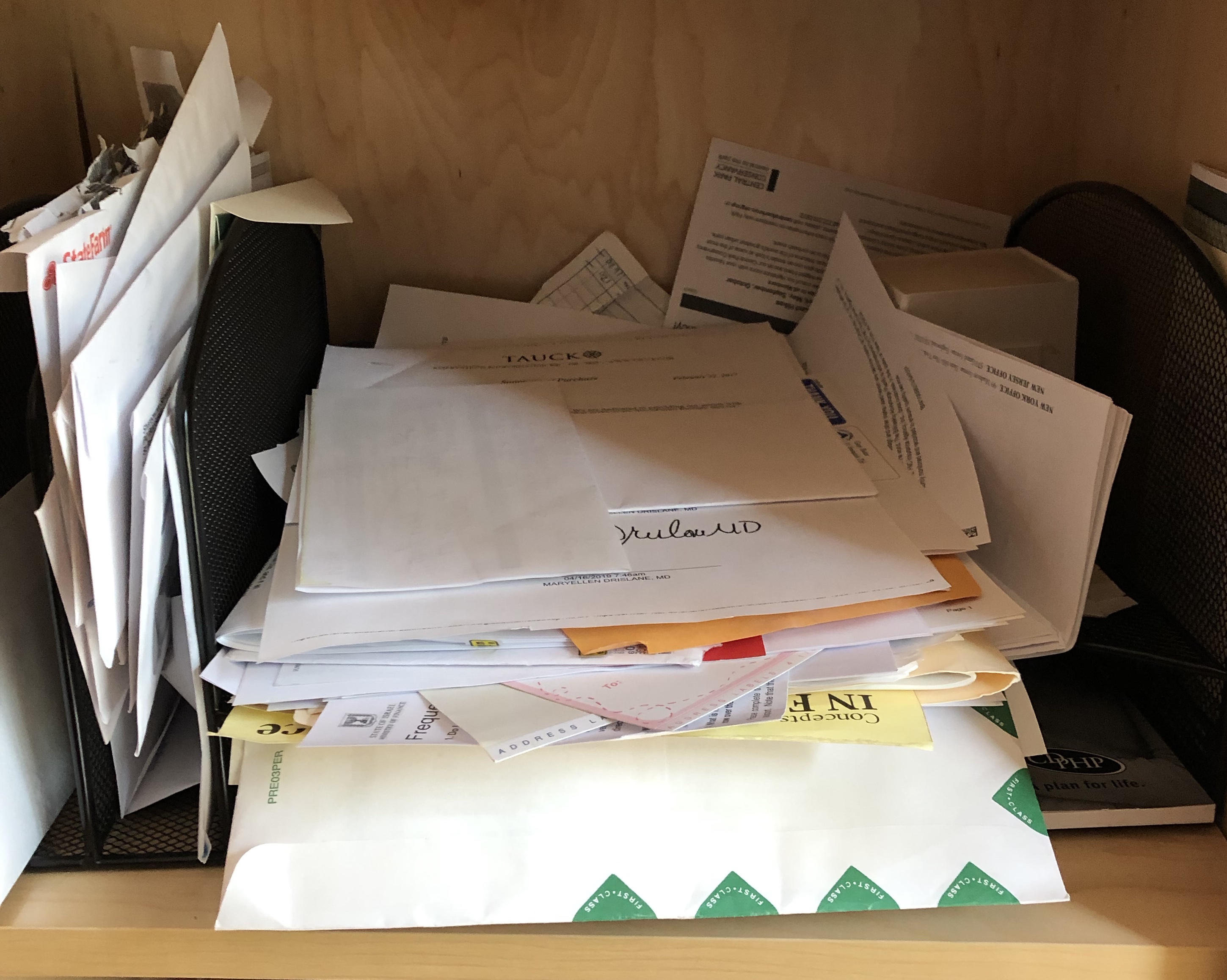
fullsizeoutput_f17Oh paperwork!!!


Letters, notices and advertisements pile up on my kitchen counter

Which electricity supplier should I use?

Is there a difference among them?


A notice of unclaimed funds arrives in my mailbox

Three phone calls placed, four completed forms submitted

Five months later, I receive a check for $2.50


Another notice arrives via email

The bank has closed an account due to minimal activity

I ignore it

Four months later, I need that account

Something to do with a trust

A visit to the bank is in my near future


Oh paperwork!!!


The La-Z-Boy in the family room invites me

I take the novel I started

Settle into the comfy chair

And disappear into 1980 Atlanta.

(For those who are curious, the novel was Silver Sparrow by Tayari
 Jones)

Who is she?

A woman stands in the middle of a room

Like a sculpture

I sit, studying her

I know her.


I shift seats

I study her again

I see variations, but

the image holds.


A chill wind blows

She shifts her stance

Bracing herself

I see her face.


I don’t recognize her

Who is she?

_________________________________________________

Random thoughts and observations about relationships……

I’ve been thinking about how we know the people in our lives. And, I’m wondering: do we really know them?

Often our connections are circumstantial. School, work or our children’s activities may throw us together.  Is that enough to sustain a relationship? Sometimes it is. And, how well do we get to know the person when we only interact in a certain context.

Years ago, when I was in college, I read an article in a magazine that explored friendship. I don’t remember the adjectives the author used to label the different types, but one of the ideas was that some friendships develop because of a shared experience and when that is over, so is the friendship. I think the article mentioned college friends as an example. I don’t know if that fits for me. One of the things that was true in college was that I had a lot of time to devote to those friendships. We spent hours talking and sharing insights, our histories. I share a bond with those women. As an adult, busy with work, family and the mess and responsibilities of everyday life, I don’t have the luxury of spending time in that way.

It is true, though, that some relationships don’t continue beyond the circumstances. Sometimes it could be because you move on and don’t see the person any more. Though these days with technology being what it is, that may not be a legitimate excuse. Other times it can be because the friendship isn’t that deep. If you take a class with someone and bond during it, the connection may not be strong enough to sustain it beyond that. You may try to extend the relationship, socialize beyond the classroom, and find that you just don’t have enough in common. As you get to know the person, you may find that you like them less!

It is a rare and wonderful thing when you peel back the layers of a person and find out that you like them even more.

I’ve also wondered, how many friendships can a person sustain? It takes energy to keep up. I think I may be unusual in the amount of alone time I need, to contemplate, to reflect.

And, what about family? We need to tend to those relationships, too.

With some people, you can be out of touch for months and then pick right up as if no time had passed at all.

And, then, there is the situation where you thought you knew someone and they surprise you – and not in a good way.

Sometimes I wish I didn’t think so much! Relationships, and my interior life, would be so much simpler.

dxSmTlmoRneANvSPFTvA8g
I bought this reproduction of Rodin’s The Thinker for Gary years ago because it had particular meaning to us. Columbia University had one on its campus and it was where we would meet. Given my nature, I better understand now why this sculpture resonated so much with me.

Ode to Central Park

Views of Central Park in mid-October (photos by me!)

Oh, how do I love thee?


I love the juxtaposition

Nature and civilization

Bird calls and sirens

Steel and glass skyscrapers and majestic ancient trees


Ducks and turtles paddling the reservoir

Birds swoop

Stately pre-war apartment buildings stand guard to the west

Museum mile beckons to the east

Commerce to the south

Harlem to the north


Flora, fauna and culture abound

Beauty in all its forms

For the taking


People of every age and size

Of every skin color

Of every socio-economic level


Running, walking

Laying in the grass

Cycling, rowing

Reclining on a park bench


Riding in a pedi-cab

Or a horse-drawn carriage

Planking on a pedestrian bridge

Graceful moves of tai chi on the meadow


Children’s laughter

So many languages

The wind in the trees

Honking horns

The rotors of a helicopter slicing the air


Let me count the ways.


Who Decides?


21271050_10213938747246026_598520306118937214_n

His skin is mottled,

He is 94.

He stands erect,

He walks with assurance.

He says, I feel the same as I always feel.


Right now, I think.

He can’t imagine feeling different,

He doesn’t remember.


Months before, winter of 2016, hospitalized 5 times or more in Florida,

Weakened by persistent diarrhea and congestive heart failure.

We see his mortality as he lay in a hospital bed,

Grateful to have his ‘son the doctor’ by his side.

He felt his vulnerability – then, not now.


Summer of 2017, Saugerties, NY.

They have a full-time aide,

Living ten minutes from their daughters.

Close to their sons.

In an apartment, furnished with familiar things,

In a new community, in an unfamiliar place.


I arrive to take him to his doctor’s appointment,

We leave his wife, many years into Alzheimer’s, with the aide.

We step outside into the light so bright, he shields his eyes til they adjust.

He walks with purpose to the car.

Fall is in the air, he says.

Almost time to go back to Florida, he tells me


I start the car and drive,

I don’t respond to his comment about Florida.

What to say?


When was the last time he drove?

He would not be able to navigate the roads to the doctor’s office,

Or the paperwork,

Or explain his complex medical history.


He might understand the doctor’s instructions,

He is a compliant patient.

He has an iron will,

Which may explain his 94 years.


His long life brought him from the woods in Poland

Where he fought with the partisans against the Nazis,

To fight in the Russian army,

To survive by any means necessary.

To a displaced persons’ camp,

To immigrate to the United States,

To build a life.

To outlive friends and family, still bound to Paula, his children and his faith.


Should he and Paula go to Florida?

What is the right balance between their quality of life and their safety?

What is the right balance between David’s wishes and the peace of mind of his children?

Who decides?

What is the Cure?

Note: I wrote the following essay about two weeks after the election of Donald Trump. I didn’t post it to the blog at the time, I wasn’t sure that I wanted to take the blog into the political arena since it is such a divisive subject.  But, I am continuing to experience anxiety related to Trump’s presidency – in fact, I was motivated to write a poem, which you’ll find at the end of this essay. So, I re-read what I wrote, and did some editing and decided to share it. I hope it offers food for thought.

donald-trump-650-afp_650x400_61498283248

I am struggling. I have moments where I imagine I have the energy to do the things I need to do – laundry, cooking, planning stuff, paying bills, writing, etc. And then when I actually need to move to do them, I feel like I am in mud. My spirit is in quicksand and sinking slowly. Has it reached bottom yet?

I know that I need to move beyond that, but I am so profoundly disappointed. I feel drained. I’m hoping that writing this, as writing often does for me, will be a form of expurgation. Maybe I will be able to leave it on the page. So here goes….

In the wake of Trump’s election, I have been thinking a great deal about the people who voted for him and what they might believe.

Here are some beliefs I can accept, even if I don’t agree with them:

  • That government is not able to provide solutions to societal problems.
  • The primacy of individual responsibility, rather than “it takes a village.”
  • Big government is inefficient and incompetent.
  • American businesses and workers need more protection in global markets.
  • Religious faith, if one is a believer, should guide personal behavior and choices
  • Less regulated (or unregulated) capitalism is the best economic system.
  • Favoring national security over personal privacy.

Here are some beliefs I cannot accept:

  • That immigration policy or immigrants are the source (or even a major source) of America’s economic and/or societal woes.
  • That building a wall will solve any of America’s problems.
  • That people of color have too much power (or that white people have too little power) in this country.
  • That by sanctioning same-sex marriage, we are on a slippery slope that will allow bestiality or polygamy.
  • That government has a role to play in regulating reproductive rights (other than its role in approving drugs and licensing doctors, etc.)
  • That one individual’s religious faith can trump another person’s beliefs.
  • That Hillary Clinton belongs in jail.
  • That registering Muslims, or preventing immigration of Muslims, will reduce the threat of terrorism.

The above is partially in response to something my nephew wrote after the election. He wrote about how essential it is to be willing to talk with and listen to people with differing perspectives and not live in an echo chamber (not his words, mine). I see the danger in that. But, I also don’t think the ‘echo chamber’ is the root of the problem. I think that makes the problem far worse, but the divisions in our country, at their root, aren’t caused by the failure to listen to others. I think the division is about fundamental beliefs and, in some cases, willful ignorance.

No matter how much I talk to someone who thinks Hillary belongs in jail, they are simply not going to be able to convince me (and it is highly unlikely that I will change his/her mind). My mind is closed to that notion. Unless and until evidence of a crime is presented, and despite the extraordinary effort to do just that, it hasn’t happened.

Some beliefs may be born of ignorance, for example, climate change denial may be based on ignorance of the science. But to overcome ignorance, you must be willing to be educated and accept information (facts) that doesn’t conform to your mindset (if actual evidence of Hillary’s criminality surfaced, I would change my view).  The willingness to be educated is different than being willing to exchange ideas with someone. Yes, I can learn something by listening to another perspective, but at some point we need to agree to a body of knowledge or a set of facts about our world. I see that failure as the root of the problem.

When we are receiving information, it seems to me, we look at it through the lens of our belief system. I don’t see things in black and white, I see many, many shades of gray (which is sometimes a pain in the ass), but it generally makes me open to considering alternative ideas. When I receive information, I ask myself a number of questions: where did the information come from? Is it observable? Is it consistent with other known facts? It’s like when I used to read journal articles in graduate school – what was the methodology? Can the findings be trusted? Do others do that when they receive information? And if they don’t, what do we do about that?

I see most things on a continuum; values, beliefs, philosophies. Here are some of the belief continuums I see:

People inherently good—————————————–People inherently evil

Individualism—————————————————–Collective Responsibility

Capitalism———————————————————State-run economy

Isolationism——————————————————–Globalism

Unfettered Growth———————————————–Environmental Protection

Business Owners’ Autonomy———————————–Workers’ Rights

National/Personal Security————————————Individual Privacy

Closed US Borders————————————————Completely Open Borders

Gun-Owner Rights————————————————Repeal 2nd Amendment

Obviously within these categories there are many sub-issues.  But, I think this captures the major issues of our day. Am I missing anything?

Here’s where I would put myself:
X(midpoint)

People Inherently Good———-L——————————People Inherently Evil

Individualism————————L—————————-Collective Responsibility

Capitalism——————————-L————————–State-run economy

Isolationism—————————————L—————-Globalism

Unfettered Growth———————————-L————-Environmental Protection

Business Owners’ Autonomy————————–L———-Workers Rights

National/Personal Security————–L———————–Individual Privacy

Closed US Borders———————-L————————–Completely Open Borders

Gun Rights————————————————-L———Repeal 2nd Amendment

Can you place yourself on these scales? Where do you fall?

Maybe this is silly, but I tend to weigh things (not myself, if I can help it).

Can we have meaningful discussion along these lines? Would it be helpful? If we recognize our predispositions, if we are honest with ourselves, perhaps we can look at information more objectively.

___________________________________________________________

Six months later, I was driving up the Northway, with a too familiar feeling in the pit of my stomach, as I listened to NPR report on the G-20 summit. Here is the poem that came to me:

His Presidency

What is that feeling?

My stomach grips

My arms are weak

I sigh deeply


Images and thoughts of our President flit across my mind

His signature hand gestures

His limited vocabulary

His callousness

It is unbelievable to me that he represents us on the world stage


I have physical symptoms

Of his presidency

What is the cure?


Music


Music is so powerful in evoking emotions. During a recent visit, my Mom and Aunt Diane were recalling times when a piece of music brought tears to their eyes. Not tears of sadness, but tears inspired by the beauty of the sound. Aunt Diane recalled a time when she was driving home from work, on the FDR Drive, when she pulled her car over to listen without distraction. They were talking about classical music, identifying particular works of Bach and Beethoven that triggered the tears.

I have had occasions, especially with a live performance, where I have gotten shivers down my spine and my scalp prickled upon hearing something that touched my soul. Most often, for me, I’ve had that happen when voices harmonize and I feel uplifted. But even when I don’t have that physical reaction, I almost always have a response to music.

As a teenager and young adult music was central to my life. I think many people share that experience during that time of their life. Perhaps there are those for whom that isn’t true – my brother Mark comes to mind, but I think, not surprisingly, he may be the exception rather than the rule.

In high school, I have vivid memories of putting an album on my turntable, in my room the size of a closet, lying on my bed, and letting the music take me away. I didn’t do anything while I listened. Occasionally I may have read or done homework, but mostly I just listened…to Simon and Garfunkel, Seals and Crofts, Carole King, James Taylor. I put on my headphones, turned up the volume so that my head was filled with their voices, their melodies, their poetry.

The combination of the music and the lyrics in songs like Fire and Rain, The Boxer, Only Living Boy in New York, America validated my own feelings of alienation, loss and sadness. Sometimes it felt good to wallow around in my loneliness – I may have overdone that a bit as a teenager. But, the music could be hopeful or soothing, too. You’ve Got a Friend, Beautiful and Bridge Over Troubled Water reminded me that I did have connections, there was another way to look at the world.

Somewhere along the line I stopped doing that – just listening. Of course, life intrudes, especially when you work and have a family. But, I waste plenty of time – there could be time to do it. Concentrating fully on music, other than when I am in the car or at a concert, is just not something I consider doing anymore.

Music was a significant part of bonding with other people, too. We took it quite seriously. I remember going to my friend Cindy’s house (not the Cindy I played hooky with in elementary school, for those of you keeping track) to hang out. We weren’t long out of high school. She put on Turnstiles (Billy Joel) – a newly released album at the time. As she was setting it up on the turntable she turned to me and said, “Let’s not talk during it, ok?” I nodded in agreement. “And, I hope you don’t mind if I sing along to some of the songs, I really love James.” Cindy had already listened to the album many times over. It was still new to me. I was fine with her singing, she had a good voice. If we wanted to discuss a song, she paused the record so we could talk – we wouldn’t think of talking over it. This was one of many times that I bonded with someone over the shared experience of listening to an album.

At college, especially freshmen year, this shared ritual was an important part of establishing friendships. Merle introduced me to Jackson Browne and Dan Fogelberg. I remember sitting on her bed in her dorm room, we weren’t roommates yet, and she handed me the album Late for the Sky. “You have to listen to this,” she said. The evocative photograph on the cover, a solitary old car parked in front of a house as a day draws to a close with a still bright blue sky with fluffy white clouds, set the stage for the intense, searching songs that followed. We sat together and listened, cementing our friendship and a shared love of Jackson Browne. The same thing happened with Fogelberg’s Home Free. I heard the first notes of To the Morning and knew it was special to me. We eagerly awaited the release of their new albums, hoping one of us had the money to buy it.

Alison introduced me to Joni Mitchell. Aside from listening to Ladies of the Canyon, Alison played the guitar and we sang the songs. Again, a bond was formed that has withstood the test of time.

Music had another role in that time and place (the mid ‘70s). It was often used as a complement to getting high. I managed to make it through high school without trying pot. At times, I felt literally alone in that status. In college, I decided to relax my rules a bit and experiment (thank you, Merle, for getting me to loosen up!). One friend, Rob, fashioned himself as a kind of pied piper for those getting high for the first time. He liked introducing people to weed and I was one of his subjects. I went to his dorm room, where he had created an appropriately mellow environment with low lighting and wall hangings. He put on the Beatles’ Magical Mystery Tour and we rolled up. I admit it was kind of pleasant and relaxing. I remember walking back to my dorm in the dark and feeling like I was watching a movie where I could see the campus scenery as frames of film. Fortunately, it didn’t freak me out, I just took it all in. Although it was a positive introduction, I never fully embraced getting high. It was fine now and again, but not something I wanted to do regularly. I wonder if my feelings about pot relate to my failure to embrace the Grateful Dead, though that may be a ‘chicken or egg’ thing. Did I not like the Dead because I didn’t love getting high? Or, was it that I didn’t love getting high and therefore didn’t love the Dead? Either way, it wasn’t my scene.

Music was also an important part of my relationship with Gary. In our first year together we spent time listening to each other’s favorite albums. I had heard Bruce Springsteen before, but I didn’t fully appreciate his artistry until I listened to it with Gary. Our taste in music overlapped quite a bit, but Gary tended to like a grittier sound. I was drawn to prettier, more melodic songs. I remember playing James Taylor’s You Can Close Your Eyes for him, expecting him to be similarly moved. Gary said something disparaging about it. I’ve blocked out what he said – but he made fun of it.  I nearly broke up with him right then and there! His dismissive attitude cut me to the quick. We had a real fight (maybe our first?). We had to learn to respect each other’s taste in music – this was serious business. Clearly, we figured it out or we wouldn’t be here almost 38 years later (34 married).

There is one thing that remains different about Gary and me and our attitude toward music. Gary is happy to listen only to music from before 1980 – unless it is Springsteen or Jackson Browne. He listens to their new music. If something that sounds remotely like rap comes on the radio, he immediately changes the station or turns it off. I, on the other hand, like to hear new things, new musicians. While I’m not particularly interested in Top 40 or hip-hop, I do like trying out new artists. I listen to an alternative radio station. I’m still drawn to singer-songwriters, but I’m open to hearing new people. I listen to my old favorites, too, but I’m curious about new stuff.

As I write this and reflect on what music has meant to me, I have made a decision: I want to devote more time to listening, without distraction. Maybe I’ll borrow a page from my teenage self:  Put on a CD, lay on my bed and let the music envelop me.

Binghamton, 1977

xcourt


After I retired I took a writing workshop that was an awesome experience. I have written before about how liberating that class was for me. One of the assignments we were given was to write a poem in response to another work of art – a poem, a painting, song lyrics – whatever inspired us. I wrote a poem in response to “Down to You,” by Joni Mitchell. For those who aren’t familiar with it, or if you don’t remember the lyrics, here they are:


Everything comes and goes
Marked by lovers and styles of clothes
Things that you held high
And told yourself were true
Lost or changing as the days come down to you
Down to you
Constant stranger
You’re a kind person
You’re a cold person too
It’s down to you

You go down to the pick up station
Craving warmth and beauty
You settle for less than fascination
A few drinks later you’re not so choosy
When the closing lights strip off the shadows
On this strange new flesh you’ve found
Clutching the night to you like a fig leaf
You hurry
To the blackness
And the blankets
To lay down an impression
And your loneliness

In the morning there are lovers in the street
They look so high
You brush against a stranger
And you both apologize
Old friends seem indifferent
You must have brought that on
Old bonds have broken down
Love is gone
Ooh, love is gone
Written on your spirit this sad song
Love is gone

Everything comes and goes
Pleasure moves on too early
And trouble leaves too slow
Just when you’re thinking
You’ve finally got it made
Bad news comes knocking
At your garden gate
Knocking for you
Constant stranger
You’re a brute, you’re an angel
You can crawl, you can fly too
It’s down to you
It all comes down to you

Joni Mitchell from the album Court and Spark, 1974


I must have listened to that song, among many other Joni songs, hundreds of times during my college years. She was a mainstay of the soundtrack of that time in my life. This is the poem (or prose-poem) that I wrote after reflecting on that song:


Binghamton, 1977

It is a Binghamton kind of night.

The air so cold it hurts.

The sky is clear, pinpricks of light shine against the velvet blackness.

I am in exile.


My roommate’s boyfriend is visiting.

I will spend the weekend studiously avoiding my dorm room.


I am holding my pillow pressed against my chest, my knapsack on my back.

Waiting til 8:00 pm when I will meet a friend at her dorm room

where I will crash for the next two nights.


So, I wonder, where is the ‘pick up station’ that Joni sings about?

I have never found it.

Wouldn’t know how to work it, if I did.


She counts lovers like railroad cars.

I’ve had none.


But, I would like to lay down my loneliness.

I don’t think her way will work for me, though.

Can’t imagine picking up a stranger and feeling less alone.


Joni is right about one thing, though.

Pleasure moves on too early and trouble leaves too slow.

When I am in a tunnel, I can’t see the light.

If only the reverse were true.

When I’m in the light, I wait for a shoe to drop.


Right now I am clutching the night to me

And it is cold.