Since October 7th when Hamas brutally attacked Israel, committed acts of horrific violence, and all that has followed, I have struggled with a range of emotions. I have always given a lot of thought to my identity as a Jew, but this has been a more challenging time, and it has been hard to sort out my feelings.
I have attended presentations, in person and on Zoom, to hear what others have to say. I have read books, some recently published, including one entitled “On Being Jewish Now,” edited by Zibby Owens. It is a compilation of 75 essays by authors and advocates, all written in the wake of October 7th. As I write this, I have read about ¾ of them. They offer interesting perspectives, but none, yet, have hit the mark for me. Most of the authors explain how they have been moved to assert their identity as a Jew, even if there is some fear involved. They may not have been particularly observant before but found comfort and meaning in turning to Jewish rituals. They write about the pride they feel and the importance of their alliance with Israel. My feelings are more complicated. I have been thinking about what it means to be proud of being Jewish and about pride in general.
“Think about times you’ve been proud of yourself. Jot them down. I’ll give you a couple of minutes and then let’s share.”
This was the prompt from a Weight Watchers lecturer at a meeting I attended about two decades ago. She was urging us to call upon those times when we did hard things and apply those same skills to our weight loss goals. This exercise sticks with me because I could not think of a single thing to be proud of. Nothing came to mind – certainly not my identity as a Jew. I share this not to elicit sympathy or to fish for compliments. I am writing about this because it was then I realized that this was an issue for me, and there are implications.
I sat for those few minutes in that meeting bewildered, reviewing various experiences in my life. I was already married, had two children who were still quite young, and I was working for the state. Nothing resonated with being proud.
When others at the meeting shared their triumphs, it was enlightening. Graduating from college, completing a project, losing weight, finishing a 5K, recovering from addiction, leaving a toxic relationship….some of those things I had done, I just didn’t feel particularly proud for having done them. I realized that I have this tendency to think that the quality of what I do isn’t special or that it was expected. Everyone in my family graduated from college, in fact both my parents had master’s degrees. When I finished a 5K race, I’d look at the time and think, “Could I have gone any slower?” It isn’t a healthy perspective. This exercise made me aware of it. In the years since, I have tried to be fairer in my assessment, but it doesn’t come naturally. Today if I was asked the same question, I would be able to come up with a couple of examples of times I was proud of myself. I’m making progress. But, all of that is different than taking pride in my identity as a Jew.
One of the essayists in “On Being Jewish,” Lisa Barr, a writer of a number of best-selling novels, who I also saw speak on a panel that was addressing antisemitism in publishing, described how she was motivated to be “loud and proud” of her identity as a Jew in the aftermath of October 7th. I have been thinking about that sentiment.
I tend to consider accomplishment rather than identity when I think of sources of pride. If you are born something, does that merit feeling proud of it? I asked Gary, my husband, if he was proud to be a Jew. He thought for a moment and said yes.
“I’m not suggesting you shouldn’t be proud, but can you explain why?” I asked.
He thought for a bit, which is something I appreciate about him, he is thoughtful in the truest sense.
“I think Jews have contributed a lot to the world – in science, in medicine, in the arts…in all kinds of ways. It was the first monotheistic religion. Jews have made the world a better place… And, then there is my parents’ experience.”
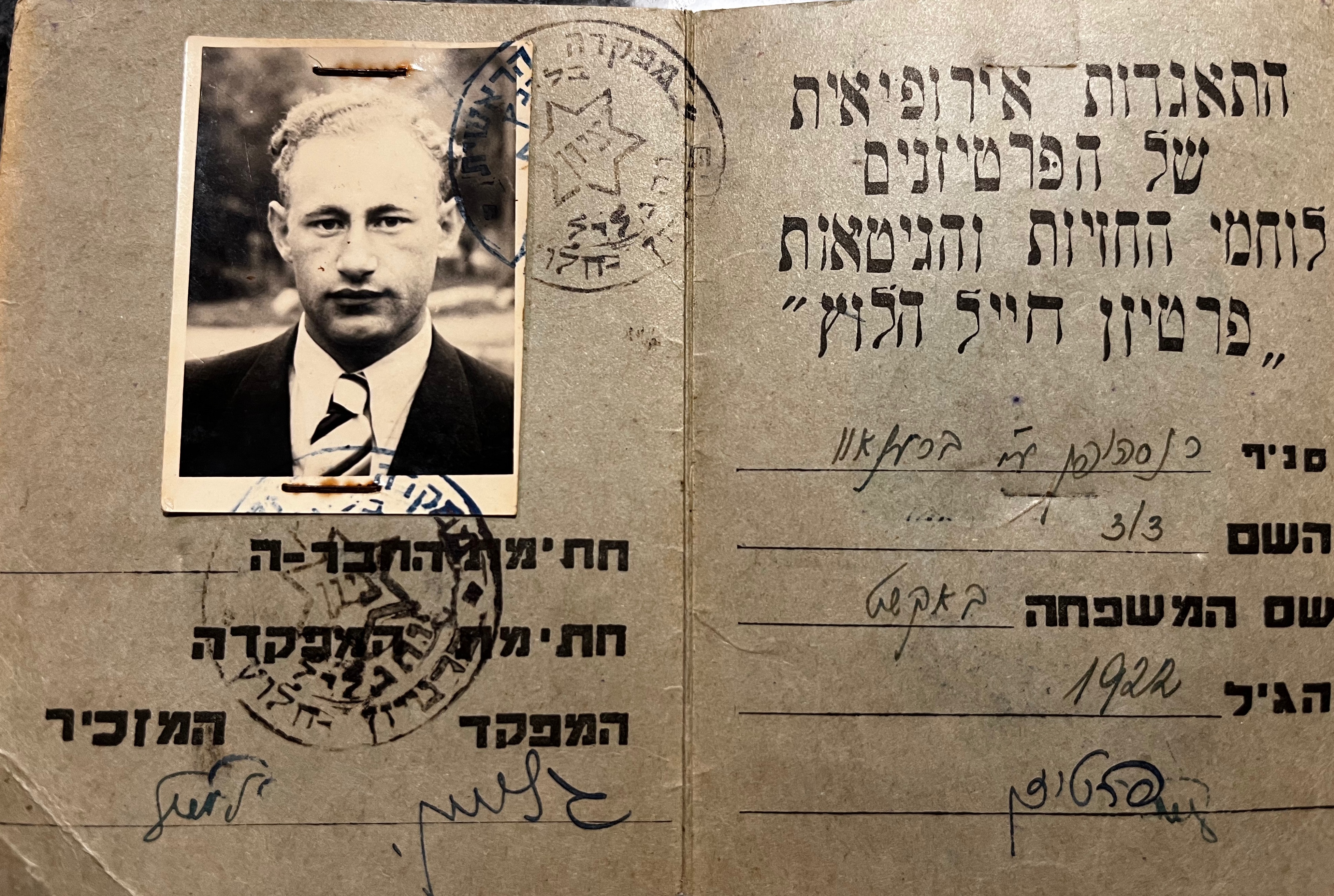
As I have recounted elsewhere on this blog, Gary’s parents are Holocaust survivors. This is a source of tremendous pride (and pain) for Gary. Their Jewish identity was the cause of their suffering due to the poisonous hate of the Nazis and their collaborators but was more importantly the basis of the strength and resilience that helped them to survive and flourish.
I understood what he was saying, and though my parents were not survivors, I am part of that legacy in a larger sense.
In my heart of hearts, I wasn’t sure if that’s how I felt, especially about the first part of what he said.
“It’s funny,” I responded, “but I remember as a kid I felt that pride. When a Jewish person did something impressive – whether it was winning a Nobel Prize or Mark Spitz winning all those Olympic medals, I felt a certain satisfaction. But I’m not sure I feel that anymore. I wonder why?”
I was thinking that in a way it was like how I felt about being an American. As a child I felt proud of my country, now it is much more complicated. I have a clearer understanding of why that has changed – I have been disappointed in our country’s shortcomings often enough to wonder if we can ever realize our foundational ideals. I realize that the story of America that I absorbed as kid is far more complex and not quite as heroic. In a way, perhaps some of the same thing has happened with my Jewish identity– or maybe as one matures into adulthood it is natural to see things in a more nuanced way.
Being Jewish is complicated. It is an ethnicity and a religion. I don’t believe in the God of the religion, but I do believe in the core values of Judaism. The central theme, as I understand it, is justice – Judaism demands that we do our best to be a righteous person. This resonates with me. But, reconciling my lack of faith in God while accepting the values being espoused is tricky. Frankly, I haven’t been able to do it since I can embrace justice and fairness as a humanist, without the trappings of religion. At the same time, some of the rituals, particularly the ones we practice at home (lighting Chanukah candles as a family and singing the prayers, conducting a seder) are meaningful to me and those traditions are rooted in the religion.
The ethnicity is part of me. It is engrained in my DNA. I like the humor, the slightly skeptical worldview, the food, the propensity to question anything and everything. I bond over those qualities when I meet other Jews, especially from the New York City metropolitan area. While I take pleasure in my ethnic identity, I’m not sure I would say I’m proud of it, but maybe I should be.
Adding another layer of complexity to this question of pride is the place of Israel in Jewish identity. Zionism has become a dirty word to many with much undeserved baggage assigned to it. Zionism is simply the belief that Jews should have a homeland. Zionism does not, in and of itself, define the borders of that homeland – that is a disputed subject even among Jews. The idea that we need a homeland is hard to argue with given our long history of persecution, whether that persecution was a result of religious, ethnic or racial hate. As I have expressed in another blog post, I support the state of Israel. It is as legitimate as any other country. It is also between a rock and a hard place in terms of defending itself. There are many forces determined to wipe it off the face of the earth. How it defends itself is subject to widespread criticism, much of it unfair given the existential threat it faces.
While acknowledging that, I do have concerns about Israel that I can’t deny, even in the wake of October 7th. The first is the rightward movement of the government over the years. I do not support the Netanyahu administration, and it has gotten worse and worse in recent years. However, there are many countries, including our own, where I have not supported the government, but that doesn’t mean that the nation becomes illegitimate. Now that Trump is president-elect, our right to exist isn’t in question. While I can acknowledge that it can be hard to separate the two, Israel seems to be held to a different standard than other countries in this regard.
The other concern is more fundamental. I worry about the tension between religion and ethnicity in defining the government of Israel. Since being Jewish is both, what is the role of religion in the governance of the state? I am not suggesting it is a theocracy; it isn’t (there is no official state religion) or that it will become one. I do worry, though, that since the Rabbinate does have some official roles – in regulating marriage and divorce, for instance, there can be friction and actions that make me uncomfortable.
Most of Israel’s founders were secular Jews, at least that is my understanding. In its initial establishment, Israel was more of a socialist state. Over the 66 years of its existence, it has become more of a capitalist economy. It is also a parliamentary democracy – so the prime minister is selected by either the majority party (if there is one) or a coalition of parties that can agree on an individual. Israel hasn’t had a clear majority party in many years. As a result, the ultra-orthodox Jewish (Haredi) parties have an outsized influence on politics and policies. They have been instrumental in allowing Netanyahu to stay in power. The Haredi, according to the most recent census data, make up only 14% of Israel’s population, but it is growing faster than other segments. Perhaps, my concern that it will drift toward more religious influence is unfounded. I hope it is.
The bottom line of all of this is that I find it hard to be as full-throated in my backing of Israel as I would be if I supported its administration. That may not be entirely fair, given what I wrote above, but it is how I feel. From what I read and hear, this is not as problematic for other Jews.
Where does that leave me in terms of being proud to be a Jew?
Minority groups that are subject to discrimination often encourage taking pride in that identity. Whether it is the LGBTQ community, or Blacks or indigenous people, movements have focused on lifting the esteem of the members of the group. Group members themselves are vulnerable to buying into the negative stereotypes and that is destructive in many ways, so it makes sense to staunch that impulse. Jews are no different. Urging Jews to take pride in their identity can be helpful in the face of the rising tide of antisemitism.
Going back to the author who said she was ‘loud and proud’ of her Jewish identity; I have no problem being loud about it. Anyone who knows me, or reads my writing, knows I am Jewish. I make no effort to hide it. The more challenging part is expressing pride – but perhaps that has less to do with the complexities of being Jewish and more my personal hesitation in feeling proud of myself. Or, perhaps, it is a perfect reflection of my Jewish identity because it is a quintessentially Jewish characteristic to struggle with different ideas.