Repeal the Second Amendment

Repeal the second amendment! I know that is an inflammatory statement, and maybe unpopular, too, but I need to put it out there.

It would be the ultimate irony if we made progress on gun control after Charlie Kirk’s assassination. My heart does go out to his family, and all those affected by gun violence. Charlie Kirk, though, does not deserve martyrdom. He did a great deal of damage, bringing a message of intolerance and divisiveness to young people on college campuses. I watched a number of videos of him espousing his beliefs. In some instances, I actually agreed with his point (I don’t think Cardi B is a great role model). However, even in those instances, he did it in a disrespectful, one-sided way. I don’t think Britney Spears or Madonna were great role models for little girls either – and for the same reason. We shouldn’t be sexualizing young girls. Why focus only on a Black star? But that isn’t my point, it is just illustrative of the problem with how Kirk approached things. His racism ran deep, and he was oblivious to his privilege. He shouldn’t be lionized in death.

Now back to my main point: we should repeal the second amendment. I welcome arguments to the contrary, but please don’t bother explaining the meaning of the second amendment to me – whether it was intended only for militias or individuals. I don’t care what our forefathers intended, just as I wouldn’t accept the argument that because our forefathers tolerated (supported? profited from? believed in? were indifferent to? – pick your verb) slavery, holds no water today. We know better. We should know better about guns.

For those who require guns to hunt, to protect livestock, to protect us, we can make provisions in law; we can set up mechanisms to allow for that. But, we have to let go of the notion that owning a gun is a God-given right. Some of us don’t believe in God, for one thing, but that aside, even if we can all agree in a common morality –  like ‘thou shall not kill’ – I don’t understand how that morality includes gun ownership.

The Bill of Rights protects our freedom. How do guns protect our freedom? I could more effectively argue that owning a car is more connected to being free in this country than having a gun. We don’t believe that owning a car is a God-given right. Someone explain to me, in the context of the world we live in now, how possessing a gun enhances your freedom, or is essential to your freedom.

Somewhere along the line we got things twisted in this country. There may have been a time when settling the ‘wild west’ or living a pioneer life, folks needed guns for their survival. That time has passed. As time went on, though, the gun became symbolic of something else (of rugged individualism, of strength, of masculinity…) – not just a tool to hunt or even to protect oneself. If we have gotten to the point where every man, woman and child needs a gun to protect themselves, we are lost.  

Most Democrats are not willing to say that the second amendment should be repealed. The attachment to guns is too strong, the gun lobby is too powerful (still! – despite the fact that the NRA has been discredited). I believe we need to be bolder. If we start from the presumption that we don’t have a God-given or forefather-given right to have a gun, so much becomes possible. We can still have shooting ranges. People can still hunt, though unless you hunt for food, I don’t understand the pleasure in that – but that is just me. Police and other security-related people can be armed. But it can all be regulated. And, it moves the question of regular folks having automatic weapons off the table – we wouldn’t need a special law to prohibit it. Think how much simpler it would be – we wouldn’t have to argue about what the second amendment actually means! We’d save millions of dollars in litigation costs.

I understand how freedom of speech, assembly, press and religion relate to freedom. It is a direct connection to the way we live our lives. I get why we have the Bill of Rights. Those activities are central, crucial to our liberty. It is not a slippery slope if we were to remove the second amendment. The right to bear arms has not made us more free and won’t make us more free. Hasn’t that point been made again and again over the last 25 years!?

I believe the exact opposite of what Charlie Kirk espoused. The second amendment is not worth the loss of life we as a country have endured. The rate of gun violence is too high a price to pay for the right to bear arms.

Will It Make Difference? It Is Up to Us

I watched chunks of Senator Cory Booker’s 25-hour speech in the Senate. I did not see or listen to the whole thing. I saw enough and read enough about it to offer some observations.

First, I was impressed with his stamina. My voice isn’t strong enough to talk for an hour, much less a full day. Yes, he had some breaks where other senators spoke, under the guise of asking questions, but he stood for all of that time and spoke with passion and emotion. It was quite a feat. It is not surprising that he was an athlete in college and continues to work on his fitness. As an amusing aside, my husband was impressed with his bladder. He needed control of both to get through that ordeal.

I saw some of the comments on social media during the event. Most lauded him. Of course, I live in a Democratic echo chamber, so I didn’t see much right-wing commentary. They may have been critical or sarcastic or who knows what – perhaps they mostly ignored it. Some, even in the progressive corner, were critical – saying it was a stunt or asking what good was it doing. I think there is a legitimate point there. It was a stunt. The question is: did it do any good?

It is true that Senator Booker wasn’t fillerbustering a proposed bill or administrative appointment. But, I think there was still merit to what he did. We need people to get motivated. We need people to be informed. To Booker’s credit, he didn’t read the phonebook like some in the past who have fillerbustered. He spoke substantively. Yes, some of it may have been repetitive, but there was a logic to that. After all, who would be watching the whole thing? Plus, people need the central messages to be repeated so they grasp them. It remains to be seen whether he was able to get folks energized.

Sadly, there are limits to what the Democrats can do to stymie Trump, especially given the aggressive, outside-the-norm, methods of slashing and burning government agencies that the administration is pursing. The Dems simply don’t have the numbers in Congress to stop legislation or prevent appointments. They are taking him to court, but that is slow and, in some cases, appears to be ineffective because rulings have been ignored. Plus, in many instances the damage has already been done. If someone is fired, or an office is closed, it isn’t so simple to just put it back in place even if there is a court order. There is likely mass confusion as to what happens next when an action has been countermanded.

For folks who are angry at the Dems, I ask: what would you have them do? It is easy to criticize. I criticize when they aren’t at least raising their voices. I was profoundly disappointed in Schumer’s capitulation on the budget. Perhaps he thought it was necessary to avoid a government shut down, and that may be so, but he should have put up more of a fight first. At least make some gestures at resistance – push them a little further, see if there is even some concession.

Aside from noting Booker’s stamina, I was impressed with his intelligence and passion. Some of his colleagues in the Senate showed themselves to be articulate and knowledgeable. We make fun of politicians for many reasons, accusing them of being self-serving or corrupt. Some may be that. But Tim Kaine, Senator from Viriginia, Chris Coons, Senator from Delaware, and Chris Murphy, Senator from Connecticut, were among the speakers who displayed deep knowledge and commitment. They deserve to be recognized and respected for their efforts. Unfortunately, the realities of power in our country require that elected officials raise crazy amounts of money to run for office, which leads them to have to practically sell their souls (or be ungodly rich themselves), and that, in turn, makes us suspicious. Add to that the idea that many of our fellow citizens don’t respect academic achievement, or value people who are intellectuals and you end up with someone like Marjorie Taylor Greene being more well-known and popular, instead of well-educated, widely-read public servants like the aforementioned senators.

I know many say that all politicians and all government workers are corrupt. I am not that cynical. I look at some of the individuals who spoke yesterday, most especially Cory Booker himself, and I believe their sincerity. I believe he is a man of genuine faith – not the false piety of Trump and many of his followers. You can disagree with Booker’s philosophy of government or his approach to the economy, but he speaks from his heart. He wants government to improve the lives of Americans. I can’t say the same about our president.

Will what Cory Booker did make a difference? Time will tell. I plan to attend the protest in Albany on April 5th. I plan to continue to express my opinions, on my blog and by writing to Senators and Representatives. I will support candidates whose platforms offer a better way forward. I hope others are similarly motivated. I hope the tide can turn. I have to believe that most Americans are unhappy with the approach to budget cutting that has been taken – the cumulative impacts will take time to register, but they will be real. They are not cutting waste, fraud and abuse. For all their talk about that, they haven’t taken the time to find it! Musk wants to cut and ask questions later. Sadly, the damage is already being done, we are beginning to suffer a brain drain where researchers and academics leave to more hospitable countries/institutions, among a myriad of other negative effects.

I applaud Senator Booker. I believe history will be kind to him. I just hope we can look back and see it as a turning point – not even so much a turning point in policy, but a turning point in our national dialogue, to put the focus on substantive issues and to place value on our democratic processes instead of the politics of divisiveness. I hope the Senator is proven right when he said that the power of the people is greater than the people in power. I hope we choose to wield it, rather than ceding it to Trump, Musk and DOGE. I hope enough of us are willing to make “good trouble.”

Democracy Hangs in the Balance

So much to say. I hope I can express it coherently.

I want to follow up on my last blog post which explored the role of the civil service. In that essay I mentioned that we all had a general understanding of the separation of powers. Now I’m thinking maybe we don’t. Given what has transpired in the last week, I think it is important we take a deeper look at the roles of the different branches of government. I have seen it at work up close and personal throughout my career. I believe it is an essential concept, a foundational construct, of our Constitutional democracy and it is being dismantled day by day.

Elon Musk, empowered by President Trump, is upending a structure that has existed for centuries, and he is doing it without a transparent plan for what replaces it. This is a critical issue. It isn’t simply reducing the size of the federal workforce that is underway here; it is the gutting of its ability to function. Some may think that there is so much fat in government that if you cut the staff you would still have an operating agency. That might have been true if cuts were planned, surgical reductions. Across the board cuts or offering all employees a buyout without regard to who is critical, eviscerates programs. In some instances, whole programs have been shuttered. Many of the cuts target either Trump’s perceived enemies or his and his billionaire friends’ interests – not the interests of the majority of Americans.

There are two problems with how things are proceeding. First is one of process – the way thing sare being done – they demonstrate a total disregard for laws and regulations in implementing these changes. The second is one of policy – what will be the consequences of these changes for the American people? Is this what we signed up for? These processes and policies have hurt people already and we have not even begun to feel the full impact.

Our Constitution does not empower an autocrat or an oligarchy. There is an executive, but that executive does not function as a legislature or judiciary. There can be some argument about where the line between making the laws and executing the laws is drawn – and the courts mediate that – but there IS A LINE. Let’s take a look at the line.

I worked years ago for the Legislative Commission on Expenditure Review in New York State. This entity was a bipartisan committee that had staff charged with reviewing programs to see if they were complying with legislative intent. In other words, we would look at the language of the legislation that authorized a given program, for example purchasing by the Office of General Services, to see if the program was operating in accordance with the law. To understand the purpose of the program, we looked beyond the plain language of the statute. We looked at the history of the bill (the bill jacket) and then we reviewed the operations in practice. The purpose of our review was not a traditional financial audit, that was the responsibility of the Office of the State Comptroller (OSC). We audited the performance of the program. Was it effective? Was it efficient? Was it accomplishing its mission? Was it being done in compliance with the law? We made recommendations when there were areas that were falling short.

So, that is how it is supposed to work: The Legislature, with input from the Governor’s office and the public, enacts a bill; the Governor signs the bill and it becomes law. Funding, negotiated by the Governor and Legislature in the budget process, is allocated. An Executive branch agency, as directed by the Governor, creates that program. The Executive branch implements and administers it, enacting regulations through administrative procedures (which the public can comment on) to flesh things out. The Legislature periodically oversees the program by having staff review it. A separate entity, OSC, reviews the financial operation. In sum, power and accountability is shared.

This balance of powers, this separation of responsibilities, plays out at the federal level, too. The names of the entities are different, but the functions are performed by separate entities.  Power is not concentrated in any one branch. Is there potential for leakage? Are there instances where the system doesn’t work? Absolutely. Especially when Congress fails to act by not fulfilling its responsibilities.

Legislation can be vague. The Executive is left to interpret things and in that process a program can go sideways or it may overreach. Oversight can be inadequate. Oversight activities, within an agency and by the legislature can be underfunded and understaffed given the breadth and scope of the work of government. Agencies themselves have a role in preventing corruption by having internal controls and systems set up to prevent and/or detect malfeasance or other inappropriate actions. Inspector generals (IGs) and internal auditors within departments help to oversee this, in addition to the separate entities I described above. Removing those internal checks and balances threatens the integrity of the agency. We have seen the removal of IGs already. At the federal level the Government Accountability Office (GAO) performs a similar role as the state’s OSC. Congressional committees are responsible for oversight. All of this might be clumsy and time consuming, but it serves a purpose. Private sector entities can afford to be more streamlined, though they have some of the same concerns and limitations.

As is always the case there is a balance. Oversight is costly and you don’t want to create a whole other bureaucracy parallel to the one that is performing the service. But, some checks are necessary and pay for themselves by preventing or recovering losses. Finding the balance is difficult, but ridding the system of the whole process is certainly not the answer!

What happens when all of that is stripped away – both the separation of powers and the oversight – as is happening with the Trump administration? What will replace it? The judgement of one man, or a committee of men? Why should we trust them? What are their interests? What happens when Congress forfeits its authority and responsibility to oversee activities, as the Republicans appear to be doing? The system, carefully calibrated to prevent concentration of power and corruption, is rendered impotent. Is that what the American people want?

As I argued in my last blog post, we need to improve the system. We need to address the paralysis that plagues our Congress so that it can function as intended. But, we should not throw the baby out with the bathwater. The checks and balances, the division of responsibilities must be preserved. We can’t allow Trump and Musk to ransack our democracy. Please write and/or call your representatives!

In Defense of American Government

For a while, after the election, I put my head firmly in the sand. I could not follow the news. It was all too overwhelming. But, there was only so long I could maintain that approach. I have looked up and I am frightened by what I see of the actions taken by the Trump administration. I cannot be silent.

I started this essay about a week ago and I keep having to change it, add to it, amend it. I can’t keep up with the transgressions. It is also hard to prioritize which of his moves are the scariest. Right now, I am leaning toward Elon Musk hooking up private servers to the Office of Personnel Management to communicate with all federal employees (and have access to all of their information). No one elected Elon Musk, and that is just the first problem with this scenario.

Perhaps in second place is the attack on DEI, especially blaming it for the tragic collision between the jet and the army helicopter resulting in the loss of 67 lives. Again, there are so many things wrong with the Trump Administration’s reaction to that calamity that it is hard to know where to start. One can assume that whenever things go wrong the playbook will call for blaming previous administrations and DEI.

It seems like the Trump administration strategy as they start their new term is the equivalent of a military blitz. Send everything in all at once so we are caught off guard and don’t know what to respond to first. Before you know it, the whole system will be upended. Some may have voted for him for that, but I don’t think the majority did. In fact, when you look at the numbers, Trump didn’t even win a clear majority of the vote. He has no mandate. Upending the system will have many unintended consequences (or if they were intended, they will be damaging in ways most Americans did not sign up for).

I have a master’s degree in public administration and policy from Columbia University. I completed my comprehensive exam to earn a PhD in public administration and policy at the University at Albany, but I did not write a dissertation – that means that I took all the coursework for that advanced degree but didn’t do the final piece. I share this because I have some background, some credentials, with which to evaluate what the Trump administration is doing. Most people do not want to get bogged down in the weeds of policy or administration. I understand that, and I am not going to go that far in this essay, but we do need to take look behind the rhetoric.

Most of us learned, at some point, about the separation of powers which characterize our government structure. You don’t need to go to graduate school to understand that. At a fundamental level, Trump was violating that by trying to freeze federal funds already approved by Congress. He offered no rationale or plan for going forward. Fortunately, his power grab was stopped, but it will not be the last attempt. We will face similar challenges in the future and these questions will need to be faced:  Should federal agencies even comply with those orders? Are they constitutional? If they are unconstitutional, can they be disobeyed? Do they have to be obeyed until the courts decide? Meanwhile, how much damage will be done? Which brings us to a subject that is not sexy but may be increasingly important in this current environment: the role of the civil servant.

One of the first things you learn when you go to graduate school in public administration is the history of the civil service. I will not bore you with the details. It is important, though, to know why, in a general sense, we have that system. It was installed as a response to rampant corruption and a belief that the government was not being responsive to the people who fund it. Before the civil service existed, government hiring was through the spoils system – where family members and loyalists were rewarded by elected officials with positions in government without regard to their competence. It was called the spoils system from President Andrew Jackson’s quote ‘to the victor goes the spoils.’

This led to two major problems – ineffective policy and a culture of bribery. The needs of the people were not a priority. This was how things were run from 1828 (before 1828 it was also a system of patronage, but positions were awarded to elites; Andrew Jackson broadened it to include the ‘common man’ in 1828) until 1893 when the Pendleton Act was passed and created the federal civil service. Most states followed suit and created their own versions. It is important to note that the civil service does not cover the highest positions in federal or state agencies. It was understood that it was appropriate that the leadership reflect the will of the President. Secretaries/commissioners of departments and layers below that are political appointees. There was also recognition that under those policy-making positions it was important to have a class of employee who was not beholden to politics or parties, who could maintain stability and provide service when administrations changed – thus the creation of the civil service.

An essential element of the civil service was to provide a pathway to jobs with the government that was open to all, as opposed to through connections or bribery, and that would test for competency. Over the years the system has evolved with more specialized testing especially as government work required more expertise (lawyers, doctors, engineers, etc.).  There have also been measures to make the workforce more reflective of the demographics of the country, ensuring that barriers to women and minorities were removed.

The civil service system has its flaws. For one thing, tests are never perfect. There is also no question that it is too difficult to fire employees who are lazy or inept or worse. But that does not mean we should throw the baby out with the bath water. We need to improve the system. President Trump appears to be trying to circumvent the whole structure. It suits his agenda to have everyone beholden to him and the MAGA universe. This would be a case of history repeating itself if we don’t learn from what happened before.

There is another aspect of this changing perspective on civil servants that deserves attention. Starting in about 1980, with the candidacy and election of Ronald Reagan, there has been a steady stream of insults hurled at government employees. Some of that may be a result of those flaws in the civil service system mentioned above. I think of the negative experiences many had with the Department of Motor Vehicles back in the 1970s when a trip to apply for or renew a driver’s license was an all-day affair in Brooklyn. The public facing clerks could be surly and seemingly inefficient. But, that was not an indictment of government as a whole. It was a failure of management and some aspects of the system, but it does not follow that we don’t need a Department of Motor Vehicles or the civil service. In fact, today, I believe, the DMV functions pretty effectively. We renew our licenses (for the most part) and registration online. When we go to the office, it is set up to process customers efficiently. Vehicles do need to be registered, and they need to be inspected. We need commercial trucks to be regulated for the safety of everyone on the roads.

We can argue about how much government is necessary; how much regulation is needed when balanced with the red tape created. That is fair game, and we can agree to disagree. But, disparaging the public workforce is counterproductive. Who wants to go into public service when it is so disrespected? So devalued? Government needs the best and brightest. I will never understand politicians who degrade the folks who implement their policies.

I went into public service because I wanted to help people. I wanted to make a difference in the quality of life of my community, to contribute what I could to improving services. Sometimes I felt frustrated because the work I did was far removed from that goal, so I looked for other opportunities. But even when I was buried in the bureaucracy of the department of tax and finance, I still believed I was doing something worthy. Collecting taxes in a fair and efficient manner is necessary. No one likes paying taxes, but without them essential services can’t be delivered.

The take-aways I offer are four-fold:

  1. Know our history – let’s not repeat the errors we have made in the past.
  2. Don’t throw the baby out with the bath water. Change structures, improve efficiency, but we should not dismantle whole systems impulsively and without planning for what replaces it and understanding why it was established in the first place.
  3. Stop demeaning public service. Even if you are a libertarian, you need to value the essential work of the government and the people who do it. Insulting people is unhelpful to say the least.
  4. Recognize that public and private management are different in important ways. The model of private business, where profit is the motive, is often not appropriate for the provision of public goods. Sometimes it may fit, and it may make sense to move certain functions to the private sector or adopt their systems, but many services don’t lend themselves to that approach.

We can’t sit back and allow the dismantling of our government without proper checks and balances. We need to make sure Congress hears us. We need to support organizations that are bringing lawsuits that raise legitimate questions about whether constitutional lines are being crossed. Please pay attention. Though it is tempting to put my head back in the sand, none of us can afford to do that.

a few of the books in my library

Pride

Since October 7th when Hamas brutally attacked Israel, committed acts of horrific violence, and all that has followed, I have struggled with a range of emotions. I have always given a lot of thought to my identity as a Jew, but this has been a more challenging time, and it has been hard to sort out my feelings.

I have attended presentations, in person and on Zoom, to hear what others have to say. I have read books, some recently published, including one entitled “On Being Jewish Now,” edited by Zibby Owens. It is a compilation of 75 essays by authors and advocates, all written in the wake of October 7th. As I write this, I have read about ¾ of them. They offer interesting perspectives, but none, yet, have hit the mark for me. Most of the authors explain how they have been moved to assert their identity as a Jew, even if there is some fear involved. They may not have been particularly observant before but found comfort and meaning in turning to Jewish rituals. They write about the pride they feel and the importance of their alliance with Israel. My feelings are more complicated. I have been thinking about what it means to be proud of being Jewish and about pride in general.

“Think about times you’ve been proud of yourself. Jot them down. I’ll give you a couple of minutes and then let’s share.”

This was the prompt from a Weight Watchers lecturer at a meeting I attended about two decades ago. She was urging us to call upon those times when we did hard things and apply those same skills to our weight loss goals.  This exercise sticks with me because I could not think of a single thing to be proud of. Nothing came to mind – certainly not my identity as a Jew. I share this not to elicit sympathy or to fish for compliments. I am writing about this because it was then I realized that this was an issue for me, and there are implications.

I sat for those few minutes in that meeting bewildered, reviewing various experiences in my life. I was already married, had two children who were still quite young, and I was working for the state. Nothing resonated with being proud.

When others at the meeting shared their triumphs, it was enlightening. Graduating from college, completing a project, losing weight, finishing a 5K, recovering from addiction, leaving a toxic relationship….some of those things I had done, I just didn’t feel particularly proud for having done them. I realized that I have this tendency to think that the quality of what I do isn’t special or that it was expected. Everyone in my family graduated from college, in fact both my parents had master’s degrees. When I finished a 5K race, I’d look at the time and think, “Could I have gone any slower?” It isn’t a healthy perspective. This exercise made me aware of it. In the years since, I have tried to be fairer in my assessment, but it doesn’t come naturally. Today if I was asked the same question, I would be able to come up with a couple of examples of times I was proud of myself. I’m making progress. But, all of that is different than taking pride in my identity as a Jew.

One of the essayists in “On Being Jewish,” Lisa Barr, a writer of a number of best-selling novels, who I also saw speak on a panel that was addressing antisemitism in publishing, described how she was motivated to be “loud and proud” of her identity as a Jew in the aftermath of October 7th. I have been thinking about that sentiment.

I tend to consider accomplishment rather than identity when I think of sources of pride. If you are born something, does that merit feeling proud of it? I asked Gary, my husband, if he was proud to be a Jew. He thought for a moment and said yes.

“I’m not suggesting you shouldn’t be proud, but can you explain why?” I asked.

He thought for a bit, which is something I appreciate about him, he is thoughtful in the truest sense.

“I think Jews have contributed a lot to the world – in science, in medicine, in the arts…in all kinds of ways. It was the first monotheistic religion. Jews have made the world a better place… And, then there is my parents’ experience.”

As I have recounted elsewhere on this blog, Gary’s parents are Holocaust survivors. This is a source of tremendous pride (and pain) for Gary. Their Jewish identity was the cause of their suffering due to the poisonous hate of the Nazis and their collaborators but was more importantly the basis of the strength and resilience that helped them to survive and flourish.

I understood what he was saying, and though my parents were not survivors, I am part of that legacy in a larger sense.

In my heart of hearts, I wasn’t sure if that’s how I felt, especially about the first part of what he said.

“It’s funny,” I responded, “but I remember as a kid I felt that pride. When a Jewish person did something impressive – whether it was winning a Nobel Prize or Mark Spitz winning all those Olympic medals, I felt a certain satisfaction. But I’m not sure I feel that anymore. I wonder why?”

I was thinking that in a way it was like how I felt about being an American. As a child I felt proud of my country, now it is much more complicated. I have a clearer understanding of why that has changed – I have been disappointed in our country’s shortcomings often enough to wonder if we can ever realize our foundational ideals. I realize that the story of America that I absorbed as kid is far more complex and not quite as heroic. In a way, perhaps some of the same thing has happened with my Jewish identity– or maybe as one matures into adulthood it is natural to see things in a more nuanced way.

Being Jewish is complicated. It is an ethnicity and a religion. I don’t believe in the God of the religion, but I do believe in the core values of Judaism. The central theme, as I understand it, is justice – Judaism demands that we do our best to be a righteous person. This resonates with me. But, reconciling my lack of faith in God while accepting the values being espoused is tricky. Frankly, I haven’t been able to do it since I can embrace justice and fairness as a humanist, without the trappings of religion. At the same time, some of the rituals, particularly the ones we practice at home (lighting Chanukah candles as a family and singing the prayers, conducting a seder) are meaningful to me and those traditions are rooted in the religion.

The ethnicity is part of me. It is engrained in my DNA. I like the humor, the slightly skeptical worldview, the food, the propensity to question anything and everything. I bond over those qualities when I meet other Jews, especially from the New York City metropolitan area. While I take pleasure in my ethnic identity, I’m not sure I would say I’m proud of it, but maybe I should be.

Adding another layer of complexity to this question of pride is the place of Israel in Jewish identity. Zionism has become a dirty word to many with much undeserved baggage assigned to it. Zionism is simply the belief that Jews should have a homeland. Zionism does not, in and of itself, define the borders of that homeland – that is a disputed subject even among Jews. The idea that we need a homeland is hard to argue with given our long history of persecution, whether that persecution was a result of religious, ethnic or racial hate. As I have expressed in another blog post, I support the state of Israel. It is as legitimate as any other country. It is also between a rock and a hard place in terms of defending itself. There are many forces determined to wipe it off the face of the earth. How it defends itself is subject to widespread criticism, much of it unfair given the existential threat it faces.

While acknowledging that, I do have concerns about Israel that I can’t deny, even in the wake of October 7th. The first is the rightward movement of the government over the years. I do not support the Netanyahu administration, and it has gotten worse and worse in recent years. However, there are many countries, including our own, where I have not supported the government, but that doesn’t mean that the nation becomes illegitimate. Now that Trump is president-elect, our right to exist isn’t in question. While I can acknowledge that it can be hard to separate the two, Israel seems to be held to a different standard than other countries in this regard.

The other concern is more fundamental. I worry about the tension between religion and ethnicity in defining the government of Israel. Since being Jewish is both, what is the role of religion in the governance of the state? I am not suggesting it is a theocracy; it isn’t (there is no official state religion) or that it will become one. I do worry, though, that since the Rabbinate does have some official roles – in regulating marriage and divorce, for instance, there can be friction and actions that make me uncomfortable.   

Most of Israel’s founders were secular Jews, at least that is my understanding. In its initial establishment, Israel was more of a socialist state. Over the 66 years of its existence, it has become more of a capitalist economy. It is also a parliamentary democracy – so the prime minister is selected by either the majority party (if there is one) or a coalition of parties that can agree on an individual. Israel hasn’t had a clear majority party in many years. As a result, the ultra-orthodox Jewish (Haredi) parties have an outsized influence on politics and policies. They have been instrumental in allowing Netanyahu to stay in power. The Haredi, according to the most recent census data, make up only 14% of Israel’s population, but it is growing faster than other segments. Perhaps, my concern that it will drift toward more religious influence is unfounded. I hope it is.

The bottom line of all of this is that I find it hard to be as full-throated in my backing of Israel as I would be if I supported its administration. That may not be entirely fair, given what I wrote above, but it is how I feel. From what I read and hear, this is not as problematic for other Jews.

Where does that leave me in terms of being proud to be a Jew?

Minority groups that are subject to discrimination often encourage taking pride in that identity. Whether it is the LGBTQ community, or Blacks or indigenous people, movements have focused on lifting the esteem of the members of the group. Group members themselves are vulnerable to buying into the negative stereotypes and that is destructive in many ways, so it makes sense to staunch that impulse. Jews are no different. Urging Jews to take pride in their identity can be helpful in the face of the rising tide of antisemitism.

Going back to the author who said she was ‘loud and proud’ of her Jewish identity; I have no problem being loud about it. Anyone who knows me, or reads my writing, knows I am Jewish. I make no effort to hide it. The more challenging part is expressing pride – but perhaps that has less to do with the complexities of being Jewish and more my personal hesitation in feeling proud of myself. Or, perhaps, it is a perfect reflection of my Jewish identity because it is a quintessentially Jewish characteristic to struggle with different ideas.

A Trip to Pittsburgh in the Aftermath

A view of downtown from the top of Mount Washington after riding the Duquesne Incline

I could write a book about our trip to Pittsburgh. We were traveling there for a mini medical school reunion.

So many thoughts flood my mind:

  • The choices we make in our lives, being reminded of a turning point and what might have been. We could have settled in Pittsburgh but wanted to be closer to family. The road not taken is hard to resist imagining.
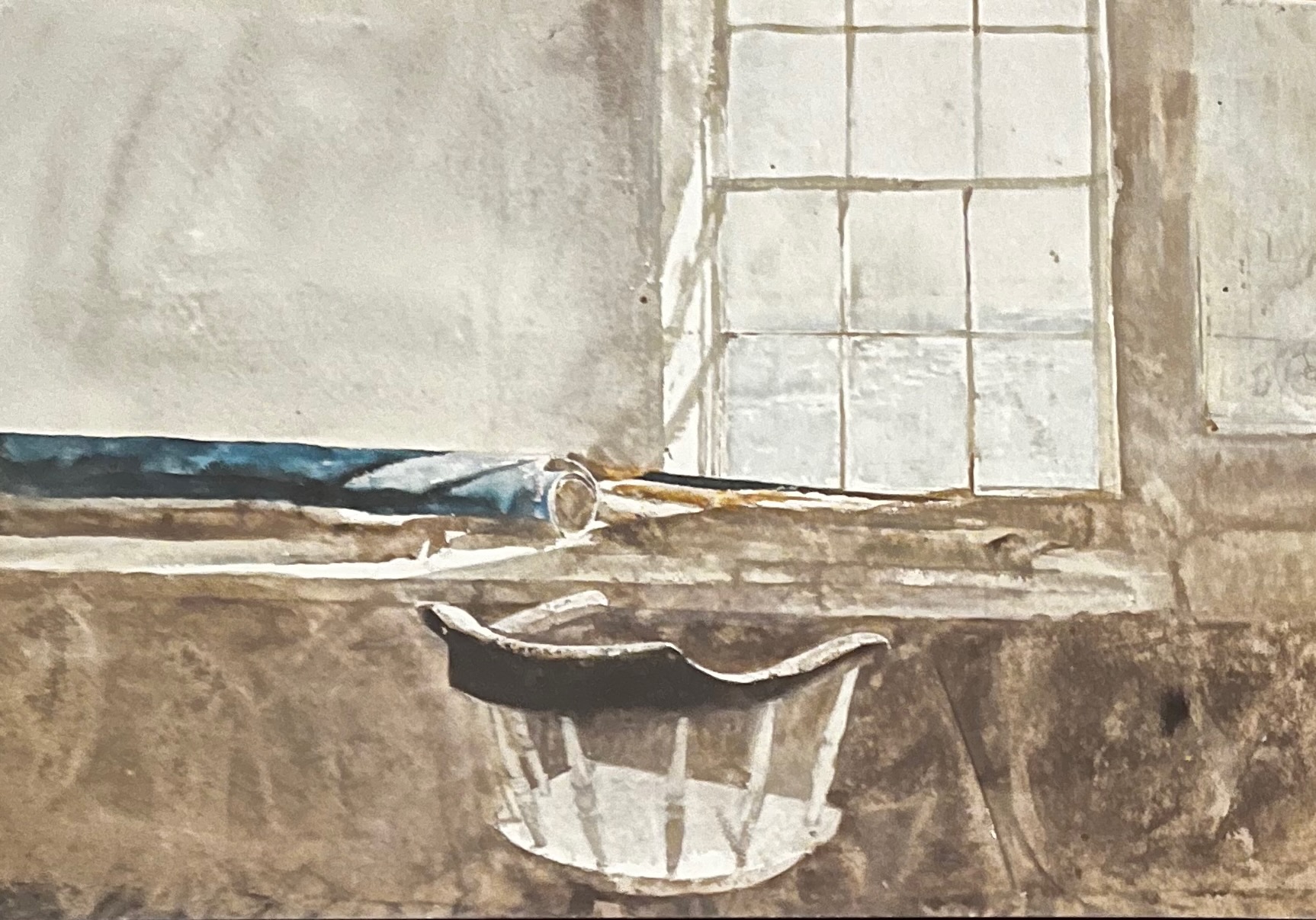
  • The side trip that took us at least 90 minutes out of our way, not to mention the time spent at the stop itself, a museum to see an exhibit of Andrew Wyeth’s paintings. When I suggested the detour, Gary initially didn’t want to take the time knowing what a long drive it was already from Albany to Pittsburgh. Then when we got in the car to start what should be a seven- or eight-hour trip, he said, “What the heck. We aren’t in any rush. Let’s go to the museum.”  I think he took pity on me, knowing my spirits were low from the results of the election and imagining a stop to look at art might help. He was right – it worked…for a while anyway.
  • The juxtaposition of gleaming office buildings, the beauty of the confluence of the three rivers and the unhoused, hurting people on the streets of that same downtown area. It is painful to see folks strung out, young people panhandling, wondering what’s worse: to walk by with a shake of the head and a murmured “sorry,” or to give some money? Our society must do better taking care of its own. The wealth suggested by elaborate skyscrapers, high-end stores and fancy hotels, side-by-side with people whose possessions are held in a bunch of plastic bags begs for a more humane economy. Below is evidence of the issue in Pittsburgh.
  • Gathering with friends from 40 years ago, some we did see eight years ago but others we had not, in the aftermath of an election that broke my heart but likely brought joy to some of theirs, was daunting. I was worried about how it would go.

It turned out that our reunion was warm, and we avoided politics, but I did have some interesting discussions with the woman I knew best all those years ago. We sat next to each other during the Pitt-Virginia football game that neither one of us was interested in. I knew she was a Trumper, and she knows I’m a bleeding-heart liberal. We would not change each other’s minds about anything. I come away as mystified by how I feel about folks who voted for Trump as I was before. Maybe I understand a bit more about her thought process – she sees the world differently than I do. One part of our conversation I will share because I think it is revealing.

I explained that I could not forgive Trump for, among other things, his reaction to the unite the right event in Charlottesville where the marchers chanted, “Jews will not replace us” and carried tiki torches. Trump responded saying there were good people on both sides. My friend explained that Trump was referring to the people who were trying to prevent the removal of confederate monuments – that he was sympathetic to their cause –  not to the chant. I said that I didn’t understand his statement that way and if that was the case he needed to make it clearer. She told me that it was obvious to her that’s what he meant. I said that even if that was what he meant, those monuments needed to come down. She disagreed. She asked me if knew anything about Abraham Lincoln. I said yes. She went on to explain that Lincoln supported monuments and naming forts after confederate generals to allow the South to save face. I responded by saying that may well be, and may have made sense in 1865, but it is now 2024, and the country needs to understand that the South lost the war. Those statutes and stories can be displayed and explained in museums and history books. Monuments in public squares should help us to remember and celebrate our better selves – the people honored don’t have to be perfect, but they do have to be on the right side of history. She just shook her head saying history should be preserved. I said, let’s change the subject and we did.

The game took almost three hours. There was a lot of conversation. Most of it was ordinary stuff about family, travel, health, but we couldn’t help but return to politics every so often, after all some of those subjects involve policy. Every time we did, we had to agree to disagree. At one point she said, amused, “You’re just too woke.” I smiled and said, “Exactly – that’s no insult to me. I work at being woke.” We both laughed.

I was proud of myself. I didn’t pretend that I didn’t disagree with her, but we didn’t get heated.  I was able to hold on to the good times we shared, aware of the pain she’s had in her life, the disappointments and struggles. I assume she could do the same for me. We hugged when we said our good-byes.

Gary was sitting next to his friend and former classmate, her husband, who shares her politics. After we left, Gary and I compared notes about our experience of the game. Interestingly, they had not discussed politics at all. Not surprisingly they were more focused on the game, but they talked about other subjects too – work, memories, family, being grandpas. No politics, though. I wondered how they managed that.

I am still processing the entirety of the trip. It was only 4 days, including all that driving, but it represented so much. I am also still processing the election results. It is going to take a long time to digest it all.

The best part of the game that Pitt lost – the half time show. The band was terrific.

My Closing Argument

I can’t wait for this election to be over. The relentless ads on tv, the frequent text and email solicitations for money, the anxiety about the country’s future are all hard to put aside. No matter what happens, it will be a relief when it’s over.

That’s not true, exactly. I will not be relieved if Trump wins and/or if there is a red wave. I will be devastated, as I was in 2016 when I didn’t want to get out of bed for days after. But, I will try to take heart in the surprising closing message of Jon Stewart at his performance at the Palace Theater in Albany, which I enjoyed very much. He pointed out that democracy is work that doesn’t end. Regardless of the result on election day, we need to soldier on, doing our part every day to work for the ideas we believe in, not just on a single election day. He reminded us how shattered we were after 9/11. We thought the world would never be ‘normal’ again, and in some ways, it was forever changed. But we couldn’t give up, we needed to continue to participate in our civic life. We can’t give up hope, hard as that might be. So, I am promising myself, if I need to mourn for a bit, I will, but then I will pick myself back up and keep trying to make this country a better place in whatever ways I can.

But, before I turn the page on this presidential campaign, I have some thoughts to share. I doubt many of my readers are Trump supporters, though there may be a few. I have always tried to be respectful. I don’t like the crude remarks or snarky takes that insult folks who view things differently than I do and I don’t plan to start now. I do need to ask a few serious questions for those who are planning to vote for him:

After Trump’s behavior these past few weeks, do you believe he is fit for office? For those who believed in him in 2016 or even in 2020, do you not see the changes? He is more impulsive and less coherent. Those are not qualities a president should have.

So many of those who served under him have abandoned him. Are they all part of some vast conspiracy? The generals? The cabinet members? His vice president? His daughter? No one is continuing to stand by him. Doesn’t that say something important about what they know about him?

For those who say ‘policy’ is the reason for voting for him, what policy? Is it about prices in the grocery store? If so, there are many factors that led to inflation (pandemic and supply chain issues to name two) that would have happened even if there had been a different president. Our rate of inflation, aside from the fact that it has been brought under control without a recession, is far less than other countries. Also, just as the health of our economy is more than the Dow Jones Industrial Average, it is more than the price of eggs.

Is it about the border? Do you really believe immigrants are ruining this country? Where is the evidence of that? How has your life deteriorated as a result of the influx of immigrants? Is crime that much worse and if it is, is it because of immigrants? I don’t believe the data supports that crime is worse, much less that the crimes that are committed are by illegal immigrants (other than sensationalized, or in some cases fabricated, stories on social media). My experience here in Albany and in NYC doesn’t back up those claims either. All of which isn’t to say that illegal immigration isn’t an issue that needs to be addressed. The demands on social services and housing, among other things, are challenging, especially to our cities. We can’t simply have open borders, but exaggerating the problem doesn’t help to solve it (neither did tanking the border bill). And blaming Kamala Harris for it is absurd.

Trump supporters like to ask if you are better off today than you were four years ago. By what measure? Four years ago, we were in the midst of the pandemic. Before vaccines, before treatments. Well over a million Americans died of Covid. Other than the divisiveness stoked by Trump, I do believe we are better off today.

Is Israel your reason for supporting Trump? Trump is an opportunist who will support whoever or whatever is in his self-interest at the time – the Saudis, Putin, possibly Netanyahu (maybe not, if he thinks Bibi doesn’t like him anymore). The incidence of antisemitism has soared since Trump came on the scene. How do you square those things? And, in order to support Israel, we need to be a functioning democracy not an oligarchy or monarchy.

Do you think children are going to school as one sex and coming home another, as Trump claims? Schools can’t apply sunscreen without parental permission. Not to mention that it takes more than a day to transition. Having worked in education policy for many years, I am well aware of the complicated questions posed by students who are trans, especially in regard to the role of parents. But, making trans students, or trans citizens in general, some kind of crisis (it can be a crisis for those individuals and families) that threatens our nation is ridiculous. I urge everyone to watch the movie Will and Harper (it’s on Netflix) to get some perspective on this. These are human beings who face challenges, not freaks who endanger our way of life.

Do you believe Kamala Harris is ‘dumb as a rock,’ to quote Trump? Really? I hear an articulate, intelligent woman. I see and hear people surrounding her who are competent and educated, not the racist, misogynist venom that spewed at the Trump rally at Madison Square Garden (and not just from that vile comedian).

Bottom line, for me, isn’t policy, though anyone who knows me, knows policy is near and dear to my heart. The bottom line is that Donald Trump is a despicable human being. He has normalized lying and cheating. I do not want my grandchildren to watch him or hear him. Our president, even if I disagree with their policies, should be someone children can watch without worrying that they will hear or see lewdness or vulgarity. And, I have granddaughters!!!! – I haven’t even mentioned reproductive rights. Or January 6th! I won’t get started on those or I will be writing another thousand words.

I will get off my soap box now. Honestly, after all of this, if you are still voting for Trump, please, please don’t tell me.

Step Aside…Both of You

First, let me state that I will vote for whoever the Democratic candidate is for President. If it is Joe Biden, I will vote for him. If it is a sack of potatoes, I will vote for it. In my mind, Trump is not an option; he is dangerous.

Second, the media should subject Donald Trump’s mental health to the same scrutiny given to Joe Biden’s condition. Op-ed pieces in major newspapers should be calling for Trump to step down (as the Philadelphia Inquirer did) for a myriad of reasons, not the least of which is that he is a convicted felon, found guilty by a jury of his peers.

With those two stipulations, I believe the right thing for Joe Biden to do is to step aside. This judgment is not offered because I think it enhances the Democrats chances in the election or consigns us to lose. It is simply the right thing for him to do.

Despite all the pundits’ insights and poll results, we don’t know how it would play out. Biden, as he currently presents, is not a strong candidate. As my brother pointed out to me, those voters who are willing to entertain voting for Trump are not being given a reason to choose Biden. So those who say that changing candidates now is a recipe for disaster, may not be clear eyed about what we are facing if he remains on the ballot.

I believe Joe Biden has been an excellent president. He has navigated unbelievably challenging times, and the country has benefitted from his administration’s policies in many ways. I have admired him throughout his career and believe him to be a good man with a kind heart, but I believe he is in denial about his cognitive abilities. This is not unusual. Unfortunately, in my family we have observed many people go down the path of dementia. Having good days and bad, covering for themselves (and family members covering for them), and not wanting to recognize what is happening are common reactions. Biden’s unwillingness to submit to a cognitive exam is troubling to say the least. Cognition doesn’t get better; they don’t recover. It just gets worse. Explaining his debate performance by saying he was tired, or it was just 90 minutes of him not at his best, does a disservice to him and the country.

When he walked stiffly, I was not alarmed. When he stuttered, I empathized. When he fumferred for words, I made little of it: who over the age of 50 doesn’t struggle to retrieve words? All of that can be understood, some of it has been true his entire public life. The incoherence at the debate, his inability to recall if he had watched the debate in the interview with Stephanopolous, are something else. He looks vacant some of the time. That is a change. This is not a matter of getting enough sleep, though I don’t doubt that is a factor. Being tired takes a toll. Unfortunately, being President of the United States is pretty much a 24/7 job. He can’t afford to have an off 90 minutes at the NATO summit today.

I believe when he made the decision to seek reelection months ago, he was in better condition cognitively. At least better enough so that it seemed reasonable to continue. Something has changed and now it is public. The patriotic thing to do is to step aside. If he doesn’t have the confidence in Kamala Harris to ‘anoint’ her, there are other options. Pundits are dwelling on the lack of an obvious choice as the reason Biden should stay in the race. I think that is short-sighted for so many reasons.

I know how important the question of who takes his place is.  And, almost equally important is the question of through what process. These are essential issues, but they are separate from whether Joe Biden should continue. We need to have confidence in our president. As much as I admire the work he has done, and believe that he has surrounded himself with competent, good people, that is not enough to lead us forward over the next four years. He no longer inspires confidence. We don’t elect a team; we elect one person. Dr. Jill, or any other person in his inner circle, should not be the de facto president.

Democrats have a convention coming up. It offers an opportunity. No, it isn’t the same as having primaries, but there is wide representation at the convention – all 50 states, different wings of the party, many of whom are elected officials in their own right. One could argue that the drawn-out candidate selection process we usually use hasn’t worked well anyway – generally speaking the extremes of the party (this is true for Republicans too) are overrepresented in the primary process. The convention may be messy, and it may be difficult, but it wouldn’t be undemocratic to let it play out that way.

As many know, my husband is a doctor. If he were to show signs of mental impairment (more than just slowing down) such that his judgment was no longer sound, and he was in denial about it, I would feel an obligation to step in. The consequences of his making mistakes are too high, people’s lives are at stake, I would need to discuss it with his colleagues, and of course urge him to retire. It would be painful. I would hate to be in that position, but in good conscience I could not delude myself or him. I would not want him humiliated by not being able to meet the extraordinarily high standards he has met his entire career. I would want to preserve his dignity in the process, but I could not let him put patients at risk. Joe Biden has far more responsibility for far more people. Those around him owe it to the country and owe it to Joe Biden to be honest about what is happening. It doesn’t sound like they are doing that. They may think they are protecting him or the country, but they aren’t.

Finally, for those who look back at history to try to predict how this will go, there are important differences between now and any previous time. Everything goes so much faster now thanks to (or we can blame) the internet and social media. People’s attention spans are shorter. One might argue that having a shorter period of time to campaign in a concentrated way could be more effective. The candidate might not be losing much, if anything at all, by being out front only from August to November. I don’t believe we have faced an analogous situation in our history.

By the way, though this is truly yelling into the void, the Republicans need to cast aside Trump and choose another candidate, too.

It’s NOT the Economy, Stupid

Maybe it’s just me, but the political narrative that gets presented in the media makes no sense. I’m listening to a podcast where New York Times columnists are talking about the relatively healthy economy and why people are still not optimistic or confident in it. They are hypothesizing about Covid lag, lingering inflation, negative feelings about Joe Biden. Those things may be relevant, but I don’t think that is what is at play in the poll numbers.

I think the reason the polls show negativity is because, though the survey questions may target the economy, people are pessimistic because the world is going to shit. Everywhere you look, it is scary. I think this view applies to Democrats, Republicans and Independents. Personally, I find the divisiveness in our country, whether it is around Trump’s trials, the war in Gaza, global warming or the issues the panelists were talking about (lingering effects of Covid and inflation), call into question whether we will be able to come together to address the problems. I don’t think I am alone in being pessimistic. We are a country famous, maybe even envied, for our optimism. I’m not sure that still applies.

In fact, just the other day I was at a gathering at my daughter’s house. A friend of hers was talking about his lack of hope generally, that it was hard to find things that inspired confidence in the future. He made the point that one of the few bright spots, something he was grateful for, was the young children of his friends. When he looked at them, their innocence and promise, it made him feel better. The man who was expressing this thought is in his mid-thirties.

Ever since that march in Charlottesville in August of 2017, the Unite the Right Rally where folks were marching with tiki torches, and our President couldn’t condemn it, I have been uneasy. I imagine for some that might not have been as seminal a moment as it was for me, but there have been so many things that have happened since then that make me question whether we live in the same reality. That event hit me hard. I thought I was watching something that happened fifty years ago, not a protest in an enlightened college town. And things have only gotten worse. The chasm has widened.

There is the possibility that we have always been this divided, but we just didn’t know it. People’s ugliest thoughts weren’t broadcast on social media. If someone stood on a soap box in a town square, even Union Square in New York City, and proclaimed that (insert your favorite scapegoats) were the devil, it was likely to fall on deaf ears. Now that person gets support from people across the globe who share a similar warped world view and the idea gets momentum. It also gets overrepresented in the social media narrative because it generates clicks – controversy or outrageousness always does. It is hard to get a handle on how many believers there really are when you have bots and trolls and foreign and domestic agents who benefit from the chaos.

If you ask me that classic question, “Are you better off today than four years ago?” I don’t know how to answer that. My economic situation is about the same, maybe better, but the precariousness of the health of the world, in every sense, affects my response. My feeling has little to do with Joe Biden or his policies. To me it feels like he is working to hold back a tsunami of terrible things – trying to preserve women’s reproductive rights, slowing climate change, bolstering the economy, minimizing inflation, reducing tensions in the Middle East, addressing crime, the list can go on. Some would include the southern border as a crisis. In some ways it is, but in other ways it is a manufactured panic. There are real problems with our immigration system, but some politicians are invested in keeping it a problem rather than making it better. I think Biden is doing a reasonable job against staggering obstacles. He has not created these problems.

No matter how good a job he does, though, it pales in comparison to the challenges. And it is done in the setting of unprecedented division.

I see footage of what is going on at Columbia University and other college campuses where backers of Palestinians have set up encampments to protest United States support of Israel and the universities’ investment in Israel and/or our defense industry that aids Israel. Separate and apart from the rightness or wrongness of the protesters’ positions (a topic for another essay), there is a way to get your message across effectively. If the idea is to win people over to your side, persuade them of the righteousness of your position, it isn’t by shutting down traffic on the Golden Gate Bridge or harassing Jewish students or impeding folks from getting to their calculus class. In most cities, (perhaps all cities – I am not a lawyer) you need a permit to stage a protest or march. There is good reason for this. It goes back to the balancing of different legitimate interests: the protesters and other citizens going about their lives. It is fine to disrupt the routine, to a degree. But you can’t purposely jeopardize public safety. I’ve attended any number of rallies for causes. I believe in showing up to voice my opinion on public policy, but there is a way to do it. Chanting hateful slogans doesn’t help either.

We live in confusing times. I think the polls reflect people’s general uneasiness, not a judgment of the economy. I wish Biden was more effective at communicating his vision for the future of our country. I do fault him for not showing clarity of purpose and leadership, but I don’t hold him responsible for the sorry state of our union. I believe we are suffering the effects of the cynicism, greed and fear that has become the stock and trade of the Republican party, along with the poisonous influence of social media over the last decade. Add in natural disasters which are increasingly frequent with climate change, seemingly endless wars across the globe and it feels overwhelming. I don’t know what the solution is, but we need to understand and acknowledge what we are dealing with before we can find answers. Polls are not shedding light on the issue. We need to be asking different questions.

Lawn Signs

There is a route I take frequently when I run errands. I drive through a neighborhood in Albany when I go to the bank (more likely the ATM), to our favorite bagel shop or to walk at SUNY. Probably 18 months ago I noticed a house had a for sale sign. The brick house sits on a corner lot; it is possible that it is a multi-family dwelling. Anyway, I wondered how quickly it would sell. The reason I wondered, given that the market was pretty hot, maybe not as hot as some areas of the country, but healthy nonetheless, is because of the house next door. That house has a barrage of signs – including the unforgivable ‘Fuck Biden.’ I’m all for free speech, but that is over the line. The house has lots of other signs – back in the day he (and I believe it is a he because I see him mowing his lawn) had a ‘Lock her up’ sign, among others. Based on the signs he displays, he is deep into conspiracy theories about the deep state.

A photo from a New Jersey newspaper – not the house I drive past obviously, and his are a bit more discreet, but the sentiment is the same

I have driven past the ‘for sale house’ for many, many months and now its lawn is overgrown, and it has one of those orange notices affixed to its front door – I imagine that it is in foreclosure. Do you think it has anything to do with the ‘Trumpy’ neighbor? I would not want to live next door to someone who was willing to put a sign out with an expletive directed at anyone, much less our president (even if I hated him/her – in my most outraged state with Trump it would never occur to me to display such a sign). Or maybe something is actually wrong with the structure? I don’t know, but I have mixed feelings about it. Part of me feels a certain satisfaction that the house is going to seed because the Trumper takes meticulous care of his property and can’t enjoy looking at the mess next door. I don’t wish ill to whoever owned the house that isn’t selling, and it isn’t good for the neighborhood to have an abandoned property, so there is that.

That same route that I drive brings me past a house that this month is festooned with pride symbols – just around the block from the Trumper. I wonder if they know each other. I should note that there are no curse words included in their array, just rainbows and hearts. Further down that same block is a house with flags that I associate with extreme Republicans – Don’t Tread on Me, the American flag and some others that I don’t recognize (not the confederate flag, I’m pleased to report). Is it one big happy neighborhood? Somehow I doubt it.

It is interesting to me that folks choose to advertise their politics in this way – it is not election season. I have put signs on my lawn in support of candidates. In fact, my Kerry for President sign got stolen. But, I don’t choose to put symbols out that represent my politics. I admit I appreciate passing homes that fly a rainbow flag – and I like the signs that say, in one way or another, hate has no place here. I’m not sure if I think those gestures are helpful. I defend anyone’s right to put whatever they want on their lawn, though I would like to think people would exercise good judgment. ‘Fuck Biden’ isn’t good judgment. Isn’t there some ordinance against that? I would not want a six year old, who is learning to read, to see that.

It leads me to ask: will we further segregate ourselves by our politics? Cities have historically been blue, though New York City, that bastion of liberalism, has elected any number of Republican mayors. Rural areas have historically been red, though I’m sure there have been exceptions. Can that still happen? As the parties move further apart, will those anomalies continue?

I wonder what impact the divisiveness in our politics has on the real estate market, especially in suburban areas. It can’t be good for our communities. Will our neighborhoods become echo chambers like our social media? Will we instruct our realtors to find properties with like-minded neighbors?

I wish this era of hateful rhetoric was behind us.