The ‘Right’ Thing

This photo came up as a memory on Facebook a couple of days ago. It was bittersweet to see it. I remember that day clearly. It was only a year ago. Gary and I were in Florida for our annual pilgrimage to see the Mets during spring training. We took a short drive from our hotel to take a walk by the beach.  Gary did his thing – he likes to show he can still climb a tree – and I snapped the photo to document it and sent it to our children, who, in turn, would hopefully show our granddaughters.

At the same time that we were enjoying this ordinary moment of levity, I was struggling with a difficult and painful decision. My mother, whose health had been failing, took a dramatic turn for the worse the night before. We had only just arrived in Florida. Though Mom had not been doing well, I had spoken with my brothers, the hospice nurse and her aide before leaving and we thought she was stable. We were wrong. Thus the question: Should I return and go to New Jersey, or should I stay?

Gary and I contemplated that as we walked along the beach. I had several conversations with my brothers before our walk. Both of them encouraged me to stay in Florida. Mark was heading down to Jersey from Albany with his wife, Pam, so he would be there. Steven and his wife, Cindy, lived 15 minutes away from Mom so he visited regularly. Steven was quite insistent that I stay in Florida; they would handle things. I had been very involved with Mom’s care up to that point, they didn’t want me to cut short our brief vacation. We were scheduled to be away for a total of five days, and we were on our second day when things went south.

After much contemplation, we decided to stay, believing that there wasn’t much I could add. My brothers are capable people. Mom was sleeping most of the time. Despite that, I was still torn. Did I need to see her? I decided I didn’t. I remembered how painful it was to see my father during his last days. Those images stayed with me for years, crowding out memories of him as a healthy person. It was also possible that I would get back in time to see her since our trip was so brief. Though I was deeply conflicted, I didn’t have a strong gut feeling, so we decided to stay in Florida.

I was able to enjoy the sunshine and warm air. I had the welcome distraction of the baseball games and dinners with friends. We visited Gary’s mother. In between, I talked to my brothers and thought about Mom and continued wondering whether I was doing the right thing. My brothers and sisters-in-law were handling some rough stuff – administering morphine, watching Mom to see if she was uncomfortable while she mostly slept. I felt guilty leaving this final stage to them, but I was also relieved.

Gary and I flew back north on Monday. Mom was still hanging in there. Before we left for the airport, I called my sister-in-law Pam’s cell phone, knowing she was sitting with Mom. Pam told me Mom’s eyes were closed, and she seemed comfortable. I asked her to hold the phone next to Mom’s ear. I told Mom I was coming to see her the next day but if she was ready to go, it was okay. I told her I loved her, that she was a great mother and that she earned her rest.

We arrived back in Albany late on Monday. Mom was still breathing. I got up early Tuesday morning and was packing my things to drive down to New Jersey when my phone rang. Mom’s aide, Ama, said she believed Mom had passed. She was waiting for the nurse to come to confirm it. I was surprised and I wasn’t. I thanked Ama for all she had done for Mom. I felt lost – now what should I do? After calling Gary, who was at work already, I wandered around my bedroom deciding if I still wanted to go down to New Jersey. For reasons that aren’t entirely clear to me, even now, I wanted to go. Maybe to see visual proof that Mom was gone, maybe to help Steve and Cindy with the details….

Ama was indeed correct. The next few days are a blur, planning the funeral, sorting through her things.

It was Mom’s time – I knew that. I wondered whether what I said to her on the phone made a difference.  I didn’t exactly feel guilty about not being there, though I wondered if I would have offered her some additional comfort. I had been with Mom through most of her medical issues over the last years. I think I offered her comfort then. A year later I am still not sure how I feel. I am not riddled with regret, and I have been spared thinking of Mom as the sick version of herself. When I remember her, I think of her vibrant self. I am grateful for that. I still think of calling her to share good news.

I am also grateful to my brothers for protecting me – I think that is what they were doing by encouraging me to stay in Florida. I believe that they thought I had pulled my weight in caring for Mom, and they stepped up to see her through to the end, painful as it must have been.

Aside from knowing that it was Mom’s time, I know one other thing: there is no “right” answer as to how to handle the end of life. There is only doing the best you can and making decisions with love and compassion. After that, if you are a believer, you give it up to God. If you aren’t, and I am not, you give it up to the great unknown.

Note: Mom passed one year ago today – February 27, 2024. We miss her but take comfort in the long, happy life she had.
Ashes to Ashes

Aunt Clair’s ashes were sitting in a cardboard canister in the closet of our Manhattan apartment. The third anniversary of her passing was coming up soon. Her final wishes were to have those ashes spread over her parents’ graves. For many reasons, it had not been possible to make that happen, and as her yahrzeit (Yiddish for anniversary) approached, I was distressed.

When Aunt Clair died, I made the arrangements with the funeral home. She had no spouse or children, only nieces and nephews. I was her health care proxy. I had to identify the body before cremation. It was jarring to see my aunt without her spirit, it almost didn’t look like her, but sadly it was. The representative of the funeral home was kind and explained how things worked.  I wrote about her funeral and shared the eulogy on this blog previously (https://stories-i-tell-myself.com/2021/11/08/a-eulogy-for-aunt-clair/.)

The first problem with fulfilling her wishes was that when I inquired at the cemetery, I was told it wasn’t permissible to spread ashes there. We could buy a plot and bury the remains, but there wasn’t a spot near her parents, and it was expensive. After consulting with family members and my own conscience, I decided that we would at least spread some of her ashes there discreetly.  I imagine that the cemetery had its reasons, but I doubt it was because it would harm anything. I also didn’t want to take the chance of calling attention to ourselves, so I didn’t want to plan to spread all of the ashes there.

One of the things I learned through this process is that the amount of ash was more than I had imagined, though I had nothing to base my idea on. The canister was heavy, and it was tall.

I thought, given her love of biking and the frequency with which she would cycle from her apartment in Greenwich Village to her sister on the Upper West Side of Manhattan, that spreading the rest of her ashes through Riverside Park would be appropriate. I looked on the city’s website and believe it or not, it is legal to spread ashes in city parks*. It is not permissible to spread them in bodies of water within a park.

So, why were her cremains still sitting in my closet three years later? Life and death happened.

I recall when I picked up the ashes from the funeral home, the representative said, “You know how common it is for people to move into an apartment in New York City and find an urn with remains buried in a closet?”

I looked at him incredulously, “No.”

“You’d be surprised. People don’t know what to do, they put them away out of sight, forget, and they sit there for someone, years later, to discover. I’m just letting you know.”

“That won’t be the case here” I reassured him, and as I walked away, I thought, “That’s crazy. Who would let that happen?”

I have a better understanding now.

I had no prior experience with cremation; it isn’t a common choice among Jews, though apparently more are opting for it according to the guy at the funeral home. Aunt Clair wanted to be cremated, but she also requested that a memorial stone be laid at the foot of her mother’s grave. She had arranged for a footstone at her father’s grave in memory of the family he lost in the Holocaust in Poland, so she thought this was possible.  

After the funeral, I brought her remains back to my apartment. After a few months passed and thinking that we would have an unveiling for the footstone on the one-year anniversary (and we would spread her ashes at that time), I began the process of ordering the memorial stone. This proved to be complicated to arrange. It was not a typical request. The cemetery didn’t want it to be confusing as to who rested in the plot. After a lot of back and forth that isn’t worth detailing, we came to an agreement about what the stone could say. It wasn’t exactly what Clair wanted, but it was the best we could do. It took more than two years for the stone to come to fruition.

When the stone was finally available, other things were going on in the family. We were not able to arrange a time for the ‘unveiling’ of the memorial and we didn’t spread the ashes. In the interim Clair’s sister, Aunt Diane, passed away, as did my mother. A whole generation was disappearing. Another year passed.

As Aunt Clair’s third yahrzeit loomed, I decided I didn’t want to wait any longer to fulfill her wishes. I wrote an email to my brothers and cousin and said I would like to visit the cemetery and spread her ashes on Friday, November 15th. Jewish cemeteries are closed on Saturdays (the Sabbath) and my Mom’s unveiling was planned for Sunday, November 17th. It would be a good time to make this happen. My cousin, who lives in Massachusetts, responded that her daughter’s due date was November 20th so she would not be comfortable traveling to NYC so close to that time. Aunt Clair would certainly understand that, as did I. It turned out the timing didn’t work for anyone but me and thankfully Gary. Despite that, I decided to go ahead with the plan

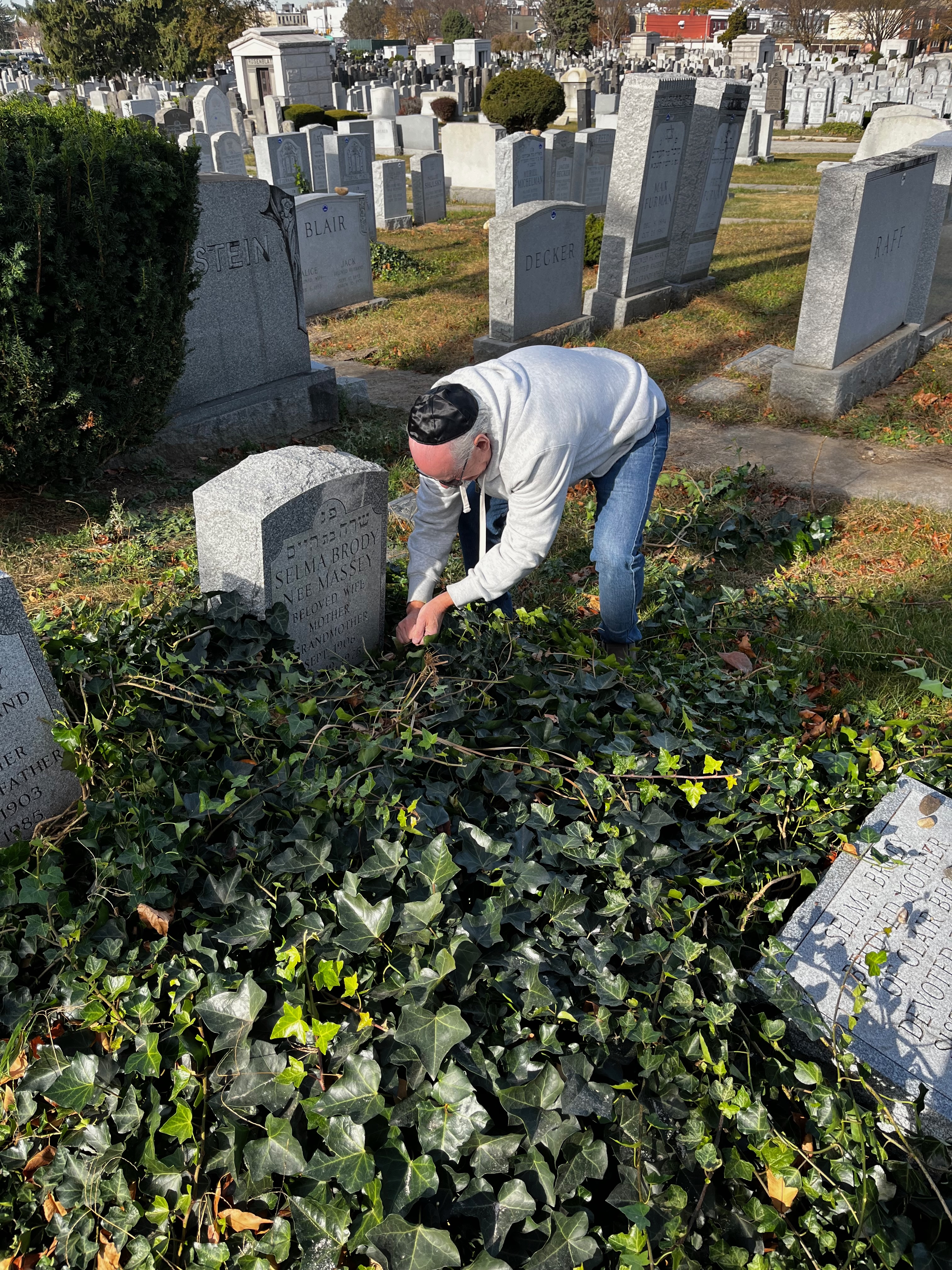
November 15th was a cool, sunny day as we drove the Jackie Robinson Parkway, a narrow, curvy roadway that connects Brooklyn and Queens and passes through a series of huge cemeteries. The trees were not yet entirely bare, the yellow and gold leaves shone in the sun. I had the location of my grandparents’ graves written down and we drove to the appropriate section of the cemetery. I thought I remembered my way to their graves. Gary and I combed the rows and couldn’t find them. I checked and rechecked my notes. Finally, I remembered I had taken a picture the last time I was there and maybe that would help. I searched my phone, those smartphones can be quite helpful and in the photograph I found a couple of landmarks that helped – a majestic tree and two large grave markers in front of my grandparents’ more modest ones with the name Feingold on them. We found the spot and now understood why we hadn’t seen them before – they were entirely blanketed in ivy.

Gary and I peeled away the ivy and exposed all the markers. Aunt Clair’s stone was there, as expected. I looked around and seeing nobody around, I took the baggie with a portion of Aunt Clair’s ashes out of my pocket and spread them over the graves. “May you rest in peace, Auntie.” I said. Gary and I paused and stood quietly for a bit. Then we got back in the car and headed back to Manhattan. Part one of my mission had been accomplished.

The sun was still shining brilliantly as we made our way to Riverside Park. It was also quite breezy. I wasn’t sure how I was going to do this. I carried the canister in a canvas bag. As we walked, a plan revealed itself to me. We passed a garden, now gone to seed until the spring, and I thought this was a perfect spot to provide what perhaps could be fertilizer. I looked around and nobody was paying attention – I knew I wasn’t doing anything wrong, but I also worried it might be disturbing to onlookers. I spread a good deal of the ashes throughout the garden, and nobody seemed to notice. There was still a lot of ash left.

We continued walking through the park and came upon a memorial to the Warsaw Ghetto Uprising. The shrubs surrounding it presented itself as another opportune spot. Though Aunt Clair was not a religious Jew by any means, she was fiercely proud of being Jewish. This would be a meaningful location, as well. Gary reminded me to stand upwind as I poured the ashes over the bushes. I had not been as mindful of that the first time.

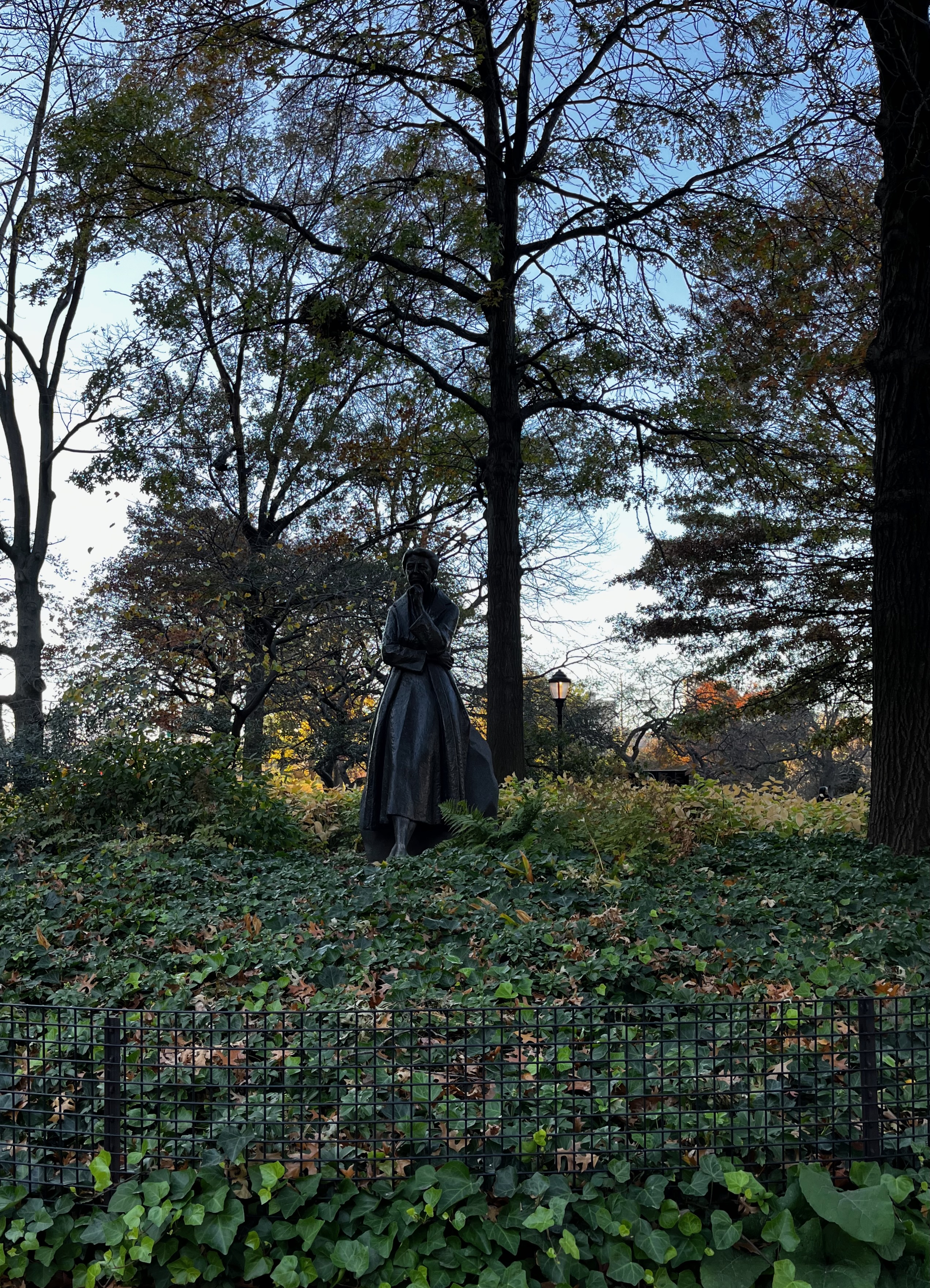
The canister was still not empty, and I knew of one more spot that I wanted to visit. Aunt Clair was an admirer of Eleanor Roosevelt and there is a statue of her at 72nd Street just inside the park. We continued our walk south to find it. I was pleased to see that there were plantings around the memorial. I spread the remaining ashes there.

Throughout our walk, aside from talking about mundane things, Gary and I shared memories of Aunt Clair. I felt good about what we were doing. I was grateful to have Gary to share it with. He knew her well and shared his own unique relationship with her. We had come darn close to fulfilling her wishes and I think we honored her spirit. Part two of our mission was now accomplished. I was glad she was no longer sitting in my closet.

We took a different route through the park back to our apartment, walking along the Hudson River. I felt peaceful. The sun lowered and its rays glistened on the water. The day was fading, and I was satisfied.

*This is where I found the information: https://portal.311.nyc.gov/article/?kanumber=KA-03480#:~:text=New%20York%20City%20Parks%2C%20including,the%20site%20of%20cremated%20remains.

An Unveiling

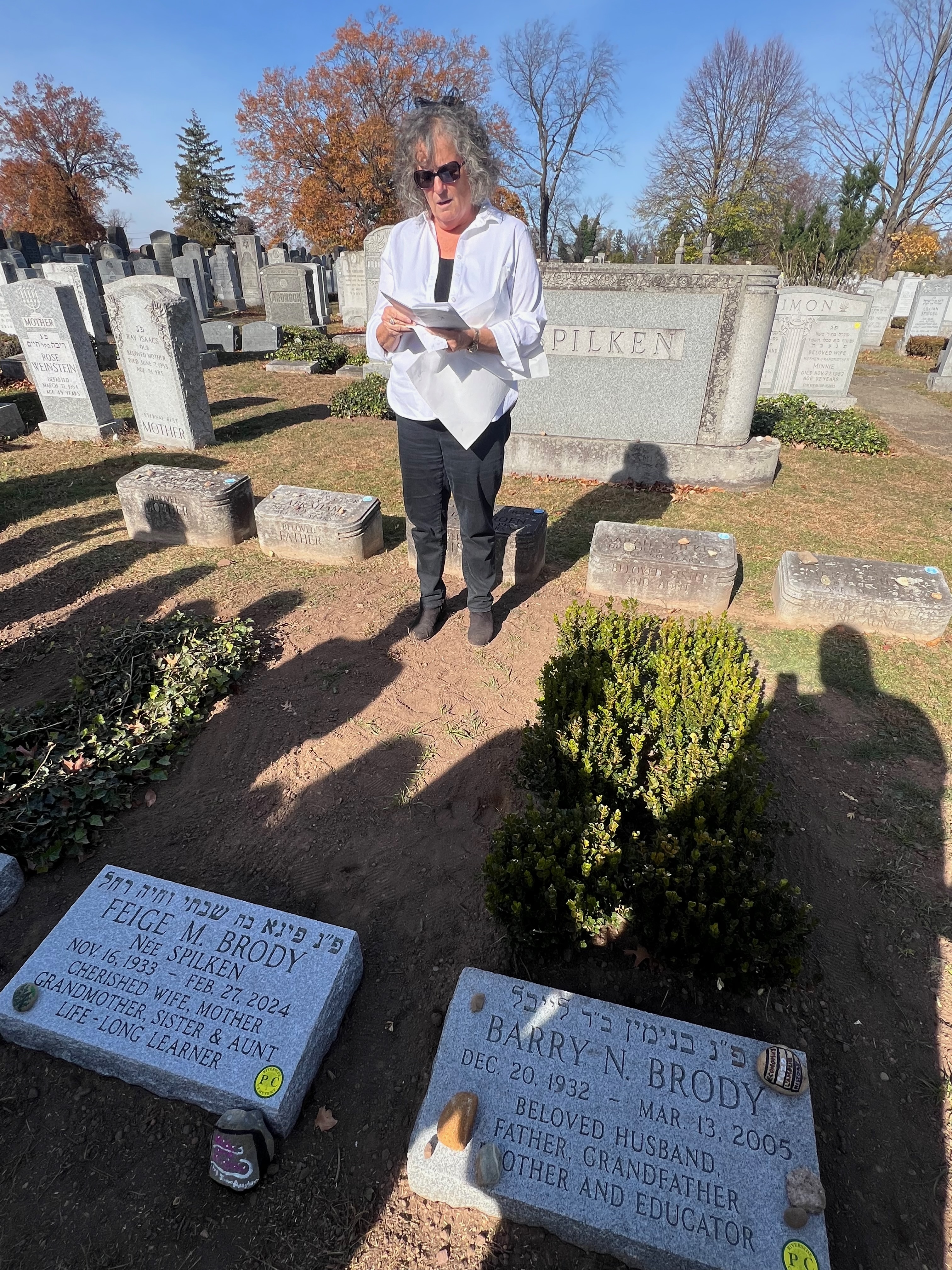
We gathered at Riverside Cemetery in Saddle Brook, New Jersey. In Jewish tradition, a year or so after a person is buried, you have an unveiling – literally the unveiling of a headstone or footstone that is the marker commemorating the individual’s life and death. Though it has been less than a year since my mother passed, my family gathered to observe this ritual for her on Sunday, November 17th, one day after what would have been Mom’s 91st birthday.

Photo by my brother, Mark Brody

19 of us stood around her grave on a brilliantly sunny day, unusually warm for mid-November in the northeast. It was appropriate weather given Mom’s sunny disposition (she was an eternal optimist, though, for better or worse, she shared her fears and complaints with me). She is buried between her mother, my Nana, and her husband, my father. The plot is part of an area that was established by the burial society founded by immigrants from Strickover, Poland where her father was born. Ironically, he is not buried here, he rests in Florida. But, other family members surround Mom, her brother, grandfather, aunts and uncles. There is something comforting to me about them all being together.

We began the ceremony by reading the portion of Ecclesiastes that tells us so eloquently that to everything there is a season – reminding us of the cycle of life. Then we uncovered the stone which reads:

Feige M. Brody

Nee Spilken

November 16, 1933 – February 27,2024

Cherished Wife, Mother, Grandmother, Sister and Aunt

Life-long Learner

Standing beside me were representatives of all those roles – her children, brother, sister-in-law, grandchildren ( a great-grandchild, too), nephew, nieces, and great-nephews.

I read these words: “On behalf of all of us, we consecrate this memorial to Feige Brody as a sign of our eternal love and devotion. May her soul be bound up in the bond of eternal life.”

The cemetery had provided a booklet with selections that could be read, and it offered the following passage which I am transcribing here because I thought it was insightful, comforting and appropriate and might be helpful to others who are grieving a loss:

“We gather here today at the final resting place of our beloved mother, sister, grandmother, aunt, Feige to unveil this grave marker dedicated to her memory and to call to mind our cherished memories of her. When Feige passed away, we assembled here to pay our respects. At that time our grief was deep, and we felt intensely the pain of loss. Now, with the passage of time, the pangs of our initial grief have softened, yet we still feel sorrow in our hearts whenever we remember her.

Jewish tradition teaches us that those memories of Feige, which each of us cherish, can provide us with a measure of comfort. Those memories also serve as a form of immortality that comes to those we love when we remember them, and when we live our lives in emulation of the virtues they taught us by example.

Our presence here today is already an indication that Feige has achieved that immortality that comes through remembrance. Our presence is also a sign of the respect and admiration in which Feige is held by us. We still feel an emptiness in our lives when think of her because she played such an important role in each of our lives as a beloved family member and friend to many. Feige was devoted to us as we were devoted to her, a relationship of love and affection that we recall today.

Throughout the months since Feige passed away, we have each had occasions to remember the impact that she had on our lives.

We are comforted by our memories of the joys she brought to people and by the contribution Feige made to the betterment of our world.

In the biblical book The Song of Songs we learn that “The bonds of love are stronger than death.” Our memories today prove the truth of that teaching.

Even though Feige is no longer present in person, the love that we shared and the way our lives were touched by her continue to be felt. The pain of loss and separation is the price we have to pay for the years of Feige’s love and devotion.

Therefore, it is with sorrow, yet at the same time with a deep sense of gratitude, that we thank God for the years during which we were privileged to have had Feige as part of our family’s life and as a member of our community. We thank God, as well, for the love that bound us together with Feige in life and that inspires our cherished memories. It is with these thoughts in mind that we now pay tribute to Feige by dedicating this grave marker to her.”

That passage provided comfort to me. I am consoled by the notion that we attain a measure of immortality by being remembered – it helps me to reconcile the loss of my mother and father, as well as other people who I have loved in my life and still think of regularly. And, it is meaningful to me to think of how, by carrying forward their values, by emulating their integrity and generosity, I am helping to preserve their legacy. Those thoughts help me to come to peace with my own mortality. Hopefully I will have touched friends and family in a way that merits remembrance.

After reading that passage, we said a concluding Hebrew prayer and Uncle Terry read a touching poem he had written in tribute. Aunt Barbara, as a self-described “out-law” welcomed into the family by Mom, offered her heart-felt perspective on Mom (and Dad’s) generosity and the importance of our family bonds. Terry noted that he had Barbara would, when the time came, rest in this same area of the cemetery, just across from where we stood. I said a silent prayer that that would not be any time soon.

Another Jewish tradition when visiting the grave of a loved one is to place a rock on the marker. This is to signify a visitor’s presence, that the person who has passed has not been forgotten. Several years ago, when we gathered at my father-in-law’s grave, my sister-in-law Doreen painted some rocks with pictures of things that she shared with her Dad or represented him. I thought that was a wonderful gesture. I decided to do that for my parents. I painted one rock to look like a bookshelf with items my dad read regularly: Economics, Puzo (he loved The Godfather and read it multiple times), L’Amour (he loved westerns) and History. I painted another stone with Pride and Prejudice by Jane Austen (my mother’s favorite of her novels, and she read Austen every summer until dementia made that impossible) and a final stone with a blueberry bush (when my parents lived in the Catskills and the grandchildren came to visit, they went blueberry picking and baked muffins). I felt good placing those rocks that embodied precious memories, knowing that they would sit there for a while at least before the elements wear them away.

No Spilken/Brody gathering would be complete without partaking of food. So, we adjourned to the diner that was just outside the cemetery. Though the service was painfully slow, and we had to wait, and the orders got mixed up (no day goes by without some aggravation), we enjoyed each other’s company before going our separate ways and returning to our lives  – some in New Jersey, some in Massachusetts, some in Connecticut and the rest in Albany, New York. Hopefully our next gathering will be a happier occasion, but I am left with a feeling of warmth, believing that Mom and Dad rest easy knowing that our familial bonds are strong and that we are doing our best to live out their values.

Photographs and Memories

Photographs and memories –  a Jim Croce song that was popular in the mid-1970s – could be the soundtrack for this past weekend. The song’s lyrics don’t exactly fit, that song is about a lost love, but the sentiment of being left with photographs of times gone by is right on point.

Once again, I spent hours sorting through family photographs. This time from my mother’s place in Florida. Two years ago, we cleaned out my in-laws’ home to prepare to sell it. I took boxes of photographs to sort out  – I wrote about that experience here.

This past weekend, I received a new set of boxes filled with photos, memorabilia, my mother’s paintings and other decorative items. These items made up her home in Boynton Beach, a home in the process of being sold. A great deal of the work of sorting was already done by my brother and sister-in-law, Mark and Pam, who spent a week going through Mom’s stuff – making multiple trips to Goodwill, wearing out a path to the trash dumpsters across the street, shipping boxes of books and photos, and finally packing their SUV to the brim with the rest to drive north.

Even with all the donations and distribution of many items, we are still left with the question: What do I do with all of the photographs? I find it very difficult to throw them away. I know they can be digitized and, in fact, I have done some of that. But what should we transfer? How should we organize it? If we take the time and effort to convert photos, will anyone look at them? What is the point of photos?

I like to pull out albums from time to time. I go back through a vacation remembering the sights and funny anecdotes, or on the birthday of one of my children, I’ll take out an album from when they were an infant and walk down memory lane.

Walking down memory lane has its pitfalls. In some ways it was easier to do this task with the Bakst family photos – less baggage for me. The pictures I was going through this past weekend ran the gamut from when my mom was a little girl in the 1930s to family weddings through the decades to our more recent trip to Israel.

I find myself looking at the pictures as if they will provide answers. Who was Nana (my maternal grandmother)? She has been gone fifty years. She was such a central figure in my childhood and in my understanding of family. I see pictures of her with Zada, my grandfather, and try to intuit their relationship. It is fruitless. The pictures don’t bring her back. If I linger too long, I just get sad.

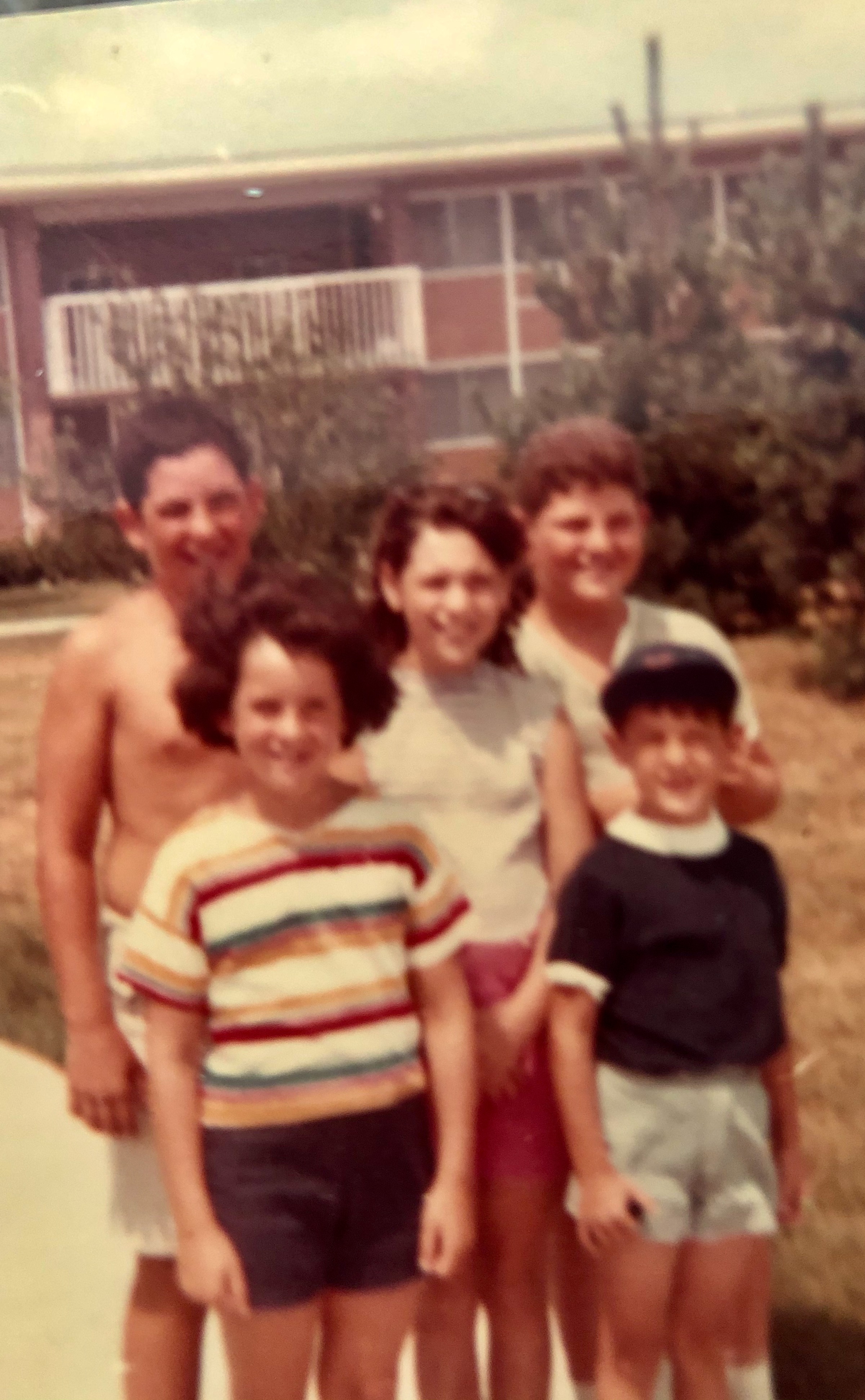
I came across photos of our time in Illinois where we spent three summers while my dad went to school at the university to get his master’s in economics. We were great friends with another family, the Emrichs from Delaware. I see our smiling faces, there were seven of us kids, as we sit in the grass at the side of the community pool that we went to every day – weather permitting. I can hear Sweet Caroline and In the Year 2525 playing over the loudspeakers as we splashed each other. I look at myself and wonder: why did I think I was so fat and ugly – even then, at 7 years old? Now I see a cute little girl. I’ve wasted so much time dwelling in that negative place.

Us standing in front of graduate student housing at the University of Illinois. Our cousins came to visit. I am front left.

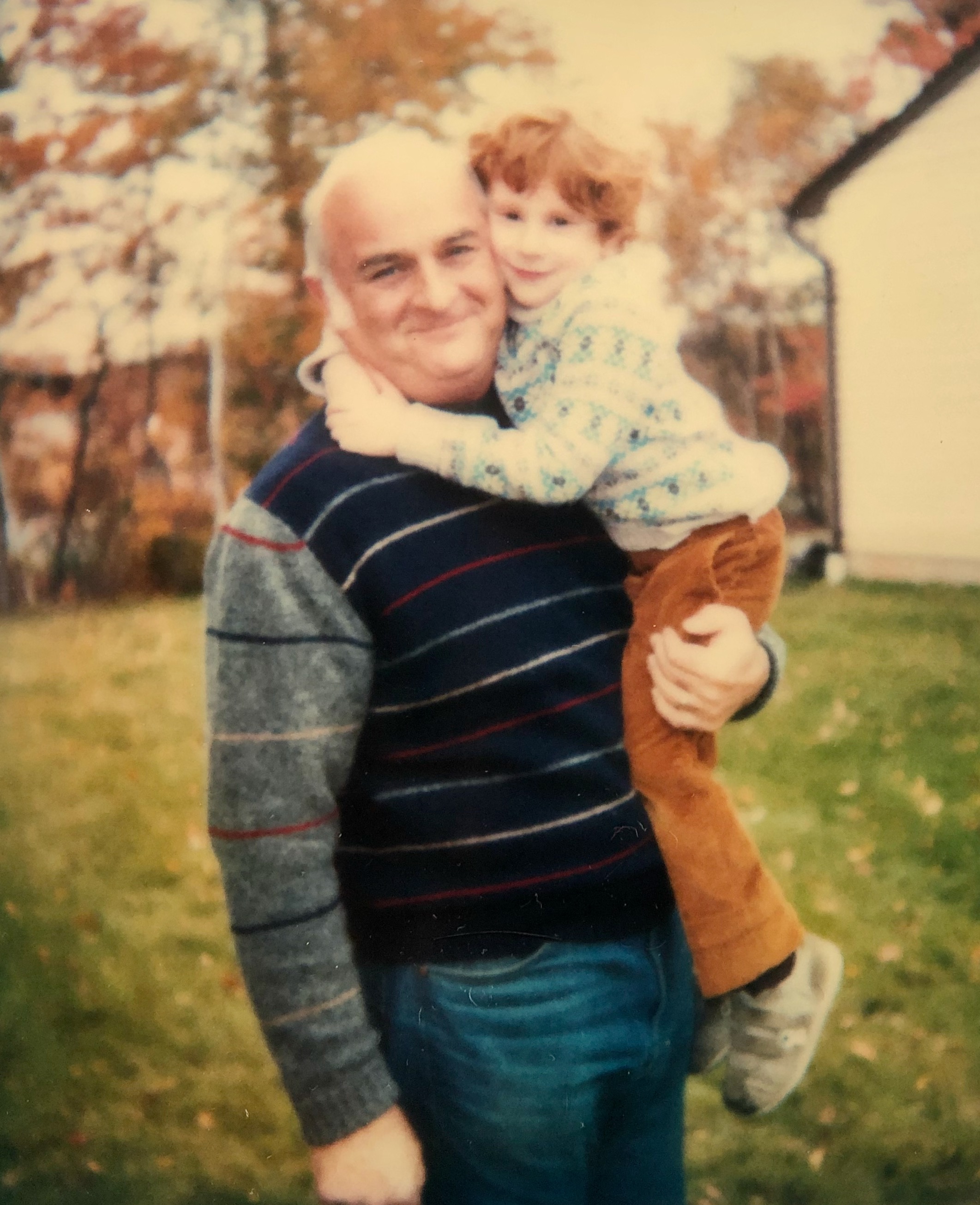
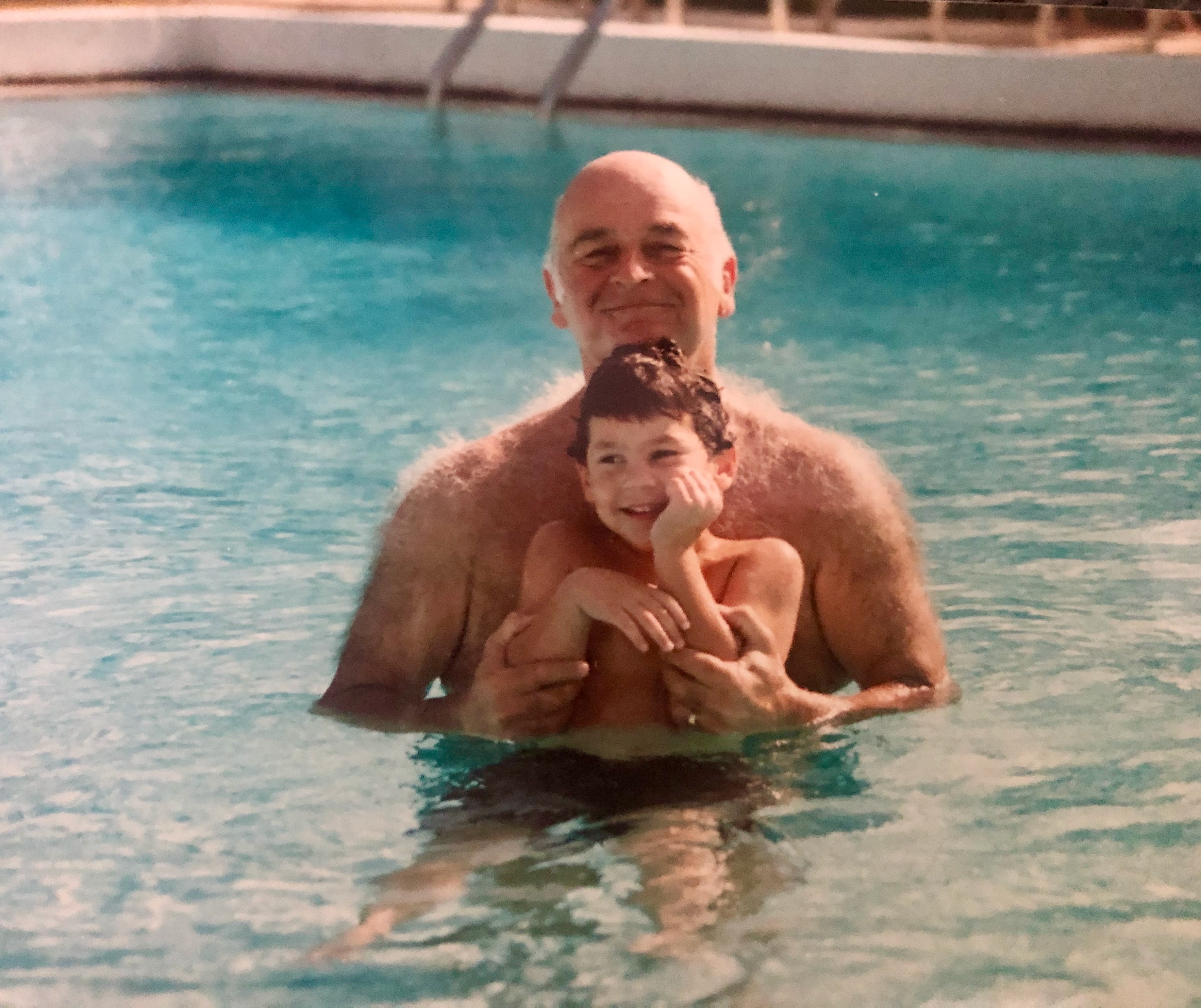
So many people in the pictures are gone. Finding images of my dad holding his grandchildren as newborns, when they are now in their thirties, some even approaching 40!, knowing he has been gone for 16 years brings warm memories and the ache of missing him.

It reminds me how much he reveled in being a grandfather. He had six that he doted on.

The realization that Gary and I are on the precipice of being the oldest generation is mind-blowing. There are so few elders left and those that are still with us face serious health threats. I am grateful that they are here. The shape and nature of our family has changed and continues to evolve. It is the cycle of life, and I cannot control it, try as I might.

I think it is time to put the photos aside and look forward. It is fine to take a trip down memory lane, but I can’t live there. I need to focus on my family as it is today. I want to shed the negative self-image and create a healthier one; one that I can walk in more comfortably for the rest of my life. That is a more fruitful assignment. Good luck to me.