Money can be a great thing. Not a surprising a statement. This notion was reinforced by the tour we took of Olana, home of Frederick Church, one of the significant painters of the Hudson River School. Church was born into a monied family. He may have disappointed his father when he announced his plan to be an artist as a teenager, but he had the luxury of making that choice. He was able to pursue and fulfill his dream. He wasn’t under pressure to make money; he could take his family on an 18-month trip to Europe and the Middle East without worrying about where his next dollar was coming from. He could come back inspired by all he had seen, buying knick-knacks and artwork, and full of ideas for building his own home in Hudson, New York. Olana was born at least in part from that trip and thanks to his vision we can enjoy his property today.
Olana, we learned, didn’t just refer to the building – which was the family home; it referred to the whole property including the acres of land surrounding it. Church viewed the whole thing, the land and his home, as a unified piece of art. Church would buy parcels as they came up for sale in order to preserve the views he found so inspiring. Here are two views from our walk of the property:

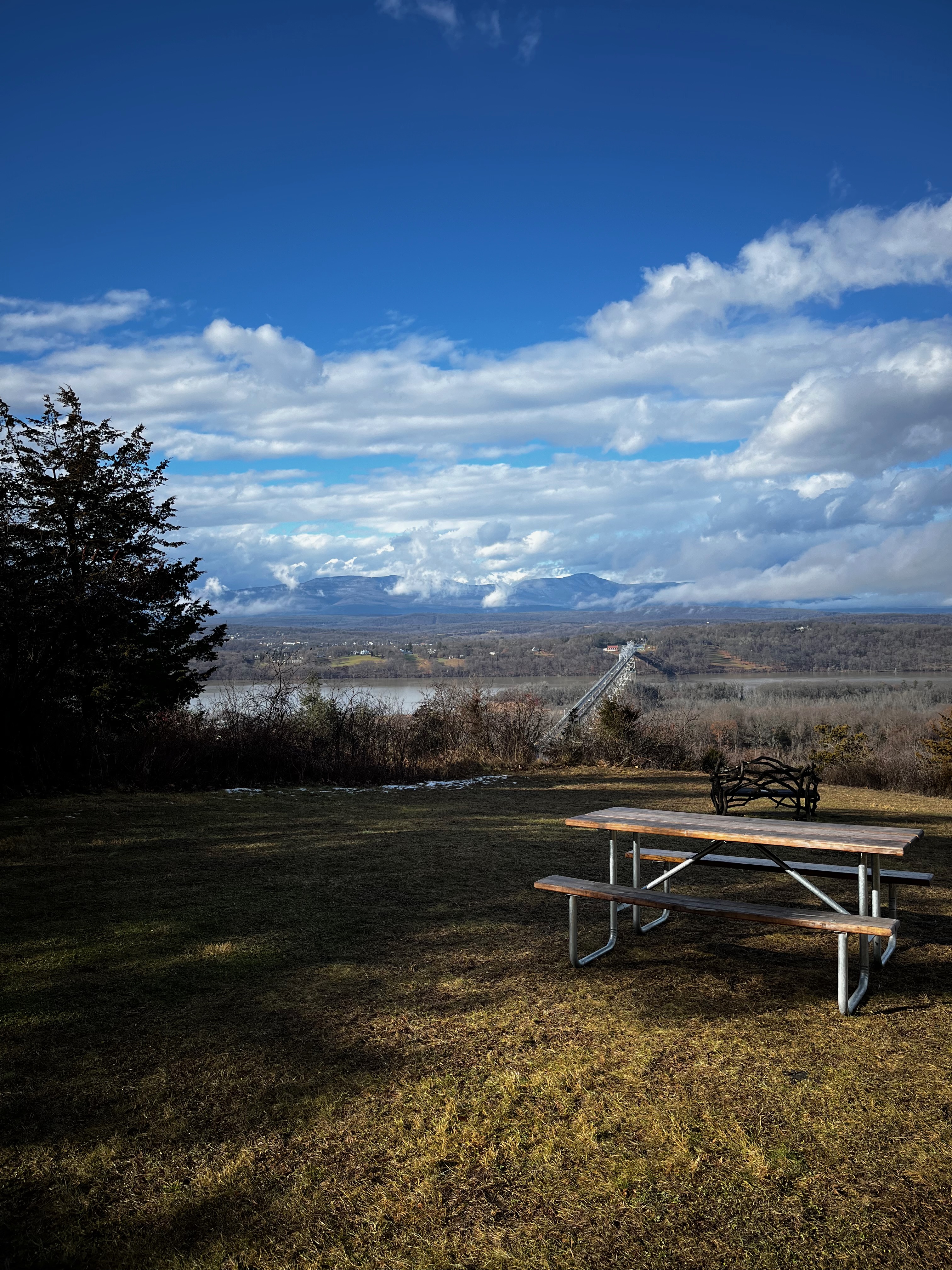
He painted many landscapes of the Catskills and Hudson River from here. When Church arrived in the area, the land had been clear cut of trees. The property was barren. He wanted to restore its natural habitat. It was the fashion of the time to plant exotic trees and plants, bringing home flora from Europe and the Middle East, but Church didn’t adopt that approach. He used native trees, and he purposely left open spaces to frame vistas. He took an artist’s approach to the project, specifying where the plantings should end so he could have a pleasing view of the mountains, rivers and farms that surrounded his property. We are fortunate that Church was a visionary. He left us a magnificent place to explore and appreciate the beauty that Is the Hudson Valley.
While we were walking the land, our guide pointed out a small cement factory that we could see in the distance. A number of years ago there had been a proposal to build another factory that would have included a 40-story smokestack. The idea was moving ahead until some in the area got wind of it and objected. Ultimately, the plan was defeated. The guide believed that if the plan had gone ahead, it would have ruined Olana. I wondered if that was the case. A view would have certainly been diminished but did that mean that Olana could no longer be a place people would want to visit and hike? Would it literally have ruined Olana? Certainly if the emissions from the smokestack were noxious, it would have. The question is moot since the State rejected the proposal.
After the last of the heirs of Church died, the land and house became a New York State Park. I am in favor of preserving wild spaces, especially for public use. But there is a balance. Economic development is also important. People need to make a living. Many towns in the Catskills have struggled and lost population. Our guide explained that Olana itself is not an insignificant employer in the region. It is a dilemma faced all over the country – the tension between development and preservation; these tensions are regularly encountered in the Adirondacks. I don’t reflexively reject development. I want to understand the implications, the costs and benefits, before coming to a conclusion. Unfortunately, it can be hard to come by good information on that. I think many of us have a knee jerk reaction to these issues. We can be predisposed to believe that any encroachment on nature is a negative thing (especially when it involves our own property or neighborhood), or we may automatically support anything that promises more jobs and tax revenue. Neither of those reactions are useful in effective policymaking.
As we finished our walk of the property, the guide asked us what we thought of the house – meaning the design of the structure. All of us on the tour liked it but saw different things in it. Some were reminded of an Italian palazzo; others saw Middle Eastern touches. It is something of a mish-mosh.
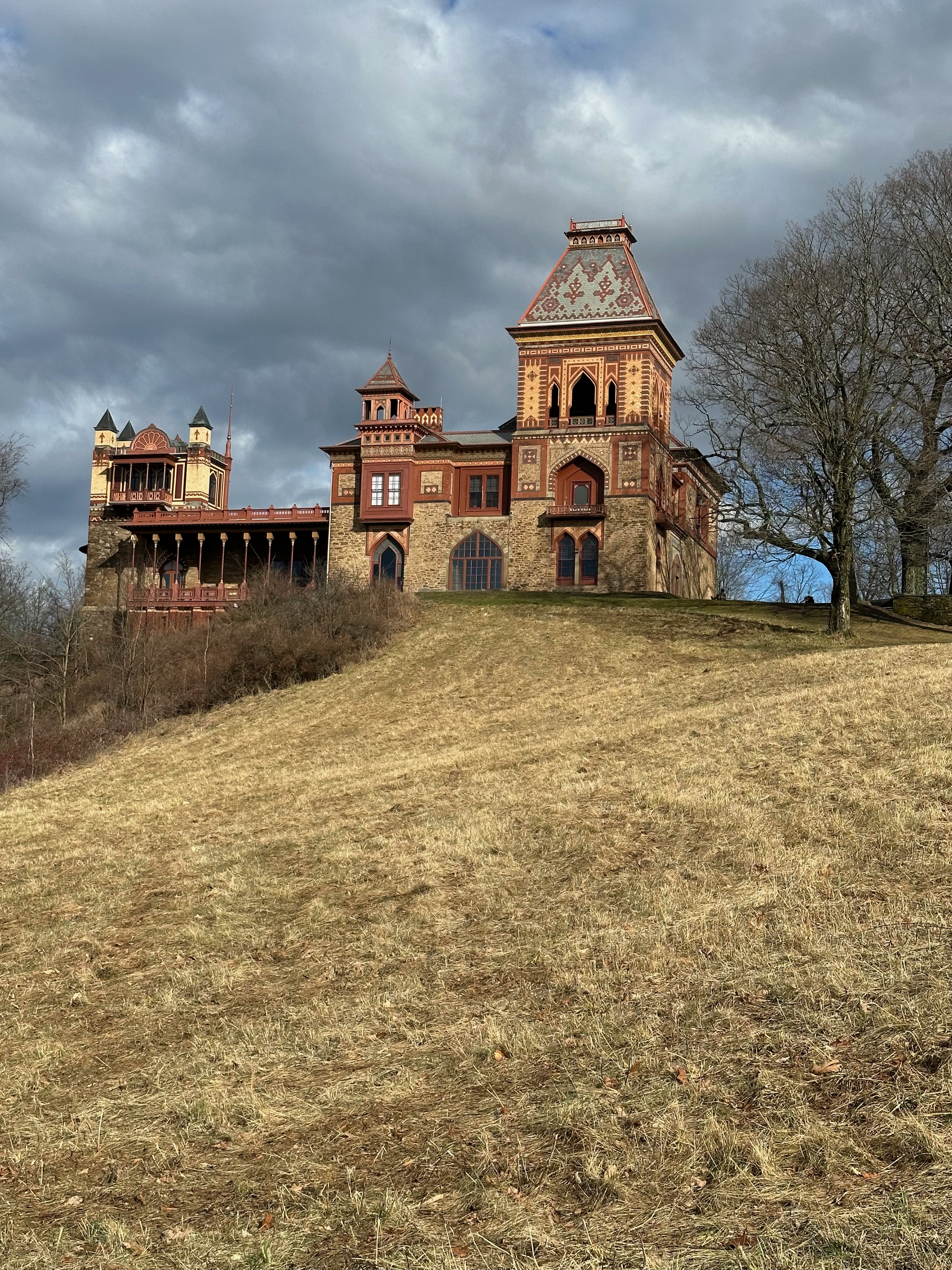
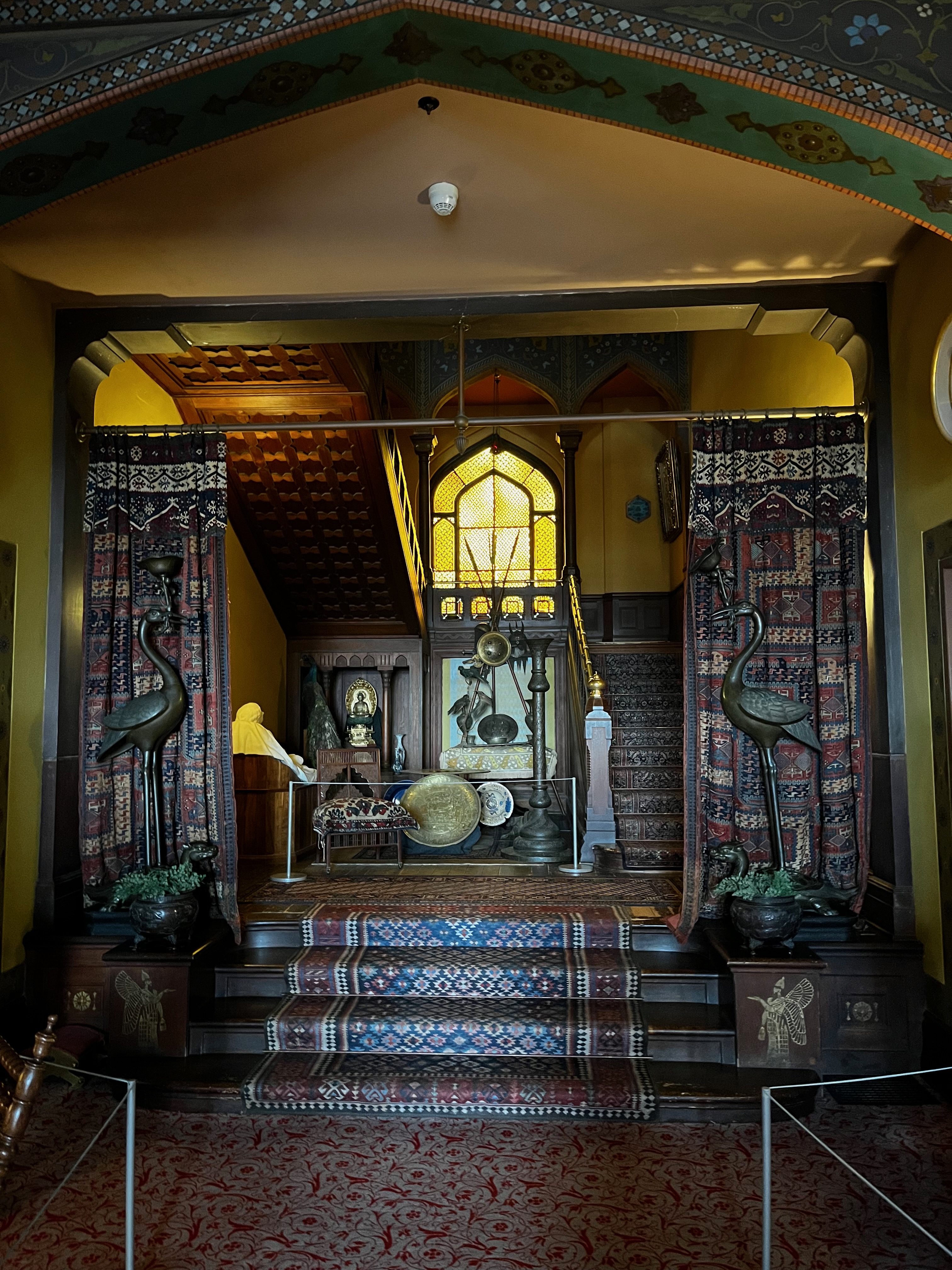
Money does give you options that most of us don’t have. Church found folks who were willing and able to fulfill his vision.
Money can also make people crazy. It can be a trap. Frederick Church enjoyed his largesse. He connected with many of the accomplished people of his day. Prominent people from New York City visited him at Olana. Other folks in that circle were not so fortunate. We learned on the tour of the Wittgenstein family of Vienna, the patriarch was a contemporary of Church, and one of the richest families in the world. Several members of that family committed suicide and the one remaining son gave all the money away. Money does not buy happiness. We can forget that when we are in the midst of challenging times. When we are barely making ends meet, or the ends aren’t meeting, it is understandable to think that having more money would solve all our problems. There is no doubt that money can help with a myriad of issues, but it doesn’t solve loneliness, or bad decision-making. Apparently, Frederick Church did not struggle with those issues and he left us a legacy we can enjoy.
