Culture Clashes Real and Imagined

96001b9c6594229fb7468303c0e26157

I admit it: I was a New York snob (maybe I still am). My worldview was like the famous New Yorker magazine cover (above) that shows New York City looking west from Ninth and Tenth Avenue, where the city is a bustling metropolis and then the rest of the United States is a vast empty space, devoid of anything interesting. It was with that mindset that I moved to Pittsburgh in 1982. I was 23 years old, engaged to Gary.

The late December morning dawned gray and cold. Good weather for driving. We, my parents and Gary, were standing in front of the house in Canarsie, getting ready to say our goodbyes. My Dad pulled me aside. “How bout you go to a justice of the peace when you get out there? You can still have the wedding, as planned, in July. But this way you’d be married.” Dad looked at me with his big blue/gray eyes, questioning, hopeful. I was sorry to disappoint him, but said, “Dad, we aren’t going to do that. There’s no reason to. It will be fine.” I turned to put the last few things in the back seat of my cobalt blue ’72 Toyota Celica.

He didn’t want his baby girl ‘living in sin,’ even if it was only for six months. It was six months too long for him. Fortunately, he didn’t pursue it further. We all hugged, and Gary and I got on our way.

We drove to Pittsburgh with high hopes and some anxiety. Gary had successfully completed his first semester of medical school. Now I was going to join him. I needed to find a job. I had some savings as a cushion, but I was hoping I wouldn’t have to drain it.

Pittsburgh was slowly on the rebound from the collapse of the steel industry. The landscape bore the scars of it. Buildings were soot stained. The Carnegie Library, down the block from our apartment, was gray sandstone heavily streaked with black, but the inscription, Free to the People, was still quite clearly etched over the main doors. Hulking mills, some vacant, some producing steel at reduced capacity, lined the river. The city remained the headquarters for a number of large companies that inhabited gleaming skyscrapers downtown.

Pittsburgh had the feel of the Midwest to me. I didn’t know geographically how it was characterized, but culturally it didn’t feel like an eastern city. The influence of its immigrant history, largely Polish, Germanic and Italian, was imprinted on the stores, restaurants and, most importantly, churches that dominated. Unlike New York City, which certainly had ethnic pockets but the sum of which was a hodge-podge; Pittsburgh felt more homogenous. It felt like there was a dominant culture and it was defined by the Catholic Church. While there was a Jewish community, it was quite small, and it felt small. This took some getting used to. After all, other than Israel, New York City is home to the largest Jewish population in the world.

After five months of pounding the pavement, I was about to register for secretarial work with a temp agency when a solid job opportunity came through. I had nearly exhausted my financial resources when I got a job with the city’s Finance Department.

There were some noticeable differences between the New York City’s Mayor’s Office of Operations, where I worked before I left, and the Finance Department. The first was the air quality. I worked with several men who chain-smoked through the day. Offices and conference rooms didn’t usually include windows and there was nothing I could do to disperse the fog that permeated the air. Somehow there weren’t nearly as many smokers in New York City’s Mayor’s Office.

Another difference: when we went out for a drink after work, I could not keep up with my new colleagues (not that it was a contest)! People would take turns buying rounds. I almost never got a chance to buy (and it wasn’t a strategy to avoid it). My drinks would be lined up on the bar.

Aside from air quality and drinking habits, there were actually more important differences. I worked with very few women, and there was only one at the management level. Many of the employees were only high school graduates. I was an outsider by virtue of my age, gender, education, religion and, of course, as a New Yorker. Sometimes it felt quite lonely, but there were some interesting conversations, too, especially about religion and faith.

Some of the cultural differences were more imagined than real. Gary and I invited one of his classmates, and his fiancé, to dinner at our apartment. Budgets being what they were, we didn’t eat out often and most of our socializing entailed going to each other’s apartments, eating, watching football or basketball and playing games like charades. Alcohol may have been involved.

As I recall, Ron and Ann were the first people we invited over. They were both Pittsburgh born and raised. I planned a menu after considering various possibilities. I worried that Ron and Ann would think the food I prepared was weird.

Gary and I kept kosher in our apartment (we didn’t when we ate out), so we didn’t mix meat and dairy. I was worried if I prepared a meat dish they might ask for parmesan cheese. I was worried if I made a vegetarian dish they wouldn’t be satisfied. I thought they wouldn’t know what it meant to keep kosher. I settled on making a ratatouille with ground beef (no cheese) and then worried that they wouldn’t know what it was.

Turned out Ron and Ann were more worldly than Gary and I, which in retrospect wasn’t saying much. Ron had gone to Dartmouth as an undergraduate and, if I remember correctly, majored in art history! Ann had been an English major and worked as an editor. I was pleasantly surprised to find that many of Gary’s classmates weren’t science majors as undergrads. Turned out Ron and Ann were quite comfortable eating my ratatouille. We had a great time, it was the first of many meals and laughs shared.

I realized I shouldn’t make assumptions about people based on where they came from, or any other single characteristic, for that matter. Of course I should have known better. When I stop and think about it, my Zada, who appeared on the surface to be a common laborer, was a self-taught Shakespearean scholar with the heart of a poet. Why would I buy into the stereotype implied by that New Yorker cover? But I did, and to this day, I need to check myself.
Starting Over

I stood at the podium looking out over a banquet hall filled with my colleagues. Since I had no prepared remarks, I was trying to come up with something. What did I want to say?

The executive director of the New York State School Boards Association (NYSSBA), for whom I had worked for the last 9 years, had just introduced me by offering some left-handed compliments, noting my penchant for speaking my mind. Happily for him, the reason we were in the banquet hall was that I was retiring.

The party wasn’t only for me. A colleague, who had worked for NYSSBA for over twenty years, was also being honored. He had already been introduced and made heartfelt remarks about how much he enjoyed his career. He was genuinely moved and spoke haltingly, emotionally about his appreciation for the organization.

When my turn came to take the podium, I wasn’t at all sure what I felt. In the weeks leading up to the luncheon I couldn’t get myself to focus on writing remarks. After all, most of the reason that I was retiring at age 55 was that I was unhappy in my work. I was tired of fighting the good fight and getting nowhere. I couldn’t very well stand up and say that, despite my penchant for speaking my mind. I made innocuous remarks, thanking the people who I did enjoy working with and I wished everyone well. It was time for me to turn the page and start a new phase of my life.

It is unlikely that anyone reaches 55 years of age without starting over a few times. Whether the impetus is retirement, a relationship ending, or moving to a new city or changing jobs, it is almost impossible to avoid starting over in the course of a life. Some might actually seek out new starts, finding the prospect exciting and challenging. I am not one of those people. I like the idea of change in theory, but the reality is hard.

When district lines were redrawn when I was a child in Brooklyn and I had to attend a different junior high school than my elementary school classmates, I struggled. When my then fiancé, now husband, was accepted to medical school in Pittsburgh and I uprooted from New York City to join him, I had a tough time adjusting. When budget cuts closed the Legislative Commission on Expenditure Review, where I worked and enjoyed my job, I was angry and resented having to find a new job.

While those new starts were thrust upon me, the decision to retire as soon as I was eligible was a choice I made. After much ruminating, and discussion with Gary (husband, see above), I decided to retire, collect my minimal pension, and pursue writing. Perhaps that sounds simple. It wasn’t.

The decision was fraught on many levels. For one thing, I worried about how my retiring from paid employment would affect my marriage. Gary and I have spent a lot of time negotiating the balance of our relationship – balance in terms of finances, child care and household responsibilities, and attention to each other. Other than the first 8 years of our 33 year marriage (and counting), Gary has been the major breadwinner.

I supported Gary through medical school and continued to work when we started our family, but once he was in medical practice, he earned far more than I did. Gary never held that over my head, he wasn’t one of those husbands who begrudged me a new pair of shoes. He didn’t review the credit card statements. But, that isn’t the point. The point is that Gary works very hard, long, stressful hours. I think he felt a sense of relief, of shared burden, when I was working (for pay, that is).

Having grown up in the late ‘60s and early ‘70s, I bought the idea that women could have it all – family, marriage and career – hook, line and sinker. I wanted a career, I believed I should have a career. I felt like a failure when I finally admitted to myself that I could not balance it all. I thought it would get easier when the kids got to be school-age, but it didn’t. The running refrain in my head at the time was that I was doing a shitty job wherever I was – at home or at work.

Although I had a lot invested in my identity as a career woman, the reality was that I was working for the New York State Department of Taxation and Finance in a job that made me feel like I was living in a Kafka novel. It was not the vision I had for myself when I started the master’s program in public administration and policy at Columbia University. I thought I would help people by pursuing a career in public service, hopefully in education policy. Somehow I found myself in a job that was as far from helping people as one could get. I had to do some serious mental gymnastics to connect what I was doing to the public good.

When it became financially feasible for me to stop working and stay home with the kids, I did. I thought long and hard before doing it. I still held on to the idea that I should be doing something productive to help people and get paid for it. I considered looking for a new (more satisfying) job, but the truth was, with the demands of Gary’s career and two young children, I felt like working full time might lead me to a nervous breakdown. I was already well on my way to one. So, I stopped. I spent the next 11 years mostly staying home.

I told myself when I stopped work that I would write. Now that I was home, I thought I would try writing a fictionalized version of my childhood. I always wanted to write – I was always composing sentences in my head, describing the scenery or people I observed. At various times in my life, I wrote in a journal but I never moved beyond that. I thought I was finally ready to do it. I wasn’t. If I shared my writing I would subject myself to judgment that was too close to the bone, too close to judging my worth as a person. I couldn’t expose myself in that way, even under the guise of writing fiction.

Instead I did a bunch of other things on a freelance basis. I became an impartial hearing officer who heard disputes between parents and school districts about services for students with disabilities. I did that sporadically for about five years, until they changed the law and required hearing officers to be lawyers. I could have continued, they grandfathered the current pool in, but it didn’t seem right to me. If the belief was that a law degree was necessary, and I could see the wisdom of that, then I decided I shouldn’t continue.

I became a facilitator for the Anti-Defamation League’s World of Difference Program, a multicultural, diversity education program, and I did that on a freelance basis.

I also got involved in my kids’ school. I volunteered in their classrooms and in the library. I went to PTA meetings. After about two years of doing that I ran for the school board and was elected. I served for nine years.

When our son was in his junior year of high school and our daughter was a freshman in college, I thought it was time to go back to work full time. The pressure of two college tuitions, and my desire to get back to a career, led me to start to look for work. That turned out to be complicated. It seems that the various freelance positions I held, and serving on the school board, looked like a hole in my resume.

Finally, based on my school board service and the support of someone in the organization, I found a job with the New York State School Boards Association. I stayed for nine years. During that time, in my opinion, education reform was moving in the wrong direction. Too much emphasis on tests, misuse of the tests to evaluate teachers, charter school expansion that drained resources from public schools, Race to the Top….I could go on and on. I tried to advocate within my organization to take a stand against these policies, but I rarely made progress. After 18 years immersed in public education, and reaching age 55, I decided I had enough.

At the same time, I started to think again about writing. I had never stopped thinking about it actually. Most of my days at work were spent writing, but it wasn’t the type of writing I wanted to do. I thought maybe I was finally ready.

Lucky for me, my children knew I needed a nudge. As a retirement gift, they signed me up for a writing workshop at the Capital Region Arts Center. It was three hours each night over the course of four consecutive evenings. I was both terrified and excited.

The class started on a lovely summer evening in mid July. I was nervous about finding the Art Center and parking in Troy, so I left myself a lot of time. I am chronically early and this was no exception. The classroom was still locked, so I wandered around the Center and looked at the art exhibits. I found the vending machines. I tried to distract myself.

I went back to the classroom. I felt hopeful, but unsure of what to expect. The door was unlocked and there were a few people in the room. It turned out the workshop was led by a poet. I hadn’t written a poem in…I couldn’t remember when – probably in junior high school when we were forced to. The workshop was described as ‘generative,’ which meant that participants were able to work on whatever type of writing they wished. So, poetry wasn’t required. Phew!

There were only five other people in the class, all women, several of them looked to be about my age, the others definitely younger. The poet-leader was a young man. After brief introductions, Victorio read a poem to us, which was in the form of a letter to oneself. After he read it, he asked us to take 20 minutes and write something to ourselves. The six of us spread out in the room. I took a spot on the windowsill, looking out on the Hudson River.

I did not have difficulty finding words. I wouldn’t call it a poem, it was prose, but it wasn’t a narrative either. I wrote freely. I surprised myself.

After 20 minutes, we came back together. Victorio didn’t ask for a volunteer to read first. He simply called on me. My jaw dropped; the moment of truth. I know he saw the fear in my eyes, but he didn’t flinch and he didn’t let me off the hook. I stopped thinking, looked down and read the words I had on the page. I didn’t look up until I finished.

I honestly don’t remember the substance of the comments. What I remember is that it was okay. I survived. There was criticism, all of the constructive variety. (In that I was fortunate – none of the women turned out to be jerks, and Victorio set a great example for us.) There was encouragement. And, most important, I didn’t die of exposure or embarrassment!

Driving home that night, I was almost giddy. It felt like a burden had been lifted. Ahhh, liberation…..I could finally try to do what I had always wanted to do. In that moment I certainly didn’t know if I would ever be published (and still don’t), but it didn’t matter. I didn’t know where the process would bring me, but I knew something had changed inside. I had begun a new path.

Maybe it wasn’t really starting over at all. Maybe it was a coming home of sorts, coming home to myself.

Tornado!

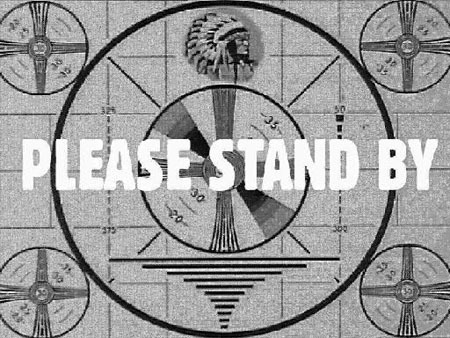
testpattern
This might come up on the TV screen, interrupting programming, when there was a tornado warning. The image still makes me uneasy.

I was probably 45 years old before I stopped getting nauseous when there was a tornado watch or warning (I was well acquainted with the difference between the two – and either one caused the same reaction).

Before reaching 45, though, the atmospheric conditions present when tornadoes were possible seemed to inhabit my body. My insides were as unsettled as the air outside. The ominous clouds scuttling across the sky mirrored the feeling in my stomach.

My fear of tornadoes began in Illinois in 1968. Growing up in Canarsie (Brooklyn), I had not experienced tornado watches or warnings. If they happened, I wasn’t aware of it. My awareness of twisters was informed mostly by watching The Wizard of Oz and as long as it remained on the TV screen, I could handle it.

When we got to Illinois, where my Dad attended graduate school for three successive summers, I learned about them first hand. It seemed like there were tornado watches almost everyday. I spent a lot of time studying the sky and feeling queasy. My brothers had quite a different reaction.

One particular afternoon things got serious. Fat raindrops started to fall. First there were gusty winds and then it got very still. The sky had a yellowish-greenish tint. We had been playing outside the graduate student housing where we lived when adults, including my Mom, emerged to gather us up and shepherd us into a ground level apartment. Lawn furniture and toys were pulled inside as well.

I immediately went where I was told to go and sat huddled in a corner, away from the windows. Snacks were offered as a distraction. The idea of eating a potato chip turned my stomach. I declined the offer.

The radio was broadcasting emergency instructions repeatedly. The static-y voice kept telling us to move to an interior room and under a heavy piece of furniture. I wanted to find a desk to sit under, but there were a lot of us in the apartment so I just stayed put in my corner. My Mom sat next to me, trying to comfort me, until she realized that my brothers were nowhere to be found. Apparently they thought it would be exciting to actually see the tornado. They were 10 and 12 years old (I was 7) and they had either never come inside or they snuck out. My mother found them running up the hill behind the building trying to spot the funnel cloud. Hearing the frantic tone in her voice must have registered with them because they did come back. I think the offer of snacks may have also influenced their decision. Most of the kids’ appetites were undisturbed. Meanwhile, I concentrated on not throwing up.

Eventually the storm passed without doing damage to the immediate area. I don’t think the funnel cloud touched down near us. The fact that nothing happened, though, didn’t lessen my anxiety about the possibilities. Throughout our entire time in Illinois, I dreaded the interruption of a television show with a weather bulletin. I’d listen carefully to the locations – for a 7 year old, I was very aware of the geography around me and knew the names of the nearby towns and how close the storms were.

Many years later (around 1985 while Gary was in medical school at the University of Pittsburgh) we went on a camping trip with friends. Yes, you read that right. Those of you who know Gary well, know that camping is not his cup of tea and this trip confirmed it for him. We were coming back to Pittsburgh from our adventure along the Cheat River in West Virginia, where Gary imagined hearing lions and tigers and bears outside our pup tent. While I did not share his anxiety while we were in the woods, I had my share of worry on the trip back. I was sitting in the backseat of the car, looking at the sky and feeling uneasy. I had that familiar feeling in my stomach – the one that said “Tornado!.”

Since we had made it to the interstate highway, nearing civilization, someone flipped on the car radio. My instincts were confirmed moments later when an emergency weather bulletin was broadcast. There was a tornado warning in the area. Not knowing enough about the surrounding geography, I didn’t know how close it was to us. The others in the car barely paused in their chatter. I sat silent, my head on a swivel, scanning the sky in every direction, plotting what to do if I saw a funnel cloud, willing us to get back to our apartment in Pittsburgh safely.

Fortunately, other than spotting some ominous clouds in the distance, we didn’t encounter any difficulties. We arrived back to our sturdy brick apartment building and the roiling in my stomach subsided. Another bullet dodged.

Although we have lived in upstate New York for the last 30 years, with climate change, we have experienced tornado watches, warnings and actual twisters touching down in the area with increasing frequency. Sometime after our children were grown, I can’t pinpoint a date or event, I realized that I didn’t experience the queasy, unsettled feeling anymore. I’m not sure if it was a physical change – my body stopped functioning as a barometer – or if it was a psychic change – or both. Either way, I let go of the fear. I resigned myself to nature’s uncertainty and my inability to control it, and it happened while I wasn’t looking. While I won’t be doing what my brothers did any time soon, nor will I become a storm chaser, I have come to peace – at least with tornados.