Stories I Tell Myself

Linda Brody Bakst on Brooklyn, growing up, identity and more

  • The edition I read

    Apropos of Halloween, our family book club recently read and discussed Frankenstein by Mary Shelley. I had never read it before. I have seen the movie versions, the iconic one with Boris Karloff from 1931 and Mel Brooks’ version. For the record, I recommend Young Frankenstein.

    Reading the book, I was surprised by how relevant the story is even though Shelley wrote it in 1818 (when she was 18 years old!). I was anticipating a difficult read. I expected the language to be dense and unfamiliar. I was pleasantly surprised to find it accessible. In parts it was quite beautiful and expressive. At other times I found it overwrought, though I suspect the author may have intended it to be. It is quite a melodramatic tale. The members of our book club differed in their judgment of the writing; some ended up skimming because they found the focus on details off-putting, while others reveled in the lush descriptions. I fell somewhere in the middle. I appreciated her ability to convey depth of emotion and paint a picture of the ‘creature’s’ experience as he entered the world, but sometimes I found it overdone and was ready to move on.

    Apart from the writing itself, the story led to spirited discussion. It is so rich with themes that transcend time: the nature of man, the balance of progress (scientific discovery) and ethical obligation, the danger of unbridled passion/ambition. It was nearly impossible to contain our conversation to the scheduled one hour (we meet on Zoom). Interesting takes on the story were offered: that it was really a parable of mental illness (perhaps the ‘monster’ wasn’t real at all). Another perspective suggested that it was reflecting on the fears of that age that God had turned his back on man the way Dr. Frankenstein abandoned his creature.

    We talked about the role of appearances. The creature’s appearance engendered so much disgust, fear and violence that he became the monster that the people feared. Had the public responded differently, he might never have become destructive.

    In terms of the risks of progress, we agreed that the book offers a cautionary tale. We talked a bit about whether Mark Zuckerberg was a ‘Dr. Frankenstein.’ While there are differences in that Zuckerberg has not abandoned his creation (far from it), there are relevant parallels.  Progress, without due consideration of the ethics and consequences, is dangerous. Today universities have structures in place to assess the ethical impact of an experiment before it is funded. Private tech companies need to put more emphasis on ethics and consequences before steaming ahead with new applications. How to make that happen remains an open question.

    In the story Victor Frankenstein, during his studies at university, becomes obsessed with breathing life into something dead. His research convinces him that he can achieve this, and he becomes single-minded in his pursuit of that goal. He sleeps little, isolates himself and slaves away in his workshop until he succeeds. Most of the story focuses on what happens after that ‘eureka’ moment, but I was interested in exploring that aspect of the narrative.

    I wonder whether that level of intensity is necessary for great breakthroughs, for great scientific achievements. My daughter, who is a neuroscientist and has worked in several labs at different universities, offered that she thought meaningful scientific progress can be made by people who have lives outside the lab. She has observed researchers who have families and hobbies and still manage to produce important work. I was heartened to hear that because I am predisposed to think that it requires if not obsession, close to it.

    When I raised that question at book club my cousin responded that it is a myth that big discoveries are achieved by single-minded, hardworking geniuses. He pointed out that those accomplishments are the result of collaboration or appropriation of the work of others; though individuals may claim the credit and history may celebrate that person, that isn’t the reality. We didn’t get to examine his point in depth because time had run short. I want to investigate this idea further here.

    I have not read the histories of Edison, Ford and others who are credited with huge advances, but it makes sense to me that their work was built on ideas and contributions of others. I think it does us a disservice not to acknowledge that. The mythology of one man, and most often it is a man, forging the path or having the ‘aha’ moment, creates unreasonable expectations and fails to give due credit to those who provide the conditions that permit the discovery. Putting aside the cases where the idea may have been outright stolen or appropriated, wherever you look, in whatever field of endeavor, geniuses need support. These days, even in an individual sport like tennis, the winner of the tournament thanks his/her ‘team.’ Roger Federer, a genius on the tennis court, acknowledges his coach, his physio (I didn’t know what that was until recently), and his family because he recognizes that even if he was alone on the court, others contributed to his victory.

    I took my cousin’s important point to heart; it still didn’t exactly answer the question I was posing. Both things can be true. Great accomplishments can require collaboration (acknowledged or not) and an obsessive devotion to the effort.  I was pleased to hear Leah’s observation; I still wonder. Though I can’t say I have seen geniuses work up close, I have worked with folks who are at the very top of their field, very respected, sought-after practitioners of medicine, law and public policy. I think it is fair to say they have bordered on obsessive. They certainly put in many, many hours of work and mental energy. They may have families and even a hobby, but it isn’t in balance. I can’t think of anyone in that esteemed position who didn’t prioritize their work (family might share equal billing, but nothing else comes close). I made a choice early in my career to seek out balance, I wasn’t that ambitious. Or maybe I was, but my ambition was to have well-adjusted children. I certainly put time and energy into them. I have come to no conclusion on this. Can a person live a balanced life and still achieve greatness? Of course, it begs the issue of defining greatness, but I’m thinking about major contributions to their field, whatever it might be.

    The issue of scientific breakthroughs without due consideration of consequences and whether those engaged in that work need to be obsessed are likely connected. The obsession or unbridled ambition may lead to the inability to consider impacts beyond their own achievement. We need mechanisms in place that balance the drive for innovation with concern for the greater good. The concept of a greater good has proven difficult for folks to agree upon.

    In sum, if you have not read Frankenstein, I recommend it – especially for a book club.

    Note to my fellow book clubbers: If I have not done justice to the ideas shared, please add your comments. Or, if I have done justice, but you’d like to chime in, please do. If your thoughts rise to the level of a full essay, I’m happy to post it. I extend that invitation to other readers, as well.

  • How many lives have you lived?

    I was listening to a podcast the other day, as I often do when I am on a long drive in the car. Marc Maron, comedian/actor and host of WTF, during an interview, said, “That was another life, I’ve had many.” He was referring to a period of time early in his career when he was performing as a stand-up comic traveling a circuit of gigs in New England.

    I thought about my life. I have had only one. I understand Maron was speaking metamorphically, but it doesn’t feel to me like I’ve had different lives. It is all of a piece. I imagine that for someone who has had very different careers or lived in different parts of the country or world, or perhaps has been divorced, it might well feel like different lives. Nothing that dramatic has happened to divide mine into definable segments.

    Other than living in Pittsburgh for 3 ½ years, I have been a resident of New York my whole life – less than half of it in Brooklyn, the rest in the Capital Region. I have been with the same partner for over 40 years. I have held a variety of jobs, but all were in some aspect of public policy. These are threads that bind the tapestry of my life.

    In a way, I feel jealous of those who have had more variety. Sometimes I’m restless; I want a change of scenery. I remember being on vacation in San Francisco, enjoying the natural beauty and cultural offerings, and wondering ‘why do I live in Albany?’ I’m fully aware of the downsides of the city by the bay and the upsides of New York’s capital city but I felt a sense of longing, for a different climate, new surroundings, something new. I’ve never seriously considered moving, not with all that would entail: Gary starting a new practice, uprooting the kids, being so far from our families who are almost entirely located in New York and New Jersey.

    There’s a group on Facebook that I am part of called ‘View from My Window.’ Folks from all around the world post pictures from a window in their home. Many have fabulous views of mountains or oceans, but there are mundane views, too: An ordinary tree in the front yard of a suburban home or an up-close look at an apartment building exterior with fire escapes and windows. I see those pictures and imagine if it was my view. I have no complaints about the one I look at most often – the window above my kitchen sink that looks out at our backyard. The same view I have looked at for almost 30 years. As lovely as it is, I crave something different.

    The view from my kitchen window this rainy, autumn morning

    I’m sure others, who have moved around a lot, would envy my stability.

    For some, like Maron, phases of their lives may be demarcated by periods of sobriety and addiction. That, too, is foreign to me. I can imagine that, perhaps more than any of the other changes mentioned above, living life sober would be different on a very deep level as compared to being in the throes of addiction. Perhaps one almost feels like a different person in recovery, before and after, on the wagon or off – I’m just speculating. I am happy not to have gone down that road.

    Living in different places and having different careers holds appeal.  It seems so much more colorful. One of my colleagues in a writing group has lived in far-flung places in our world, not to mention different regions of our country. It sounds so much more exciting than my path.

    If I am honest with myself, there is a reason my life hasn’t been that exotic. When I was younger, I was afraid of change. In college when some considered studying abroad, the idea intrigued me, but I was too insecure to do more than read through the explanatory pamphlet. I told myself I couldn’t afford it, but I don’t think that was actually the case. Looking back at it, I don’t regret it, I wasn’t ready. In some ways I wish I could go back to college now; I would be so much less tentative, more willing to take risks. Someone said youth is wasted on the young. I see the truth in that now.

    The question is what will the future hold? Will Gary and I make a ‘new life’ if he ever retires? I suspect, whatever we do, it will still be of a piece with what has gone before. That’s just who we are, even with my pangs of restlessness.

    Do you feel like Marc Maron does, that you have lived multiple lives? Or is your experience more like mine. I’m curious to hear if you are willing to share.

  • A flash of insight can come at the most unexpected time. I was driving to my poetry group on Saturday and I was thinking about why I was so agitated that morning.  Why was I feeling so ‘judgy’ of others? I suddenly understood something that maybe should have been obvious, but somehow wasn’t.

                Here is what I understood: If I don’t feel the emotion that the person is sharing, I am prone to judging them. If I can feel, really feel, the emotion, I am less judgmental.

                I think of myself as an empathic person. When someone shares their troubles with me, I usually feel their pain or frustration. Sometimes too much. However, there are instances where I don’t, especially these days. I was attributing that to being spread too thin and my general sense of frustration with the state of the world. It occurs to me, though, that isn’t the complete story. I have been ‘judgy’ before the pandemic.

                When a friend or relative is sharing something I can relate to, perhaps have experienced myself, I am able to recall the emotion readily. The disappointment or sadness or anger comes flooding in. When that person shares an experience or feeling foreign to me, that’s when I am predisposed to judgement. If I can’t connect their reaction to my own, I am left to intellectualize – then judgement can follow.

                I may not express it– I usually know enough to keep those thoughts to myself. But I stew in it. I’ve been stewing a lot lately. I won’t say to the person that I think they are wrong or over-reacting, but it is what I am thinking. My powers of empathy are more limited than I care to admit. Sitting in judgment doesn’t feel good, though. I don’t want to be a harsh appraiser, especially of those I love. Plus, I think it is counterproductive. Even if I don’t outwardly express it, it creates distance, or it may leak out in other destructive ways.

                Thinking about this as I was driving, the ‘aha’ moment hit me: maybe if I can’t feel what the person feels, there is another path to empathy. What if I imagine what it feels like to be that person? Not through the prism of my experience, but through theirs. So, if a person is expressing their terror of getting Covid, something I don’t feel to that degree, rather than thinking about whether they are justified and thereby trying to convince them they shouldn’t be so afraid, focus on what it feels like to be terrified. Being terrified is an awful state of mind – I can empathize with that irrespective of the cause. During the conversation, I may share some information that I hope allays their fear, but it would be delivered from a place of compassion, rather than judgment.

                Maybe the divisions among us would be helped if we tried to understand the emotion first, acknowledge and connect to it. Maybe if we named the other person’s feeling – fear, anger, hopelessness – and remembered what that emotion feels like even if it was in a different context– we could start a more fruitful conversation.

                For example, anxiety is something I have experienced, but I have had only one panic attack and that happened when I was an adolescent. Others experience panic as a regular expression of their anxiety. And, I may not be set off by the same triggers, nor have the same physical reaction, but I still know how horrible it is to feel panicky.

                My anxiety manifests in rumination, as I wrote about last week. But, even at the worst of times when I was living in my head, I was functional. Not as productive as I wanted to be, but I wasn’t paralyzed. If someone was to share their experience of ruminating, I would reflect on my own. If they were so tied up in knots that they couldn’t get out of bed, I would feel sorry for them but wonder why they couldn’t manage to get it together. While listening, it might instead be more helpful to imagine myself in my bed so overwhelmed that I can’t get up– how terrible would that feel?  – rather than thinking about whether I would react in the same way as my friend did.

                Maybe we can’t help but see things through the prism of our experience, but it is too limiting. This might be one way to be more open to others.

                I wish I could report, having had this insight, that I was free of judgment the rest of the weekend. It probably isn’t reasonable, or even desirable, to suspend all judgment. There are times when it is appropriate to criticize. Sometimes a person is so dug into their emotional state that they have lost all perspective. A compassionate loved one can offer another view. It likely won’t be well-received if it is delivered in a judgmental tone – the compassion is key. The problem is sometimes I don’t feel much compassion and that is the point of this whole essay. How do I find the compassion?

                It takes some work to locate it and I have to be willing to put in the effort. Yesterday, once again in the car, I passed two lawn signs that got me angry – a kneejerk judgment. Having had the insight the day before, I tried to test my ability to find compassion.

                The first sign read “Fuck Biden.” Great way to advertise your politics! Why would I want to have compassion for someone, why would I want to try to understand someone, who puts up a sign like that? They are entitled to their view, but in putting it out there like that, it invites anger. Should I do the work to look beyond that, to understand their rage? That is a big ask. The answer, for me, was no, no compassion. I stayed angry. My anger met theirs, metaphorically.

                The second lawn sign demanded “Unmask our children now!” My first reaction to it was to mumble ‘asshole’ to myself (actually Gary was driving and I had to explain I wasn’t calling him that). This one was easier to swallow. I could envision having a conversation. Though I am not a parent of a school-age child (I am a grandparent of a preschooler), I can imagine the frustration of dealing with the pandemic and the desire for my child to go back to ‘normalcy.’ It is unlikely that I would come to a meeting of the minds with the parent with that lawn sign, but the starting point wasn’t as hostile. As I mulled it over, my stomach muscles unclenched a bit. I would call it a semi-successful effort to find compassion.

                These two examples aren’t quite the same thing as listening to a friend or family member express something I don’t feel, but there are parallels. My goal is to walk around holding less hostility in my gut. Does my suggestion hold any water for you? If you have other ideas for how to do that, I’m all ears.

  •            I picked an interesting time to stop taking my antidepressant! About two months ago I started the process of weaning off Zoloft. Two weeks ago, I completed the process. I was on it for years – certainly more than a decade. I began to consider stopping about a year ago. I noticed that I felt ‘flat;’ I wasn’t experiencing pleasure in moments that I expected to, like being with my granddaughter or going on vacation. That isn’t to say I didn’t enjoy those things; I did but I wasn’t fully engaged. I wanted to feel more, even sadness. I understood that Zoloft was likely protecting me from real lows, but I wasn’t sure it was worth the tradeoff anymore.

                The reason I started taking medication in the first place was not because of depression, per se. I am fortunate in that I have never experienced the debilitating effects of clinical depression. My problem was that I would ruminate – I lived in my head, and I was tired of it. I remember telling my therapist that I felt stuck. I would ruminate about unsatisfying social interactions or relationship problems. Sometimes I would get stuck on fears, even silly ones. A low point was when I was on the teacup ride at Disney with Leah and instead of enjoying it – she was – I was imagining the headlines when it crashed. Anxiety was more of an issue for me than depression.

                All these years later, when it dawned on me that I was kind of numb, I thought maybe it was time to try life without Zoloft.  Even with the craziness of Covid, which has introduced another layer of challenge for our mental health, I wanted to give it a try.

                In one sense it was a good time to consider the possibility of going off the pills. When things started getting harder managing Mom and Aunt Clair’s health care about six months ago, I returned to therapy. After a few sessions I posed the question: Could the medicine be stifling my emotions? Was the dullness I felt caused by the drug? I wondered if, by virtue of being on Zoloft for so long, my brain had rewired itself. Maybe the pathways that led me continue to re-live the same conversation a hundred times had been rerouted – not to stretch the metaphor too far. She said that the flatness I was describing was a known side effect of medication and it was possible that my brain changed such that I would be less susceptible to ruminating. We discussed the process of discontinuing the medicine and what I should be on the lookout for in terms of side effects as I went forward. I also checked in with my primary care physician since my therapist is not a psychiatrist – my primary care doc actually prescribes the medicine. Having consulted with the two of them, having a plan in place, I decided to do it.

                With all that continues to go on with my mom and aunt (not to mention the relentlessly negative news from the world at large), it might not have been the wisest time to do this experiment. I think, though, it is also important for me to feel the pain of this part of the journey. Though I am only a couple of weeks into this, instinct tells me that it was the right step to take. I may change my mind – I haven’t disposed of the remainder of my pills – I reserve the right to go back on them. But, I think this feels more natural. I should feel sad that Mom is not herself. I should get angry and frustrated at the failures of our health care system. I should feel joy when my granddaughter runs at me to hug my knees, turning her bright, beautiful face up to mine, flashing a huge smile that melts my heart. I want to feel those emotions.

                It has been a dramatic welcome back to the world of emotion. People sometimes talk about oscillating between one feeling and another. My experience is more like the hour hand of a clock sweeping across an array of them – fortunately it isn’t the minute or second hand! That would be unsustainable. Anger, confusion, frustration, love, hope, despair, powerlessness, appreciation, grateful are all part of most days.

                As expected, anger is prominent. There is a lot to be angry about, and I have a shorter fuse now. I’m not sure that is a great development. Since Gary is often the one igniting the fuse, I have checked in with him to see if I’m being unreasonable. So far, we’re managing, or should I say he is. Isn’t he lucky! Seriously, though, I am working on handling my temper. It hasn’t been a problem, but I do notice a difference.

                Another expected emotion – sadness. Each time I am faced with the fact of my mom’s new limitations, I feel it. I am still not a crier. I wish sometimes I could get that release. Oddly, I find it comforting to be sad. Being numb to what is happening isn’t living. If I don’t dwell there too much of the time, I think it is healthy.

                If the last two weekends are any indication, the joy has ramped up, too. I spent time with my children and granddaughter two weekends in a row! One of those weekends was my birthday and we managed to combine all my favorite things: family, nature and art. I was more fully present. So far, so good.

    My Gallery of Joy:

                I do notice some increase in anxiety. Stray thoughts about unlikely accidents (like my teacup ride) creep in, but they aren’t taking up residence. They aren’t getting in my way. At least not yet. I am hoping they won’t.

                Some may wonder why I am sharing all of this. It does feel a little weird to put this out there. But I want to ‘walk the walk’; I believe we need to destigmatize mental health issues and how can we do that if we don’t bring it out into the open? Maybe we’ll get to the point where it becomes a nonissue, then I’ll stop. We aren’t there yet. This is part of my journey, and I am choosing to share it. Hopefully it will help others who may be experiencing some of the same challenges. And, if not, maybe it illuminates what it feels like for those who have not been down this road.

    Note: If any reader is considering stopping medication, please do so under the direction of a doctor and/or therapist. There can be serious side effects, especially if it is done abruptly, that need to be monitored.

  • Note: I am returning to some of my earlier blog themes by exploring the beginnings of Gary and my relationship. I continue to work on a book which will examine how generational trauma (the Holocaust)shaped our respective lives and influenced the family we created together. That book is taking forever to complete and keeps getting interrupted by life, but I keep chipping away at it.

                Gary and I were home for the break between semesters of our senior year of college when I was invited to Shabbos dinner at the Baksts. I had been raised to know enough to bring something when you go to someone’s house for dinner – wine, a box of chocolates, flowers. I wondered:  what to bring? Of course, I wanted to make a good impression. Though I had met his parents once, this would be my first extended interaction. Wine was not a big thing in my family life, and I didn’t think it was for Gary’s either, and I didn’t know anything about it, so I eliminated that as an option. I thought it would be nice if I brought a homemade dessert. Mom had a recipe for cheesecake, maybe cheese-pie is more accurate, that I loved and was always a big hit. I decided to make that.

                It was not a complicated recipe. The base of the pie was Philadelphia cream cheese – how could it go wrong? I bought a pre-made graham cracker crust. I topped the cream cheese mixture with canned strawberry filling and fresh strawberries. It looked good. I was pretty sure it would taste good, too.

                I arrived at the Bakst home in Rosedale, a neighborhood strikingly similar to my own in Canarsie. Mrs. Bakst greeted me warmly. I gave her the pie, she thanked me and asked if it should be refrigerated. We agreed that it should, and she put it on a shelf in the refrigerator. We joined the rest of the family in the living room.

                I sat down next to Gary on the couch that was encased in plastic. I took note of the furnishings, so different from my parents’ living room. Aside from the plastic coverings, the style was more formal and classic. My Mom’s taste ran to the modern (for 1979); we had a red shag carpet and black and white houndstooth drapes in our living room. We chatted for a bit, Gary’s older brother and younger sister were there, too, and then we were called to the table.

                The dining room table was set with a cream-colored tablecloth. I didn’t know if the dishes were china, but they looked fancier than everyday plates. Before we sat down, Mrs. Bakst lit the candles, reciting the prayer and then covering her eyes as I had seen my Nana do years before. Mr. Bakst made the blessings over the wine and challah.  Mrs. Bakst served the first course, chicken soup. “I cook without salt,” she explained as she set the steaming bowl down before me, “because David has high blood pressure. If you want to add it, you can.” I nodded and thanked her. “I don’t think it needs it,” David said. “It’s better without all that salt.” I didn’t add any, though my tastebuds were accustomed to lots of salt. I didn’t know if my mom or dad had high blood pressure, I did know that Mom wasn’t shy about including salt to her recipes – especially chicken soup. I was impressed that Mr. and Mrs. Bakst were so disciplined about his diet. Diet and discipline weren’t connected in my family.

                Everyone took a slice of challah. I looked around the table for butter or margarine and saw none. It was dawning on me that the Baksts kept Kosher. Gary had probably mentioned that to me, but his eating habits at college didn’t strike me as all that different from my own. I didn’t have milk with meat either (though I had been known to have a cheeseburger now and again). I didn’t yet realize that there was much more to it than that. I was about to learn quite a bit more  – much to my chagrin.

                We finished dinner. I got up to help remove the dishes.  When I stood, I was horrified to see that there were two pink smudge marks on the tablecloth where my elbows had rested. I was wearing a burgundy chenille sweater. It had not occurred to me that the color would run on to Mrs. Bakst’s pristine cloth. I think my face turned the color of my shirt.  I briefly thought about whether to say something or to try to cover it with my napkin.  “Mrs. Bakst,” I stammered, “I’m so sorry, but my sweater….look.” She looked, “Don’t worry. It will come out when I wash it.” “Are you sure?” Among the many things I knew nothing about at 20 years of age was how to get stains out. “It’s okay,” she reassured me. I made a mental note to tell Gary to let me know if it didn’t come out so I could buy a replacement. Oy. I wasn’t making the impression I hoped.

                After clearing the table, we returned to sit and continue chatting. After a bit, Mrs. Bakst offered tea and suggested serving the pie. Though, we had talked about refrigerating it earlier, we had not specifically gone over its ingredients. I realized there might be a problem. I explained to her that there was cream cheese in the mixture. Mr. and Mrs. Bakst conferred and decided that we had waited long enough after dinner to have it. According to the laws of Kashruth, I would later learn, you wait a certain number of hours before consuming dairy after meat. Not everyone observes the letter of the law. I felt badly that I had put them in that position. But, it was going to get worse.

                Mrs. Bakst removed the pie from the refrigerator, and I noticed her looking at it carefully. She was reading the label from the pre-made shell which was still affixed to the plastic cover of the pie. “is it okay?,” I asked.

    “I am looking to see if the crust is kosher,” Paula explained.

    I didn’t know that a crust could be unkosher. I had not yet learned that food products came with symbols to indicate whether they were rabbinically supervised and if it contained meat, dairy or was pareve (contained no ingredients that were meat or dairy and could be eaten with either). If the crust included animal fat it could indeed be unkosher. Given that there was no symbol on the label, it was likely that it wasn’t kosher.

    “I’m sorry, I didn’t know. If you don’t want to have it, I understand. I can just take it home.”

    Mr. and Mrs. Bakst conferred again.They decided we would have it on paper plates with plastic utensils. I felt embarrassed.

                As I drove my father’s car back to our house in Canarsie, I reflected on the evening. How many things could I get wrong? The remains of the unkosher pie sat on the passenger seat. I knew it would get eaten in my house. Though I was born Jewish, there was a lot I didn’t know. And my lack of manners was on full display! Not only were my elbows on the table, but they had stained Gary’s mother’s linen tablecloth! Hopefully the smudges would come out. I hoped Mr. and Mrs. Bakst saw some of my positive attributes – I did help clear the table….

                Writing this 43 years after the fact, I am mostly amused by my ignorance. At the time I wondered if it would be a fatal flaw in the eyes of either Gary or his parents. Obviously, it wasn’t, but I had some work to do, including understanding how Gary felt about Judaism’s rituals and practices and whether I wanted to integrate them into my life.

    Gary and I survived my inauspicious debut with his parents. Five months later we were graduating from SUNY-Binghamton 1980
  • I thought this week’s blog post was going to be titled “The System is Broken.” The system I am referring to is elder care. It was motivated by my visit to my aunt at the Amsterdam Nursing facility. I will write that piece, but not today. Fortunately, I was rescued from that dark place by some uplifting experiences, and I decided to focus on those.

    First, I will note the value of friendship. In the midst of my distress, I had a lovely dinner with my almost-life-long friend (we met when I was 14), Steven. We commiserated over our respective painful experiences of seeing our elderly parents, relatives and friends go through the indignities that aging can bring, especially when coupled with the limitations of the health care system. We found much to laugh about even as we covered those difficult subjects. We ate outside on the Upper West Side of Manhattan with a refreshing breeze washing over us. A strong cocktail improved my mood. It was a much-needed respite. Thank you, Steven.

    This was followed up later in the week with a zoom call with Merle. We lamented the state of our country, but then focused on our gratitude for the good fortune we both enjoy.

    The crowning event, though, in shifting away from writing that disturbing blog post, was attending the fourth annual Albany Book Festival. Last year it was limited to a virtual event due to the coronavirus. This year it was a mixture – virtual and live. I was concerned about attending an in-person, indoor event and wondered whether they would be taking appropriate precautions. I read the Covid information on the website and my worries were eased. I assured Gary that if they weren’t enforcing the rules and the environment felt unsafe, I would leave promptly.

    My well-thumbed program

    The morning fog had burned off, leaving a bright blue sky dotted with puffy white clouds, as I drove the short distance to the SUNY-Albany campus. I parked my car and ran into an ex-colleague from my days working at NYSSBA. This was a delightful surprise, as I had not seen her in several years. We caught up as we walked to the campus center. Purple signs, SUNY-A’s color, directed us. As we entered the building, I was relieved to see each and every person masked; not just masked but wearing them properly, fully covering their nose. There were a lot of people, but the area was not overcrowded. So far so good.

    I perused the program and decided to head to the auditorium to hear Nathan Philbrick talk about his new book, Travels with George. It is a combination history, travelogue and memoir; the George in the title is George Washington. I had not read the book, nor was I familiar with Mr. Philbrick’s earlier work, but I thoroughly enjoyed the relaxed but informative conversation that was facilitated by moderator, Paul Grondahl. Mr. Philbrick, who has written multiple history books about early America, talked about Washington as a flawed but great man. Sprinkled in were amusing and interesting anecdotes about Philbrick’s own life. To conclude the session, Grondahl asked the author about his prediction for our country’s future, in this difficult and contentious time, given his knowledge of the past. Philbrick reflected on other perilous times in our history, including in the immediate aftermath of Washington’s election when the United States was first forming as a nation. He responded, “I have faith in America.” He pointed out that it may take a while, likely years, to weather the current storm. He admitted that though he is a pessimist by nature, he still trusted in our institutions. My spirits lifted. I felt better. I realize he is just one person, but he struck me as well-informed, intelligent, and knowledgeable. I bought his book.

    I picked another session to attend. This one featured a conversation with the newly-named New York State poet and author, Willie Perdomo and Ayad Akhtar, respectively. Again, I was not familiar with either man’s work. I am not well read in poetry.  I am always promising myself that I will read more of it, to no avail. I left this session motivated once again. We’ll see.

    Both men were well-spoken, good-humored and insightful. It is no wonder that Mr. Perdomo is a poet. He spoke lyrically, expressively and meaningfully about his life-journey. I could have listened for another hour. Mr. Akhtar didn’t project the same warmth, but he too was insightful. I bought his novel, Homeland Elegies, which according to Barack Obama is ‘a powerful and searching examination of contemporary American politics and attitudes.’ I value President Obama’s book recommendations and look forward to reading Mr. Akhtar’s work.

    After that session, I wandered through the exhibit hall, taking in the offerings of other authors and publishers. I looked out the window and saw the brilliant sunshine. I decided I wanted to enjoy the beautiful weather rather than attend more sessions so I headed home.

    I was invigorated by the talent, intelligence, and diversity I had witnessed at the book festival. Though I cut my stay short, I had gotten what I needed: a reminder that there are creative, smart, interesting people who are engaged with complex issues. It made me feel better about the world, about the future. Though it doesn’t change the fact that ‘the system is broken,’ I felt more hopeful and energized. Next week I can write about elder care.

  • Last Wednesday evening was the beginning of Yom Kippur; it turned out to be a particularly poignant one. As many know, Yom Kippur is the holiest day on the Jewish calendar. It is a solemn day of reflection where we ask for forgiveness for our transgressions from our fellow humans and from God. Those who doubt God’s existence, even avowed atheists, can find meaning in the holiday. We look inward to see how we can do better in the year to come. Sometimes the observance of Yom Kippur resonates more than other years. This one did, perhaps because it has been such a difficult year on so many levels.

    The ongoing health challenges facing my mom and aunt have been hard with so many decisions to make; coming to terms with problems that are beyond my ability to solve, has tested my spirit. I hope I am meeting the moment. The limitations COVID has placed on us, which makes dealing with everything yet more complicated, has been another test. I am not the most patient person, but I have had to be more so than ever. The sense that our country is at odds with itself, with no healing in sight, adds to the strain. Well over 650,000 Americans have died of Covid – an unfathomable number. It didn’t have to be this way.

    As I look back on the year, there were bright spots. The country did elect Joe Biden (for some readers that may not be a bright spot, but for me it was). An even more positive thing was our daughter’s wedding. Despite the obstacles Covid introduced, we had a magical, intimate weekend of celebration.

    From our magical wedding weekend

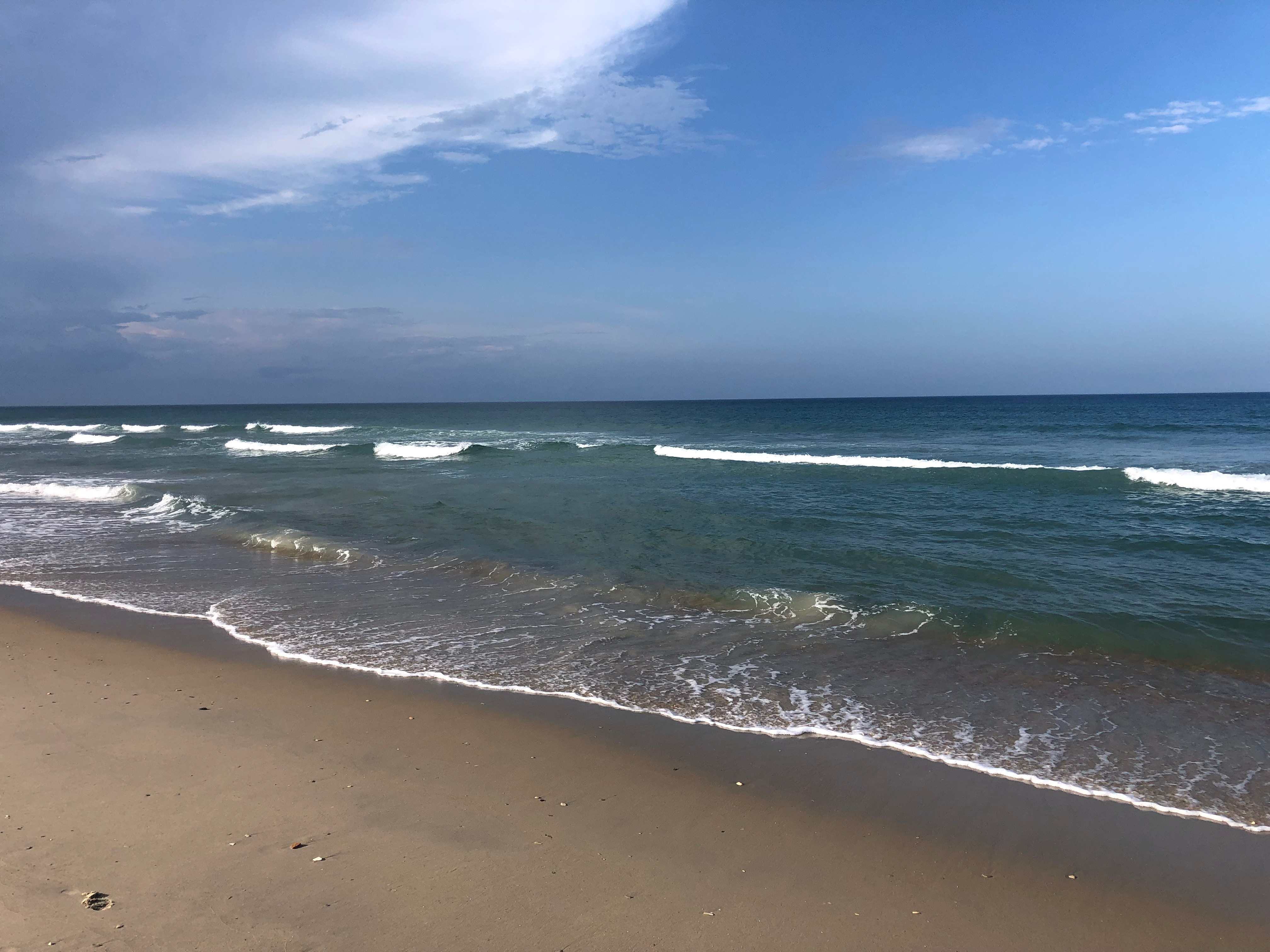
    We were also able to have a family vacation at the Outer Banks. Sometimes I lose sight of the bright spots, so it is good to reflect and remind myself.

    The beach at Duck, North Carolina

    One of the reasons this Yom Kippur may have been more poignant was that it is the first since Gary’s Dad, David, died. Though we had not actually spent the holiday in person with him in many years, we were very connected. Gary would call just as we concluded the evening meal before attending Kol Nidre to wish David and Paula an easy fast, and then when we broke it the next evening, he would call again to wish them a happy new year and compare notes on how the fast went. This was his tradition with his dad for all the years that I have known Gary unless we were physically all together. There was a painful emptiness where David would have been.

    Once again Gary and I livestreamed the service from a Manhattan synagogue, B’nai Jeshurun. Gary was not comfortable attending our synagogue in person due to the continued presence of Covid in the community. We participated from home. I downloaded the mahzor so we could recite the prayers – actually Gary recited, I listened.

    Our new-fangled observance: Gary davening while I listened

    Part of the Yom Kippur service is called Yizkor. It is focuses specifically on remembrance of those who have died. In preparation for that part, the rabbi suggested that those at home have a photograph, or an item associated with their loved one close by. Gary grabbed an old polaroid of David in which he is surrounded by the family at his home in Liberty. I took a wool cap that was my dad’s that Gary continues to use. We put those items on the coffee table next to the computer screen. It surprised me how much emotion they evoked.

    Before the actual Yizkor prayers, the rabbis, there were two conducting the services, shared poems. One was especially powerful.

    Michiko Dead

    BY JACK GILBERT

    He manages like somebody carrying a box   

    that is too heavy, first with his arms

    underneath. When their strength gives out,   

    he moves the hands forward, hooking them   

    on the corners, pulling the weight against   

    his chest. He moves his thumbs slightly   

    when the fingers begin to tire, and it makes   

    different muscles take over. Afterward,

    he carries it on his shoulder, until the blood   

    drains out of the arm that is stretched up

    to steady the box and the arm goes numb. But now   

    the man can hold underneath again, so that   

    he can go on without ever putting the box down.

    I thought the box was an fitting metaphor for grief. We have all had the experience of struggling to carry a heavy load and grief is just like that. Though we learn to cope, we adjust, we never put it down. The experience is fresher for Gary, but it is a message that resonated for me, as well.

    I think we don’t talk about grief or loss enough. It makes us uncomfortable. I don’t want to dwell there, but those emotions are powerful and an important part of our lives. As soon as someone mentions a person who has died, or talks of their sadness, the impulse is to gloss over it and change the subject. Maybe if we didn’t do that the grief would be easier to bear.

    One other thought on grieving that we don’t speak about. It is the grief we feel when someone we love is dying. They are still with us, but they might have a terminal illness, or the aging process is taking its toll. Sometimes our mourning begins before they are gone. That is even more of a taboo subject. We don’t know how to talk about death, unless it is an abstraction, or even if we should. There must be a healthier way to live with the certainty of death rather than ignoring it or dressing up our feelings so we can store them tidily away.

  • Yesterday I spent well over an hour online trying to initiate a Medicaid application for my elderly aunt. I had no success. I learned one thing. After completing the first part of what I thought was the correct process, I found out it was not. Buried four clicks in, and after filling out two preliminary forms, and after receiving several error messages and a rejection notice, they finally explained how to initiate an application for someone over 65. After all that, I learned that you are supposed to call the helpline or visit a Medicaid office! It seems that little tidbit could have appeared on the very first screen. A pretty major piece of guidance, if you ask me. Who designs these things? I will call the helpline after the holiday and find out how to proceed. Let’s see how convoluted, complicated and frustrating this process will be. I have such high hopes.

    ————————————–

    It may seem odd to be writing about the passing of Ed Asner, but I need to say something. He reminds me of my dad, in the best way possible. He always has. When I watched the Mary Tyler Moore show back in the 70s, and I loved that show for many reasons, I noted the likeness. Some of it was physical. My Dad was built similarly, that burly, Eastern European thing. They both were also balding with a heavy beard. My Dad could probably have shaved twice a day. I suspect Mr. Asner could do the same. But more than that, it was the sense of decency Mr. Asner radiated. The gruff exterior belied a tenderness. Maybe I read too much into Lou Grant and other characters he played, but that is what I sensed.  And that was at the heart of my dad. These last few days, as tributes came through my Facebook feed, each time I felt a pang of loss. Dad was not granted the length of years Mr. Asner was, he is gone more than 16 years, but I still feel it acutely. I mourn Ed Asner’s passing, too.

    —————————————–

    I have spent much of the last week under the weather. I don’t want to assign blame, Daniel, but I caught a cold. Of course, since we are in the midst of a pandemic, I was concerned that maybe it was actually Covid. The delta variant has been spreading locally. I tried to make an appointment for a test and found it difficult to get one. All the area pharmacies were booked. I could get a slot the next afternoon, but I’d have to drive half an hour. I took it. In the meanwhile, I asked my husband to try to pick up an at-home test on his way home from work. He called around and found one at a CVS in Schenectady – not that far away. He brought it home. I read the directions carefully, followed them, waited the 15 minutes and found out I was negative. These tests are imperfect, but my son and granddaughter also tested negative, so I took a measure of comfort in that. The cold though wasn’t deterred by that information, it has gone through its various stages relentlessly. Sore throat, headache, sinus pressure, my nose running like a faucet (throw in a couple of bloody noses), then the cough. The cough is the worst part for me and takes the longest to resolve. I know I shouldn’t complain. So many others have it worse. But whenever I am under the weather, I get mad at myself. I take it as a personal failing. So, in addition to feeling poorly, I am angry at myself. I have been down this road many times and I still do it. I am disappointed in my lack of productivity while I am ill. I shouldn’t have gotten sick in the first place! I will not cough!!! The refrains in my head are singularly unhelpful. Maybe now that I have written it down, it will stop. Or it will stop when the symptoms pass…any day now.

    —————————————————

    Two more covid -related complaints. We are once again trying to plan the celebration of Leah and Ben’s marriage. We are now three and a half months out. Once again, we are plagued by uncertainty. I am angry. It didn’t have to go this way. My other gripe is of the ‘first world’ variety. Most people are faced with lost opportunities due to the pandemic. College kids deprived of the full experience. Youngsters wearing masks as they start school. Cancelled proms. Job loss or forced career changes. Folks with other health problems having to navigate getting care. Seniors enduring damaging isolation. So much fall out. My issue isn’t serious, but I find myself resentful anyway. I am missing prime-time travel opportunities. Gary and I are in our early sixties. Thankfully still healthy. This would be a time for broader exploration. We are lucky enough to be financially able to do it too. I love travel – minus the hassle of air travel itself, that part sucked even before the pandemic. But that aside, who knows what the future will bring? There are so many places I want to go. Okay, I’m done whining. I know it pales in comparison to the price others have paid, including loss of life. But since I am venting, I thought I would put that out there, too. I invite you to vent, as well. It can be therapeutic – as long as it isn’t directed at an innocent bystander. A journal, online or on paper, may be best. Feel free to use the comment section below.

  • The last public event I attended before the pandemic shut everything down was an appearance by Scott Simon, the NPR broadcaster, sponsored by the New York State Writers Institute. He talked about his career in journalism and the book he had recently written. In the course of the discussion, he said something I made note of and continue to think about. He said, and this may not be an exact quote, but I believe I got it, “If you have the same convictions at 42 as you had at 22, you aren’t paying attention.”

    Hmmm, I wondered, do I agree?

    As I sat in the auditorium, I think I construed convictions as equivalent to values. And, my values have not changed over the years: honesty, integrity, kindness are steadfast principles and always will be. So, at first, I rejected his premise. Subsequently, I looked up the word conviction: a firmly held belief or opinion. Ahhh, that is a different question. Have my opinions changed?

    What were my convictions when I was 22?

    When I was 22, I had just graduated from the public administration master’s program at Columbia University. It was 1982, an important year in my life that I have written about here. What did I believe?

    I was a Democrat and, though Ronald Reagan was popular, I voted for Jimmy Carter in 1980 (it was the first presidential election in which I was eligible to vote). I didn’t believe in Reagan’s message – he campaigned on small government, tax cuts, trickle-down economics and the whole ‘greed is good’ mentality. I didn’t buy it. I still don’t. That is one conviction that hasn’t changed.

    Over the many years since then, even with the disappointments in our government, all the instances that corruption has been uncovered and scandals revealed, I still believe in the potential for good governance. I was 12 years old during the Watergate hearings; old enough to understand the implications.  I knew big corporations were just as problematic, though, if not more so. Over the years my understanding has become more nuanced, but I grasped early on that the common denominator was human nature. People could abuse power and money in any setting. Justice and fairness are best served by checks and balances. I stand by the notion that elections and oversight from journalists and governmental entities are more effective mechanisms to ensure the greater good than the “free” market. The market has its benefits, and I still call myself a capitalist, but a strong government is essential for the common good. That opinion has not changed. 

    In 1982 I believed in Gary, and our future together. That hasn’t changed either. I believed in the importance of family. My thoughts on one aspect of that has changed. Forty years ago, I thought I could be a career woman and a mom at the same time. I no longer believe that, at least for myself. In fact, I had to let go of that conviction to maintain my sanity. I honestly think I was headed for a nervous breakdown if I didn’t adjust my expectations. It took a long time, a solid decade or more, to not blame myself for not achieving the dream of a successful career and happy, healthy children and husband.

    As time passes, I see just how challenging it is for women to balance the competing demands of career, motherhood and all the other roles we play (wife, friend, daughter, etc.). I was not able to – at least not at the same time. Sequentially it might have been possible, but not all at once. Perhaps the particulars of my circumstances conspired against it. Gary’s career was, and is, all-consuming. I didn’t see how both of us could be pursuing work that demanded so much of our respective energy and still attend to our children appropriately. We weren’t rich enough to pay for nannies or housekeepers. We didn’t have a support system of family and friends that could substitute either. Something had to give. Maybe I could have sustained a job, but not a career. I was fortunate in that I could make a choice. I left the workforce, except for some freelance assignments, for ten years.

    I also had to come to terms with the fact that my career wasn’t what I envisioned anyway. When I graduated with my MPA, I hoped to make meaningful contributions to public policy. Early on I found myself working for Pittsburgh’s Department of Finance and a decade later I was at the Department of Tax and Finance for the state of New York. This was not what I had in mind. I believed in the importance of an efficient and effective system of taxation, but when I thought about ‘public policy,’ I wanted to help people more directly by improving the quality of community life or helping people move up the economic ladder. That was quite a stretch from what I was doing buried in the bureaucracy. My career path was unfulfilling. It made sense to step off it. I am very glad I did.

    I think there is truth in what Mr. Simon said. Our convictions should evolve. We need to be paying attention – to other ideas, to new information, and other perspectives. We need to test our beliefs to see if they hold up. Sometimes it is painful to let go of a closely held belief. Unfortunately, these day too many of us don’t do the work of examining our opinions. We are entrenched in our ideas, stuck in our echo chambers. One constant for me, at 22, 42 and now as I approach 62, is I am always wondering, questioning and thinking. In answer to the question I posited in the title of this post, yes, I am paying attention. Many of my opinions have remained, some have evolved.

    Have your opinions changed since you were 22? Which ones? Care to share? It would be interesting to hear how and why your beliefs evolved.

  • Note: I am changing the names in this essay to protect the innocent! I don’t want to embarrass anyone or tell tales out of school, but I am sure that many can relate to the topic.

    “Would you drop clothing on the floor – you know, let’s say you’re tired or whatever and want to get to bed?” Samantha asked.

    “No, I don’t do that. It’s simple enough to put it in the hamper or hang it up,” I answered.

    She nodded.

    She followed up, “Can you go to sleep with a dish in the sink?” I had to smile. “Uh, yeah! No problem,” I said. She rolled her eyes. Clearly, my cousin could not imagine it.

    My cousin, and her adorable, precocious and kind 6-year-old son, came to visit from New Jersey. In honor of their making the long drive, local family gathered in my backyard, and we had a small pool party. Somehow the topic of how we kept our houses came up. A range of philosophy and practice was represented among the five households present. Some among us struggle to keep things organized, others are fastidious. Samantha needs things to be just so, she told two stories that illustrated her point.

    She and her son arrived at a friend’s house to babysit and upon entering the living room, strewn with toys, her son blurted out, “We need to clean this room up!” Samantha was embarrassed. And proud, too; he had clearly absorbed her lessons. After you finished playing with a toy, you put it away before taking out another. Though many moms try to get their kids to abide by that rule, most are not as successful as Samantha. They proceeded to help clean up the room, much to the genuine delight of her friend.

    Samantha’s other example involved the time she invited some of her friends over for a housewarming. Her walk-in closet was arranged by color. Her friends thought it would be funny if they took a white blouse and put it among the blue, mixing up some of the carefully arrayed items. Samantha laughed about it, then she put everything back where it belonged.

    I explained to Samantha where I fell on the continuum of neat to messy.  “I would say I’m in the middle – I am certainly no neat freak. But I can’t abide chaos in my house either.”

    In some households this issue can be a bone of contention. When I was in college, my roommate, Merle, kept things neat as a pin. I was messier back then. I wanted to believe that saying that a ‘messy desk is the sign of a creative mind.’ We both compromised. I tried to do better, she took a deep breath and lowered her expectations (as least as far as my side of the room went).

    This was not so much of a thing between Gary and me. We seemed to be on the same wavelength. At least I think that is the case. The truth is that for all the time we have lived together he has been immersed in his career – first medical school, then training, then treating patients. I have been responsible for ‘keeping house.’ One of Gary’s great qualities is that he knows better than to criticize when he isn’t in a position (or maybe he isn’t willing) to do it better.  I don’t recall us ever having an argument over the state of the house. Now that we are empty nesters, our house is considerably neater. Children make the battle against mess infinitely more challenging.

    One nephew of mine, Jonathan, married a very discerning woman who wanted a well-organized, clean, and orderly home. In the home of Jonathan’s youth neatness was not emphasized. He simply didn’t have the skills. He was a willing learner, though. Jonathan made the transition and is fully capable of maintaining their lovely home. I was not privy, nor do I need to know, what went into that process. It may have had its ups and downs, but they have arrived at a meeting of the minds.

    One of my nieces grew up in a very orderly home. Neatness did not come naturally to Elizabeth. She gave up trying. She found a partner who is fastidious. They are in the process of working that out. Elizabeth has upped her game considerably, but they are still negotiating what is reasonable. They were laughing about it poolside as we all compared notes.

    Another nephew, Jonah, who grew up in the same house as Jonathan, and was similarly challenged in the cleaning and organizing department, married a lovely woman, Margaret, who is also stationed on the messy side of the continuum. Margaret rebelled against the demands of her mother who kept the family home very neat. Margaret prefers to put her energies into fun activities. Add babies to the mix and you have a ‘situation.’ Jonah’s father jokingly offered to pay Samantha to organize their house. Samantha’s eyes lit up. The challenge appealed to her – she loves to create order out of chaos. “Let me run back to my house and get my label maker! I’ll be right back!” Samantha laughed. She lives four hours away. That will have to wait for another day.

    When my mother-in-law, Paula, who kept a dust-free home, visited back in the days when my children were young, was very diplomatic about how I did things. She never criticized me and never appeared to judge me. In fact, I remember one visit where I apologized for the disarray, and she told me not to worry. “You are spending time with your children, that is more important.” How kind was that?

    I do recall another visit when Paula relayed the wisdom of her mother. “My mother told me, ‘before you go to sleep, clean the kitchen, do the dishes. This way when you get up in the morning, you start fresh.’ It feels good.” I told her I appreciated that, and I would try, but I wasn’t sure it would work for me.

    These days after dinner is my time to hang out with Gary. Whether I am using that as an excuse or not, I don’t know, but the dishes are still there in the morning. If I have trouble sleeping, it has nothing to do with the dishes in the sink. Cleaning the kitchen has become part of my morning routine

    I think for some keeping your surroundings orderly is one way to stave off the anxiety of the chaos in the world. Maybe it isn’t that complicated and some just find it more peaceful to live in uncluttered spaces. How do you navigate it? Is it a source of friction in your household?

    My sink this morning. I slept fine!