Stories I Tell Myself

Linda Brody Bakst on Brooklyn, growing up, identity and more

  • Note: I wrote a blot post about gratitude a while ago (you can find it at https://stories-i-tell-myself.com/2019/03/11/gratitude/). The impetus for that essay was International Women’s Day and I reflected on the women in my life for whom I was most grateful. Interestingly, that post is the single most read offering among the 305 (!) posts on the blog. That piece was planned. The other day a feeling of gratitude crept up on me from an entirely different source and I was inspired to write about it. I wanted to share it – perhaps it will lead you to find gratefulness in something you might otherwise take for granted.

    I plugged ‘Untermyer Gardens’ into my GPS and drove the designated route. It was simple enough to find, though I was not familiar with Yonkers at all. I had heard of it from several sources and knowing how much I enjoy gardens, I wanted to check it out. Plus, it’s free!

    It was the day after taking Mom to see the pulmonologist, which went uneventfully, I’m happy to report. It wasn’t my best visit with Mom, but it went smoothly enough. Driving to Mom and back is a lot for one day (about 7 hours) so I usually do an overnight at my brother’s home or in our apartment in New York City to make it more manageable. I decided to reward myself by going to the garden before I headed back to Albany.

    As I pulled into the small parking lot, I noted there were still some spots available. The website had warned of the limited number of spaces, so I was prepared to search on nearby streets. I was glad that wasn’t necessary; it was a good start.

    As I got out of my car, I felt especially grateful, and not just for the parking spot. Gratefulness is not a feeling that sneaks up on me all that often. As I made my way to the entrance, I realized I was grateful for many things. Though it was overcast, rain was not in the forecast, so the weather was cooperating. More importantly, I thought about the fact that I had the wherewithal to make this trip, from Albany to Freehold, New Jersey, to the Upper West Side of Manhattan to Yonkers and then back to Albany by myself over the course of less than 36 hours.  I had the time, the financial resources, and the physical ability to do this. Not every 62 year old woman can, not every human being can. I took a moment to appreciate my good fortune. I wasn’t worried that I wouldn’t be able to walk the grounds of the gardens. My legs are pretty strong, my heart and lungs are in reasonable shape – I didn’t know what to expect but I knew I could climb up and down stairs, I can walk 3 to 5 miles without too much difficulty so I was confident I would enjoy the experience.

    I write this not to brag, but to acknowledge my blessings. There are challenges in every life, mine included, and I tend to hyper-focus on those. Here was an opportunity to appreciate what I have and take pleasure in something that brings me joy, the combination of natural beauty and human creativity. Untermyer Park and Gardens embody both.

    Turns out Mr. Untermyer, who established and bequeathed the gardens to the people of New York State, is also worthy of admiration. Samuel Untermyer, a Jewish-American born of German immigrants, was a successful lawyer who advocated for financial regulation to protect against corruption and monopolies in the late 19th and early 20th centuries. I was even more impressed that he initiated and campaigned for a boycott of Nazi Germany beginning in 1933. He recognized Hitler as a threat early on. Unfortunately, Untermyer’s efforts were not successful in isolating Hitler, but he was on the right side of history. It is uplifting to learn of people who made positive contributions to our world – someone I had never heard of before.

    I went through the entrance and found a map of the grounds. My children tease me about always wanting to know the ‘lay of the land.’ Whenever we traveled, I looked for a map or floorplan so I could scope out where to go and what were the highlights. Much of this information is available today on smart phones, but I still appreciate a guide on paper. I set out to explore.

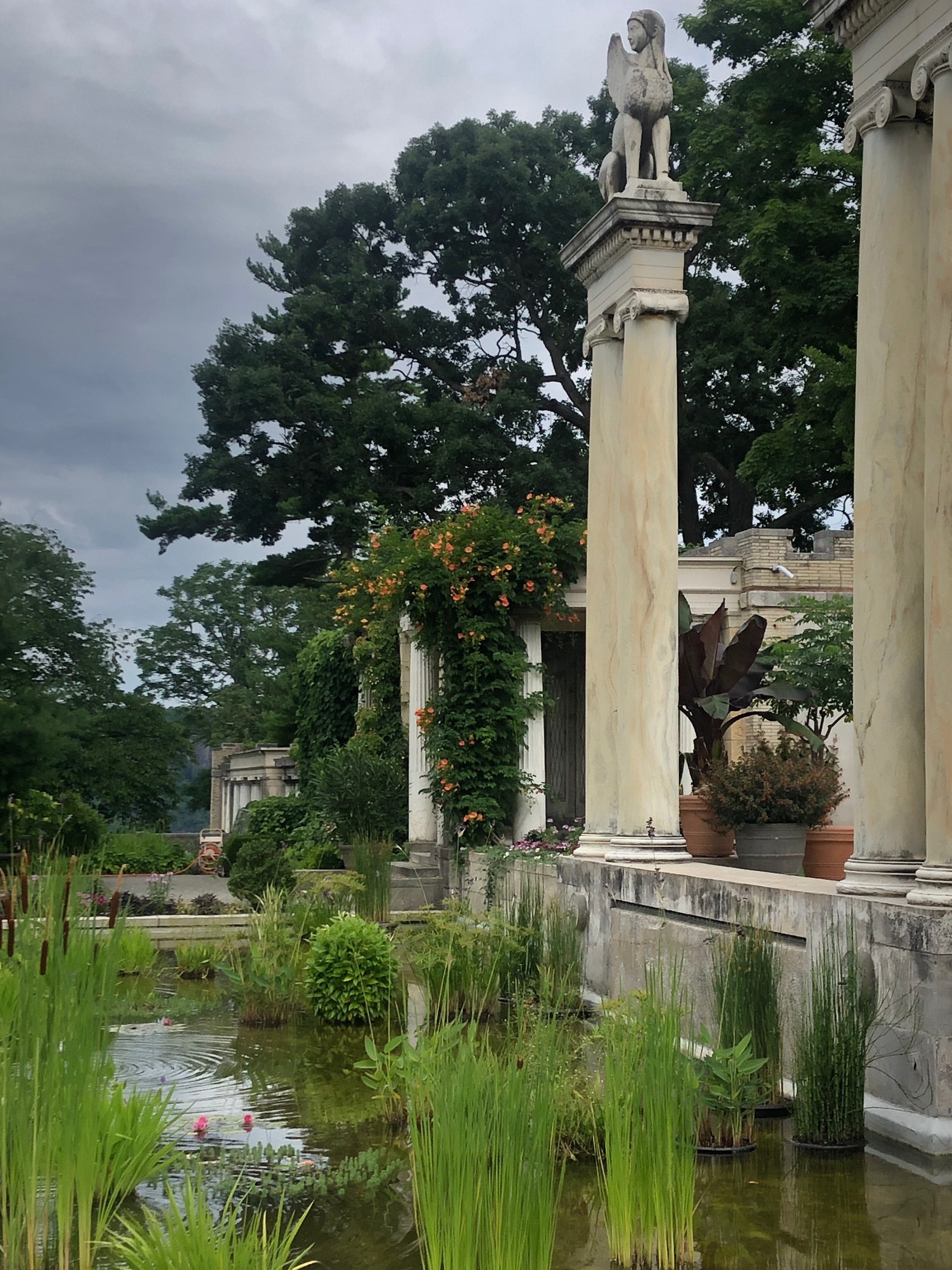
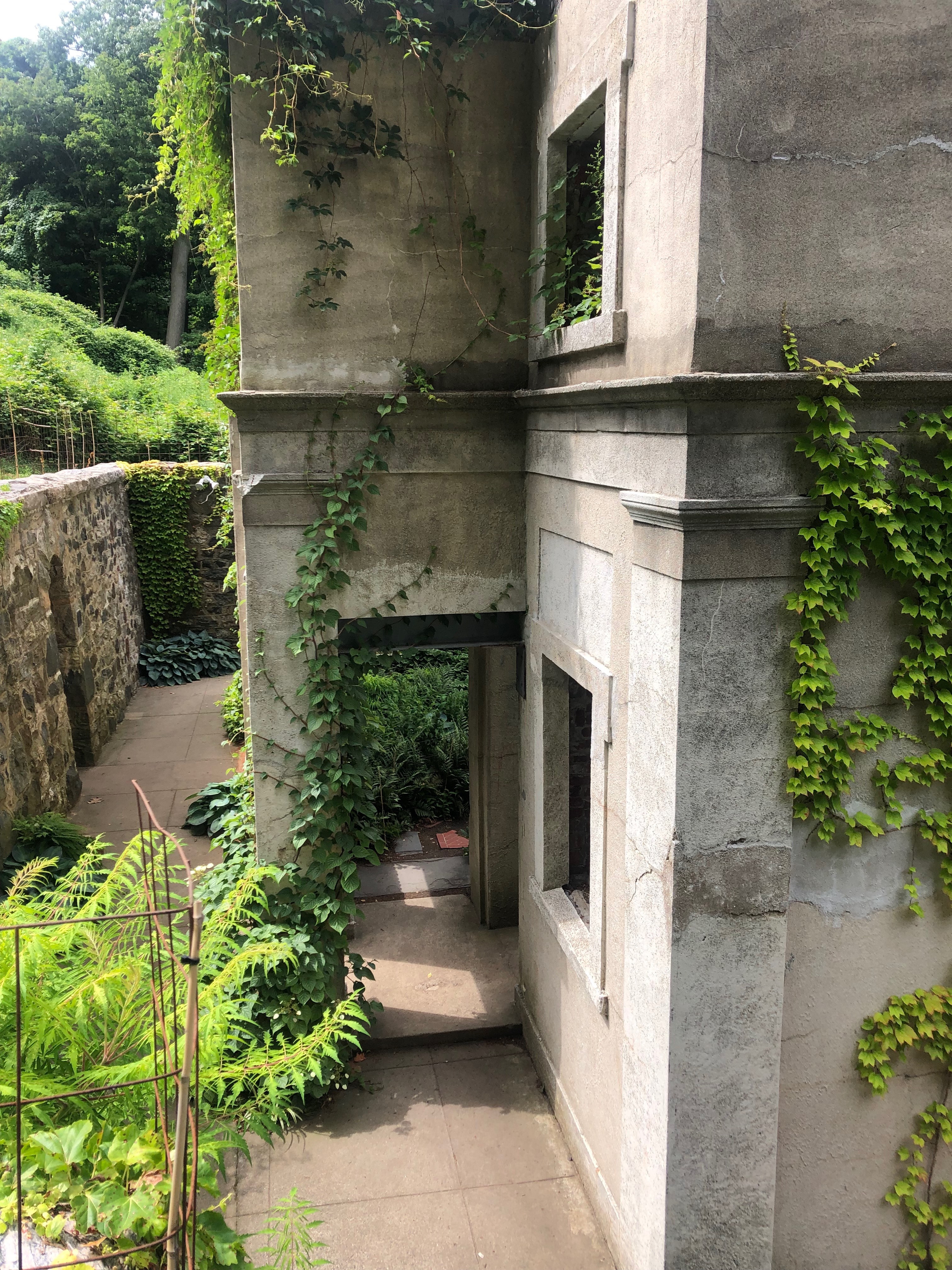
    The Gardens are located in view of the Hudson River. It includes structures that borrow from the architecture of ancient times. Some of the buildings have gone to seed – in some cases the ruins have been incorporated into the landscaping. Sometimes it isn’t clear whether the decay is intentionally left, or if it will eventually be restored. Perhaps they don’t know. It made for interesting viewing.

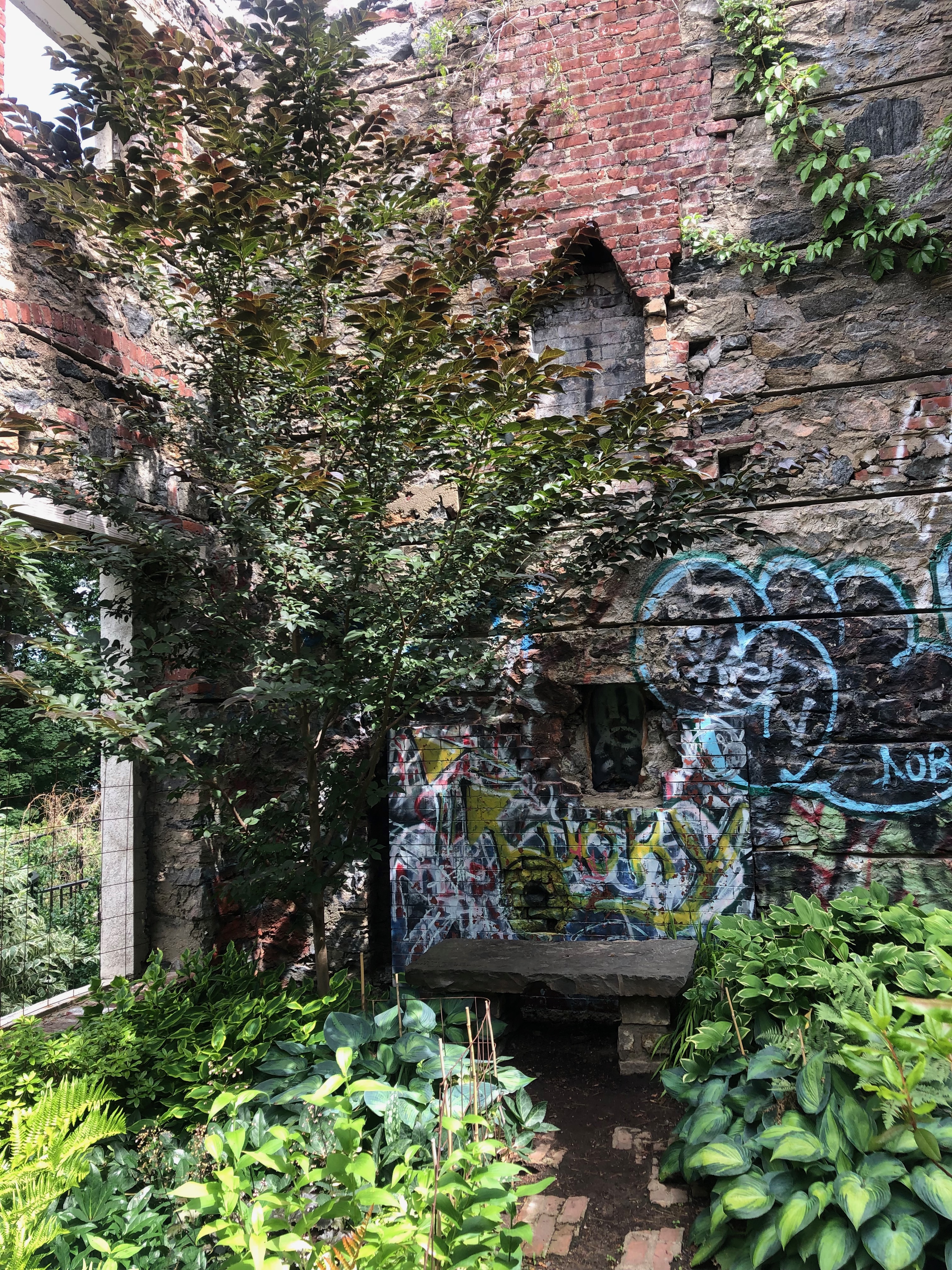
    In one case, graffiti decorated the walls of what had been a gate house (you know you are on an estate when there is a gate house). I posted a picture of the scene on Facebook and Instagram, asking if folks thought the graffiti added or detracted from the look.

    The picture I posted on social media

    Some thought it detracted, some needed more context (was it ‘allowed’ or invited, or if it fit in with the history of the place), while others simply thought it enhanced the view. My visceral reaction, while there, was positive. I liked the juxtaposition of the colors, the new art and the old stones, the lushness of the plantings and the intrusion of urban expression on a structure from a time long gone. When I read about it, after the fact, the guide says that the graffiti was “intentionally preserved as an artifact from a troubled time in its history.” That raises even more interesting food for thought.

    After exploring for about two hours, I sat in a shady portico (see photo below) and considered the blessings of the day. I felt energized when I returned to my car. I headed north, stopping first to have lunch with a friend before continuing the long drive home.

    I carry that gratitude with me now.

  • It is the 4th of July. It is a beautiful, warm, sunny day and we will do one traditional thing – barbecue some burgers and hot dogs. Otherwise, the holiday doesn’t have much meaning this year. I’m not taking much pride in being American, sad to say.

    I am a baby boomer – slipped in under the wire, being born in 1959. I don’t know who decides these things, who defines the generations, but I meet the criteria. As a product of that time, I believed in American exceptionalism. The lessons learned at school, and the broader culture, taught me that this country was special, born of an idea that we were all created equal, and we were free in ways other citizens in other countries were not. I was born into the Cold War – people in the Soviet Union could not criticize their government without fear of imprisonment, they did not enjoy the riches and abundance of the free market, they weren’t allowed to practice religion (I was especially aware of this as a Jew) among many other rights. But, not only that, I thought we were better even than England where people were born into a class and couldn’t rise above it. When America won gold at the Olympic games, my heart swelled with pride when our national anthem played. I believed we were the good guys.

    I came to understand that we weren’t always the good guys in foreign policy. We sometimes supported regimes that were repressive or corrupt because we thought it was in our economic interests. As I became more educated and experienced in the world, I didn’t dismiss these instances, but I accepted that there were some limits to our choices; our country existed in a real world with bad actors. I still had faith, though, with effective leadership and if our values informed our policies, we could be a force for good.

    As I grew up, and became more educated about our history, I came to understand that we weren’t quite as exceptional as I thought. I still believed in the essential values that were our foundation, freedom and equal opportunity, but I realized that we had not fulfilled those promises. Race riots and the women’s movement made me aware that we didn’t all have equal opportunity. When the founding fathers wrote the Declaration of Independence and our Constitution, they used the term ‘men’ purposefully. We needed to expand the concept. We had work to do to make that a reality. But, I accepted that this was something that could be achieved through new laws and improved education. I believed that the majority of Americans wanted to realize that promise.

    Today my faith is shaken. It seems that a powerful portion of the American people don’t share my understanding of the foundational values that I thought inform our institutions. I thought freedom meant that people could worship as they chose, if it wasn’t infringing on others or violating laws, but that religion was not endorsed by the government. Increasingly it seems that our Supreme Court has thrown that idea by the wayside. A coach, an employee of a public school system, can lead his team in Christian prayer in the middle of the football field. A Christian concept of when life begins dictates a woman’s right to reproductive choice. The right to bear arms outweighs sensible limitations. If polls are to be believed, though, the majority of Americans don’t agree with these policies. So, where does that leave us?

    The very idea of democracy, that the will of the majority of people determines the government’s course of action, is being thwarted. Everything I learned, that we have a “government of the people, by the people and for the people,” is at risk. I just re-read the Gettysburg Address, from which the phrase I quoted above derives, and I remind myself not to give up. I highly recommend refreshing your memory by reading it (here).

    These ideals are worth fighting for; all is not lost. These Supreme Court decisions need not be the final word. Congress can act. State legislatures can act. Governors make a difference. Local school boards are relevant. We need to be vigilant, and we need to vote – in primaries and in November. Perhaps this holiday, this 4th of July, can help to remind us of our promise and obligation.

    Okay, I’m feeling better about the holiday. I hope you are too.

  • I visited with my mom the other day. She is 88 years old. I asked her what she remembered about becoming a first-time mother.

    I had just come back from helping my daughter, who recently gave birth to a baby girl, her first child. Caring for my newborn granddaughter, changing her diaper, soothing her when she fussed, brought back powerful memories of my own introduction to motherhood. I was curious how my mom remembered her early days after her firstborn, my older brother Steven, arrived.

    Mom gave birth to Steven in an Air Force hospital in Wichita Falls, Texas in 1955. When I asked her how she felt at the time, she responded, with some hesitancy, “I was frightened.”

    I was surprised by Mom’s response, and, at the same time, I wasn’t. If asked how I felt upon being released from the hospital in 1987 with my newborn daughter I would have said, ‘Terrified.’

    We don’t usually admit to those feelings. We are supposed to be overjoyed. For me, at least in the beginning, the fear outweighed the joy. It felt like such a huge responsibility; one I had no previous training to take on. I felt woefully inadequate.

    Mom went on to tell me a story, one I had heard before, but was eager to hear again. Before they sent her home, the nurse showed her how to diaper the baby and gave her other instructions. While explaining, the nurse took Steven by his feet and flipped him over on the bed! He appeared unfazed by the motion, he landed safely. “He isn’t as fragile as you think,” the nurse told my stunned mother.

    It is hard to imagine a nurse doing that when I had my daughter in 1987. Though Mom took some comfort from the nurse’s demonstration, she couldn’t help but wonder about her ability to meet the needs of the tiny, living, needy creature entrusted to her care.

    In the 1950s women were not encouraged to breast feed. My brothers and I were bottle-fed formula from the get-go. During that recent conversation Mom told me the idea of nursing made her uncomfortable, she didn’t consider the possibility. Since bottle-feeding was the norm in that era, I don’t think she felt any guilt. When I became a mom, it was expected that you breastfed. It was assumed that unless you were physically unable to, you did it. I could be remembering wrong – it is possible it wasn’t quite that black and white, but that was my perception. I received some guidance from the nurse while I was in the hospital to get me started, and fortunately, I was able to successfully do it without much physical complication. That doesn’t mean there weren’t other complications. I remember being exhausted, on the edge of depletion. It seemed as soon as I finished a feeding it was time to do it again.

    Tired anyone? Me holding Leah – at least one of us was sleeping

    My husband and I decided, after two weeks, to introduce a bottle of formula so that he could take a middle of the night feeding. Despite hearing something about ‘nipple confusion,’ we decided to risk it for my sanity. Though I believed we did the right thing for us, I didn’t widely share our approach given the prevailing attitudes of the day.

    I don’t recall getting much guidance or support navigating these issues. In a way, I envied the fact that my mom didn’t have to deal with the question of whether to breastfeed or not. She had confidence that a formula-fed baby would be just fine. By the 1980s the decision became fraught – there are extremists (as there are about everything in our society these days) who insist that a woman must do it given the evidence that breast milk helps the baby’s immune system. It is only in the last year or two that there is recognition that we should not be so dogmatic. So many things come into play. Nursing can be unbelievably time consuming. In the first days and weeks after birth it can be every two hours, leaving little time for sleep or physical recovery. Some women experience pain or have supply issues (some women who produce milk worry ceaselessly about whether it is sufficient). Others are fortunate to find it relatively easy and experience the emotional reward of bonding with their baby – but most women I know, though they ultimately may have felt fulfilled by doing it, had a bumpy road getting there. The process can be hard without adding the collective judgment of society.

    Writing this in the wake of the Supreme Court decision to overturn Roe and deprive women of their right to choose, I see a consistent theme. Women shoulder huge responsibilities in bringing forth new life, but we are not supported in that work (yes, I called it work, labor is called that for a reason).

    The myriad ways in which our culture fails us is breathtaking. From inadequate access to health care (from prenatal to aftercare for mother and baby), to the history of failing to research women’s health issues, to the lack of understanding of the demands of those first few months, and finally, on a fundamental level, not valuing us, women often feel alone and overwhelmed. Though I am well past new motherhood, all of those feelings come rushing back as I watch my daughter go through it, especially in the context of the court’s repudiation of women. I feel the anxiety and weight of the responsibility in the pit of my stomach.

    Being a mother is the hardest job I ever had (and still have). I believe, from what I know of my grandmothers and mother, they would agree. Our society needs to reprioritize its values. Mothering, and all forms of caretaking, must move up many rungs. It deserves better pay (sort of a joke since mothers aren’t paid, but we should assign it value). Childcare should be far more financially rewarding. But, perhaps even more than that, the work of mothering deserves more respect. Mother’s Day is a trifling excuse for the recognition that is due to those who take on the role.

    It goes without saying that the government has no place in deciding whether a woman becomes one. I am well aware that some are not up to the task; all the more reason to support reproductive choice and change the way we view and assist mothers. It does take a village to raise a healthy child. When will we accept that and make policy decisions accordingly? I hope for my granddaughters’ sakes we begin the change now.

  • Note: I wrote the following in a fit of frustration, anxiety and sadness two weeks ago. Some things have changed since then (some things haven’t), but I thought it was still worth sharing as a snapshot of my state of mind that others might relate to.

    I can solve NOTHING!

    I can’t get the handle on the fireplace damper fixed or replaced.

    To be more precise, the company hasn’t called back to offer any solutions.

    I can’t get a spare tire or ‘donut’ in case of a flat tire.

    To be more precise, if I get a spare it will take up the whole trunk.

    Not a good option.

    Donuts are difficult to find. I can get a used one shipped from Arizona or California for a lot of money.

    The Honda dealership offers no options or solutions.

    I went to AutoZone and a helpful man showed me the tire sealant he recommends. I bought it and threw it in my trunk.

    I will keep my AAA membership – I’ve been getting good use of it these past two months.

    I will pray that if I get a flat, I’m in cell phone range.

    I can’t get a memorial stone for Aunt Clair.

    She wanted a footstone placed at her mother’s grave, though she herself chose to be cremated.

    It comforted her to think of it.

    I ordered one and paid for it immediately after she died six months ago.

    After many emails and layers of approval, from the burial society and the cemetery,

    After mock-ups back and forth,

    The dates are wrong on the latest one.

    Must it be so difficult?

    Is it time for Plan B? What is Plan B?

    I have an idea,

    But it doesn’t have Aunt Clair’s seal of approval.

    I may have to live with that.

    I’ll give it one more shot with the monument company, then we move on.

    I can’t get my mother’s insulin regimen straight.

    Her doctor rarely responds to my calls or emails.

    I placed another call this morning.

    Fortunately, Mom is getting her insulin

    Though her glucose is not well controlled.

    Ironic given that I am married to an endocrinologist.

    It is not his fault, nor can he manage this in a day-to-day way

    For many reasons.

    Sigh.

    I can’t convince my granddaughter to make her entrance into the world.

    She is 9 days late and counting.

    I am grateful that all appears to be well with mom and baby,

    But we are on pins and needles.

    We are at loose ends.

    Waiting

    I know patience is a virtue

    Sadly, I was not blessed with it.

    Is this a test?

    I can’t resolve my laryngitis.

    A month into this

    A course of steroids

    Decongestants

    Nasal spray

    Allergy medication

    Reflux medication

    Cough medicine

    After ten days, I can at least make sound, I can talk on the phone

    So that is an improvement,

    But, is this hoarseness permanent?

    Of course, it could be worse.

    It could be my grandchild gunned down in school.

    It could be my friend murdered in a supermarket.

    That is small comfort.

    So much struggle

    Can we hope for more than being grateful that we weren’t in the site of a gunman?

    Update: There is some good news. There is hope for movement on gun safety legislation. It isn’t enough, it isn’t what I would want, but I am a pragmatist about public policy. Something is better than nothing and hopefully it can be built upon.

    Our granddaughter did make her entrance into the world – the day after I wrote this she arrived. We are thankful and in love with the peanut.

    I haven’t had to call AAA in the last two weeks – but I don’t want to jinx myself as I will be driving quite a bit over the next few weeks!

    Aunt Clair’s monument is still unresolved, we are still struggling with Mom’s diabetes though she seems to be stable, and I am still hoarse. Of lesser importance, the damper on our fireplace is still not repaired – and the guy who said he would pave our driveway a month ago hasn’t been in touch. I figured I’d throw that in since that is another one of those things that feels out of my control.

    Despite the remaining frustrations, I am in a much better frame of mind than when I wrote my screed of exasperation and anxiety, and for that I am grateful.

  • I have been missing in action blog-wise – life has been happening. I shall return.

  • Here is an excerpt from an article in my local paper the day after school board elections were held last week. [ Note: North Colonie is a suburb of Albany, New York.]

    “In North Colonie, some voters said they agree with the “parents rights” movement, though they declined to give their names. ‘Things are going on the parents aren’t aware of,’ said one North Colonie voter. ‘Things are being said in the name of equity.’”

    This sounds like the sentiment expressed at the Meet the Candidates forum that I watched for my home district, Guilderland. The idea that ‘things’ are being slipped into the curriculum under the guise of equity without parental knowledge was a concern of more than one candidate. This notion fits in with the larger conspiracy narrative that plagues our nation. It is alleged that unnamed forces are in cahoots to indoctrinate our children.

    I have so many questions about this line of thinking. When I watched the candidates express this thought, I wondered first who was slipping this material in? Was it a teacher, a principal, the superintendent, the state education department? No names or titles were offered when they made their argument.

    What exactly was being slipped in? One candidate mentioned a math problem where the pronoun used was he/she. The candidate suggested this was needlessly confusing. I thought to myself, it could be clunky, but is it really that big of a deal? What harm would it do? Would it actually lead a 7 year old, for example, to question their gender identity? They probably wouldn’t even notice it unless an adult brought it to their attention.

    Or, was there more to it?

    I decided to look for myself. Could I find examples of the types of material being used as part of this indoctrination? When I started doing the research the first thing I found was that some of the ‘new’ language being included in math textbooks was because social-emotional learning (SEL) goals were being incorporated into those texts. Furthermore, some commentators seemed to be conflating the use of SEL with critical race theory.

    Apparently an analyst at the conservative think tank, Manhattan Institute, said the following about social emotional learning in a New York Times article and it has gained traction: “The intention of SEL is to soften children at an emotional level, reinterpret their normative behavior as an expression of ‘repression,’ ‘whiteness,’ or ‘internalized racism,’ and then rewire their behavior according to the dictates of left-wing ideology,” said Chris Rufo, senior fellow at the Manhattan Institute, the Times reports.

    “Reinterpret normative behavior”? What does that mean? I googled it and normative behavior is that which we think should be normal.  Hmmmm. Is he saying that schools are trying to change norms of behavior? Perhaps reconsidering norms of behavior would be a fruitful effort in view of the state of the world – and I am not just referring to the current state of affairs. Reflecting on my school experience and that of my children, I think school climate (the health of our relationships as they play out in school) could have been better. We might have a more well-adjusted adult population had we addressed this earlier.

    And what left-wing ideology is he referring to? Let’s take a closer look at what SEL offers.

    I am familiar with social emotional learning from my years serving as a member of the New York State Dignity for All Students Task Force and from research and work done as a writer of policy for school boards across New York State.  One of the organizations at the forefront of the research and implementation of SEL was, and still is, CASEL (Collaborative for Academic, Social and Emotional Learning – casel.org). I refreshed my understanding by reviewing some of their summary material. This is the statement from their website:

    “We define social and emotional learning (SEL) as an integral part of education and human development. SEL is the process through which all young people and adults acquire and apply the knowledge, skills, and attitudes to develop healthy identities, manage emotions and achieve personal and collective goals, feel and show empathy for others, establish and maintain supportive relationships, and make responsible and caring decisions.”

    In that statement there are five core competencies:

    Recognize and manage emotions

    Develop caring and concern for others

    Establish positive relationships

    Make responsible decisions

    Handle challenging situations

    One might read that list and think either that all sounds exactly right – this is what we want for our children, as much as they need to read, write and do math, they need to know how to cope in the world. Or, a person might look at that list and wonder what the public school’s role is in developing those competencies. I hope we can agree that it is impossible to read this list and see how it teaches critical race theory – it would take monumental leaps to get there.

    Over the course of my life, ideas about SEL have evolved. When I was in elementary school, in the 1960s, little time was spent teaching us to manage our emotions. The assumption was that children just figure this stuff out – you pick up on social cues, you make mistakes and go from there. Unfortunately, not everyone was successful at that. When I started my professional career, families and schools were still thinking of aggressive behavior among children as ‘boys will be boys,’ and ‘kids need to toughen up’  and other dismissive adages, without appreciating the price we were paying for that approach. We had normalized that behavior. As we became aware of the dangers of bullying, including the rise of cyberbullying, more enlightened thinking emerged.

    Not to go into a whole history of the evolution of this, but societal changes have meant that public schools have taken more responsibility for supporting the whole child, meaning not just their academic needs. Some might argue that this is misguided or that it is asking too much of schools, but needs must be met. Children who are hungry, fearful, or unhealthy can’t learn (certainly not at the rate of their peers who are fed, stable and healthy). If children arrive at public school unprepared to learn, how can a school be successful? If our goal is to graduate citizens ready to contribute to our society, it behooves us to do what we can to meet their needs. Academics can’t be neatly separated from other aspects of their lives. If only we could, things would be much simpler.

    I guess the question is: have ‘things’ gone too far? I’m not sure I know what that would look like. I can imagine some satirical sketch on SNL of children spending the day in a circle singing Kumbaya instead of learning to multiply. But that isn’t what SEL advocates, nor is that what is being described by unhappy parents.

    One of the places where this controversy is playing out is Florida, which made the news recently when it removed 24 math textbooks from their list of approved texts because they included social emotional learning goals. I tried to find examples of the objectionable text. The New York Times found some examples (https://www.nytimes.com/2022/04/22/us/florida-rejected-textbooks.html). The Florida Education Department released four pages of offending material.

    According to the material released, when SEL is incoroporated it might  involve calling children’s attention to their feelings when solving a difficult math problem – a thought bubble on the side of the text might remind the student to persevere, or might remind them to be respectful when disagreeing about how they solved a problem in discussions with a peer. In a high school textbook they used statistical data on implicit bias as the basis for an exploration of data analysis and statistics. The data came from Project Implicit (https://www.projectimplicit.net/).

    What is the problem with these examples? Are the messages softening our children up in a damaging way? One of the recognized barriers in developing math skills is students’ preconceived ideas about it. Encouraging a more positive mindset seems at worst harmless and at best helpful.

    Is the data set used in the high school textbook on implicit bias controversial? Why not ask high schoolers to assess the quality and ideas introduced by the data? What a great opportunity for discussion. Those who disagree with the findings might take a deep dive into the methodology and find it flawed, thereby advancing our understanding. If a student is troubled by the conclusions suggested by the data, what a great opening for discussion with parents.

    This takes us full circle, back to the original quote from the voter in North Colonie. What ‘things are being done’? Education and society are evolving. This has ever been so.

    A lot of issues are getting tangled up and making it more difficult to talk about. Social emotional learning is not an agenda to make children gay or trans, or to make them feel guilty about being white. It is about learning to manage emotions. Somehow racism, gender identity and expression, and the whole history of the United States, have all been tied up together in the culture war and SEL has been offered as the problem. It would be a tremendous loss if SEL was sacrificed on the altar of our current politics.

    It doesn’t have to be this way. I have to believe we can have meaningful dialogue if we focus on the heart of the issue (what do our children need), without the accusations and fear of vicious reprisals.

    Schools are caught in the middle of all of this. They serve students, parents and the broader community. Sometimes those interests are not aligned. It can be very hard to find common ground. We are not helped in finding that space if people assume the worst about each other, if they use inflammatory rhetoric or rely on sound bites for information instead of looking more deeply into the facts. We must do better. Our children and our democracy demand it.

  • Though it has been a dark time, and I will spare you the list of terrible things happening in the world, I want to focus on something lighter (literally and figuratively).

    When I moved to Albany, New York 36 years ago, I was dimly aware that the area was originally settled by the Dutch (well, not originally, that credit goes to native peoples, but the Dutch were the first Europeans to put down roots here). Having grown up in Brooklyn, we learned some state history (though not much about native peoples, sad to say) and I knew a little bit about the Dutch connection. One expression of that connection that continues locally is Tulip Fest. The tulip is associated with the Netherlands and is also the official flower of Albany.

    Since 1948 the festival is held on Mother’s Day weekend in Washington Park – a lovely expanse designed by the same landscape architects credited with Central Park in Manhattan – Frederick Law Olmstead and Calvert Vaux. Did they design every beautiful urban park in this country? Seems like most major city parks have their fingerprints. They certainly got around. Anyway, until Covid hit and forced its cancellation in 2020 and a scaled back version in 2021, the festival was held rain or shine, and one of its main highlights are beds of colorful tulips. There are craft and food vendors, and music. The festival came back full strength this year. We attended on the Saturday of Mother’s Day weekend and we were delighted to see throngs of people enjoying all the park and festival had to offer (due to the crowds, Gary and I stayed masked – a small concession in our opinion).

    One of the things I have appreciated about Tulip Fest over the years is that it is increasingly diverse. The crowd includes young, old and every shade of humanity. I think in my early years, in the late 1980s, the crowd was much more homogenous.

    The diversity extends to the tulips themselves. Until I started attending, I had no idea that there was such a wide variety. I knew they came in different colors but didn’t appreciate how vibrant those colors could be. I also had no idea that they came in such a wide variety of shapes.  

    Here, for instance, are several that defy expectations:

    Who knew tulips could look like that? More like lilies or maybe peonies?

    They also have some interesting names:

    That’s Vincent Van Gogh on the left – not the best picture but hopefully you can see the fringed end of the petal. It was quite cool in person. The one on the right is called Bud Light. I can say for certain that I prefer this version of a ‘bud light,’ I’m no fan of beer.

    Over the last few years, I make a point of going to the park either a few days before or a few days after the festival. The flowers are in bloom and there are less crowds to contend with. Washington Park itself is lovely  – with some trees well over 100 years old. When I visited this past week, I saw graduates in cap and gown posing in front of the tulip beds. I was also asked by a young couple if I would take their picture. I was more than happy to oblige.

    Statue of Moses overseeing the tulip beds.

    As if I didn’t have my fill of tulips, I went to another garden this past Saturday, too. Knowing my love of gardens, Leah got me tickets for Mother’s Day to the Tulip and Daffodil Show at Naumkeag (which no matter how many times I ask I cannot pronounce), an estate in Stockbridge, Massachussetts. The estate has beautiful grounds that throughout the year host a number of different themed shows.

    The show featured sculptures by George Rickey (middle photo) interspersed among the gardens.

    I’ll leave you with one final photo which shows how vibrant the colors are. The sun shining on those petals lifted my spirits. I hope they will do the same for yours.

  • Tensions were running high during the public comment period of a school board meeting.  A parent was addressing the Board. “I expect when I send my son to school, when I put him on the school bus in the morning, that he returns home at the end of the day in exactly the same condition – not a hair on his head hurt!” The parent was pleading for more safety measures. He was yelling at us, so great was his fear.

    This was in 2001 in the aftermath of 9/11, during my tenure on the Guilderland School Board, a suburb of Albany, New York. Speculation that terrorists might hit ‘soft’ targets like schools was in the news and Columbine had happened less than 18 months prior.  We had, in fact, taken steps to secure our buildings and were reviewing procedures and options for cameras, to see if more should be done. As always budgets were tight.  It was a fraught time.

    I had two children in district schools at the time. As much as I sympathized with the parent’s fears, I thought his demands were impossible to meet. We could not guarantee the kind of safety he was looking for, no matter what we did. Children fall on the playground. They get into tussles with their peers – never mind guarding against a determined gunman. If we are lucky children will come home from school with some minor bumps and bruises – either the physical or emotional kind. I knew we could do more to protect children from intruders and from fellow students who might turn to violence – prior to these tragedies school doors weren’t even locked in our district. No one wore I.D. We could pay more attention to student mental health. There were lots of steps to take, but the essential truth was, and still is, that there are limits to what can be done. We can only protect our children so much.

    I was reminded of that challenging time when I read a quote last week from a school board candidate in my district who was running under the banner of parental control. Elections are coming up in one week. The gist of what the candidate said was that she did not accept the premise that the school system was a partner in raising her child – instilling values and guiding her child was her responsibility. She went on to say that schools should stay away from those controversial topics that strayed into morality or hot button political issues. This may seem on its face to be unrelated to the safety issue described above, but I believe there is a common thread that connects them.

    Both reflect the desire for parental control. We want our children to be safe and we want to be the ones imparting values. We want to ward off undesired influence. I would argue, though, that when you send your child to public school you relinquish some of that control. Once a child boards a school bus, they are hearing all kinds of things. If you aren’t comfortable with that then home schooling or sending the child to a private school that is in accordance with your philosophy and approach is probably a better option.

    I am not suggesting parents don’t have a role in public schools – they have a critical role. For one thing, parents serve on school boards. I did –  for 9 years. I wanted to represent other parents by bringing forward concerns I heard about or experienced myself. That’s the main purpose of the board: to serve as a conduit between the community and the administration, sharing information and facilitating two-way communication. As a board member, though, I was one of nine – I did not have power as an individual. I had input, but majority ruled, as it should in a democracy. It is a well-calibrated system of checks and balances. Board members, as parents themselves (though not all members are parents) or as representatives of parents, shape policy and set the big picture course for the district. Individual board members are effective to the extent that they can convince colleagues of their position.

    Aside from presence on the board, parents are essential partners in the success of public school systems– from the highest level (district-wide excellence) to the achievement of individual students. Contrary to the belief of the candidate in my district, schools are also essential for the development of our children. Our children should not grow up in a vacuum. I would argue that schools should not avoid those issues. They should not purposely seek them out, but often they emerge as a natural outgrowth of innocent conversations about current events or sharing of family stories. When a child hears something that is inconsistent with lessons from home, it provides parents with a teachable moment. They can either explain how/why we differ or consider another perspective and perhaps adjust. Either way the child’s life is enriched, and the family’s bonds are strengthened. Children are capable of understanding that different rules apply in different spaces – they figure that out pretty quickly when their parents take different approaches (ask dad first?) and/or grandparents, not to mention different teachers, or behavior in a house of worship versus the playground.

    One last point that is essential to understand if one advocates for ‘parental control.’ School boards operate in the context of federal, state, and local laws and regulations. The pandemic, with its mask mandates, was another flashpoint for those angry with school boards. Initially boards may have been free to make their own rules, but once the federal, state or local health department stepped in, there was no choice. Railing at school board members was pointless. But, even when (or if) school boards are not constrained by those rules, think about this: Boards are faced with many parents demanding masks (or some other policy counter to your own), and masks are of limited use if they aren’t universal. It isn’t as simple as ‘you want your kid masked, so mask them.’ The effectiveness relies on widespread use. This is true in other contexts too – in most cases curriculum can’t be divided up so that groups of children in a given classroom learn different things. So, which parent voice wins? Whoever yells loudest? And what about staff risks and attitudes?

    Add to that the fact that districts have their own ‘medical directors,’ a position designated by the board – a person who meets state licensing requirements who is giving guidance in just this scenario. If the medical director advises that children and staff should mask, the board shouldn’t substitute its own judgment. If they did, they would open themselves up to legal liability. In the case of non-health related issues, the board will have likely received input from other experts (educators, engineers, architects, accountants – depending on the topic). Those considerations, the well-being and wishes of the entire community, expert guidance and the legal context, weigh heavily on board member decisions – and they should.

    Parental control may sound good, but in the real world it has limitations. In my experience, parents have many opportunities for input and influence in public schools. And they receive lots of information (though districts can always improve in outreach). Those parents that are not willing to accept the constraints (and in some cases even welcome them) are probably best served by home schooling or choosing a private option.

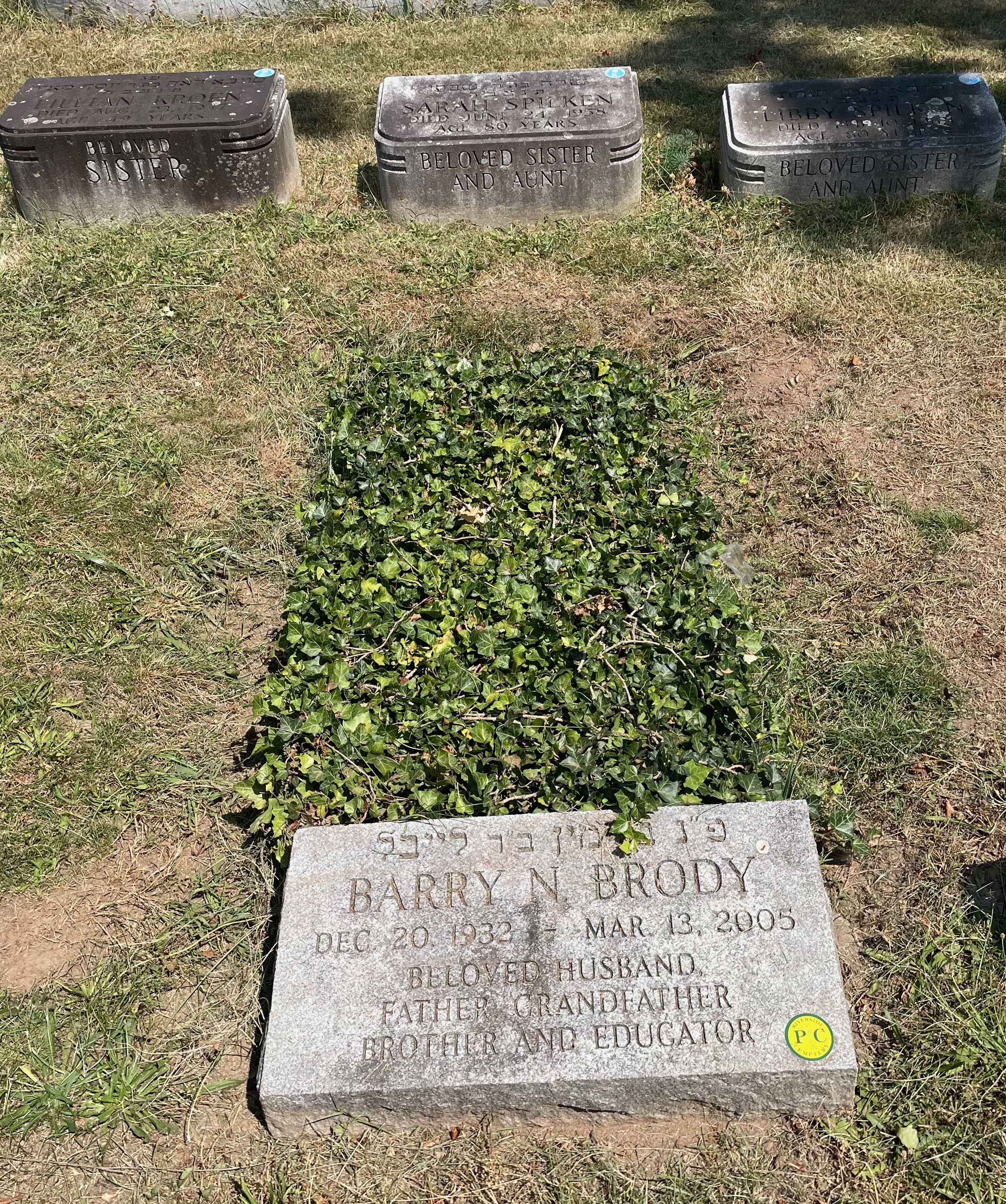
  • Note: I wrote and posted a piece about my Aunt Diane in September of 2016, not long after I started this blog. I have updated and edited that essay in her memory. She died Monday, April 25, 2022. She was 92. She joins her sister, Clair, who passed away this past November, and her brother, my dad, Barry, who died 17 years ago, in the unknowable great beyond. They were each unique and important to me and I miss all three.

    When we met at the burial site for Aunt Diane this past Wednesday, the rabbi told us that death takes us all, no one is spared.  He went on to say that the ritual of gathering at the cemetery reminds us to recommit to living life meaningfully. He told us that we were fortunate to be able to leave that afternoon though Diane could not– we should make the most of the time we have. He urged us not to waste it. I stood in the chill wind, somehow it is always colder and windier at cemeteries, I took in the huge expanse of grave markers as far as my eye could see, and I understood the truth of his words.

    It’s funny how I hadn’t noticed it before – the likeness around the eyes. The line of the brow. The particular shade of blue, flecked with gray. The first time I saw Aunt Diane after my father died, the likeness unnerved me. During subsequent visits it comforted me. I felt like I got two-for-one: a visit with Dad, too.

    My father was the middle child, one sister (Diane) three years older and another sister (Clair) two and a half years younger. They were three of the smartest people I have ever known. It’s kind of amazing that three siblings could each be so sharp. They had different personalities to be sure, but they shared incisiveness, a capacity for insight and intelligence that was as impressive as it could be intimidating. They also shared lively, large, blue-gray eyes. I always wished I had inherited those eyes.

    In a traditional Jewish family, especially of that era (Dad was born in 1932), the son was the prince. Typically the family’s aspirations were tied up in the success of the son. Not so in my dad’s family. While I take pride in the fact that it was the eldest daughter who became the doctor, it seems that my father was overlooked. By his description, corroborated by Aunt Diane, he was not given encouragement or attention by his parents. It is a mystery that will never be solved.

    Visual evidence of the family dynamic: photo taken at my dad’s bar mitzvah in 1945: Diane (16 years old) seated in front, (l-r): Clair (10 years old), Selma (my grandmother), Leo (my grandfather), Barry (my dad, age 13).

    Growing up I didn’t know Aunt Diane that well. We celebrated Passover and Thanksgiving together most years, but those were large gatherings and didn’t provide much opportunity to have intimate conversation. I knew that we all respected Aunt Diane and called upon her whenever there were medical issues that needed to be addressed. I remember her reassuring presence at the hospital when I had eye surgery, by an ophthalmologist she recommended, when I was 5 years old and again when I was 21.

    But the relationship between my father and his older sister, while loyal and loving, could also be tense for reasons I didn’t understand. Or maybe the tenseness related to her husband, Paul. Dad and Uncle Paul had different sensibilities, they didn’t share interests or humor. They each liked to laugh, but not at the same things. It was not something spoken about, just something I sensed. It would take some unusual circumstances for me to get to know Diane on my own.

    I was preparing to go to Columbia University for graduate school, but housing wasn’t available when the semester started. It was September 1980 and Columbia was rehabbing a building on 80th Street and Columbus Avenue that would be offered to graduate students. I reserved a studio in that building, but since it wasn’t ready, Aunt Diane and Uncle Paul offered to let me stay with them to spare me a 90 minute commute (each way!) from Canarsie. I lived with them for almost two months, making the easy trip from 104th and Broadway to 120th and Amsterdam where the School of International and Public Affairs was located. And, I got to know Aunt Diane. I can’t say I got to know Uncle Paul.

    I spent any number of hours talking with Aunt Diane about a range of subjects, from national politics (lamenting Ronald Reagan’s nomination to be President) to Israel to health care policy to personal values. I learned she was a lot more liberal than my parents! I learned about her history, about the challenges of going to medical school as a Jewish woman in the early 1950’s where she faced both anti-Semitism and misogyny. She was a trailblazer and a free-thinker; a woman before her time, especially in terms of male and female roles.

    One area where Aunt Diane was distinctly more progressive than my parents was in her attitude toward premarital sex. I knew she and Uncle Paul took a more relaxed view of the subject so I asked her if Gary could stay over with me. Gary and I had already been together for a year at that point and he was working at a lab at Columbia Presbyterian, even further uptown (on 168th street). Gary was living at home with his parents in Rosedale (Queens), leaving him with a monumental commute to the lab. Aunt Diane explained that she had no problem with it, but was not comfortable allowing something that would go against my parents’ wishes. While it was true that my parents would not sanction that in their home, I thought they would be okay with it if she was – after all, I had been away at college for the four previous years. I think my parents took an “out of sight, out of mind” approach to the subject. I suggested she talk to my mom about it. I was not privy to that conversation, but a day or two later Aunt Diane told me that Gary was welcome to stay over.

    Aunt Diane was a pediatrician who worked at a clinic in a hospital on the Lower East Side of Manhattan, her patients were mostly children of immigrants. During one of those conversations she told me she didn’t believe money should be part of the relationship between a physician and her patient. As a result, she spent her career practicing in the clinic and working for the New York City Department of Health, organizing continuing education for doctors. I always respected that choice, but today as an adult fully aware of the implications of that decision, I admire it even more.

    After Uncle Paul died in 2010, when Gary and I were in Manhattan, we would sometimes meet Aunt Diane for a meal, often at the diner in her neighborhood.  She still lived in the same apartment she shared with Paul on the Upper West Side, the same apartment I stayed in back in 1980, and the same one I visited when I was a child. We met her as she walked ever so slowly with a cane, making her way down Broadway. We took a booth at the Metro Diner and chatted. We talked briefly about her health status; she had medical issues, as any octogenarian would. But mostly we talked about other things, she told us stories of her adventures in Israel with Paul in the 1950s.  She asked us questions about our lives, discussed advances in medicine with Gary. As one of those meals concluded, she invited us to join her to see a movie, A Tale of Love and Darkness, based on the book by the same name by Amos Oz. She was meeting a friend to see the movie at 3:00. We would have loved to go, if only we didn’t have another commitment (which we really did have – her offer was much more appealing!).

    Those meals became less frequent as time went on and Aunt Diane’s mobility and cognition declined. I will continue to think back on them, though, particularly whenever Gary and I go to that diner. I saw my father in her eyes while we sat in that booth, especially how they crinkled up when she laughed. I am grateful I got to see them for as long as I did, but also so sad that I will see them no more, a connection to my dad extinguished. I will miss Aunt Diane’s wisdom, her stories, and insights. Her memory is surely a blessing.

    Dad with his sisters

    Mom with her sisters-in-law
  • In the wake of Trump’s presidency, I have been very concerned about the loss of respect for truth and integrity. The discussion I had with my accountant, which I wrote about in my last blog post, did nothing to allay my fears – not because my accountant is without integrity, but because he was unwilling to acknowledge a difference between Biden and Trump when it comes to that quality. My accountant said, “They all lie.” And since they all lie, he concluded, not in these these exact words, “Democrats are being unfair to Trump, Biden is just as corrupt.”

    I do not accept that. I believe all politicians ‘spin.’ They present things in a way that reflects most positively on their ideas and actions. They leave out counterarguments. They cherry pick facts. Politicians of all parties do that. We need to distinguish that practice, which is distasteful (but apparently an effective communication strategy in a world beset by short attention spans), from lying and corruption. I will grant that there can be a slippery slope between spin and lying, but we need to examine the rhetoric and call it out when it crosses the line. We cannot throw up our hands and say, “They all do it,” and accept it.

    I worry about our capacity for discernment especially after listening to Bill Browder’s assessment of Putin’s reign of terror in Russia and the war in Ukraine. Browder was interviewed by Preet Bharara on his podcast Stay Tuned. I highly recommend listening. Browder has 22 years of experience working with Russia and has seen first-hand Putin’s brutal management style. He described a Russian state hollowed out by Putin’s corruption. In setting the tone at the top, taking his percentage from all the oligarchs the way the head of a crime family does, Putin has not only robbed the country of assets and resources, but has created a culture where everyone along the line does the same. Everyone takes a percentage up the chain of command. In doing that, the essential structures of governance, the paving of the roads, the maintenance of fighter jets, the stores of fuel, have been compromised. Browder suggests that the poor performance of the Russian army is related to this culture.

    One of the ironies of the war in Ukraine is that Zelenskyy was elected on a platform of fighting corruption. Ukraine was recognized as having a major problem with it and the people were fed up. Zelenskyy offered a different message. Putin is more comfortable with neighboring countries that either have a puppet as its leader or at least someone corrupt enough to be manipulated.

    Corruption in the United States is also a problem, but I don’t think it is endemic to the system. Influence peddling has always been practiced. We have not rooted it out, but politicians have been forced out of office, they have been charged and jailed for their offenses. We have laws against it. I am worried that corruption can become the norm if we aren’t vigilant. I see a straight line between the practice described by Browder, that approach to aggregating power, and Trump. I believe Trump subscribes to a philosophy aligned with Putin, he has as much as admitted it. It is entirely about individual power and wealth – there is no concern for the greater good. Trump cloaks his desire to be the most important, powerful person in the world in patriotic rhetoric. Nothing he has ever done suggests that his patriotism is genuine or reaches beyond his narrow self-interest. To be clear, I am not suggesting that Trump is a murderer, as Putin is.

    Some of Trump’s self-interest resulted in policies that benefited the economy, at least according to some analysts. To the extent that this is believed, those folks support Trump. But the grave danger isn’t in those policies (I would argue that those policies aren’t good for the country either, but that is not my point here). The greater long-term danger is in the underlying culture. Policies can change relatively easily. A tax cut can be reversed. Culture is more difficult to meaningfully transform.

    In my academic and professional life, I took courses and training in internal auditing. The purpose was to give us tools to evaluate whether existing policies and procedures ensured the integrity of a given operation (in my case the efficacy of New York State funded programs). In every training that I received or delivered, the main message was the importance of ‘tone at the top.’ This was management’s essential responsibility – modeling the behavior and setting the expectations. That’s why I put so much emphasis on this when assessing the risk that Trump represents. The Republican party must reject Trumpism and instead nurture new leadership – people that offer core values of honesty and ethical behavior. I believe that many in leadership positions in the Democratic party do that, most importantly, Joe Biden – but not all of them. When Democrats fail to meet that standard (i.e., Sheldon Silver, Charlie Rangel, etc.), they too need to be cast aside. If you are a Republican and believe that Democrats are as guilty of corruption and lying, then I implore you to not accept that – make sure the Republicans put forward a worthy presidential candidate so that person can be elected. Please cast Newt Gingrich aside – I don’t know why he still merits attention, he gets trotted out on national media platforms as a spokesperson as he was just this past weekend. Why does he still get to weigh in when he has no standing to comment on issues of honesty and integrity?

    My accountant asked me about Hunter Biden. I replied that if Hunter Biden did anything illegal, he should be prosecuted. If there is evidence of criminal behavior, he should be investigated. The investigation should follow the evidence and if it implicates Joe Biden, then he too should be prosecuted. The Bidens and Trumps should be held to the same standard. I would like to hear Trump supporters say the same thing about Don Jr, Ivanka and Jared – and about the January 6th insurrection. It is important that we continue these investigations until we uncover the truth and assign accountability. We can’t just sweep their actions under the rug and say it is time to move on. The precedent that sets, the message that sends, is dangerous to our country’s future as a democracy.

    We cannot close our eyes to corruption and lies. We cannot let it become the norm. We need to redouble our efforts to expect and enforce ethical behavior at all levels – in government, in business, in media, in our relationships. We must be truthful, and we must call out lying. This is the slippery slope that allows authoritarianism to creep up on us.