Stories I Tell Myself

Linda Brody Bakst on Brooklyn, growing up, identity and more

  • “If I had my way, I would today build a wall about the United States so high and so secure that not a single alien or foreign refugee from any country upon the face of this earth could possibly scale or ascend it.”

    Sound familiar? Could almost be a sound bite from the 2016 Presidential campaign or current political discourse. It is a statement one can imagine hearing at Trump’s recent rally in Ohio. But it was made by North Carolina Senator Robert Reynolds around 1939 in response to the growing Nazi threat in Europe.

    This was one of the many echoes that struck me as I watched “The U.S. and the Holocaust,” the  Ken Burns’ documentary that aired on PBS last week. It can still be streamed for free.

    Today it is appropriate, it is Rosh Hashana, the Jewish New Year, to reflect on the lessons that could be learned from Burns’ film. Those lessons could be learned if one watched the six-hour series. Sadly, the people who most need to see it, likely did not. It was hard to watch, painful, but so important because of the reverberations that continue to plague our country now. I will need to write more than one essay to explore it.

    So many themes addressed by the film are alive today. I believe there is something to be gained by considering them. These issues are thorny, but we need to be honest and talk about them.

    First, a word about terminology. Immigrant, refugee and migrant are all words used to describe people arriving at our borders. Theoretically these words mean different things, though I don’t believe there are agreed upon international definitions. A refugee is generally understood to have been forced from their home, while a migrant seeks another home voluntarily (it has the connotation of not necessarily being permanent and can be within a country, like migrants from the Dust Bowl back in the 1930s). An immigrant, on the other hand, is thought of as seeking permanent status in a new country. However, the ‘voluntary’ nature of the person’s move can be difficult to assess. For purposes of clarity in this essay, I am addressing refugees, though the lessons we take from our experiences from World War II are broader than that population.

    One of the questions raised is: could/should the United States have allowed more Jewish refugees into the country in the late 1930s and early 1940s. We face this question today on a myriad of fronts – refugees from Ukraine, from Venezuela, from other war-torn or famine-afflicted states, or people displaced because of climate change (flooding, fires).

    In the past people argued that we didn’t understand the risk to European Jewry, but as this documentary makes clear, that simply wasn’t true. It was known and it was known early enough to have acted. However, fear was an obstacle; the fear of spies among refugees – that there would be bad actors even among the Jews who were so threatened. That’s where another theme intersects: propaganda.

    The Germans were masterful at stoking the flames of anti-Semitism, portraying Jews as evil, all-powerful, Communists. The image was believed even if it was internally inconsistent. Millions, and that is not an exaggeration, died as a result of that combination of fear and acceptance of propaganda – acceptance not just in the United States but in other developed countries that could have taken them in but were vulnerable to that toxic mix.

    What can we learn from this? Maybe, just maybe, we need to be careful about stereotyping. When a whole group is portrayed as one thing – Mexican drug lords, Syrian terrorists – it is incumbent on us to think critically. It isn’t that there aren’t Mexicans who could be connected to the drug trade or Syrians who could be terrorists or Jews who could be communists. There are or were, but to what degree? Were the majority? That’s preposterous. The first question is:  Are the refugees at risk of death? If they are, the second question is: can we help in a way that minimizes the danger to our own citizens?

    We have been plagued by the question of who can enter our country since its inception. We can’t keep pretending that it is new or that we don’t have biases that impact our policies. I am not suggesting that we allow unrestricted entry. The dialogue on this issue is so poisoned as to make it nearly impossible to discuss rationally. I am not aware of anyone, certainly not President Biden, who is advocating open borders.

    The reality is that the vast majority of refugees are ordinary people trying to escape intolerable, life-threatening circumstances. One of the things the documentary so effectively illustrated is the individual stories – several Jewish brothers came to America in the 1910s, one went back to Poland and was never able to re-enter our country. He, along with his wife and children, died at the hands of the Nazis. The family that remained in the United States was devastated by their inability to help and lived with guilt and pain for the rest of their lives. We can become anesthetized to the pain of the individuals if we don’t take the time to understand their stories. It took years in a displaced persons camp for my father-in-law to gain entry to the United States, at least he made it.

    The United States in the lead up to and during World War II, as is true today, didn’t want non-Northern Europeans to enter our country, they didn’t want the majority white, Anglo-Saxon Protestants to be ‘overrun’ by ‘ethnic others’. Semitic people were less desirable. It was chilling, and appropriate, that Ken Burns concluded the documentary with footage of the march in Charlottesville; showing men with tiki torches chanting “Jews will not replace us.” While that sentiment might not represent the opinion of the majority of Americans, it is frightening that our president was unwilling to clearly and unabashedly rebuke the marchers. It revealed something we don’t want to see, but we cannot ignore. If we want to keep our claim to being a force for good in this world, and maintain our democracy, we must face the demons which lie within. We cannot be complacent in the face of the evil. If a politician, no matter what other positions they take (they may ironically be a supporter of Israel), is unwilling to stand up to white supremacists, we must reject them regardless of party affiliation.

    The answer to the question I posed above is that the United States could have and should have done more. Let’s not be in the position in the future of coming up short in the eyes of history.

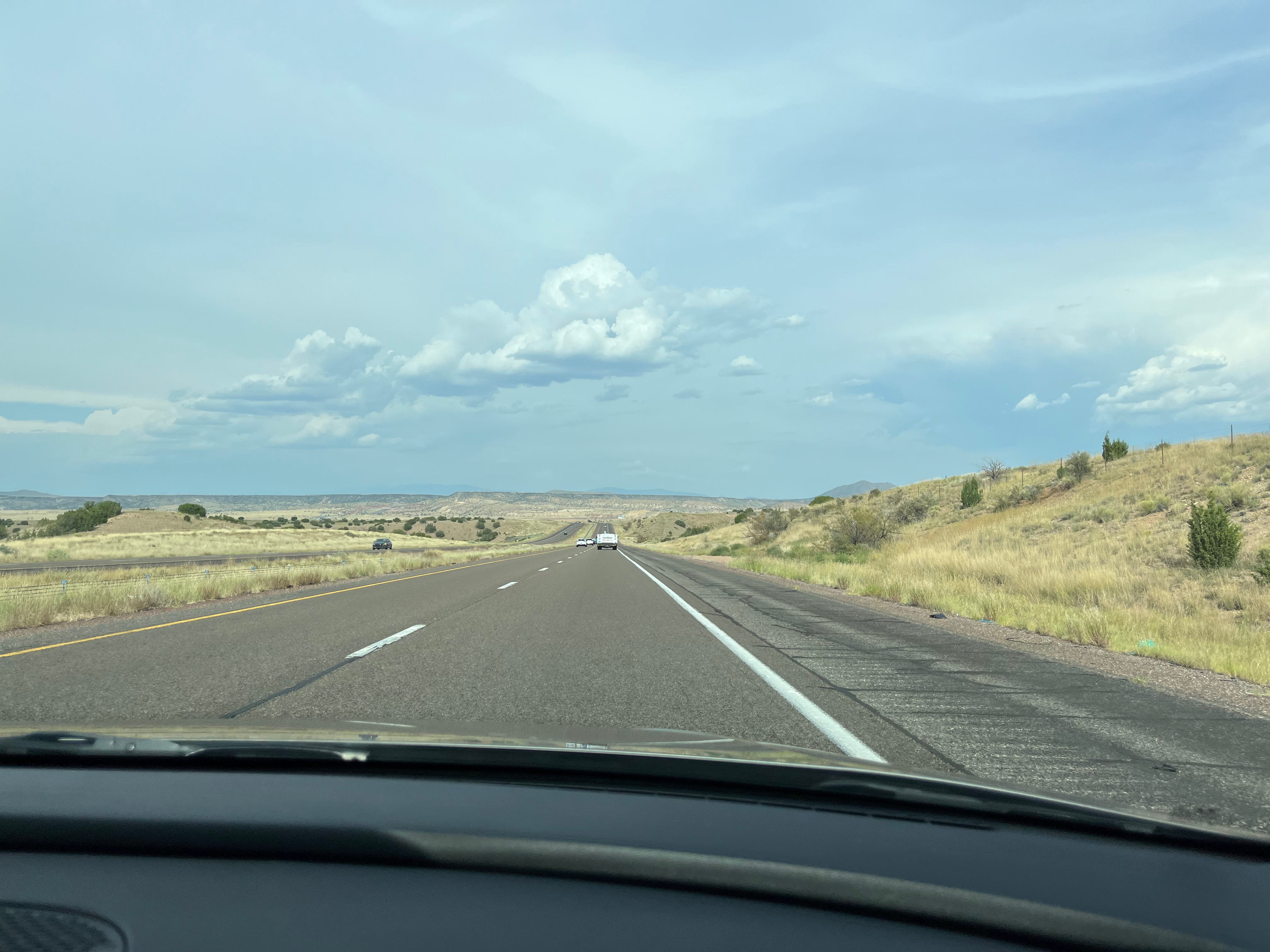
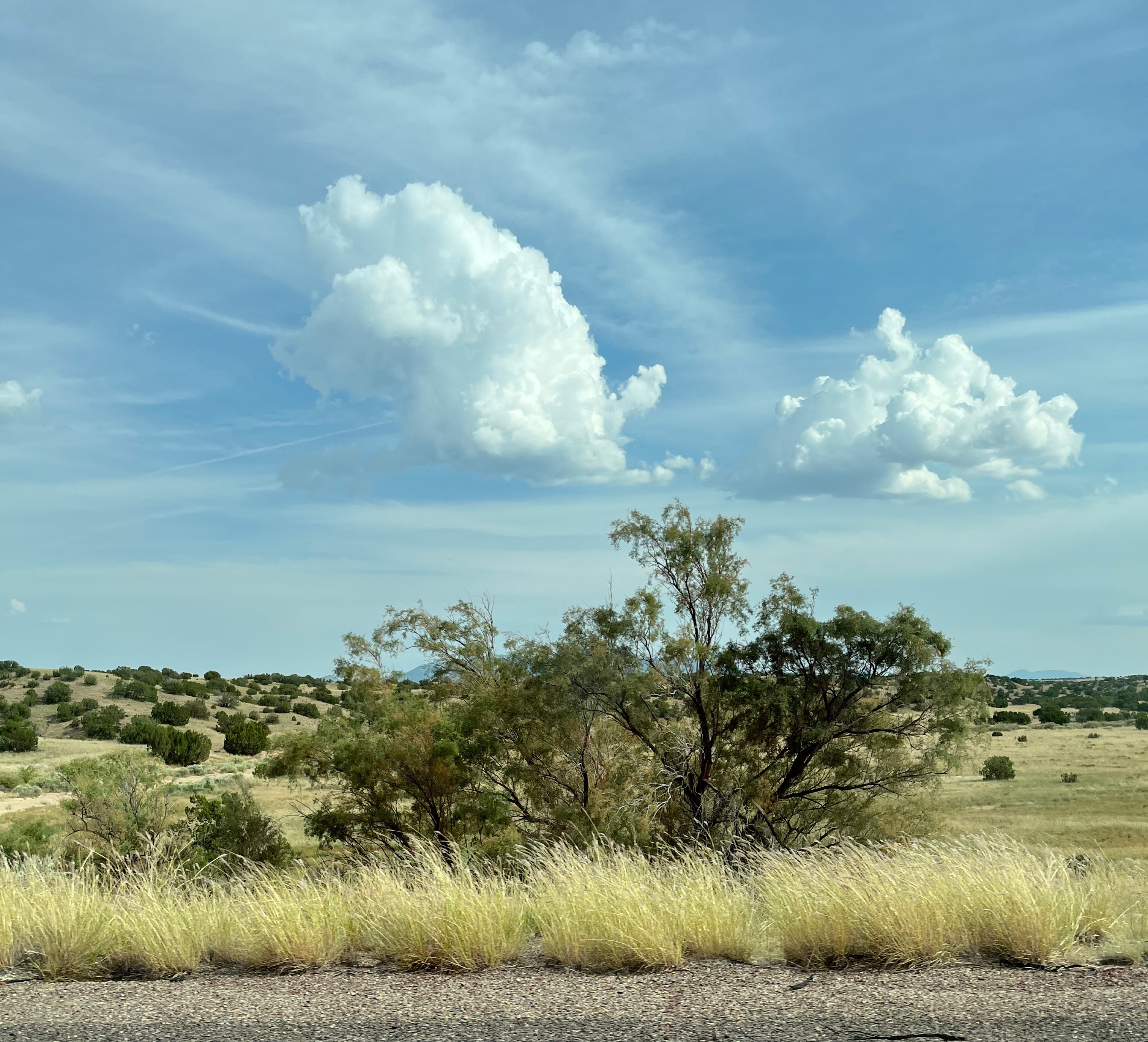
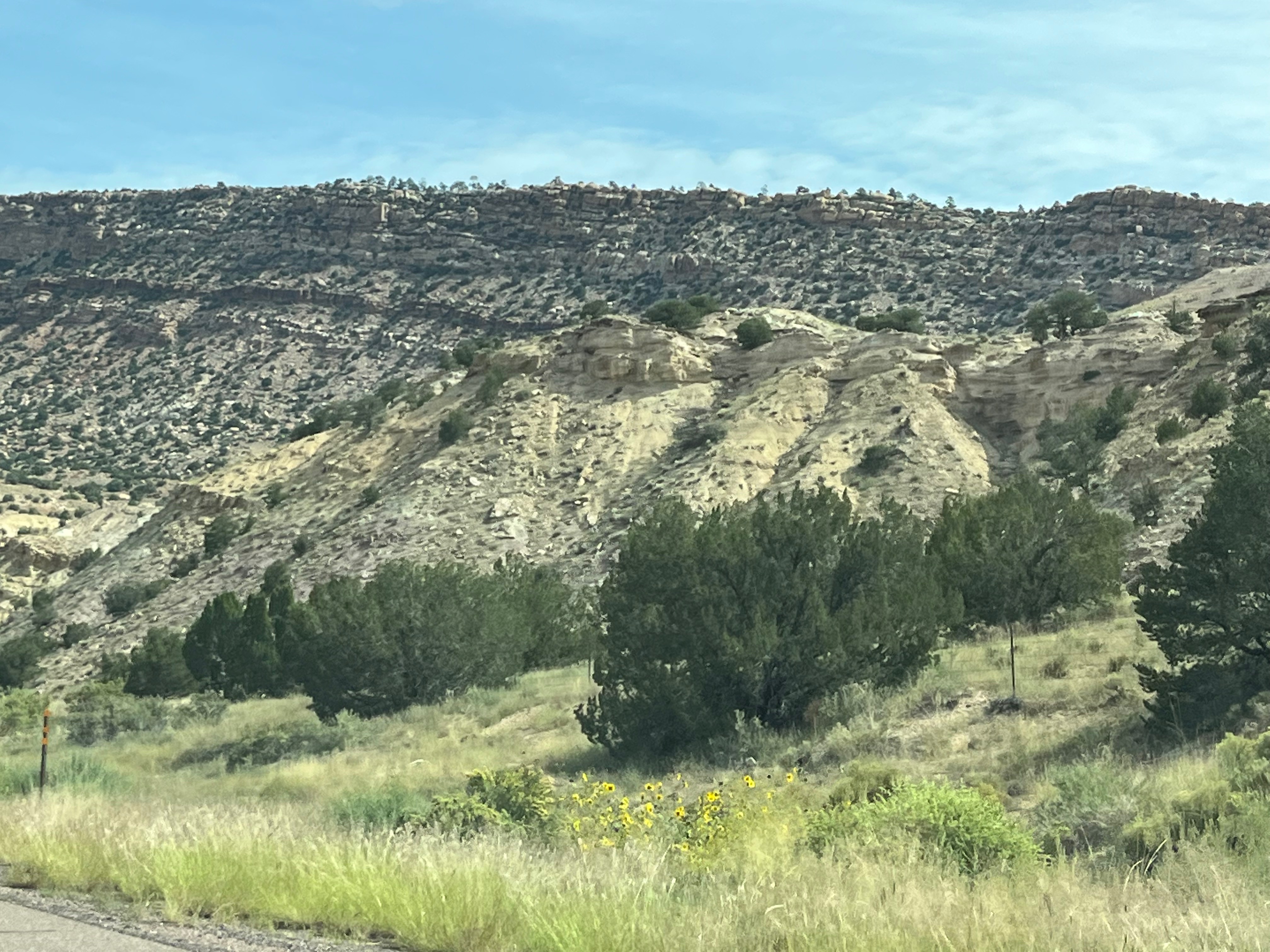
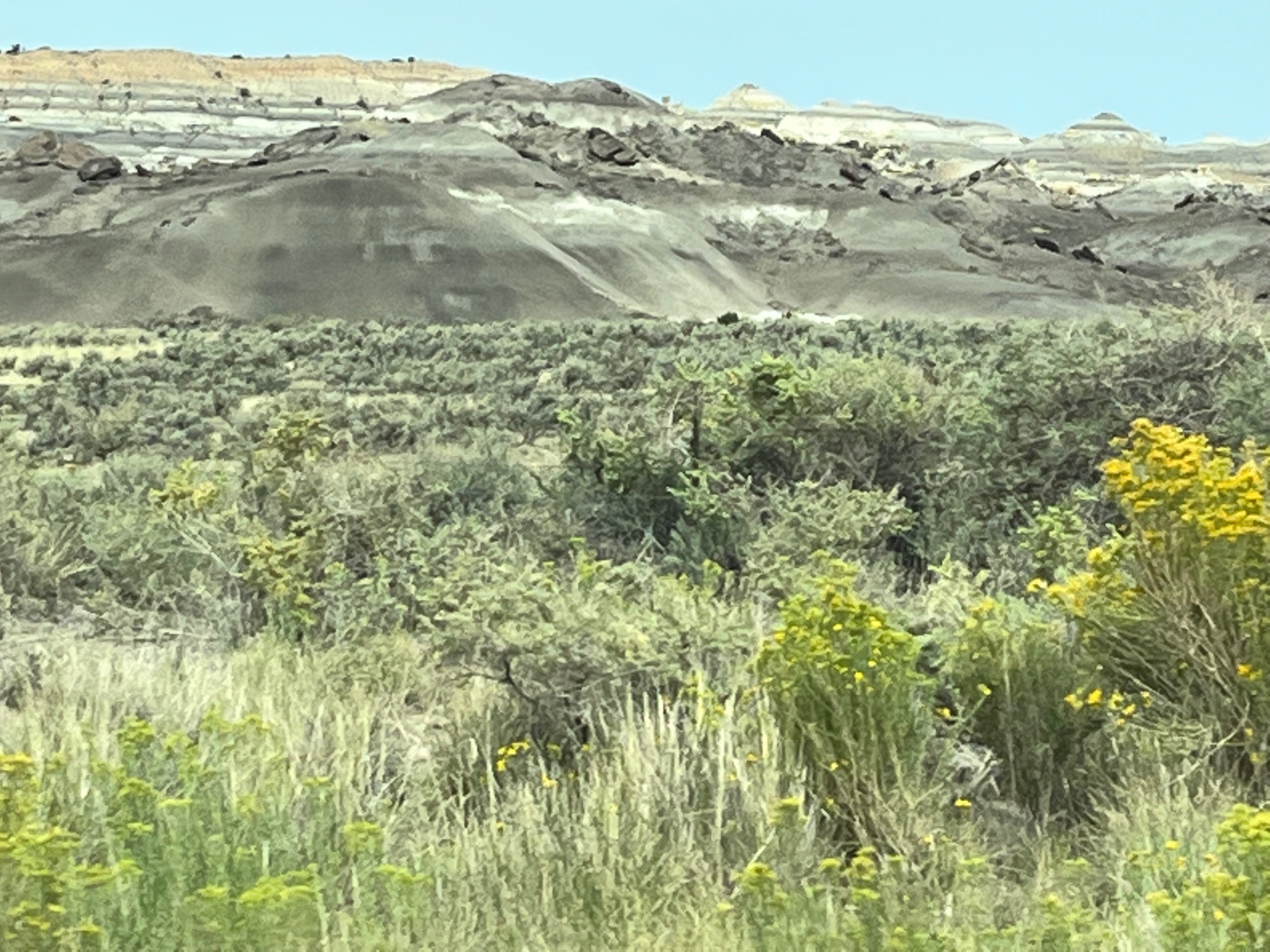
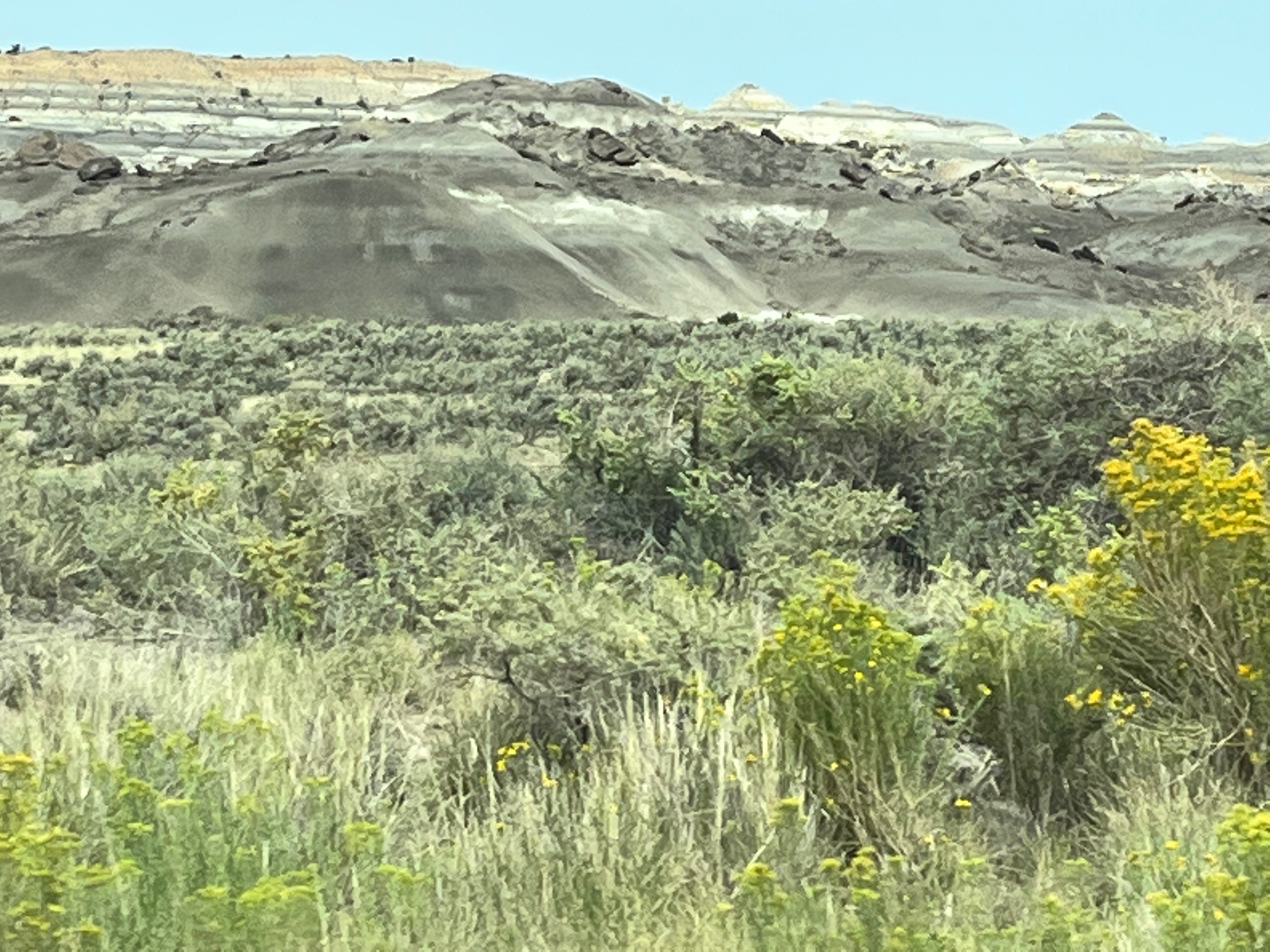
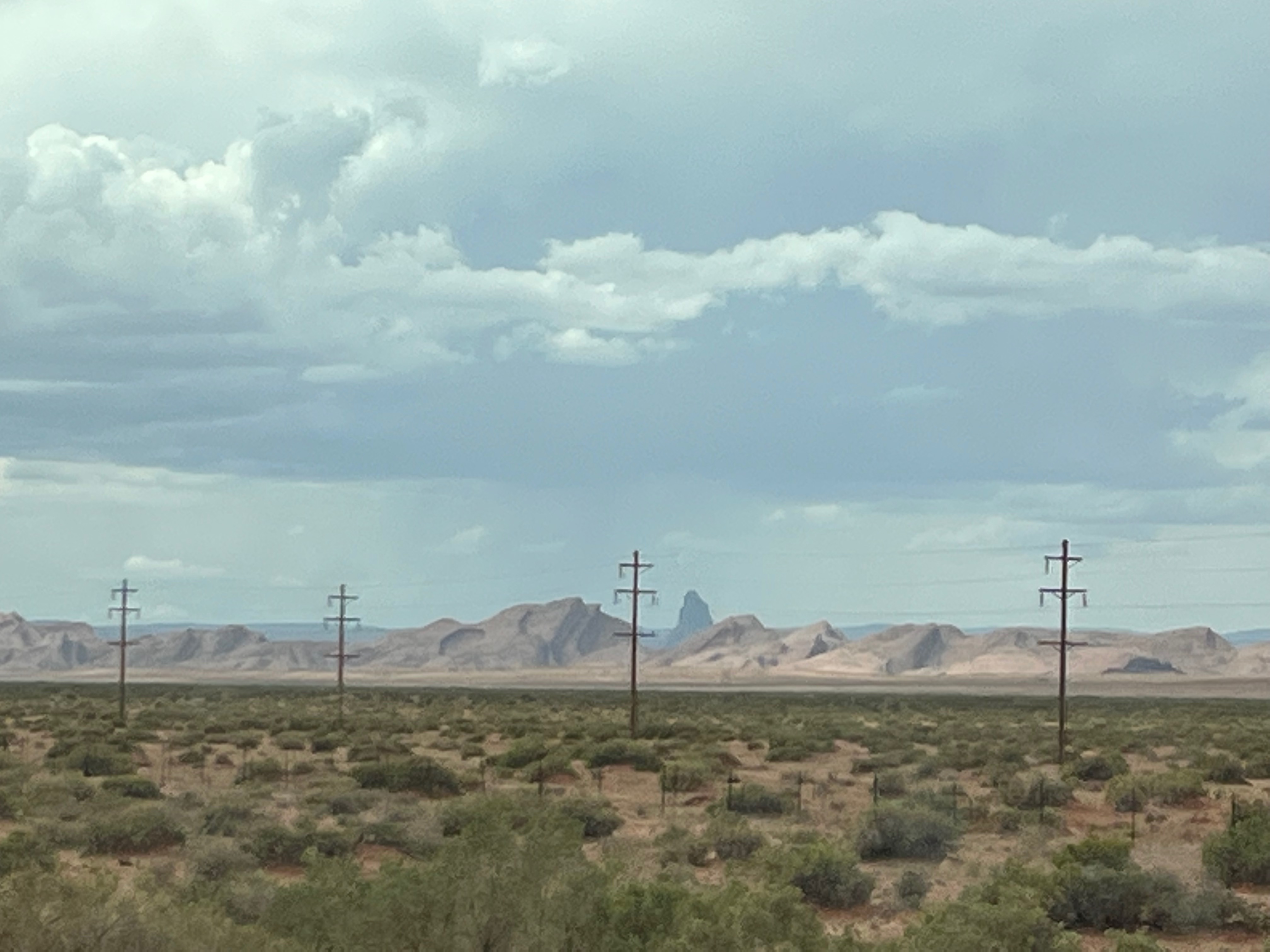
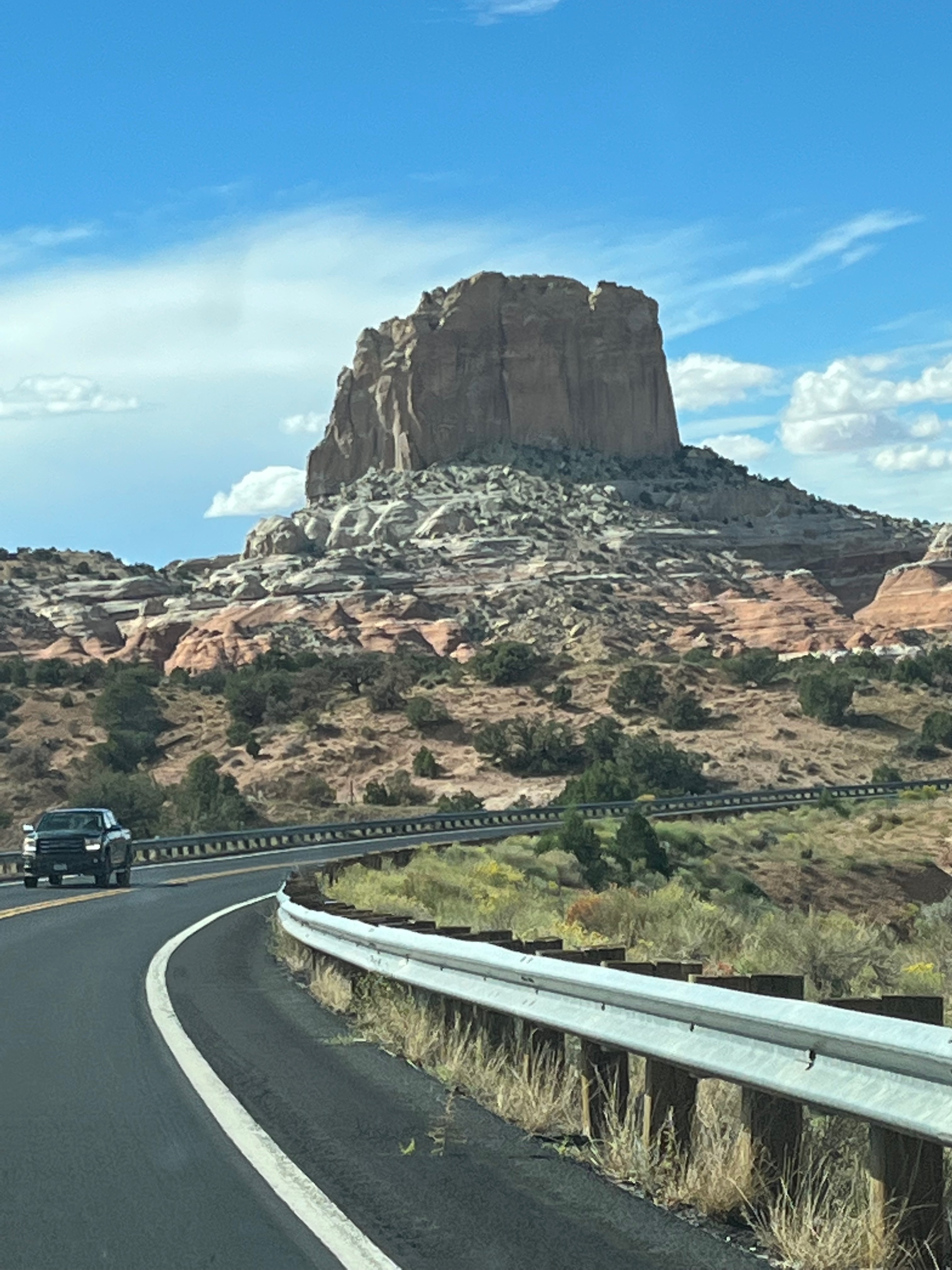
  • Though I don’t consider myself a photographer, I do like to take pictures. I find that, as long as I don’t get too caught up in the mechanics of it, it helps to notice the beauty around me and to solidify the memory in my brain. I snapped a lot of pictures on our trip through the southwest, many from the window of the car as we were speeding down the highway. Gary prefers to drive so I ride shotgun, doing the navigating, but mostly taking in the scenery. Here is some of what I saw as we passed through parts of New Mexico, Arizona and Utah. It seems to me that almost all of southern Utah could be a national park. I hope you enjoy the views.

    It is a spectacular country that we live in. I am grateful I got to see a portion of it – and that I got to see it with Gary, the best travel companion I could ask for.

  • I originally planned this trip to the southwest of the United States in 2019 long before I had ever heard of Covid-19. We were supposed to go in May of 2020 but had to cancel, much to my disappointment. Well, we are taking the trip now!

    This past Friday we flew from Albany to Albuquerque, New Mexico, leaving very early in the morning. Other than a misunderstanding about our hiking sticks – I thought they could come on as part of my carry-on baggage, TSA disagreed. They characterized them as ‘weapons.’ You’ll never guess who won that battle. We had to leave the security area and check our bags. We were early enough to get to the Delta check-in counter and back through security a second time so there was no issue. Otherwise, our travel to Albuquerque was uneventful, long (because we had a four-hour layover in Atlanta) but uneventful. Given the horror stories one hears about air travel these days, I am grateful.

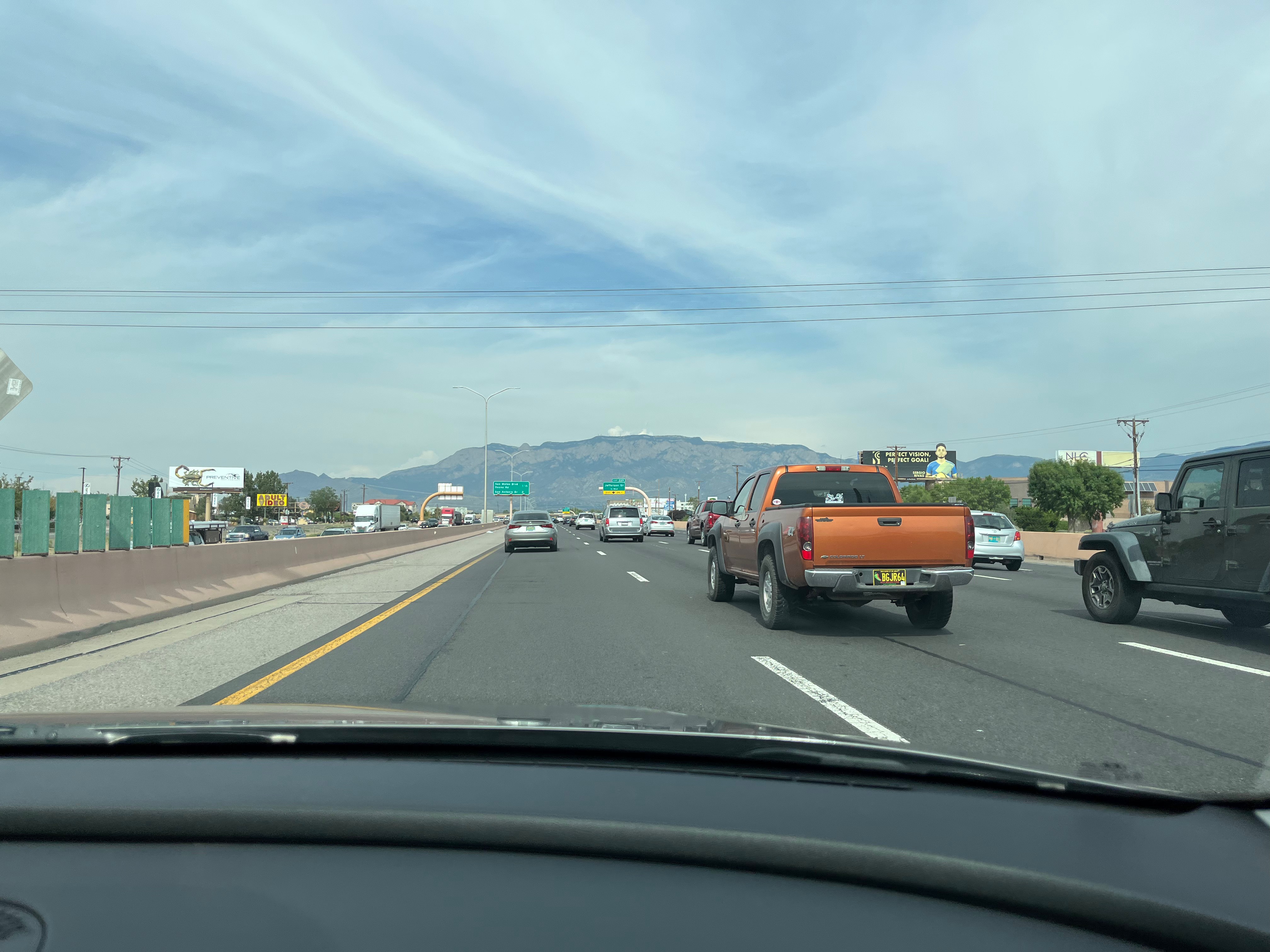
    We picked up our rental car and promptly got on the road to Santa Fe which is only a little over an hour drive. As we exited the small airport and got on the highway I did look around Albuquerque trying to find evidence of Walter White and Jesse Pinkman, to no avail.

    On the road in Albuquerque

    The landscape looked about what I expected. It got prettier and prettier as we approached Santa Fe.

    Snapped from our moving car

    We checked into our hotel, the Inn on Alameda, a mere 14 hours from when we started our day. But it was still early enough to go explore a bit and get dinner. The gentlemen who checked us in was friendly, efficient, and provided us with good information about restaurants and nearby attractions, and a map (I love maps!).

    Though we had not planned it to coincide, this was the weekend of Fiesta in Santa Fe. It is an annual celebration of the city’s Spanish heritage. The festival has evolved over recent years in recognition of the complicated relationship between the Spanish settlers, the indigenous people and the Mexicans who also ruled the area for a time. From our perspective, as tourists, what it mostly meant was that the city square had food and craft booths set up, as well as a stage where various performances were featured. It made for a fun, lively time.

    After dinner we walked back to our hotel in a light rain. We basically collapsed in our bed so we would be ready for our scheduled walking tour the following morning.

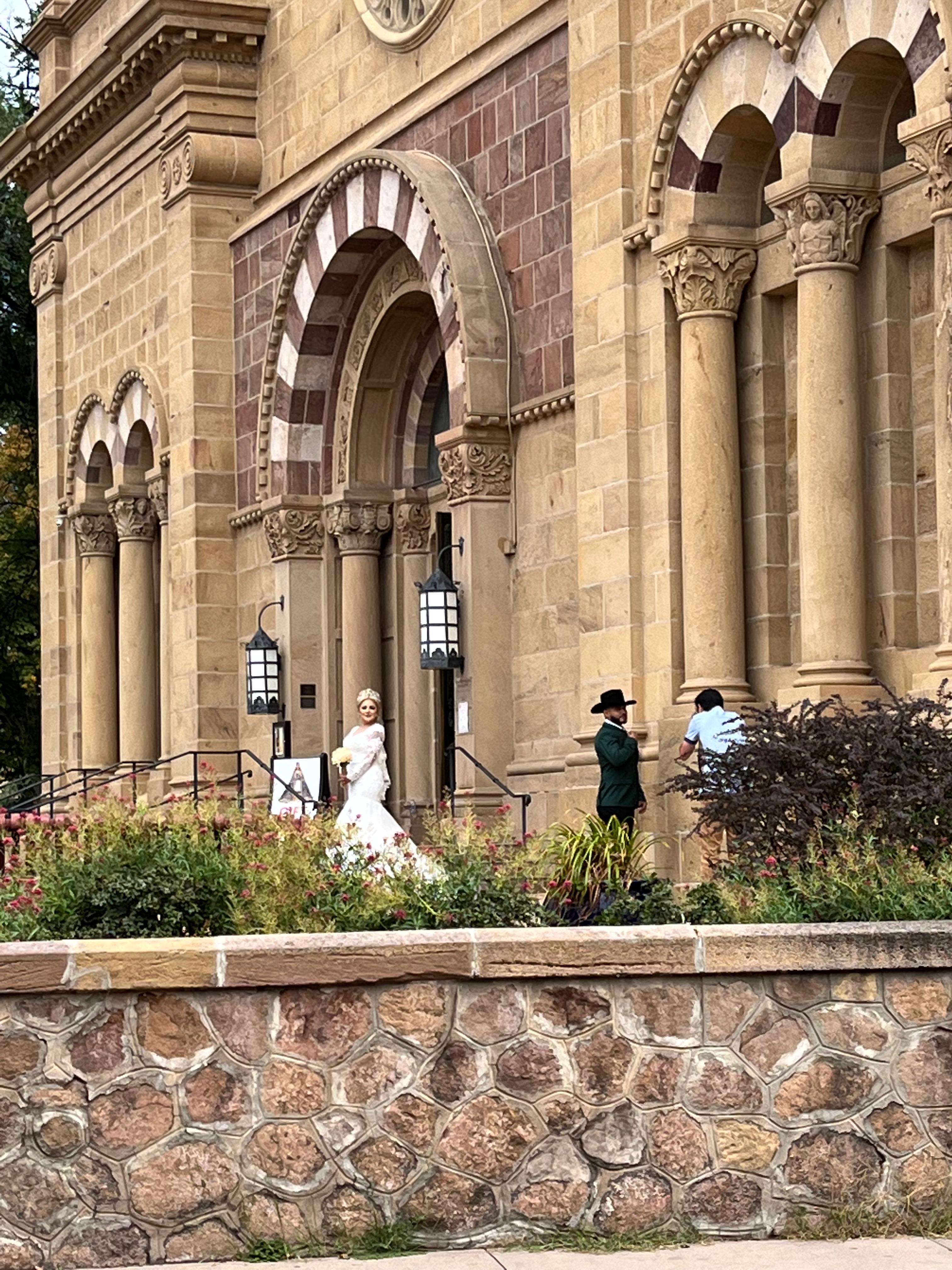
    We met up with our tour guide at a lovely coffee shop. He gave us an overview of the area’s history as we sipped our coffee. Then we started our tour. Here are some scenes from our tour:

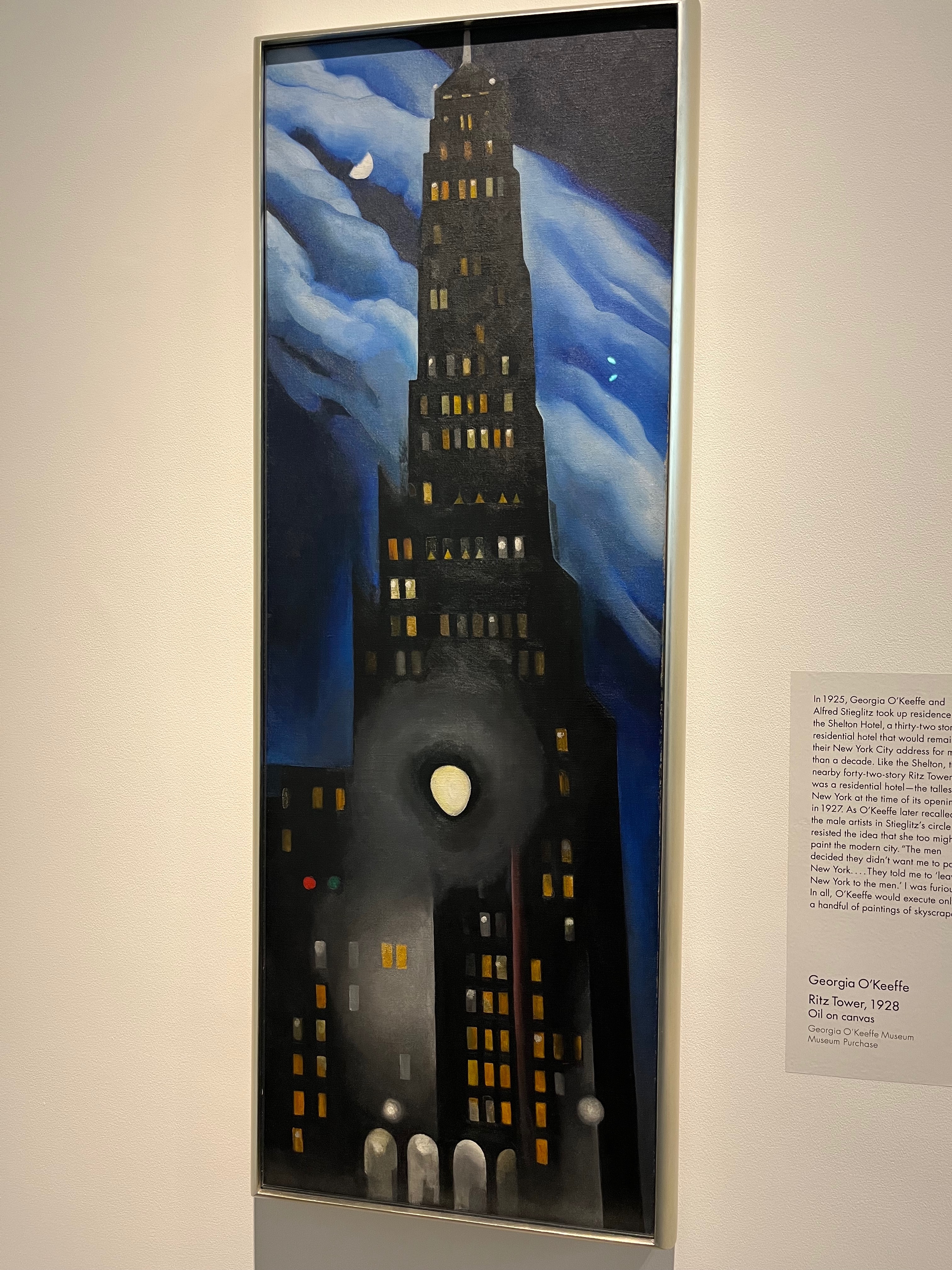
    The tour ended at the Georgia O’Keeffe museum. We enjoyed looking at her work and learning  her history. Women who are brave enough to forge their own path are inspiring – and she certainly did that. Plus, I like many of her paintings.

    Not a ‘typical’ O’Keeffe, but I appreciated it. She did live in New York City for 20 years after all

    We came back to our hotel, legs aching more from standing than walking, we had been on our feet for about 4 hours. Rather than make life complicated, we had lunch at our hotel. They had delicious offerings, as it turned out.

    After a brief rest, we headed out again to explore – this time to Canyon Road where many of the art galleries are located. It is amazing how many talented people there are in this world. The paintings and sculptures were breathtaking.

    Sunday morning, we had breakfast at the hotel. I couldn’t leave Santa Fe without getting a magnet – I make a point of collecting magnets from wherever I travel. The wall in our mud room has metal sheeting attached so I can put them up and remind myself of all the fabulous places I have been. I neglected to get one as we were wandering around on Saturday, so we drove over to the Five and Dime (that was the name of the store!) and I found a great addition to my collection. Now we could move on.

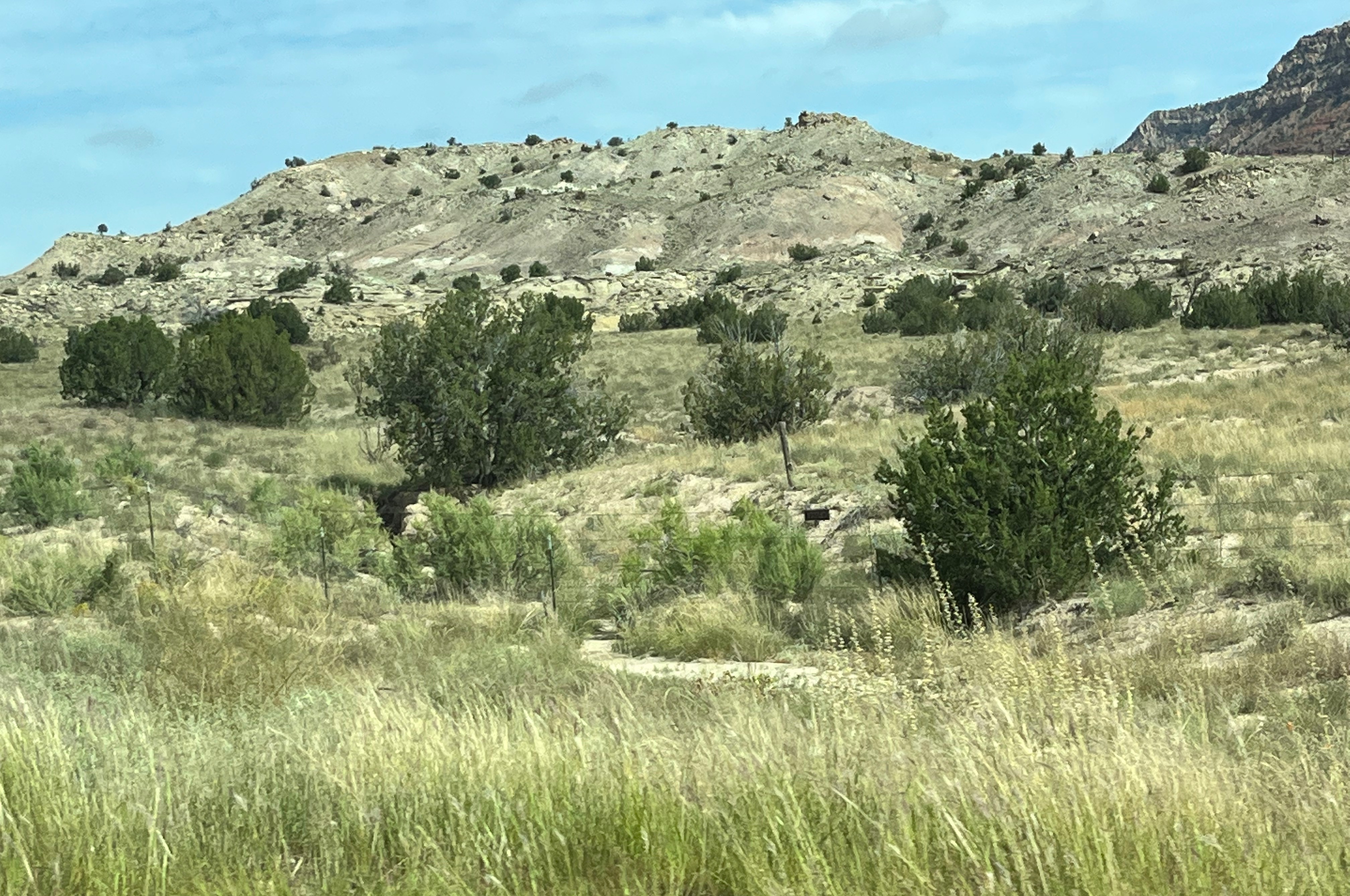
    We had only 7 hours of driving ahead of us! – to get to Antelope Canyon, Arizona. Gary and I don’t mind long car rides, though this was pushing it. Some observations: The northwestern part of New Mexico is kind of depressing. Some of the landscape is beautiful, but some of it is dreary and desolate. You also see the poverty of the native peoples – pawnshops, scrap yards, and not much else in the way of industry.

    Here are some photos shot from the car as we drove through New Mexico and into Arizona

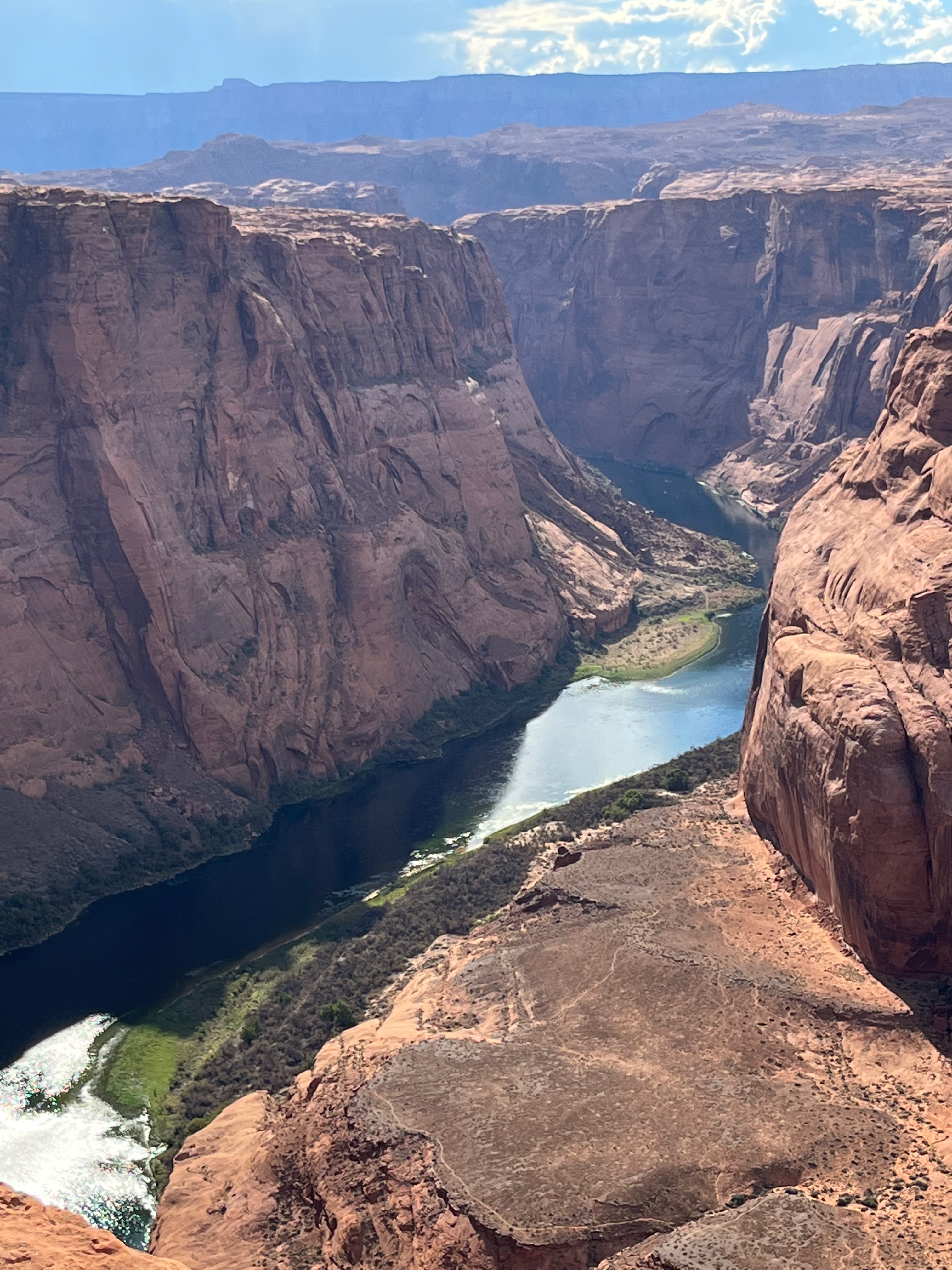
    Our destination was Horseshoe Bend, Arizona, where the Colorado River emerges from the Grand Canyon. We finally made it. We started our day in 55 degree Santa Fe. We emerged from our car into 90 degree blazing sun. It was a 1.5 walk from the parking lot to the site. Fortunately, we had water with us, though within minutes the bottled water was hot! But hot water is better than no water in that climate! The walk was well worth the effort.

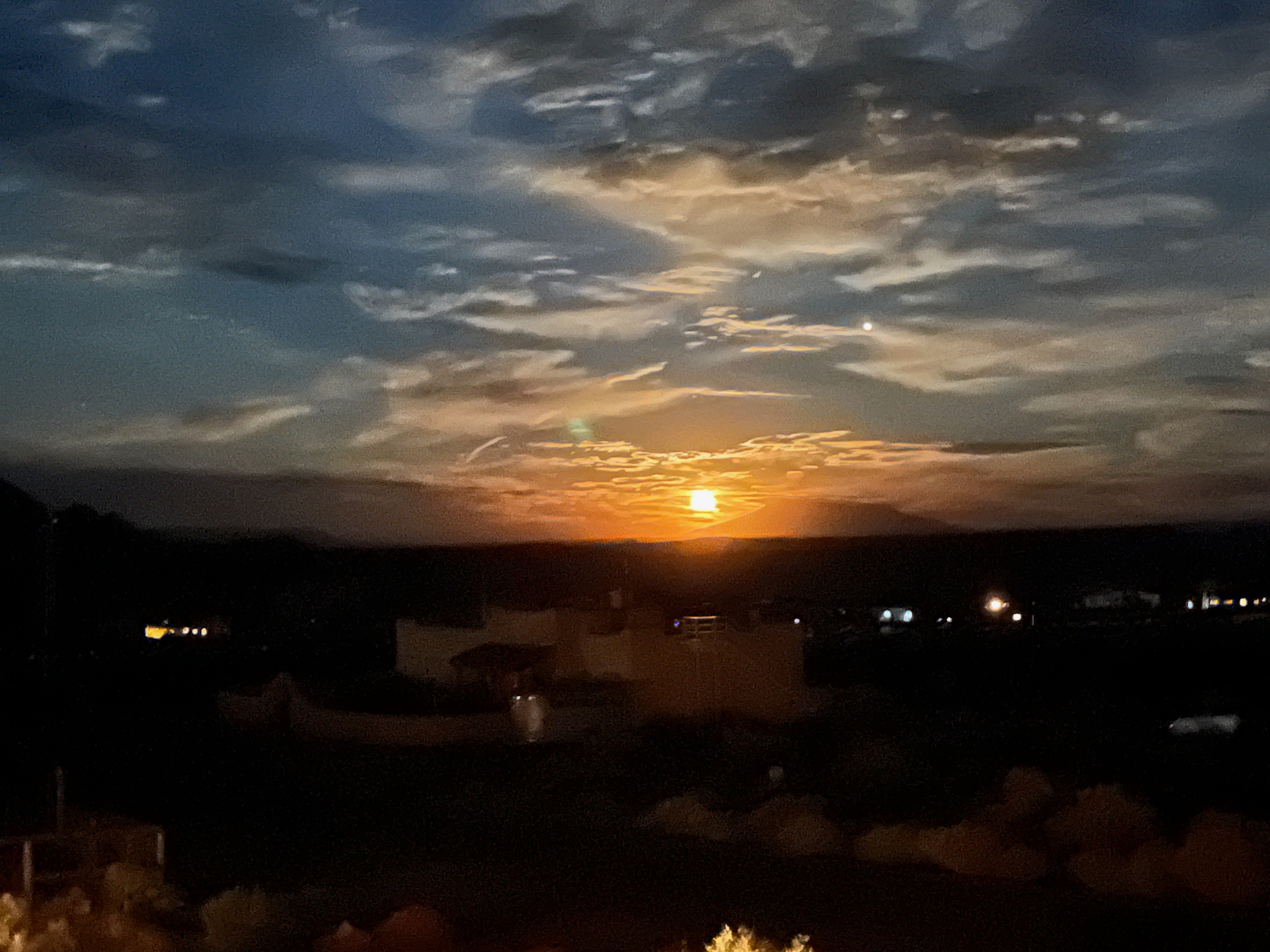
    Then it was on to our bed and breakfast – only 30 minutes away. Our host provided a beer for Gary and a glass of  well-chilled Chardonnay for me (a generous pour, too!). Ahhh! Lovely. We caught a beautiful sunset and moonrise before going to sleep.

    Moonrise

    We have finished 3 days of our vacation, 6 more to go with so many more magnificent places to see (Antelope Canyon, Bryce Canyon and Zion National Parks are coming up) before ending our journey in Las Vegas. By the way, did you know that there is a Las Vegas, New Mexico? We were confused by road signs for it as we drove to Santa Fe. We know our geography well enough to realize that Las Vegas is not 125 miles from Albuquerque. Who knew there was another one? One of the many things I learned on this trip. Apparently, New Mexicans refer to it as Las Vegas, and call the one in Nevada ‘Vegas’ to distinguish them.

    Can’t wait to see what else I learn.

  • “And I went to see the doctor of philosophy
    With a poster of Rasputin and a beard down to his knee
    He never did marry or see a B-grade movie
    He graded my performance, he said he could see through me
    I spent four years prostrate to the higher mind
    Got my paper and I was free”

    These are lyrics to the song “Closer to Fine,” by the Indigo Girls, released in 1989. They were the words sung by about 10,000 people attending a concert at Tanglewood in Massachusetts. The Indigo Girls began the song but stopped singing after the first verse and chorus, continued to play their instruments and invited the crowd to take it from there. And we did. It is a powerful thing to be among so many people singing words together – and these aren’t simple lyrics. Not “I love you, yeah, yeah, yeah.”  We were among strangers, and yet we weren’t. We all shared the experience of singing that song for decades, in our cars, in our dorm rooms, in our headphones while we jogged, while hanging out with friends. We were different people, living separate lives, varied ages and backgrounds, but united in finding meaning and connection in that song. It is a unique sensation experienced only when attending concerts in person.

    When I bought the tickets a month or two ago, it was to see Brandi Carlile; I didn’t know the Indigo Girls would be the opening act, that was a bonus I learned in the days leading up to the concert. I first became familiar with Brandi Carlile from my local radio station (WEXT) and noted that I liked her sound. I saw her interviewed and was further impressed. I bought the tickets based on that. Then, more recently, I saw video of her performance with Joni Mitchell, and I am a huge fan of Joni, at the Newport Folk Festival. That sealed the deal; I was excited to attend my first in person musical performance since the pandemic began.

    Tanglewood’s capacity, with lawn seating, is 15,000. It was close to full (there were some inside seats open until the rains came). Though most had come for the main attraction, it was clear that the Indigo Girls had their own fans, as well. The audience was very enthusiastic from the first notes and the performers fed off the energy of the crowd. I can only imagine how it feels to have lyrics you have written sung back to you by thousands of voices. How validating! Perhaps, after years of it, it becomes old hat. It didn’t seem that way for any of the performers that night. Brandi Carlile exulted, with her bandmates, that after years of playing chowder houses and chain restaurants in the Pacific Northwest, they had made it; they had, in her words, achieved their dream. I couldn’t help but feel happy for her and her talented band as they reveled in the cheers and absorbed the energy of the crowd.

    Artists may pursue their art for a variety of reasons. Some may not love the public part, the performing; they may derive more satisfaction from the creative process. Some may choose to generate their work alone; others seek out collaboration. Brandi Carlile appears to enjoy both the performing and the collaborative potential music presents. Writing books, poetry or essays is generally a solitary craft, at least initially. Publication involves others.

    No matter how the work is produced, though, the reality is that if you don’t have an audience, it may feel incomplete. People can talk about creating for its own sake, but without a reaction, without any audience, isn’t something essential lost? And, beyond that, the artist certainly can’t make a living without it.

    This notion was reinforced by another ‘show’ I attended of an entirely different sort. The Clark Museum, also in the Berkshires, is hosting a Rodin sculpture exhibit. I have always appreciated Rodin’s work, especially The Thinker and The Kiss.

    A small reproduction of The Thinker sits on my desk

    I learned a few things from this exhibit. Rodin sketched first, then created a clay or plaster model (not necessarily full size). He did not cast the bronze or carve the marble himself; he employed someone to do that. I was surprised to learn that a woman, Camille Rosalie Claudel, did some carving for him. She was his student, assistant, model, and romantic partner for a time (Rodin also had a lifetime woman companion with whom he had a child but that is another story).

    Learning that someone else did the carving was interesting on many levels. Part of me feels like the carving is an essential part of the artistry. One of the extraordinary things about sculpture of the human form is coaxing emotion and texture from stone. Does Rodin get credit for doing that if he didn’t do that part of the work?

    Is this common practice? I have watched a number of profiles of artists on the news magazine CBS Sunday Morning. When working on large installations, artists have used teams of people to weld, pour concrete and other tasks involved in creating the work. But that struck me as different than having someone else do the ‘sculpting.’ But, where do you draw the line? Does it matter?

    I don’t recall when I’ve seen Rodin’s work displayed at other museums whether the person doing the carving was given credit. If they were, I didn’t notice. At least at this exhibit they were.

    I was also surprised to find that it was a woman who did the work. Maybe that wasn’t unusual either, he was creating in late 19th and early 20th century and I would not have expected that. It comes as news to me.  

    One of the major themes of the exhibit was the role that patrons played in Rodin’s success in the United States. Without a few dedicated supporters, who bought his art, got it displayed in major museums and spread the word about his talent, he would not have become the world-renowned artist he became. It was also interesting to note that many of his patrons were women.

    We may have an image of artists as lone creatives, toiling by themselves, perhaps tortured souls. A piece of that may be true. But, if we know about that their work, if they have achieved wide exposure, then it is likely that they have benefitted from a network of people who have supported them. Nothing wrong with that – and I am not suggesting it is luck, though that may play a role for some – but as a writer seeking publication, it is useful to keep that in mind.

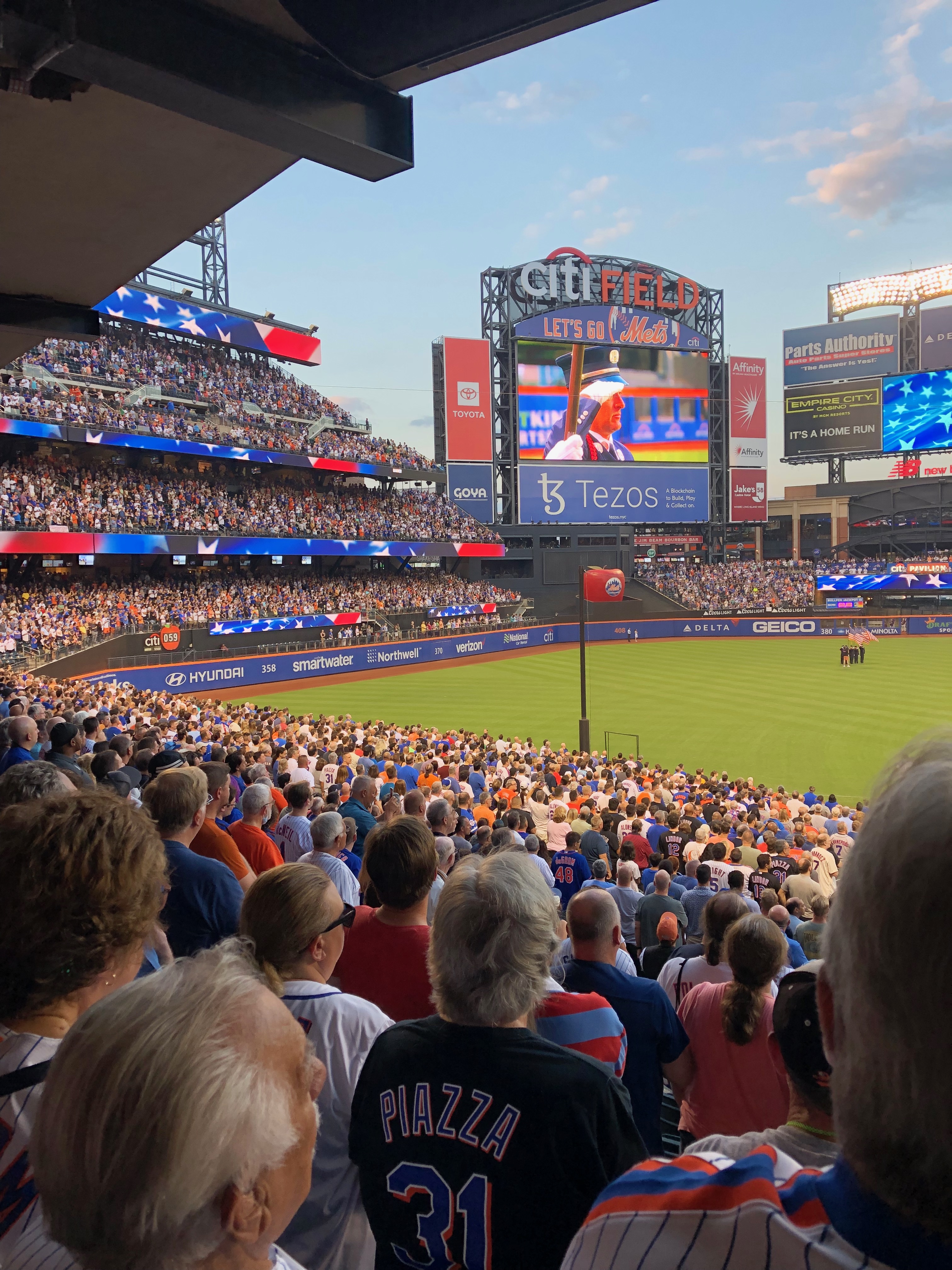
  • One of many ballpark rituals: standing for our national anthem

    Let’s go Mets! Or, in this age of social media, #LFGM! But, let’s keep it old school for the time being. We did just go to Old Timers’ Day at Citi Field, which took us back to an earlier era.

    Months ago, when it was announced that the Mets would host an Old Timers’ Day for the first time in almost 20 years, Gary jumped on it. Contrary to Gary’s take, I believe our son, Daniel, called it to our attention, not me. Anyway, Gary bought a bunch of tickets, not necessarily knowing who exactly would go, but wanting us to be there. Saturday, August 27, 2022 was the big day.

    It was our first return to the stadium since the pandemic. It felt both odd and natural. I was excited mostly because I knew it would be special for Gary since he is a lifelong Met fan.

    I did not grow up as a Met fan. I loved the Yankees. Bear in mind, that the Yankees of my youth stunk. This was the mid to late 1960s, before George Steinbrenner bought the team(in 1973) and bought success. I loved Mickey Mantle – I am not old enough to have seen him in his prime. I think I loved his name more than anything. My Yankees were the Yankees of Roy White and Horace Clarke. When Ron Blomberg came along in 1971, a Jewish player – a rarity and much beloved in New York City – I had even more to root for.

    Another reason for my affinity for the Yankees was likely that two of my main nemeses growing up, my brother Mark and my Uncle Mike who both teased me relentlessly, were Met fans. I hated Tom Seaver. I don’t know if it was because I perceived him as arrogant or because my brother loved him – either way, I preferred my Yankees. I didn’t, however, hate the Mets as a whole and I couldn’t help but get caught up in their underdog 1969 season. As a serious sports fan, I watched the games, knew the team (I could name all the position players and knew the pitching staff even though it wasn’t that common for a 9-year-old girl to follow that stuff) and was delighted when they beat the Baltimore Orioles in the World Series – even if my brother and uncle reveled in the victory, too.

    Fast forward a decade and my enthusiasm for sports in general subsided. I still enjoyed watching games, but no longer felt a strong allegiance to the Yankees or any other baseball team. Steinbrenner made it hard to remain a fan. In 1979 when I got together with Gary, it was easy enough to put the Yankees aside. During our long marriage, I have supported his passion. Together we have raised our children to continue the tradition as Met fans.

    Eight of us converged on Citi Field this past Saturday. Our son, Dan and our granddaughter; my brother Mark (yes, the one who teased me relentlessly and still does, though not relentlessly but is a loyal and loving brother too) and his wife, Pam, their son, Sam (also a passionate Met fan), and my high school friend, Steven, joined us. We took the subway, along with many other Met fans. The first leg of the trip on the 1 line, the subway car wasn’t air conditioned, but fortunately it was a brief ride and not too crowded. We had more luck with the 7 train, it was air conditioned, so we arrived at our destination in relative comfort. The 7 line travels above ground through Queens. I couldn’t help but notice the changes in the borough – so many high rises! The areas we passed have transformed from small residential and industrial neighborhoods to gleaming skyscrapers. New York City is ever-changing.

    We arrived at the stadium with hordes of others but made it through the security checkpoint and entry gate without too much delay.

    The turnout of players and fans was impressive. The seats were full. Representatives of the original 1962 Mets were present, as well as members of the Miracle Mets of 1969 including Cleon Jones, Art Shamsky, Ron Swoboda, and Ed Kranepool. There were players from the championship team of 1986, too. Obviously, the guys from the 1960’s teams are ancient, and some were infirm. It was nice to see them though and have them get a warm reception from the crowd. There was quite a range in how fit the players were, even among the more recent retirees. Endy Chavez, who made a spectacular catch for the Mets in the 2006 NCLS, looked like he could still patrol centerfield capably even though he hasn’t played a major league game in 6 years.

    The players and fans were having fun. I was having fun, too, especially as I consumed a very large hard seltzer. I am no fan of beer, the usual stadium staple. I am so glad ballparks have expanded their drink options!

    Among our group, five are serious Met fans (my sister-in-law, my four-year-old granddaughter and I don’t qualify). We played musical chairs so the five of them had chances to chat with each other. Gary compared Met notes with each of them. I was gratified to see everyone enjoying the conversation, taking in the event, and happily walking down Met memory lane. I engaged our granddaughter – can you spot Mr. and Ms. Met! Can you find six orange things?  – as best I could, hoping to give our son some time with his cousin who lives in the metro D.C. area. Dan and our granddaughter stayed for about 4 hours, deciding to leave before things could go south – a wise choice. Leave while it remained a positive experience.

    It was a long afternoon, evening, and night at the stadium – between the Old Timers’ introductions, the ceremonial game, and the actual game, it was about six hours. It was warm, but there was a breeze, and we were never in the sun. Our seats were great – behind third base. The Mets won their game against the Colorado Rockies, too, continuing a successful season.

    We were all in high spirits as we exited Citi Field and headed to the subway. Not surprisingly, the trip back into Manhattan was a mixed bag. Once again, the 7 went well, it was an air conditioned express! The trip uptown on the 3 was very unpleasant – slow, crowded and no air conditioning! It stopped for a bit between stations – the worst! We sat sweating, hoping we would start moving again quickly. Thankfully we did after a long few minutes. It was a relief to emerge into the relatively fresh air at 96th Street and Broadway. You know you have been uncomfortable when 80 degrees and 70% humidity at 11:00 at night in Manhattan is a welcome improvement! I knew it would only get better after I showered.

    Upon arriving in our apartment, I did just that and then got into bed. It had been a long satisfying day. One from which memories are made.

  • Note: This essay was written by my husband, Gary Bakst. Thank you, Gary!!! I will be sharing my take on this same event tomorrow.

    It had been 2 and ½ years since I attended a live sporting event, a concert, a movie in a theater, any sort of in person event.  I surely don’t have to tell any of you why – everybody knows.  We have all made our own decisions about how to deal with the threat of Covid.  Some have been yet more cautious than I have but many more less cautious.  And I accept that there is a range of choices people can make that may fit for them. 

    For me, it was time to go to a Mets game.  Linda looked ahead and noticed months ago that Saturday, August 27th, was Old Timers’ Day at Citi Field where my beloved Mets play their home games.  I have been a Mets fan since my father taught me about baseball.  We watched ballgames together, making the occasional pilgrimage to Shea Stadium to see our favorite players win or lose.  I remember one game in which Willie Mays -yes, that Willie Mays – was playing for the Mets.  He was old for a ball player and no longer capable of the elite level of performance that defined his many years with the Giants, but he was still that legend. 

    I have fashioned my children into Mets fans, cajoled Linda into supporting them and now my grandchildren are being educated early about the importance of supporting our Mets.  I figure, if I can suffer, so can they.  Most years, being a Met fan does involve quite a bit of suffering.  It makes one tougher,  better able to deal with other disappointments in life. 

    This year has been different.  The Mets have had other good years in their history, most notably 1969 and 1986.  But, unlike their crosstown rival Yankees, they are not perennial contenders for a championship.  It is a rare and exciting moment, a meteor streaking through the sky ever so briefly, not an annual expectation.  Perhaps with our new and improved ownership, that could be changing. 

    After being away for such a long time, it seemed like the right time to head back to the stadium.  Covid surely remains a risk, but the risk of severe disease has diminished, it is an outdoor event and the special occasion of Old Timers Day combined to convince me to purchase tickets.  I went online and bought 8 tickets for the game.  I was not sure which family members would be able to make it, but the limiting factor was not going to be too few available seats.  

    As an aside, the Mets have a policy for getting these online tickets that I found cumbersome and less than straightforward, so I tasked Linda with converting their emails into actual access to the stadium.  She found it easy and quick which did not surprise our children. 

    My new-fangled ticket to the Old Timers game

    Ultimately, we had a nice group coming to the game.  We had Linda and I, our son Daniel and his wonderful daughter, Linda’s brother Mark, his lovely wife Pam and their very nice son Sam who is also a Mets fan.  And Linda’s good friend Steven who I enjoy talking Mets baseball with over the many years we know each other.  The only person missing was our daughter, Leah, (who I have also successfully indoctrinated into Mets fandom, too) but having just had a baby three months ago, and living in the Boston area, made her attendance impossible.

    Linda and I drove down to the city; we took the number 7 subway line to the stadium.  It was filled with orange and blue clad Mets fans.  The vibrations were all positive, the sun was shining and the world was a happy place.  

    We all arrived in time for the Old Timers’ game.  They had assembled quite a large number of former Mets from players who were there for the Mets first season in 1962, to the 1969 Mets and the 1986 Mets and more or less every era of their existence.  The introductions themselves were fun and the former players exulted in the attention and adoration which the packed stadium poured out upon them. 

    At the end of the introductions, there was a surprise.   The Mets were retiring uniform number 24 which Willie Mays used to wear.  It was a heartwarming moment and surely a signal that current owner Steven A. Cohen was ushering in a different era compared with the Wilpons who are widely despised by Mets fans.  He is doing so many things the right way, and this was just one lovely example of that. 

    The Old Timers game itself was so much fun.  Some of those guys can still move pretty well and some really cannot.  Most still retain the amazing hitting and throwing skills that separate them from we ordinary humans.  It was pure joy watching them out on the field again.  We were enjoying the action on the field, the food, the drinks, the opportunity to spend time together chatting.  Baseball is unlike football and basketball.  It is slower.  Many people keep trying to make it faster.  Perhaps that is a good thing but sometimes slower has its merits.  I loved the slowness of the game. 

    When the real game with the current crop of Mets began, it was more fun.  They led by 1-0, then 2-0, then 3-0.  It was a low scoring and well-played game.  They made enough good plays to overcome the visiting Colorado Rockies and the crowd exulted as the final out was recorded.

    Our granddaughter spent about 4 hours there which is remarkable for a child not yet old enough to have any idea what a ball or strike is.  She was delightful and in great spirits and eventually Daniel left with her and they made it home without issue.  

    The rest of us found our way onto the 7 train when the game ended, and we caught an air conditioned express train back to Manhattan.  While on the train, we learned from one of the many Mets fans crowding that subway car that our main opponents, the Atlanta Braves, had lost in the bottom of the ninth inning and the subway car erupted in joy. 

    We got back home late and tired and sweaty but very happy.  Getting back out and doing something to divert my attention from my daily concerns was such a pleasure and going to a baseball game and watching my favorite team win was exactly the right salve.  I can enjoy watching any team play but if it is my Mets, then I really want them to win.  If the trip is easy and the weather is great and the food is delicious and they lose, then the bottom line is they lost.  It is unlike a movie or a show where I might say it was very good or pretty good.  This is binary: win/lose.  And they won. 

    I wonder how you have made decisions about such entertainment options.  Have you been going all along, have you picked some events as appropriate and others as not a great idea?  And which types of events take you away from your worries?  

    #LGM

  • Note: The title of this piece might be surprising – given my usual topics. Fortunately, I have been rescued from my writer’s drought by my daughter. Today Leah returns to work after her 12-week maternity leave. As she was concluding her leave, and exploring her options for continuing to provide breast milk to her baby, she was motivated to write this piece. I am grateful that she chose my blog to share it. Readers, if you have new mothers in your life, I hope you will share it with them. I think it will resonate. Meanwhile, please join me in wishing Leah good luck as she moves into this next stage of motherhood.

    So you’re thinking of breastfeeding? Great!
    Here are some things to consider before you begin:

    First, you might as well go ahead and start crying now. Why wait until later when you can get a head start on this essential part of your journey.

    Next, just to check: do you like your nipples the way they are? I hope not! You can expect all sorts of weird nipple shit. They’ll stretch, dry out, turn redder or maybe whiter. They’ll bleed. Did you know you can get scabs on your nipples? Pretty cool, huh!

    Definitely count on nipple pain: some pain is normal. But too much pain means something is wrong. What is too much pain? Probably somewhere between searing and all-consuming. Anything less than that and you can skip this section.

    But, on the off-chance you don’t like your particular amount of pain, don’t worry, there are many products available to help! As long as you don’t mind doing hours of research on which exact product is right for you, and you have an enormous disposable income, you can make use of any number of creams, gels, ointments, balms, pads, cups, and shields to alleviate your pain.

    Pro tip: Do your research while the little one is chomping on your nips! It’s a great distraction.

    All those products you panic-ordered from Amazon not working? Don’t worry. Just go see a lactation consultant! It probably won’t be covered by your insurance, or if it is, you’ll probably have to submit the claim yourself, but you can easily do that in your spare time. The lactation consultant will provide lots of helpful suggestions of more products to buy, different positions to nurse in, and maybe even diagnose a lip or tongue tie—just pop over to the doc to get your kid a little snip – yes, they actually snip part of the lip and/or tongue! And then you can restart learning how to nurse all over again.

    Aha! Now you’re breastfeeding!

    It’s the most natural thing, isn’t it? You’re doing so great. Isn’t having a baby everything you ever dreamed?

    Oh, don’t go yet! There are a few other things we should cover:

    How’s your supply? Not enough? That’s fine, you’re just inadequate! Your baby isn’t gaining enough weight and you’re a terrible mom. Remember I told you to start crying? See, now you’ve already gotten that out of the way and you can move onto the solution: Just find some formula. You can work on upping your supply in the meanwhile! Wait, there’s a dire, nationwide shortage of formula, so you can’t find any? You went to twelve stores and they were entirely out of stock? You tried asking five of your local online moms’ groups? Well, there are no other options but whatever you do, don’t make your own formula.

    If you do decide to try upping your supply, have I got the solution for you: Try power pumping! It’s relentless pumping for an hour. It’s only partially soul crushing.

    Pro tip: If your soul has already been crushed, you don’t need to worry about this!

    Or you could just pump every two hours day and night for a while. That doesn’t sound good either? Did I mention the option of buying formula and feeling inadequate?

    Maybe you have an oversupply. That’s awesome! Enjoy those rock-hard breasts! If you somehow don’t like feeling so engorged that you can’t lift your arms, try pumping to relieve the pressure. But not too much! That will only make you even more engorged! It’s a real goldilocks situation here.

    Phew! I’m sure you have your supply figured out now. Congratulations!

    But in the future, you might find small white droplets on your nips that won’t wipe away. Isn’t that neat? You either have milk blebs or thrush. No biggie. These conditions are virtually identical: in one case do nothing, in the other make doctors’ appointments for you and the kiddo and pick up medication, and make sure you both take all the medication or you’ll just pass it back and forth in an endless, terrible loop. Good thing you enjoy ruminating and scrolling through online forums to figure out which you have.

    Pro tip: Try ruminating and scrolling during night feeds, the stress it creates will wake you right up!

    Now, on the off chance you ever need to return to work or for some other totally unfathomable reason aren’t breastfeeding with complete satisfaction, you might consider a breast pump. Good news: there are so many to choose from!

    Have you figured out which pump you want yet? No? Well it’s really great that you’re a control freak who loves doing extensive research yourself, totally by yourself, no assistance whatsoever. Did you think there would be some expert to help you? Some medical professional whose job it is to help with this medical device? Silly you!

    You will find all your answers on Instagram. Yes, Instagram. Just scroll through years of posts and reviews from many different accounts and poll all of your friends with young kids. That’s a great start!

    Of course, you’ll also want to figure out whether your insurance will cover a breast pump at all – if you even have insurance – and if so which one. They’re only a few hundred dollars out-of- pocket anyway. And you love calling your insurance company, so that’s a treat! You’ll also want to determine your pumping needs. Do you want to be able to move when you pump? What luxury! Consider one with a rechargeable battery. There are also wearable and portable options. Yes, those are different.

    Oh! Don’t forget to measure your nipples! You need the right size. No, they don’t do that for you at the hospital.

    Do you want the silicone flanges or are you cool with hard plastic?

    Do you want in-bra collection cups or the regular kind? Need longer or shorter tubing? Oh, and make sure you have a pumping bra unless you prefer not to have access to your hands.

    And don’t forget to replace your pump parts regularly. Good thing you have that disposable income; none of this is covered!

    Are you comfortable with the fridge hack? Pitcher method?

    Make sure you work on building up your freezer stash if you ever plan on being away from your child for any length of time. Just add in a few extra pumping sessions in your down time. It’s no trouble.

    And I hope your child takes a bottle. Do they take a bottle? Try these 20 different types of bottles, maybe they’ll like one.

    Now that you’ve got all that figured out you’re so close to breastfeeding worry-free!

    Just keep an eye out for clogged ducts. They can come on fast and develop into mastitis, which is no bueno, my friend. That requires a doctor’s visit and antibiotics. But I know you love parenting and running errands when you feel like absolute human garbage.

    If you do think you have a clogged duct, there are many easy at-home remedies! Try taking sunflower lecithin. It should make your milk slippery-er. We all want slippery milk. You could also try massaging the clogged area while taking a hot shower. It will likely be very painful!

    That didn’t work? Okay, load up your haakaa breast pump – you have one of those don’t you? – with warm water and Epsom salt. That might do the trick.

    Do you have an electric toothbrush? Turn it on and place the back of it on the area with the clog. It just might vibrate the clog right out of you – a handy second use for your toothbrush!

    Repeat all of these steps until the clog is gone and make sure to be increasingly frantic as you go. That always helps.

    By now I’m sure your milk is flowing in exactly the right amounts, with exactly the right amount of pain! However, you might still find your baby refuses to drink your milk. This could be due to high lipase: it makes your milk taste and smell bad! Isn’t that so funny – your milk tasting bad! I’m laughing so hard I’m crying.

    But there’s a simple remedy for high lipase. For all of the milk you pump, just scald it before putting it in the fridge. So easy! You were wondering what to do with all your down time anyway. But be careful not to boil it! Never boil it. You want bubbles to form but not the boiling kind of bubbles.

    I’m sure there are other things we could cover, but I’m guessing by now it’s time for another feed.

    Oh, you were reading this while you nursed or pumped? Who’s the pro now!
    Just keep in mind that whatever choices you make, however your journey goes, others will judge you for it! Welcome to motherhood.

  • Our granddaughter heading back to our place on our last night of vacation

    How do you feel when you come home from vacation?

    I just returned from one week away on a beach. It is now late Sunday afternoon, we got back around noon. I feel sad – though, to be fair, I am also happy and relieved and at loose ends and tired….so many competing emotions.

    I’m sad that it is over because time away from the routine that I so looked forward to and planned for is done; and, our week with our children and grandchildren is in the rearview mirror.

    I am happy that we had the time together – we laughed, we dug holes and built sandcastles on the beach, we relaxed, we had good food and drink, we chatted, we annoyed each other (as family members do) and then moved on to enjoy each other again. I got to snuggle my granddaughters and now I am having physical withdrawal from being deprived of their company.

    I miss the beach – the sound and rhythm of the waves, the changing color of the ocean, the people-watching, the snow-white gulls against the deep blue sky, the bright pops of color of umbrellas and towels dotting the sand. The cool breeze off the north Atlantic (the water temperature was 65!) taking the edge off the heat of the sun (and it was extremely hot). I took several walks along the shore and felt my blood pressure was likely measurably lower for having done so. Now I return to reality, the same view out my kitchen window. It is a nice view, but predictable and the one I see while preparing meals and washing dishes.

    At the same time, It is a relief to be home – my own bed, with our kitties, the known. It is only the two of us that I need to consider rather than juggling the wants and needs of six others.

    I feel a bit lost – not sure what I should do with myself, not very motivated to get to chores. Years ago, when we’d return from vacation and the kids were young, as soon as we got in the door, I got swallowed up by their immediate needs. I might not unpack my own suitcase for days! Hard to imagine that now. I didn’t have time to think. Now I do. I don’t want to return to that hectic time, but there is something to be said for it.

    I reflect on the sights and sounds of the past week. We stayed in Salisbury, Massachusetts. I had never heard of the town before but was looking for a shore spot close to Somerville where our daughter, who gave birth ten weeks ago, lives. Salisbury is about an hour north of Boston, just below the border with New Hampshire. It is an interesting place, caught in a time warp. The stores, restaurants and arcades are stuck back in the 1970’s, with a touch of seediness, but charm, too. As the week wore on, I liked it more and more – unpretentious. It had all the essentials. We explored the shops, sampled the food and our granddaughter who is four years old, rode the carousel (she called it, adorably, the carobell) and she loved it. The beach itself was quite beautiful, wide with soft sand. Our unit was beachfront with a balcony facing the ocean. It was hard to leave.

    Our visit to the area coincided with Yankee Homecoming, a week of festivities centered in nearby Newburyport. In celebration of that, Saturday night there were two fireworks displays we could see from our unit – one from the front balcony (which were launching from Newburyport) and one from the back that was a good deal closer in Salisbury. In fact we could see the barge that was moored not far offshore from where we were. We watched from our balcony – oohing and aahing. As is par for the course for me, I had mixed feelings as I watched. The sprays of color were beautiful, but I worried that the bursts of loud noises would wake the little ones and frighten them. Never mind the little ones, I am uneasy with loud explosions but I do love the result.  

    Now I get reacquainted with the ordinary. How do you do it? Does re-entry feel like a letdown? Or, do you feel energized? Or maybe happy to have left and happy to be home? I’d love to hear.

    Sun sets on another vacation – until next time
  • As happens with some frequency, I was listening to a podcast and it got me thinking. It was Stay Tuned with Preet. Preet Bharara interviewed Nita Farahany, someone I had never heard of before but learned that she explores the intersection of law, neuroscience, and technology. She is a law professor at Duke University and has a PhD in philosophy. She has quite an impressive resumé (I looked it up).

    They discussed the implications of emerging technologies in brain monitoring, as part of the larger issue of society’s increasing capacity for surveillance. During my first listening (yes, I listened more than once and you’ll understand why in a moment), I was outraged. Why? Because she said the following, “We have cameras in our kids’ bedrooms. Our oldest, who is now seven, she wouldn’t cry, she would look at the camera and wave….”  On first hearing that, I thought she was saying that they had still had a camera in their seven-year old’s bedroom. Most parents these days have baby monitors that include video, but I assumed once the child was able to climb out of bed and come to the parent’s bedroom, the monitoring device would be removed.

    Would you find that outrageous, having a camera in a seven-year old’s room? I think children deserve to have some privacy. I don’t think they should be monitored 24/7 unless there are unusual circumstances. I believe we removed the baby monitor, it was limited to audio, from our child’s bedroom once they were out of the crib. Why wouldn’t the same notion apply to monitors that include video?

    It is possible that I misunderstood what she said. She was making the point that children growing up today are accustomed to being watched. In the comment above she explained that by the time her daughter was one, she would wave at the camera to get her parents to come get her, she didn’t cry. For her it was normal to be watched in that way and that could have implications about how they felt about it as they got older.

    Thinking that she was still surveilling her daughter with a camera, though, my immediate reaction was, “And you are an ethicist?!?” I then thought that I didn’t really want to hear the rest of what she had to say, and I turned it off.

    Upon further reflection, I wondered if I heard right, perhaps I misunderstood. And then, as I thought more deeply about it, I wondered if, given the emphasis on security these days, if cameras in children’s bedrooms and throughout the house are common and are simply a given. If that is the case, what does that mean for privacy? Who is watching?

    Recently when our daughter was pregnant and putting together her baby registry, she explained something to me that her brother, who’s child is now four, explained to her. When you buy a video monitor you can choose one that is wifi enabled or not. Our son and daughter-in-law selected one that was not, in other words it worked over a certain distance in a house but didn’t utilize the internet. Our daughter and son-in-law made the same choice, believing that it reduced the risk of being hacked or monitored by uninvited individuals. Our children face parenting decisions that we didn’t dream of. I don’t envy them.

    Realizing that I may have misunderstood Dr. Farahany, I decided to listen to the entire podcast, and to replay the part that got me so angry. I was calmer and realized I may have leapt to a conclusion. I also realized that perhaps it wasn’t so crazy, though I stand by my belief that children deserve privacy, too.

    I’m glad I listened. First, it was not clear that cameras were still in use in her older child’s room. I would love to ask her to clarify and hear her thoughts on the idea. Second, they discussed a lot of important subjects that we need to consider as science and technology evolve.

    One area they discussed was use of brain monitoring on long-haul truckers, and this technology may not be limited to that job. We might agree that monitoring truck drivers’ level of alertness, which can be achieved using several different types of surveillance technologies, is a good thing since drowsy driving is the most frequent cause of accidents on our roadways. The issue gets stickier when you think about what other data might be collected along the way, who might have access to the data and how else it might be used. If we can be sure of the narrow use of the information, to inform the driver (and the employer?) that they are sleepy, then the intrusion on privacy is warranted. One can imagine a whole host of possible misuses of the information, though, especially if the monitoring isn’t limited to tracking wakefulness. And even in that limited application, what does it mean for employer/employee relations? Does the trucker get disciplined? Hopefully, these issues have been worked out before the technology was implemented. Sometimes that planning doesn’t happen, and the horse is out of the barn before the implications have been considered.

    Privacy is a sensitive subject, especially when balanced against safety. In many areas of our lives, including in our own homes, we make calculations about what is more important to us. We are often willing to sacrifice privacy for security, but we need to be mindful of unintended consequences. And, like many things, we won’t all agree on the proper balance. It is an important conversation to have, especially as parents of young children.

  • Our family gathered in Groton, Connecticut for a wedding this past weekend. We converged on the Mystic Hilton, coming from upstate New York, New Jersey, Massachusetts, Virginia and California. On Friday as we were each on our way, my brothers and I received a text from our aunt reporting that she and my uncle ‘made a stop to tell our loved ones the good news about our trip,’ meaning they visited the cemetery in Saddle Brook, NJ where my father, uncle and Nana (among other family members) are buried and shared the happy news of the upcoming nuptials. She included several pictures of the graves. I appreciated that they had done that, as irrational as the gesture may be.

    I don’t believe that going to my father’s gravesite puts me closer to his spirit, but at the same time visiting is a demonstrable show of respect. In the Jewish tradition, when you visit the grave, you leave a small rock or pebble on the headstone as a tangible sign that someone was there – at least that’s the reason I have in my head and heart when I do it (there is likely some obscure reason for the ritual that dates back to ancient time, but I have no knowledge of it). I was glad that my aunt and uncle did it on our behalf. When we gather for these milestone events, it is bittersweet. We are thankful that we have something so special to celebrate, but also painfully aware of those who are no longer with us.

    While chatting with one of my cousins, I mentioned that my aunt and uncle had done this, and she explained that for her going to the cemetery was an empty experience. Her mother died 35 years ago, and she still feels her mom’s spirit with her all the time, she is in regular communication with her (just to be clear, she didn’t mean that literally) but she doesn’t feel anything at her gravesite. I know other people feel the same way and have no need to go. My cousin wasn’t casting judgment on those who find meaning in a visit, but it just doesn’t do anything for her. On the other hand, I have a friend who visits her parents’ graves regularly – she finds it comforting. I’m trying to decide how I feel about it – not just with respect to loved ones who have died, but also in terms of what I want for myself.

    This isn’t a subject most people want to talk about – all topics revolving around death tend to make people uncomfortable. I have always found it interesting and, more than that, important. I want to sort out my conflicting emotions, in part to plan for it so my children aren’t left with painful decisions when the time comes.

    I have a recollection of an irreverent George Carlin comedy routine where he lamented that cemeteries were a waste of space. He suggested the land could be better used for affordable housing! (He was equally merciless about golf courses). Seriously, it is reasonable to ask whether our burial practices make sense from a use of resources and an ecological point of view. Is it sustainable?

    Some of our feelings about this are probably the product of the traditions, either religious or cultural, we observed growing up. In my mother’s family, when she was a child, they went to the cemetery at least annually to pay their respects. She even remembers picnicking there! For her those were warm memories. The departed were still included in their lives. Though that tradition was not continued in my childhood, we never picnicked, I was aware that Mom and her brothers went at least yearly to the cemetery. As an adult, after my dad died, I took Mom to the cemetery a few times. Dad is buried in Mom’s (the Spilkens’) family plot, he lies near his mother-in-law. In life he loved being part of their family, it seems appropriate that he rests there. There is a spot for Mom, when the time comes, next to Dad.

    The photo my aunt, Barbara Spilken, sent

    Cremation was not considered when Dad died. It is my understanding that cremation was frowned upon among Jews. That attitude seems to be changing, and apparently was not rooted in agreed upon Jewish law. More Jews are choosing that option these days. Then you have to decide what to do with the cremains – scatter, bury/place in a mausoleum or keep in an urn somewhere. For other Jews, like my husband, irrespective of tradition or law, the legacy of the Holocaust makes this an unacceptable option.

    On our drive back home from the wedding I asked Gary what he thought about all of this, including whether it was meaningful to visit the cemetery. He finds comfort in the idea of leaving a marker behind. He also expressed a desire to go to visit his dad, who is buried in Liberty, about a 2 hour drive from our home. Regardless of whether we go regularly, or not, Gary believes it is fitting that his dad’s existence has a marker, a place and a stone that memorializes his life that will be there for decades, maybe centuries, to come. He wants that for himself, too. Gary noted that he had not visited deceased family, he was thinking especially of his Bubbe, who are buried on Long Island in many, many years. He would like to, but couldn’t see making a separate trip, it is long and inconvenient, only for that purpose. If we were traveling in the area, then he would make a point of going. The location of the cemetery is obviously a factor in the frequency of visits.

    Though I can’t articulate my reasons, it is important to me that I visit Dad’s grave once in a while – I can’t say how often it should be, though annually feels about right. I think of my dad all the time of course, but there is something about the visit to the site that formalizes it. Time and effort are carved out to honor my relationship with him by being there, looking at the inscription on the stone and placing a pebble on it to signify my presence. I am glad I can pay my respects to Nana and Uncle Mike at the same time.

    I am of two minds for myself. I like the idea of being scattered in the wind, in a particularly lovely spot. I also see the appeal of leaving a marker, even if my children and grandchildren don’t visit. There would be a place where my existence was noted. I suppose the two are not mutually exclusive. Perhaps that is the answer I’ve been looking for – my cremains strewn about a lovely spot, (could they fertilize a garden?), and a memorial marker somewhere (a bench in Central Park?). Maybe I’m on to something here.

    Do you visit loved ones at the cemetery? Does it feel meaningful? What do you want for yourself?

    It is ironic that this piece started with the family gathering for a wedding but explored our recognition of death, but that is the nature of life. We gather for these events. The judge who officiated the ceremony, and it was a beautiful one, began with “Dearly beloved….,” just a word away from “Dearly departed…” It is all of a thread.