Stories I Tell Myself

Linda Brody Bakst on Brooklyn, growing up, identity and more

  • img_1636
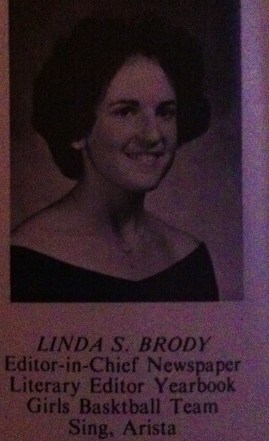
    Yearbook photo

    My parents and I were at Seniors, a restaurant in Sheepshead Bay, to celebrate my high school graduation. The ceremony was earlier in the day. I started to say, “I feel really bad…” and my dad threw down his fork. “Don’t!” he said, “We’re celebrating your graduation. You have nothing to be sad about!”

    “But…” I started to explain, but the look on his face shut me down. I fought back tears and concentrated on the food on my plate.

    The end of high school was a strange time for me. I was so unhappy and lonely in junior high school and came to Canarsie High School feeling like an outcast. I was terribly insecure, between my eyes, my weight and general self-consciousness, I began high school in a hole. Things did turn around, but not like in a fairy tale or Hollywood movie. The ugly duckling didn’t emerge as a swan and float off happily ever after. Painstakingly, over the course of the three years, I dug myself out.

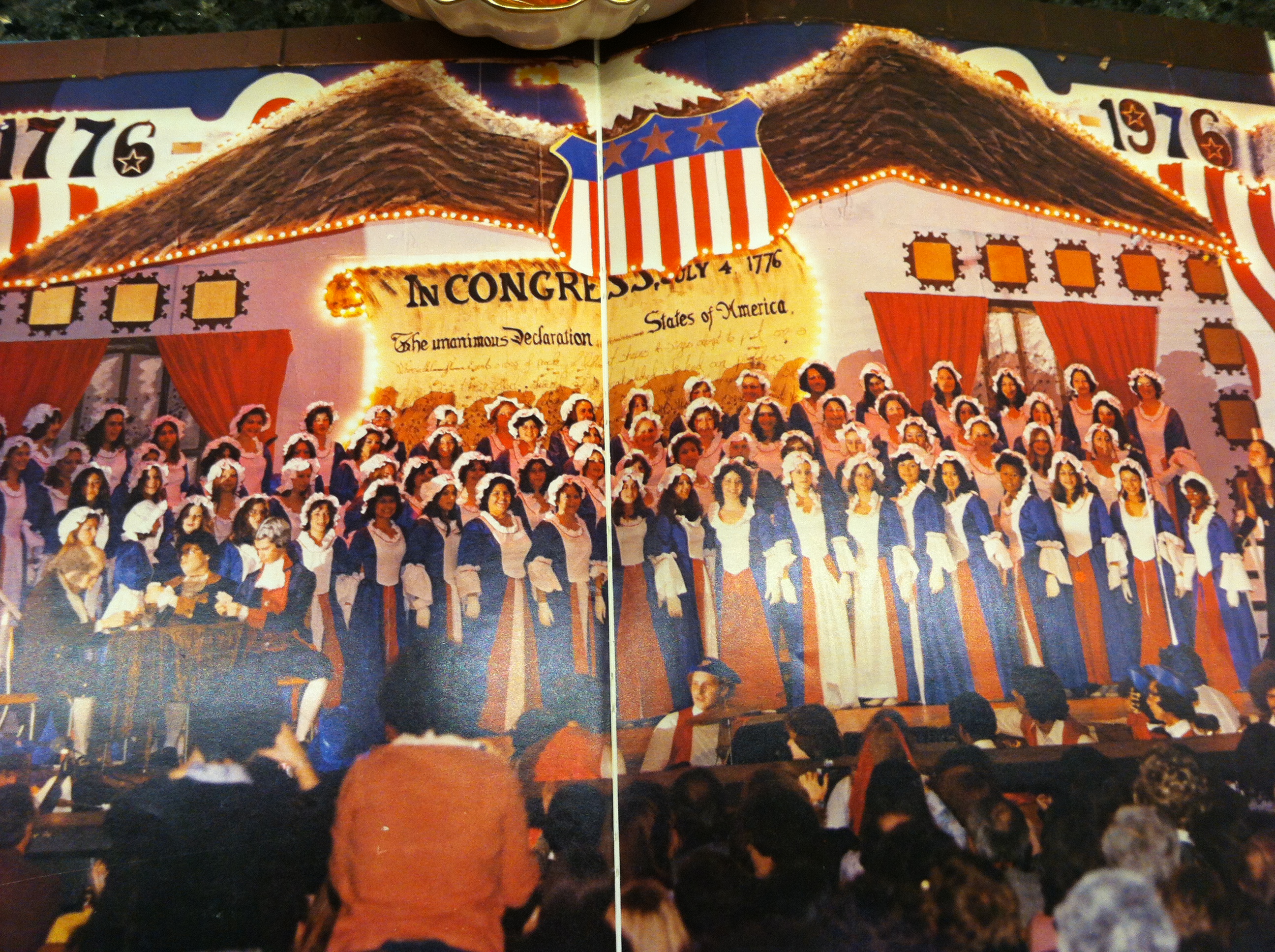
    I started by joining some activities. I was in the chorus of Sing, a school show of sorts. I connected with some of the girls who stood near me in the alto section during rehearsals (some were friends from elementary school who went to a different junior high). I still had trouble knowing how to extend the friendships beyond the rehearsal, but I was making progress.
    img_1637
    Sing senior year (1976). I am the last person in the last row on the right (picture from our yearbook).

    I tried out and made the girls basketball team. We were God-awful, except for one or two players, but I loved basketball and I was happy to be part of the team.

    I wrote for the Canarsie Campus, the school newspaper, and by senior year I was the editor-in-chief. I started out doing okay in my classes and by the senior year, I was doing really well. The trajectory was headed in the right direction. I was voted Most Likely to Succeed by my classmates and had my picture, along with Alan Schick, in the yearbook commemorating the designation. I both enjoyed the attention and felt disconnected from it. Inside I still felt like the girl who sat in the junior high school cafeteria eating lunch alone, worried that I would be the target of teasing.

    So, in June of 1976, I was in a much better place than in September 1973 when I entered high school. But, my newly formed self-esteem was still pretty fragile, and oddly enough the graduation ceremony itself delivered a major blow.

    Canarsie High School held its graduation at the Loew’s Kings Theater in Flatbush, a huge old-time movie theater with some 3000 seats and ornate plaster walls. With more than 750 graduating seniors (there were more like 1100 students in the senior class, but the rest didn’t qualify to graduate) and their families, the high school auditorium couldn’t accommodate it.

    I don’t remember who from my family came. My Dad drove our monster-size Chevy Impala, with my Mom and me (and perhaps others – it’s possible that Uncle Terry and Aunt Barbara were there), and dropped me off to gather with the graduates. They went to find parking.

    Some students were invited to sit on the stage, those who were speaking, receiving an award or performing. I was receiving an award so I marched in and climbed up on the stage with maybe 30 other students. I was told beforehand that I would receive the Monroe Cohen Memorial Award, given in honor of Canarsie’s beloved representative to the New York City Council who unexpectedly died a year earlier. I didn’t know why I was being given the award, but I took my seat on stage and took in my surroundings.

    The stage was huge; the whole theater was huge. I looked out and searched among the thousands of faces for my mother. I couldn’t spot her. My dad, who had been a dean at Canarsie High School but left to become chair of the social studies department at another city high school two years before, was invited to sit on the stage, too. He was seated on the other side with faculty and other dignitaries. I couldn’t see him either.

    The ceremony proceeded in the usual way. Eventually they got to the presentation of awards. I heard our principal, Mr. Rosenman, announce the Monroe Cohen Memorial Award and I started to make my way to the front of the stage. Mr. Rosenman was saying something like, “Linda virtually single-handedly put together the school newspaper, without a faculty advisor and with very little funding.” I was standing next to him, smiling, one hand extended to receive the award and the other hand extended to shake his, when someone screamed out, “That’s not true!!” Despite the crowd, unfortunately at that moment it was pretty quiet in the theater.

    I looked around, wondering, did that just happen?! Though the comment wasn’t repeated, I knew what I heard. It rang clear as a bell, echoing in my ears, “That’s not true!!” Mr. Rosenman paused briefly and then continued on as if nothing had happened. Finally I took the envelope with the award and found my way back to my seat on wobbly legs.

    There may have been applause. I actually didn’t know what was happening because my head was spinning. I sank down in my seat, shaking like a leaf. I felt exposed. Everyone knew I was a fraud. I looked frantically around the theater to see if I could figure out where the comment had come from, but the words didn’t leave a vapor trail. There was no telltale sign, except in my vibrating body.

    My friend Laurence, who was sitting a couple of seats down from me, reached over and patted my knee. He asked if I was all right. I nodded that I was, though I suspected that my face said otherwise. I’m sure all the color had drained from it.

    I don’t remember the rest of the ceremony, but I kept breathing and made it through. I found my family afterwards. I don’t remember much about our conversation, other than my mom telling me that someone said it was a parent who yelled out. Maybe that should’ve made me feel better, but I was still in shock. My father, who was quite hard of hearing, was learning of it for the first time when we gathered after the ceremony was over. He dismissed it as sour grapes. I wished I could do the same. We got back into our Chevy and went back to our house in Canarsie.

    It didn’t occur to me to be angry. I felt humiliated and it confirmed my worst fears, that I was undeserving. I hadn’t asked for the award and I didn’t write the comments Mr. Rosenman delivered.

    At dinner with my parents, when I tried to bring it up, I think my Dad wanted to ignore that it happened and he didn’t want me to be hurt.

    I couldn’t let go of it, but I had to pretend to.

    All these years later, I remember the incident so clearly. I know that I went that night, after dinner with my parents, to celebrate at a bonfire at a nearby beach with friends. I don’t remember what my friends said. It is unlikely that I would have mentioned it because it was so embarrassing, but maybe I did. I don’t know if words of comfort were offered, but maybe they were. It is interesting, the memories we carry with us, and what we forget.

  • testpattern
    This might come up on the TV screen, interrupting programming, when there was a tornado warning. The image still makes me uneasy.

    I was probably 45 years old before I stopped getting nauseous when there was a tornado watch or warning (I was well acquainted with the difference between the two – and either one caused the same reaction).

    Before reaching 45, though, the atmospheric conditions present when tornadoes were possible seemed to inhabit my body. My insides were as unsettled as the air outside. The ominous clouds scuttling across the sky mirrored the feeling in my stomach.

    My fear of tornadoes began in Illinois in 1968. Growing up in Canarsie (Brooklyn), I had not experienced tornado watches or warnings. If they happened, I wasn’t aware of it. My awareness of twisters was informed mostly by watching The Wizard of Oz and as long as it remained on the TV screen, I could handle it.

    When we got to Illinois, where my Dad attended graduate school for three successive summers, I learned about them first hand. It seemed like there were tornado watches almost everyday. I spent a lot of time studying the sky and feeling queasy. My brothers had quite a different reaction.

    One particular afternoon things got serious. Fat raindrops started to fall. First there were gusty winds and then it got very still. The sky had a yellowish-greenish tint. We had been playing outside the graduate student housing where we lived when adults, including my Mom, emerged to gather us up and shepherd us into a ground level apartment. Lawn furniture and toys were pulled inside as well.

    I immediately went where I was told to go and sat huddled in a corner, away from the windows. Snacks were offered as a distraction. The idea of eating a potato chip turned my stomach. I declined the offer.

    The radio was broadcasting emergency instructions repeatedly. The static-y voice kept telling us to move to an interior room and under a heavy piece of furniture. I wanted to find a desk to sit under, but there were a lot of us in the apartment so I just stayed put in my corner. My Mom sat next to me, trying to comfort me, until she realized that my brothers were nowhere to be found. Apparently they thought it would be exciting to actually see the tornado. They were 10 and 12 years old (I was 7) and they had either never come inside or they snuck out. My mother found them running up the hill behind the building trying to spot the funnel cloud. Hearing the frantic tone in her voice must have registered with them because they did come back. I think the offer of snacks may have also influenced their decision. Most of the kids’ appetites were undisturbed. Meanwhile, I concentrated on not throwing up.

    Eventually the storm passed without doing damage to the immediate area. I don’t think the funnel cloud touched down near us. The fact that nothing happened, though, didn’t lessen my anxiety about the possibilities. Throughout our entire time in Illinois, I dreaded the interruption of a television show with a weather bulletin. I’d listen carefully to the locations – for a 7 year old, I was very aware of the geography around me and knew the names of the nearby towns and how close the storms were.

    Many years later (around 1985 while Gary was in medical school at the University of Pittsburgh) we went on a camping trip with friends. Yes, you read that right. Those of you who know Gary well, know that camping is not his cup of tea and this trip confirmed it for him. We were coming back to Pittsburgh from our adventure along the Cheat River in West Virginia, where Gary imagined hearing lions and tigers and bears outside our pup tent. While I did not share his anxiety while we were in the woods, I had my share of worry on the trip back. I was sitting in the backseat of the car, looking at the sky and feeling uneasy. I had that familiar feeling in my stomach – the one that said “Tornado!.”

    Since we had made it to the interstate highway, nearing civilization, someone flipped on the car radio. My instincts were confirmed moments later when an emergency weather bulletin was broadcast. There was a tornado warning in the area. Not knowing enough about the surrounding geography, I didn’t know how close it was to us. The others in the car barely paused in their chatter. I sat silent, my head on a swivel, scanning the sky in every direction, plotting what to do if I saw a funnel cloud, willing us to get back to our apartment in Pittsburgh safely.

    Fortunately, other than spotting some ominous clouds in the distance, we didn’t encounter any difficulties. We arrived back to our sturdy brick apartment building and the roiling in my stomach subsided. Another bullet dodged.

    Although we have lived in upstate New York for the last 30 years, with climate change, we have experienced tornado watches, warnings and actual twisters touching down in the area with increasing frequency. Sometime after our children were grown, I can’t pinpoint a date or event, I realized that I didn’t experience the queasy, unsettled feeling anymore. I’m not sure if it was a physical change – my body stopped functioning as a barometer – or if it was a psychic change – or both. Either way, I let go of the fear. I resigned myself to nature’s uncertainty and my inability to control it, and it happened while I wasn’t looking. While I won’t be doing what my brothers did any time soon, nor will I become a storm chaser, I have come to peace – at least with tornados.

  • rosenthal-alamo
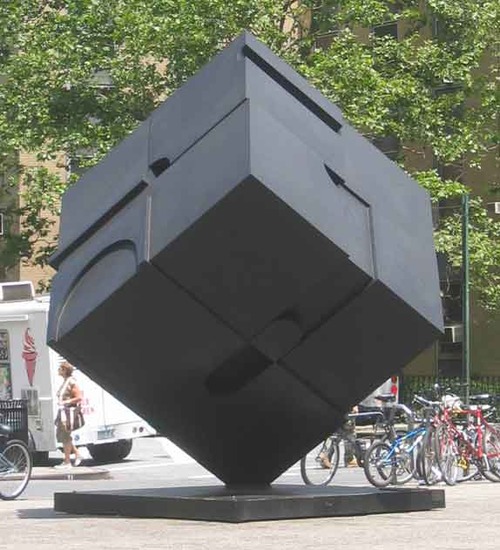
    Sculpture at Astor Place. I loved and still love coming upon sculptures in public spaces in New York City. This one is near the subway station exit at Astor Place.

    Growing up in Brooklyn I was always excited to go “into the city,” which meant going to Manhattan. Technically all five boroughs comprise New York City, but we knew Manhattan was really The City. Not everyone shared my excitement. There were many people in the outer boroughs who were as unfamiliar with The City and its attractions as people from say Oshkosh. My father fell into that category. He wasn’t unfamiliar with it, after all his two sisters lived there, but, somehow he failed to see the charms of the traffic, grime, and general hassle of getting around Manhattan. My Mom, on the other hand, focused on the museums, theater, and creative energy. I inherited my mother’s perspective.

    Over the years I relished wandering around the different neighborhoods within Manhattan. I remember my first trip without adult supervision. My next door neighbor and friend, Deborah, and I were 12 years old when we plotted our adventure. Our plan was to explore Greenwich Village, stopping at the many bookstores that were there at the time. We studied the map of the subway system and reviewed our plan with my mom. We took the bus to the LL, the LL to Union Square and then switched trains to the 6 and got off at Astor Place. We were careful to read the signs so we got on the subway headed in the right direction. We were proud when we made it to Astor Place without any detours.

    We started up the stairs to exit the subway station and we heard chanting from the street. We couldn’t make out the words, but it didn’t sound like the Hare Krishnas (a religious group – cult? –  that would sometimes dance and sing on city streets). Deborah and I looked at each other and wondered what we were going to see when we got outside. When we emerged into the daylight we saw a demonstration going on across the street. People were carrying signs and marching around in a circle. In keeping with our instructions for visiting The City, we didn’t get involved – we didn’t stop long enough to really look at what the protest was about. We were delighted by it, though. Our first trip into the city unaccompanied and we arrived at a protest! In that day and age (1972) protesting was a daily occurrence. It could have been women’s lib, civil rights, the Vietnam War or a labor dispute. It didn’t matter much to us – it was exciting, but we were also a little nervous. So, we got our bearings and kept walking.

    Much of what I liked best about going to the city was walking aimlessly, taking in the scenery, looking for interesting shops, and people watching. Of course some neighborhoods in the city weren’t what they are today. SoHo wasn’t filled with art galleries, trendy shops and expensive restaurants. In fact it was unlikely that we would have ventured south of Houston Street, since the Village was filled with coffee houses, head shops and other interesting stores. It wasn’t expensive to walk and window-shop, there was lots to see.

    In the early 1970s the MTA (the city transit authority) ran bus routes called culture loops. It was like the ‘hop-on, hop-off’ buses that many cities offer today, but it was the cost of a single fare. I took full advantage of the service and rode the different loops many times, sometimes alone, sometimes with a friend.

    When I was in college I worked summers and breaks for a perfume company that was located on 57th and 5th Avenue. I did secretarial work and some bookkeeping. I was also a messenger of sorts. The owner of the company did quite a lot of business in the Middle East and he traveled to Dubai and Kuwait pretty frequently. There was paperwork that needed to be delivered to the applicable country’s consulate, located near the United Nations, which is as far east in Manhattan as you can go. The perfume company gave me cab fare, which I would pocket and walk instead. I took a different route each time – walking as quickly as possible. I covered probably every street between the office and the different consulates – usually about 1.5 miles each way.

    I still love walking in the city. My most recent visit took me on a trek from the Flat Iron district to and along the Hi Line.

    The Hi Line is an elevated walkway on the site of old railway tracks that were reclaimed as public parkland. It winds its way on the west side of Manhattan from around 12th to 34th Street. I have walked the path a couple of times before, always delighted to find sculptures and other art installations throughout the walk (see pictures below from my recent walk).

    After 30th street the path of the Hi Line swings out toward the Hudson River, looping around the Hudson Yards, where trains pause or sit before entering or leaving Penn Station. A few trains rumble slowly into position, most sit silently waiting.

    It was desolate on that December day. Very few people were on this part of the path. The somber clouds, the gray water, the browns and grays of the buildings created a bleak but beautiful landscape. The cold air stung my eyes. I heard the slow screech of train wheels. I heard sea gulls crying. I heard other sounds, too. Was it music?

    Plaintive, elongated notes from stringed instruments wove through the ambient noise. I looked around. Was I imagining it? I finally noticed loudspeakers affixed to poles. I was not having an auditory hallucination! Notes harmonized with the trains and the gulls and the traffic of the West Side Highway. It was a powerful soundscape. Eventually I found a small plaque that identified the music (Lachrimae by Susan Philipsz) as part of an art installation. It perfectly captured the sound of loneliness amidst civilization.

    You never know what you will see or hear when wandering around New York City.

  • 2000px-google_chrome_icon_2011-svg

    Search Terms

    Google Chrome icon, click, type in search bar
    
    Redress number passport
    
    Okay, not applicable.
    
    How to move across country
    
    Hmmm – stuff to think about.
    
    Greyhound shipping
    
    They have a student discount.
    
    Restaurants that deliver near me
    
    What kind of food do we want?


    Key Bank locations in NYC
    
    Only one!
    
    Cabinet depth refrigerators
    
    Need to look at Consumer Reports, who subscribes?
    
    The Wire
    
    One of the top television series of all time, according to this article.
    
    Dominic West
    
    He’s English, who knew?
    
    Several, few, couple: definitions
    
    Still don’t understand the difference, but they aren’t interchangeable.
    
    Eye muscles
    
    There are six.
    
    Bronchoalveolar carcinoma
    
    A term describing certain variants of lung cancer.
    
    
    Results
    
    Scroll through pages of information
    
    More questions, more searches
    
    No answers
  • img_1612
    Dad and Leah

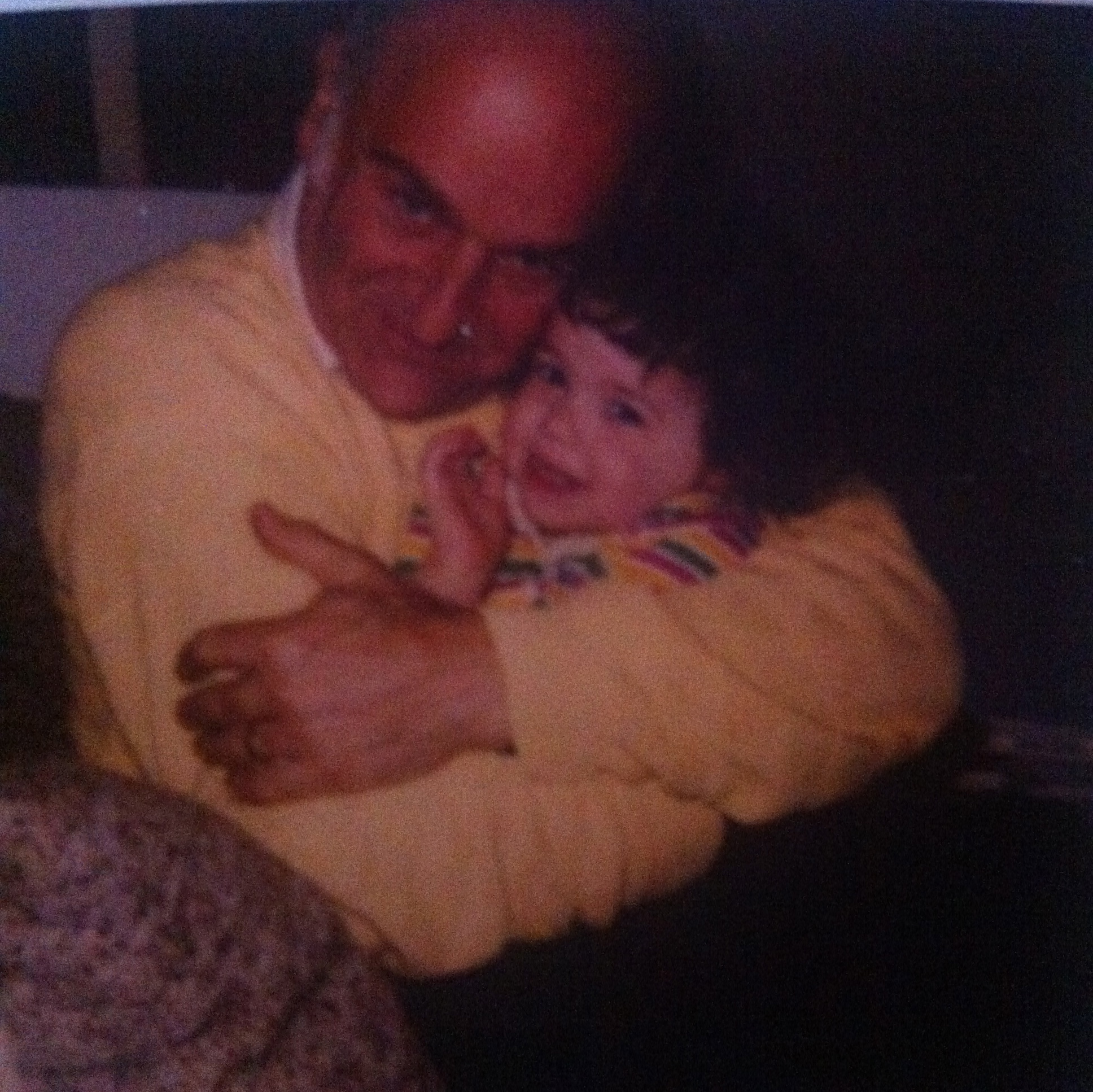
    I was talking with my brother, Mark, about my father’s legendary temper. Recalling how Mom would say, “Wait til your father gets home,” to get us (mostly Mark) in line because the threat of Dad’s anger was a powerful weapon. Leah, my daughter, who was listening to the conversation, later said to me, “That’s not the Grandpa I knew. He wasn’t intimidating to me.” I smiled, happy that her experience was different. Happy, too, that Dad, as he got older, mellowed and rarely erupted – he was more at peace with himself, I think.

    I knew my father’s anger well. He had quite a temper when we were growing up. His deep voice, muscular frame, bald head and prominent nose gave him an intensity, even when he wasn’t angry. He was the perfect high school dean, which, in fact, he was. He was perfect because while he did have that presence about him that made you think twice about doing something wrong, he was also fair-minded and had a deeply engrained, true moral compass.

    Despite his volcanic outbursts, he never, to my knowledge, raised a hand to any of us. I was on the receiving end of his verbal outbursts – usually because of fighting with my brother, Mark, or for using a ‘tone’ with my mother. I think it is fair to say that I could be pretty disrespectful to her and Dad rose readily and angrily to her defense.

    One of the things that made living with my dad’s anger more tolerable was his willingness to apologize. Pretty much like clockwork, after the yelling, after I ran to my room crying, there would be a knock on my door. Usually he would say something like, “I shouldn’t have raised my voice like that, I’m sorry. But that doesn’t excuse your behavior….” He would then explain what I had done wrong. He would be calm and sorrowful. The anger gone like a brief, intense summer storm.

    I was, I think, ten years old when I realized he was gruff on the outside, and prone to bursts of temper, but a marshmallow inside. It seemed that his anger needed venting, like a pressure cooker. While I don’t remember how I came to that understanding, I do remember the moment of clarity; the time when he screamed and I looked at him and knew that he wouldn’t actually do anything to me.

    I had been upstairs in my grandparent’s apartment and I did something awful. I don’t remember what precipitated it, but I yelled at Uncle Terry’s girlfriend (now wife) that I hated her and I ran downstairs to my room. The way I remember it, my parents were in the room when I had my outburst and my father was hot on my trail as I ran down the steps. He boomed, “Linda!!!! How dare you!!! You go apologize this instant!”

    It was at this moment that I decided he wasn’t going to hit me, and I didn’t have to do everything he said. I said, calmly, “No, I don’t want to.” I was feeling quite righteous in my own anger. My father was taken aback. Interestingly, he didn’t get angrier, he was silent for a moment. Quietly, he said, “I’m not going to get into an argument with you. But, I want you to think about Uncle Terry.”

    That penetrated. I have no memory of why I was so angry at Barbara – I’m sure a good measure of it was jealousy. After all, her time with him cut deeply into my own.

    “We love Uncle Terry,” he continued, “and we want him to be happy. You acting that way will not make him happy.”

    That took the wind out of my sails. I felt embarrassed. “Okay, I’ll apologize.”

    With great difficulty, I climbed the stairs and faced Barbara. “I’m sorry I said that. I shouldn’t have.”

    Somehow I understood my Dad and 99% of the time I ended up agreeing with him – despite his temper.

    That wouldn’t be the last time my father got angry with me. And, his anger could certainly make me unhappy, uncomfortable, frustrated, resentful, or angry with him. But, I wasn’t afraid.

    I don’t know if my brothers ever came to the same realization.

  • Note:  Since I have been traveling over the last several weeks, I have not been able to devote as much time to this blog post as I would like. Please consider it a work in progress. (the whole blog is actually a work in progress!) I want to continue exploring Brody family history and its implications but my life gets in the way. Bear with me as I continue the journey.

    After reading the letter from the priest, I felt a need to see if the events described had been recorded; to see if history had taken note of the massacre. I did some research, mostly on the Internet. I also looked at a couple of books, including Jewish Roots in Poland by Miriam Weiner.

    I also wanted to find the towns listed in the letter. In addition to looking at maps online, I poured over a world atlas.

    I did find most of the towns, though it was challenging. The translation of town names, and my total ignorance of Polish, made finding these locations difficult. Several still exist and can be seen on a current map of Poland (Jaslo, Dukla, Nowy Zmigrod), all in the southeast corner of the country. By the way, Stary in a town’s name means ‘old,’ while Nowy in a town’s name means ‘new.’ Oddly, to me anyway, Zmigrod (without Nowy or Stary attached) appears to be miles away to the west and slightly north of the towns mentioned in the letter.

    In looking for mention of the massacre in Halbow, I found another massacre exactly one month earlier, June 7, 1942, in the same area. At first I wondered if it was the same incident, perhaps the month was mistakenly recorded. After further exploration, it appears that there were actually two separate incidents (or “actions” in the language of the war) exactly a month apart. On one level it is hard to believe that there could be two (intellectually I know there were many “actions”), but the scope and horror of the Holocaust is still hard to comprehend, even all these years later.

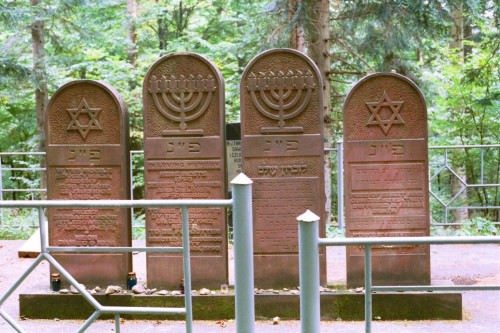
    I did find the July 7th genocide noted in several places and it appears that there is a monument erected to memorialize the lives lost in Halbow.

    now066
    Monument to the victims of the atrocity in the forest in Halbow.

    In the 1990s many children of Holocaust survivors visited Eastern Europe searching for their parent’s hometowns and gravesites of family members. Some of those travelers documented their findings. As a result, I was able to find a picture of the monument (see above). The monument was funded by Zmigrod survivors’ families in America. I was relieved to find that at least there is a monument, but another issue emerged from my research.

    The priest’s letter indicates that 1434 people were buried in the mass grave in Halbow. The sources I found on the Internet reported 1250 .(archiver.rootsweb.ancestry.com/th/read/Galicia/2009-07/123905001; www.jewishgen.org/yizkor/nowy.zmigrod1/now065.html; kehilalinks.jewishgen.org/zmigrod/zmigrodholo.htm).

    I am disturbed by the discrepancy and wonder what it represents. As mentioned above, in doing the research I found two separate incidents, each with 1250 victims recorded. But it seems odd that the number would be exactly 1250 in both cases. Were they estimates? How were the numbers documented?  Could the 1250 represent only the Jewish victims? Or, could the priest’s information be incorrect? It raises so many questions about how history is documented.

    Which led me to another question: Does the number matter? My gut reaction was, of course it does – we are talking about 184 souls not ‘officially’ counted.

    But, then, I don’t want to obsess about the actual number. The number, whether it is 1250 or 1434, is too many to accept. Either way it is roughly the size of the suburban high school in my community. It is almost half the population of the town I live in. The number is important, but it isn’t the central point – the central point is that humanity was lost in every sense; in the lives cut short and in those who perpetrated the crime. Those who were responsible for the crime discarded their humanity.

    We struggle today to identify and agree to facts. Sometimes when the numbers are in dispute people take the opportunity to dismiss the larger issue. Especially for those with an agenda. That these atrocities were committed is a fact that cannot be denied. My family bore the weight of it, in the loss of life, in the loss of faith and the silence that followed.

    I wish I had an answer, though, for reconciling discrepancies in records (data) that sometimes lead us to lose the forest for the trees.


  • The legacy of the letter from the priest is many layered. Of course, there was the profound impact of the loss on Leo Brody, my grandfather, and thus on his immediate family. I had not considered the ripple effects of the atrocity and the silence surrounding it through the generations until now. My family stands in stark contrast to Gary’s family experience – where the impact was more obvious.

    As I got to know the Bakst family, when Gary and I started dating in 1979, I was aware that Gary’s parents were Holocaust survivors. Our shared Jewish identity, and the differences in our experiences, was a subject we talked about quite a bit as we got to know each other. My parents were American born and college educated. As I described in prior blog entries, we were culturally and ethnically Jewish, but God was conspicuously absent. No one in my family attended synagogue regularly and when we did it was obligatory, certainly not heartfelt. The Holocaust was discussed, but in a more scholarly way, despite my grandfather’s tragic loss. It was at a remove from our day-to-day experience.

    Gary’s parents, while not Orthodox Jews, were far more observant – religion was part of their practice, they kept a Kosher home, didn’t drive on the high holidays and went to synagogue on Shabbat. Gary’s Dad believed in God despite his harrowing experiences – or maybe because of them.

    While I would not say that their Holocaust experiences were spoken about often, they were not shrouded in silence either. They attended the dedication of the U.S. Holocaust Museum in Washington D.C in 1993, were involved in the organization (Holocaust Survivors and Friends) that was instrumental in establishing the museum and attended the annual meeting of the Iwie Society (a group of lansleit from David’s hometown in Poland). Their status as survivors was an essential part of their identity and of Gary’s (and his siblings).

    As I got to know Gary’s family I came to recognize some of the scars from their Holocaust experience. Paula, Gary’s mom, who was about nine when her life in the shtetl of Sarnik was upended, was anxious and fiercely protective of her children. The first time Gary and I went on a date when we were home from college, Gary drove to my house using Paula’s car. This was long before cellphones. When Gary arrived in Canarsie (20 minutes away), he asked to use our phone to call home and let Paula know that he had arrived safely. Years later, when I was pregnant with Leah, my doorbell rang one evening in Albany. I went to the door to find my brother. He had come to deliver a message, “Call your mother-in-law. She hasn’t been able to reach you and she is worried.” Apparently our phone was off the hook and I didn’t realize it. Paula, ever resourceful, long before the Internet, found my brother’s phone number, called him and dispatched him to check on me. Needless to say, I called her immediately.

    To say Paula didn’t trust easily would be an understatement. Years before he met and married Shari, Gary’s older brother, Steven, was dating a woman, Jenna, who wasn’t Jewish. I sat at Paula’s kitchen table in Rosedale while she shared her fear that if Steven was to marry Jenna, she might kill him in his sleep. I was at a loss as to how to respond. I asked her why Jenna would do that. She shrugged and said, “Because she is Christian and he is Jewish.” I began to understand the depth of the damage done by her traumatic childhood.

    Gary and I were together for four years before we married and had children (at least another 5 years later) before I felt I had earned her trust.

    When Steven Spielberg, as a companion to Schlindler’s List, undertook the Shoah Project (the effort to record the testimony of all living survivors before their numbers dwindled), the Bakst family participated. We went to the Pines Hotel in the Catskills and waited in the lobby while Paula and David were interviewed separately. Then all ten of us – Rochelle and Doreen (Gary’s sisters), Steven, Shari, Laura and Jordan (Gary’s brother, wife and two young children) and our family (Gary, me, Leah and Daniel) – went in to be filmed as a coda to their testimony.

    Over the years I had heard the stories of their survival. David fought in the Russian army and with the partisans in the woods in Poland. Death was all around him. Paula survived by the guile of her mother and, for several years, with the assistance of a gentile Polish farmer. They told how they met in a displaced persons camp and of Paula’s resettlement in Cuba where she had family and David’s in New York. Ultimately David went to Cuba to propose marriage and a year later, on September 3, 1949, they were married in Havana. David brought Paula back to New York and they settled in Queens and started their family. Paula’s mother, brother and sister survived, her father was murdered as they fled their town. David’s father and sister survived the war, though his father, having navigated the war itself, tragically died from complications from hernia surgery in Germany just before they were to immigrate to America. There is so much more to their story than can be told here in a blog entry.

    Despite his travail, David’s experiences reinforced his belief in God. He felt he was spared by God’s hand on several dramatic occasions. Over the years I attended synagogue many times with David and Paula and it was impossible not to be moved by his faith, in particular. He chanted the prayers from his heart. Paula also took comfort in the rituals. They felt part of a community that shared beliefs and customs. It was very different than the synagogue experience, limited as it was, that I had growing up.

    The process of integrating our two families and creating our own is still a work in progress.

  • My last blog post (No Easy Answers) told of my grandfather, Leo, and his time staying with us in Canarsie. Comments from my brothers and mother prompted a deeper examination of his life.

    The Brody family story is not unique among American Jews, but it is still important to give voice to it. Grandpa may not have shared his story; at least to the best of my knowledge he didn’t. I believe it merits telling. There are important gaps that I don’t know if I will be able to fill. Many of the people who could offer insight are no longer alive, and some, who are elderly, are particularly subject to the vagaries of memory (as I’ve noted before, memory is a funny thing under the best of circumstances).

    This is what I know: Leo Bruder (he changed his name to Brody, perhaps to fit in with other family that had come before) came to this country from Poland. Specifically, he came from Galicia, an area of southeast Poland that changed hands many times throughout history, in the Carpathian Mountains. He came to America with an entrepreneurial spirit. He made the journey alone, not in steerage like most immigrants. He had enough means to buy a ticket that allowed him to arrive in New York City without going through Ellis Island. He was 18 years old and the year was 1921 when he arrived. He left his parents and sister in Europe.

    img_1574
    Page 1 of a copy of the translation of the letter Grandpa received

    In November of 1945, about six months after World War II ended, Grandpa received a letter (picture above), in response to his inquiry by cable, from a priest from his town about the fate of his parents and sister. The original letter was in Polish. My brother Steven has a copy of the translation of the letter. In order to read it more easily, Steven transcribed it into a Word document that I have posted below.

    When I was growing up the letter and the tragedy it describes was not spoken of directly. I knew that Grandpa’s parents and sister had been killed by the Nazis. I also knew that, from that point on, Grandpa didn’t go to synagogue unless there was a specific celebration like a bar mitzvah or wedding. He lost his faith in God. The events described in the letter and Grandpa’s life in Europe were not spoken of otherwise and it was understood that questions weren’t to be asked. Late in his life, after Grandma died, he seemed to be more willing to talk, but the legacy of silence was still strong.

    I think it is important to share this letter because it provides documentation of the atrocity. I want to give fair warning, though, that it is graphic and disturbing and I understand if you choose not to read it. I did want it posted, though, as it is an essential part of my family’s history. It made its mark on us in a myriad of ways.

    I’m not sure why I didn’t ask more questions about this letter when my father was alive. I knew of its existence from sometime in the late 70s or early 80s. I don’t believe I ever saw it with my own eyes until this past week when Steven scanned it and sent it to me. I have so many questions now. I am hoping that I can find some answers. If I am successful in finding insights that add to our family story, I will share them.

    [A note about the letter: Steve and I did our best to transcribe the translation, but as you can see from the picture above, it is not a clear copy. In addition, the original translator was not able to decipher some of the Polish. Fortunately, these difficulties do not impact the meaning of the text.]

    ————————————————————————–

    Translation from Polish of a letter dated 11/21/1945

    Zmigrod Stary 11/21/1945

    Dear Mr Leon,

    Your cable was delivered to me only today, though it was received in Zmigrod on November 12th. The post office delivered it to Wohlmuth, who turned it over to me only today. I am answering at once. I am sorry but I cannot write you something good. Your parents and sister were killed by the Germans on July 7th 1942 in Halbow, near –Rempno. On the same day and in the same woods all Jews from our town and the neighborhood with the young rabbi Halboratwa. Your family was killed, family Weinstein and family –estreic from Lysa-Gora.

    But before it came to this terrible tragedy, your family suffered a lot. Your mother used to say always why did they not go to USA with their son, why they have to suffer?

    To start with all their belongings were taken away from their house and farm. Then they were deported to the town where they lived at Lembik’s house. In the beginning they left with me some of their personal belongings asking to hide them, but before the deportation they took everything with them. They had very bad time there, as they had nothing to eat. I used to send them bread and milk and flour. I saw them a few times and tried to console them and reassure them that nothing will happen to them, that they will be sent to a camp, because nobody could think of such a tragedy. On July 6th I saw them, and they asked me to write you about everything. They gave me your address, but I lost it during the evacuation and the fire of the village. Still in the last day of their life my house-keeper Salka went to see them and to comfort them, but alas it was too late, as they knew already that death is near. The Gestapo patrols were already in the streets. With moans and tears they prepared themselves to the saying of last prayers. On July 7th 8 o’clock in the morning all Jews were gathered on the meadows across the bridge. There they were ordered to surrender all their money and valuables, after this they were by trucks brought to Halbow. There, before dug out trenches, they were ordered to undress and stand up in rows. They were killed by shooting from behind. The children were killed by smashing their heads with rifle butts. Altogether 1,434 persons were killed in this day and buried in the trenches. It is possible that Americans will not believe in such a horrible murder, but it is true.

    It is quite impossible to describe what we went through during the war. All villages, Zmigrod Stary, Lysa-Gora, Glojsce, Iwla, Siedliska, Makarowaka, Nienaszow were destroyed and burned down. . Only chimneys and rubble remained. Zmigrod Nowy, Dukla and Jaslo were in ruins. 153 bombs and grenades exploded over my church and in the parsonage and barns. We were hidden for a month in the cellars, later we were removed to some other place. When we after 6 months came back, we found only ruins, without roof and doors, and, what was still worse, nothing to eat.

    The house of your parents and of Weinstein are not damaged and at present homeless families live in these houses. The farmland is not tilled. You have to apply to the court to be recognized as heirs after your family. Same apply also to Weinstein, or send me power of attorney legalized at the Polish consul authorizing me to do it on your behalf, as well as giving me right to manage your property, as I presume you do not intend to return. Tell Wallach to do the same.

    I have to add that you sister (name illegible) and your mother used to come often to the parsonage. Many times before an imminent danger they used to come to me in order to find shelter and protection. But from death I could not save them. Only Sommer, house painter, son-in-law of Wrobel from Lysa Gora saved his life.

    I cannot write more today, though I have many more things to write that would be of interest to you. I am not sure even that this letter will reach you, as the conditions are still not normal (illegible) conditions are better and better, and we hope soon will everything will be in order.

    I would ask you do me a favor. I have a brother in USA by the name Maoiej in Carteret, NJ Hudson Street, 18. I do not know if he is alive. He does not write to me. Maybe you would go there and find out what is with him, and would let me know.

    I finish this letter with my deepest sympathy on the death of your parents and sister. Let God comfort you.

    Best regards,

    Priest Juljan Beigert

    Zmigrod Stary

    District Jaslo, Rz.

    Regards to Weinstein, Wallach, also family, and especially Hashek Wallach and Mortek. Please answer this letter immediately

    _________________________________________________________________

    I hereby certify that I am thoroughly familiar with the Polish language; that I have read the attached document in said language; and that the above English translation was made by me and is a true and accurate translation.

    Samuel Birger

     920 Riverside Drive

      New York 32, NY

  • I was in social studies in 12th grade in 1975 and the class was discussing the nursing home scandal that was unfolding in New York City. Terrible details of elder abuse and neglect were emerging in the newspapers.

    The discussion moved from the scandal to elder care as a societal value. Our teacher explained that in some cultures, for example, Native American, elders were more revered than in American society at large. In those cultures older folks stayed with the family as they aged and were cared for until they died. One of my classmates, declared, “I would never put my parents in a nursing home! How can you put them away like that?” Others chimed in with their agreement.

    I raised my hand to respond, “It isn’t so simple. Sometimes older people,” and my voice unexpectedly broke. I took a deep breath and managed to say, “need more attention than you can give.” I couldn’t say more.

    My grandfather, my father’s father, was staying with us at the time. Grandma had recently died. In those years he stayed with us for some extended periods – during the period of mourning, after cataract surgery and while awaiting placement at the Hebrew Home for the Aged, My brothers were away at college. When I made the comment in class I was thinking of the impact that Grandpa living with us had on the life of my parents and myself. Unfamiliar with our house, with compromised hearing and vision, it was difficult for him to manage.

    While he was staying with us, when I came home from high school, I would ask him if he wanted to take a walk. He was always delighted to. He would put on his trench coat and fedora and we would set off to the shopping center. Grandpa was always careful to walk on the outside, closer to the curb. I didn’t understand why he did that, so I asked him. He explained that the man should always walk next to the street, the young lady should be closer to the buildings to be safer. Grandpa had very gentlemanly, old world ways.

    img_1565
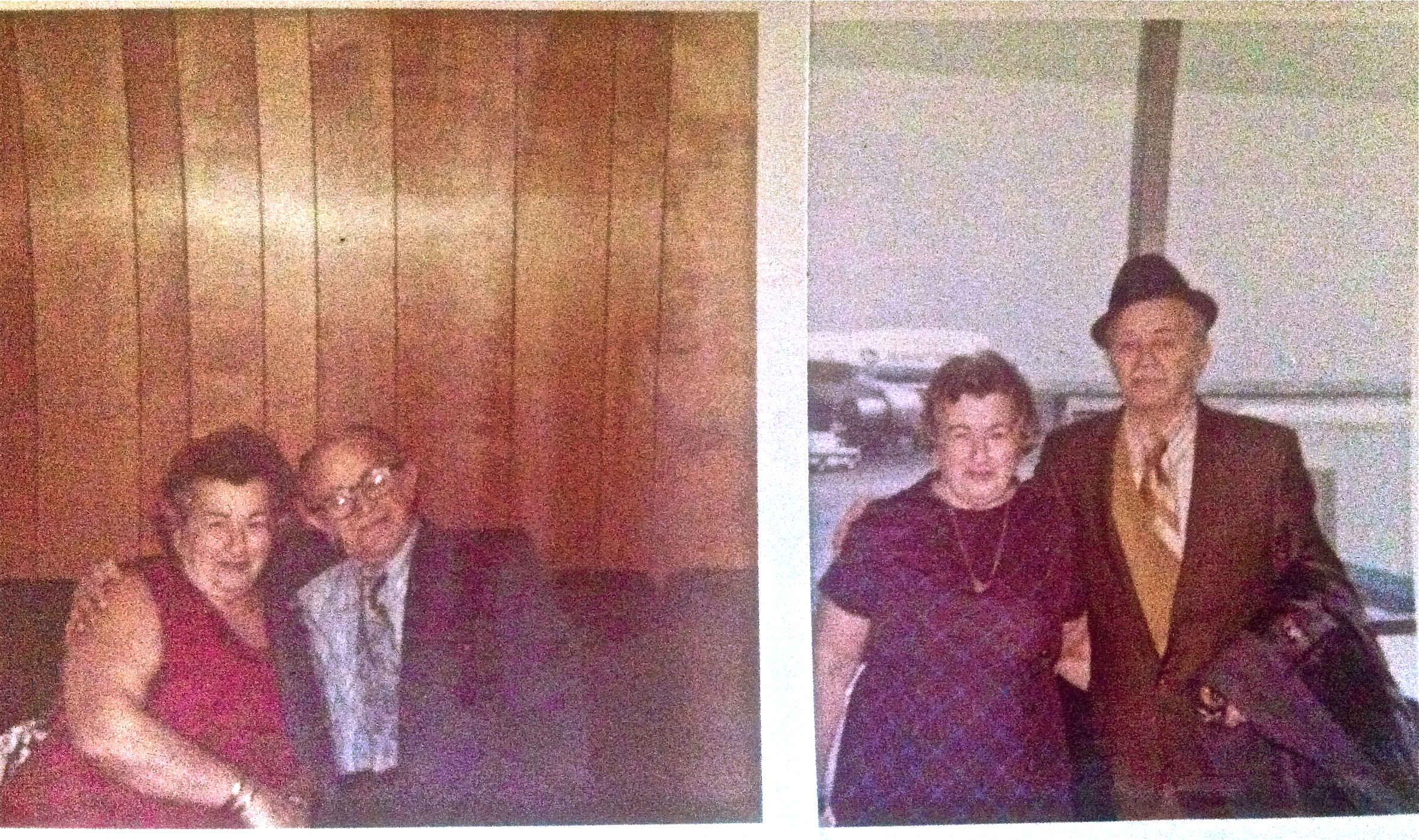
    Grandma and Grandpa in happier times, on our living room couch in Canarsie. With his trademark fedora, trench coat draped over his arm. In those days you could see travelers to the gate. I believe they were off to Florida.

    We would go to the stationary store where he would buy the Forward, the Yiddish language newspaper, and a cigar. We would walk back home. Grandpa didn’t feel a need to fill the silence. I’m not sure if his reserve related to his hearing deficit, or if it was just his personality, Grandma certainly ran the show when she was alive – she was smart, funny and opinionated. Maybe she just overshadowed him and he got used to it. I wish I had asked Grandpa more questions. We were surprised at how long and well he did after Grandma died.

    Perhaps we shouldn’t have been surprised. After all he came to this country by himself at the age of 17. He learned five languages, he ran several businesses, married and had a family. He played cards and a mean game of Scrabble. Even though English wasn’t his first language, he beat all comers.

    When Grandpa had cataract surgery and was recovering at our house, I gave him his eye drops. Both Grandpa and my father had what’s called benign essential tremor, involuntary shaking of the hands, so they couldn’t do it. My mother had a thing about eyes and wasn’t comfortable giving the drops. I did the best I could.

    As part of his recovery from the surgery, Grandpa was told not to smoke his beloved cigars. I think this was to minimize coughing which might impact the healing of his eye. We still took our walks and he still kept a cigar in his shirt pocket. One day at dinner, Grandpa started to cough. My father was enraged, thinking Grandpa was still smoking. Dad reached across the table and ripped the cigar from Grandpa’s shirt pocket. “You know you aren’t supposed to be smoking these,” he roared.

    He also ripped the pocket clear off the shirt.

    In that moment I thought it was possible that Dad hated his own father. After the explosion, Dad apologized and things calmed down, though it wasn’t that long after that Grandpa went to stay with Aunt Diane.

    Dad told us that he remembered little of his own childhood, but he also told us that when his family moved to a new apartment on Prospect Park West there was a bedroom for his sisters and one for his parents, but not for him. He slept on a couch. He made himself scarce, going to school, working various jobs and playing ball.

    Aside from feeling neglected, Dad also said that when he had the opportunity to go to Harvard or Yale Law School, his parents wouldn’t lend him the money (he didn’t believe it was simply a matter of finances). They did provide funds for his older sister to go to medical school. There was layer upon layer of resentment that was never addressed, it just smoldered in my father.

    For the years that Grandpa was able to be self-sufficient, he lived in Century Village Deerfield Beach in Florida and we made our annual visits. When that was no longer an option, he moved to the Hebrew Home for the Aged in Riverdale.

    So while it would be optimal if as folks aged they could be cared for in the loving arms of their family, I don’t think it always plays out that way. The needs of the older person may be too great, the capacity of the family to provide the support and the relationships may not be healthy enough to make it work. It wouldn’t have in our family.

  • For years I wanted to write about my family. When I started writing in a serious way a year and a half ago, I thought I would be focusing on my relationship with my grandmother, Nana. I have written about her, and I will continue to explore those memories and how they shaped me. I have been surprised, though, by how prominent my memories of Zada have been. Perhaps I shouldn’t be.

    Zada was a storyteller. I remember running to the basketball courts in the park across the street from our house to retrieve my brothers, Mark and Steven. Zada was going to tell stories! Extended family was visiting our house in Canarsie and Zada was going to regale us with his tales of growing up on the Lower East Side and of his first car. Hearing that Zada was going to be sharing those tales, Mark and Steven set aside their game and came home immediately. Now that is testimony to how entertaining Zada was!

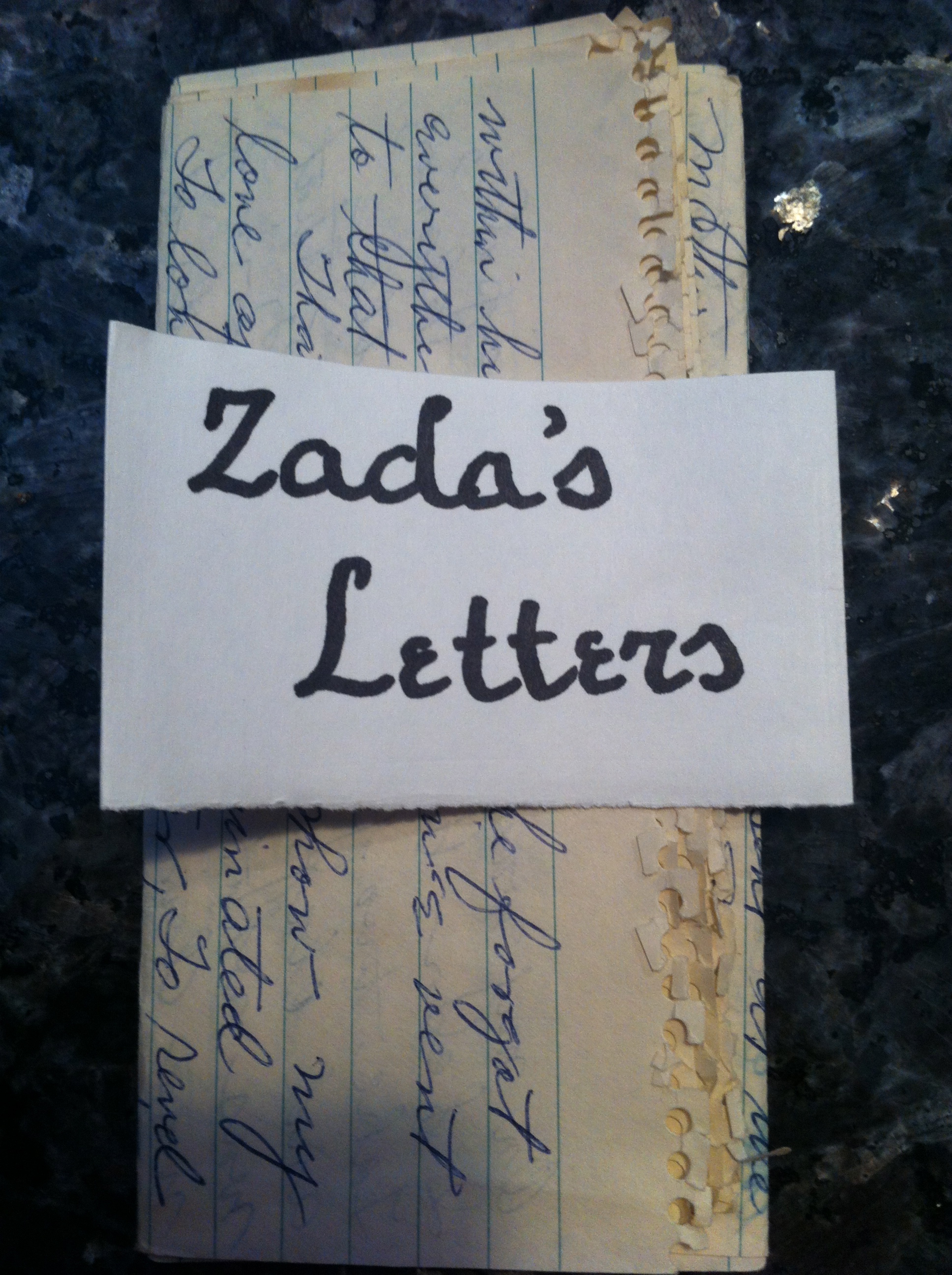
    Fortunately, Zada wrote some of his stories to me in letters. I don’t have all of his stories, not by a longshot, but I have carefully stored the ones that I do have. The one I have shared below gives a number of insights into our family, including: (1) why the Spilkens speak so loudly 🙂 ; (2) why we prize our family so much; (3) where the emphasis on critical thinking began; and (4) how much education was valued. Perhaps you will find other insights.

    img_1560
    This is the letter that I have reprinted here. He alluded to stories ‘for another telling’ throughout this letter. Unfortunately I do not have many of them. I’m not sure if he actually wrote those other stories down. If other family members have them, please share!

    Here in Zada’s own words:

    June 1973

    Dear Linda,

    In a few days you will be graduating Junior High School. The first step in achieving a world of knowledge. It brings back to me thoughts of my own graduation and the indelible impression it made on my life.

    I measure the fortunate circumstances in my life in milestones. The first milestone is becoming aware that you can read the printed word, and being able to imbibe and digest all the beautiful things that have been written. This also gives you the extreme pleasure in being able to formulate your own ideas and opinions.

    All the other milestones are experiences that leave a lasting impression. With me it would be from the time I met my beloved, the thrill of seeing my firstborn and the satisfaction I had from the ones that followed. The sublime devotion they have accorded me. Becoming a grandparent and knowing the family will be perpetuated eternally. A boy growing up on the East Side of New York, and seeing Palm Beach for the first time (that is a story for telling later).

    So now, dear Linda, I will try to tell you why my graduation affected me so that I carry the memory with me forever. My parents came to this country about 1905. For various reasons my father was forced to leave Poland (also for telling later). He left behind my brother Jack, Irving, and sister Lillian and myself, also most important of all, Mother. My father worked hard, long hours in order to make enough money to pay for our passage to America. Within two years he sent for us. We arrived at Ellis Island and were taken to our new home on Orchard Street, between Stanton and Rivington. This neighborhood was known as the lower East Side.

    My father’s salary was meager, in order to supplement his earnings and allow us to exist, Lily and Irving went to work. My mother took in four boarders. In those days for $5 a week a boarder would get food and lodging. Now picture a four-room railroad flat, toilets in the hall, man and wife, three children (Jack came to America later) all in one flat. The fortunate thing was that my father and two of the boarders worked nights so that they were able to sleep days. In other words, it was quite a quiet household. That is why when I grew older instead of talking moderately, I shouted in order to make sure that everybody heard me.

    Eventually things got better. Unions came into existence, more money was expended for salaries, my father’s wages were tripled. We were able to live in better quarters. We said goodbye to our boarders and moved to East New York, Brooklyn.

    In the year 1915 East New York was the equivalent to what city people today think of as the mountains (the Catskills, that is). I must not forget to tell you that in the interim Bess, Ruth, Harry and Sidney became additions to the family. (We lost Ruth in our first year in East New York).

    So now I am the oldest of the children going to school. In the year of June 1917 I am to be graduated from Public School 109, located at Powell and Dumont Streets. Finally the day arrives I am to be graduated and the only one of the family that will be present is my brother, Irving. Extenuating circumstances made it impossible for any others to attend.

    Now let me set the picture of Public School 109. We did not have an auditorium, but an assembly room that at the most would have held about 150 people. There were about 60 students, and the like number of adults (the graduation exercises were held on a weekday morning accounting for such a small attendance).

    Our principal was Oswald D. Shalakow. A real administrator and fine gentleman. There was no valedictorian, so our principal gave the graduating address. This is the problem he posed for us, and he expected answers:

    A teacher leaves her classroom and forgets her wallet, it is open and money is in the purse. Two students enter the room individually. The first one sees the money and is tempted to take it, but he fights with himself, and finally he overcomes, leaves the room but does not take anything. The second boy enters the room, sees the money, leaves without giving a thought about taking the money.

    The consensus of the graduating class was that the first boy deserves all the credit, because he had to battle his conscience and he had won.

    But our principal explains to us that the second boy should get all the credit, because, his reasoning was that the first boy may someday succumb to temptation, and would not be able to resist taking the money. But the second boy is inherently honest. It never enters his mind to take anything that does not belong to him. It may be different today, morals being what they are. So form your own opinion as to who was right.

    Now the diplomas are to be handed out, so the principal makes this request. Please refrain from applauding the individual, but when the last graduate is called, he would welcome a large round of applause for all of the graduates. Names would be called alphabetically and if people would applaud at the start they would get tired when it would come to the “Jays,” and it would not be fair to the boys that would follow.

    The assembly room is quiet, the names are called, each boy as his name is called approaches the principal, receives his diploma, and returns to his seat. Now he comes to the “Esses.” He calls Charles Spilken. I rise, on my way to the principal. I hear a deafening clamor, take two pieces of marble and clap them together, that was what my brother Irving was doing with his hands. Understand that Irving had two very strong hands (more in a later telling). If the floor had opened up, and I fell thru, I would have welcomed that kind of calamity, I was so embarrassed. But years later when I looked back at that incident, I realized that all the emotion, all that happiness seeing his first graduation, especially that of his little brother, who was now on his way to becoming a somebody, because in those days to be educated was to reach the pinnacle of success. That he could not suppress the feelings within his heart, that he forgot everything, but to give vent to that pride.

    That is really how my love of family originated. To love one another. To revel in each other’s successes, to be steadfast in each other’s adversity(ies). To have a ‘swelling pride,’ that cannot be subjugated by petty annoyances.

    Then will I consider myself blessed, especially Dearest Linda if you can realize how proud you make your Zada, for being able to be present at the maturing of Linda Brody.

    I’ll leave for West Palm Beach knowing that I am endowed with the best family a man can ever possess. May that feeling within me age, but never grow less.

    Zada