Stories I Tell Myself

Linda Brody Bakst on Brooklyn, growing up, identity and more

  • Note: I am reposting this essay today on the country’s 250th birthday. Though it was written six years ago, I feel the same. I am of two minds about today’s holiday. I want to celebrate the values that we aspired to, but did not achieve at our founding, and have still not fully realized. Those values, liberty and justice for all, are worth celebrating. It is hard to feel proud today, though, when I feel like we have moved further away from those fundamental tenets. I want to take a moment to renew my commitment to the best in our country. I hope you will take some time to think about that – and then have a great day with family, friends, nature, activity, food, drink, or however you choose to enjoy yourself.

    All through elementary school we began our day by reciting the pledge of allegiance. I recall standing, facing the flag, hand over my heart, earnestly saying the words with my classmates.

    “I pledge allegiance to the flag of the United States of America,

    And to the Republic for which it stands,

    One nation, under God, indivisible,

    With liberty and justice for all.”

    I said those words with pride. As I got older, it became a rote exercise. By the time I was in high school, in the early 1970s, it was hard to hear the words over the general din in homeroom.

    The process of it losing my attention, and apparently my classmates’, too, might have been a function of our age. Or it may have reflected something else – a change in our country as a whole.

    Two things made me think about this. First was the controversy over Megan Rapinoe, the women’s soccer player who got called out by President Trump for not singing the national anthem. The second thing is that the 4th of July is upon us, a good time to reflect on patriotism.

    Over the years a lot of athletes have stirred controversy by their behavior during the national anthem. The first roiling I recall was when John Carlos and Tommie Smith raised their gloved fists in Black Power salutes at the 1968 Olympics in Mexico City. That touched off a firestorm. I was only 8 at the time, but I remember being upset by it. I think what disturbed me most was that it was detracting from the competition. I loved the Olympics, I loved it when Americans won an event, and I felt pride hearing our anthem played in the stadium. It reinforced that we were the good guys – and it was the Cold War, after all. I didn’t want Carlos and Smith to upset the applecart.

    But, even at 8 years of age, I stopped to think about why they were doing it. They were making a statement and I felt it was important to try to understand it. They were calling attention to the fact that Black Americans were not being treated equally at home. It was hard to deny that truth. The athletes felt they had to use their platform literally and figuratively. They paid for their actions – they were kicked out of the Olympic Village and banned from the rest of the games. They also received death threats. One can only imagine what might have happened if this occurred in the age of the 24/7 news cycle and social media frenzies.

    The idea that our country was falling short of its foundational values became more evident to me as the years rolled on. The Vietnam War and Watergate took their toll on my faith; they were stains on our nation’s history.

    I don’t want to suggest that I didn’t feel pride in being an American – I did and do. But it is tempered by an awareness that we haven’t always met our own standards. We need people like Megan Rapinoe and Colin Kaepernick to keep us accountable. They raise legitimate issues. We can disagree with them. We can think that they are wrong. But they should be seen and heard.

    I came to my own conclusion about the pledge of allegiance. When I became a school board member in 1997, I took an oath of office. It was simple and said the following:

    “I do solemnly swear (or affirm) that I will support the Constitution of the United States and the Constitution of the State of New York, and that I will faithfully discharge the duties of office of school board member of the Guilderland Central School District according to the best of my ability.”

    I recited and signed that statement with honor and seriousness of purpose. I thought about my responsibility to the U.S. and New York State Constitutions, and to the students and members of my school community. I kept that in the forefront of my mind during the nine years I served. But, I stopped saying the pledge of allegiance.

    It was our practice, and I believe it is the custom of most school boards, to begin meetings with the pledge. I stood up out of respect for my colleagues and the audience, but I didn’t put my hand over my heart, and I didn’t repeat the words. I had two reasons. First, I felt uncomfortable pledging allegiance to the flag. The flag is a symbol. I wouldn’t desecrate it, but I didn’t want to take an oath to it. I think it is beautiful waving against a clear blue sky, but my allegiance isn’t to the flag itself. If the pledge only said, “I pledge allegiance to the United States of America,” that would be fine. I recognize the value of symbols, but we shouldn’t confuse a representation with the actual thing that we venerate. Sometimes I think the flag itself becomes more important than the values it represents.

    My second objection was the phrase “under God,” which was added in 1954. I’m not an atheist exactly, I’ll call myself a doubter. Given that I grew up believing that one of the great pillars of our country was the separation of church and state, I don’t think those words belong. So, I simply stopped reciting it.

    Funny thing is that for all the years that I didn’t say the pledge, no one noticed! The meetings were televised locally. We were covered by a local reporter. No one ever asked. I wasn’t interested in calling attention to myself, so I didn’t make a point of it. I made a personal choice. I wonder if it had been noticed, if it would have become a “thing.”

    I wish people wouldn’t get so angry when celebrities or regular people make these kinds of gestures. Why can’t they be noted, and then people make their own determination as to whether they agree or not. If you don’t like Megan Rapinoe because of her behavior or her values, that’s fine. But we don’t need the vitriol – how did we get to death threats so quickly? We have enough real problems to deal with, we don’t need to dwell on whether someone didn’t sing or if they knelt during the national anthem.

    As we celebrate the 4th of July, I hope we think about the values that are the foundation of this country as expressed in that pledge: liberty and justice for all. These are still aspirational goals that I readily embrace and work towards achieving. We can and should enjoy the symbols: our majestic flag, the fireworks, the patriotic music, the hot dogs and beer. But let’s keep our eyes on the prize.


    fullsizeoutput_fe2
    A house in my neighborhood – ready to celebrate the Fourth of July
    view of the Statue of Liberty from Governor’s Island
  • Note: Once again life has interfered – in a good way! I do not have a new blog post to share. We have been busy continuing to celebrate Gary’s milestone birthday. Last night we were treated to a concert by Jackson Browne at the Beacon Theater by our kids. Anyone who reads this blog knows that spending time with my children and their partners is simply the best part of my life. And, seeing Jackson Browne was the cherry on top. So, in the meanwhile, I will share this post from July 3, 2017.

    Another family gathering was coming to a close and I was saying my good-byes. When I was young my family used to joke about “Jewish good-byes,” referring to the fact that we needed to begin the process of saying farewell an hour before we wanted to leave.  I remember my father nudging my mother to begin. There were hugs and kisses for each aunt, uncle and cousin, and, in the midst of that, new conversations would start. The process could take quite a while.

    I was never comfortable with that ceremony. Somehow, and I can’t explain it, I was always uneasy with the hugging and kissing. I loved my family, including the extended members, loved our conversations and connections, and I wanted to express warmth – but did it have to include a kiss? Couldn’t we nod and smile at a comfortable distance?

    As a young child, the resisting of kisses became a thing. When family came to visit I either begrudgingly gave them my cheek, or I avoided them. It became a running joke with one of Nana’s cousins, who went by the nickname “Knock,” his last name was Nachimow. He would cajole me, he practically chased me around the living room. I tried not to give in. It was a strange combination of funny and upsetting to me.

    Many years ago, I remember seeing an old family movie of my brother, Mark, trying to give me a kiss on my cheek. I may have been two years old in the film, which would have made him five (I was probably 30 when I last saw it). The way I remember the film, I was trying to climb out of the backseat of the car and Mark was trying to give me a kiss before I got out. The film had no audio so I don’t know what was being said, and I don’t know who was holding the camera.  I was squirming and pushing him away. I was not surprised seeing the images on the grainy film. I knew this about myself, but it also it made me sad.

    Watching our actions, I felt sad for Mark. I don’t think he was doing anything wrong. He was expressing affection for his little sister, but I wanted no part of it. On the one hand, I was entitled to define my boundaries. I certainly felt, and still believe, that a person should have control of their body and their space. On the other hand, what was it about kisses and hugs that made me squirm?

    I was probably about 10 when Uncle Terry had a minor surgical procedure. He was recuperating in his bedroom, which was above mine in our house in Canarsie. I think I made a card for him and went up to visit. Knowing my reticence about getting kissed, he told me had a secret for me and when I bent down to listen, he planted a kiss on my cheek. I blushed deeply. “Uncle Terry!” I yelped, I was so surprised (I have always been gullible so falling for the ruse was no surprise.) “That wasn’t so bad, was it?” he asked. I had to admit it wasn’t.

    In junior high school, I had a great social studies teacher. It was toward the end of the year and the class knew his birthday was coming up. Since my grandfather worked at a bakery, I volunteered to bring in a cake. I presented the cake at the end of class, someone else brought paper plates and forks. The class sang ‘happy birthday.’ Mr. Stern was clearly touched. After the little celebration, he gave me a peck on the cheek. I could feel my face burning bright red and I retreated back to my seat. I hoped no one noticed.

    When I was in college and I saw how some of my friends interacted with their siblings, it was a revelation. They would greet each other with hugs and kisses. They might sit close together on a couch or put an arm around a shoulder while chatting. That was not how I interacted with my brothers. I’m not sure when the last time I hugged Mark or Steven. But, I don’t doubt our affection for each other. I know they would be there to help, protect or support me, as I would be for them.

    But it does strike me as a bit odd. Saying our good-byes at that recent family gathering, I felt some of my usual uneasiness. I certainly give my mom a kiss and hug. My children have no choice – I am getting my hug (unless we are ‘schvitzy’)! After that, it is all iffy. And, for me, there is still some awkwardness about it. With some relatives, the expectations are clear – we will hug, or we will give each other a peck on the cheek.  It is equally clear with my brothers, we will just wish each other well. But for some there is a bit of a dance. Perhaps we should develop signals so people will know what we’re comfortable with.

    Now that I’ve written this, I’m sure all my interactions with friends and family will be totally comfortable! No one will try to hug or kiss me ever again! I hope it doesn’t come to that. As with most aspects of human behavior, I am endlessly curious about it. Why are some naturally physically affectionate? Why do others shy away from it? Why am I still conflicted? The search for understanding continues.

  • How young is too young?  Or put another way, what is the appropriate age for children to…..fill in the blank. As parents we were always debating these questions. To walk to a friend’s house by themselves; to ride their bike in the neighborhood alone; to cross the street; to see PG-13 movies; to wear make-up or get their ears pierced. So many decisions. There are no hard and fast rules, nor should there be.

    My parents were permissive in this regard. I’ve touched on this before on my blog. I saw violent movies when I was quite young. I was allowed to read anything I wanted – I don’t recall ever being told to make a different choice when I went to the library with them or if I picked up a book that my older brother was reading. The only time my reading was limited was when I went to check out The Grapes of Wrath when I was in elementary school and the librarian told me it wasn’t appropriate. I vaguely remember arguing with her briefly before giving up.

    Some of those parenting decisions are influenced by where you live and what the norms are in the area. Certainly, growing up in New York City is different than growing up in suburban Albany where my children were raised. Of course, technology has changed things, too. Our kids were in middle school before some of the social media issues started to emerge.

    Generally, Gary and I were on the same page with these decisions. We agreed that our children would not have a television or computer in their bedroom (this was before laptops, i-pads or smart phones; they were in high school before that became an issue). We wouldn’t buy Eminem’s CD for Dan (he was ten when the Slim Shady LP came out), no matter how much he begged. We knew he heard the music at friends’ houses, but we wanted to be clear that we weren’t sanctioning it. It wasn’t the language we were concerned about, it was the misogyny and casual treatment of sex and violence.

    We may have made some errors in judgment, but at least we made them together! One example of what may have been poor decision-making involved Daniel. Daniel was born with a certain skepticism. He never bought into fairies or magical thinking. He was on to the fact that we left money under his pillow when he lost a tooth; he never went for the idea of a tooth fairy. Though it wasn’t part of our tradition, he never believed in Santa Claus or the Easter Bunny either. Out of respect for friends, family and neighbors, we never taught our children that there wasn’t a Santa, we simply told them that we didn’t celebrate those holidays. Unfortunately, Dan came to his own conclusion before some of our friends’ children and he shared his ideas (not to be cruel, he thought they already knew). That led to some awkwardness.

    Knowing that his skepticism led him to have a mature sense of humor at a young age, we let him watch a George Carlin HBO Special when he was ten or eleven. I knew the humor would appeal to him and it did. But, I think it was too much too soon. In retrospect, we should have encouraged more innocent comedy. I don’t think it helped Dan’s anxiety level to hear Carlin’s cynicism and biting observations so young, even if we all laughed and appreciated his skewering of the establishment.

    Though we were almost always in agreement in our parenting decisions, there was one specific time that Gary and I were not on the same page. We had agreed that we would not pierce Leah’s ears as a baby. We wanted it to be her decision. By the time Leah was eight, she was asking to get earrings. Dan was born skeptical; Leah was born headstrong. She was quite persistent. I explained that she needed to be more mature so that she would follow the instructions for the care of her ear lobes and to be sure that it wasn’t a passing fancy. That explanation bought me some time, but by the time she was ten, she was convinced that she was ready. I thought she probably was; Gary didn’t.

    One evening we were at the mall. Leah was nearing 12 at this point and I had been putting her off in terms of the earrings. Dan and Gary went to look for something while Leah and I went in another direction. We agreed to meet up at a certain time. As Leah and I were walking, we passed a kiosk that offered ear piercing. Leah stopped and asked me again. I took a deep breath and made an executive decision that she was mature enough. The woman did it quickly, with a minimum of fuss. Leah handled the pain without much reaction. She was proud of herself and excited.

    We met back up with the boys. When Leah showed Gary the small gold posts in her ear lobes, he was furious. I hadn’t expected such an extreme reaction. When Gary is angry, he retreats; his silence is more penetrating than harsh words. At first, he was mad at Leah too, but he let go of that in a reasonable amount of time. Most of his fury was reserved for me. He may not be over it yet (20 years later).

    Looking back at it, if that was the worst of our differences in parenting styles, that’s pretty damn good. That isn’t to say we didn’t have other arguments, but at least not about those issues.

    It will be interesting to watch the next generation navigate their parenting path.

  • I was visiting with my son, we were debriefing after the successful birthday party for his daughter, who turned one the prior weekend. He mentioned an observation his wife shared after the party. She said she never met siblings who were more different from each other than my brothers. I got a good laugh from that. She is so right.

    Her observation came as no surprise, but I realized that I take it for granted. I don’t think about it; it just is a fact of our family life. Hearing her comment, though, gave me pause. It is hard to explain how two such different people grew up in the same house, from the same set of parents, born only 17 months apart. Mark and Steven are about as different as day and night.

    IMG_1266
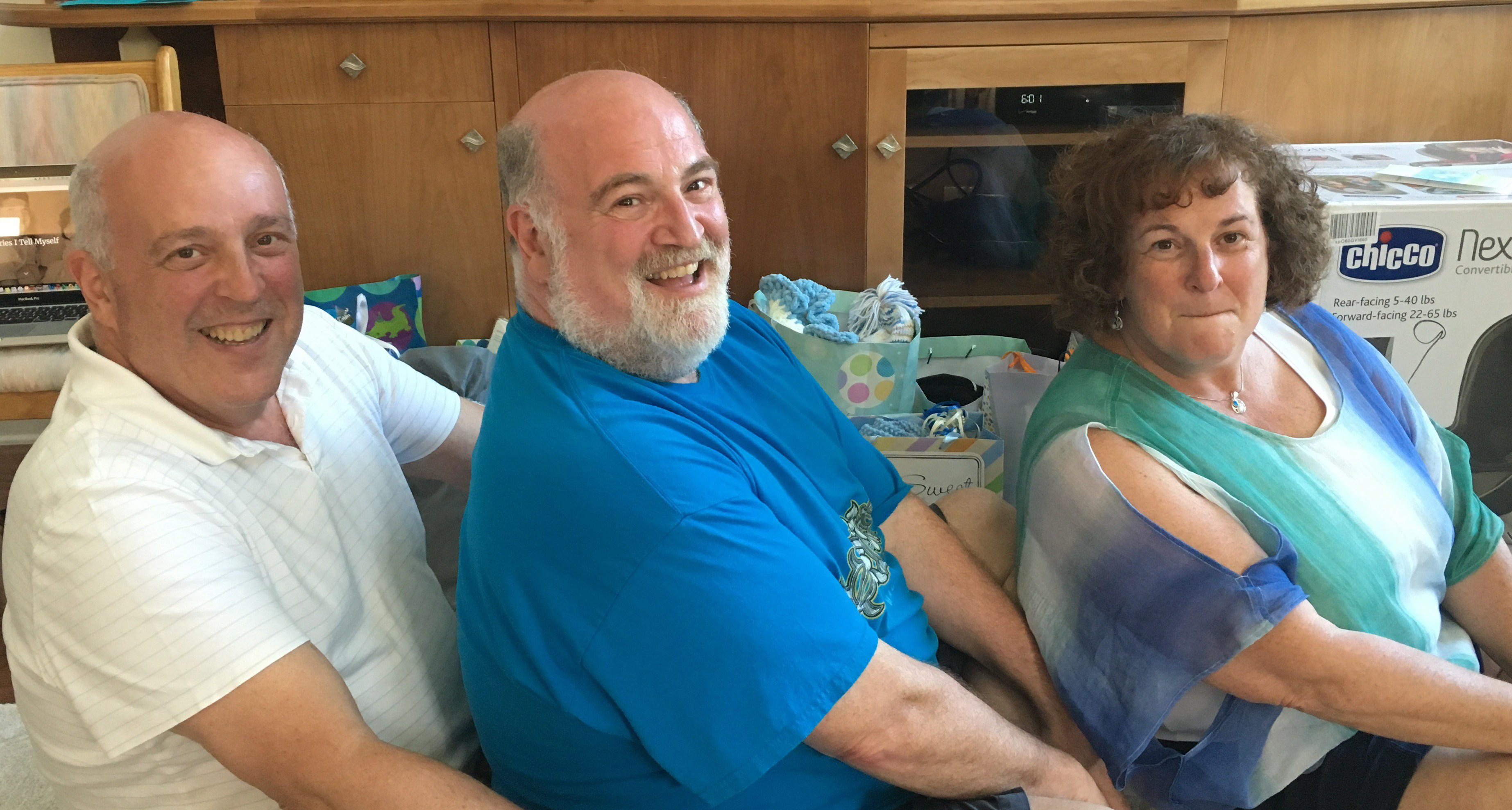
    Me and my bros – 2017 – recreating a pose from when we were small and could more comfortably sit like that!

    Mark likes to be the center of attention; Steven doesn’t (he certainly doesn’t seek it). Mark is a jokester; Steven enjoys a good laugh, but doesn’t work to get one. I can see Mark’s wheels turning as he figures out a way to tease someone or fit in a humorous story; Steven tends to hang back. Steven gives attention to his appearance, he enjoys wearing stylish shoes and a well cut leather jacket. Mark couldn’t care less – he is pleased if his clothes aren’t stained. Mark is also color-blind; Steven isn’t. Steven is neat and organized; Mark is anything but. Mark is very liberal politically; Steven is a centrist. Other than being about the same height and having the same hairline, they don’t look much alike either. Steve has a dark complexion; Mark is fair-skinned and freckled. I could go on and on. How could they share so much DNA and yet be so different? It is a mystery.

    They do share some commonalities. They like sports and are good athletes. Hmmmm. What else? They are dedicated husbands, fathers, brothers and sons (though how they express that dedication is not similar). They are both upstanding citizens – trustworthy and hard-working. Beyond that, it is hard to find adjectives that apply to both. Interestingly, they married sisters! My sister-in-laws are not as dramatically different as my brothers, but enough so that they are a good fit.

    It makes me wonder about siblings. I see patterns in the siblings in my extended family and Gary’s, too. Our mothers had an interesting and similar dynamic with their respective sisters. When asked about her childhood, before the war, Paula recalled with warmth and love her father sitting on the edge of the bed she shared with her sister telling them bedtime stories. Sophia, younger by a couple of years, didn’t remember it that way. She insisted that their father directed the story to Paula, Sophia felt neglected. Fifty years after the fact they still disagreed about it. Paula insisted he was entertaining them both; Sophia said no, the stories were for Paula. There is no way to reconcile the difference in perception – they felt what they felt.

    It is sad because that perception colored Sophia’s view of the world. Her Holocaust experience added trauma and pain to the baggage she carried. Paula at least had a more positive foundation.

    The story of my mother and her sister was not as dramatic, it didn’t play out against the Holocaust, but the theme was similar. If asked to describe the same incident from their childhood, my mother’s version was lighter, more positive. Whether it was because she was extra sensitive or tuned into subtleties, her sister, Simma recalled slights and hurts. They often disagreed about the meaning of the actions of their parents or aunts and uncles. Again, it could be difficult to reconcile their views of the same people.

    The pattern isn’t limited to sisters. If you asked Gary and his brother to describe their father, you might think they were depicting two different people.

    I wonder how common this is. It would be an interesting experiment: ask siblings to describe their parents and see how much overlap there is in the portrait offered. Maybe the same words would be used, but it might still feel different to each child. I imagine that my brothers and I would agree that our Dad was impatient. But, we each might feel differently about that. It might have rolled off my back because I knew the storm would pass. One brother might have been unnerved by the harsh tone and the other might have been oblivious. It could be that Dad mellowed with age and while I saw his impatience, I may not have experienced the intensity of it. Or maybe as his baby girl, he may have shielded me from the worst expression of his impatience. So many possibilities! Birth order, gender, gaps in age all likely play into it. Is it any wonder that sibling relationships can be so complicated?

    Regardless of the differences in perceptions and personalities, my mother and mother-in-law were deeply connected to their sisters; they were not estranged. They argued, but they were present for each other. The message I received growing up was that familial bonds should be valued and respected. Hurts and disappointments could be overcome because you knew you could count on your sibling to be there for you, especially during tough times. You didn’t have to like your brother or sister, that would be a bonus, but you loved them no matter what and they were part of your life forever. Judging by how often families are estranged, not everyone grew up with that message.

    I do understand that sometimes relationships are so toxic that they have to be cut. Certainly, where there is abuse, it is appropriate and necessary to dissolve the bond and create a family of choice. Fortunately, that wasn’t the case for me or my brothers.

    Whatever differences in character traits that exist between my siblings or between them and me, we know with certainty that we can rely on each other. I am grateful for that knowledge.


  • Note:  I am working on a new piece but it isn’t ready yet. It occurs to me that I have been fortunate to accumulate new readers since I began this blog over three years ago. With that in mind, I will periodically post an earlier essay. I hope to have the new entry ready by Wednesday. Meanwhile, I offer the following reprise from June 6, 2016:

    Everyone has stuff that they deal with – sometimes it is invisible to others and sometimes it is painfully obvious. I’m not sure which is worse.

    The image that is the banner for this blog is of my brothers and me in the style of the time, lined up in age order. Today I look at that picture and smile. When I was young I looked at it and cringed. All I could see were my crossed eyes and it felt like a personal failing.

    I had my first surgery when I was one. Unfortunately, it didn’t work. I had another when I was in kindergarten. I remember waking up from that surgery with the cloying smell of ether still in my nose, the nausea overwhelming. I was released from the hospital wearing an eye patch with hopes that it would force the strengthening of the weaker eye muscle. Perhaps there are children who could pull off wearing an eye patch, making it cool, but I wasn’t one of them. Fortunately I didn’t have to wear it for long.

    After that surgery, instead of fixing inward on my nose, my right eye drifted out, especially when I was tired. “You talkin’ to me?” was a question I heard often, long before it was used in a different context in Taxi Driver. Like the movie, though, the question had a very unsettling affect. I would take a deep breath, close my eyes in a kind of prayer, concentrate really hard and hope my eyes would go in the same direction when I opened them. Mostly in that moment I wanted to be swallowed up by the floor.

    At least once a year I would go with my mom into Manhattan to see the eye doctor, Dr. Snyder. The trek to ‘the city’ from Canarsie was a long one. A long walk across blustery Seaview Park, a long bus ride to Eastern Parkway and then the 4 or 5 train to the Upper East Side. That trip may be a reason some Canarsiens didn’t bother going into the city.

    On the one hand it was special to have my Mom all to myself for the day. We would have lunch out and window-shop. On the other hand, the subway, with its screeching wheels, the smell of metal on metal and the crowds of humanity, filled me with dread. I was terrified of getting separated from her.

    Dr. Snyder’s office was just off Park Avenue. The waiting room had red leather chairs and, to my delight, Highlights magazines. I would find the hidden animals in the pictures while we waited to be seen. Dr. Snyder was gentle. There was one part of the exam that confounded me. He showed me a picture of a fly; it was enlarged, the details of the fly in blue against a silver background. He would ask me if it looked raised or flat. I could never decide. I would just pick one and looked at him to see if I got it right, but he never let on one way or another. This went on every year. Turns out I couldn’t see in three dimensions. I used one eye at a time and still do.

    I was assigned exercises to strengthen my eye muscles. I was supposed to stare at my index finger as I moved it slowly toward my nose. I’m not sure that we followed the doctor’s directions as faithfully as we should have, but I don’t know that it would have made a difference.

    As I got older other problems with my eyes emerged. In graduate school I was having recurring migraines and as part of the work up I had my eyes examined. Unrelated to the migraines the eye doctor found that my retinas had areas of weakness – he called it lattice. He advised against skydiving (no loss for me since as anyone who knows me would agree, I’m no adrenaline junkie!). He said, “Your retinas are your Achilles heel,” and recommended a surgical procedure to freeze them. I had the surgery. (Another story for another blog entry☺)

    I think having crossed eyes, and then a lazy eye, and weak retinas shaped me in important ways. It added to feeling like an outsider. I always identified with those who felt different. I was also terribly self-conscious and received more than my share of teasing from other kids, especially in my neighborhood. More than once my brothers were called upon to defend me from bullies.

    I can’t help but think that my eyes played an important part in creating the sensitive, introspective and insecure little girl that I was, the girl who sought comfort from Nana.

    As my father pointed out, as I got older, some of those same qualities were a blessing, not just a cross to bear. It’s been a journey, but I can smile at that picture today, despite the fact that my eyes are still my Achilles heel.

  • When I arrived on campus at SUNY-Binghamton in August of 1976, I was 16 and emotionally fragile. I emerged from the disaster that was junior high school and had grown more socially competent through high school, but I was still a bundle of insecurity. Plus, though I didn’t understand this about myself yet, I was prone to depression.

    Thankfully, when I moved in to Cayuga Hall, I met Merle. It isn’t really correct to say that I met her because that implies that I didn’t know her before. Merle went to my high school and we were in many of the same classes. But Merle was out of my league. She had a posse of friends. She was captain of the booster squad, co-leader of Arista (the honor society), in the top ten in our class. [Editor’s note: since I posted this, Merle called to thank me and also to correct me. She was not captain of the booster squad! She was just a member of it. I stand corrected. :)] She was pretty, petite and seriously smart. I may have given myself partial credit for being smart – at least in English and Social Studies (my grades in math and science were very average), but I was none of those other things. In fact, feeling unfeminine and unattractive was my Achilles heel.

    So, though I knew Merle, at the same time, I really didn’t. Imagine my surprise when we bonded over our shared struggle to acclimate to campus life during college orientation. Thus, began a beautiful friendship.

    I learned there was a reason Merle had so many friends. She listened attentively, she empathized, offered great insights and gave useful suggestions. And to top it off, we laughed our asses off. We took one class together – Anthropology. One time we disrupted the class with our laughter, the professor stopped and glared at us. We tried to rein it in.

    I came to college so young and inexperienced – in every sense of the word. I was wound up pretty tight, afraid to try things. Merle was a whole six months older, maybe not much in the scheme of things, but she had a much more adventurous spirit. I needed to loosen up and she helped me do that.

    Much of our time, in the beginning, was spent commiserating about our roommates. Both of us were tripled; both of us were in a dorm room that wasn’t connected to a floor (the door to our rooms opened to the outside – hers on the first floor, mine in the basement). One of her roommates was quite beautiful and knew it. She lounged naked. She entertained her boyfriend at night, thinking her roommates were asleep. Merle wasn’t. It made for lots of things for us to discuss, and more to laugh about.

    We signed up to be trained as counselors for High Hopes, an on campus help line that mostly gave referrals to students if they had questions or problems. Merle, I think, had already decided to be a psych major. I thought it would be interesting and believed it was an important service. The training was great. They taught us to reflect (using Carl Roger’s approach) when listening to someone’s issues because it helped the caller to clarify what they were thinking and feeling. That was one of the most valuable skills I learned in college.

    We also attended a lecture about homosexuality as part of the training. It was 1977, before AIDS, before gay characters were on television, most lived in the closet – mothers were still being blamed for it. The lecture opened our eyes to something we knew very little about. A mutual friend of ours was in the process of coming out. In fact, Merle’s older brother, came out to her around that time. I went with Merle to visit him in San Francisco in June of 1978. I have great memories of that trip. I learned so much about opening my mind and heart to differences. He took us to the Castro, and though I wouldn’t have articulated it quite this way at the time, I began to understand that love is love is love….

    We also went camping in Yosemite. I had seen mountains beyond the Catskills when I went with my parents to Rocky Mountain National Park years before, but Yosemite Valley and the majestic Sequoias were sights to behold. Merle’s brother and his friends brought food, but it was mostly vegetarian. While it all tasted good, Merle and I snuck off to share a ham and cheese sandwich when we were at the gift shop. We were kindred spirits even if we inhabited very different bodies.


    I write this today because yesterday was Merle’s 60th birthday. I am happy and proud to say that we are still friends. Through the loss of parents, the birth of children, the ups and downs of marriage and career, we have shared a lot. I still rely on her empathetic ear, her insights, her suggestions and her laughter. I hope I have returned the same.

    I have learned countless lessons from my friendship with Merle. Not the least of which is that you can’t judge a book by its cover. All those years ago I was intimidated by the cover. It turned out that while she is all of those things, popular, beautiful, petite, and smart, she is also warm, kind, vulnerable and funny. Here’s to continuing to celebrate life’s milestones and being there for each other during life’s challenges. Happy birthday, my friend!


  • What do you want to be when you grow up?

    Why do adults ask children that question? Are they expected to know? On the one hand, the question can prompt some introspection and perhaps a realization that they have a future which they can/should consider. On the other hand, it can be overwhelming because of all that the question implies.

    I envied kids who knew what they wanted to be. Evelyn, my classmate in elementary school, wanted to be a doctor. Though I lost touch with her ages ago, I know through the wonders of the Internet that she achieved her goal.

    A lot goes into achieving that goal, starting with knowing that’s what you want. Then, you have to navigate the path, and, finally, you need to have the resources and wherewithal to complete it. None of that is easy. But, for those who don’t know what they want, or for those who want a career where the path isn’t well-defined, the process can be quite fraught.

    f6YwhefiQSO%m67mk%Wd2g
    If only the path could be so well defined.

    Readers of this blog may remember that I wanted to be a sportswriter when I was young. I read Marv Albert’s book, “Krazy about the Knicks,” in which he described his journey, starting with “broadcasting” games from his seat in the stands of Ebbets Field. Inspired by him, I wrote up every Knick game in a notebook (I still have that notebook).

    I was worried that being a girl would hinder my prospects. I wrote to the Yankees when I was 14, and had just gotten my working papers, asking for any type of job. I wrote that I was strong enough to be a vendor in the stands, carrying Cracker Jacks or whatever (not beer, since I wasn’t of age). I got a polite rejection letter. As I’ve shared on the blog before, I continued writing sports through college when my enthusiasm for it vanished without explanation.

    When I was even younger (less than ten years old), I tried my hand at writing a short story. As was often the case, I was in Nana’s kitchen while she visited with her two brothers and their wives. They were seated at the marble table, having coffee and chatting. Mostly I listened. But Uncle Morris and Uncle Jack were kind enough to engage me in conversation. They always asked about my interests. I must have mentioned that I wrote a story. They wanted to read it. I ran downstairs to retrieve my story; a couple of pages handwritten on loose-leaf paper. I presented it to them and left, too embarrassed to be present while they read it. When they finished, they called me back upstairs. They had bemused smiles on their faces. They asked where I had gotten the idea for the story. I have no recollection what it was about. I do remember feeling terribly self-conscious. They weren’t unkind, but given my level of insecurity as a baseline, I gave up writing fiction.

    I still wanted to write, though. I had a good friend Cindy who shared my sensibilities. When we hung out, we would write fake newscasts (long before Weekend Update on SNL) and tape them on a small cassette recorder. We laughed so hard we cried. I don’t know if it occurred to us to share them, but we never did.

    One time, Cindy and I decided to try something different. We worked on a play. I don’t recall the specifics, but I do remember Cindy making a suggestion that created major conflict between the characters, I think jealousy between siblings. I was so impressed that she could come up with that idea. At that point I knew enough about storytelling to understand the need for dramatic tension, but I had no idea how to construct it. Once again, I internalized the message that I didn’t have the talent to write.

    I think I grew up looking for evidence that I didn’t have the goods to be a writer, even though another part of me felt driven to do it. I learned sportswriting didn’t satisfy the urge. An unformed notion that I needed to write still lived inside me, but I didn’t have the confidence and I didn’t see a defined path to continue pursue it. I got a job instead.

    It is one of the great challenges of growing up – finding that path. Finally, at 55 years of age, four years ago, I went to look for it. Fortunately, I realize I haven’t finished growing up.

  • I was taking another drive to New Jersey recently. Usually I listen to music, but I have been exploring podcasts. A friend recommended Marc Maron’s WTF, saying he was a good interviewer. He’s also a comedian so I thought there could be some laughs. I enjoy a good interview and laughing so I decided to check it out.  (I agree with my friend; he is a good interviewer and I enjoyed the three podcasts I listened to – it is a long ride!).

    Anyway, one of the comments he made got me thinking. He was relaying a story about family vacations. He did not remember them fondly (don’t worry, Mom, I remember ours very warmly). He talked about his family of four sharing one hotel room and in that cramped space they got on each other’s nerves. He mentioned that they didn’t know each other that well. He pointed out that they were probably all too self-absorbed in their day-to-day life and didn’t actually know each other. When they were thrown together in the confines of a single hotel room, it could get unpleasant.

    The idea of not really knowing your own family gave me pause. On the one hand, I would have said that we knew each other quite well. We were a close family; we spent a lot of time together. On the other, maybe not…. especially when I was younger. Most of my time with them was as a family unit, and we fell into certain roles. Dad was the disciplinarian. Mom was the one directing our activities. Mark was the instigator, looking to get a rise out of someone, mostly me. Steven was the sphinx, keeping to himself, getting along. I don’t know who I was – sometimes I know I was the whiner, “Mark touched me!” I would cry with great indignation.

    I don’t mean to reduce us to one characteristic, but I think there is something to that. We still fall back into those roles.

    I remember once when I was a young adult living in Albany, having already started my own family, Dad came to visit alone. He was attending a social studies conference at one of the hotels in the area. He stayed overnight at Gary and my house. It was all fine, but it felt odd. It isn’t that I never spent one-on-one time with my Dad. But that was when I was a kid.  When I was 9 or 10 years old, I would go to watch him play tennis. I would ride with him to Marine Park, where he met his friends and they would play doubles. I would alternate between hitting a tennis ball against a wall and watching them play. On the way home, we’d stop for an egg cream. I remember enjoying those times, they are special memories for me.

    I’m sure that was more time than some daughters get with their fathers. Yet, when he visited that time in Albany, it struck me that there was some awkwardness to it. Maybe it was because as an adult it had been years since it had just been us. Maybe we didn’t know each other as adults.

    It wasn’t that he disappointed me in any way during that visit, or that it was unpleasant. I became aware, though, that our relationship was inextricably tied to our connection to my mother. I was more accustomed to spending time with them as a couple. It felt a bit weird to relate to him as an individual.

    This notion was reinforced, years later, when my Dad died. I became aware that my relationship with my mother was changing. She was likely changing, after 50 years as a partner to Dad she needed to find her own path. I discovered different parts of her personality, as she may have been discovering different aspects of herself. It is hard to disentangle the varied strands – was she changing? Was I? was that who she had always been, but now I saw it?

    I also think back on ideas I had about other family members. It’s funny how my understanding of our family has changed over the years. When I was young, I thought we were perfect. Then I went through a phase, not surprisingly, as a teenager, where I hated them (okay, hate is a strong word – they annoyed me profoundly). Then I got to college and realized I was so lucky to have two parents who communicated their love and care clearly, and an extended family that I was deeply connected to. As I grew into adulthood, I saw our family in more nuanced ways. I became aware of tensions that ran beneath the surface – not so much in our immediate family but with aunts and uncles. I realized that things were more complicated than they seem on the surface.

    I remain deeply connected to my family. I continue to get to know them. How well do we know each other?  I can’t answer that. I wonder what others experience in their families. Do you know each other?

    fullsizeoutput_f27
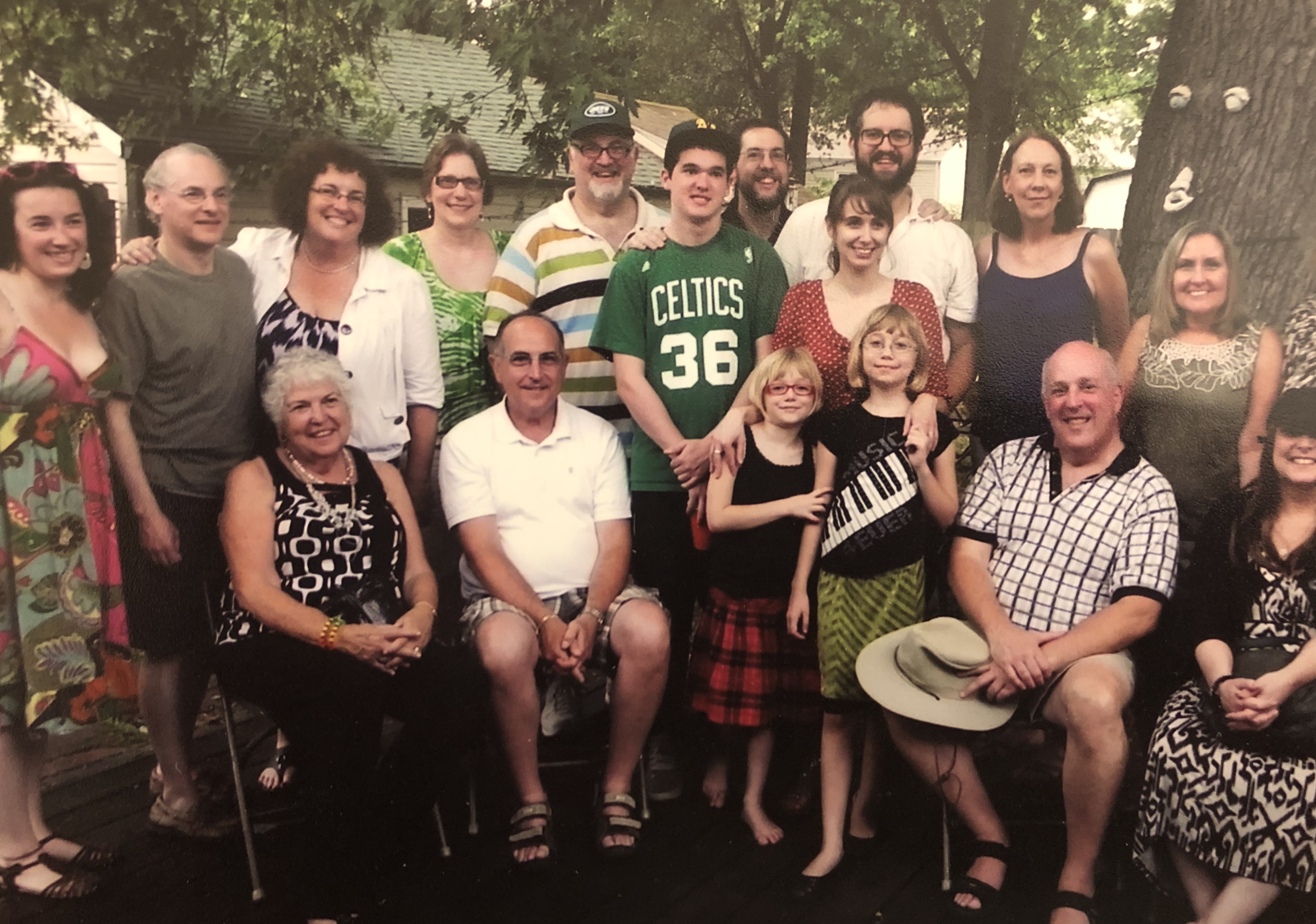
    part of my family


  • Yesterday was Mother’s Day. It was a wonderful day for me – I felt loved. Need I say more? Probably not, because that sums it up pretty well. But, I do want to say more (otherwise I wouldn’t have much of a blog post, would I?).

    fullsizeoutput_f20
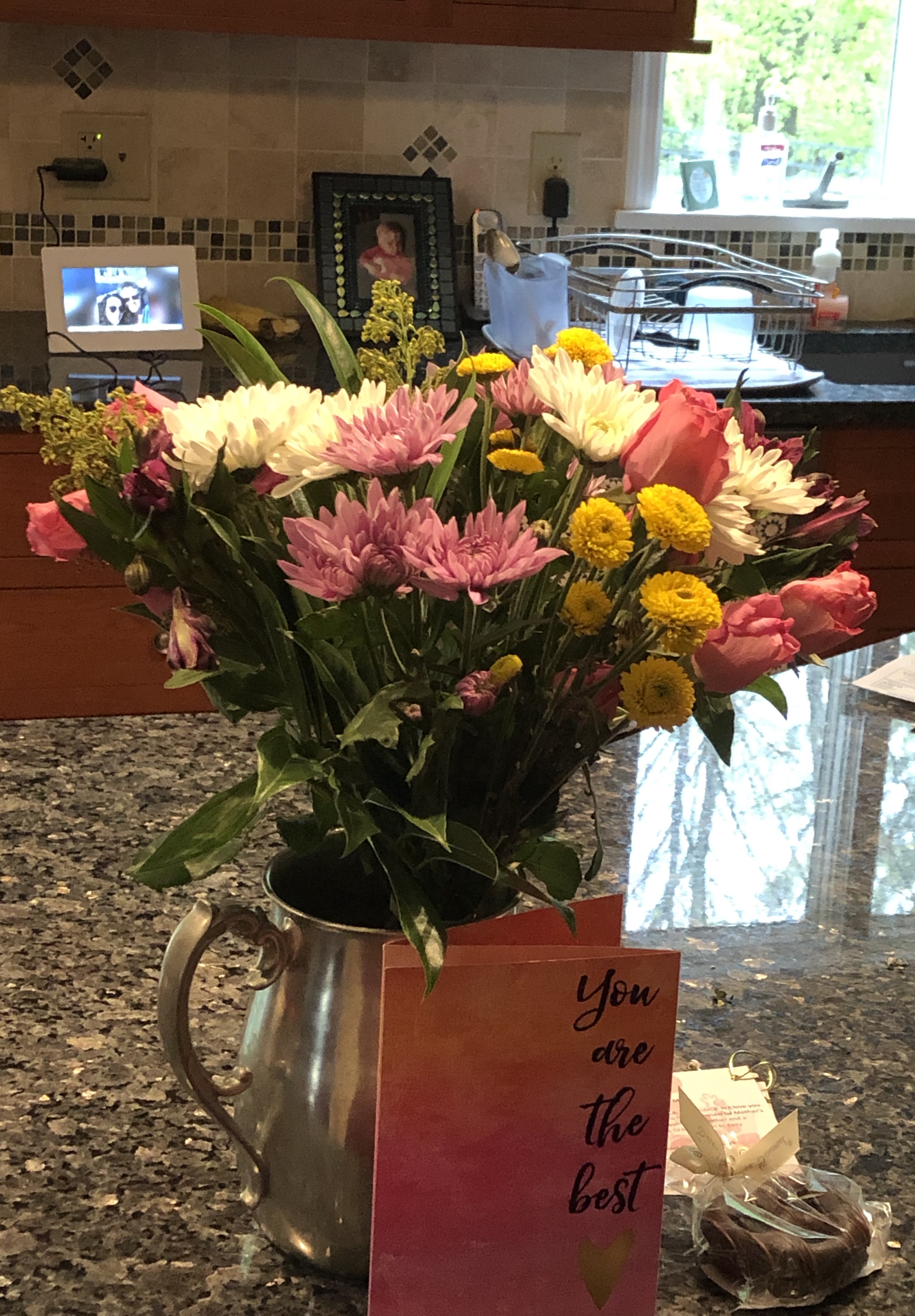
    Part of my mother’s day. I am so lucky!

    I came across an essay by Anne Lamott, a writer I like very much, in which she argues for cancelling Mother’s Day. (If you want to read her post, here is a link: here, though if you aren’t on Facebook it might not work.) She made a lot of valid points. It is a day that can be fraught for many reasons: it can be a reminder of the painful loss of a mother or child, it romanticizes motherhood when for most the relationship is not as simple as a Hallmark card, it can be alienating for those struggling with infertility….the list can go on. But all celebrations have a flip side. Birthdays can be reminders of what we haven’t yet accomplished. The holiday season can feel intensely lonely. I think we need to be sensitive to that and reach out to those who may be in pain. We should also emphasize the love, not the consumerism. But we shouldn’t cancel the celebration. Mothers deserve to be celebrated, even the flawed among us (which would be all of us). Most of us are doing our best, which sometimes isn’t enough. And there are some who aren’t doing that, but then I hope we could celebrate those who helped us overcome, who played a nurturing role. A mother, whether they are biological, adopted, or chosen, is worthy of recognition.

    After all, it is in the ten commandments. Even if one doesn’t believe in God, or has their doubts, the ten commandments offer some good moral guidance, and the fifth commandment says to honor your father and your mother. I have wondered what that means.

    I remember when I was a child being in the room when my dad had an argument with one of my mom’s uncles. Uncle Morris was saying that children owe their parents respect and love. My father, in his forceful way, disagreed. He said children didn’t ask to be born. Parents were obligated, since they brought the child into the world, to care for them, but a child didn’t have to return the favor. Uncle Morris was taken aback. I think I understood, even though I was a child, that somehow this related to my dad’s feelings about his own parents. I’ve written about this before, but I believe my father didn’t feel loved or supported by his parents (at least not in the way he needed to be). To his credit, he, in turn, did his best to make us, his children, feel loved and supported.

    What do we owe our parents, if anything? My mother has often told me that she doesn’t want to be a burden. I appreciate her saying that. I make a choice to drive to New Jersey to take her to the doctor in New York City. I choose to call her almost every day. Is that burdensome? Maybe. When I am crawling through midtown traffic to get to the Lincoln Tunnel to take her home from the appointment, it can be onerous. But, it still feels right. I want to do those things. Sometimes I wonder if I can or should do more. We are all pulled in different directions. Balancing it, our relationships, our work, our hobbies, our own health, is a never-ending struggle. I am constantly in conversation with myself about whether I am striking the right balance. It is not a very satisfying conversation because most often I feel like I am coming up short somewhere.

    Do you have that conversation with yourself? Any comments on that fifth commandment? – it is a tricky one. Maybe they all are.

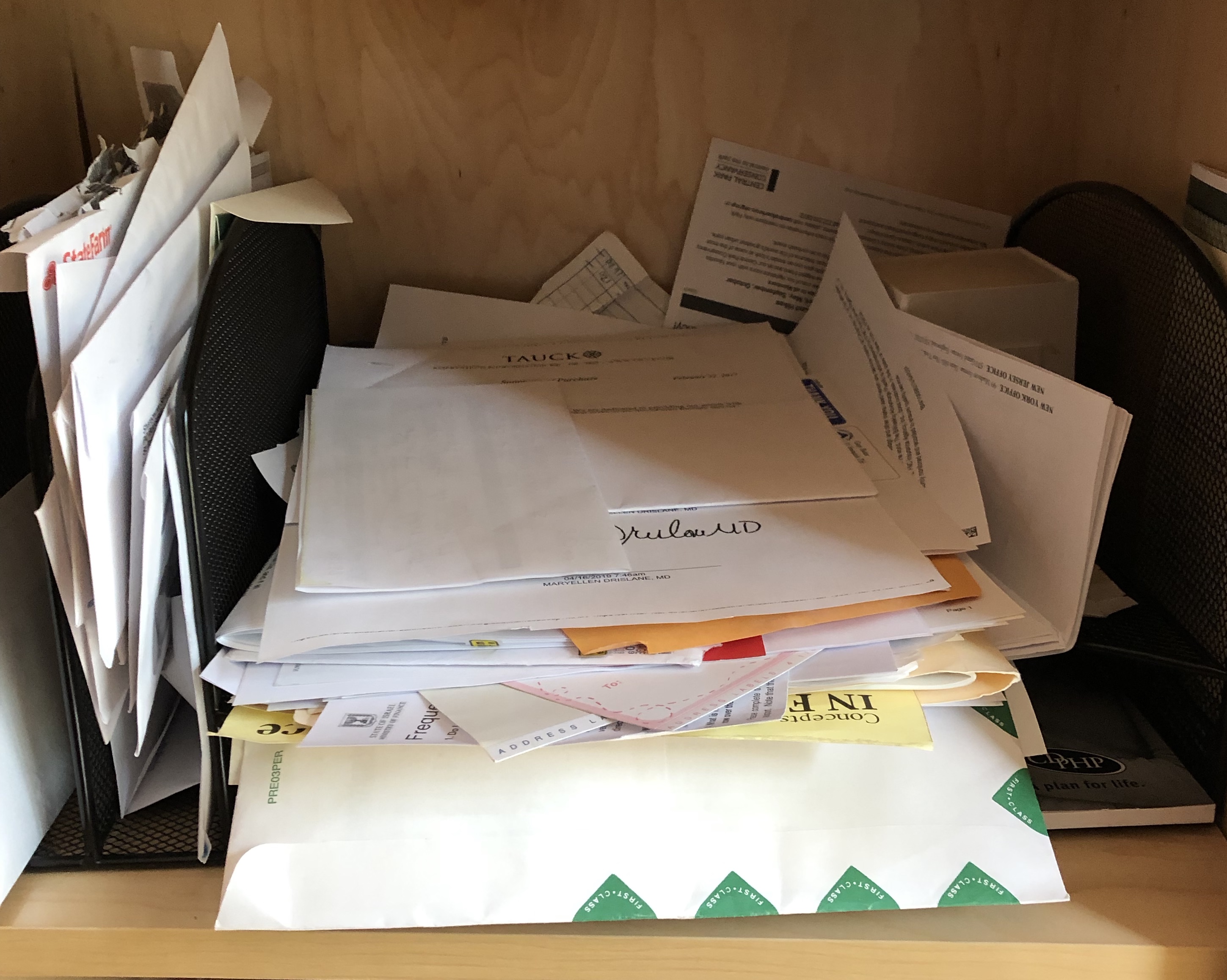
  • fullsizeoutput_f17Oh paperwork!!!
    
    
    Letters, notices and advertisements pile up on my kitchen counter
    
    Which electricity supplier should I use?
    
    Is there a difference among them?


    A notice of unclaimed funds arrives in my mailbox
    
    Three phone calls placed, four completed forms submitted
    
    Five months later, I receive a check for $2.50


    Another notice arrives via email
    
    The bank has closed an account due to minimal activity
    
    I ignore it
    
    Four months later, I need that account
    
    Something to do with a trust
    
    A visit to the bank is in my near future


    Oh paperwork!!!


    The La-Z-Boy in the family room invites me
    
    I take the novel I started
    
    Settle into the comfy chair
    
    And disappear into 1980 Atlanta.
    
    (For those who are curious, the novel was Silver Sparrow by Tayari
     Jones)