I don’t have a blog post prepared so I am winging it. The past week was a tiring one. It started off with a dental appointment to put a crown on a tooth that had previously had root canal. The process of preparing the crown left my mouth sore. I don’t know about you, but I don’t enjoy when they insert the tray with the gooey stuff in my mouth to make an impression of my teeth. I remind myself to breathe so I don’t gag. I prefer not to have someone putting their hands in there to drill either- the vibrations cause my ears and sinuses to ache. Invariably my jaw is sore afterwards. It took a couple of days for that to settle down. Great start to the week.
Then I went down to New Jersey to accompany my mom to her pulmonologist appointment. I wanted to go (Mom, don’t feel guilty!!). I don’t mind a road trip. I listen to podcasts, NPR and music. As long as traffic isn’t bad, I’m good. I wanted to be there to hear directly what the doctor said, to support Mom and to spend some time with her. The issue is that the visit to the doctor was not great. I’m not going to go into details, but we left with more questions that we arrived with. Mom is doing okay, but not as good as we would like and frankly, I worry about her. (Mom, don’t feel guilty!!) It is hard being 3.5 hours away.
That night, after the unsettling appointment, I had a zoom bookclub. I signed up for an offering from my local library – the club meets virtually to discuss 7 Pulitzer Prize winning novels that explore the American experience. The assignment for this meeting was Humboldt’s Gift by Saul Bellow. I’m not going to digress too far on this, it could merit its own blog post, but I would describe the read as a slog. Reading a book should not be a slog. I fought through it, at least in part out of respect for my fellow bookclubbers. The facilitator of the session, who I like very much, opened the meeting by confessing that he couldn’t get through it! Part of me regretted that I had put in the effort, but, in fact, I’m glad I did. It wasn’t great timing in that I had other things to do, but I did get something out of the experience. One thing I learned: I will not read another Saul Bellow novel. I read one in college, Herzog, which I also remember as a painful experience. I think two is quite sufficient for my lifetime. I may write more about Mr. Bellow’s novel another time. I enjoyed our discussion which centered on whether we feel an obligation to finish a book we have started. What do you think?
The week proceeded with preparations for Passover. Last year we did a virtual seder which worked out pretty well, all things considered, but certainly isn’t what we prefer. This year, since Gary and I are fully vaccinated, our children came and we zoomed with my husband’s sisters. I love having a full house. I loved having Leah, Ben, Dan, Beth and our granddaughter here.
Our granddaughter woke up at 4:15 a.m. Saturday morning. I didn’t want her to wake her parents – she was starting to cry and we had the monitor in our bedroom – so I went in to her. She settled quickly. I didn’t. I got back into bed and thought about everything I needed to do. About 6:00 a.m. I fell back to sleep. Our granddaughter woke up at 6:15 a.m. Fortunately, Gary was happy to get her and I fell back to sleep for another hour and a half. Despite that I got up not feeling particularly well rested. A small price to pay, but as I get older it gets harder to rebound. I thought to myself, “I don’t want to be 61!” as I brushed my teeth. Of course it is better than the alternative.
During the weekend we laughed, we chatted, we prepared the seder meal (three of us combined efforts to make the turkey and it paid off), we ate multiple meals actually. We played Trivial Pursuit. My granddaughter not only chose me to put her to bed both nights, but said, “Nana, I love you.” Nothing is better than that. I will treasure the memories and look forward to the next time we get to be together.
Now it is Monday morning. I don’t have a blog post prepared. But that’s okay.
‘Crimes or misdemeanors.’ My husband uses that phrase when we talk about making judgments about people’s behavior. We are walking in our neighborhood and I am telling him about my distress because someone disappointed me. After listening to me vent for a bit, he will ask, “Crime or misdemeanor?” a reminder to put things in perspective. Do I want to hold a grudge? Do I want or need to discuss it with the person? Gary isn’t saying it to minimize my emotional response to the incident, but to ask me to step back and look at it afresh.
Some transgressions are minor, others far more significant and it is useful to make that distinction. It is relevant in terms of how we evaluate the person’s character and assess the consequence. Lately, particularly in the context of the #MeToo movement and accusations of racism, it feels to me that we are losing the capacity to be discerning, especially about the punishment. I think there is something to the argument that ‘cancel culture’ has gone too far, even if the phrase is a Fox News favorite.
I believe Harvey Weinstein got what he deserved. Even if one wanted to say he was canceled, he should have been. In my saying that the pendulum may have swung too far in canceling people, I am not offering a defense of indefensible behavior. Rape, assault, stalking, unwanted touching, ogling, unwelcome flirting are all unacceptable, but they represent a range of wrongs. I think we need to ask what the appropriate punishment is depending on the offense. In the context of sexual harassment at work, options could range from criminal charges to a warning. Potential responses include referral to the police, an internal investigation, bringing in an outside consultant, a counseling memo in their personnel file, firing, required training, reassignment or some combination of these. Perceptions will vary about the appropriate response. The problem we are up against is that for years and years and years, nothing was done. Women weren’t believed or the problems were swept under the rug. Perhaps in reaction to that, we are overcompensating now.
When the New York Times reported that Peter Martins, the director of the New York City Ballet (NYCB), retired because he was being investigated for creating a hostile environment, which included sexual harassment, my mother was outraged. It wasn’t clear whether the investigation had been completed when his decision was made (it seemed he was forced to retire). Mom was a huge fan of his dancing – we both were, we followed his career and enjoyed his performances over the years. She thought he was being treated unfairly. I argued that the organization likely had a lot more information than what was in the paper. I reminded her of some incidents that had been reported about him in the past. I also made the point that NYCB likely didn’t undertake a major investigation and accept his retirement without good cause. I asked her “Why would you assume that the charges are all lies?” She still thinks he was done wrong. While I don’t know the details, I don’t believe he was ‘canceled.’
In part the difference between my mother’s and my response is generational. Some behaviors that today we recognize as inappropriate were acceptable or expected to a woman of Mom’s age. Some of the #MeToo reporting didn’t sound so bad to her. (Let me be clear, she does not think sexual harassment is okay.) A coach was allowed to be verbally abusive. Sexual innuendo was part of office banter – at least in some places. A man giving a woman a compliment on her appearance may have been appreciated – it may still be.
There are intangible things at play – whether it was 50 years ago or today. Two men saying the same thing can be received very differently – tone of voice, body language, previous interactions, the look in their eye all inform the meaning of the words. “Pretty dress,” can sound innocent or lascivious. Two women hearing the same comment may respond differently – one may be flattered, another may be uncomfortable. One person may be motivated by a coach yelling, another may shut down. We can acknowledge that this can be fraught without giving up making judgments. We also can’t sustain knee-jerk reactions to every accusation. We need to make the effort to navigate this messy, confusing and difficult terrain.
We also can’t know a person’s intention. The law makes distinctions based on intentionality – harming someone purposefully is different than accidentally. It can be hard for prosecutors to establish intent; harder yet in a harassment claim. Did they mean to make someone uncomfortable? Are they on a power trip? Are they racist or ignorant? Does intention matter? Yes and no. Sometimes the action speaks for itself. The guy in Atlanta may deny racist intent after he murdered six Asian-American women, but what he did belies his words.
Ignorance is an inadequate defense, too. If you make no effort to educate yourself, then you bear responsibility for not knowing the meaning of words or symbols. Is it believable that a person doesn’t understand what a swastika represents?
Another question is: Can we give the harasser an opportunity to redeem themselves? I am troubled by the idea that people are written off or deprived of their career without slowing down to investigate and then give due consideration to the punishment.
What guidelines can we use? I think it can be helpful to ask what if the behavior/action happened to our child, spouse, friend or relative? Imagine yourself as the victim. See if that empathy changes your perspective.
By the same token, ask yourself if the person who is accused was your spouse, child, friend or relative, what would you think is fair? Does that change how you would like them treated?
We also need to be cautious in reacting to what we see in the media. Sensational headlines get attention. Sometimes the full story gets lost. Let’s all take a breath.
Accusations should be investigated, fairly and thoroughly. Once facts and perceptions are understood, we need to find a just response; one that is not inflamed by political extremism, righteous anger or a rush to judgment. In the long run, we all benefit from a thoughtful, fair process. We don’t want the pendulum to swing too far back in the other direction, silencing voices that have only begun to be heard.
Governor Cuomo is in trouble. I have mixed feelings about that. He is a complicated public figure. I can’t claim to have first-hand knowledge of how he operates but having worked with his administration on education issues and knowing folks who have attended meetings with him and living in the Albany area for the last thirty years, I have certainly formed opinions about him. Before the pandemic, my impression was largely negative, even though most of his policies aligned with my own views. I did not like the way he did business.
Recent reports that Governor Cuomo or his aides threatened to ruin the careers of adversaries are very believable. I think that has been Cuomo’s modus operandi for most of his career. The evidence suggests that he is a bully. Maybe our culture is changing such that his behavior has become unacceptable and that would be a good thing. I think, to varying degrees, bullying in the workplace has been acceptable in the past. I have worked with men who got away with a version of that – yelling and intimidating people to get their way, driving employees to tears. Maybe they didn’t go so far as to threaten to ruin careers, but scaring underlings was a tool they used. Perhaps they had anger management issues, but nobody called them on it. From what I have observed, some men benefitted from the behavior. Cuomo may be caught in a changing tide. What was once okay (or at least overlooked) is now not. One question this raises is: what is the penalty for that? I’m not sure that the punishment (forced to resign or impeached) meets that crime. Is it enough for him to acknowledge it and pledge to behave better? (If he was willing to do that.) Should he be forced to step down? It would be a simpler calculus if that was all he was accused of.
The allegations of sexual harassment are another matter. I have to admit that these charges came as a surprise to me. It was not something I heard whispers about before, though that doesn’t prove anything. At first, I wondered if the allegations were actually more about how his bullying behavior manifested with women. The first reported complaint that I read about, back in December, sounded like that. Creating a toxic work environment was consistent with what I understood about him. Unwanted touching, though, is a whole other thing. The incident at the wedding where he cupped the young woman’s face (she wasn’t an employee of his) and asked if he could kiss her sounds like he was being a creep (perhaps drunk?) and doesn’t reflect well on him but does not seem to be harassment. Now there have been other allegations that involve more aggressive unwanted touching of employees. The question this raises is: should he resign based on the allegations? I think the investigation should play out first. I know that in the heat of the stories emerging, it is tempting to leap to conclusions, but a rush to judgment isn’t fair. I think there has been too much of that.
Then there is the nursing home situation that is also being investigated. The issues here fall into a couple of different categories. The coverage I have read has focused on the wrong things. The number of deaths reported in which categories is less important than the facts of the deaths. We need to understand what happened and what can we learn from it.
Throughout the pandemic, at all of those press conferences which I watched, the person I was least impressed with was the Health Commissioner, Howard Zucker. He did not inspire confidence, unlike the Governor. I know he, and the whole administration, was faced with an unprecedented crisis. And, to add to the challenge, they didn’t get guidance or support from the federal government. Even cutting Zucker some slack for that, I don’t think he performed well. His role in managing the nursing home situation needs to be understood. While the buck stops with Cuomo, I have to assume that decisions about protocols were largely informed by medical advisors. What guidance did Zucker offer?
The first question with the nursing homes is: what guidance did the state give regarding Covid patients? Were nursing homes given support, in terms of PPE, respirators, or treatment suggestions? Was the state made aware of what was happening on the ground? How timely and adequately was support given? What instructions were the hospitals given about releasing Covid patients back into nursing facilities? If the Attorney General’s investigation answered these questions, I didn’t see much coverage of it. These are far more important questions than whether nursing home deaths were erroneously counted as hospital deaths. No one has said that the total number of deaths was undercounted.
I can imagine, in the midst of the crisis, that it was all a giant clusterfuck. Some of it can be forgiven because no one knew what to do, but if decisions were made that led to more deaths, we need to understand that. Not for the purposes of punishing someone necessarily, though if it involved negligence or willful disregard for human life then we would need to assign consequences, but rather so that we learn and do better. There will likely be another pandemic.
Then there is the allegation that the Cuomo administration lied on federal forms in reporting nursing home deaths. I am not suggesting that Cuomo gets a pass on the handling of the nursing home debacle. If he directed people to lie on federal forms, there needs to be a consequence. Given the posture of the Trump administration, their incompetence and politicizing of everything, it is easy to imagine the Cuomo obfuscating, if not outright lying. Truthfully when the allegations that they lied on federal forms came out, especially when it didn’t mean that he lied to the us (New Yorkers) about the number of deaths, I didn’t give a shit. I could be missing something, but in the midst of all that was and is going on, with the virus still raging and so many suffering, I thought there have to be more important things to be focused on.
We need to concentrate on the right questions. Unfortunately for Cuomo, he has made a lot of enemies, probably deservedly, and they want to capitalize on whatever they can get on him, regardless of whether it rises to the level of an impeachable offense. Add to that the usual partisan power politics, Republicans would love to take advantage of Cuomo’s weakness, and we have a situation ripe for a rush to judgment.
I took comfort from Cuomo’s guidance during those daily press conferences. He provided leadership that we needed. He deserves credit for that. In the midst of calamity, he made many decisions that saved lives and stepped into a role that should have been filled by the President but wasn’t. How does that fit into the analysis of how he gets treated now?
On the one hand, I like the fact that Democrats demand a standard of behavior for elected officials. I would like some standard to have been applied to Trump. On the other hand, we can’t have knee jerk responses to allegations. Lots of prominent Democrats have come out saying that Cuomo should resign. They say he has lost the confidence of the people of New York. Has he? One thing I haven’t seen reported is what do New Yorkers think? What do the polls show? We are bombarded by polling most of the time. While I don’t like the idea of making decisions based on poll results, it seems relevant in this case since Cuomo is in office by virtue of the most important poll, the one in the voting booth.
I think the investigation(s) should play out. When we understand what Cuomo has done, then we can make an informed judgment about his future.
Note: I wrote and posted this before seeing that Quinnipiac has a poll out showing 55% of New Yorkers approve of Governor Cuomo. I think that supports my point.
Note: The following essay was written by my husband, Gary Bakst, a physician in New York’s Capital Region. Thank you, Gary, for sharing your experience and insight.
It has been a miserable year for all of us dealing with COVID-19. The virus has killed over 500,000 Americans and infected about 30 million of us. Some are still dealing with “long haul” symptoms, ongoing effects of the virus. Sadly, many have lost loved ones to this scourge. By now, very few of us do not know someone who has had it.
Beyond the illness itself, the precautions being taken to prevent infection have entirely changed the way most of us live. We are mostly staying home, working remotely, and avoiding gatherings. There are no concerts, no theater, no ballgames. Many of us are not willing to go to restaurants, bars, health clubs or yoga studios.
For those of us still working in person, teachers, grocery workers, and health care workers, etc., there is the real risk of infection. And in our office, that concern has similarly been significant. There are about 90 employees in our office. We represent substantial diversity in all kinds of ways: race, age, religion, rural vs. urban, health status, educational and economic status.
And we have about 300 people who come into our office on a daily basis for doctor’s appointments, to see physician assistants, nurse practitioners, diabetes educators, podiatrists or our surgeon. They come in for labs and ultrasounds and bone density measurements. It is a lot of people and a lot of appointments. Altogether, since the beginning of the pandemic, it represents about 80,000 visits.
Given the prevalence that COVID has had in our community, it was inevitable that, at some point, people who work in our office would test positive for the virus. Yet, through the end of November, we had not had one employee test positive. Our precautions were working. After the Thanksgiving vacation, that started to change. We had first one and then several and then a substantial number of employees test positive. By and large, it did not feel like transmission was happening within our office although there was quite a bit of worry over that possibility. Mostly, it was people who presumably became infected outside of work, possibly via contact with asymptomatic people who did not know that they were carrying the virus.
We had at least one example of a physician acquiring infection from contact with a patient who did not know they had the virus. Personally, I had two consecutive Fridays in which a patient called (or a family member of that patient) that they had tested positive the day after their visit. Sometimes people just don’t really think they have COVID – maybe they had minor symptoms and got tested but they answered our prescreening questions indicating no such issues. Getting those Friday calls led me to quarantine apart from Linda and certainly raised my anxiety level. Fortunately, I didn’t get the virus and neither did Linda.
Unfortunately, some of my patients have been very seriously ill with COVID-19 and several have died from it. Many of them were lovely, sweet people with wonderful families.
Most of the employees who tested positive had minor symptoms or were asymptomatic. Several were more significantly ill. Several had to miss work for weeks or even months. Those who were sicker longer have had some issues in terms not feeling entirely themselves even after returning to work. One of the many frustrating things about this pandemic is the unpredictability of the disease.
By early January, I had reached the point where I was seriously thinking that we needed to shut down the office for 10 days. Then, the vaccine took effect. I got my first dose on December 28th. It was 2 weeks after we received the first dose that all of this stopped. Not all of our employees chose to get vaccinated, but the overwhelming majority did.
Up until that point, the tension, the fear, in the office was palpable among many of our staff. Everyone handled it in their own way. Some were clearly less concerned, and a few had to be repeatedly reminded to keep their masks on.
Albany Medical Center saw up to 38 employees test positive on a single day in that period. After vaccination – just over 90% of their employees chose to receive the vaccine – that number fell to either zero or one positive test per day. Most of the employees who tested positive were those who chose not to get vaccinated.
In terms of side effects, many of our staff did have some side effects. Half of us received the Pfizer vaccine and half Moderna. I did not notice any difference between those two vaccines in terms of side effects. I personally only experienced mild arm pain with both doses (of Moderna). But many in the office had more side effects with the second dose. Some had fever and chills, some were achy, some had nausea, some were exhausted. These effects generally lasted typically 12 to 36 hours. I do not know of anyone in the office who had anything worse or anything that lasted longer.
There have been several concerns that people have raised regarding getting vaccinated. I want to briefly comment about them:
“They were developed too quickly – something must not be up to standards.” Actually, they were subjected to exactly as much testing as all of the other vaccines that are produced, it was just that certain steps were done in parallel rather than sequentially. While all kinds of factors allowed it to be brought to the public more quickly including the promise that our government would pay for many doses, no vaccine went to market until all of the usual safety and efficacy studies involving tens of thousands of people were completed. All three vaccines have been authorized by the FDA.
“Since political pressure was brought to the process it must be tainted.” While there has been all too much politics involved in so many aspects of our response to the pandemic, those in charge of the vaccine process, thankfully, resisted pressures to short cut the steps we take to ensure that these vaccines work and that they are safe.
“The new technique of using RNA to make a vaccine means that my DNA will be altered or somehow there will be long term effects of the vaccine”. The messenger RNA does not get into the cell nucleus and does not ever do anything to our DNA. It is degraded fairly quickly and does not persist in our bodies. mRNA vaccines have been used before and have been safe and effective. However, never before has an RNA vaccine been used on this scale so it is absolutely reasonable to continue to monitor for potential adverse effects.
We are now many months since the first volunteers received the vaccines and their safety record has been very impressive. Their efficacy has similarly been very impressive as seen in our office. And the disease that we are combating is dangerous. We will not overcome it without vaccine. More than 500,000 Americans have died from it. With over 50 million Americans vaccinated, not one person has died from vaccine. The risk of vaccine is so clearly low and the risk of being unvaccinated so very clearly intolerable, even tragic.
Personally, I am so very grateful to be vaccinated. I feel less vulnerable and less likely to infect other people. Being vaccinated has not yet had much effect on the things I choose to do or not to do. I am still quite careful at work and reluctant to go to places where people gather. But I am hopeful that much of this will change as more of the people I know receive vaccines and I am encouraged that the availability of those lifesaving shots is increasing week by week. I hope you are able to access a vaccine soon or have already had one and that it makes your life better and safer.
I want to see light at the end of the tunnel and I probably should be able to, but it has been such a long year. The news has been so painful – so many deaths, certainly many that could have been avoided had action been taken sooner. A year ago, who would have believed that over half a million Americans would die of the coronavirus? The number is unfathomable.
The pandemic has introduced so many wrenches in our plans: from a canceled vacation to national parks last May, to planning a Covid-safe bridal shower and wedding for our daughter instead of the celebrations we were hoping to have, to Zoom meetings of my writing groups instead of getting together in person, and a funeral and shiva for my father-in-law with limited attendance. So many accommodations were made, so many disappointments were absorbed. And we were among the lucky ones. No one in our immediate family got sick, though there were scares and there were quarantines, no one died in our immediate family, and no one is suffering long-term symptoms.
We tried to make the best of it. We still had celebrations. We used FaceTime to visit. Gary went to work, as usual, coming home with indentations on his face from where his mask and goggles pressed against his skin. His hands are rougher than sandpaper from relentless washing and sanitizing. The payoff for his efforts was that, despite some exposures, he has remained healthy and so have I. We took hikes with family and friends, weather-permitting, finding lovely spots nearby to explore. We used our swimming pool more than we had in years. The summer and fall were made bearable by those activities. We used our fire pit more than we ever had even in the winter.
Temperatures reached the mid-40s on Sunday and the rain held off so Gary made a fire.
The winter has dragged on, though. Mostly one day feels like the next. I keep having to remind myself what day it is. Now it is March again.
There are signs of light. My husband is fully vaccinated. I got my first shot just over a week ago, so in another month I should be fully immunized. Getting the appointment was a travail, but the process of getting the shot was well organized and efficient. I was impressed with the whole operation at the Javits Center.
I do wonder if the speed of vaccinations can outpace the speed of variants of the virus emerging. If it doesn’t then we will be dealing with the limitations longer than anyone wants. But production has ramped up and more vaccination sites have opened, so maybe we will get ahead of the curve.
Spring is only three weeks away now; the days are getting longer and that usually makes me feel more energetic. Somehow, I still feel discouraged. Maybe it is the persistent grayness. The temperature has moderated but it still looks so gloomy. The sky is leaden, and the trees are bare.
Some of the persistent disappointment may be that I expected, with a new administration in Washington, there would be more hopefulness. I have no complaints with the steps Biden has taken – things are accelerating, but Trump’s influence is still so strong. I was hoping the fever would break, that the Republican party would be released from the ‘big lie’ of a stolen election and would be free to either return to its more reasonable conservative roots or to adopt a new constructive path. Sadly, this does not appear to be happening. I’ve said it a million times, and I will again: I accept that people have different political philosophies, that some view the role of government more narrowly, that some prioritize individual rights more than the communal good and that this leads to different policy choices. I cannot accept white supremacy or violence. I cannot accept ‘alternative facts.’ How will we move on from this moment?
I know I need to be patient. That is not one of my strengths. I have no choice but to put one foot in front of the other, keep doing what needs to be done, take opportunities to enjoy family and friends, notice the beauty of the full moon emerging from behind clouds against a violet sky… and breathe. Believe in the light even when I can’t feel it.
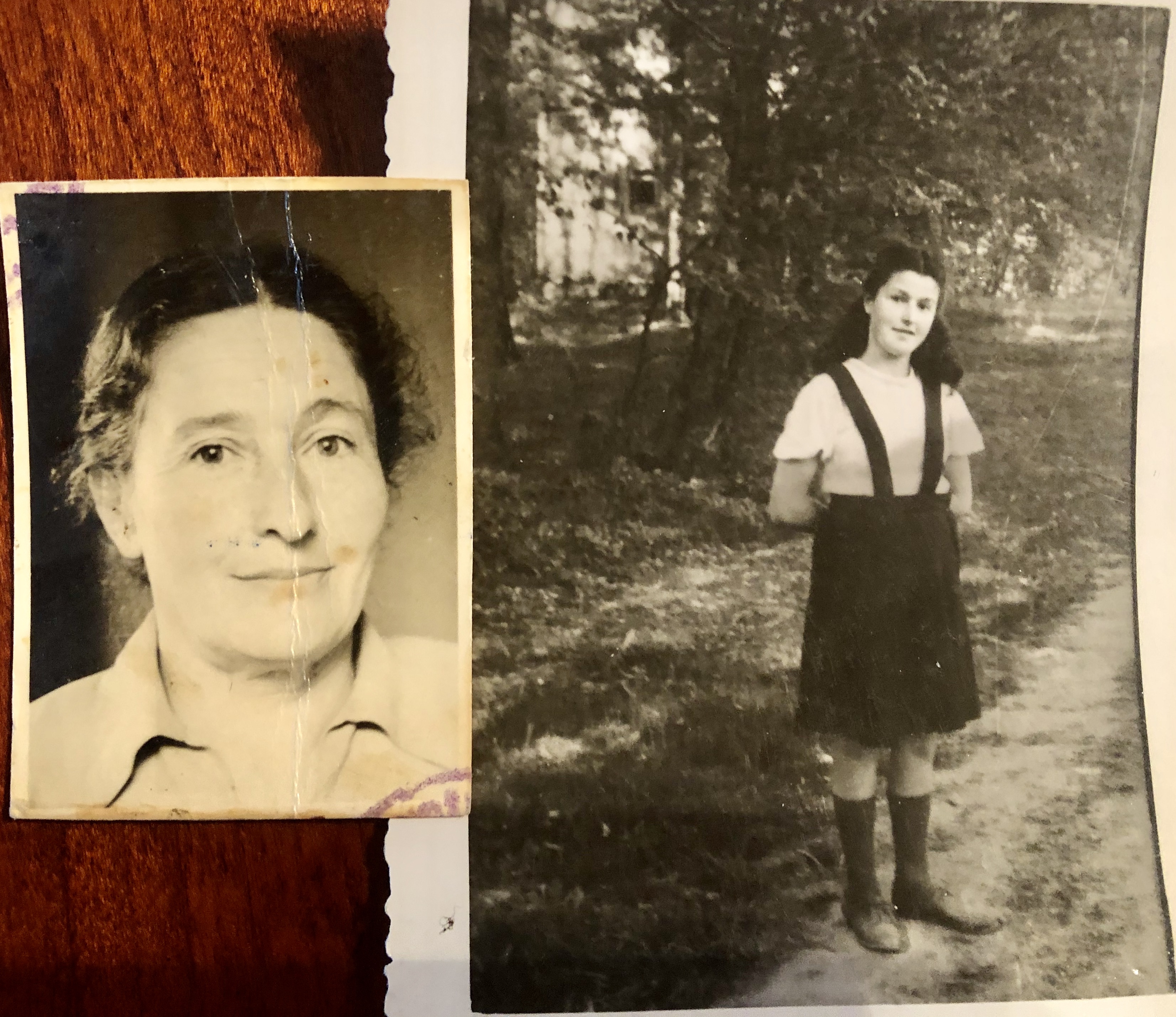
After spending the last few weeks going over Paula’s survival story, I am struck by so many things. From the mundane: I wonder if her enduring love of chocolate has anything to do with the comfort and pleasure it brought her when the Russian army shared the treats as the war was finally ending. She and her family must have felt some relief, there was light at the end of a very long, dark tunnel. Paula continues to crave chocolate and perhaps she finds comfort in it. Of course, she could simply like the taste.
I also think of the profound: how having her world turned upside down when she was just a child left her fearful for the rest of her life. She was able to take pleasure in life, she had loving relationships, but the cautiousness and the need to protect herself and those she loved was right at the surface. It was a huge price to pay as a child, an innocent.
I wonder how much of that reticence was who she was, even before the war. She described herself as an obedient child. She was likely shy before being thrust into the uncertainty and chaos that came with the Nazis. We will never know – she will never know – who she might have been, what she might have achieved. She was a smart girl with a sharp mind, good with numbers, a fast learner, quick to pick up languages. But she was growing up in a shtetl culture that didn’t encourage higher education for girls. I don’t know whether she felt that she hadn’t reached her potential or if she felt frustrated by her limited opportunities. Paula poured her energies into her family and they benefitted from that. I think her granddaughters feel an obligation to take up where she left off, to make the most of their opportunities and they have done just that. It is a blessing and a burden for them.
I can’t help but think of the many people, not just survivors of the Holocaust, but survivors of war crimes and oppression throughout history, who were and continue to be stifled. Not only is it a loss for that individual, but the world has been deprived. Paula and David were able to build constructive lives, so many others were not. Many were overcome by their sadness, their loss. We pay a huge price for humanity’s cruelty. Can’t we do better?
I think about the price she paid. About eight years ago we were visiting Paula and David in their condo in Florida. Paula was already on her Alzheimer’s journey, but she was still Paula. They didn’t need an aide yet. I sat at the kitchen table with her while Gary chatted with his Dad in the living room. Paula told me she was feeling troubled. I asked her what was on her mind.
“I keep wondering about my father,” she said.
Samuel had been killed by the Nazis more than 70 years before.
“What is it you are wondering about?”
She sighed, stirring her tea.
“I worry that he was buried alive,” she said.
I didn’t respond for a bit, taking it in, feeling so sad for her. Eventually I responded.
“I’m so sorry, Paula. That is an agonizing thought…but there is no reason to believe that’s what happened.” I said it almost as a question, wondering if she knew something she had not previously revealed. She mulled that over and shrugged.
I imagined her thinking about the story of the two men who came to Serniki, how they climbed out of the pit of corpses to escape. How could she not wonder?
“But what if he was alive?” she asked.
“We’ll never know…. I’m sorry.”
I knew I was out of my depth. I just wanted to comfort her but didn’t know how.
“But,” I continued, “I know you have good memories of your father. Let’s think about that.” I asked her about the stories he told her when she was a child. She didn’t mention her fear again, but I don’t imagine the thought left her.
Though the war took an extraordinary toll, Paula did reap the benefit of unexpected helpers, starting with the assistance provided by a Pole, Dimitrov Lacunyitz. I think about those Poles who stepped forward and those who collaborated and what made the difference. What pushed a person to choose to be on the right side of history? Unfortunately, in Poland today, there is a right-wing government which seems intent on whitewashing their history. They are making it increasingly difficult to acknowledge that there were collaborators. The mass executions could not have happened without local assistance. At the same time, we need to acknowledge those who overcame their fear and did the right thing. The Silberfarbs would not have survived without them. It is a tension that we in America face, as well. The impulse to ignore or sweep under the rug the ugliness in our history is strong, but we do that at our own peril. We all need to reckon with our past. We can’t only celebrate the heroism because it denies the experience, the reality of those who were mistreated.
I think about the importance of family. The Silberfarbs depended on each other; Lea was a tower of strength. There were times when there were tensions between them, but the bond was stronger. Their extended family offered support through the ordeal in Serniki, too. They regularly sought shelter with cousins during the unrest in town. And, in the ultimate act of generosity, Uncle Nachum opened his home in Cuba to his wife’s sister-in-law and her children. He gave them a new start. My father-in-law, David, also got support from his family – they may not have been quite as warm and welcoming, but they made a new beginning possible. Where would we be without family?
I think about luck. While their survival was made possible by their own strength and ingenuity, luck was a critical element, too. When bombs fell, the Silberfarbs were spared. When Lea chose to go right instead of left in the woods, they avoided violence. When she knocked on a door begging for food, she wasn’t killed. Was that luck? Intuition? Fate? So many times, things could have gone differently. All of it had to fall into place for them to make it.
I think about faith. One might emerge from the ordeal with faith shattered or strengthened. My father-in-law believed God had spared him. That faith doesn’t come naturally to me, but understanding how meaningful it was to David, certainly gives me food for thought.
There are so many lessons to be learned by studying the Holocaust. I wish more people would take the time to learn.
When World War II ended in Europe on May 8, 1945 most of the continent bore the scars of bombed out villages, millions dead and millions more displaced. Imagine resettling the entire population of New York City all at once. When the war ended that was the task. So many cities had been destroyed; millions needed to be resettled. Estimates of the number of displaced persons (DPs) vary wildly depending on who is included in that category: prisoners of war, concentration camp survivors, partisans, and refugees from places caught in the cross-fire flooded Europe. At the low end, 6.5 million people were displaced, at the high end 17 million. Lea, Bernard, Paula and Sofia Silberfarb were among them.
For some DPs, once the bullets stopped flying and the bombs stopped falling, they could go home and rebuild their lives. They could either reclaim their property (if it still existed) or start anew in their hometowns; they weren’t afraid to go back. In fact, by September of 1945, three-quarters of the refugees did go back to their country of origin. For others, including the Silberfarbs, going ‘home’ wasn’t an option. Serniki, reclaimed as part of the Soviet Union, held painful memories and they knew they were not welcome there. Their future lay elsewhere.
In order to establish order and begin the process of repatriating DPs, the Allies divided Germany and Austria into zones. Great Britain, France, the United States and Soviet Union each controlled sectors, and all but the Soviets set up camps to house the refugees. The USSR had a policy of expecting all its DPs to reintegrate into Soviet society, irrespective of their status as a former prisoner of war, a concentration camp survivor, or refugee and therefore no DP camps were set up in their zone. The other Allied countries utilized abandoned military barracks, hospitals, apartment buildings, private homes and other assorted structures to establish DP camps. In December of 1945 the American zone had 134, and by June of 1947, they had 416 sites. Great Britain had 272, while the French hosted 45.
An organization called Birchah (the Hebrew word for ‘flight’), which was a semi-clandestine Zionist network, helped Jewish survivors get to DP camps. With their assistance the Silberfarbs left Pinsk and ended up in a camp in Ranshofen, Austria.
Ironically, Ranshofen was located near Brunau, Hitler’s birthplace. The DP camp was made up of brick buildings that were each two stories, with two two-bedroom apartments on each floor. The Silberfarbs were assigned one bedroom in an apartment, and another family was assigned the other bedroom. The two families shared the common spaces (living room, kitchen and bathroom). Although the accommodations were not spacious, it was a welcome change from the instability of the prior four years. They had a roof over their head, shelter from the weather and food.
The other family assigned to the Silberfarb apartment included a man, Beryl Bakst, and his two adult children, David, who was 23, and Batya, who was 20, and her soon-to-be husband, Fishel. The families became close, sharing stories of their harrowing experiences. David was particularly taken with Paula, who despite being 9 years younger, was a good listener, sympathetic, smart, pretty and mature well beyond her years.
Paula and David in Ranshofen circa 1946/47
They were all in Ranshofen for the next two years before leaving on the next step of their journey. The Silberfarbs wanted to go to Palestine, as did Batya and Fishel. Beryl and David were trying to get to the United States. The paperwork to get visas and arrange travel was a bureaucratic nightmare that took patience and perseverance. In the meanwhile, Paula and David spent a lot of time together, as well as taking classes and participating in activities. David played in a volleyball tournament against other DP camp teams, which his team won.
One of the factors that determined which camp a refugee went to was where they wanted to resettle. For example, the best chance to immigrate to Palestine was from a DP camp in Italy. After some time at Ranshofen, Batya and Fishel went to Italy, since that was their goal. The Silberfarbs didn’t because they were still considering the option offered by family already settled in Cuba.
Immigrating to Palestine was very difficult and conditions in the Holy Land were challenging as the area tried to absorb survivors and build a new country in a hostile environment. In 1939 Great Britain, which exercised authority over the area, severely limited Jewish immigration. After the war, 69,000 survivors attempted illegal immigration, less than half were successful. Others were arrested and interned on Cyprus. Batya and Fishel were among those waylaid in Cyprus. In fact, their daughter, Rochelle, was born there. Once the state of Israel was established in 1948, immigration flowed more freely. Batya, Fishel and Rochelle finally made it to a Jewish homeland, and faced another war, the war for Israeli independence.
Meanwhile, intent on getting to America, Beryl and David went to another DP camp in Germany, one step closer to their goal. David and Paula agreed to correspond by letter. David told Paula that if she ended up going to Cuba, they would meet again. Paula held on to that thought.
Ranshofen was slated to close in 1948. The Silberfarbs had no choice but to move on. They went to another nearby DP camp. Lea, based on Bernie and Sofia’s wish to go to Israel, was still trying to make arrangements, but was not yet successful. She was also corresponding with her late husband’s family in Cuba. Two of Samuel’s sisters, Bushe and Mary, had settled in Havana with their respective husbands, Nachum and Solomon, before World War II.
Lea wrote to Bushe and Nachum, explaining her predicament. The children wanted to go to Israel, but she was unable to secure passage. Nachum, in response, wrote a heartfelt letter offering to sponsor them in coming to Cuba. He pointed out that life would be difficult in Israel, as a widowed mother without family to help. He suggested that they try life in Cuba. If they didn’t like it after a year, he would arrange immigration to Israel. He wrote that it would likely be easier at that point to immigrate, as post-war tensions eased, and the newly created State of Israel got on its feet. The Silberfarbs were touched by Nachum’s letter and generosity and were swayed by the soundness of his argument. They agreed to go to Havana.
During their family conversations about their plans, Paula kept silent. In her heart, she wanted to go to Cuba, thinking it was her chance to see David again. But, she didn’t think it was fair to try and influence the decision based on her burgeoning romance. She was very excited when the decision was made.
Meanwhile, the Silberfarbs bided their time at the new DP camp. Paula was back in school. She particularly liked math. A fellow survivor, a man who was an engineer by training, taught arithmetic and geometry. He was a volunteer at the makeshift school. He may not have known much about teaching, but that didn’t trouble Paula. She loved the precision and logic of the subject and took to it naturally. In addition to the academics, Paula took sewing. An organization, ORT, set up vocational training opportunities in the DP camps. Paula took full advantage.
The Silberfarbs planned to sail to Cuba from France. They left the DP camp only to find that the ship wasn’t there. With the assistance of another organization, HIAS, which helped with paperwork, and additional funds from Uncle Nachum, the Silberfarbs flew from Paris to Havana. Flying was unheard of among the survivors! It was another act of generosity by Nachum.
They arrived in Havana to both a warm welcome and warm weather. Paula’s aunts and uncles set up a furnished apartment for them. Paula began working, first in Uncle Solomon’s store and then in Uncle Nachum’s. She liked the responsibility of work, completing her tasks to the best of her ability, and she treated the stores as if they were her own. She felt a loyalty to her uncles who continued to be so supportive of her and her mother and siblings. They settled into life in Havana, enjoying for the first time tropical fruits like mangos, going to the beach and picking up another language, Spanish, along the way.
Paula resumed her correspondence with David, now that they were both settled. David was in a rooming house in Brooklyn near his Uncle Willie and Aunt Rose and had a job at their pickle factory. They agreed he would come to Havana for a visit. He saved his money and he went to Cuba in November of 1949 to see if they might have a future together.
NOTE: We pick up my mother-in-law Paula’s story, as the place where they were sheltering became unsafe. It is early in 1943.
Lea gathered her children and they moved on, grateful to Dimitrov for his generosity, but well aware that they had no choice but to leave. This would be the pattern for the next two years. They would find shelter, an abandoned hut, or a farmer who supported the Partisans who let them stay in his barn, or a camp in the woods with other Jews, and stay in that place for as long as it seemed safe. It could be days or weeks, inevitably, though, the danger of German soldiers or collaborators closed in. Lea could not let her guard down.
After leaving Dimitrov’s farm they met up with a group of Jews in the forest who knew where there were other Partisans. They went through the dense forest to find them. At night Lea would venture out of the forest to knock on doors to beg for food – some gave; others didn’t. One night a dog bit her on the foot. When she got back to their camp Lea boiled pinecones and used the water to clean the wound, unfortunately it became infected and it hobbled her.
Lea did her best to keep up the pace as they continued their trek through the woods, but eventually she needed to stop to rest her throbbing foot. Bernie, fearful that they would be caught and angry at his mother’s injury, left them and went ahead. The girls stayed with their mother. After a long while, he came back – he realized he couldn’t leave his mother and sisters. Fortunately, with time, Lea’s wound healed.
They came across another farmer who took them to a hut. Lea sewed for that farmer. During the war everything was in short supply, anything that could be repaired needed to be. Lea’s skills were put to use and in return the farmer provided food. They stayed there for about 6 weeks. Paula had reprieve enough to notice the beauty of the surrounding green forest. To Paula the woods came to represent safety.
At the end of the 6 weeks, the farmer told them where there was a Jewish encampment and they started in that direction. But they heard shooting, so they changed direction. They later heard the Partisans where they were headed got overconfident, got drunk and careless; a gang of Crimeans attacked them. Jews and Partisans were killed. Fortunately, once again, Lea’s good sense kept them away from danger.
While on the move, they crossed paths with a neighbor from Serniki, Natan Bobrov. He told them that more Jewish Partisans were in Lasitsk, a town north and east of where they were at that point. They made their way there.
During all of this, Lea fed her children positive thoughts. “The war will finish,” she reassured them. She reminded them, “We have family in Brazil and Cuba.” She kept their spirits up as best she could. She was always thinking a step ahead, of ways to escape. “We had hope,” Paula remembered. They huddled together for warmth and kept going.
They came to a clearing in the woods and saw a house. Knocking on the door was always a risk, but Lea used her best judgment. Unbeknownst to her they came upon a village that supported the Partisans. Paula was asked to crochet a huge scarf with scalloped edges– she didn’t actually know how to do it, but she persevered and figured it out. Paula stayed in the house, she knit or crocheted all day, making gloves and socks to support the Partisans. Lea, Bernie and Sofia stayed in the barn. They helped with farm chores. The family’s son was also in the Partisans. Lea and the children stayed the whole winter. If company came to visit, Paula went to the barn to join her mom and siblings.
At this point, the Russians began to turn the tide of the war. Slowly the Soviet army reclaimed the parts of Poland they had occupied before the Nazi invasion. Serniki was liberated from German control, but the Silberfarbs were about 100 kilometers away. The front moved but the war was not yet over.
Lea and her children were on the move again and they came upon the Soviet army who shared canned goods and chocolates with them. Paula could not remember the last time she had chocolate. She delighted in the rich, sweet treat. They were relieved to be in a bigger town, though bombing continued, they felt safer in the company of the army.
Life was improving, but then Sofia got typhus. Lea tried to treat her but thought it was serious enough that she brought Sofia to the Russian infirmary. Sofia was cared for there. Each child, in turn, got ill. Paula was admitted to the infirmary, as well. Bernie didn’t trust the doctors, and despite his illness, refused to be examined. He went so far as to jump out a window to avoid his mother’s efforts to get him to go with her to the doctor. Lea worked in the infirmary, cleaning, emptying bedpans in return for the care of her children. After the children recovered, the army gave them a ride to Pinsk. They sat atop barrels of kerosene on the back of a truck for the bumpy ride, but at least they weren’t walking.
When they got to Pinsk, they shared a house with another family. Lea baked and sold bread to try to bring in some needed money, even though doing so was illegal under the Communist system. She was questioned by the NKVD, the secret police, numerous times.
One day at the market, as she was selling bread, she spotted someone who looked familiar. She studied the man at a distance and slowly it dawned on her. She approached cautiously, but as she drew closer, their eyes met. It was Dmitrov Lacunyetz, the farmer who first hid the Silberfarbs. Neither of them could believe their eyes. They hugged in relief, absorbing the fact that each had survived the war. It was a tearful reunion. “Now I can die in peace,” he told her. Throughout the war he wondered if he had really helped them. Lea shared some yeast and salt with him as a gesture of appreciation, though she felt it was little compared to what he had done for them
Striving for normalcy, Paula went back to school in Pinsk. The war finally ended in May of 1945 while the family was in Pinsk. Paula was now 14 years old and had spent three years moving through the forest with her mom and siblings in a quest to survive.
The Silberfarbs knew they couldn’t go back to Serniki – there was nothing for them there. They wanted to go to Israel even though they had family in Brazil and Cuba. They wanted to live among Jews. Lea weighed their options. The first step was to go to a displaced persons (DP) camp, which was where transit arrangements could be made. What they found at the DP camp would change Paula’s life.
The red dot is Serniki in Belarus – too small to merit a label. Even today there are no large towns or cities nearby.
Note: This is another essay by my mother, Feige Brody. Here she looks back on her time accompanying my father to Wichita Falls, Texas, where he served in the U.S. Air Force. Mom was newly married and just 21 years old.
I walked into Idlewild airport (now JFK) in New York in 1954. I was taking a flight to join my husband who was stationed at Sheppard Air Force Base in Texas. Hours later I landed in Dallas, a whole different world. Signs jumped out at me, ‘No Colored Allowed’ above water fountains, bathroom entrances and restaurants. ‘Whites Only’ plastered along the brightly lit walls. It shocked me like a slap in the face. I felt revolted, but why was I so appalled? I read books, I saw movies, read newspaper articles, I knew segregation existed. So why was I so upset?
I lived in a different world. My neighborhood in Brooklyn was integrated. I went to elementary, junior high, high school and Brooklyn College with Negroes, as African-Americans were called at that time. We had one Chinese student whose father owned the laundry around the corner, and I knew Hispanic kids, too; my classmates were all colors from different countries around the world. It seemed to me that they joined school clubs and played team sports, in fact some went on to play on professional teams. We took pride in that. This was a time when Jackie Robinson was a beloved member of the Brooklyn Dodgers. The ballparks and arenas that I went to weren’t segregated – watching games at Ebbetts Field, Madison Square Garden, and the Polo Grounds we all sat together. On the surface, at least, it seemed to be an integrated society.
When we went to the movies, we saw famous white actors in black-face, where Fred Astaire imitated Bojangles, and we didn’t think anything of it. I was oblivious to the racism implicit in those movies or the wider culture. I didn’t see the subtler signs of racism in Brooklyn. When I arrived at the airport in Dallas, it was blindingly obvious.
Barry picked me up in a beat-up blue Pontiac with 150,000 miles on the odometer. It had dings, scars and scratches from battles won and lost. Riding to the air force base we struggled with the balky car fan which provided little relief from the oppressive heat and the erratic radio reception.
The ride was even more nerve wracking because Barry did not have his driver’s license yet. He had just learned to drive, my father taught him in Brooklyn before he left, and this was the very first car he ever bought; no one in his family had one before. Barry was waiting for his license to come in the mail. I kept my fingers crossed that we didn’t get pulled over by the police.
We started our slow drive to Wichita Falls through a landscape totally new to me. I expected to see oil derricks, but they weren’t anywhere to be found. Instead I saw houses with what looked like water pumps in their yards but were in fact oil pumps. I later learned that the derricks wasted too much oil and were replaced by numerous, smaller pumps.
Our trip took us past small towns – some had signs “No Colored Allowed.” Another shock to my system.
As we got closer to the air force base the air quality changed. An odor of rotten eggs and something metallic overwhelmed us. I learned that Texans say they blow the odor to Oklahoma overnight and they return the stench to Texas in the morning. I didn’t realize until then that Oklahoma was just a stone’s throw away from Wichita Falls.
We arrived at our rented apartment in town as they had no room for us on the base. Unable to open the door with the key we had been provided, a neighbor came over saying, “You have to poosh and pool.” Barry translated, he pushed and pulled and got the door open.
That first day, Barry drove me to do some basic shopping. I had to learn the lingo: I got a sack, not a bag, and pop, not soda. I was coming out of the store as a young Black woman walked toward me and she stepped off the wide, shady sidewalk into the sunny, dirty gutter. She never looked up and I couldn’t catch her eye. I was confused. That’s when I noticed the “Whites only” sign on the supermarket. The woman went through an alley to place her order at a side window. She wasn’t permitted in the store. I rarely went into town again. I lived in an all-white neighborhood and went to a small store on the corner. I didn’t see a Black person unless I went to the base.
On Wednesday, April 20, 1955 I went into labor and had my first child, Steven, at the air force base hospital. I went in at noon and delivered at 3:00 p.m. and I came home on Friday. I was prepared to give birth without family or friends present, but I was not prepared for natural childbirth! It was without any drugs for pain because the hospital staff were on their lunch break and when they returned at 1:00 it was too late; it would have been dangerous to the baby.
I called my parents on Sunday I told them we had the bris. Mom corrected me, telling me it was a circumcision (since it wasn’t officiated by a rabbi or performed by a mohel).
Barry and I survived being new parents with Dr. Spock, Mother’s telephone advice and a caring pediatrician. The pediatrician advised bringing Steven out in the fresh air. On a sunny, mild day I took Steve out with a blanket and put him on the grass. A neighbor came running out, shouting, “No, no! Chiggers!” She explained that chiggers were tiny bugs living in the grass and similar to mosquitoes, but they bit you and stayed under your skin. You have to light match at the site of the bite and watch it crawl out. It was the last time we walked on the grass. I never heard of that in Brooklyn.
My parents flew to visit us one long weekend. Barry went to the base with a friend and gave Dad that beat up blue Pontiac. Dad couldn’t get over the way he was treated when he went to the base or the PX. He was waved through security without needing to stop. After my parents left, the airmen were in formation as the general passed. Barry had to smile because the general was the spitting image of my father. Calling home, my father said, “No way, they were just being polite.” The thought on base was that the general came to do his inspection early, in disguise. The beat-up blue Pontiac was a ruse.
There were good things about our time in Wichita Falls, besides the birth of Steven. We made a life-long friend in Oliver Hailey (who went on to become a playwright with a show on Broadway). And our neighbors did help, especially the one who took a huge scorpion out of my bathtub. We were glad to leave and looked forward to our next assignment at Westover Air Force Base in Chicoppee Falls, Massachussetts.
We packed up the car. They didn’t make car seats for babies yet, so we put a small mattress across the back seat and tucked Steven in. Leaving at midnight, we drove until 3:00 a.m. and were somewhere in Arkansas when we realized we were hungry. We pulled into a small shack that said ‘Eats’ in big letters.
Stopping, leaving Steven sleeping the in the back seat, we walked into an all-Black restaurant. We saw no outward sign; we had no idea. They served us politely and one of the patrons kept an eye on Steven, looking out the door and telling us that all was well. As we left, I knew if the opposite had occurred, a Black family stopped at a white restaurant, it would not have gone the same way.
We arrived in Brooklyn for a brief stay between assignments. It was good to be back. Home is where the heart is.
Note: This is the next chapter in Paula’ journey. I have continued to research her story and the Holocaust in general since this was originally posted over two years ago which has allowed me to add more information and to improve the clarity of the narrative. If you have read this before, I hope you will choose to read it in its updated form. If you are new to it, I hope it both broadens and deepens your understanding of the personal tragedies experienced by survivors.
As I noted last week, most of the story comes from Paula’s Shoah testimony. One of the difficulties inherent in working from that is deciphering the names of people and places since they are either Yiddish or Polish. I have done my best to present the correct names and locations but recognize the potential for error. I don’t believe those potential errors materially change the truth of the story.
As a reminder, Paula’s immediate family, the Silberfarbs, included her mother (Lea), her father (Samuel), her older brother (Bernard or Bernie), and younger sister (Sofia). Her paternal grandfather was Gershon. One other piece of information for context: Serniki was a town of about 5,000 people, about 1,000 were Jewish.
After the two desperate men who escaped death shared their horrifying experience, the atmosphere in Serniki changed. Townspeople learned that Pinsk, the closest and biggest city, 19 miles to the northwest, was overrun by the Nazis on July 4, 1941. It was just a matter of time until they continued their march across Poland. As invasion by the powerful German army loomed, the Russians retreated, leaving a power vacuum in Serniki.
Some Gentiles took advantage of the absence of leadership and appointed themselves police, meting out justice as they saw fit. Anti-Semitism reared its ugly head. Where previously the communities peacefully coexisted, now Jewish homes were robbed, violence against Jews was perpetrated without consequence. Many Jews hid their valuables, believing that they were vulnerable not only when the Germans invaded, but at the hands of their Gentile neighbors.
The Silberfarbs took their prized possessions to a farmer on the outskirts of town who did business with Samuel. The whole family went because Samuel and Lea planned to leave Serniki permanently, continuing on after securing their things. While they were with the farmer, they received word that Gershon (Samuel’s father) had been murdered. Devastated, Samuel felt they had no choice but to go back to Serniki to bury him.
Upon their return they learned a man named Danilo Polohowicz was the murderer. They heard Danilo shot Gershon as he stood in his backyard garden in broad daylight. There were witnessesand fearing no consequence, Danilo boasted about it in town. He was right to fear no punishment; he wasn’t arrested or prosecuted for the crime.
Samuel went to his father’s house to oversee the funeral arrangements and, in keeping with Jewish tradition, stayed with the body until the interment. Lea and the children went back to their house, but instead of staying in the main house, they spent the night in the apartment next door. Lea thought, given the atmosphere in town, that the house would be a likely target of robbers. Lea was right. The four Silberfarbs, Lea and her three children, huddled under the bed in the apartment, listening to the sounds of burglars ransacking their house. The next morning, they cautiously returned to their home to survey the damage and found it in disarray, with floorboards lifted.
That day a German soldier on horseback came through the streets shouting, “Every Jew to the market!” Lea knew what that meant. She had no intention of taking her children to the market. Samuel still wasn’t home – as far as she knew he remained at his father’s house. Lea decided to try to escape with the children. She didn’t know where Samuel was or how to get information to him, but she didn’t think she could do anything to help him, so she focused her attention on saving her children.
They ran out their backyard through fields, across roads, towards the Stubla River, avoiding areas they suspected had police activity. As they approached the river, Bernie abruptly stopped. Lea had persuaded him to come, despite his reluctance to leave without his father. Now Bernie was unwilling to go any further – he said he wouldn’t leave without Daddy. Lea couldn’t convince him. Bernie turned back to town. Lea felt she had no choice but to continue. She took the girls to the farmer who hid their belongings. When they got to his house, he covered them all with hay and told them to wait while he went to town to investigate.
It felt like an eternity until the farmer came back and reported that the Germans kept the men to do work – to dig ditches. The streets of Sernicki flooded easily and in preparation for trucks and troops, they commanded the Jewish men of the town to dig drainage ditches. The women and children were sent home. The farmer told the Silberfarbs it was safe to return. Instead they went to a cousin’s house. This cousin’s house was situated closer to the Stubla and offered a better route of escape than their own home. By this time, it was dark out. They were relieved to see a light was on in their cousin’s house– if the house was dark, Lea was prepared to hide under the bridge by the river. They were doubly relieved to find that Bernie was also there. He had gone to the market, but since he was under 14 years of age, too young to be put to work, he was sent home. He, too, decided to go to the cousin’s house. Bernie reported that he hadn’t seen his father.
The next day, Lea went to the market alone to see if she could find Samuel. She spotted her nephew on a work detail but could not locate her husband. While she was near the market a Gentile townsperson gave Lea a message from Samuel, “Say kaddish for me.” [Kaddish is the Jewish prayer for the dead.] Lea couldn’t allow herself to panic or be distracted. She went back to the cousin’s house and thought about what to do next.
That afternoon they heard machine gun fire. Later they heard what happened. Samuel was hiding in the garden of his Aunt Fanny’s house with Lea’s brother, Avrumchik. They discussed escaping. Avrumchik agreed to run to the river first because he wasn’t married and he had no children. If there was no gunfire, Samuel would follow. There was gunfire, but unbeknownst to Samuel, Avrumchik wasn’t injured. Samuel stayed put. German soldiers, combing the town for Jews, found him in the garden and arrested him.
Later that day 120 men, the town’s Jewish leaders, and one woman were executed. They were marched to a ditch near the cemetery, lined up and shot from behind. Among them was Samuel Silberfarb.
The Germans did not liquidate the entire Jewish community of Serniki at that point. They created a ghetto for the remaining Jews. Families doubled up in houses located on just a few streets. The Silberfarbs lived in the ghetto with another family. In Samuel’s absence, Uncle Avrumchik looked after them.
While living in the ghetto, Paula learned to knit and crochet (which turned out to be valuable skills through the war years). Fortunately, they had access to books – Paula sat by the window reading by the moonlight reflecting off the snow. Reading gave her rare moments of peace. Food was scarce – Mother would make a soup with a few potatoes, mostly water. They were barely getting by and, in fact, Lea’s mother passed away while they were in the ghetto.
Lea knew that they would not be permitted to stay in the ghetto indefinitely. It was now April of 1942 and there were rumors of an ‘aktion.’ (An ‘aktion’ was when the Germans would order the gathering of the Jews in the town square and either march them to the rim of a ravine and shoot them or deport them on trains to concentration camps.) The Silberfarbs snuck out of the ghetto and went again to the cousin’s house closer to the river. Across the Stubla there was a small group of wealthier homes (some Jews lived there – Paula thought perhaps they were allowed to stay by paying bribes). Those homes provided an even better opportunity for escape. The Silberfarbs had a relative in one of those homes – they decided to try to get there, though there was a guard at the bridge. Lea studied his routine and advised Bernie, and an aunt and uncle when to sneak across. Lea and the girls planned to go the next day. Later that afternoon there was a call for Jews to re-register. Lea understood what this meant and told her children “We are not going! We will not go back to town.” Uncle Avrumchik did go back to investigate (they never saw him again).
That night Lea couldn’t sleep. She sat in the window looking out. She saw headlights coming across the bridge – she understood that this meant that more of the German army was arriving. Lea woke everyone in the house (more than just the Silberfarbs were there) – they went out the back and fled across the river and into the woods. They dispersed in different directions, though Lea, Paula and Sofia stayed together. The next day they heard the rat-a-tat-tat of machine gun fire coming from town. 850 men, women and children, the remaining Jewish population of Serniki were murdered and buried in a ditch on the outskirts of town.
As Lea and the girls fled, she thought of a man that Samuel used to do business with – they would try to make their way to him. His name was Dmitrov Lacunyetz. When they arrived he cried like a baby when he saw them and heard what happened to Samuel. Bernie, and the aunt and uncle had already arrived at Dmitrov’s farm. Dmitrov brought them all to a forested area on his property to hide. He kept them there for 16 weeks.
Dmitrov supplied them with food once a day. After a while, he sent his son-in-law to deliver the provisions. In order to avoid bringing suspicion upon themselves, they varied the routine. The son-in-law, now that it was getting colder, built them a little hut out of young birch trees. There were 8 of them in hiding. They had two spoons. Two people at a time would eat from the kettle that was brought to them. There would be some arguing over the food – “Don’t eat so much! Leave for the others!” It was usually a soup with millet (a grain used frequently in the region). At one point, Bernie was so hungry he couldn’t take it anymore – he went begging. He had some success and brought back and shared whatever he was given. On his rounds, he was asked “Are you Gypsy or Jew?” He said, “Gypsy,” thinking it was the lesser of two evils.
There was a Partisan brigade (a group of people resisting/fighting the Nazis) in the area. Though the Silberfarbs weren’t part of the brigade, Lea felt they were safer when they were near them. Unfortunately, there was a dispute with a farmer over a cow and the Partisans killed the farmer’s son in the confrontation. The farmer vowed to inform the Germans. The area became unsafe. It was now the end of 1942. The Silberfarbs had to move on.