Stories I Tell Myself

Linda Brody Bakst on Brooklyn, growing up, identity and more

  • Nadal arranging his water bottles. Photo grabbed from https://www.tennislifemag.com/rafas-rituals-so-much-to-do-before-he-can-play/

    Gary was watching tennis on television the other day. Rafael Nadal was playing. Aside from the fact that he is one of the best tennis players of all time, Nadal is interesting because he offers a host of ritualistic behaviors that are far beyond any other athlete I am aware of. All people have quirks and athletes typically have superstitions. Some pitchers won’t step on a baseline when leaving the mound to return to the dugout. Others have pregame routines that they try not to vary. Rafa is in a class by himself. From how he arranges his water bottles to the predictability of his sequence before he serves, he clearly has quirks. Gary noted when Nadal’s game was over and it was time to change sides, Nadal walked toward the net and made a sharp right turn to go to his chair – not your ordinary approach. These behaviors could be amusing little eccentricities. Or they could represent a disorder that interferes with his life. I hope it is the former or something in between that doesn’t create problems for him.

    It is kind of funny that Gary was commenting on Nadal’s routines given that he is a creature of habit himself. I guess we all are to varying degrees. Gary’s habits are harmless and amusing (to me). His process for cleaning his glasses is a whole production – if he tells me he needs to clean them before we leave the house, I know I have plenty of time to sit down and read the newspaper. Not surprisingly, his glasses are far cleaner than mine. Once in a while I will ask him to give my lenses his special treatment. I am amazed at the difference – he clearly knows what he is doing.

    I walk with a friend who used to need to circle the stop sign instead of just reversing course when we got to the end of the block. Snow could be piled up knee deep on the side of the road, but the walk didn’t feel right to her if she hadn’t done that. I remember when she decided she didn’t need to do that anymore. Humans are so interesting.

    These rituals must give us some comfort, some control, or we wouldn’t do them. I have routines, too, though I can’t say I see them as quite so specific or engrained. I get up in the morning and do things in the same order – I think – go to the bathroom (TMI?), wash hands, brush teeth, take meds, make the bed, get dressed, head downstairs. I continue the process by taking my little hotplate out and plugging it in (a gift from Dan and Beth because they know I like my coffee to stay hot), pour my coffee, prepare my breakfast, open my computer and start with the New York Times Spelling Bee, then move on to the crossword puzzle and end with the mini puzzle. Next up, I clean the kitchen – most nights I have left the dinner dishes to be done in the morning. Then I start my day – up to my office to write, read and research. I’m okay, though, if my routine has to change – if I have an appointment, or if Gary hasn’t made the coffee that morning or whatever comes up. The routine gives some structure and a beginning to my day, but I am not married to it. It doesn’t cause me anxiety to do it differently.

    Are there people who specifically choose not to have a routine? I imagine that there must be though I don’t think I know many. I wonder what that would feel like. From what I hear from friends, most are pretty devoted to their schedules.

    I was taking my brother home from the hospital after his hip replacement surgery a couple of years ago. The nurse was going over the discharge instructions. Mark asked about climbing the stairs to his bedroom. They asked how many steps it would be. “15,” he replied with certainty (I could be remembering the wrong number, but the number isn’t the point). I looked at him, “You know the number of steps off the top of your head?” He looked at me quizzically. “Of course.” Later when we were in the car, I asked him about that. He responded, “Don’t you count the steps when you go upstairs in your house?”  “No, I have no idea how many it is.” Apparently, Mark counts things – and not just the typical things that we all count (like reps in the gym). My brother has his oddities, too.

    You never know what might be going on in another person’s head. Well, maybe that isn’t entirely true. I know the thoughts in mine are quite different from my brother. I might be replaying my last conversation with my son or composing my next blog post while Mark might be constructing his all-time Yankee batting order, putting his love of numbers to good, productive use, or he might be thinking about how he might next tease me. Either of those thought processes are totally alien to me.

    To the extent that we find our partner’s, family members’ and friends’ little quirks and eccentricities charming, amusing or at least not annoying, it works. When it drives us crazy or when it gets in the way of their functioning, then it is another story.

  • I know I have used the word bittersweet quite often on the blog. Lately it just seems to fit. This past week was no exception. It featured wide swings – from the deep satisfaction of connecting in person (!!!) with long-time friends (who were fully vaccinated) to extreme anxiety about Mom’s health and back to marveling at the wonder of a toddler. It has been a roller coaster ride.

    I accompanied Mom for pre-op testing a week ago in New Jersey. It went smoothly, though, it is increasingly evident that any exertion takes a great deal out of her. I wish we had a better understanding of what is happening. I feel like there should be an answer – and with that some kind of fix so that her quality of life is improved. We continue to search but so far, we have not come up with anything. This has been going on since last August!

    On Friday I brought her in for a procedure that was meant to enlighten us – at least with regard to the condition of her heart. In a strange way I hoped that the doctor would find something wrongthat he could address. He didn’t. Her heart is good – which should have been excellent news, and it does bring some comfort. The search continues for an explanation for her extreme fatigue and shortness of breath.

    In between Monday’s testing and Friday’s procedure, I visited with family and friends who live in the New York City area. My son came into the city for the first time in over a year for work. He visited with me before his scheduled meeting. I gave him a bagel with cream cheese. He took a bite and exclaimed, “Jesus, that is so good!” He lives in Connecticut and gets bagels, but there are bagels and there are bagels. New York City may be struggling, but you can still get fabulous bagels on the Upper West Side.

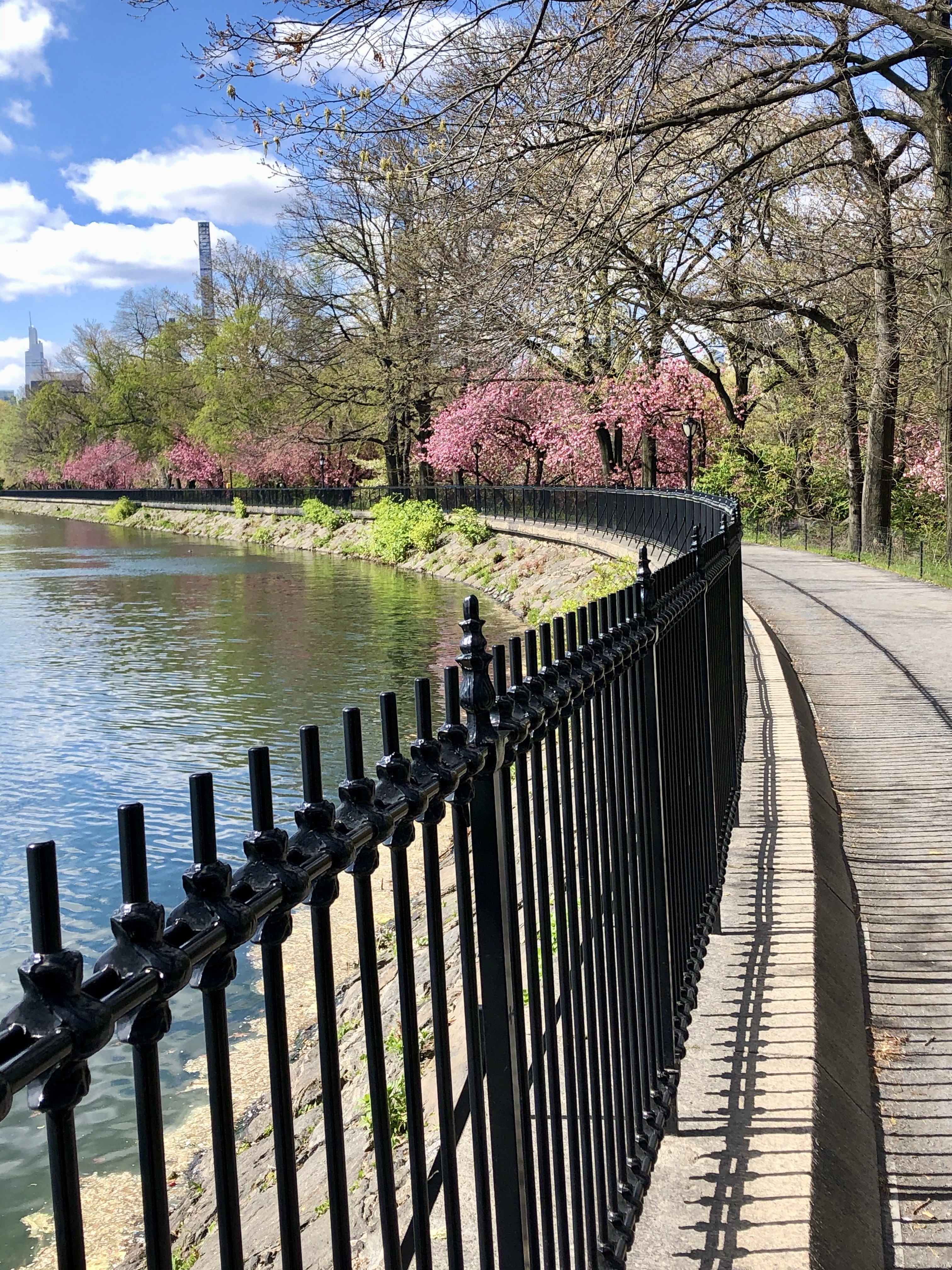
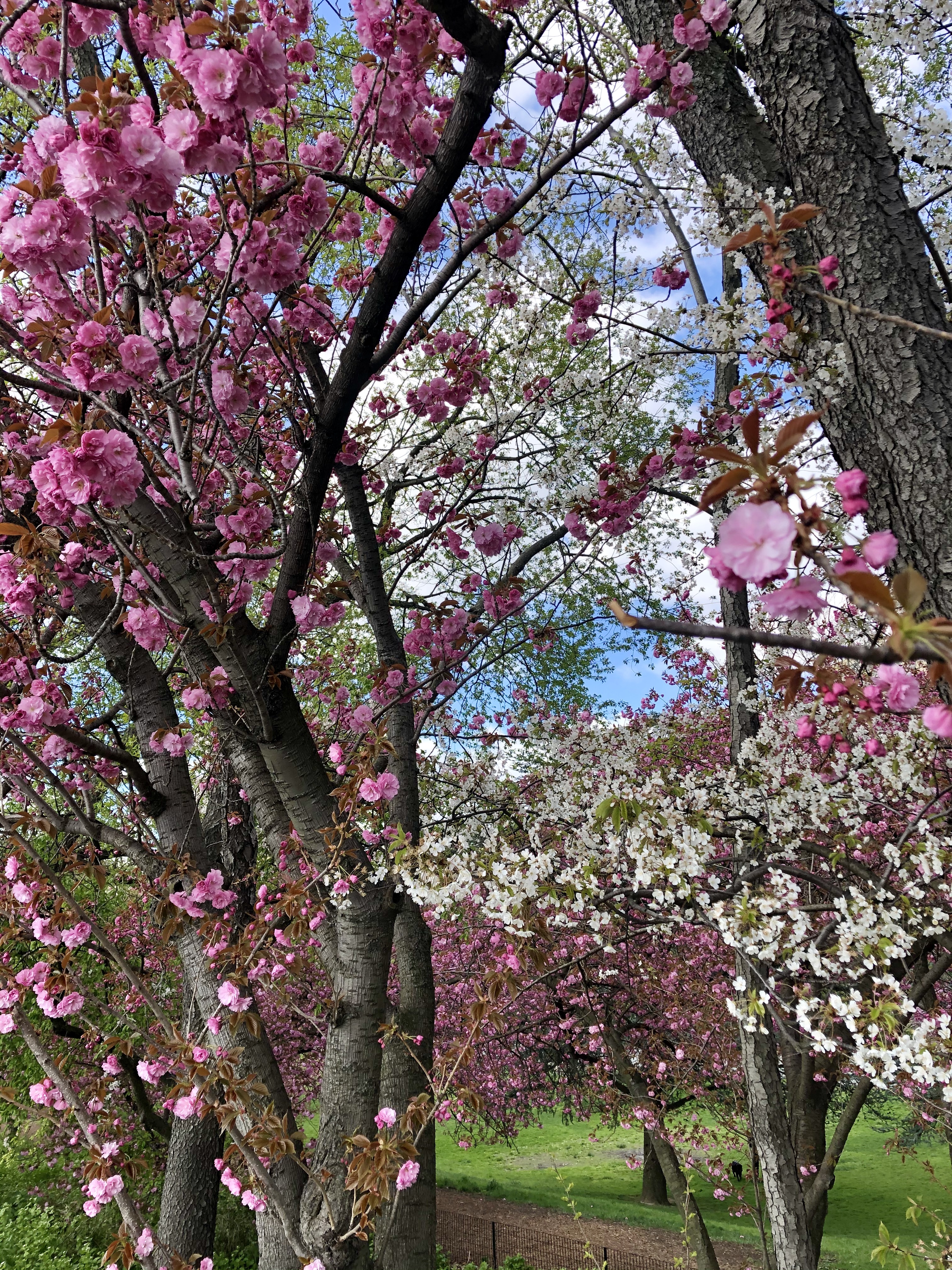
    Though things are far from normal, some activities are returning in new ways. A Vietnamese restaurant on Amsterdam Avenue set up some tables on the sidewalk enclosed in individual plastic bubbles. The pod was open on one side.  Steven, our friendship began when I was 14 or 47 short years ago, and I were enjoying our lunch when it started to drizzle, then the sky opened up. The waiter pulled down the plastic sheeting and zipped us in. We were protected from the elements and continued eating our delicious meal. When the rain stopped, the panel was unzipped and we emerged into breezy sunshine, a blue sky to the north but more ominous clouds moving in from the south. It was one of those fast-changing weather days. Spring is in full swing in NYC.

    I consumed quite a bit of Asian food during my time in the city – all of it outstanding. Isn’t it great to share a meal with people you love? Another afternoon I met Aunt Clair at a Japanese restaurant. Despite her own serious health challenges, we were able to talk about family history and current events while digging into our bento boxes. I learned more about my Dad and clarified some things, some of which will likely make its way into a future blog post.

    Late that afternoon I fought traffic on the Cross Bronx Expressway to meet another childhood friend – I know Deborah since I was four years old. Anyone who has lived in the New York area has to know the Cross Bronx is infamous – it can be 3 a.m. and traffic can be at a standstill. But Waze, the navigation app that scans for the best route, told me repeatedly, “You are still on the fastest route,” as I sat incredulously staring at the unmoving tractor trailer in front of me. The good news was that I was listening to NPR when the verdict was read in the Chauvin trial. What a relief – on so many levels! In addition to finally providing some accountability and a measure of justice, I hate to think what would have happened if a different verdict had been rendered.

    I met Deborah for dinner in Port Washington on Long Island. Deborah lives in another part of the Island but suggested a spot that was more convenient for me to travel to. Another excellent Asian restaurant. I realized that I was only minutes from where my cousins grew up. After the meal, since the days are now so much longer, there was still some daylight. I plugged their old address into the GPS. It was only a five minute ride. The terrain was familiar and foreign at the same time. The lovely homes, tree-lined, curving streets and lush lawns were as I remembered. The house itself was quite different. The wood rail fence and bushes that lined the property were gone. The siding was a different color. But it brought back many memories of our visits. So much has changed. My aunt and uncle passed away – as have so many other family members. My cousins live in Massachusetts and Florida respectively. I took a picture and texted it to them. They commented on the changes they noticed. More evidence of the bittersweet nature of life.

    Mom needed to be at the hospital at 6:30 a.m. on Friday. I drove out to New Jersey Thursday night and stayed with my brother and sister-in-law, they live about 15 minutes from Mom. Somehow when you know you are getting up at 5:00 a.m. it is impossible to get restful sleep. I woke up multiple times to check the clock, relieved to find that I still had more time. But at 4:30 I gave up. Mom was ready when I arrived at 6:00. We saw the sun rise as we drove east to the hospital.

    The procedure took less time than expected and I was thankful that she had made it through it, even though I wished there was something they could have fixed that would improve her situation. Given that she is 87 and experiencing shortness of breath, I was acutely aware of the risks of the procedure. At least she had come through it.

    She was admitted to the hospital because of a complication with her heart rhythm. I went to see her in her room. Her color was actually better than it had been. She was in good spirits. Assuming that she was stable, I planned to return home that afternoon. Months earlier the weekend of April 24th was chosen by our children to celebrate my husband’s birthday. Since Covid made going to a Met game an uncomfortable proposition, the kids came up with the idea of recreating the experience in our backyard. They would come to Albany and we would all watch the game together on Saturday afternoon.

    Fortunately, Mom was stable, so after staying with her for a couple of hours, I drove home. The celebratory plans were a surprise to Gary. He didn’t know the kids were coming. I arrived home at 3:30 in the afternoon. Leah and Ben followed about 20 minutes later. Gary worked a bit later than usual, proving that he had no idea about the surprise. He saw Leah’s car in the driveway and was delighted. He came in all smiles. It only got better from there.

    A couple of hours later, there was a knock at the door. Our almost 3 year old granddaughter stood smiling on the porch (don’t worry she wasn’t alone, her mother and father accompanied her). I reached out my arms and she lifted hers. I brought her into the family room where Gary was on the phone with a patient. His jaw dropped. I heard him say, “Okay, gotta go. Good night, Mr. Smith.” Fortunately, he had communicated the necessary medical information so though he ended the conversation abruptly, he was in fact done. He stood up and took her from me. So began the weekend.

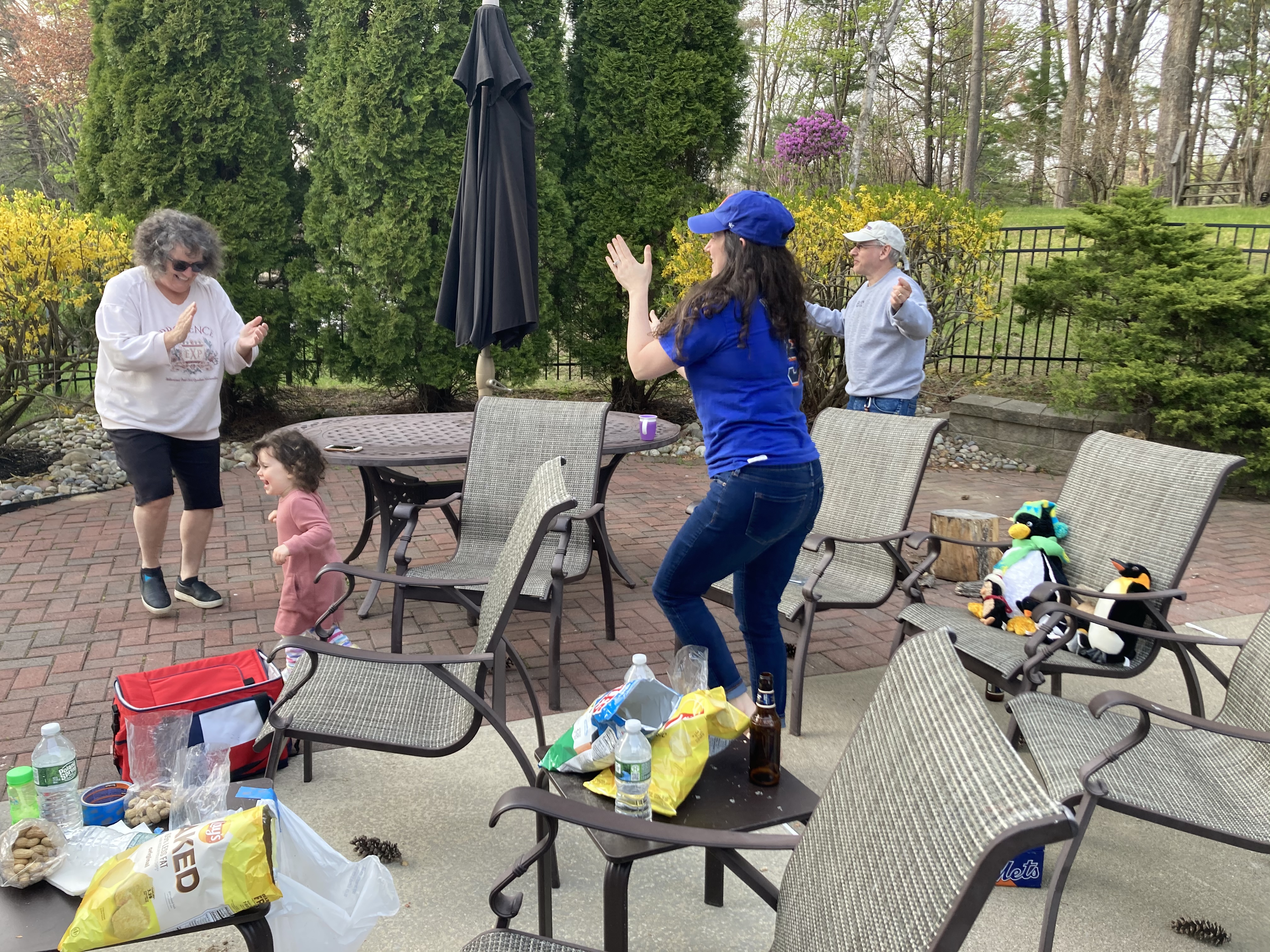
    Though we had a great time with the kids, my mom alternately sounded horrible on the phone (struggling to breathe and speak), then a bit better, then like herself, then horrible again. I was worried. I thought about whether I should go back down to the hospital, but what could I accomplish? The kids had gone to great effort. They set up a screen against the house so we could watch the Met game. They brought crackerjacks, peanuts, beer and sandwiches. They decorated with Met paraphernalia. The weather even cooperated, sadly, the Mets didn’t. They lost 7-1. We all agreed that was as it should be in a way, we’ve been to many losses at Shea and Citifield. Happily, we watched the game (indoors) the night before when Jacob DeGrom pitched a masterpiece.  

    Our own version of the 7th inning stretch

    Sunday morning, I blew bubbles with our granddaughter in our backyard. It delighted both of us. Something about watching the delicate orbs, rainbows shimmering on their surface, illuminated by the sun as they drifted into nothingness seemed appropriate. The fleeting nature of it, of everything, struck me. At the same time, her squeals of laughter as she chased them reminded me of the whimsy of life. I need to go with it, accept the bittersweet, as hard as that is.

  • Remembering Ray

    by Barbara Spilken

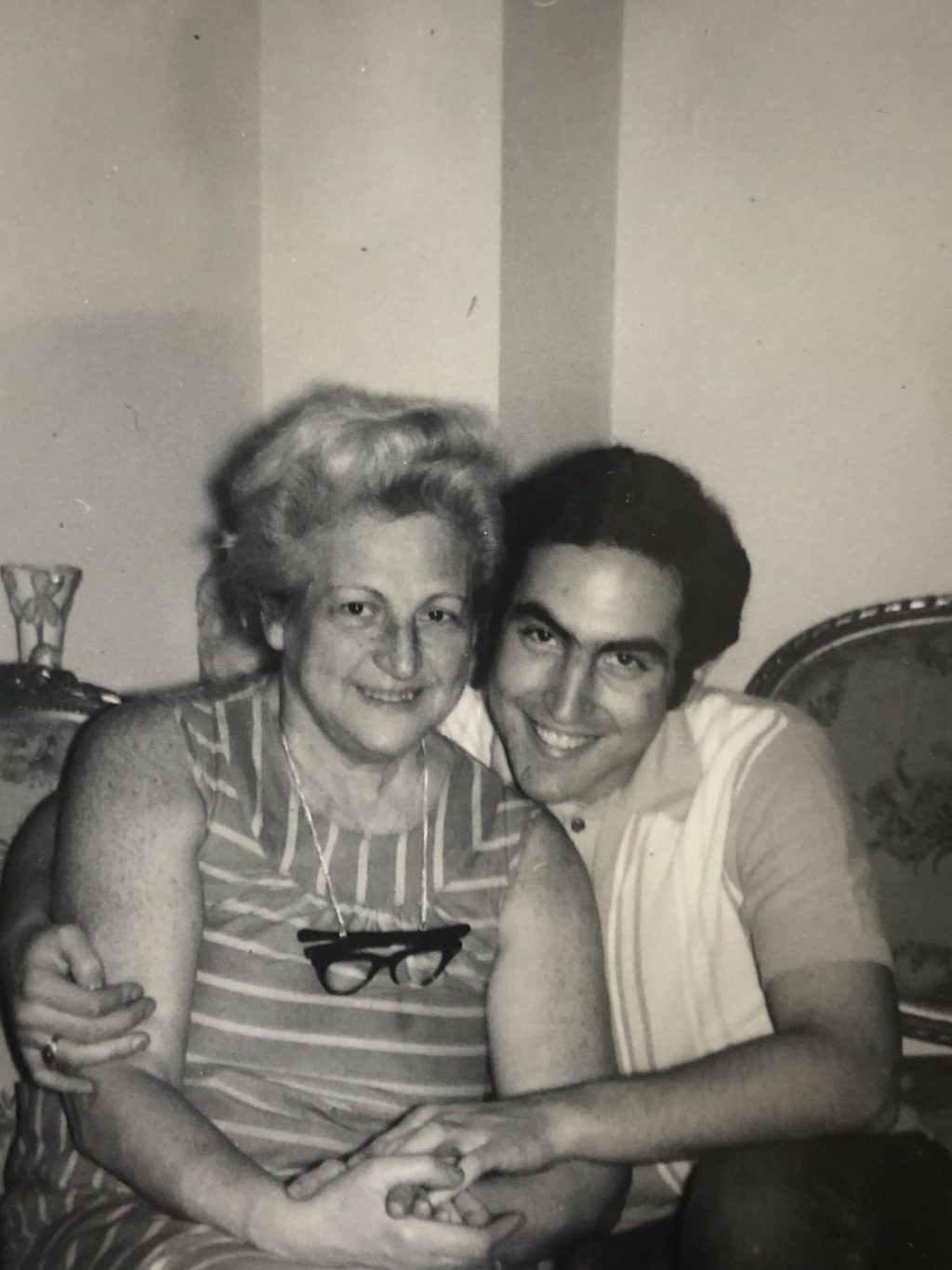
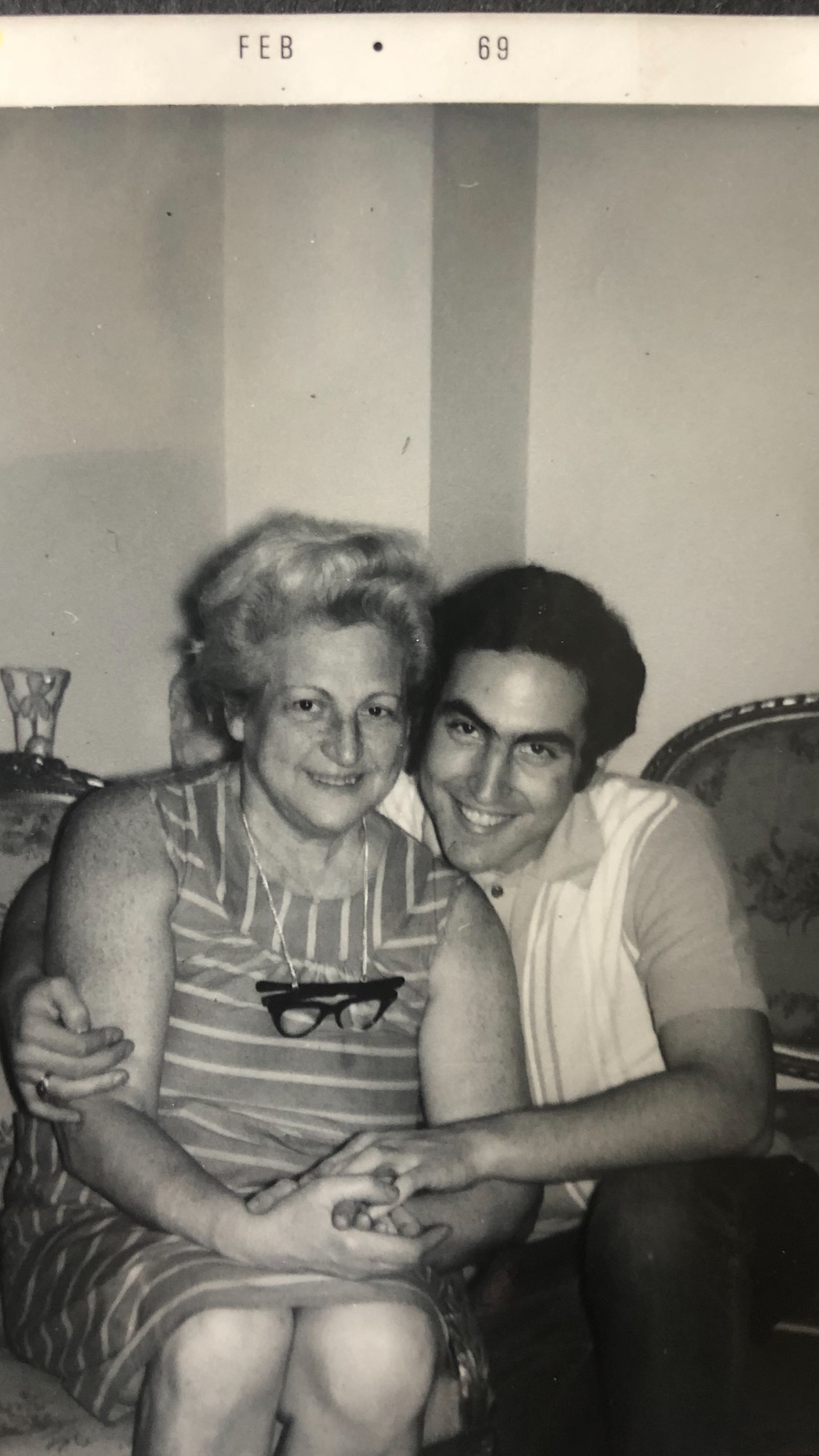
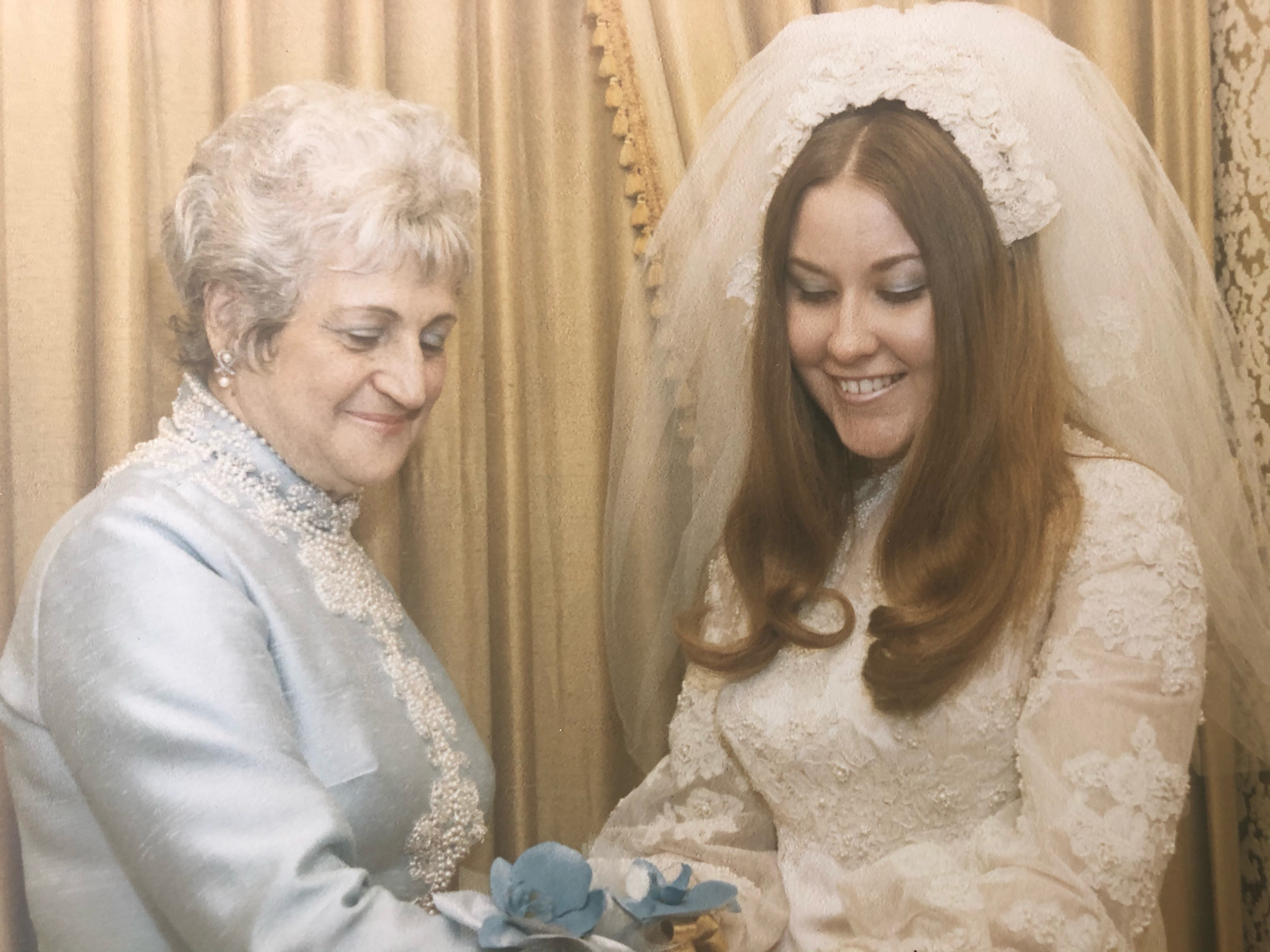
    Editor’s Note: Today’s post is written by my aunt, Barbara Spilken. It is about my grandmother, Nana. I have written many blog posts about her. Thank you, Barbara, for sharing your tribute to her. The photos come from the Spilken family collection.

    I woke up in tears this morning. April 18, 2021 marks 50 years since my mother-in-law’s death. Not many people are fortunate enough to find inspiration to last that many years from anyone much less their mother-in-law. Most in-law relationships, if we are to believe Hollywood, are strained at best. I was blessed with a different reality.

    Though I only knew Ray (Rachel Spilken) for three years before her untimely death, she shaped how I live my life and the values I strive to uphold. I was 18 years old when I first met her.

    Ray was the sun to family and friends that orbited her. She welcomed people to her home, regardless of their station in life or if they had a disability or lived on the margins of society. My family of origin did not offer such a generous and loving atmosphere. I drank in this alternative and vowed to try to live her values.

    Whether I have accomplished that is for others to say. I believe Ray’s legacy is going strong in our family. Her children, grandchildren and great-grandchildren are caring human beings, loving their families, involved in philanthropy, each trying to make the world a better place in their own way.

    Everyday I wake up to see Ray’s large, beautiful mahogany dining room table in my house. It is a reminder to gather those we love, to share our burdens and our celebrations, to break bread as often as we can  –  to stay connected to each other.

    I was welcomed by my husband, Terry, into his world. His mother extended to me every kindness and taught me these values. I hope I have done and continue to do them honor.

    Terry and Ray in 1969

    This year in which we have sustained many losses has inevitably led me to think about the meaning of life, I am comforted by my reflections on Ray. Her legacy of love and care continues to ripple through the generations that have followed. What more can one hope for?

    At my wedding – January 10, 1971

  • Privacy settings on Facebook

    A snippet of conversation overheard:

    “I can’t think of anything worse than finding a picture posted of me on the Internet without my permission,” he said.

    “I don’t actually remember if he asked before he posted,” she replied. She didn’t sound perturbed by it. “He may have asked, I don’t remember…..I mean, I don’t like when someone does that either but….whatever.” She shrugged.

    He shook his head disapprovingly.

    The exchange got me ruminating about my own actions. I surmised that she was surprised to find a photo or video posted of herself online, and to him the idea of that happening, of personal stuff being out in the world that he didn’t put there, is an anathema. He wants his privacy. He doesn’t want anonymous people knowing or seeing his business.

    Clearly, I don’t share that feeling. This blog offers plenty of evidence of that. I know better than to post a picture of a person without getting the okay beforehand, but I been known to make mistakes. Overhearing that conversation, I could imagine the young man saying to me, “You’re nuts for putting all that stuff out there!”

    I know the exchange had nothing to do with me, but it hit a sore spot. I feel some measure of self-consciousness about what I do.

    I don’t share everything. I draw boundaries.  I make choices about memories or experiences I want to write about. I also want to be careful that I am sharing my story, not someone else’s. Most of the time when I write something that involves another person in a significant way, especially if it can be seen negatively, I show it to them first. I have edited pieces in response and sometimes I censor myself. I have invited folks to share their perspective on the blog, too.

    I want to share my experiences. It is a way of feeling less alone. When a reader responds that they identify with what I have shared, it is validating. And, even more importantly, writing about painful feelings, takes away of some of their power. Things that live in my mind as embarrassing or irritating are made less so when I put the feeling in words and set them free.

    Why do I feel the need to justify that I do this? There must be a part of me that questions it, wonders if it reflects weakness or a failure to properly value my own privacy.

    This question of privacy, though, goes well beyond social media etiquette. For instance, people make different choices in regard to sharing information about their health (I’m not referring to what is shared on Facebook, I mean even in everyday conversation). Some are an open book and might share more than you ever wanted to know. At the other extreme, some don’t want to be asked how they are feeling. As we get older, health becomes more and more of a focus. It can be hard to avoid discussing it. I think I fall somewhere in the middle. I want to be open with my husband and my children. If it is something that can be inherited, like high blood pressure or diabetes, then I think I owe it to them to share the information. If it is something that is affecting the quality of my life or my mood, it seems only fair to clue them in. I’m not big on putting on a happy face – at least not for those closest to me. I also tend to think secrets have a way of blowing up.

    There shouldn’t be shame attached to illness either– it shouldn’t be seen as a sign of weakness or a personal failing. We’ve lived too long with people hiding mental illness or addictions, in particular. Some illnesses carry judgment – if you are a smoker and get lung cancer, or if you are obese and are diagnosed with Type II diabetes, you can feel like you deserve it and/or that others deem it as a just punishment. None of that is helpful. If it were simple, no one would smoke or be obese.

    By the same token, I understand not wanting to feel like your condition is tattooed on your forehead. We don’t want to be defined by an illness. It is a matter of personal choice if you want these things widely known. There is no right way to be about this. We need to respect each other’s wishes. What makes it complicated is if we assume that others share our standards.

    For me, the health issue is particularly vexing. My husband is a doctor. I have been with him from the beginning of his training and while I am not confused about the fact that I did not earn a medical degree, I think it is fair to say I have more knowledge than your average citizen. If someone speaks to Gary as a patient, he doesn’t share it with me. If it involves our children, he will. Our kids understand that (if they didn’t, now they do). I find, for whatever reason, some people do confide in me about these things; others don’t. It can be surprising who falls into each category.

    I will admit to having pretty strong problem-solving skills. When my dad was sick, it made me feel better if I came up with something that helped him to be more comfortable. When Dad was getting chemo, he and Mom were staying in an extended-stay hotel. Dad was spending a lot of time in bed, aside from being tired, the chairs in the sitting area in their suite weren’t that comfortable. I found a place that rented furniture and we had a reclining chair delivered for the duration of his stay. It was a win-win. I still feel good about that. If Mom hadn’t shared her concern about Dad being in bed so much, I couldn’t have helped find a solution.

    Combine the familiarity with medical issues with a propensity to want to fix things, or help people, and I can probably overstep. Or maybe I don’t. Geez, my brain is a confusing place to live.

    I started this essay by recounting an overheard conversation that led me to question myself. Now, having written about it, processed my thoughts, and putting it on the blog, it isn’t eating at me anymore. I won’t go so far as to say I am at peace, but I am not ruminating. I’ll call that a victory.

  • I just re-read last week’s blog post. This week’s could be quite similar. In this time of coronavirus, one day doesn’t vary much from another and that adds up to a sameness week to week. There were some differences. The prime one being I didn’t get to cuddle and play with my granddaughter. Oh well. I did get to babysit my great-nephew. He is almost 15 months old and fascinated by cars, trucks and buses. Fortunately, his house has a big picture window in the living room that looks out on a busy thoroughfare. We watched red cars and blue cars and yellow buses go by for quite some time.

    One of the extraordinary things that is happening in our family is that a new generation is emerging. Aside from my granddaughter, I now have five great-nephews! The newest arrived less than two weeks ago, on March 24th. The oldest will be four in August. Four of them have the last name Brody. My father’s name carries on! So as not to be left out, the most recent arrival was given the first name Brody! When I was young Brody was not a first name (though I think both of my brothers were regularly called Brody by friends), now it is, and we are all delighted. It will be quite something when the five of them get together! Mass confusion might ensue, but what fun!

    As we are at the beginning of a new season, a season of rebirth, I am acutely aware of the cycle of life. We are greeting new family members; we have said goodbye to others. No matter how long a life they have been granted, it doesn’t feel long enough. At the same time, we don’t want to see them suffer. There is a time to die. It is all so bittersweet. It is the way of the world.

    Yesterday, the final day of Passover, is a day when Yizkor is recited. Yizkor translates as ‘may He (God) remember;’ it is a memorial service that is conducted four times throughout the year. In Judaism we commemorate the anniversary of a parent’s (and other immediate family members) death (the yahrzeit) by lighting a candle. We also participate in Yizkor and light a candle then too. Gary is not yet comfortable attending services in person, so he livestreamed from a New York City synagogue. Throughout the year we have done that and found it to be surprisingly meaningful.

    Of course, our thoughts of David, and my father, and others who have died, are not limited to those occasions. I asked Gary yesterday what brings his dad to mind. The list was long – from mundane things like having a nice stretch of weather to elections in Israel – all things he would share on his daily phone call with him. We agreed that the most painful part of the loss is the finality of it. Many believe that we will be reunited with our loved ones when we ourselves die. I imagine that is a very comforting thought. I can’t say I have that faith. Instead, I comfort myself with memories that have become part of me, lessons that I was taught, the love that I was given and still carry with me. It isn’t the same as having their physical presence, but it is something – something significant. My father and my grandparents are part of my DNA and are, in turn, part of my children.

    I marvel at our family’s the next generation. I will share the memories, the lessons and love and hope that they carry it forward.

  • I don’t have a blog post prepared so I am winging it. The past week was a tiring one. It started off with a dental appointment to put a crown on a tooth that had previously had root canal. The process of preparing the crown left my mouth sore. I don’t know about you, but I don’t enjoy when they insert the tray with the gooey stuff in my mouth to make an impression of my teeth. I remind myself to breathe so I don’t gag. I prefer not to have someone putting their hands in there to drill either- the vibrations cause my ears and sinuses to ache. Invariably my jaw is sore afterwards. It took a couple of days for that to settle down. Great start to the week.

    Then I went down to New Jersey to accompany my mom to her pulmonologist appointment. I wanted to go (Mom, don’t feel guilty!!). I don’t mind a road trip. I listen to podcasts, NPR and music. As long as traffic isn’t bad, I’m good. I wanted to be there to hear directly what the doctor said, to support Mom and to spend some time with her. The issue is that the visit to the doctor was not great. I’m not going to go into details, but we left with more questions that we arrived with. Mom is doing okay, but not as good as we would like and frankly, I worry about her. (Mom, don’t feel guilty!!) It is hard being 3.5 hours away.

    That night, after the unsettling appointment, I had a zoom bookclub. I signed up for an offering from my local library – the club meets virtually to discuss 7 Pulitzer Prize winning novels that explore the American experience. The assignment for this meeting was Humboldt’s Gift by Saul Bellow. I’m not going to digress too far on this, it could merit its own blog post, but I would describe the read as a slog. Reading a book should not be a slog. I fought through it, at least in part out of respect for my fellow bookclubbers. The facilitator of the session, who I like very much, opened the meeting by confessing that he couldn’t get through it! Part of me regretted that I had put in the effort, but, in fact, I’m glad I did. It wasn’t great timing in that I had other things to do, but I did get something out of the experience. One thing I learned: I will not read another Saul Bellow novel. I read one in college, Herzog, which I also remember as a painful experience. I think two is quite sufficient for my lifetime. I may write more about Mr. Bellow’s novel another time. I enjoyed our discussion which centered on whether we feel an obligation to finish a book we have started. What do you think?

    The week proceeded with preparations for Passover. Last year we did a virtual seder which worked out pretty well, all things considered, but certainly isn’t what we prefer. This year, since Gary and I are fully vaccinated, our children came and we zoomed with my husband’s sisters. I love having a full house. I loved having Leah, Ben, Dan, Beth and our granddaughter here.

    Our granddaughter woke up at 4:15 a.m. Saturday morning. I didn’t want her to wake her parents – she was starting to cry and we had the monitor in our bedroom – so I went in to her. She settled quickly. I didn’t. I got back into bed and thought about everything I needed to do. About 6:00 a.m. I fell back to sleep. Our granddaughter woke up at 6:15 a.m. Fortunately, Gary was happy to get her and I fell back to sleep for another hour and a half. Despite that I got up not feeling particularly well rested. A small price to pay, but as I get older it gets harder to rebound. I thought to myself, “I don’t want to be 61!” as I brushed my teeth. Of course it is better than the alternative.

    During the weekend we laughed, we chatted, we prepared the seder meal (three of us combined efforts to make the turkey and it paid off), we ate multiple meals actually. We played Trivial Pursuit. My granddaughter not only chose me to put her to bed both nights, but said, “Nana, I love you.” Nothing is better than that. I will treasure the memories and look forward to the next time we get to be together.

    Now it is Monday morning. I don’t have a blog post prepared. But that’s okay.

    Passover bouquet on my dining room table

  • Photo from Chad McMillan

    ‘Crimes or misdemeanors.’ My husband uses that phrase when we talk about making judgments about people’s behavior. We are walking in our neighborhood and I am telling him about my distress because someone disappointed me. After listening to me vent for a bit, he will ask, “Crime or misdemeanor?” a reminder to put things in perspective. Do I want to hold a grudge? Do I want or need to discuss it with the person? Gary isn’t saying it to minimize my emotional response to the incident, but to ask me to step back and look at it afresh.

    Some transgressions are minor, others far more significant and it is useful to make that distinction. It is relevant in terms of how we evaluate the person’s character and assess the consequence. Lately, particularly in the context of the #MeToo movement and accusations of racism, it feels to me that we are losing the capacity to be discerning, especially about the punishment. I think there is something to the argument that ‘cancel culture’ has gone too far, even if the phrase is a Fox News favorite.

    I believe Harvey Weinstein got what he deserved. Even if one wanted to say he was canceled, he should have been. In my saying that the pendulum may have swung too far in canceling people, I am not offering a defense of indefensible behavior. Rape, assault, stalking, unwanted touching, ogling, unwelcome flirting are all unacceptable, but they represent a range of wrongs. I think we need to ask what the appropriate punishment is depending on the offense. In the context of sexual harassment at work, options could range from criminal charges to a warning. Potential responses include referral to the police, an internal investigation, bringing in an outside consultant, a counseling memo in their personnel file, firing, required training, reassignment or some combination of these. Perceptions will vary about the appropriate response. The problem we are up against is that for years and years and years, nothing was done. Women weren’t believed or the problems were swept under the rug. Perhaps in reaction to that, we are overcompensating now.

    When the New York Times reported that Peter Martins, the director of the New York City Ballet (NYCB), retired because he was being investigated for creating a hostile environment, which included sexual harassment, my mother was outraged. It wasn’t clear whether the investigation had been completed when his decision was made (it seemed he was forced to retire). Mom was a huge fan of his dancing – we both were, we followed his career and enjoyed his performances over the years. She thought he was being treated unfairly. I argued that the organization likely had a lot more information than what was in the paper. I reminded her of some incidents that had been reported about him in the past. I also made the point that NYCB likely didn’t undertake a major investigation and accept his retirement without good cause. I asked her “Why would you assume that the charges are all lies?” She still thinks he was done wrong. While I don’t know the details, I don’t believe he was ‘canceled.’

    In part the difference between my mother’s and my response is generational. Some behaviors that today we recognize as inappropriate were acceptable or expected to a woman of Mom’s age. Some of the #MeToo reporting didn’t sound so bad to her. (Let me be clear, she does not think sexual harassment is okay.) A coach was allowed to be verbally abusive. Sexual innuendo was part of office banter – at least in some places. A man giving a woman a compliment on her appearance may have been appreciated – it may still be.

    There are intangible things at play – whether it was 50 years ago or today. Two men saying the same thing can be received very differently – tone of voice, body language, previous interactions, the look in their eye all inform the meaning of the words. “Pretty dress,” can sound innocent or lascivious. Two women hearing the same comment may respond differently – one may be flattered, another may be uncomfortable. One person may be motivated by a coach yelling, another may shut down. We can acknowledge that this can be fraught without giving up making judgments. We also can’t sustain knee-jerk reactions to every accusation. We need to make the effort to navigate this messy, confusing and difficult terrain.

    We also can’t know a person’s intention. The law makes distinctions based on intentionality – harming someone purposefully is different than accidentally. It can be hard for prosecutors to establish intent; harder yet in a harassment claim. Did they mean to make someone uncomfortable? Are they on a power trip? Are they racist or ignorant? Does intention matter? Yes and no. Sometimes the action speaks for itself. The guy in Atlanta may deny racist intent after he murdered six Asian-American women, but what he did belies his words.

    Ignorance is an inadequate defense, too. If you make no effort to educate yourself, then you bear responsibility for not knowing the meaning of words or symbols. Is it believable that a person doesn’t understand what a swastika represents?

     Another question is: Can we give the harasser an opportunity to redeem themselves? I am troubled by the idea that people are written off or deprived of their career without slowing down to investigate and then give due consideration to the punishment.

    What guidelines can we use? I think it can be helpful to ask what if the behavior/action happened to our child, spouse, friend or relative? Imagine yourself as the victim. See if that empathy changes your perspective.

    By the same token, ask yourself if the person who is accused was your spouse, child, friend or relative, what would you think is fair? Does that change how you would like them treated?

    We also need to be cautious in reacting to what we see in the media. Sensational headlines get attention. Sometimes the full story gets lost. Let’s all take a breath.

    Accusations should be investigated, fairly and thoroughly. Once facts and perceptions are understood, we need to find a just response; one that is not inflamed by political extremism, righteous anger or a rush to judgment. In the long run, we all benefit from a thoughtful, fair process. We don’t want the pendulum to swing too far back in the other direction, silencing voices that have only begun to be heard.

  • Governor Cuomo is in trouble. I have mixed feelings about that. He is a complicated public figure. I can’t claim to have first-hand knowledge of how he operates but having worked with his administration on education issues and knowing folks who have attended meetings with him and living in the Albany area for the last thirty years, I have certainly formed opinions about him. Before the pandemic, my impression was largely negative, even though most of his policies aligned with my own views. I did not like the way he did business.

    Recent reports that Governor Cuomo or his aides threatened to ruin the careers of adversaries are very believable. I think that has been Cuomo’s modus operandi for most of his career. The evidence suggests that he is a bully. Maybe our culture is changing such that his behavior has become unacceptable and that would be a good thing. I think, to varying degrees, bullying in the workplace has been acceptable in the past. I have worked with men who got away with a version of that – yelling and intimidating people to get their way, driving employees to tears. Maybe they didn’t go so far as to threaten to ruin careers, but scaring underlings was a tool they used. Perhaps they had anger management issues, but nobody called them on it. From what I have observed, some men benefitted from the behavior. Cuomo may be caught in a changing tide. What was once okay (or at least overlooked) is now not. One question this raises is: what is the penalty for that? I’m not sure that the punishment (forced to resign or impeached) meets that crime. Is it enough for him to acknowledge it and pledge to behave better? (If he was willing to do that.) Should he be forced to step down?  It would be a simpler calculus if that was all he was accused of.

    The allegations of sexual harassment are another matter. I have to admit that these charges came as a surprise to me. It was not something I heard whispers about before, though that doesn’t prove anything. At first, I wondered if the allegations were actually more about how his bullying behavior manifested with women. The first reported complaint that I read about, back in December, sounded like that. Creating a toxic work environment was consistent with what I understood about him. Unwanted touching, though, is a whole other thing. The incident at the wedding where he cupped the young woman’s face (she wasn’t an employee of his) and asked if he could kiss her sounds like he was being a creep (perhaps drunk?) and doesn’t reflect well on him but does not seem to be harassment. Now there have been other allegations that involve more aggressive unwanted touching of employees. The question this raises is:  should he resign based on the allegations? I think the investigation should play out first. I know that in the heat of the stories emerging, it is tempting to leap to conclusions, but a rush to judgment isn’t fair. I think there has been too much of that.

    Then there is the nursing home situation that is also being investigated. The issues here fall into a couple of different categories. The coverage I have read has focused on the wrong things. The number of deaths reported in which categories is less important than the facts of the deaths. We need to understand what happened and what can we learn from it.

    Throughout the pandemic, at all of those press conferences which I watched, the person I was least impressed with was the Health Commissioner, Howard Zucker. He did not inspire confidence, unlike the Governor. I know he, and the whole administration, was faced with an unprecedented crisis. And, to add to the challenge, they didn’t get guidance or support from the federal government. Even cutting Zucker some slack for that, I don’t think he performed well. His role in managing the nursing home situation needs to be understood. While the buck stops with Cuomo, I have to assume that decisions about protocols were largely informed by medical advisors. What guidance did Zucker offer?

    The first question with the nursing homes is: what guidance did the state give regarding Covid patients? Were nursing homes given support, in terms of PPE, respirators, or treatment suggestions? Was the state made aware of what was happening on the ground? How timely and adequately was support given? What instructions were the hospitals given about releasing Covid patients back into nursing facilities? If the Attorney General’s investigation answered these questions, I didn’t see much coverage of it. These are far more important questions than whether nursing home deaths were erroneously counted as hospital deaths. No one has said that the total number of deaths was undercounted.

    I can imagine, in the midst of the crisis, that it was all a giant clusterfuck. Some of it can be forgiven because no one knew what to do, but if decisions were made that led to more deaths, we need to understand that. Not for the purposes of punishing someone necessarily, though if it involved negligence or willful disregard for human life then we would need to assign consequences, but rather so that we learn and do better. There will likely be another pandemic.

    Then there is the allegation that the Cuomo administration lied on federal forms in reporting nursing home deaths. I am not suggesting that Cuomo gets a pass on the handling of the nursing home debacle. If he directed people to lie on federal forms, there needs to be a consequence. Given the posture of the Trump administration, their incompetence and politicizing of everything, it is easy to imagine the Cuomo obfuscating, if not outright lying. Truthfully when the allegations that they lied on federal forms came out, especially when it didn’t mean that he lied to the us (New Yorkers) about the number of deaths, I didn’t give a shit. I could be missing something, but in the midst of all that was and is going on, with the virus still raging and so many suffering, I thought there have to be more important things to be focused on.

    We need to concentrate on the right questions. Unfortunately for Cuomo, he has made a lot of enemies, probably deservedly, and they want to capitalize on whatever they can get on him, regardless of whether it rises to the level of an impeachable offense. Add to that the usual partisan power politics, Republicans would love to take advantage of Cuomo’s weakness, and we have a situation ripe for a rush to judgment.

    I took comfort from Cuomo’s guidance during those daily press conferences. He provided leadership that we needed. He deserves credit for that. In the midst of calamity, he made many decisions that saved lives and stepped into a role that should have been filled by the President but wasn’t. How does that fit into the analysis of how he gets treated now?

    On the one hand, I like the fact that Democrats demand a standard of behavior for elected officials. I would like some standard to have been applied to Trump. On the other hand, we can’t have knee jerk responses to allegations. Lots of prominent Democrats have come out saying that Cuomo should resign. They say he has lost the confidence of the people of New York. Has he? One thing I haven’t seen reported is what do New Yorkers think? What do the polls show? We are bombarded by polling most of the time. While I don’t like the idea of making decisions based on poll results, it seems relevant in this case since Cuomo is in office by virtue of the most important poll, the one in the voting booth.

    I think the investigation(s) should play out. When we understand what Cuomo has done, then we can make an informed judgment about his future.

    Note: I wrote and posted this before seeing that Quinnipiac has a poll out showing 55% of New Yorkers approve of Governor Cuomo. I think that supports my point.

  • Note: The following essay was written by my husband, Gary Bakst, a physician in New York’s Capital Region. Thank you, Gary, for sharing your experience and insight.

    It has been a miserable year for all of us dealing with COVID-19.  The virus has killed over 500,000 Americans and infected about 30 million of us.  Some are still dealing with “long haul” symptoms, ongoing effects of the virus.  Sadly, many have lost loved ones to this scourge.  By now, very few of us do not know someone who has had it. 

    Beyond the illness itself, the precautions being taken to prevent infection have entirely changed the way most of us live.  We are mostly staying home, working remotely, and avoiding gatherings.  There are no concerts, no theater, no ballgames.  Many of us are not willing to go to restaurants, bars, health clubs or yoga studios. 

    For those of us still working in person, teachers, grocery workers, and health care workers, etc., there is the real risk of infection.  And in our office, that concern has similarly been significant.  There are about 90 employees in our office.  We represent substantial diversity in all kinds of ways:  race, age, religion, rural vs. urban, health status, educational and economic status. 

    And we have about 300 people who come into our office on a daily basis for doctor’s appointments, to see physician assistants, nurse practitioners, diabetes educators, podiatrists or our surgeon.  They come in for labs and ultrasounds and bone density measurements.  It is a lot of people and a lot of appointments.  Altogether, since the beginning of the pandemic, it represents about 80,000 visits. 

    Given the prevalence that COVID has had in our community, it was inevitable that, at some point, people who work in our office would test positive for the virus.  Yet, through the end of November, we had not had one employee test positive.  Our precautions were working. After the Thanksgiving vacation, that started to change. We had first one and then several and then a substantial number of employees test positive.  By and large, it did not feel like transmission was happening within our office although there was quite a bit of worry over that possibility.  Mostly, it was people who presumably became infected outside of work, possibly via contact with asymptomatic people who did not know that they were carrying the virus.

    We had at least one example of a physician acquiring infection from contact with a patient who did not know they had the virus.  Personally, I had two consecutive Fridays in which a patient called (or a family member of that patient) that they had tested positive the day after their visit.  Sometimes people just don’t really think they have COVID – maybe they had minor symptoms and got tested but they answered our prescreening questions indicating no such issues. Getting those Friday calls led me to quarantine apart from Linda and certainly raised my anxiety level. Fortunately, I didn’t get the virus and neither did Linda.

    Unfortunately, some of my patients have been very seriously ill with COVID-19 and several have died from it.  Many of them were lovely, sweet people with wonderful families.

    Most of the employees who tested positive had minor symptoms or were asymptomatic.  Several were more significantly ill.  Several had to miss work for weeks or even months.  Those who were sicker longer have had some issues in terms not feeling entirely themselves even after returning to work. One of the many frustrating things about this pandemic is the unpredictability of the disease.

    By early January, I had reached the point where I was seriously thinking that we needed to shut down the office for 10 days.  Then, the vaccine took effect.  I got my first dose on December 28th. It was 2 weeks after we received the first dose that all of this stopped.  Not all of our employees chose to get vaccinated, but the overwhelming majority did. 

    Up until that point, the tension, the fear, in the office was palpable among many of our staff. Everyone handled it in their own way.  Some were clearly less concerned, and a few had to be repeatedly reminded to keep their masks on. 

    Albany Medical Center saw up to 38 employees test positive on a single day in that period.  After vaccination – just over 90% of their employees chose to receive the vaccine – that number fell to either zero or one positive test per day.  Most of the employees who tested positive were those who chose not to get vaccinated. 

    In terms of side effects, many of our staff did have some side effects.  Half of us received the Pfizer vaccine and half Moderna.  I did not notice any difference between those two vaccines in terms of side effects.  I personally only experienced mild arm pain with both doses (of Moderna).  But many in the office had more side effects with the second dose.  Some had fever and chills, some were achy, some had nausea, some were exhausted.  These effects generally lasted typically 12 to 36 hours.  I do not know of anyone in the office who had anything worse or anything that lasted longer.

    There have been several concerns that people have raised regarding getting vaccinated.  I want to briefly comment about them:

    1. “They were developed too quickly – something must not be up to standards.”  Actually, they were subjected to exactly as much testing as all of the other vaccines that are produced, it was just that certain steps were done in parallel rather than sequentially.  While all kinds of factors allowed it to be brought to the public more quickly including the promise that our government would pay for many doses, no vaccine went to market until all of the usual safety and efficacy studies involving tens of thousands of people were completed. All three vaccines have been authorized by the FDA.
    2. “Since political pressure was brought to the process it must be tainted.”  While there has been all too much politics involved in so many aspects of our response to the pandemic, those in charge of the vaccine process, thankfully, resisted pressures to short cut the steps we take to ensure that these vaccines work and that they are safe.
    3. “The new technique of using RNA to make a vaccine means that my DNA will be altered or somehow there will be long term effects of the vaccine”.  The messenger RNA does not get into the cell nucleus and does not ever do anything to our DNA.  It is degraded fairly quickly and does not persist in our bodies.  mRNA vaccines have been used before and have been safe and effective.  However, never before has an RNA vaccine been used on this scale so it is absolutely reasonable to continue to monitor for potential adverse effects. 

    We are now many months since the first volunteers received the vaccines and their safety record has been very impressive.  Their efficacy has similarly been very impressive as seen in our office.  And the disease that we are combating is dangerous.  We will not overcome it without vaccine.  More than 500,000 Americans have died from it.  With over 50 million Americans vaccinated, not one person has died from vaccine.  The risk of vaccine is so clearly low and the risk of being unvaccinated so very clearly intolerable, even tragic. 

    Personally, I am so very grateful to be vaccinated.  I feel less vulnerable and less likely to infect other people.  Being vaccinated has not yet had much effect on the things I choose to do or not to do.  I am still quite careful at work and reluctant to go to places where people gather.  But I am hopeful that much of this will change as more of the people I know receive vaccines and I am encouraged that the availability of those lifesaving shots is increasing week by week.  I hope you are able to access a vaccine soon or have already had one and that it makes your life better and safer. 

  • I want to see light at the end of the tunnel and I probably should be able to, but it has been such a long year. The news has been so painful – so many deaths, certainly many that could have been avoided had action been taken sooner. A year ago, who would have believed that over half a million Americans would die of the coronavirus? The number is unfathomable.

    The pandemic has introduced so many wrenches in our plans: from a canceled vacation to national parks last May, to planning a Covid-safe bridal shower and wedding for our daughter instead of the celebrations we were hoping to have, to Zoom meetings of my writing groups instead of getting together in person, and a funeral and shiva for my father-in-law with limited attendance. So many accommodations were made, so many disappointments were absorbed. And we were among the lucky ones. No one in our immediate family got sick, though there were scares and there were quarantines, no one died in our immediate family, and no one is suffering long-term symptoms.

    We tried to make the best of it. We still had celebrations. We used FaceTime to visit. Gary went to work, as usual, coming home with indentations on his face from where his mask and goggles pressed against his skin. His hands are rougher than sandpaper from relentless washing and sanitizing. The payoff for his efforts was that, despite some exposures, he has remained healthy and so have I. We took hikes with family and friends, weather-permitting, finding lovely spots nearby to explore. We used our swimming pool more than we had in years. The summer and fall were made bearable by those activities. We used our fire pit more than we ever had even in the winter.

    Temperatures reached the mid-40s on Sunday and the rain held off so Gary made a fire.

    The winter has dragged on, though. Mostly one day feels like the next. I keep having to remind myself what day it is. Now it is March again.

    There are signs of light. My husband is fully vaccinated. I got my first shot just over a week ago, so in another month I should be fully immunized. Getting the appointment was a travail, but the process of getting the shot was well organized and efficient. I was impressed with the whole operation at the Javits Center.

    I do wonder if the speed of vaccinations can outpace the speed of variants of the virus emerging. If it doesn’t then we will be dealing with the limitations longer than anyone wants. But production has ramped up and more vaccination sites have opened, so maybe we will get ahead of the curve.

    Spring is only three weeks away now; the days are getting longer and that usually makes me feel more energetic. Somehow, I still feel discouraged. Maybe it is the persistent grayness. The temperature has moderated but it still looks so gloomy. The sky is leaden, and the trees are bare.

    Some of the persistent disappointment may be that I expected, with a new administration in Washington, there would be more hopefulness. I have no complaints with the steps Biden has taken – things are accelerating, but Trump’s influence is still so strong. I was hoping the fever would break, that the Republican party would be released from the ‘big lie’ of a stolen election and would be free to either return to its more reasonable conservative roots or to adopt a new constructive path. Sadly, this does not appear to be happening. I’ve said it a million times, and I will again: I accept that people have different political philosophies, that some view the role of government more narrowly, that some prioritize individual rights more than the communal good and that this leads to different policy choices. I cannot accept white supremacy or violence. I cannot accept ‘alternative facts.’ How will we move on from this moment?

    I know I need to be patient. That is not one of my strengths. I have no choice but to put one foot in front of the other, keep doing what needs to be done, take opportunities to enjoy family and friends, notice the beauty of the full moon emerging from behind clouds against a violet sky… and breathe. Believe in the light even when I can’t feel it.