Stories I Tell Myself

Linda Brody Bakst on Brooklyn, growing up, identity and more

  • Baseball is a thread through my family history. Zada, my maternal grandfather, was a fan and as a result my mom grew up going to games, most often at the Polo Grounds. Zada took the opportunity to impart life lessons to his young daughter. One time a player on the New York Giants pitched poorly and as he was coming off the field my mother yelled, “You’re a bum!” Zada was appalled. He told her, “You never kick a man when he’s down.” When they got home, he insisted she write a letter of apology. She did. Another time they went to a game and some ominous clouds threatened. Mom asked, “Daddy, do you think we should leave? Look at the clouds.” Zada pointed to the other part of the sky, the part that was blue and told her to focus on that. Mom took that advice to heart, always preferring to look at the bright side of things.

    Baseball also played a part in my parents’ relationship, nearly sinking it. When they met in 1950 at Brooklyn College, Dad helped Mom through their required freshman physics class while they rooted for rival teams. Dad was a die-hard Dodger fan, Mom rooted for the New York Giants. They enjoyed discussing their respective teams, and Dad was tickled by Mom’s knowledge and interest. Their burgeoning romance was tested in 1951, when Bobby Thompson of the Giants hit the shot heard round the world that sunk the Dodgers playoff hopes. Mom was overjoyed, tossing her books in the air as she heard Russ Hodges jubilant call, “The Giants win the pennant! The Giants win the pennant!” Dad was crushed. Mom and Dad didn’t speak for a while. Thankfully for me and my brothers, they got past that.

    Six years later both the Giants and Dodgers left for the west coast. With that move, my father lost his love of baseball. He hated Walter O’Malley, the owner of the Dodgers; he felt O’Malley betrayed the loyal Brooklyn fans. Dad now saw the sport as a business. He still followed the game but not with a genuine rooting interest. Mom didn’t hold the same animus toward the Giants. The general consensus was that the New York Giants were legitimately losing money and needed to relocate. The Dodgers were not in the same predicament.

    Despite those shifts, baseball remained part of our family life, largely thanks to Zada, and his sons, my uncles, Michael and Terry.

    Those who have been following this blog know that I grew up in a two-family house in Brooklyn. Me, my parents and my brothers occupied the first floor unit, while my maternal grandparents and my two teenage uncles lived upstairs. In 1962 when the Mets came into being, Uncle Mike adopted them as his team. Uncle Mike was always a fan of the underdog. Like many Met fans, he hated the Yankees.

    As a child, and I do mean child, I loved the Yankees, particularly Mickey Mantle. By the time I was four years old I was enamored of the Mick – I think maybe the rhythm of his name first caught my ear. Whatever it was, I was hooked. The Yankees of my childhood were losers, though I was aware of their winning tradition. Mantle was at the end of his career by the time I was old enough to meaningfully follow the games. The Mets were the team in ascendence, much to my distress. I hated Tom Seaver, in particular. Not surprisingly, my brother, Mark, my nemesis, the thorn in my side, loved Seaver and the Mets.

    So, as I recall, the rooting interests in the house lined up as follows:

    Me – staunch Yankee fan; I didn’t hate the Mets, other than Seaver.

    Mark – rooted for both the Mets and Yankees, but more of a Met fan.

    Steven – I couldn’t tell which team he preferred; he went to Met games with my uncles, I don’t recall him joining me in my Yankee obsession.

    Uncle Terry – Met fan, didn’t hate the Yankees

    Uncle Mike – staunch Met fan, don’t even mention the Yankees!

    Zada – rooted for both

    Mom and Dad – indifferent, but wanted New York teams to win

    Looking back, I think in deference to Uncle Mike, it is possible that my brothers and Uncle Terry were more vocal in their support for the Mets in the 1960s and 1970s. As the years went by, and we no longer lived in the same house, other allegiances emerged. Today Steven and Terry are avowed Yankee fans. Mark continues to root for both teams.

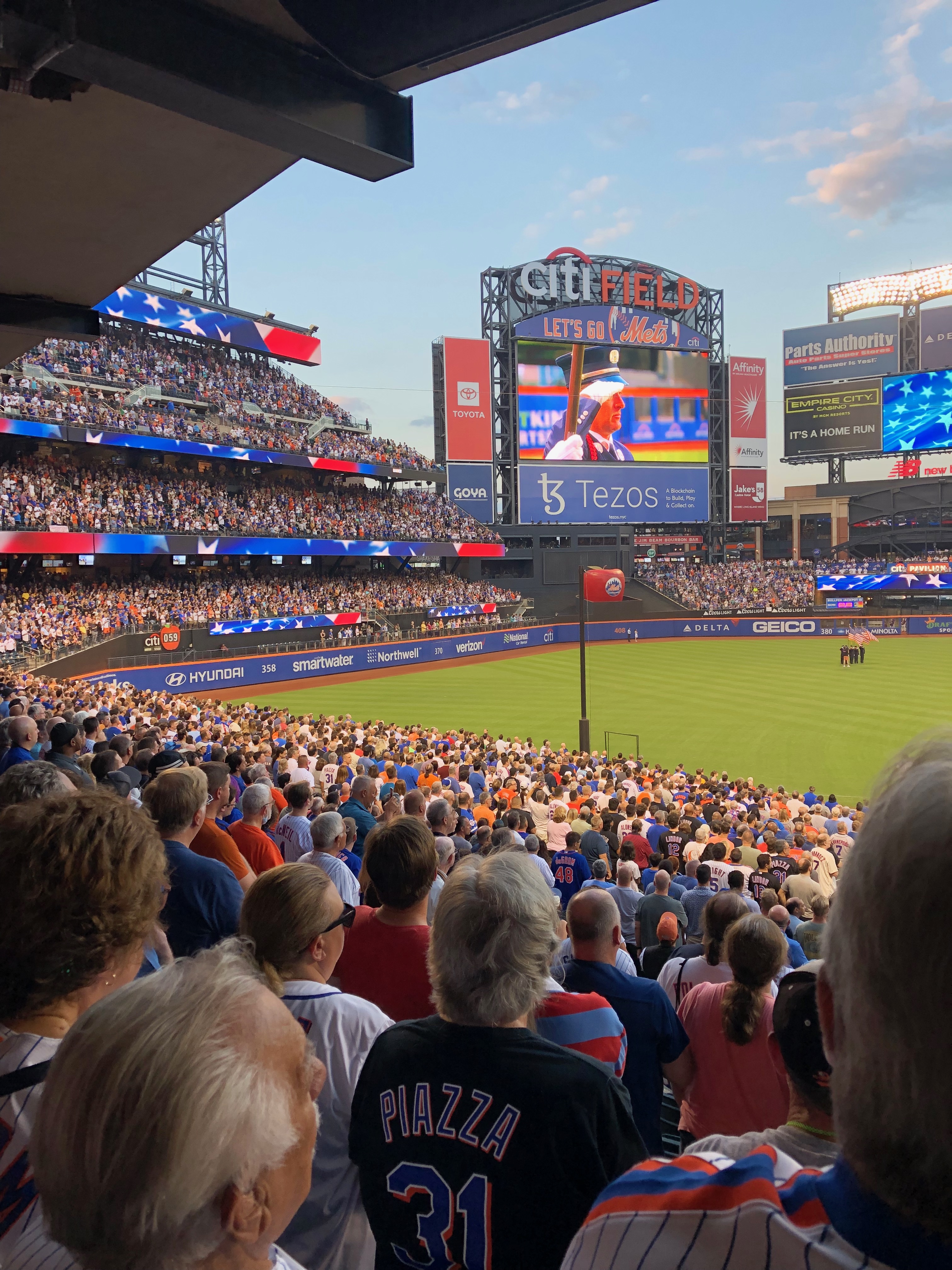
    Today I am a Met fan. I made the switch in the interest of marital harmony. When I first met Gary, I continued to follow the Yankees. Over the years, though, for reasons I’m not sure I fully understand, though Gary has said something about obnoxious Yankee fans (not me), my husband developed an antipathy for the Bronx Bombers. The truth is my passion for sports in general has waned over the years. I enjoy watching most games – I draw the line at Australian rules football – but I am not emotionally invested in the outcome. I used to be a die-hard Knick fan, but I just can’t summon the energy anymore. It just isn’t that important in the scheme of things. So slowly but surely, my interest in the Yankees fell away. It made it easier for Gary to immerse our children in the history and culture of the Mets if I simply joined forces. Gary says being a Met fan is also a good life lesson – you learn to deal with disappointment. Like the Dodgers before them, we live with the hope that there is always next year.

    So, the lessons baseball has to teach continue on to the next generation. We will see if they get passed on to our grandchildren.

  • Today, December 20th, 2022, my Dad, Barry Brody, would be 90 years old. Sadly, he only got to celebrate his 72nd birthday, and he was not well when that milestone arrived. We did not understand at the time that he had an aggressive form of chronic lymphocytic leukemia (CLL). We thought CLL was an indolent blood cancer that would take years to become a problem and that he would likely die of something else. Now we know there are different forms of the disease. Dad died four years after his diagnosis.

    I mention this only because his deterioration was a surprise and a mystery, and for years clouded my memories of him. I wondered if there was more I could have done. Today I am not thinking about that – I am thinking instead of the legacy he left and the gift he gave me.

    Dad was strong – in every sense. He was broad shouldered and powerfully built. In my mother’s eyes he wasn’t tall, he was 5’11”, but I thought he was. As much as his physical presence, though, was his strength of character.

    I pulled out a box I have of memorabilia – letters, notes and mementos from celebrations. Included among the papers were copies of remarks made at Dad’s funeral by various speakers. One of his friends noted that Dad wasn’t capable of being dishonest. He couldn’t mislead you or play games. Actually, he liked games – real ones – particularly cards and tennis (and he was very competitive even when playing Spit with his granddaughter). But he didn’t play mind games, he didn’t play with your emotions. He said what he thought and behaved in a manner consistent with his words.

    My brothers and I were lucky to have him as a role model. He gave us a great work ethic and showed us what it meant to be a partner in life. My brothers and I have reaped the benefits in stable family lives and successful careers. I’ll be celebrating my 40th wedding anniversary next summer, while my brothers have already surpassed that milestone.

    Dad had his challenges. As his oldest friend said in his eulogy, he and Dad bonded in fighting off bullies in junior high school. Dad was Jewish in an Italian neighborhood where antisemitism was ubiquitous.  Dad was also overweight. The combination made him a target. Interestingly, the friend who reflected on the bullying episode was Italian. Their bond was strong, lasting a lifetime.

    Dad found his way through that, but he carried baggage, like we all do from the hurts and insecurities of childhood. As a consequence, he was sensitive to my struggles. Among the letters I found were several written to me while I was in college.

    My first two years at SUNY-Binghamton were very difficult. Though I made some good friends, I often felt lonely and lost. It wasn’t that uncommon for me to call home crying. Dad’s letters were encouraging – reminding me of my worth, his belief in me and that he and my mom were there for me.

    Dad frequently said or wrote me the thing I most needed to hear. At my sweet sixteen, I had a sign in book. He wrote, “ Dear Linda, I am sure that you will “cultivate” a most rewarding life. Your sensitivity and sense of justice are your blessing and cross to bear. I hope that you enjoy the years to come as much as I have enjoyed your first sixteen years. Love, Dad”

    He recognized my essential qualities and the struggles they created. It is kind of a thing these days to say “I feel seen.” My Dad saw me and he let me know he approved in word and deed. There is no better gift a father can give his daughter.

    One of my favorite pictures of me and my dad

  • Note: I have been absent for a month! There are many reasons for that – I will write about it at another time. I am glad to be back! I look forward to continuing our conversation about stories we tell ourselves.

    December 15, 2022 would be my father-in-law’s 100th birthday. David Bakst made it to his 98th and for that I am grateful. He passed away a week after achieving that milestone.

    As I reflect on his life so many thoughts come to mind. In David’s last years, I would often accompany Gary on his Thursday afternoon visits. Gary doesn’t see patients on Thursday afternoons, so it was a good opportunity to spend time with his Dad. They, including his mom despite her advanced dementia, would go out to lunch to a diner near their apartment in Saugerties. I know Gary treasures that time and the memories they provide.

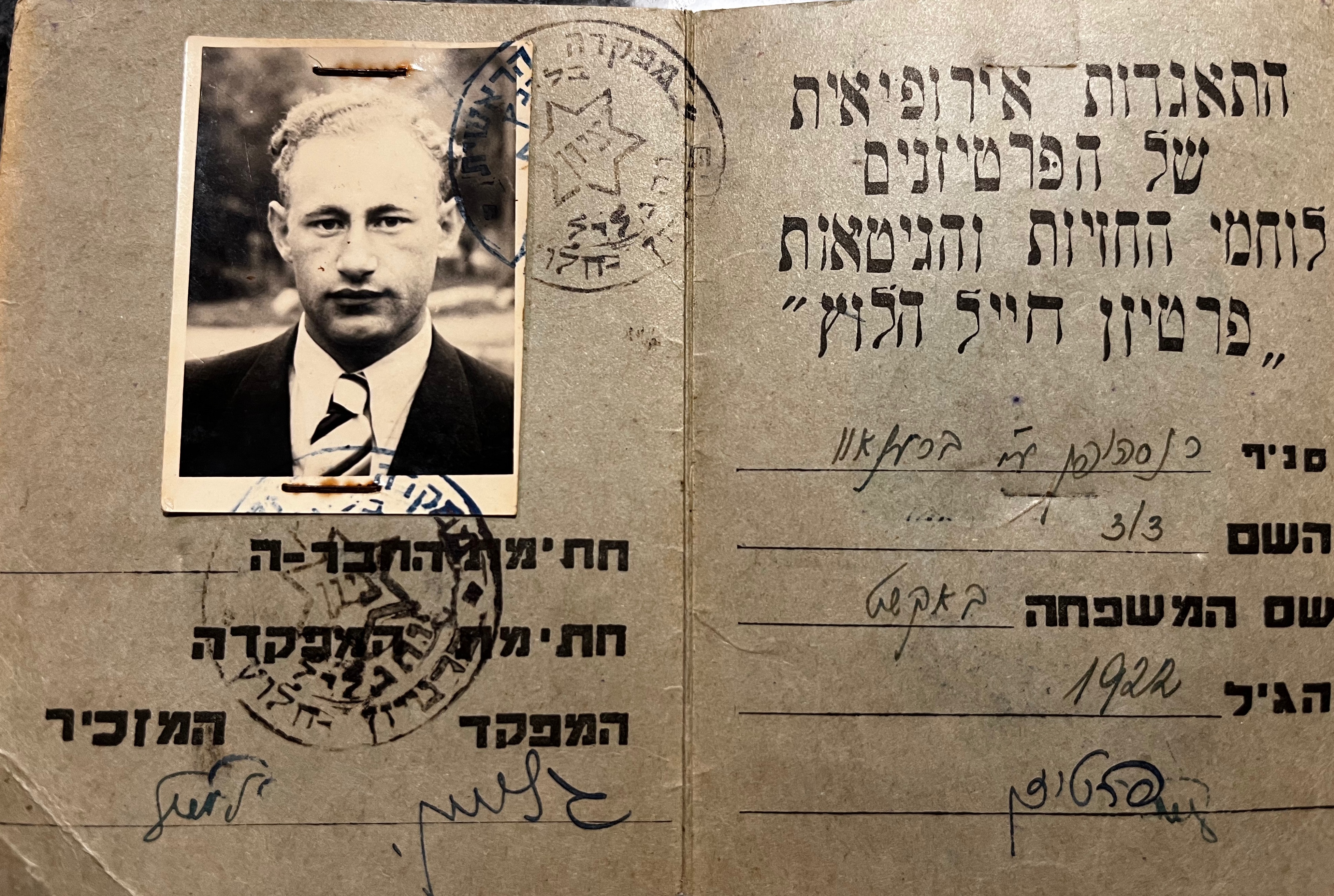
    Many of those lunchtime conversations revolved around David’s memories. We would ask him about his youth and World War II experiences. We heard the same stories multiple times, new details might be offered, but even if not, we never tired of hearing them. One particular comment stayed with me, though I am not sure why. As David described his family life before the war, he said that after Shabbos services, the adults (his parents’ family and friends) would gather at his home and talk (argue) politics. David listened in, beginning a long interest in politics that remained for the rest of his days. He told us that his father was a supporter of Jabotinsky, who he described as more of a right winger. The name vaguely rang a bell, but I didn’t know anything about him or the context. I was curious. I tried to imagine what their political conversations might have been about in the late 1920s and early 1930s in David’s shtetl (village) in Poland (now Belarus).

    After that conversation, I googled Jabotinsky and learned a bit but didn’t get very far and I set the subject aside, though it still intrigued me. Oddly enough the other day I came across a podcast entitled Jabotinsky and the Birth of the Israeli Right. I thought this might shed light on the topic, plus I am interested in better understanding the politics of Israel and this sounded like it could offer that.

    I am very glad I listened. It accomplished exactly what I had hoped. It reaffirmed my belief that learning about our past illuminates our present; the issues that plagued us more than a century ago still percolate in the lives we live today.

    The topic the Bakst family was likely discussing during their Shabbos afternoon visits was Zionism. It is appropriate that I write about this now given the intersection between anti-Zionism and antisemitism, and the appalling rise in antisemitic rhetoric and violence.

    So, what is Zionism? It is the movement to create and support a Jewish homeland. Its roots go back centuries as part of Judaism, with the idea that since the destruction of the temple in Jerusalem and the diaspora, Jews prayed to return to the Holy Land. This was largely a religious tenet until the late 19th Century. It evolved into a political movement, in part in response to virulent antisemitism in Central and Eastern Europe when Jews were largely confined to living in an area called the Pale of Settlement (part of Russia and Poland). In the late 1800’s and early 1900’s, as pogroms (violent riots perpetrated against Jews in the Pale of Settlement) became more common and feared, some Jewish thought leaders concluded that the only solution to antisemitism was a Jewish homeland. They believed that there was no future for Jews in Central and Eastern Europe and that ultimately, they needed their own country in their ancestral homeland. The father of this strand of political Zionism is generally considered to be Theodor Herzl, who wrote a pamphlet that was published in 1897 entitled Der Judenstaat (The State of Jews). In it he argued that Jews were a nationality, that it was not a social or religious question, but a national one. In order to escape antisemitism, express their culture freely and practice their religion, they needed a state. This idea became quite popular and was widely discussed in Jewish circles, including David’s hometown of Iwie.

    As with most political movements, there were factions. I imagine that David’s family debated the different perspectives. One of the areas of disagreement was what kind of country should it be. Some advocated for a socialist state (David Ben-Gurion emerged as the leader of this wing and in fact became the country’s first prime minister in 1948); others wanted a free market approach. I would imagine David’s father, as a successful businessman before the invasion of the Soviet Union in 1939, would have wanted a capitalist economy for the new state. Jabotinsky, the person David referenced, supported the free market, though he also believed that the citizens of the new state should determine their destiny.

    Another thread of discord in Zionism is the role of Judaism, the role of the religion itself, in the creation and running of the state. One of the things that is unique about being Jewish is that it encompasses a number of elements: it is a religion, it is an ethnicity, and it is a culture. Some identify with some aspects of that identity, but not others. The Zionist movement included (and still includes) a range of belief about religion. Some are Orthodox, very observant Jews, for whom the religion and the state are inextricably tied. Others are secular Jews who may even call themselves atheists. Neither Herzl, Ben-Gurion nor Jabotinsky were particularly religious. Though I never had a conversation with David about this subject, I believe he would support maintaining the Jewish character of the state but would not support a theocracy. Defining that balance continues to be a challenge.

    Jabotinsky also advocated for a strong military capability. He believed that the new state would be fought over, that the Arabs in the area would not relinquish land or power without a fight. Ben-Gurion believed that in return for economic and political considerations, the Arabs could be appeased. In furtherance of Jabotinsky’s belief in the need for military capability, he created a youth group in Poland, Betar, that would instill nationalist fervor in young people for Israel and train them to respond to attacks on Jews wherever they occurred. David Bakst was a member of Betar.

    I wonder if any of the training he received, or the faith and support built as part of that group, helped him in his war experience.

    There is great poignancy to these issues. Imagine if there had been a Jewish State in the mid 1930’s. Millions of lives might have been saved. Instead of ships being turned away from ports, instead of country after country rejecting Jewish refugees, people would have had a place to go. We will never know what might have been.

    The controversies that plagued the founding of Israel are still playing out today. The tensions between its socialist origins and the demands of a free-market economy are still difficult to sort out. The balancing of the different attitudes regarding the role of Judaism in the state creates conflict. The fundamental disagreements between Israel and its Arab neighbors, not to mention its Arab citizens, are as troubling as ever.

    And, in an even larger sense, we are still grappling with what to do about antisemitism. It is a pernicious and stubborn prejudice. It is disheartening that over a century after Herzl wrote his pamphlet, and even with the establishment of the state of Israel, lies, misconceptions and hate are still rife. After all he went through, I wonder if David would be surprised by this latest resurgence. In that one sense, I am glad he isn’t here to see it.

  • The midterms are over – or almost over. All the races haven’t been called yet. I am relieved that it wasn’t a red wave, and that Kathy Hochul will be our Governor. It certainly was not a complete victory. I am left wondering how Marjorie Taylor Greene was re-elected and why did Herschel Walker get enough votes to force a runoff? These two people are, as Dave Chappelle said about Walker on Saturday Night Live, “observably stupid.” If I think too long about people voting for such incompetent candidates, I get depressed. So I won’t. I will focus on the more reasonable results and breathe a sigh of relief that the Senate will not be led by Mitch McConnell.

    I’ve been thinking about some other things related to the election. For example, why are polls reported on as if they are news? Polls aren’t actions and they are subject to misinterpretation, given that few people understand statistics. How do polls further the mission of the New York Times (‘all the news that’s fit to print’) or the Washington Post (‘democracy dies in darkness’)? Polls should not be considered news! And, I could make a strong case that hyping the polls the way that they do, is detrimental to democracy. It certainly doesn’t shed light on it. The actual election is the engine of democracy.

    I understand the utility of polling for candidates and their campaigns. The polls can help them target audiences or messages (whether that is a good thing is another subject I would be happy to argue, but I’ll leave that alone). But, what purpose do they serve to the general public? Why are they covered as if something happened, as if there were new developments? They may or may not be accurate and until the actual vote is counted, they mean nothing. All they do is add to the anxiety, they create an artificial energy (whether you are on the ‘losing’ or ‘winning’ side) that fuels more spending. When you look at how much our political races cost, it is mind-blowing. Think of all the good that could be done with that money.

    When I mentioned this idea at a family gathering, my niece pointed out that the media report it because people find it interesting – they respond to the horse race aspect of it – and the media is driven by interest/ratings. I believe she is correct. But does it have to be that way? Isn’t it a vicious cycle? What would happen if mainstream media just stopped reporting on it? It is possible that they could make that choice.

    My son-in-law commented that he wished we followed the model of some European countries where campaigns are limited to two months. We had a short debate about whether that would lead to more focus on substantive issues, or whether the candidates wouldn’t bother and would just get right to the bullshit allegations and smear campaigns. It is hard to say how it might play out, but either way we wouldn’t be subjected to the onslaught of ads for months – and it would cost far less. After watching a program where each political ad was worse than the one before it, my husband said, “It makes me miss the drug company ads.” I had to laugh. That says something. Gary, the doctor, would rather be inundated by ads that promise relief from eczema.

    * * * *

    We have had some extraordinary weather. Two weeks ago, I lamented that with November beginning, we were entering the dreary part of fall. I was premature in my proclamation. We were given a lovely reprieve. It was great timing for my family in that we hosted several gatherings over the course of the weekend. Our newest granddaughter, just over 5 months old, came for her first visit to our home and we invited aunts, uncles and cousins to meet her.

    As the weekend approached, we kept checking the weather forecast. I was hopeful we could gather outside to minimize the possibility of spreading Covid/flu or even a cold. I couldn’t believe that it was going to be that warm and it promised to be dry, too! The forecast held. We had a brief drizzle that wasn’t enough for anyone to move inside, so we were able to eat, drink and visit in our backyard. What a delight!

    Then to top it off, we had the most amazing sunset. The sky was pastel pink – the air itself appeared to be pink. I have never seen light like that before. Though we didn’t have many leaves on our trees, we still had some lingering yellow ones. We also have a carpet of pine needles – in bright light they look brown, but in this sunset they were orange. This phenomenon of the light was brief, and I couldn’t capture it on camera. I hope I can keep the image in my mind’s eye – it was spectacular. What gift!

    Another gift – a tree in our backyard

    * * * *

    Speaking of gifts, we are coming into the holiday season where we do a great deal of gift-giving. We don’t want to overdo it with our grandchildren. If there are items we know they need, we are happy to get them, but the truth is there isn’t much they need. We are very fortunate. With our older granddaughter, we are starting to focus on experiences, getting tickets to a show or performance we think she will enjoy. And we can contribute to their college funds – who knows how crazy expensive tuition, and such will be by the time they enroll.

    They have enough stuff. The only problem is that it can be fun to pick out stuff – cute outfits, colorful toys, squishy stuffed animals can be irresistible. They can never have enough books, in my estimation, either. But, I will restrain myself. In the interest of our budget, and not contributing to needless clutter, I won’t overdo it. At least I will try not to. Plus I can channel some of that desire to give to others who are in need.

  • Sugar is like a drug. Once I start having treats – cookies, Halloween candy – it is hard to cut it off. I wish my body didn’t respond to it that way. For folks who don’t have weight issues, is it that their body responds differently – they don’t continue to crave it? Or, is it a decision/willpower? I envy those who don’t have that trigger, though I am grateful that I don’t crave alcohol or other addictive substances.

    I miss having a sense of smell. I lost it (not entirely, I perceive some scents) years ago after a couple of rounds of a virus. Yesterday when a trick or treater came to the door, she asked, “What smells so good?” I was mystified at first. Then realized, “I just made roast chicken, I think that must be what it is.” She asked if there was any left. That made me laugh. But it also made me wish I could smell it! I know sometimes you become habituated to a smell when you’ve been in it a while and if you step outside and come back in you perceive it again – but that is not what happens with me. Something has to be quite pungent for me to smell it.  If I had to choose to lose one of the five senses, I guess this one would be the least critical. But it does dull taste and it makes experiences less rich. Oh well.

    One other Halloween observation. When I happened to be on the Upper East Side of Manhattan a week or so ago, I was struck by how elaborate the decorations were (see photos below). I also thought some were quite gruesome. Have they gotten more horrifying over the years? I like cute pumpkins and Caspar the Friendly Ghost type of decorations. I don’t actually want to be frightened. I particularly don’t enjoy scenes that feature blood. A standard witch is fine, depictions of graveyards are okay, too. If it were up to me, we’d just skip the really gross stuff.

    It is interesting to me that some people love that – seek out entertainment that scares them. I heard a snippet of an interview with Stephen King where he said that since he was a child, he liked the feeling of being scared. I don’t. I don’t want to watch scary movies and I don’t seek out risky activities (I’m faster on cross-country skis going uphill than down). I wonder if people who like horror movies also like thrill rides? I’d rather ride a roller coaster than watch a horror movie. Our son-in-law posted a list of horror movies he had watched in the lead up to Halloween. I have seen none of them. In one way, I feel left out of a whole segment of cultural references, but I don’t want to watch those movies, so I guess I’ll just have to remain in the dark, so to speak. It’s funny but both of my children, who grew up not watching horror movies, married people who love them. I will leave it to them to negotiate that – maybe they will become fans, too.

    We have passed that threshold from the beautiful part of fall to the dreary. This year I did take the time to appreciate the vibrant colors. I think we had an unusual number of sunny, warm days that allowed the leaves to shine. We had some magnificent sunsets, too, made even more beautiful by the glow of the leaves. Now I look out the window and see mostly bare branches. There is beauty in that, too. I love the look of the silhouette of the trees against the sky. But not so much when it is grey and damp. Also, the less daylight we have, the less energy I seem to have.

    This may be a little specific, but when you find a sub for an activity you are committed to (let’s say tennis), and then the sub finds they can’t make it, who is responsible for finding another replacement? If I told someone I would fill in for them and then found that I couldn’t, I would view it as my responsibility to get another person. I was a bit annoyed recently when the sub I found punted it back to me. But maybe I’m wrong on the etiquette. Thoughts? This is the kind of thing I should spend more time thinking about – instead of fretting about our democracy.

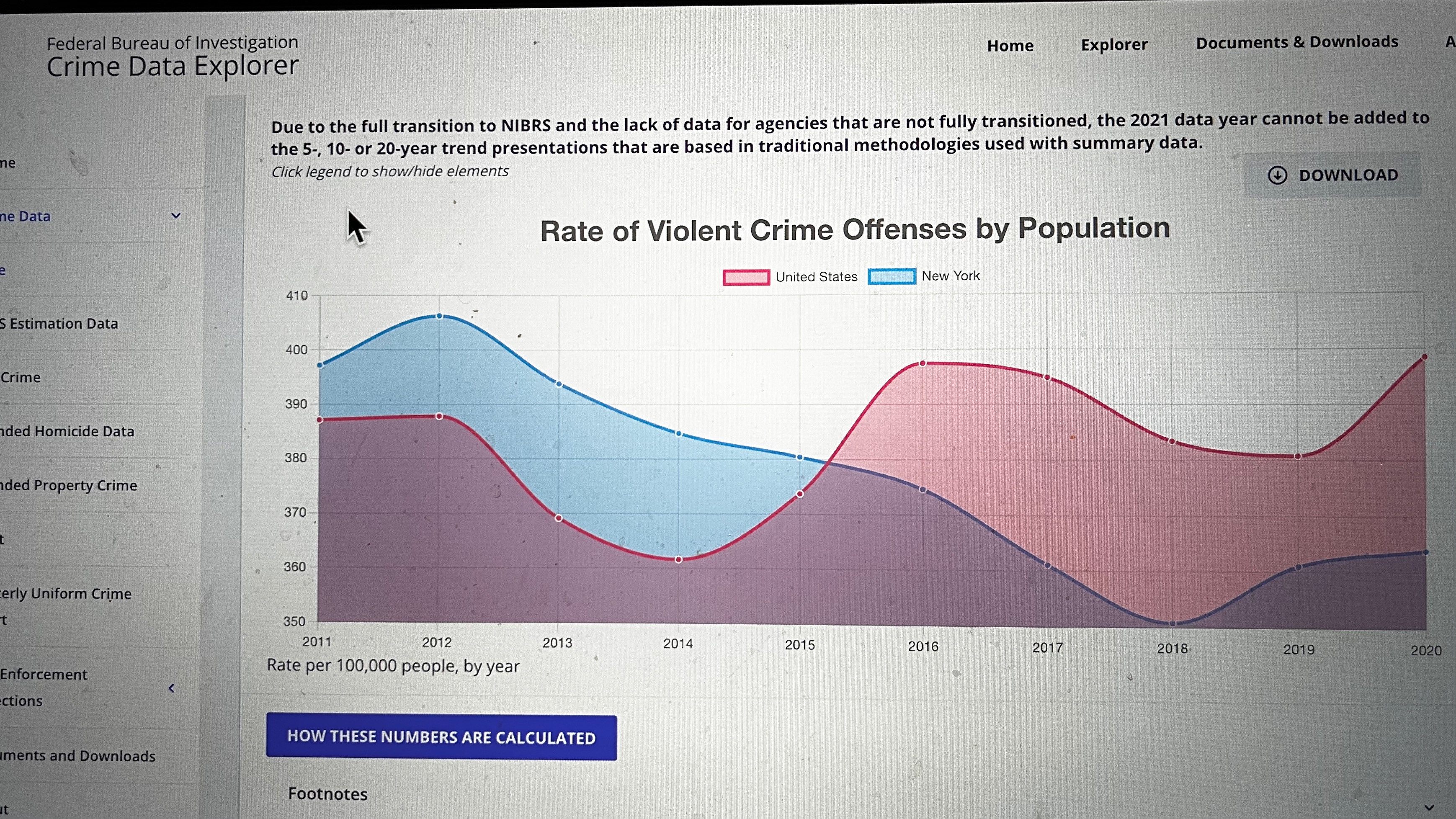
  • Early voting has begun in New York State. Let me direct. If you are a resident of this great state, I am asking you to vote for Kathy Hochul. We are being bombarded by ads, paid for by the Republican National Committee or another Republican political action committee, playing on fear of crime to get folks to vote for Lee Zeldin. I ask that you consider the facts. Has the crime rate gone up? The answer to that is: it depends – compared to when? What types of crimes? Where? Here is a chart (using FBI data) that illustrates that New York State’s crime rate is far below that of the United States as a whole and that it is far less than it was nine years ago. (New York is in blue, the United States is red – this is the most current available)

    It is all about perception. I looked at current New York City data and again it depends on what you compare. Murder is down year over year. Auto theft is up this year compared to last. But, again, it is all relative because compared to five years ago, when crime was at historic lows, it has gone up. If you compare it to a decade ago, it is substantially lower.

    No matter what your perception of crime is, what exactly are Republicans proposing to do about it that will make it better? There is no evidence that whatever increases we have seen are the result of ‘cashless bail.’ If the only solution to this perceived crime wave is to repeal cashless bail, it will not have the desired effect.

    There was a reason the state adopted cashless bail and that reason has not gone away. We can’t have a system where persons who commit the same crime are treated differently because one has access to money, and another does not. One person can’t languish in jail while another walks free based only on one having access to cash. The current law may need to be adjusted, if there are loopholes or if aspects of it that aren’t working. In fact, it already has been amended. But, we should not throw out the baby with the bathwater.

    The criminal justice system is flawed. We need to acknowledge the problems and not pretend that we can go back to some ‘good old days.’ There are no good old days when it comes to crime. I don’t have all the answers. I am not advocating defunding the police – neither is Kathy Hochul. It is a ridiculous notion, we need police. At the same time, though, we need to be honest about the problems inherent in the system. Beware of any candidate who offers simplistic solutions, on either end of the spectrum (from defunding the police to ‘lock ‘em up’). I appreciate that Kathy Hochul, despite the onslaught of these hyperbolic crime commercials, has not called for repeal of cashless bail. She has a spine – a necessary quality in a public servant.

    I also believe that New York State has many other issues to grapple with. The more I hear of Lee Zeldin’s positions the more concerned I become. He is advocating lifting the ban on fracking. Again, this might sound appealing in the short term, but it would be a disastrous policy for the environmental health of our state. He advocates public funding for religious schools. This is another dangerous policy that in the long term threatens the very heart of our system of governance. We need to firmly re-establish the separation of church (synagogue, mosque or any other religious institution) and state. That separation is especially critical in education.

    Since I wrote my blog post several weeks ago asking that you not be complacent,  the race for governor in New York has tightened. I believe the fear-mongering and relentless advertising is having an impact.

    It is essential that we be vigilant – and not just at the gubernatorial level.  The same strategy of fear-mongering is at play in House of Representatives races. In my home district, the Republican candidate, Liz Joy, is portraying her opponent as soft on crime. The law that everyone is criticizing was enacted at the state-level, not federal. The incumbent Congressman, Paul Tonko, had no role in the move to cashless bail. Tonko has voted for the assault weapon ban and every other common-sense approach to crime reduction offered at the federal level.

    Once again, I appeal to all to look beyond facile slogans and the relentless fear-mongering. Make sure you are getting your information from reliable sources. When applicable, look at the candidates actual voting record.

    As a reminder, here are some of the bills Lee Zeldin voted against as a congressman:

    Assault Weapons Ban (ironically, most in law enforcement support this), Inflation Reduction Act (but he takes credit for infrastructure projects and issues press releases to encourage federal spending in his district), Right to Contraception, Ensuring Access to Abortion, Women’s Health Protection Act, Infant Formula Supplemental Appropriations Act, Consumer Price Gouging…the list can go on and on. These bills were not part of some crazy liberal agenda – they are responses to problems and needs that most New Yorkers support.

    Zeldin has downplayed the potential for rolling-back abortion access in New York State, despite his ‘pro-life’ stance, noting the Democratic majorities in both houses of the State Legislature. Please do not rely on that – the composition of the legislature can change (and has many times in my lifetime) and the governor has powers through budgeting and executive orders that can circumvent the legislature.

    Finally, Zeldin’s close association with Trump is problematic, and it should be disqualifying. We in New York have seen Trump’s career – his multiple bankruptcies, his failures, his lies – up close. We know he is a charlatan. Somehow Zeldin overlooks all of that and refuses to hold Trump accountable for the damage done to our country. This alone makes him unfit to be governor.

    I urge everyone to do their homework on the candidates (for all offices). Don’t rely on advertisements. Read their own words; look at their positions; if they have a voting record, check it out. And then vote – it matters.

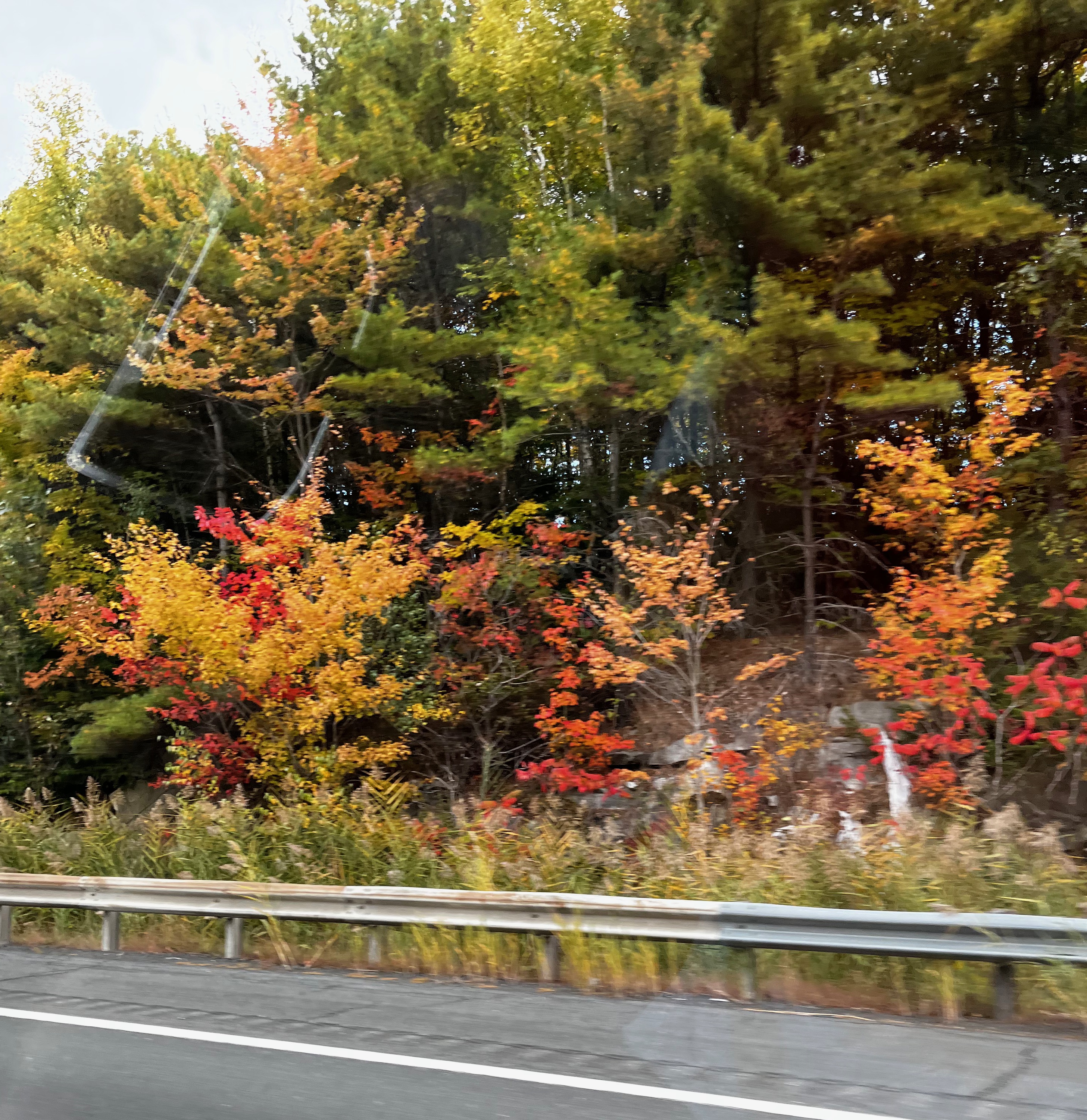
  • Yesterday we drove through the Berkshires on the way home from visiting our daughter. The oranges, reds and yellows of autumn were on full display. I selected Jackson Browne’s Solo Acoustic Album 2 as the soundtrack for our ride. The song “Alive in the World” came on. I looked at the magnificent scenery as the song played and I decided I needed to listen to it again. “Do you mind if I replay that?” I asked Gary, who was behind the wheel. “Go for it.”

    Here are the lyrics:

    I want to live in the world, not inside my head
    I want to live in the world, I want to stand and be counted
    With the hopeful and the willing
    With the open and the strong
    With the voices in the darkness
    Fashioning daylight out of song
    And the millions of lovers
    Alive in the world

    I want to live in the world, not behind some wall
    I want to live in the world, where I will hear if another voice should call
    To the prisoner inside me
    To the captive of my doubt
    Who among his fantasies harbors the dream of breaking out
    And taking his chances
    Alive in the world

    To open my eyes and wake up alive in the world
    To open my eyes and fully arrive in the world

    With its beauty and its cruelty
    With its heartbreak and its joy
    With it constantly giving birth to life and to forces that destroy
    And the infinite power of change
    Alive in the world

    To open my eyes and wake up alive in the world
    To open my eyes and fully arrive in the world

    To open my eyes and wake up alive in the world
    To open my eyes and fully arrive in the world

    If you would like to listen to it, here is a link: https://www.youtube.com/watch?v=8T4JwA4OIio

    The song resonates with me – I have always liked it. I could have written the first two lines, or perhaps they were written for me. But the whole song is right on point. “With its beauty and its cruelty, with its heartbreak and its joy, with it constantly giving birth to life and to forces that destroy, and the infinite power of change, alive in the world.” What a perfect description of this thing called life.

    Having spent two days holding our four-month old granddaughter, a bundle of light and joy, the lyric brought tears to my eyes – and it does as I write this. I need to believe in the infinite power of change alive in the world.

    I wake up this Monday morning not feeling particularly hopeful, but I am replaying the song and holding on to that thought as we face the absurdity of Kanye, Elon and Trump (the list of threats could go on and on). I renew my request from last week, please vote, please make your voice heard. Let’s elevate Jackson Browne’s message, not theirs.

  • Please don’t be complacent about voting. You may believe you are in a ‘safe’ district or state where the polls show a commanding lead for your candidate, but polls can be wrong. We have seen that. Not only that, but it is important that your voice be heard. It matters if a candidate wins with a clear majority versus a slim margin – the message from the electorate is more powerful when it is backed by huge numbers. So, no matter where you live, make your voice heard.

    I write this because I am worried. In New York State, where polls show Kathy Hochul with a commanding lead in the race for Governor, I see the Republican candidate reaching for a familiar election strategy to change the momentum:  fear – fear of crime. We know that is an effective tactic. While we can legitimately discuss crime and whether bail reform is responsible for, or even plays a role in, the rise, it is not legitimate to use propaganda to stoke that fear entirely out of proportion to reality. The fact that the crime rate has risen in states that have not enacted changes to bail would suggest that there are other elements at work. Bail reform is a policy worth reviewing and can no doubt benefit from study, but it must be kept in perspective. It is especially problematic when there are so many other important issues to consider.

    I think it is important to consider the candidates’ other positions. I took a closer look at Zeldin’s voting record – he has been in Congress representing the eastern end of Long Island since 2014. Here are some of the recent bills he voted AGAINST: Assault Weapons Ban (ironically I believe most in law enforcement support this), Inflation Reduction Act, Right to Contraception, Ensuring Access to Abortion, Women’s Health Protection Act, Infant Formula Supplemental Appropriations Act, Consumer Price Gouging…the list can go on and on. These bills were not part of some crazy liberal agenda – they are responses to problems and needs that most New Yorkers support.

    I believe that among my community some may be considering voting for Zeldin, for two reasons. First, his position on crime and second, his support of Israel. I’ll address the second issue first because it is easier. While Zeldin is Jewish, I could find nothing that suggests that Hochul has not been an ally for Israel and for the Jewish community. In fact, when Cuomo was in the process of resigning, Jewish leaders from around the state voiced their support for Hochul and characterized her as “accessible, transparent and widely liked.” It does not appear that there is a difference between the two candidates on this.

    For me, nothing is more concerning than his position on reproductive health. In this post-Roe era, the governor of New York must unequivocally support a women’s right to choose. Lee Zeldin does not. It is painfully obvious that governors and state legislatures are on the forefront of protecting women’s rights. We can’t afford to entrust the governorship to someone who will not provide full-throated support for autonomy over their own bodies, especially for our daughters and granddaughters.

    Others may not place that issue as high as I do when they evaluate candidates. Here is another thing to consider. The anti-Zeldin commercials I have seen highlight his closeness to Donald Trump. I don’t trust political ads, so I read his public statements after January 6th and looked at his voting record on the issues surrounding it (Trump’s impeachment, the recent vote to fix the ambiguity around the role of the vice president in certifying the election, among others). What did I find? He deserves to be portrayed as a Trump supporter. He voted against impeachment and against the clarifying legislation. On January 7th, after the insurrection, this was the statement he issued: “ I just returned home from our Nation’s Capitol after witnessing firsthand from inside the House Chamber yesterday the best of America clash with some of the worst of it in a moment of my life I will never forget. For this moment, let’s take one collective deep breath, recharge and renew our spirit for whatever lies ahead. We are all Americans first.”

    He took a play from Trump’s playbook by coyly not identifying who were the good guys and who were the bad guys. I didn’t leave out the part of his statement explaining that. To make matters worse, on the night of January 6th when Congress reconvened to certify the results, Zeldin voted to reject Arizona’s presidential election results. He also joined in the lawsuit that sought to discard the votes of Georgia, Wisconsin, Pennsylvania, and Michigan, which was subsequently thrown out by the Supreme Court.

    In the days, weeks and months that followed, Zeldin has never acknowledged Trump’s culpability in that attack or that the election had not been stolen. In fact, he has defended Trump, alleging that a double standard was applied where Trump’s inciting words were criticized but not Democrats. He failed to note which words and by whom. And, in case you were wondering, there are New York Republicans in Congress who have rejected Trumpism and voted in support of a number of the measures I noted above. A person who has not disavowed Trump cannot be trusted to lead our state – he either lacks a backbone or conscience or both.

    As I have written before many times on this blog, I can understand and respect different policy approaches. I have never been a Republican and can’t imagine that I ever will be, but I recognize the importance of compromise and finding common ground. I am happy to debate policy issues, from taxes to crime to the economy and everything in between. I must draw a line, though. I cannot accept allowing Donald Trump to continue to be the standard-bearer for the Republican party. He cannot be permitted to skate by without being held accountable for the damage he has done, much less hold public office again. People like Lee Zeldin appear to be all too happy to allow him to remain in party leadership. I hope New York Republicans will reject Zeldin in his bid to be governor.

    If crime is your central concern, there are any number of ways to communicate with elected officials and advocate for other approaches. I ask that you not allow the spate of political ads that play on fear and make exaggerated claims to dictate your vote. Look more deeply at the issue and what candidates are offering as solutions. I hope those in my community who might be considering Zeldin will realize he is a poor choice for a myriad of reasons, including that he does not offer real solutions to rising crime. It is a lot more complicated than repealing bail reform.

    Most importantly, I urge everyone to do their homework on the candidates (for all offices). Don’t rely on advertisements. Read their own words; look at their positions; if they have a voting record, check it out. And then vote – it matters.

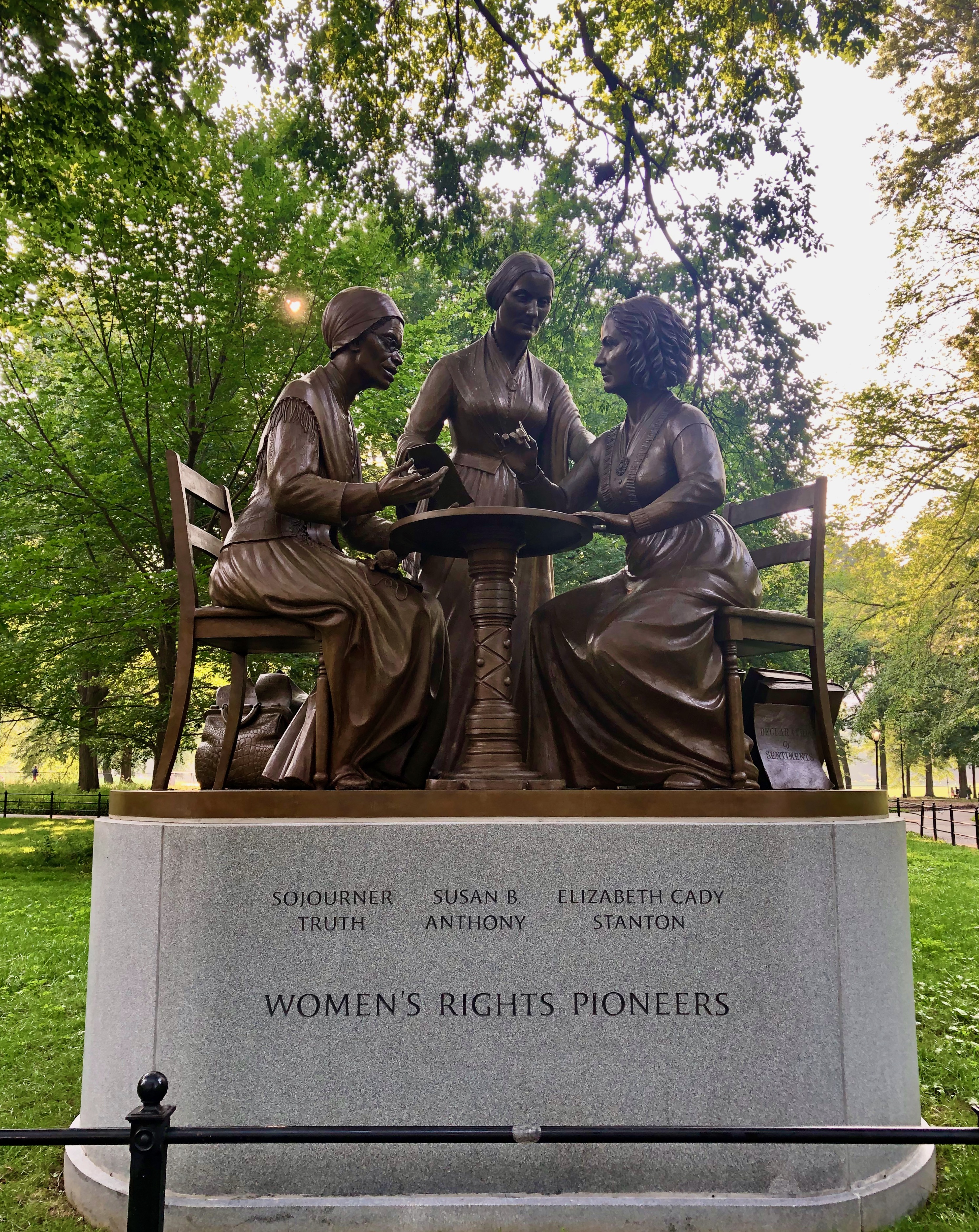
    The newest statue in Central Park in NYC – an appropriate reminder of our responsibility to carry their work forward
  • “If I had my way, I would today build a wall about the United States so high and so secure that not a single alien or foreign refugee from any country upon the face of this earth could possibly scale or ascend it.”

    Sound familiar? Could almost be a sound bite from the 2016 Presidential campaign or current political discourse. It is a statement one can imagine hearing at Trump’s recent rally in Ohio. But it was made by North Carolina Senator Robert Reynolds around 1939 in response to the growing Nazi threat in Europe.

    This was one of the many echoes that struck me as I watched “The U.S. and the Holocaust,” the  Ken Burns’ documentary that aired on PBS last week. It can still be streamed for free.

    Today it is appropriate, it is Rosh Hashana, the Jewish New Year, to reflect on the lessons that could be learned from Burns’ film. Those lessons could be learned if one watched the six-hour series. Sadly, the people who most need to see it, likely did not. It was hard to watch, painful, but so important because of the reverberations that continue to plague our country now. I will need to write more than one essay to explore it.

    So many themes addressed by the film are alive today. I believe there is something to be gained by considering them. These issues are thorny, but we need to be honest and talk about them.

    First, a word about terminology. Immigrant, refugee and migrant are all words used to describe people arriving at our borders. Theoretically these words mean different things, though I don’t believe there are agreed upon international definitions. A refugee is generally understood to have been forced from their home, while a migrant seeks another home voluntarily (it has the connotation of not necessarily being permanent and can be within a country, like migrants from the Dust Bowl back in the 1930s). An immigrant, on the other hand, is thought of as seeking permanent status in a new country. However, the ‘voluntary’ nature of the person’s move can be difficult to assess. For purposes of clarity in this essay, I am addressing refugees, though the lessons we take from our experiences from World War II are broader than that population.

    One of the questions raised is: could/should the United States have allowed more Jewish refugees into the country in the late 1930s and early 1940s. We face this question today on a myriad of fronts – refugees from Ukraine, from Venezuela, from other war-torn or famine-afflicted states, or people displaced because of climate change (flooding, fires).

    In the past people argued that we didn’t understand the risk to European Jewry, but as this documentary makes clear, that simply wasn’t true. It was known and it was known early enough to have acted. However, fear was an obstacle; the fear of spies among refugees – that there would be bad actors even among the Jews who were so threatened. That’s where another theme intersects: propaganda.

    The Germans were masterful at stoking the flames of anti-Semitism, portraying Jews as evil, all-powerful, Communists. The image was believed even if it was internally inconsistent. Millions, and that is not an exaggeration, died as a result of that combination of fear and acceptance of propaganda – acceptance not just in the United States but in other developed countries that could have taken them in but were vulnerable to that toxic mix.

    What can we learn from this? Maybe, just maybe, we need to be careful about stereotyping. When a whole group is portrayed as one thing – Mexican drug lords, Syrian terrorists – it is incumbent on us to think critically. It isn’t that there aren’t Mexicans who could be connected to the drug trade or Syrians who could be terrorists or Jews who could be communists. There are or were, but to what degree? Were the majority? That’s preposterous. The first question is:  Are the refugees at risk of death? If they are, the second question is: can we help in a way that minimizes the danger to our own citizens?

    We have been plagued by the question of who can enter our country since its inception. We can’t keep pretending that it is new or that we don’t have biases that impact our policies. I am not suggesting that we allow unrestricted entry. The dialogue on this issue is so poisoned as to make it nearly impossible to discuss rationally. I am not aware of anyone, certainly not President Biden, who is advocating open borders.

    The reality is that the vast majority of refugees are ordinary people trying to escape intolerable, life-threatening circumstances. One of the things the documentary so effectively illustrated is the individual stories – several Jewish brothers came to America in the 1910s, one went back to Poland and was never able to re-enter our country. He, along with his wife and children, died at the hands of the Nazis. The family that remained in the United States was devastated by their inability to help and lived with guilt and pain for the rest of their lives. We can become anesthetized to the pain of the individuals if we don’t take the time to understand their stories. It took years in a displaced persons camp for my father-in-law to gain entry to the United States, at least he made it.

    The United States in the lead up to and during World War II, as is true today, didn’t want non-Northern Europeans to enter our country, they didn’t want the majority white, Anglo-Saxon Protestants to be ‘overrun’ by ‘ethnic others’. Semitic people were less desirable. It was chilling, and appropriate, that Ken Burns concluded the documentary with footage of the march in Charlottesville; showing men with tiki torches chanting “Jews will not replace us.” While that sentiment might not represent the opinion of the majority of Americans, it is frightening that our president was unwilling to clearly and unabashedly rebuke the marchers. It revealed something we don’t want to see, but we cannot ignore. If we want to keep our claim to being a force for good in this world, and maintain our democracy, we must face the demons which lie within. We cannot be complacent in the face of the evil. If a politician, no matter what other positions they take (they may ironically be a supporter of Israel), is unwilling to stand up to white supremacists, we must reject them regardless of party affiliation.

    The answer to the question I posed above is that the United States could have and should have done more. Let’s not be in the position in the future of coming up short in the eyes of history.

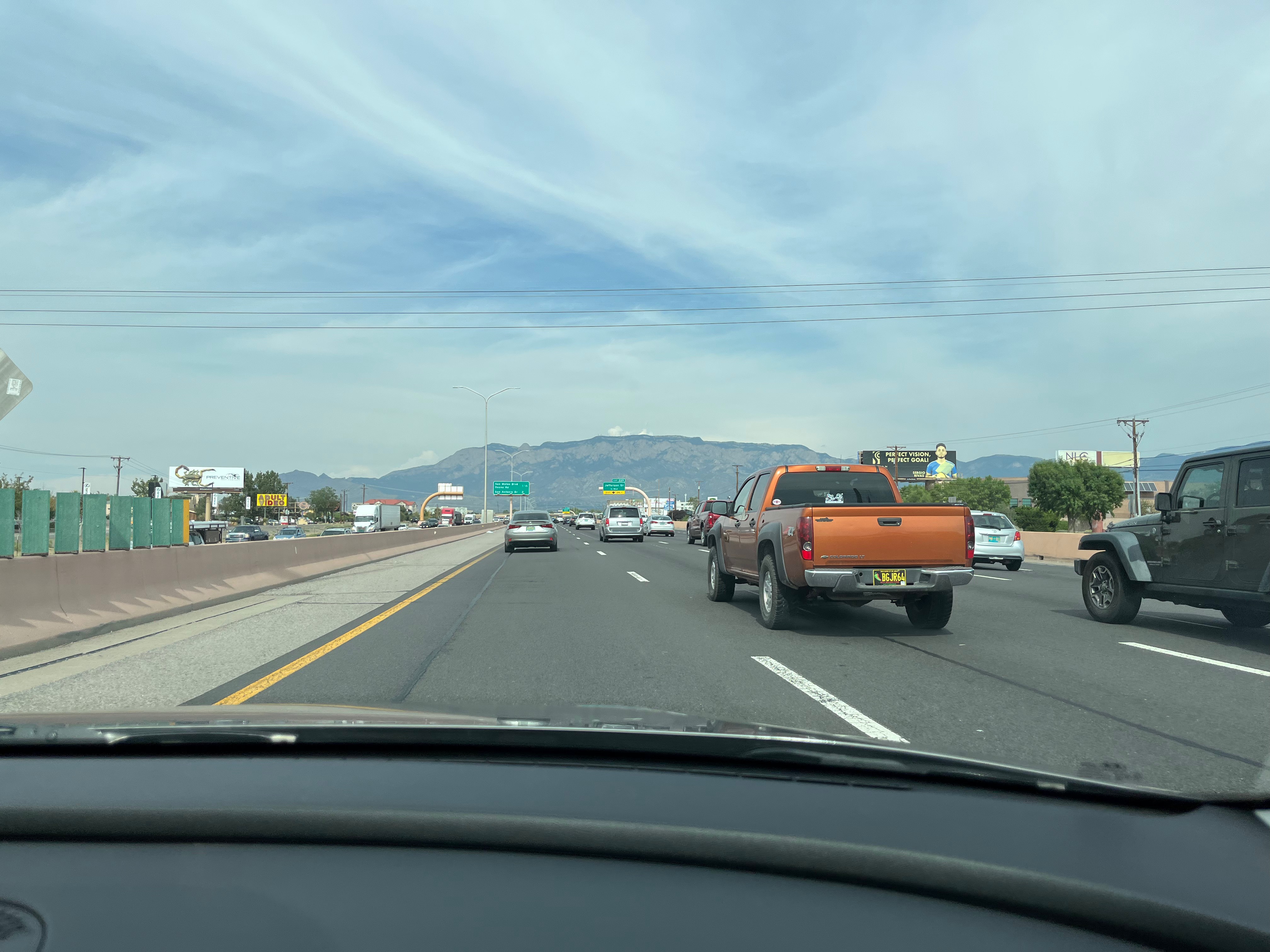
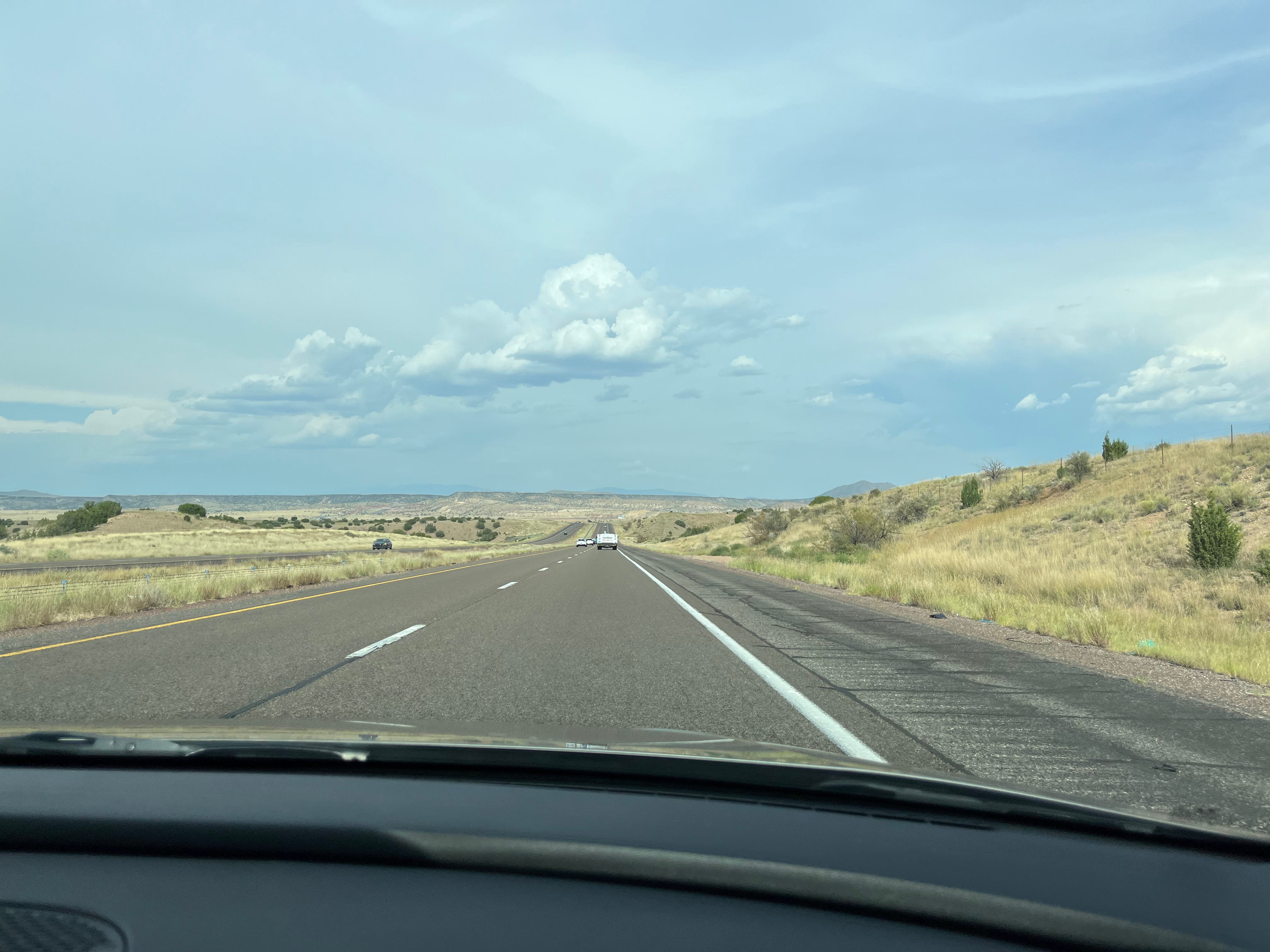
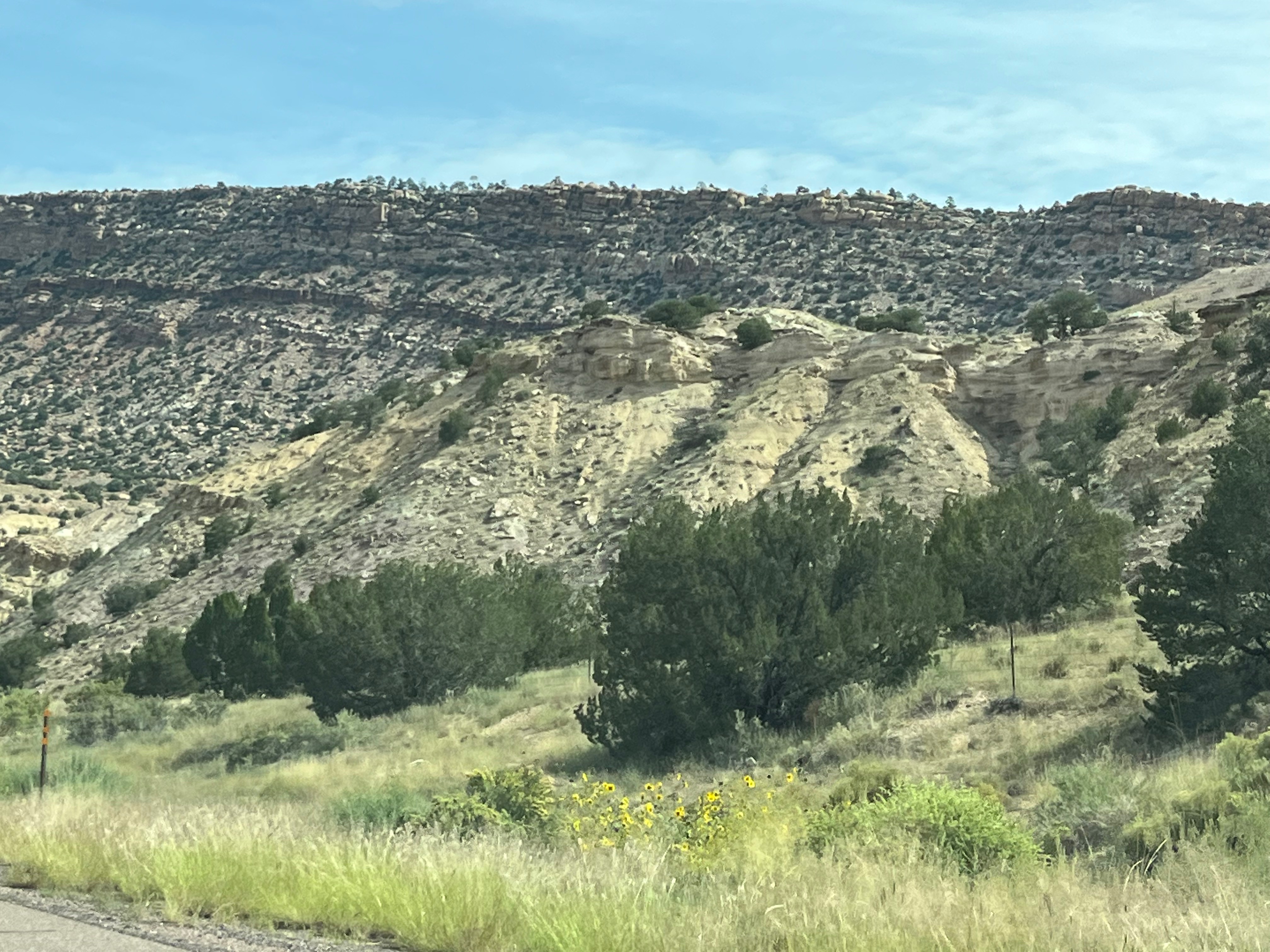
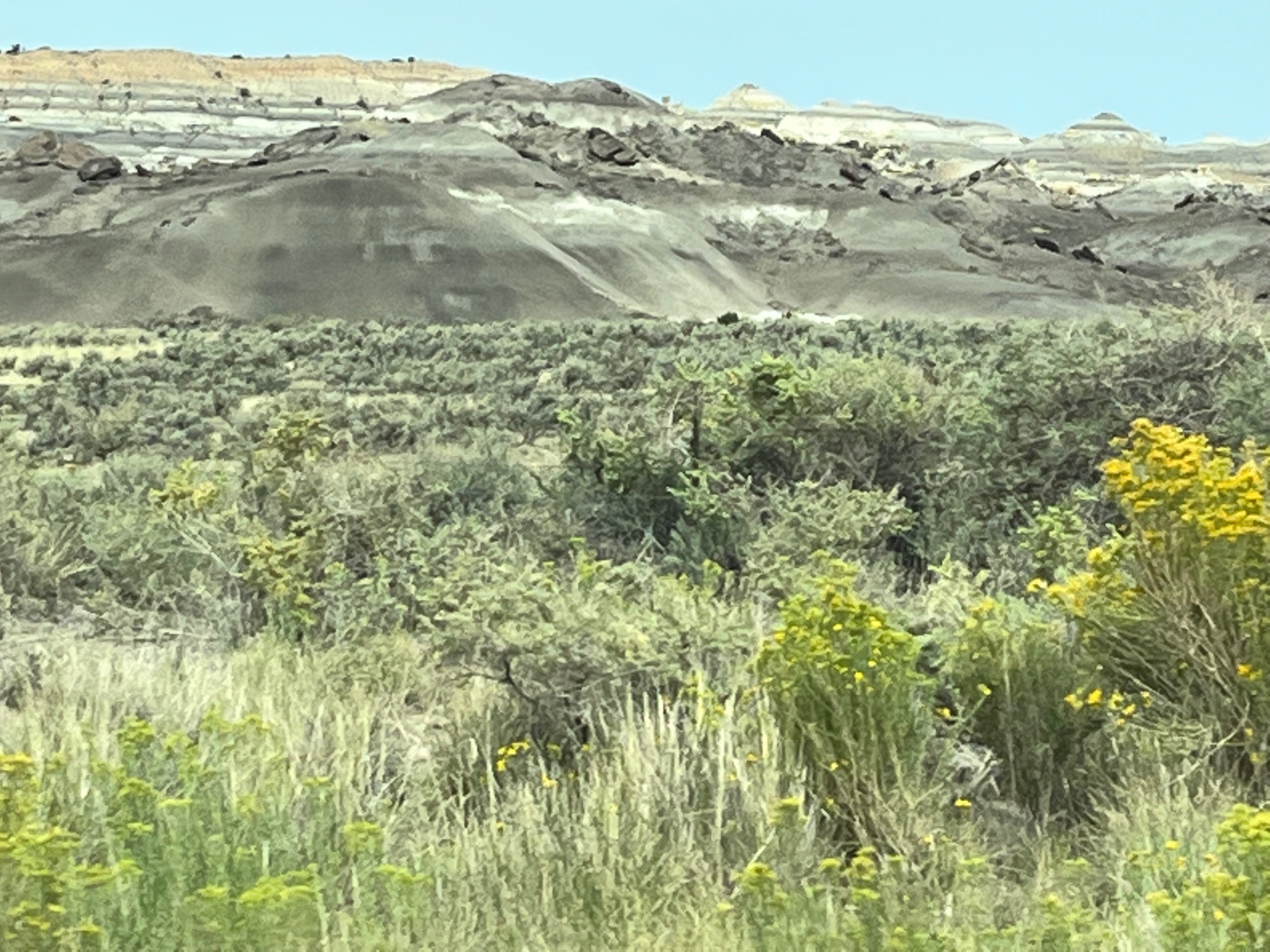
  • Though I don’t consider myself a photographer, I do like to take pictures. I find that, as long as I don’t get too caught up in the mechanics of it, it helps to notice the beauty around me and to solidify the memory in my brain. I snapped a lot of pictures on our trip through the southwest, many from the window of the car as we were speeding down the highway. Gary prefers to drive so I ride shotgun, doing the navigating, but mostly taking in the scenery. Here is some of what I saw as we passed through parts of New Mexico, Arizona and Utah. It seems to me that almost all of southern Utah could be a national park. I hope you enjoy the views.

    It is a spectacular country that we live in. I am grateful I got to see a portion of it – and that I got to see it with Gary, the best travel companion I could ask for.