Stories I Tell Myself

Linda Brody Bakst on Brooklyn, growing up, identity and more

  • I often begin blog posts by referring to an interview or podcast I listened to. This one is no exception. George Packer, a journalist and novelist perhaps best known for his writings on American foreign policy, was a guest on Preet Bharara’s Stay Tuned. Most of their discussion was about the status of the United States as a world leader (lots to worry about there, but not the subject of this essay). Toward the end of the interview, they turned to a subject of particular interest to me – the use of language and whether we are increasingly limiting ourselves by removing words that have negative connotations. It is a variation of the idea that it is problematic to be ‘woke.’  As I wrote previously, I strive to be woke and see it as a good thing. However, I thought Mr. Packer had a point. He wasn’t taking aim at ‘wokeness,’ per se, he was voicing his concern that, taken to an extreme, the idea that we can’t hurt anyone’s feelings could prevent us from identifying and solving serious problems. The example he gave related to words used to describe poverty – for instance, poor, impoverished, disadvantaged, at-risk. Apparently, all of these words/phrases have been identified as loaded and therefore to be avoided.

    First question: who is doing the identifying? Packer explained that many nonprofit organizations, he cited the Sierra Club as a prominent one, have come out with ‘equity guides.’ These guides provide lists of words that should not be used, and he said they provide clunky, bland alternatives (for example, instead of ‘paralyzed with fear,’ they substitute refused to take action). He characterized the people behind these guides as a small group of educated elites. He thought that though they were well-intentioned, they were doing more harm than good. Packer’s main point was that we need to be less worried about the words and more concerned about the underlying problem that the word describes. I was intrigued by his argument.

    I wondered if I would draw the same conclusion as Packer if I looked at the guide, so I googled a few. I also read his article in the Atlantic in which he fleshes out his argument (https://www.theatlantic.com/magazine/archive/2023/04/equity-language-guides-sierra-club-banned-words/673085/).

    The Sierra Club equity guide is a 30 page pamphlet which provides much food for thought (here is the link if you want to check it out yourself https://www.sierraclub.org/sites/default/files/sce-authors/u12332/Equity%20Language%20Guide%20Sierra%20Club%202021.pdf). Included in it are references to many other style guides (I counted 9 of them!) as source material.

    First, some context. Most news organizations and magazines have style guides – the Associated Press (AP) style guide is one that is frequently cited. If you write for those entities, they have established standards you are expected to follow. Organizations which put out frequent press releases or social media posts or are routinely called upon by the media to express positions are also likely to have one – that is why the Sierra Club has one, as does the American Cancer Society. The equity guide is an offshoot (part of) of the style guide.

    Another aspect of the context relates to the Sierra Club specifically. They, like many organizations, have a complicated history in terms of their relationship to historically marginalized communities. In the past the club has mostly been thought of as the purview of white, male environmentalists. As the country has changed, and as the damage done by climate change has hit more broadly, they have needed to reach a more diverse constituency. If they are going to do that successfully, they need to understand those communities and use accessible language. They have taken positions in the past that hurt those communities.  In addition, the original founder, John Muir, was known to use racist language. Thus, the organization felt it had some work to do to repair the damage. That said, equity guides are prevalent beyond this particular nonprofit and Packer believes that as it seeps into the mainstream, it will erode our ability to tell the truth.

    So, is there a problem with the equity guide, as Packer argues? My conclusion: Yes and no.

    The main impetus of the guide is to remind its users to put people first. I became acquainted with this notion years ago when I was cautioned not to refer to a person with diabetes as a diabetic. A person is more than any single aspect of their identity, whether it be their illness, disability, religion, occupation, etc. It may not seem like a big thing, but I believe it is meaningful and worth reminding folks.

    Another main point of the pamphlet is to ask people how they would like to be identified. It reminds us not to make assumptions based on appearance, and to use the terms the individual themselves would like to use. This applies especially to race and gender. To me this is common sense advice and simple enough to follow.

    They also ask writers to evaluate whether the descriptor is germane to the subject. Do we need to know the person’s age or race or gender? We are conditioned to include some of those characteristics, but it is worth asking ourselves the question. Is it relevant or does it just contribute to stereotyping? If we are trying to paint a picture of a person or a situation, maybe more specific adjectives would do a better job.

    So far so good.

    Where things get problematic, and where Packer has a point, is in the avoidance of words that make us uncomfortable. If we are talking about poverty, neighborhoods that are poor, we can’t use euphemisms. It is what it is. The folks who live in those communities know they are poor and/or working class. It won’t come as a surprise to them. The problem isn’t the words. The problem is, in my estimation, the assumptions that get made because of that condition. Just as we should not define an individual by a single characteristic (diabetic), we must not define a whole community by one issue (i.e., its crime rate or the percent who live below the poverty line). We often write-off those communities or try to ignore them. But, we must not ignore all the people who are trying to raise families, make a living, lead healthy, productive lives in those communities. We need to remember that in those communities lots of good things are happening – there is culture, art, humor, good food, etc., etc. No matter what words we ultimately use to describe poverty, it is the associated assumptions that are dangerous, not the words themselves.

    Words have power. We need to be mindful of how we use them. Sometimes we need to vividly describe a problem to move people to action. At the same time, we shouldn’t be careless about hurting folks. On balance, I think the equity guides are a good thing. Some of its advice borders on silly (I sincerely doubt that a person in a wheelchair would be offended by using the phrase ‘paralyzed with fear,’ or that a blind person would object to the phrase ‘blind rage’ – though it would be interesting to ask a group), but users of the guide can make their own judgments. In fact, the pamphlets make a point of telling readers to do that, especially in view of regional and local standards. The guides could be problematic if a given organization implements it as if it is law, without leaving room for nuance or the wisdom of the people on the ground. But, if it is a tool to raise awareness and offer alternatives, then it isn’t the bogeyman Packer sets it up to be. As with many things, the question of whether it is a good or bad thing depends on how it is used.

  • NOTE: Another view from the frontlines written by my husband, Gary Bakst.

    I saw a patient for a physical exam and there was a lump found on that exam.  It was not one of those lumps that make you immediately think the worst.  But it also wasn’t a lump that felt obviously innocent.  It would require investigation.  I was concerned but in my gut I thought this is probably going to turn out to be benign.  I also knew that what I needed to do was fairly straightforward.  The work up should be easy.  However, what should be easy is hardly ever easy these days.

    I knew he needed a CT of the pelvis with and without contrast to better understand what we were looking at.  However, when I searched our electronic medical record system, there was no option for a CT pelvis with and without contrast.  There was CT abdomen with and without.  There was CT abdomen and pelvis with and without.  There was CT pelvis without any specification as to whether or not it included contrast and there was CT pelvis with contrast.  I have no idea why they made the choices so weird.  Ultimately I decided they must have intended that the CT pelvis (without specifying) was without contrast.  So I ordered CT pelvis with contrast and CT pelvis. 

    This electronic medical record system was imposed upon our office.  We did not ask for it and we surely did not want it.  We had an electronic medical record system that was working very well but the larger organization that we are now part of felt it was important to get everyone in the organization on the same platform.  They switched us over a bit more than a year ago knowing they were going to again switch systems for the entire organization in early 2024.  We explained to them that our office is particularly busy and they did not have enough support staff to make this cumbersome system work in the setting of such a busy practice.  They weren’t impressed with that argument. 

    When the switchover came, they sent in people to help us with the transition and they were great but the underlying issues were too much to overcome.  Our office became less productive, we were less able to accommodate our patients and new referrals.  The larger organization lost money when they thought they would save money.  Some of our doctors and PA’s became frustrated.  Two have left and one went from full time clinical to half time clinical practice.  We have been able to hire a PA and a nurse practitioner and we hopefully have another physician joining us soon.  Still our productivity is well below where we were before the change.  Belatedly the higher ups came to understand that the transition was a failure and allowed us more staff to deal with it.  Unfortunately, that happened just as the economy got weird and you couldn’t hire anyone.  However, as time went by, we have been able to increase our staffing and it has gotten better. 

    We submitted the plan for the CT pelvis to the patient’s insurance company and they rejected it.  We appealed and they again rejected it and said I needed to speak to one of their reviewers.  Ultimately, they finally approved the CT.  Thankfully, it showed nothing terrible.  I had also ordered some lab work for this patient.  Previously, we drew the blood in the office and we also had a very efficient office lab that processed the blood work.  It was accurate and very fast.  The overwhelming majority of lab work was available to me on the day that the blood was drawn.  I would go home from the office and be able to review all of that lab work, call the people who had a problem and create letters to those who had good results so they could know they were fine.  Each evening, that day’s blood work was essentially all dealt with. 

    However, the larger organization closed our lab.  We still draw the blood but the plan was to send it to their lab to save money.  We explained that it would lead to delays and be less efficient and not allow us to do as well in dealing with issues that come up with lab work.  However, they felt very strongly that it would be a major savings in lab costs.  To be fair, the higher ups listened to our objections and we were able to speak with them at length about it.  But the decision was made and was not going to be undone.

    On the same day that they changed our electronic medical record system, they also closed our lab.  Specimens were to be sent to the hospital but at the same time, the pandemic related supply chain issues got us. There was a shortage of vacutainer tubes needed for blood draws so we had to send all of our labs to Lab Corp except for those patients who have Blue Shield which does not accept Lab Corp.  Lab Corp did pretty well getting us timely results.  They took one day longer than our lab but they were not too bad.  We lost much of our ability to have the lab add on tests as needed or re-run results that were questionable.  Still, it was a moderate, not severe, drop in our function.  For the Blue Shield patients, they had to go to either St. Peter’s labs or Quest labs, both of which were quite slow.  Sometimes we just never got any results and we had to call for them.  Sometimes patients would tell me their results off their portals for those labs and that is how I found out how they were doing.  

    Finally, in November, the shortage of vacutainer tubes was over and our hospital lab said they were ready to accept our labs rather than sending them to Lab Corp.  But they were not ready.  We saw labs taking 4 or 5 days to come back.  In quite a few cases, by the time they got to our specimens, they had timed out and it was too late to run them.  For reasons I cannot fathom, they denoted this as “lab accident” and that showed up on patient’s portals.  Patients were naturally concerned about the lab accidents involving their results.  I started sending them to Lab Corp again until the hospital was able to get enough staffing to actually process the labs properly.  They are finally doing better but not great.  

    In my patient’s case, there were lab abnormalities that required follow up.  I asked them to add the follow up labs from the blood that we had already collected but they could not do so.  Previously that would have been easily accomplished.  The patient came in for repeat blood work and they did much of what I asked for but somehow left out the most important follow up test.  I am capable of making mistakes but I had correctly ordered it-they just didn’t do the test.  Fortunately, in this case, they were able to run it and it also turned out to be good news. 

    I have spent a fair amount of time criticizing the larger organization that owns our practice but I want to make the important point that they are actually pretty good as larger organizations go.  The problem with them is that they are a larger organization.  Speak to doctors anywhere in the country and you will hear similar stories.  Mostly you will hear worse stories.  These guys are really only guilty of being a bit too smart to realize that sometimes when something works, you should let it keep working rather than fix it.  Other organizations do far worse and have more concerning priorities.  The main point is that we now live in a landscape of practices owned by large organizations in which the decision makers are removed from the people taking care of the patients.  They have their own data and jargon and don’t answer to us.  Another part of this is the insurance companies which are increasingly difficult to deal with.  Then there are the ridiculous costs of pharmaceuticals and the shortages of all kinds of common products from blood pressure medications to amoxicillin liquid. 

    Ultimately, this patient is well and that is the most important piece of news.  And in the end, we were able to get done what we needed to get done.  But, comparing what it took to make it happen to what that would have involved just a few years ago, the difference is quite stark.  People talk about the problems in health care these days.  You are not imagining them.  This was a fairly straightforward case.  Nobody was hospitalized; nobody had surgery.   It was just a CT and a couple of labs.  But it shouldn’t be this hard. 

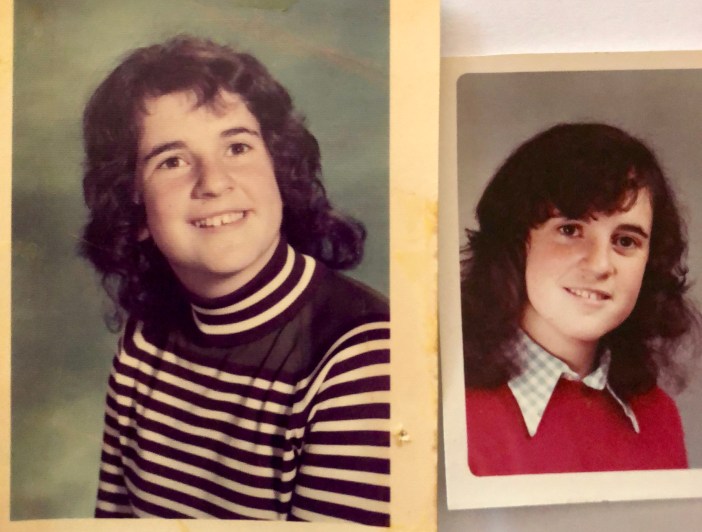
  • Me in 7th and 9th grade
    me more recently

    I am not a conventionally attractive woman. I don’t write that to fish for compliments or to elicit sympathy. It is a fact, and it has complicated implications. I am reading a memoir, Crying in the Bathroom by Erika Sanchez and in the course of telling her story as a Mexican-American woman who has defied cultural norms, she writes of her numerous experiences being harassed, and in some cases (nearly) assaulted, by men. She writes about her problematic relationship with her appearance. I have read many similar accounts by women, especially as we processed all that was revealed from the ‘me too’ movement. I have heard first-hand stories from friends, too. I believe them and they are painful and emblematic of the reality of toxic masculinity. It has not been my experience, though, and that leads to some complicated feelings. In a bizarre way it makes me wonder what is wrong with me, and am I alone is not having those experiences?

    That is not to suggest that these experiences are all attributed to the looks of the women involved, or to blame the victim for being attractive! No matter what you look like, you should not be subjected to abuse. I am well aware that 80 year old women get raped, as do ‘unattractive’ women. I also believe that systemic sexism exists. Strong women are often discriminated against in relationships and in the workplace – I have seen that with my own eyes and believe I was the victim of it. That has less to do with appearances and more to do with societal expectations about women’s behavior and/or generalized misogyny.

    I also know that research shows that resumés with women’s names or names associated with African-Americans are passed over in favor of men or those with what are assumed to be white names. This has implications for job opportunities, access to loans, among other things that shape power structures in our society.

    Appearances, meeting the culturally defined standards of beauty, are so important. I believe that one’s experience of the world is shaped to a more significant degree than we’d like to believe by how we look, and this is true even as an otherwise privileged white woman. From the reaction of salespeople to service received when lodging a complaint, one’s looks can help or hinder. It might be true for men too, but I doubt to the same degree.

    I have been out and about with my granddaughters, both of whom are or were especially adorable babies (one is well past the baby stage). I know you are rolling your eyes and I get that – I am their nana, after all. I know I am not objective, but I am basing it on the reaction of those who walk by. Often people stop to comment or coo at them. I appreciate babies, though I almost never stop to comment or coo unless it is the child or grandchild or someone I know. I probably do smile more in recognition of a cutie pie. (Now that I am thinking about it, I will make a point of smiling at all of them. I hope I do that already, but honestly, I’m not sure.) Sometimes if a baby is odd looking, they can have a unique charm. All deserve love and attention regardless. The reality is the world doesn’t react equally. When I was a baby, I had crossed eyes. They were glued to my nose. It wasn’t successfully fixed until I was five and surgery didn’t totally correct the problem. I think people responded accordingly. I absorbed the message that I wasn’t pretty or notable. We take in those messages long before we have the language to talk about it or understand it.

    Does this all mean that we shouldn’t appreciate or comment when a child or a person is especially beautiful? Would we be losing something if we decided that it was inappropriate to say, “what a cute baby!” or telling a woman she looks beautiful?  I don’t think we need to go that far. Maybe we should simply be more mindful when it comes to giving advantages to some over others based on something so superficial.

    When the ‘me too’ movement started I had some interesting conversations with friends. I grew up in a time when some things were taken for granted and accepted. One friend made the comment that you were almost insulted if a guy didn’t try to ‘cop a feel.’ She talked about the kind of flirting and ‘handsy’ fooling around that went on when groups of guys and girls hung out. No one wanted to be sexually assaulted, but a level of sexual play was tolerated and perhaps expected. I understood what she was saying, though, again it wasn’t my experience.

    I know many women who were fed up with or frightened by catcalls from men. Who wants to be objectified while they are walking down the street, or any time? My mother, again the product of another generation, thought it was flattering. I know if it crossed the line, where she felt threatened, it wouldn’t have been appreciated. But, she didn’t see it as that big of a deal. Though many women talk of this as ubiquitous, again, it was not so much my experience. If it happened, I probably assumed it was directed at someone else, or I was oblivious. I do recall a drunk guy once weaving past me saying, “Look at the breasts on that bitch!” I was impressed he called them breasts. Have catcalls stopped? Have we moved beyond that crude behavior? Maybe, or perhaps we have ‘progressed’ to silently leering.

    I imagine it can be confusing for those blessed with beauty, too. It isn’t based on anything earned, and one might resent it or feel frustrated that their appearance gets the reaction, not other talents or intelligence. Others may be quite comfortable enjoying the benefits, though I’m sure they would be loathe to admit it. Either way, it isn’t fair.

    My point in writing this is two-fold. First, though I did not experience the hostility or harassment other women talk about, it does not make it untrue. We need to listen to others and understand their experience but that is a two-way street. I was listening to an interview with an Asian comedian. He talked about growing up in Ohio. He did not feel discriminated against. He was almost apologetic about it. He knew it happened to others, but he didn’t feel like he was subjected to it. His perception helped shape his appreciation for America. He shouldn’t feel guilty telling his story. I shouldn’t feel guilty that my experience of men hasn’t been that toxic (though I will complain bitterly about feeling limited in the workplace, having my ideas coopted or shut down). We benefit from understanding the range of human experience. Similarly, just because I wasn’t subjected to disrespect or harassment based on my appearance, doesn’t mean I get to dismiss the experience of so many other women. There is room for everyone’s story, and we need to open our hearts and minds to hearing them.

    My second reason for writing this is to bring attention to the outsize effect of looks. We place far too much emphasis on appearances.  Standards of beauty are very limiting, and the implications are important. Being conscious of a predisposition can help us to work to do better. This applies in many contexts. I think teachers, in particular, may be vulnerable to implicit biases based on appearances, and they are so powerful in our lives. We talk about racism (not enough, and we haven’t fixed it by any means, but a lot is written about it) and gender, but this is even more basic. Being conventionally pretty shouldn’t be that important.

  • Have things changed?

    Do you find yourself asking friends or family that question? It has come up in a few different contexts. The other day I was visiting with a friend. She, like me, is involved in the care of her elderly mother who has faced a myriad of health issues. She was telling me about her mother’s frustration with her television set – sometimes it works, sometimes it doesn’t, sometimes she can get the channels she wants, sometimes she can’t. I know from experience with my mom it can be hard to sort out the source of the problem – is it the equipment? is it the technology? Which part of the technology? Is it our mother? I am not terrible when it comes to troubleshooting cable, the internet, and equipment, but I am no tech geek either. I can manage, but how is an 89-year-old or a 92-year-old supposed to navigate it? I have an idea! Senior living centers should have staff specifically devoted to tech support (separate from maintenance) – someone residents can call when their remote no longer changes the channel or their iPad freezes. It would save so many frustrating calls to family members who aren’t nearby or can’t just drop in and fix it. I imagine many people would be willing to pay something extra for the service.

    In an effort to make things better, my friend went to Best Buy and bought a new t.v. and arranged for delivery. While I was visiting with her, the t.v. was supposed to be delivered and installed. Everything that could go wrong went wrong. There must have been six phone calls before it was finally determined that the person showing up to do the installation was not the same person who was delivering the set. The installation guy arrived before the t.v., and they had no record of the delivery being scheduled!

    In between being beyond annoyed, we had to laugh. The whole thing was preposterous. My friend was sure she had been clear about the delivery address (at first the person on the phone was heading to her house, which is not where her mother lives). Nothing got accomplished – leaving my friend with another series of telephone calls to straighten it out.

    Was it always so complicated? Were deliveries routinely screwed up? These days I am so relieved when anything goes as planned. But, maybe I’m just older and more impatient. Maybe I’m focusing on the errors and not all the times things happen the way they should.

    I have raised the question before – does all the technology we use make our lives easier? Or, does it introduce more opportunities for things to get screwed up – and make it more difficult for us to get to the bottom of the problem to fix it.

    I am responsible for overseeing my mother’s medical care. It makes sense that I play that role since my husband is a doctor and neither my brothers nor their spouses have that expertise. The one problem with this is that I live about 3.5 hours away from Mom. Generally speaking, I am able to work things out to accompany her to appointments. The thing that has been more challenging has been keeping her medicines and medical supplies in stock. I can’t tell you how many times there have been problems. Sometimes the issue is one of supply – the pharmacy to which the prescription was sent (electronically) is out of stock of the particular drug. Do they call me? No, apparently they communicate with the doctor (or maybe, depending on who you believe, they communicate with no one). I have explained to everyone and anyone involved in Mom’s care that they should call, email or text me – in fact in many cases my number is the only one they have. And, yet, I still don’t get notified.

    And, when did supplies get to be an issue? I had a conversation with my daughter the other day while she was in search of eye drops, amoxicillin and children’s Tylenol for her baby who had conjunctivitis and an ear infection. She spent hours on the phone calling pharmacies. Finally, after a whole lot of back and forth with pharmacists and the doctor’s office, she called me triumphant. She scored the needed drugs!

    Going back to my travails with keeping my mother’s supply of medications.: another issue is, not surprisingly, insurance coverage. I am told that her sensor (Mom has diabetes and finger sticks are just not practical anymore) is not covered by Medicare. Then when the drugstore receives the prescription for it, perhaps reasonably, doesn’t fill it (figuring the patient will likely want an alternative that is covered) and sends an email to the doctor letting her know. Eventually I get informed, and I tell them, just fill it. This happens every month. I believe that the sensor probably could be covered but I would need to appeal the decision and go through the hoops and loops. And they’d probably make me do it every time! I think they are counting on wearing me out – and they have been successful. I don’t want to go down that rabbit hole; I just pay for it. Fortunately, it isn’t crazy expensive.

    There are so many layers to this. Sometimes I think systems are deliberately set up to not serve us. Or perhaps, as drugstores and doctors’ offices are bought up by corporate entities, the systems are designed, and the decisions are made too far away from where the service is delivered. Something is lost. When entities were smaller, they could be more responsive. Maybe that accounts for some of the loss in customer service.

    Or maybe things aren’t actually that different. As I consider this, I wonder if I’m just an old fogey. People are people, after all. What do you think?

  • Note: Today is my son’s birthday. Today’s essay has nothing to do with that, so I want to give a shout out to him here. Daniel, you are a treasure and I love you beyond measure. See what I did there – I was channeling your father. Wishing you a wonderful day and an even better year ahead with your fabulous family!

    Last week Gary and I were visiting with family and friends in Florida. Several different people made the same comment: ‘I don’t know what ‘woke’ means. I don’t get it. What does it mean?’

    It wasn’t entirely clear to me where the folks raising the question were coming from. We were in Florida after all, where, I imagine, the word gets bandied about regularly –  most often by Governor DeSantis who uses it as a punching bag, a politically expedient bogeyman. In those conversations I didn’t want to pursue the topic too far because we were having a relaxed, enjoyable visit – we were on vacation. Now I am back home, and the question lingers, and I feel unsatisfied in not addressing it.

    I believe I have something to offer to the discussion. I’d like to suggest an analogy. Let’s say you have a longtime friend, someone you’ve known since childhood, whose nickname was Shorty. You and his family and friends have always called him that. Now, as an adult, this person, whose given name is Joseph, tells you they don’t like the nickname and would prefer to be called Joe. I would hope, as a sentient human being, who respects the years of friendship, you would say, “I didn’t realize it bothered you. I will call you Joe.” To my mind, that is an example of being ‘woke.’ You have heard someone’s concern and you have responded accordingly.

    You might be tempted to respond by saying, “We call you Shorty with affection. It’s cute. You aren’t short anymore, what’s the problem?” You may be thinking, ‘it’s no big deal, why is he making a thing of it.’ But, while you may have those thoughts, hopefully you would resist giving voice to them and respect their wishes.

    I think a ‘woke’ person responds with an open mind, is willing to hear a person’s concerns and change the words they use in accordance with their wishes. It is really that simple.

    Human behavior, though, isn’t that simple. At the risk of stretching the analogy too far, I’d like to take a closer look at the dynamic.

    The first step is Joe being willing to say how they feel. It may have taken years of feeling insulted or uncomfortable for him to finally tell people to stop calling him Shorty. I don’t know about you, but I want to be a person that Joe can approach. I want to communicate to my friends and family that I am open to hearing what they need. I don’t want anyone to worry that I would make fun of them or be dismissive. To me that is part of being ‘woke.’

    Let’s say some time passes and the next time you see Joe you call them Shorty – old habits die hard. Here’s another opportunity. It is possible that Joe loses it and gets angry. To my mind that would be unfortunate, perhaps understandable, but an extreme reaction. Let’s assume for the moment, he doesn’t react that way, but instead just gives you a look that communicates his displeasure. Hopefully you would apologize, saying that you will try harder to get it right and please be a bit patient. In that situation, if you offer a sincere apology and offer to do better, you are ‘woke.’

    Now instead of this operating on a personal level, expand the idea more broadly. Representatives of a community disavow a term that has long been in use. Why not stop using it? Not every single person in that community might agree, some may not find it insulting. Communities are rarely monolithic. But, when a consensus emerges, why not respect it?

    Similarly, when we come to understand more about our history, for example we learn more about treatment of Native Americans at residential schools, we need to acknowledge it. It doesn’t displace everything else we know, it doesn’t necessarily become the focus of the narrative of the story of our country, but it can’t be swept under the rug and ignored either. There is a balance. Our children are capable of understanding that – the good, the bad and the ugly. Again, there may be extremists who want the story of America to be shaped entirely by slavery. I think that would be a distortion. Thomas Jefferson and George Washington should be examined as the complex figures that they were – the great ideas and leadership they provided along with the things they got wrong.

    The truth is, we shouldn’t need concepts of ‘woke’ or ‘politically correct.’ If people exercised compassion and empathy, we wouldn’t. If people acknowledged that there is always more to learn about history, about cultures other than our own (and even our own), we wouldn’t need ‘wokeness.’ Sadly, many people are not capable of that without being ‘policed.’

    There is no doubt there are people who overreact. There are those who are unwilling to be forgiving of others who slip and use outdated language, or of those who simply haven’t kept up. It takes two to tango. There is nothing gained by being so strident and rigid. Some of that may come from a lack of trust, from not believing in the sincerity of those who profess to be trying. I come back again to a tenet of Anti-Defamation League training – which says that you should start by assuming the best of intentions on the part of the other person. They may prove unworthy of that assumption but start by giving them the benefit of the doubt.

    Based on my understanding, I see nothing wrong with being ‘woke,’ or ‘politically correct.’ It is something I work on.

  • I like Trevor Noah. Though it was a little traumatic for me when Jon Stewart left the Daily Show, I think Noah did a good job. I appreciated his voice (his take on things), intelligence and talent. He is a good interviewer, quick on his feet and charming. When he performed locally, Gary and I went to see him, and we were very entertained. I laughed a lot. I recently read his memoir, Born a Crime, and I still appreciate his viewpoint, he has had unique life experiences as a mixed race person who grew up in South Africa as apartheid was being dismantled, but I will admit to discomfort with some passages of the book He recounts three experiences that troubled me.

    I don’t want to focus on those three incidents without first acknowledging the insightful and compelling parts of the book.

    It is quite startling to understand the reality that is reflected in the book’s title. Trevor Noah is the child of a Xhosa woman and Swiss father. Their union, they were not married and couldn’t be, was illegal in South Africa in 1984. Thus, his very existence was the result of a criminal act. It is hard to wrap my brain around that, and to realize that miscegenation was decriminalized only a couple of decades before that in the United States– in my lifetime. To some that may seem a long time ago, but when you consider how long it takes to really change hearts and minds, it isn’t that much time.

    Noah details what that meant for his family. He couldn’t walk on the street with his father. Even walking with his mother was complicated since to some Noah appeared white or ‘colored,’ but not black like she was. He spent much of his childhood playing indoors.

    Anyone who has watched Trevor Noah knows that he has a great facility for languages (he does uncanny imitations of different accents, too). He talks about the importance of language and how it acts as a double-edged sword. Language carries culture and values in its idioms and rules. It can bond people. He points out, though, that in South Africa, as of the writing of his book, there are 11 official languages, it can also be something that divides people. They may not understand each other and may not make the effort to understand each other. He recounts a number of instances where his ability to communicate in different languages got him out of trouble or helped make a connection.

    He also writes insightfully about the cycle of poverty and how difficult it is to move beyond the circumstances one is born into. The pressures to conform which play out in a myriad of ways and the systematic barriers combine to keep people in their places. His mother is an unusual person, she was someone who saw beyond the imposed limitations and refused to be constrained by those expectations. Ultimately, Noah finds his way to a different life, but it takes him a bit to decide for himself that he wanted to do that. It is an interesting journey.

    The book does not cover his emergence as a comedian in the United States. It only mentions his success in South Africa in passing. The focus is on his experience growing up as someone who navigated different worlds – the challenges he faced and the tools he used to do it. He also shares the impact that domestic violence had on him as he writes about his mother’s experience with an abusive man. It offers a compelling story.

    One incident that left me uncomfortable was his cavalier response to the killing of his cat. He was a young child at the time, but older than 5. He had a black cat. He writes that he wasn’t that attached to it (given the nature of cats) and to some in his neighborhood black cats were associated with witchcraft. So when he finds it dead (and evidently tortured – I won’t go into details), he isn’t that surprised or upset. I found that disturbing. I would hope that one would have feelings for any creature that had been harmed, much less tortured. I couldn’t let him off the hook just because he was young. It struck me as odd, even if there are cultural differences in attitudes towards pets and cats in particular. If it is a reflection of a cultural difference, I can’t help but judge it.

    Another thing that I thought reflected poorly on him involved an escapade with a close friend. They found a store in the local mall that when it was closed, and the grate was down, they could still reach in to snatch chocolates. They did this regularly until one time security saw them and gave chase. He and his friend ended up running in separate directions. Noah got away and his friend got caught. What bothered me is that Noah made no mention of feeling bad for his friend, in fact that friend is not mentioned again in the book. He was about 13 at the time. Maybe that was just a matter of editing – not closing the loop on that experience. But that lack of sympathy for his friend troubled me more than the stealing.

    You may look at those two incidents and chalk them up to youth and credit him with writing honestly about his childhood. I appreciate that he wasn’t painting himself as some kind of hero. But, it raised questions about his capacity for empathy.

    Part of the narrative he is telling is how endemic cutting corners and flouting the law is (buying and selling stolen items was common) and how it took him a while to see it and decide to go a different way. He does ultimately distance himself from those activities, but it took some close calls and hard realities to get him there. In offering insight into that, it is enlightening, and one can see that not everyone would or could emerge successfully from it.

    The third episode was the most disturbing because he is writing this book years after the fact and he could have added a more informed perspective if he chose to, but he didn’t. The title of the chapter is “Go Hitler.” He explains that a buddy of his, who was a skilled dancer, had the first name Hitler. Apparently in South Africa, in the black community, this was not that unusual of a name (wow!). Noah goes on to say that their awareness of Hitler’s atrocities was limited – it wasn’t explored in school – he was seen as more of a strongman than as a perpetrator of genocide. While this is distressing for me to learn, it is useful to understand.

    One of the things Noah did as a teenager to earn money was to DJ. He had a crew of dancers that performed with him, Hitler being the star dancer. Their final number involved him getting in the center of a circle and the other dancers and Noah chanting, “Go Hitler.” This didn’t trouble anyone when they did their act in the townships. They were invited to a competition at a Jewish day school, and they were doing fine until that number. Noah claims he didn’t understand why the atmosphere changed, why they pulled the plug, why they got yelled at. He thought it was for their suggestive dance movements. He was outraged that they were treated that way – since they had been invited specifically to showcase cultural diversity.

    Writing about this years later, he doesn’t show much empathy or understanding. He says that the reason we know there were six million Jews killed is because Germany kept meticulous records. In Africa, when colonialists abused and killed native peoples, no records were kept, thus we have no numbers. He seems to suggest that if those records were kept, our attitude would be different. Maybe it would be. We should have more understanding of the brutality and exploitation inherent in the colonial system in Africa. That is a valid point, but it doesn’t negate the suffering of the Jews in Eastern Europe. It doesn’t mean that the students and staff at the Jewish day school shouldn’t react to hearing “Go Hitler.” Just reading the chapter title sent shivers down my spine.

    I am not interested in comparing atrocities or competing to see who had it worse. One would hope, though, as a member of an oppressed, vicitimized people, Noah’s response would be compassion. How about, having learned now about Hitler’s evil, now understanding the nature of the genocide he would include a statement such as, “Now I understand their reaction; then I didn’t.” He doesn’t write anything of the sort.

    I was not aware, until reading Noah’s book, about the history of South Africa. It was not included in the curriculum in my high school’s global history class. I am not an expert having read his book, after all it is one account. But, my eyes were opened to the reality of apartheid (not that I didn’t understand it was an unjust, despicable system before) and the complications involved in dismantling it. I also am now more aware of the different tribes that comprise the black community. The history of that country, once again, illustrates the capacity of human beings to be evil, selfish and ignorant.

    I recommend reading Born A Crime. It is compelling and insightful. It raises challenging questions about how we educate ourselves. It is unrealistic for us to learn the history of every country. Clearly, we have problems agreeing on the history of the United States and what to teach our children, never mind trying to cover the history of the nations of the world. There aren’t enough hours in the day to learn it all. But, it speaks to the need to continue to learn, to continue to read and to be open to different perspectives – even when it is troubling.

  • Last week’s blog entry that I entitled Self-Care drew some interesting comments that got me thinking. Gary, my husband, who is also a doctor, pointed out that taking care of oneself was a good investment of time and energy. A number of the things that I identified as self-care were doctor recommendations. I can see his perspective. Rather than resenting the time it takes to do the physical therapy or whatever it is that has been prescribed, one could look at it positively. Time spent making yourself healthier, perhaps pain-free, or with improved mental health, is a good use of one’s time and better than a lot of alternatives. Once again, reframing something has its benefits.

    I also received useful feedback from Leah, my daughter. She argued that activities I was including in self-care didn’t necessarily belong there. She suggested that self-care can be thought of as activities that ‘fill your cup;’ things that restore your spirit. I like that notion. While I didn’t specifically list brushing my teeth as part of my self-care routine, it was included as part of what I do to get ready in the morning. I don’t think that should really count as self-care, except in the broadest sense. It is necessary to preserve my dental health but doesn’t do much to restore my spirit. Although, replacing morning breath with minty-fresh breath is a big improvement – I think I’m getting too far into the weeds here. It is safe to say I am over-analyzing this.

    Back to the main point: Even if I take a broader view of self-care than the one Leah offered, I like the exercise of thinking about what is restorative. It is helpful to be mindful of the activities that energize us because when we do have a bit of time to spare, we can make a good choice as to how to spend it. Sometimes I take the path of least resistance – turn on the television and vegetate. There is a role for that, occasionally. But, more often than not, spending time on the couch watching something mindless is enervating. I feel worse, not better, afterwards.

    What does make me feel better or more full? First and foremost, spending time with my children and grandchildren. Sometimes that isn’t possible so making a plan, having something on the calendar, so that I know when I will see them is wonderful. It doesn’t have to be complicated – we don’t need to be doing anything special – actually the less hectic the day, the better. A couple of weeks ago, our son’s family visited, and we went to the playground, came back and hung out. Our granddaughter set up an obstacle course on the living room floor (it involved navigating a path through pretend lava – paper – and hopping over pretend rocks – crayons) and we took turns. She is four years old and she delighted in first showing us what to do, then telling us if we were successful. I loved it. What better way to spend time?

    Another thing I find energizing is travel. While it is fabulous to take trips overseas or to cities or landmarks in the United States, again, it doesn’t have to be that elaborate. I’m happy to explore the hilltowns a few miles away, or take a ride in the Catskills. Anything new is interesting to me and if we can find some natural beauty, a lake, some mountain views, all the better. I am happy just to take in the scenery. Of course, I wouldn’t turn down a trip to Paris or the Canadian Rockies, but clearly those are rare. The trip we took last fall to the national parks in Utah and Santa Fe was sustaining. I look at the pictures every so often and it brings back the exhilaration of seeing those beautiful places. Being in nature is the best way to restore my equilibrium. When my dad was in the hospital in Florida, and he was terminally ill, I either went to sit by the ocean for a few minutes or walked in the bird sanctuary most days and just breathed. If I hadn’t done that, I don’t know how I would have coped.

    Reading, particularly a good novel, makes the cut as self-care, too. Not all my reading experiences, though, fall into this category. I have read stories that annoyed me. Why I stayed with the book is a reasonable question, but sometimes even when the main character is exasperating, I still want to find out what happens. Also, if I am reading non-fiction, it can be challenging to find the right balance between what is stimulating to learn about and what is so disturbing that I have to close the book for a while before continuing. Reading anything about the Trump administration would not fill my cup! I guess reading can be a bit complicated.

    I can’t leave this topic without also mentioning art museums – I love them! They can be small, like the Fenimore in Cooperstown or Albany’s own Museum of History and Art, or huge like the Metropolitan in NYC, I find looking at the art in relatively calm, quiet spaces to be relaxing and energizing at the same time. Add an outdoor sculpture garden and I am in my element. I don’t even have to love the art itself, though if I can find a few pieces that speak to me that’s all the better. Walking through rooms where the focus is on what people have created and taking it in, is delightful. I think some people may get hung up on thinking they are missing something if they don’t ‘get it.’ I try not to worry about that – I just like looking and generally will find something that is either just interesting or moving.

    As I consider this, I realize that I don’t find spa treatments all that fulfilling. The idea of it is more appealing than the actual experience. I like the end result of a pedicure or manicure, but the process just doesn’t do it for me. On the rare occasion where I have gone with a friend or with Leah, I have enjoyed it much more, but otherwise I would rather take a nice walk.

    What do you find restorative? Have you thought about it? We might be making certain assumptions about what fills our cup based on popular culture and it may not really work for us.  It would be great if readers would share.

    From a local winter walk in the woods – Five Rivers
    From a local walk in the woods this past Fall – Thacher Park
  • If I spent all my time taking care of myself, following all the doctors’ directions, therapists’ advice, self-help manuals, I wouldn’t have time to actually DO anything! And I am a retired person and my children are adults who are living on their own. If I had a full-time job and young children, it would be nearly impossible.

    Since last May I have been dealing with chronic hoarseness. After a number of exams and scoping of my vocal cords, I was referred for speech therapy. Fortunately, that testing didn’t find any growths, but noted a combination of the effects of reflux and muscle compression. The speech therapist did a thorough evaluation and recommended vocal exercises. She also gave me papers with foods to avoid (two pages worth) and foods that are encouraged (a small list). I also received some stretches to focus on loosening the neck muscles. I am supposed to do the stretching and vocal exercises 3 to 5 times per day. The protocol takes about 5 to 7 minutes. So far, I have been managing to do it twice a day and feel pretty damn proud of myself.

    Another part of the routine recommended by the ENT, to help with congestion, is to use a netti pot and saline spray. I do the nasal rinse once a day and the spray twice. These take another 5 minutes. I’m also supposed to use a humidifier. Setting that up and taking it apart each day is another 5 minutes.

    All of the stuff to try and deal with these throat and ear difficulties add up to at about 45 minutes each day.

    In theory, these are the other parts of my self-care routine:

    • Waking up – brush teeth, take daily pills, wash face, comb hair – 10 minutes
    • Make the bed – several advice gurus stress the importance of starting the day by making the bed – I subscribe to that idea – 3 minutes
    • Exercise (at least 20 minutes but I actually do 35 either walking outside or on the treadmill) – if it is vigorous enough, it requires showering after, so add another 20 minutes. I am quick in the shower, so 25 minutes allows for getting dressed, too. I also play tennis once or twice every other week, each time 90 minutes (add another hour for driving to and from the courts).
    • Meditation – 10 minutes
    • Shower or bath – if I haven’t exercised and showered, then I will do that and take more time with it – more like a half hour
    • Moisturizing – face, skin, nails – 10 minutes
    • Journaling/affirmations/gratitude journal – 15 minutes (at least)
    • Eating healthy meals (with preparation) – I don’t know how long, but way longer than grabbing fast food. For three meals, it has to be at least 2 hours each day, including the time to eat and clean up.
    • Getting enough sleep  – 8 hours

    Some of the things on the list above are aspirational.

    I can’t accurately add up the time for those activities because it is so variable, but it is a large chunk of the 24 hours. And, again, that is as a retired person who only takes 10 minutes to get ready in the morning! Most people take longer. I wear no make-up. I don’t do anything special with my hair. I spend next to no time picking out clothing. All of those things could be part of a person’s self-care regime, requiring more time and attention.

    My exercise routine is minimalist – better than nothing, but not the amount of time a truly fit person devotes to working out. For someone like, let’s say Jennifer Aniston, it is a full-time job to look like she does. Not that I would choose her as a role model. I don’t make a living on my looks and never did. Unfortunately, though, we live in a world where we set up unreasonable expectations of what we should look like, but the vast majority of us can’t take that much time to nurture ourselves.

    Many people face other types of health challenges that require more daily attention. I’m very lucky. Other than this annoying thing with my voice, and the usual minor aches and pains that come with age, I am healthy. In the past I have had occasion to go for physical therapy (for a frozen shoulder or a tweaked back) and there were stretching exercises prescribed. Those kinds of regimens can be hard to stay faithful to.

    So, what is my point? First, that doctors and therapists of all sorts need to be realistic and work with folks to figure out a program that can be followed. Second, we need to be honest with ourselves – what are we willing to do? What do we have time to do? Do we believe in the regime that is being prescribed? Lastly, let’s not expect perfection. There’s nothing good about beating ourselves up over falling short of our goals – that can lead us to spiraling into negativity and being more self-destructive.

    I want to be able to sing to my grandchildren – that is my main motivation for working on my voice. That and I don’t want to annoy people with my constant rasp. My throat doesn’t hurt, my voice just sounds bad. In a more general way, I want to be proactive about my chronic congestion to help lessen the number of sinus/ear infections I get and preserve my hearing. I will try to stick to the program, but I will also try to follow my own advice. I beat myself up enough about all kinds of things. I don’t need to add this to the list.

    Other aspects of self-care: relaxing, reading a book, drinking coffee and spending time with my kitties-now kitty 😦
  • I have read quite a bit about the Holocaust. Recently I read Eichmann in Jerusalem by Hannah Arendt, which reported on the trial in Israel of the Nazi who was responsible for the transport of Jews to concentration camps. I also read Fugitives of the Forest by Allan Levine which profiled Jewish Partisans who fought and survived in the forests of Poland during World War II. Any reading about the Holocaust is challenging because you can’t help but be overwhelmed by the evil that was perpetrated and these two books are no exception. It is hard to wrap one’s brain around the breadth and depth of cruelty and viciousness.

                This past week offered an opportunity to look at another dimension of the Holocaust, one that reminds me that in the midst of evil, people can express their humanity, they can still be moved to affirm their faith in life by creating beauty. On Thursday evening I attended a concert at Carnegie Hall in New York City that included music, song and poetry created in the ghettos and camps during the Holocaust.

                The evening was conceived of and co-produced by a friend of my brother Mark, Ira Antelis. Ira became aware of a series of songbooks published just after the war ended that memorialized music created in the camps and ghettos. He wanted it to be heard, to bring awareness to its existence. It was originally performed in a Chicago synagogue last April, and they brought it to New York to commemorate International Holocaust Remembrance Day. The evening was appropriately entitled “We Are Here.” Broadway performers, renown cantors and elite musicians contributed their talents. Each piece was introduced by a prominent individual, for example David Gill, German Consul General to the United Nations, another by Cardinal Timothy Dolan, Archbishop of the Diocese of New York. These introductory remarks gave context: who the composer and lyricist were, some information about them was shared and where they were when they wrote the piece.

                I didn’t know what to expect of the music. One might imagine that it would be quite dark, and some of it was. But, most of it wasn’t. The music was beautiful, often hopeful, sometimes even upbeat. The lyrics could be sad, reflecting the reality of the pain and loss they suffered. But, all of the works represented acts of defiance. The Nazis may have wanted to wipe the Jewish people and culture from the face of the earth, but these artists were leaving a legacy. Perhaps it was an expression of their faith, or a need to reclaim their humanity by creating beauty in the face of ugliness.

                One particularly meaningful piece for me was the Partisan Anthem (Zog Nit Keyn Mol), “Never Say You Have Reached the Final Road, We Are Here,” which gave its name to the whole program. When we went through my in-laws’ house several years ago as it was being cleaned out in preparation for sale, I found a notebook with pages of Yiddish writing. On one of our visits with Paula and David, we hoped they could tell us what it was. It looked like it might be poetry, given its structure. They recognized it immediately. The first page were the lyrics to this song. They began to sing it. More than sixty years after they had likely last sung it, they were able to recall it. Paula, who had lost most of her ability to make conversation because of Alzheimer’s, joined in. At the time, David provided us with a rough English translation.

                These are the lyrics (in English):

    Never say you are going on your final road,
    Although leadened skies block out blue days,
    Our longed-for hour will yet come
    Our step will beat out – we are here!

    From a land of green palm trees to the white land of snow
    We arrive with our pain, with our woe,
    Wherever a spurt of our blood fell,
    On that spot shall spurt forth our courage and our spirit.

    The morning sun will brighten our day
    And yesterday will disappear with our foe.
    But if the sun delays to rise at dawn,
    Then let this song be a password for generations to come.

    This song is written with our blood, not with lead,
    It is not a song of a free bird flying overhead.
    Amid crumbling walls, a people sang this song,
    With grenades in their hands.

    So, never say the road now ends for you,
    Although skies of lead block out days of blue.
    Our longed-for hour will yet come –
    Our step will beat out – we are here!

    Lyrics by: Hirsh Glik  

    Music by: Dmitri and Daniel Pokrass

                The performance of the song on Thursday night by a group of talented vocalists was stirring. It was not the only profound moment of the evening. Another song was introduced with the explanation that it originated in a cattle car to Treblinka when a man started singing a known prayer to a new melody. Somehow the melody was passed on and eventually published. Though the composer didn’t survive, the melody did. Cantor Yanky Lemmer sang it so powerfully I got goosebumps.  The prayer, Ani ma’min (Never Shall I Forget), is based on the writing of Maimonides in the 14th Century (in English, it was sung in Hebrew):

    I believe with all my heart

    In the coming of the Messiah,

    And even though he may tarry,

    I will wait each and every day

    For his arrival.

    I believe in the sun

    Even when it is not shining.

    I believe in love

    Even when I do not feel it.

    I believe in God

    Even when He is silent.

    Melody by: Adriel David Fastag

                The evening of music and song was not my only reminder of the strength of the human spirit. Another artifact found when cleaning out the Bakst house was a small spiral notebook. Each page had a separate entry, some in Russian, some in Polish, others in Yiddish. Some of the notes were accompanied by crayon drawings. It wasn’t until I brought it to YIVO a few weeks ago that we learned what it represented. It contained notes to Paula from friends at the displaced persons camp, Ranshofen, in Austria. It was created as a keepsake of the relationships established during the almost three years that Paula was at Ranshofen. I look at that notebook, even without knowing the translation and I see the spirit of teenage girls that I might have grown up with. Paula was 14 when she arrived at the DP camp, after living in the woods for 4 years. After all they had been through, they still could make fanciful, colorful, hopeful drawings. Here are some of the pages from the book:

                In sharing this, I am not minimizing the horror or suffering. It is not to shift attention away from the enormity of the loss. It is essential that we not become numb to the tragedy – or the tragedies that continue to be perpetrated by those who are evil and the many more who are indifferent. But, it is also essential to have hope. These creations, these melodies, lyrics, gestures, and notes are expressions of hope and beauty. They are remarkable.

    Note: If you would like to learn more about the concert, please go to http://www.wearehereconcert.com

  • I’m not sure what happened exactly, but something has crystalized for me. I have been writing this blog, participating in writing groups, taking classes online and in person and spending countless hours thinking over the past 7 ½ years, but it is only in the last month that it has become clear to me that I do have a book I want to write. Actually, there are three of them (I think)! But I have chosen one theme to pursue because it feels ready. That is why my blog writing has been sporadic. I have been channeling my writing energy into the book.

    Maybe it isn’t exactly accurate to call it an ‘aha moment’ because it wasn’t a single moment really – more of an accumulation of moments. It is a funny thing because I have toyed with this idea – exploring how the Holocaust has influenced Gary and myself and the family we have created – for years. I felt like there was something there, but I couldn’t get at it. I couldn’t figure out the arc of it. I was writing all around it. Finally, I see it. At least I hope I do! I hope I can sustain the vision to see me through to the end of this project.

    It has been a lot of work. I would have thought, with all the blog posts I have (over 300 of them!), that it wouldn’t be that difficult to piece it together. But there is a lot missing – big chunks are needed to knit the story together. The process of filling it in has brought a lot more memories and a lot more questions.

    I’ve also wondered if I should share these new pieces on the blog. There is a part of me that wants to keep it for the book. There is also the practical matter of sharing some of these stories with the people involved before I make it public. With the blog, my policy has been if another person is being written about in any significant way – other than a tribute to them – I email them the piece to get their feedback. Fortunately, everyone has been supportive – there have been essays that have benefited from another perspective and only one that I killed all together. I am not interested in writing anything that is hurtful – certainly not deliberately – and if there is some pain in the story, it has to serve a purpose and permission of any of the involved parties. Gary and Mom are the two that this has really applied to, and they have been unbelievably supportive, encouraging me to write my truth.

    I have no idea whether I will be able to find a publisher for this book, or whether I will publish it myself, or whether, once I finish it, I will feel satisfied to share it with friends and family and leave it at that. We’ll see. I don’t want to get ahead of myself. There is a lot involved in that process that can be overwhelming, so right now I want to focus on the story.

    One of the things that may have contributed to clarifying my purpose was visiting YIVO, the Institute for Jewish Research. I took some of the documents and photographs that had been stored in my in-laws’ house, some from their war years – to YIVO to see if they were appropriate to be archived there. I met with an archivist and he was quite receptive. He also offered insight into some of the items that brought more of it to life. Some of that may or may not find its way into the narrative I am writing, but the importance of documenting their story, but not just their story, became more evident to me. Yes, their story must be preserved and to a large extent it has been by Laura Bakst, Gary and my niece, who wrote and successfully published The Shoemaker’s Son (available on Amazon, among other places), which details Paula and David’s journey. My focus isn’t to document their story, though I will recount it in less specificity, but on what it has meant to Gary and myself in terms of our Jewish identity and what we tried to pass on to our children and their children. My family of origin was also deeply impacted by the Holocaust in a wholly different way, and I want to share that as well.

    Over these years that I have been writing I struggled with the merit of our story – not Paula and David’s, there is no question that it must be preserved (and has been in several ways). After all, there is nothing extraordinary about me or my family (of course I think my children and grandchildren are extraordinary!). But, going to YIVO made me reevaluate the idea that it isn’t worthwhile.

    We live in a world where antisemitism continues to thrive. We live in a world where people are traumatized – by violence, by hate, by war. Ordinary people must cope with those realities, and they pass it on to their children, sometimes in the form of fear, but also resilience, as well as a myriad of other impacts. As an ordinary Jew, the Holocaust, even though it happened before I was born and long before my children were born, has shaped us in important ways, including my relationship with faith. I am exploring that in my book. I just hope I can fulfill my vision for it.

    In the meanwhile, I will try to keep up with the blog. I want to keep the conversation going and keep my connection with those of you who have been reading over these years. If you have suggestions, if you want to comment on whether I should share chapters of the book as I go, I welcome your thoughts.