Note: I wrote a blog post a while ago that asked the question ‘History,’ History In the following post, I take a different perspective.
What is history? When you visit a new city or country and take a tour, the guide often tells you about the history of the place. I love that. Perhaps my enthusiasm is based on being the daughter of a father who was a high school history teacher and a mother who was a reading teacher. So, I have been a student of history for basically my entire life. But that doesn’t answer the question of what it is. What does a tour guide include in their presentation?
I am thinking about this because we just returned from a trip that took us to some very interesting places with long, long histories. It is hard not to conclude that when we learn about history, we are often told about wars, and if not outright wars, then power struggles. Is history really a narrative of power? It appears to be so. And, when you dig into it a bit, you sometimes find that those power struggles and wars are about personal things – insults or slights.
This is a stretch, but if Hitler had been accepted to art school, could that have changed the course of history? Would his ego have been assuaged enough? Would he not have needed to go on a quest to prove himself with such horrific and destructive consequences?
The trip we took was D-Day themed, so perhaps it was inevitable that the places we saw were chosen based on the role played in that momentous event, or in World War II in general. Perhaps my perception that history is often the recounting of conflicts or wars is colored by the type of tour we chose.
We took a Viking river cruise that was organized around D-Day. We visited London, Paris, and Normandy. Each place we visited was the site of intense World War II action. Gary and I share a fascination with the topic. Our families were impacted, if not shaped, by those events. Gary has watched countless documentaries about the military battles. I have read innumerable historical novels set in that era. With that said, I learned so much on the trip, and Gary would say the same.
First, I did not understand the scope of the D-Day invasion. It covered 72 miles of France’s coastline. I thought of it as a single beach, perhaps because of the way it was portrayed in movies. In fact, even that beach, Omaha Beach alone, was six miles long. Aside from breadth of the operation, it also involved so much in the way of logistics and coordination among the allies. They built a temporary port to facilitate bringing in more troops and supplies. It was quite an undertaking.

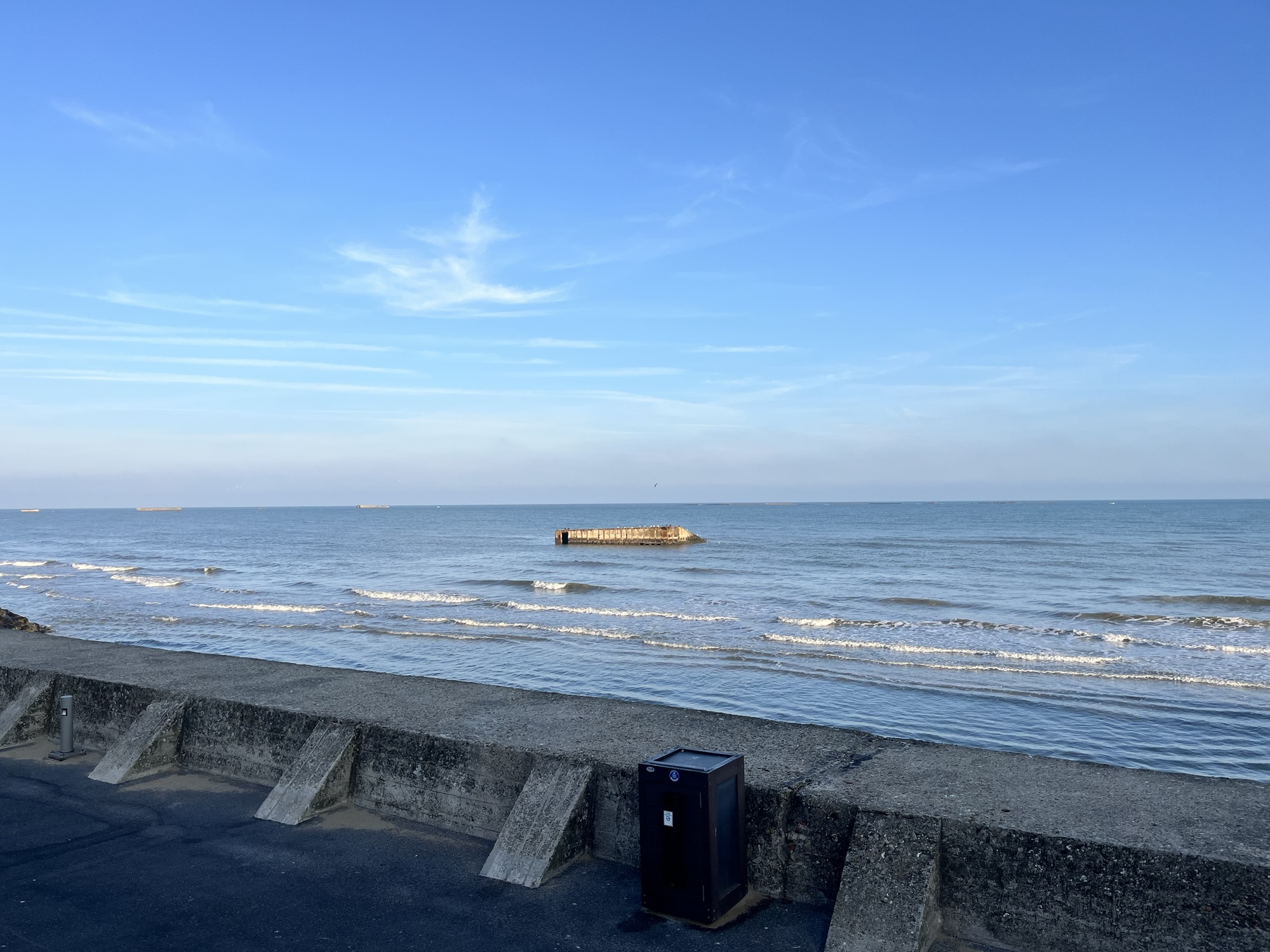

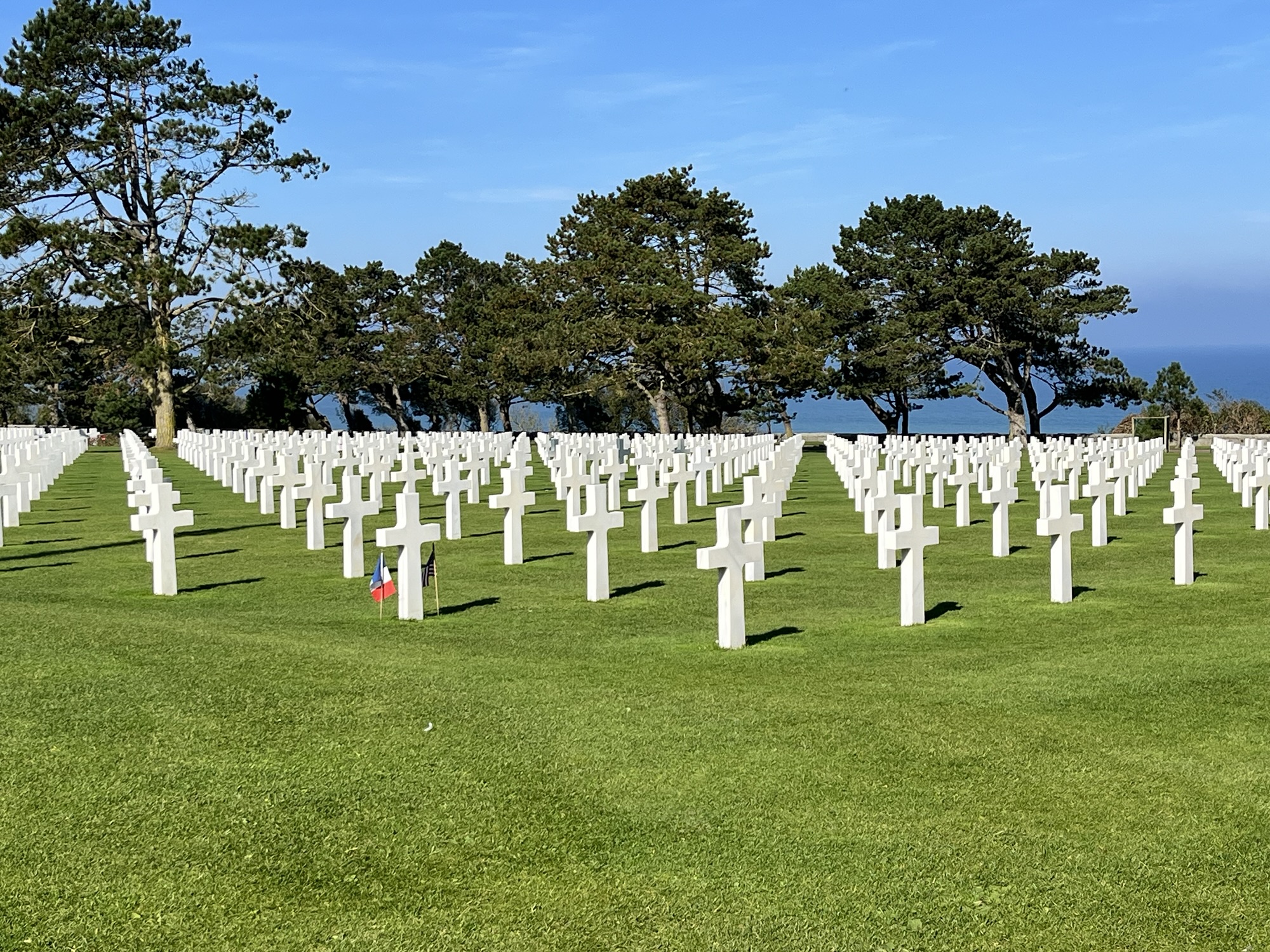
It was also clear that the difference between success and failure was very narrow. The Allies were on the brink of failure. It is scary to think about the consequences of that possibility. One can’t help but be moved by the extraordinary sacrifice made by the young soldiers who carried out that mission. Standing in the cemetery, which overlooks the English Channel, looking upon row after row of crosses and Stars of David, is overwhelming.

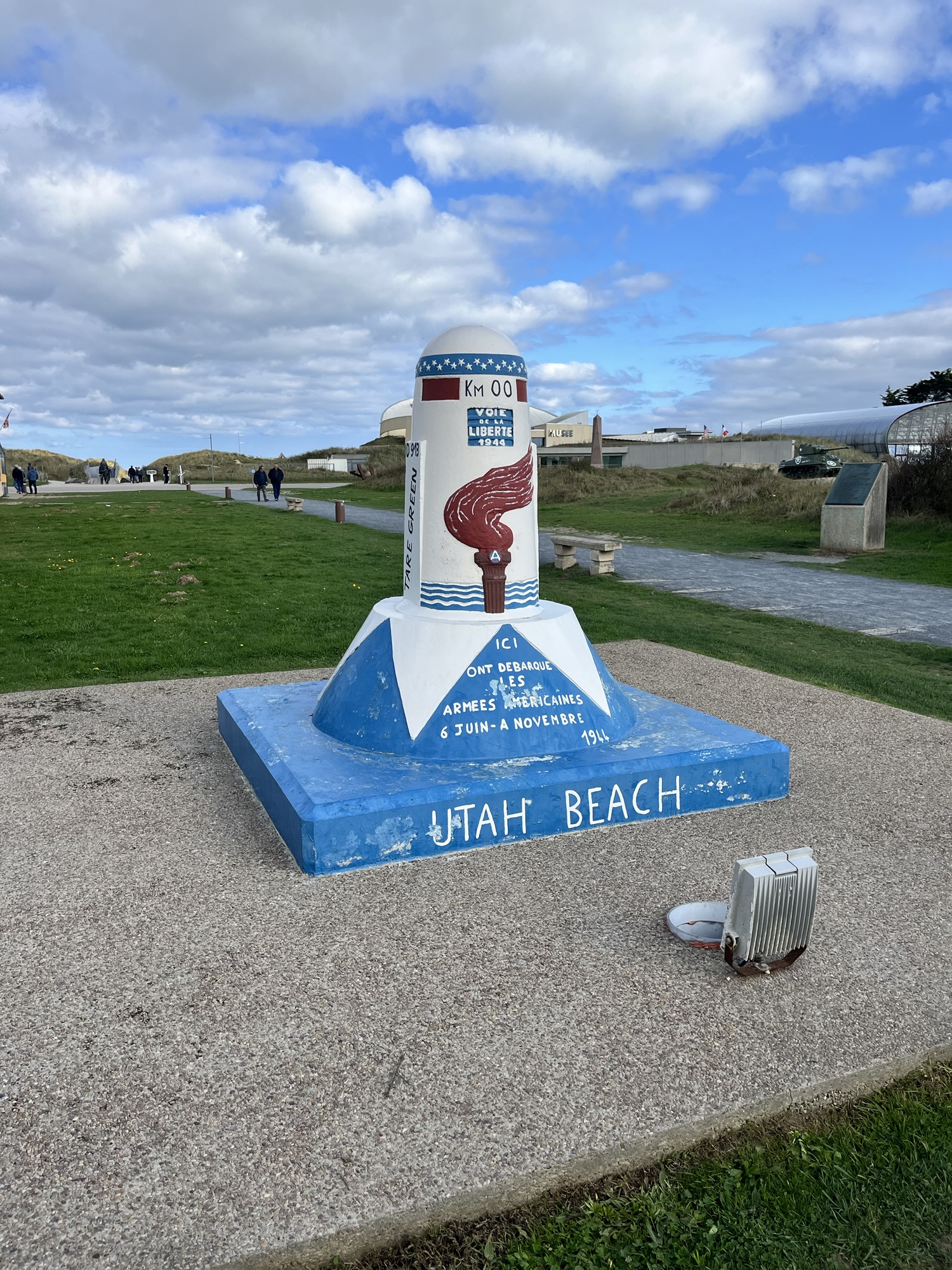
The land in Normandy still bears the scars of the battle, too. There are craters in grassy areas, and they have left the remnants of the German battlements. The coastline is also dotted with monuments. The statues, sculptures, and museums express the gratitude of France and Europe for their liberation and tell the story of how that was achieved.



Perhaps the most powerful aspect of visiting this sacred space is its breathtaking beauty.
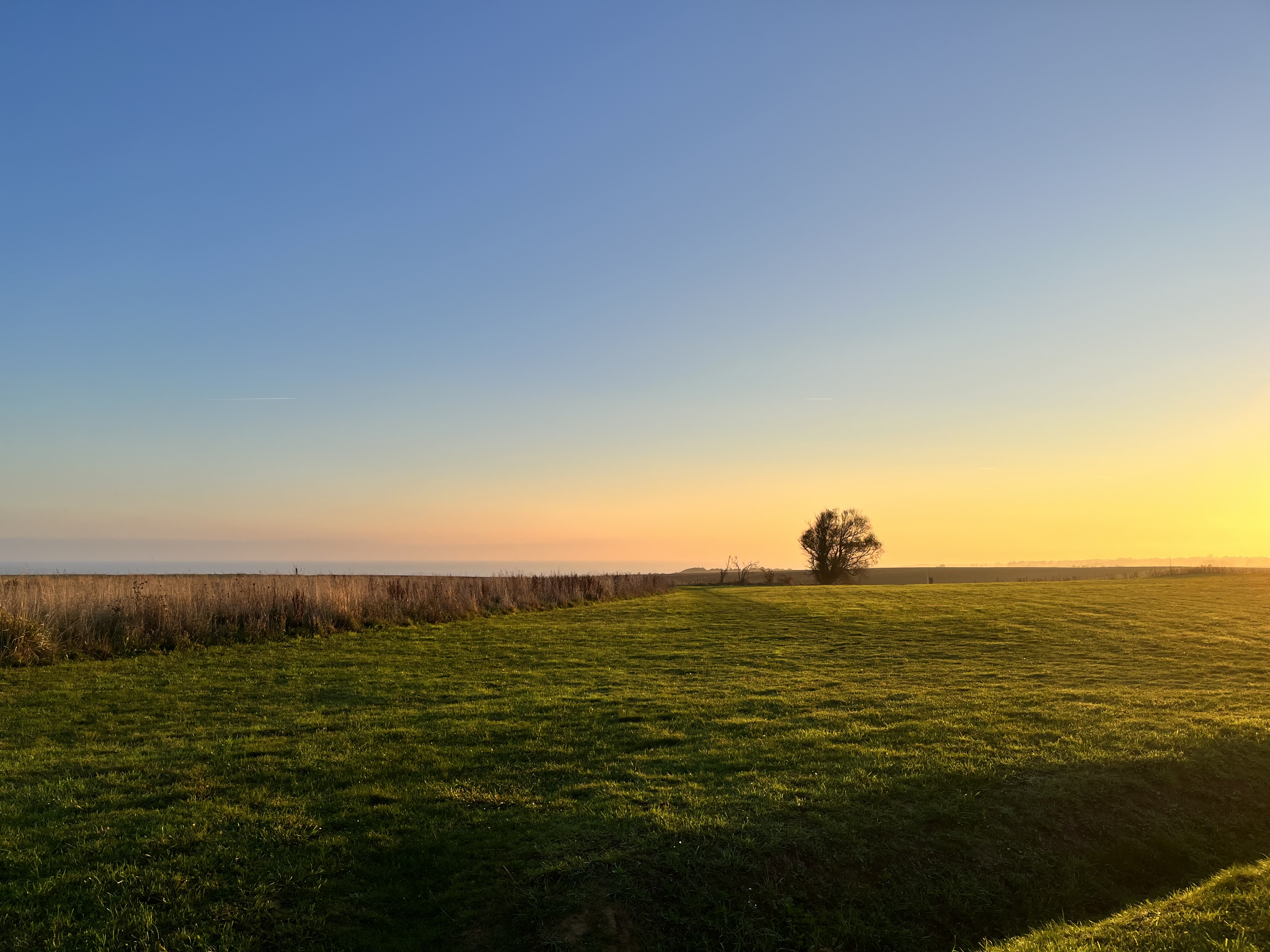


I stood on the cliffs, it was so peaceful, the only sounds were birds and the waves. The stark contrast to what it must’ve been like on June 6, 1944, with the pounding of artillery and bombs falling, is striking. When I looked at the cliffs that the soldiers had to scale, I couldn’t help but be amazed by their strength and bravery.
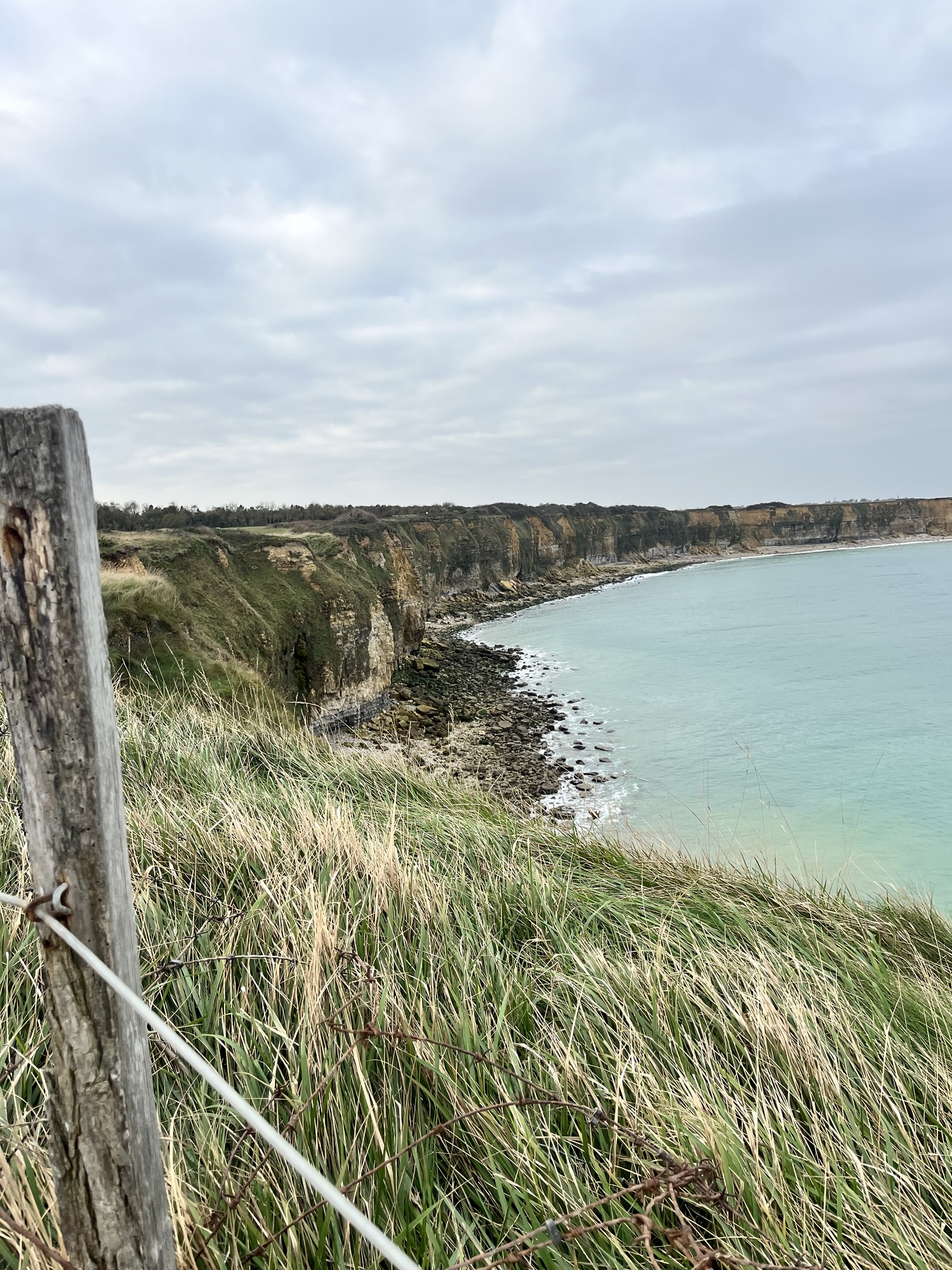
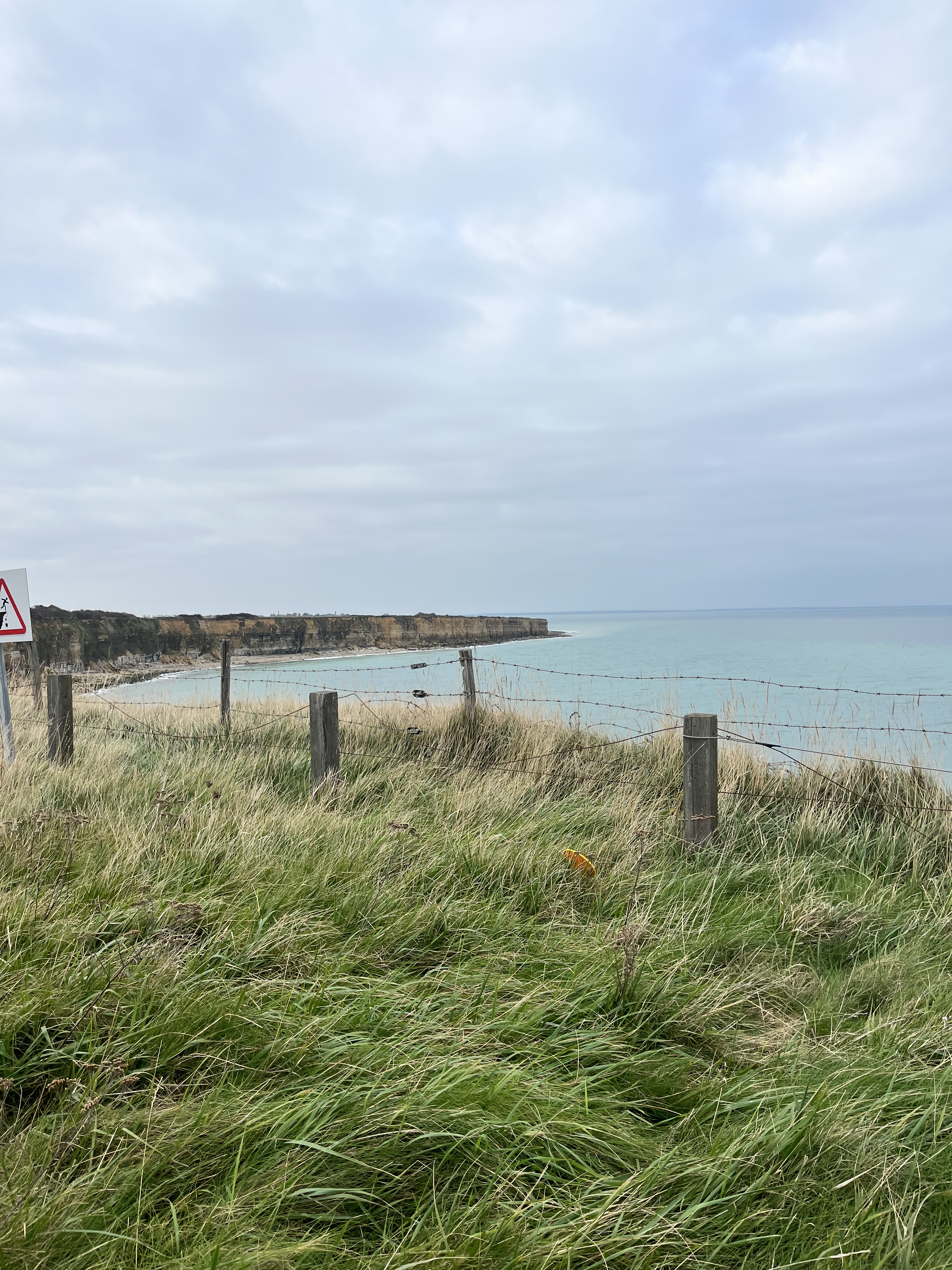
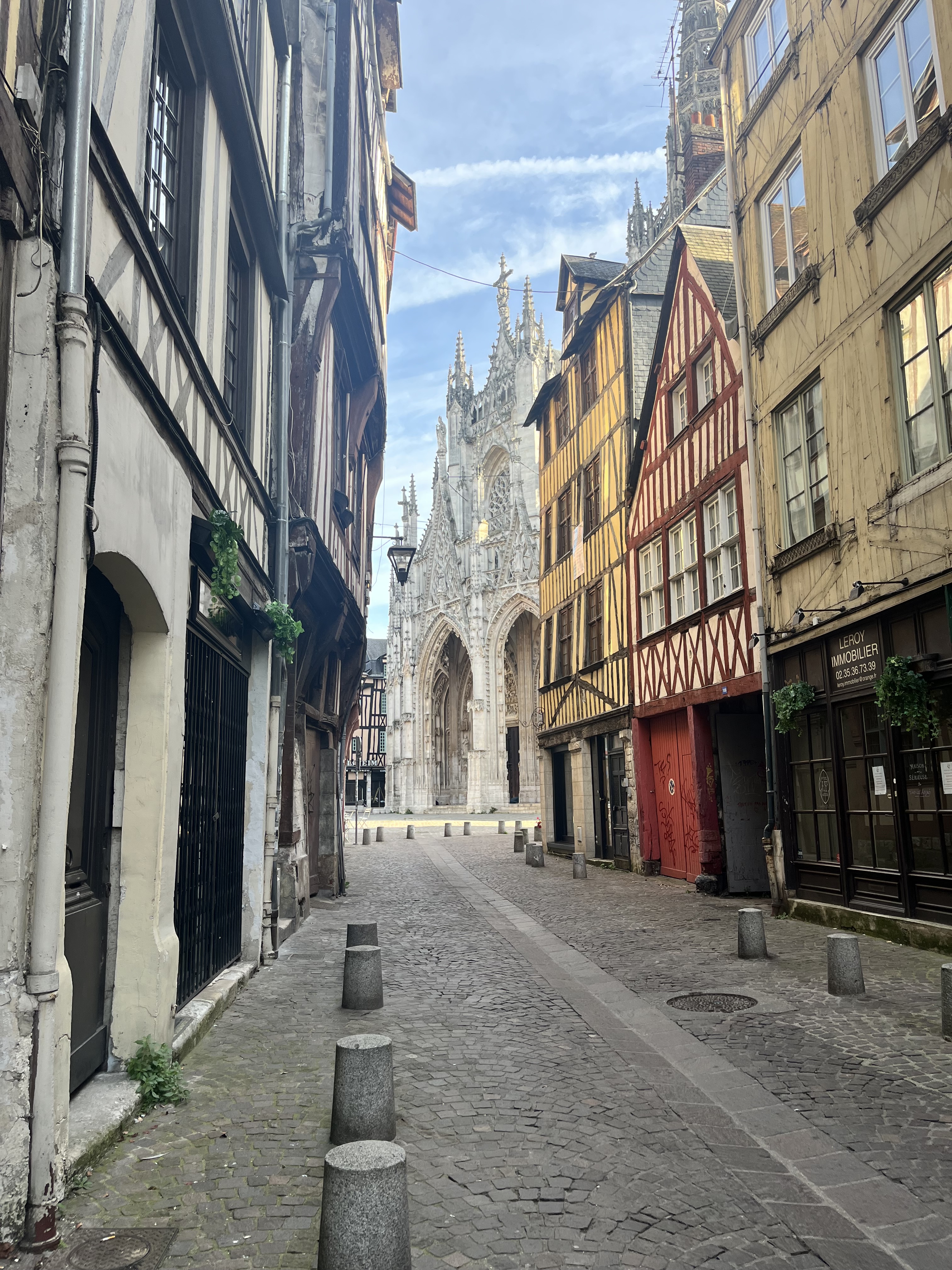
The towns, which withstood the onslaught, are charming. Some have modern elements that reflect the rebuilding effort, but many of the structures, which date back centuries, are still standing. I could have spent a great deal more time there. We visited for two full days, and it didn’t feel like enough.
These photos are from the old part of Rouen, considered the capital of Normandy.


I can’t recommend a visit strongly enough. We need to be reminded of all that went into fighting fascism and what people were willing to sacrifice for freedom. It would be tragic if we allowed our country to continue to slide into authoritarianism. I’m not sure Gary and I needed reminding, but I came away with a renewed sense of responsibility for doing what I can to prevent that from happening.
If one of the reasons we study history is to learn from it and avoid making the same mistakes, I urge everyone to revisit what World War II and the rise and fall of fascism have to teach us. War, even a just one, is brutal and exacts a steep price.


Leave a Reply