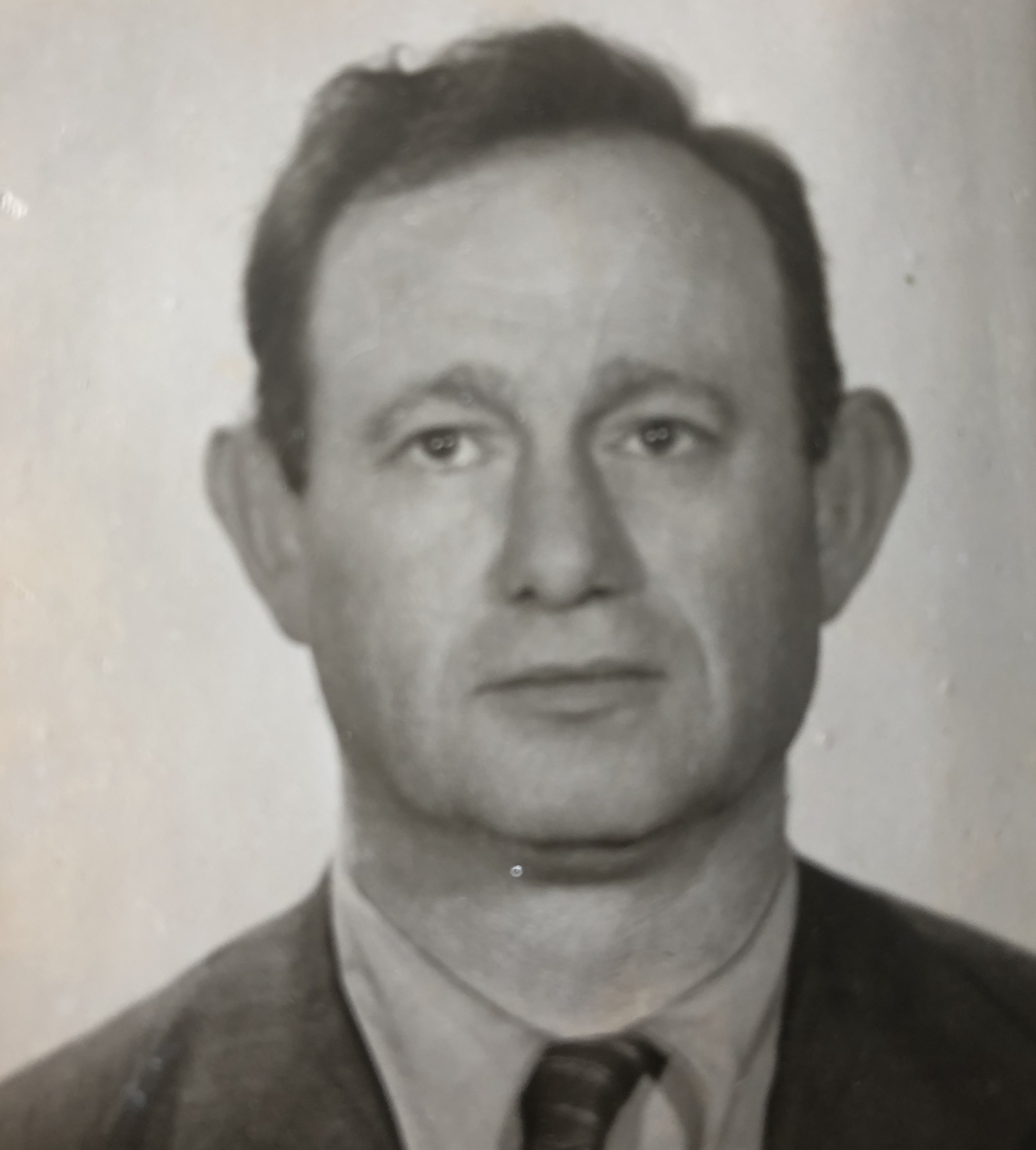
When Gary and I got together a process of melding two very different Jewish-American families began. My parents were American-born (even my grandmothers had been born in this country); my Mom and Dad had master’s degrees; and, we weren’t religiously observant. Gary’s parents were European-born; formal education was abruptly stopped by the war; and, they went to synagogue every Sabbath, and kept a kosher home. It was this last piece, being observant Jews, that was initially most perplexing to me. Until I attended services with Paula and David, and until I understood the source of David’s faith, I couldn’t relate to keeping all the rules and regulations that Judaism requires. Turns out my father-in-law believes in miracles. It took a while for me to understand that.
I left off last week with the Russian invasion of Iwie. David and his family had been enjoying a peaceful and prosperous life until the Communist takeover. Not only did his father lose ownership of his home and business, but Berl was taken for questioning by the KGB repeatedly. He was subjected to interrogation nightly for weeks, with the family worried that he would be whisked off to Siberia, never to be seen again. People disappeared and rumors about being sent to the gulag pervaded the air in Iwie. Fortunately, after each interrogation Berl returned home.
As a result of being labeled ‘capitalists,’ David was shunned by friends. His fortunes, and that of his family, changed on a dime. Now they were almost destitute. Berl barely managed to provide, it was quite a fall in status. Berl’s business, which was comprised of a leather factory and shoe store, was still operating, but under Russian supervision.
Things went from bad to worse over the next few years. The Germans invaded as part of their plan to take Russia. Jews from surrounding towns and villages were rounded up and sent to Iwie. A ghetto was created. The Bakst family lived in the ghetto, but were allowed to leave to work at the shoe factory. This gave Berl and David access to information and other townspeople. They heard rumors of ‘actions,’ actions were when the Germans would order the gathering of the Jews in the town square and either march them to the rim of a ravine and shoot them, or deport them on trains to concentration camps.
Upon hearing rumors of an impending ‘action,’ Berl, Rachel, David, Eli, Batya and Gussie (David’s sisters were born in 1927 and 1932) escaped to the woods. They tried to hook up with partisans (fighting groups that lived in the forests surrounding Iwie – and other forests in Poland). David remembered walking through thigh high snow in the bitter cold. His little sister, Gussie, was carried by Berl until the point of exhaustion when David took over. They weren’t successful in connecting with a partisan brigade. It was winter and they feared freezing to death. The Bakst family made rendezvous plans at a spot in the woods in case they got separated and had to run again in the future. They went back to the ghetto.
That first ‘action’ resulted in the killing of the leadership and intellectuals of the Jewish community in Iwie, others were spared, for the time being.
The adult Baksts continued working at the factory. Berl arranged for his wife and Gussie to be hidden in a farmer’s barn about ten miles outside of Iwie, thinking they would be safer there. They, along with about 10 other Jews, including David’s cousins, were crowded into a space under the barn floor. Food and supplies were brought to them.
At some point, perhaps because a collaborator reported them, or because the Germans saw unusual movements around that barn, they came to investigate. Normally the barn floor had hay strewn about. It was Spring and the floor was bare. A German soldier’s boot heel sunk into a hole in a floor board. A child underneath made a sound. The soldier tossed a grenade into the hole. One of David’s cousins tossed it back. Two cousins climbed out to fight and were shot immediately. The Germans continued to shoot as they set fire to the barn. The remaining people, including David’s mother and sister, were burned alive.
The farmer, who himself was now on the run, got word to Berl about the fate of his family. No miracles saved Rachel and Gussie, but the remaining Baksts continued on. They still worked in the factory, but as the war dragged on and German fortunes were fading, their lives became more precarious. They wondered how long the leather/shoe factory would be continued. Berl would have David go across the street to the Polish shoe store to visit and try to gather information.
One day German soldiers came to the factory while David was at the store across the way. David saw the soldiers. The Polish storekeeper gave David an overcoat so that his yellow star would be covered. David put the coat on and ran out the back. Two soldiers saw him and gave chase, shooting at him. David remembers zig zagging down the alley, rolling and getting up, darting back and forth to escape. Gunshots sprayed around him, but none hit their target. He got away and went to the rendezvous spot.
Berl and Eli also escaped the factory that day. Eventually they showed up at the rendezvous spot to meet David. Batya didn’t come. Berl wanted to go back to find her. He felt he couldn’t leave his daughter behind. David argued that Berl couldn’t leave them either. In an emotional exchange that still pains David, he convinced his father to stay with them.
This time in the woods, they were able to join partisan brigades. David and Berl joined Iskra, a Russian regiment. Eli joined the Bielskis (a Jewish regiment, whose story was told in the movie Defiance).
David was a fighter in the regiment and Berl supported the group by repairing shoes and working with leather. David recalls various missions including sabotaging a German military caravan where they were able to capture weapons and ammunition.
Iskra also took measures against collaborators. When they became aware of Polish families who were cooperating with the Germans, they wanted to send a message that there would be consequences. The partisan brigade took vengeance on those villagers, and captured any food, weapons or other material that would be useful. At this point, David described himself as living like an animal – there was no right or wrong, there was only survival and he did what he had to do.
While they were with Iskra, Berl and David got word that Batya was alive. She was in a camp outside Lida, which was about 40 kilometers away. With the assistance of the other members of the brigade, they came up with a rescue plan. Using coded messages, they managed to communicate with Batya.
Batya had a routine which involved crossing the camp to bring food to the German soldiers. This was done at the same time each day. One of the partisans, a Pole, intercepted Batya, ripped the yellow star from her clothing and covered her with his overcoat. Somehow, they walked out of the camp without being detected.
Batya joined David and Berl and became part of the Iskra brigade. To have his sister back was a miracle to David. That the rescue plan worked was unbelievable. David still gives thanks for it.
He would need more miracles to continue to survive.


Leave a reply to Steve Cancel reply