If a politician runs on a platform that ridicules government, what can we expect of them if they are elected and take office? The first time I thought about that question, I was a state worker and George Pataki was running for governor of New York. His rhetoric at the time went beyond a belief in small government. I understood the notion that some thought that ‘government that governs least, governs best.’ I may not have agreed with the sentiment, but I understood it. And, as I saw it, that philosophy grew out of the streak in America’s history that idealized ‘rugged individualism,’ a belief in the primacy of individual effort and achievement. Pataki’s argument, though, struck me as qualitatively different. The statements he made demeaned state employees and made it sound like government was inevitably incompetent, that by its nature it was bad.
I felt personally insulted. While there were state employees who were lazy and inefficient, most that I knew were in it to do good things for people. I wondered what the impact of the rhetoric would be on people seeking to work for the state. Who wants to work for a CEO who seemingly doesn’t believe in the mission, or doesn’t have confidence in the workforce? It was demoralizing.
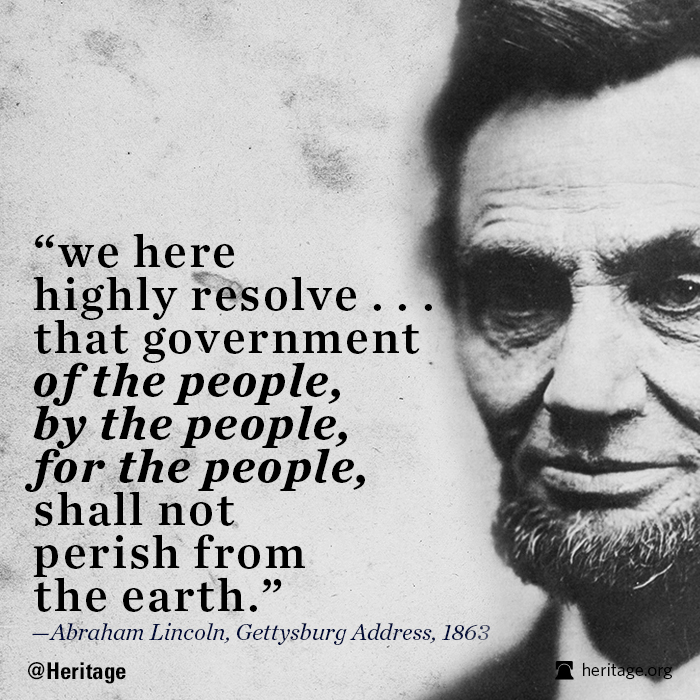
Pataki ran for governor for the first time in 1994 and he won. Since that time that rhetoric has become much more common, it has become ubiquitous and it has been amplified by social media. We elected a president who espouses those beliefs in the extreme. Trump has appointed personnel who are systematically dismantling their agencies. This raises a fundamental question: do Americans believe in government by the people, for the people? Or do Americans believe and trust in corporations?
I know what I believe. I don’t think either government or corporations are inherently good or inherently bad – both are made of people and people are people. There needs to be a healthy balance of public and private enterprise.
It used to be that we could argue about the size of government or the scope of the government’s role in regulating different areas of our lives (for example, health, housing, the environment); but not the basic premise that government could and should provide some services and oversee our safety. The differences between Democrats and Republicans, when I was growing up, centered on how active the government should be in regulating markets and in providing a social safety net. The pendulum swung back and forth a bit depending on who was in power.
Some elements of the culture wars of today were present then, too. There were differences in attitudes about reproductive rights and views of law enforcement, but it didn’t reach to the point of invalidating a role for government. Sometimes it feels to me as if the legitimacy of our government is at stake.
The incivility of the rhetoric is also markedly different. Personally, I am less concerned about that than I am about the beliefs that may underlie the incivility. Given the 24/7 news cycle and social media, people may need to be more outrageous to be heard. What is more concerning is this: do people really believe the things that they are saying/tweeting/posting?
Gary, my husband, has been talking about the damage Fox news has done to our country – he’s been pointing to that as a problem for years now. Former President Obama recently commented on the danger of living in different realities based on the media we listen to. It isn’t clear to me whether this is the source of the problem or a symptom of the problem. Are we listening to different sources of information because they conform to our ideas, or do those sources create our ideas? Either way, how do we change it?
Also, who will be willing to work for a government so disrespected, so disempowered? Who is going to get a degree in public administration if things continue in this vein? I believe we need professional, educated people to work for our government.
I have to believe that the tide will turn. I have to believe that Americans will not be willing to continue to cede power to Donald Trump, Steve Bannon and those who think like them. We can continue to debate the proper balance of public and private, of regulation and unfettered markets. We can argue about social issues, too. Those debates are healthy. I hope 2018 proves to be a turning point. I intend to do my best to make it one. We must move away from the rhetoric that is undermining the very foundation of our union.


Leave a Reply