Stories I Tell Myself

Linda Brody Bakst on Brooklyn, growing up, identity and more

  • Note: After last week’s entry (“What are you?”) several people shared their experiences with race and ethnicity. I invited them to write them up to share on the blog. Gary, my husband, took me up on the offer. One of the things that Gary and I bonded over when we first met was talking about our experiences growing up in similar neighborhoods – he was just east of JFK airport, while I was just west of it. Here is his story – in his words. Thanks, Gary.

    I wanted to share a story about my favorite bicycle. I was in seventh grade when this happened and to me it encapsulates so much about racial issues growing up in New York City in the early 1970’s.  At that time, the neighborhood I grew up in, Rosedale, was much like Canarsie.  It was largely Italian and Irish and Jewish.  There were no African-Americans in our part of the neighborhood.

    Later on, when I was in high school that would change.  The first black families moved in and were greeted with rocks thrown through their windows, their garbage dumped out on their lawns and their children harassed.  Back then, I didn’t grasp how those families tolerated such racism and abuse.  Why would they stay in Rosedale when they were met with such hostility?

    But now I understand that those brave people were standing up for their right to live in that neighborhood just like anyone else had the right to.  Eventually, that story was the focus of a PBS special report by Bill Moyers (you can find it on YouTube).  And, I must say, my Catholic neighbors were particularly vehement in their racism and use of the N-word.

    But let’s get to my story.  Rosedale was divided by Brookfield Park.  On one side of the park, everyone was white.  On the other side, the neighborhood was nearly entirely black.  The park itself was everyman’s land.  Blacks and whites both used the park, and then retreated to their side of the divide.

    Along with a group of my friends, I would bike to the park on weekends.  We would put on helmets and shoulder pads and play tackle football on a grass/dirt field and then we would bike back to our homes about a mile away.  On one particular weekend day, we had just finished playing and we all got on our bicycles and started to head home.

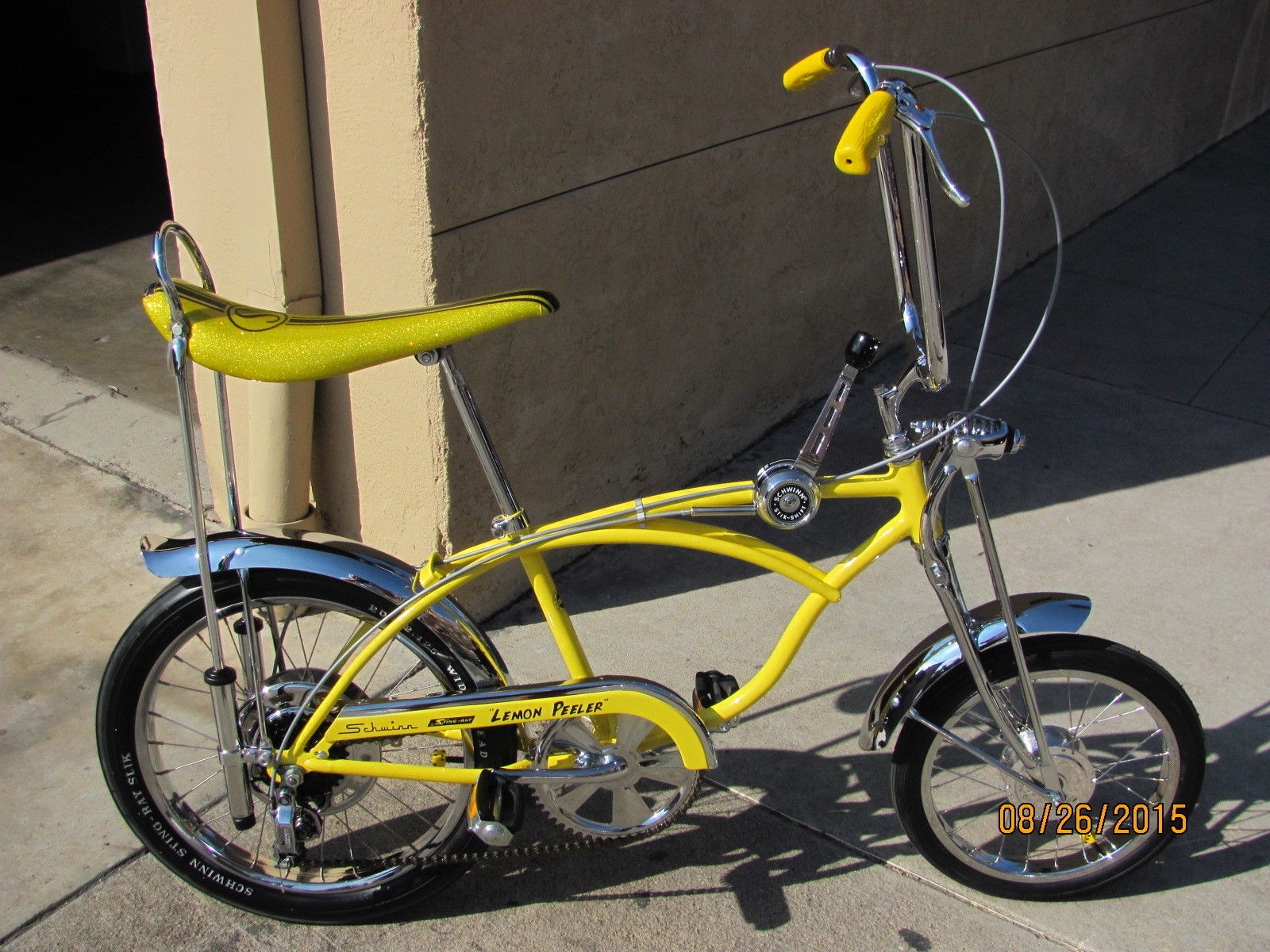
    I really loved my bicycle.  It was a five-speed Schwinn lemon peeler.  It even had shock absorbers.  It was heavy and slow but it was cool and was perhaps the best gift I had ever received as a kid.
    57-23
    A Schwinn Lemon Peeler – How cool is that?

    As I started to ride, I realized I had left my helmet behind.  I should have called out to the other kids to wait for me but I figured I would grab the helmet and catch up to them quickly.

    That turned out to be a terrible decision.  As I picked up the helmet, a large, older black kid pushed me off the bike and started to pedal away towards the black part of the neighborhood.  I ran after him for no logical reason.  I couldn’t catch him on foot, even if the bike was slow.  And I surely could not physically take on this clearly older, bigger and stronger person.

    Eventually, I walked home, embarrassed, and reported the theft to my family.  My brother Steve said we should go back to the park the following weekend and see if we could find the kid on the bike.  I thought that was worthless because nobody could be stupid enough to go back there so soon after stealing the bike.  And, once again, I was wrong.

    I was in the park playing football with my friends and my brother was walking around the park and spotted a kid who fit the general description on a bike that obviously had been repainted but otherwise seemed like it could be mine.   Steve engaged the kid in a conversation and walked him over to where we were playing.  Upon seeing him on my bike, the football players surrounded the kid.  He said he had to go and my brother said, “You aren’t going anywhere.”

    This was well before cellphones and I went running over to my Aunt Sophie’s house nearby and called the police.  They drove up in a patrol car and one of the two officers asked me if I wanted to press charges.  I said no – I just wanted my bike back.  So he gave me the bicycle.  And he got into the back seat of the car with the kid.  The other officer started driving the car away.

    I will never forget what I witnessed as that car pulled away from us.  The police officer in the back seat took out his baton and started beating the kid.  It was horrible.  It was brutal.  It was surely criminal.  And yet it was the police – law enforcement itself – doing it.

    It took three cleanings with turpentine to get down to the original paint job but eventually my lemon peeler turned yellow again.

    I thought I would never see that kid again, but I was wrong yet one more time.

    The following Monday, as I got out of school, Junior High School 231, he was there, waiting for me with a look of hatred in his eyes.  It was clear that he was intent on revenge for the beating he had been subjected to.  To be fair, he had no reason to be angry with me.  He stole my bike.  And I didn’t tell the cops to beat him up.  But, he surely couldn’t take his anger out on the police, so I was the only choice.

    He ran after me and I faked right and cut left and got past him and ran onto the Rosedale bus.  That was the only bus he could not get on.  It was full of white people.  While boys are supposed to deal with their own issues, I realized this was not someone I could fight.  I told my parents what had happened and they went to the school and told school officials.

    The next day, when I got out of school, the kid was there again and ran towards me.  But the dean grabbed him as soon as he moved.  And I never saw that kid again.  I must add that the dean was also black.

    Racial overtones run throughout this story.  And no side is innocent.  The racism ran both ways but the white people ultimately had the power, in this case in the form of the police.  Surely economics were part of the issue too.  The blacks in our small part of southeastern Queens were living in poorer and less safe neighborhoods.

    But still, race was the clear and obvious divide.  How much have things changed?  Surely the N-word is no longer acceptable to say in public.  And surely we could not have elected an African American president then.  But just as surely, we have many issues left to deal with and a substantial divide still separating us.
  • Note: One of the reasons I started writing these memoir-stories was to explore different aspects of identity. I have struggled with notions of femininity and masculinity, as well as issues of social justice with respect to race and class for as long as I can remember. Some of the stories I have posted have touched on these topics. The essay that follows is intended to be one of several on race and ethnicity – it is a big topic! And, I have a couple of experiences I want to share. I welcome your contributions to the conversation – please feel free to share your perspective by commenting or sending an email.

    “What are you?”

    When I was growing up in Brooklyn in the late 60s, it was one of the first things we asked each other. It was a way of sorting ourselves out. I wonder if kids still ask each other that. As adults we tiptoe around those questions.

    When we asked, in that place and time, we were usually asking whether the other person was Jewish, Italian-Catholic or Irish-Catholic. There really weren’t that many other possibilities in my neighborhood. I’m embarrassed to say that I was a young adult before I realized that there were many other possibilities – and how small a minority I was part of.

    I’m not writing nostalgically of that time – I don’t think those were the good old days. I have been reflecting on why we asked each other that question and what it meant. I think we need to figure out how to talk about our identities in a way that doesn’t stir up suspicion, insinuate judgment or assume superiority. We are, after all, curious about each other.

    As kids we were figuring out our identities and where we fit in. In asking the question ‘what are you?’ it felt to me like we were looking for connection, searching for commonality. The question was a shortcut to understanding something about each other and the answer could help seal a bond. And if it didn’t create a bond, it gave a point of reference.

    We talk about prejudice being learned and in part I think that is true. Certainly we don’t come into this world thinking that a particular group is cheap or dirty or dangerous. All of that is learned. But, I think there is a hard-wired discomfort or suspicion of those who are different from us and that makes fertile ground for prejudice. We are born into a family or culture that defines what is comfortable and known to us.

    I was born into a second-generation Jewish-American family. Actually both of my grandmothers were American born, which would make me third generation, and my grandmothers were high school educated. Both of these facts made my family a bit unusual in my neighborhood. My parents were not only college graduates, but my Dad had one master’s degree in education and another in economics. My mom was going back to school while I was growing up and earned her master’s in reading. Education was a value in and of itself.

    We took great pride in being Jewish, though we weren’t religious at all. I recall Nana lighting Shabbos candles on Friday nights. I have a mental picture of her moving her hands forward and back over the candles as if to invite the flame into her heart, her white hair covered by a white doily. Then she put her hands over her eyes as she completed the prayer silently. That was the extent of our ritual. We didn’t go to synagogue and we enjoyed ham, among other treyf (unkosher) items. Judaism was a culture to me, a sense of humor, and a way of looking at the world. It meant asking questions. It included certain foods at certain times of the year. It didn’t include God.

    I was and am ethnically Jewish. My grandparents liberally sprinkled Yiddish in their speech. Shana madela (pretty girl), lay keppe (lay your head down), meshuganah (crazy), and schnorer (a moocher) and many other words were part of our lexicon.

    One Yiddish word confused me. I grew up hearing blacks referred to as “schvartzes” by my grandparent’s generation. It wasn’t the equivalent of using the n-word, but it was a pejorative. When I sat at Nana’s kitchen table listening to her conversation with friends and family and the word was used, it sounded wrong to my ears, it was a discordant note. When I was older Aunt Simma shared a story of being told that she couldn’t go to a black classmate’s house to play when she was a child, though she was welcome to invite the girl to her own home.

    I never had to face that issue, though I can’t imagine my parents issuing such an edict. There weren’t any black families on my block. There were only one or two black kids in my elementary school classes and neither of them were girls. Even in high school, my life was pretty segregated. My path crossed with black kids in gym and on the basketball team. The relationships didn’t extend beyond the court.

    I’m 56 years old and still trying to sort out the different aspects of my identity and what it means for my relationships with family, friends and the larger community. In some ways it has gotten even harder to talk about.

  • Uncle Mike had a great idea. He would take my brothers and me to visit our cousins at sleep-away camp. Laurie and Ira were going to summer camp in the Catskills, the same camp Uncle Mike had attended when he was a kid. He had great memories of going to Camp Olympus and he was eager to show us the verdant grounds and, of course, see his other niece and nephew.

    IMG_1447
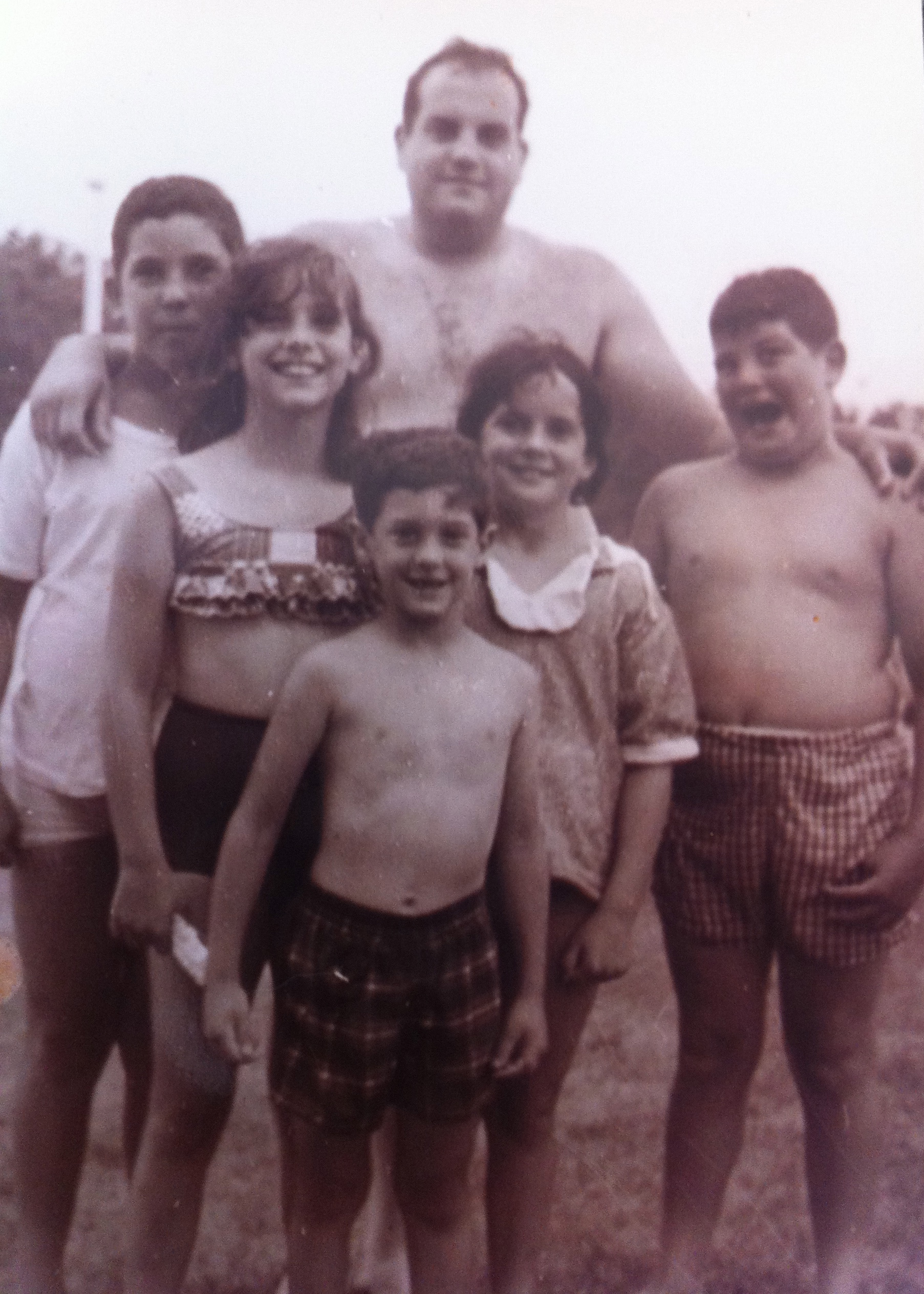
    Uncle Mike visiting with his nieces and nephews about a year before the events described in this story. From the left: Steven, Laurie, me, Mark (being Mark) and Ira in front. Mike’s son and more nieces would arrive a decade later

    Early on the morning of August 16, 1969, we piled into his green two-door GTO (which Uncle Mike named “Boss”). Steven was riding shotgun, Mark and I were in the back. Uncle Mike was a big guy, in all dimensions. He was about 6’3” so the driver’s seat was positioned as far back as it would go. Since I had the shortest legs, I sat behind him. I was not yet 10, Uncle Mike was 23, Steven was 14 and Mark was 12.

    Uncle Mike supplied 8 tracks to keep us entertained. I don’t ever remember riding in a car with Uncle Mike without music playing – he loved R&B and early rock ‘n’ roll. The “oldies” on WCBS-FM were the soundtrack for many car rides. That morning we set off from Canarsie listening to the Chambers Brothers on a trip that should have taken about two, maybe two and a half hours each way. It was already a gray and very humid day and perhaps that should’ve been a clue that we should postpone the trip. But, we barely noticed the weather in our excitement.

    Things were proceeding uneventfully as we left Brooklyn, skirted Manhattan and headed through the Bronx. Then the traffic got heavy as we drove past Yonkers. We were approaching the Harriman toll when we came to a virtual standstill. Fortunately, Uncle Mike knew another route and we got off and made it to the Red Apple Rest Stop– a cafeteria-style restaurant that didn’t look like much to me, but it was a favorite of Uncle Mike’s.

    I think sometimes he and his friends, at the end of an evening in Brooklyn, would take a ride “upstate” to the Red Apple. Anything beyond the Bronx was upstate to us; the Red Apple was about 40 miles outside the city. Apparently, in its heyday, comedians who performed at the hotels in the Catskills would congregate at the Red Apple at the end of their evening, too.

    We had some breakfast there and got back in the car, still unaware that this was an inauspicious day to be making the trip. After we left the Red Apple, things got really interesting.

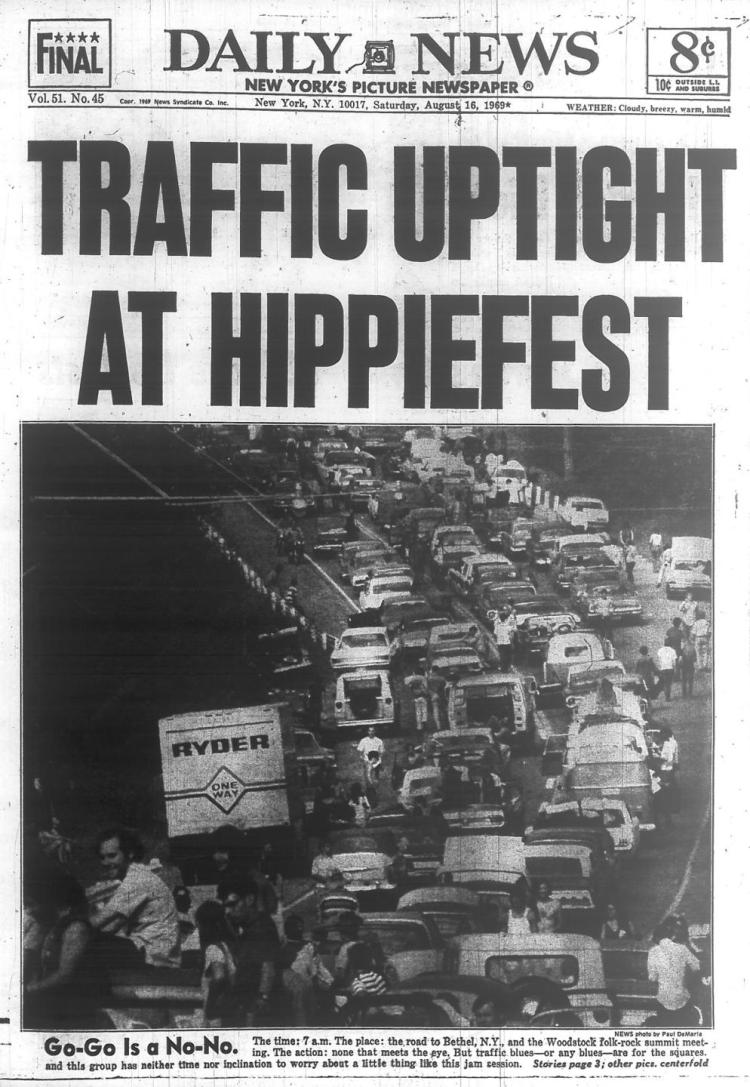
    None of us realized that August 16th was in the midst of the Woodstock Music Festival. We were attempting to drive right by it because Camp Olympus was located a few miles from Bethel, the site of the concert. We couldn’t have picked a worse time to try to visit!

    woodstock13a-3-web
    Unfortunately we left Canarsie before we saw the headline of the Daily News! While this wasn’t quite the scene we encountered, it was still a mess.

    As we proceeded up Route 17 we saw cars parked on the side of the road; people abandoned their cars and made the pilgrimage on foot to Yasgur’s Farm (just like the song lyric described later). We finally understood what was going on – we put the radio on and heard the news. Many of the people had long hair, bell-bottoms, beads, sandals – the costume of the day – they looked pretty dirty, too. It was not a look embraced by either of my uncles, or my brothers. Each time we passed a group, Uncle Mike yelled “Hippie!!” out the window. I’m not sure why, maybe it was his merry, antic tone, but my brothers and I found this hysterical. We laughed every time he did it.

    I got the sense that Uncle Mike didn’t much approve of the hippies. And, they looked back at us disinterested. Uncle Mike worked full time and, as far as I knew, didn’t partake of any kind of illegal substances. I don’t believe I ever saw him with a drink in his hand either. The counter-culture was as foreign to him as it was to me.

    At a snail’s pace, we made it to the camp hours later than expected. At least I think we made it. I don’t remember much about the visit. Given the circumstances, and the weather (it was raining steadily), we probably made it pretty brief and started back home.

    Uncle Mike navigated a very roundabout route toward home that I think took us through Pennsylvania and then New Jersey. The rain was unrelenting. It was nearly impossible to keep the windows from fogging up and now it was dark.

    Uncle Mike tried every possible combination of defroster on high, low, cold air, warm air, and windows open, windows closed. It was a battle to see the road. I was given the choice of getting rained on with Uncle Mike’s window open or sweltering in the humidity with his window closed. I wanted a third choice.

    The novelty of yelling “Hippie!!” had worn off. We had played all of Uncle Mike’s 8 tracks again and again. There were only so many times we could listen to the Chambers Brothers – even if People Get Ready and In the Midnight Hour were awesome songs. We were wet and hot and hungry and the trip home seemed never-ending. After a long, sweaty, aggravating day, the air in the car wasn’t too pleasant either.

    Fortunately, Uncle Mike persevered. He had an uncanny sense of direction despite never having taken this particular route. We were incredibly relieved when we finally recognized the highway heading to the Verrazano Bridge. Even I knew my way home from there.

    Needless to say, hours later than expected, we got back to East 91st Street. It wasn’t our most successful outing, but at least we had a story to tell. I could say that I was almost at Woodstock.

  • Note: Another impetus for writing this blog is that I have vivid memories of some people who helped shape me. I want to provide a picture of those individuals, people who weren’t necessarily part of my day-to-day life, but had an impact nonetheless.

    Zada was driving us home from Uncle Sid and Aunt Fannie’s apartment. I don’t remember the circumstances: why we had visited (which while not unheard of, wasn’t common either); and, why were we riding with Zada, instead of our parents? Memory is funny that way, snippets of dialogue, vivid images, sometimes in context, sometimes not. I do remember that it was a dark, clear chilly night. We were on the Knapp Street entrance ramp to the Belt Parkway, which had a short sight line. Zada asked my brother Mark, who was sitting in the back seat next to me, to let him know when traffic was clear so he could get on the highway. Mark said okay. Zada thought that Mark meant it was okay to speed up and enter the parkway. Mark meant, ‘okay, I understand your request.’ Horns honked and we swerved, we narrowly missed colliding with another car. This precipitated some back and forth about the misunderstanding. Nana, who was sitting in the front seat, may have suggested that asking an 11 year old to give driving assistance wasn’t the wisest idea. After we averted disaster, everything went back to normal pretty quickly. No big deal as far as Zada was concerned.

    Uncle Sid was Zada’s youngest brother, 13 years his junior. He was a kind hearted, bear of a man. His life, from my perspective, couldn’t have been easy. He may have been a little slow, he was certainly lumbering in both speech and movement; it was difficult for him to walk. But he was always cheerful.

    His wife, Aunt Fannie, had breast cancer, two occurrences that resulted in two mastectomies. I remember her coming to visit our house after the last of her surgeries. I was nervous about seeing her. I didn’t know what to expect. I was in my bedroom steeling myself to face her. Cancer was not something we spoke about openly. I was afraid, I don’t know if I thought it was contagious or if I was thought she would be physically deformed. At that time cancer was spoken of in hushed tones, perhaps because it was usually a death sentence.

    Uncle Sid kept his natural cheerfulness even after his beloved Fannie died of the dreaded disease. He went on to live 15 more years after she died. He remained cheerful even in the face of the fact that his son stole the little money that he had to feed a drug habit. When asked if he wanted to press charges against his son for cleaning out his bank account, Uncle Sid said no, the money was one less thing to worry about. He added, “He isn’t an axe murderer after all.”

    It was a poignant example of perspective, one that I think of when I’m losing mine. My heart hurt for Uncle Sid. In his later years, on rare occasion I would go with Uncle Terry to visit – Uncle Terry, a podiatrist, would take care of his feet. Weather permitting, we would find him sitting on a bench outside his apartment building, part of a housing project in Sheepshead Bay. Taking a break from chatting with a neighbor, he would greet us with a gap-toothed smile, pleased as punch to see us, no trace of bitterness about his lot in life.

  • Reading was an essential part of my growing up. My parents were both teachers and voracious readers. During the summer we went as a family to the library at least once a week. Wherever we were, Brooklyn, Champaign-Urbana, Worcester, we frequented the library. I remember particularly loving biographies. I believe there was a series specifically for children and I read them all. I was inspired by the stories of Frederick Douglass and Harriet Tubman, drawn to stories of heroes who overcame fear and danger to find freedom. Though my life bore no similarity to them, I wanted to be heroic. I wanted to be part of the fight for freedom and justice.

    As I think about it now, there were a number of strands that came together to fuel this passion. I was aware that my paternal grandfather had lost his parents and sister in the Holocaust. My grandfather, Leo, came to this country alone when he was 17, in 1921. He had a cousin here, but left his family behind in Austria. I think he immigrated with the assumption that at some point the rest of the family would join him. He married and established a life for himself in New York. During World War II he received a letter written by a priest from his hometown informing him that the Nazis executed his family. This was not spoken of in the family, it was simply too painful for my grandfather.

    I was also aware of the larger story of the Holocaust. I don’t know how old I was when I learned about it; it seems to have been part of my entire conscious life. Between that, the protests against the Vietnam War and the civil rights movement, I was preoccupied with the injustices in the world. I turned to books to try to find hope and maybe answers.

    As I got a little older, I moved beyond those simple biographies. I was in the sixth grade when my oldest brother, who was in high school, was reading Down These Mean Streets, a raw and graphic memoir by Piri Thomas about growing up in Spanish Harlem. I picked it up, I was shocked and fascinated by the sex, drug use and violence and I couldn’t put the book down. It gave a glimpse into a life that was foreign to me. I was acutely aware that I was living in the same city as Piri Thomas, but leading such a different life. I tried to understand how our worlds could coexist.

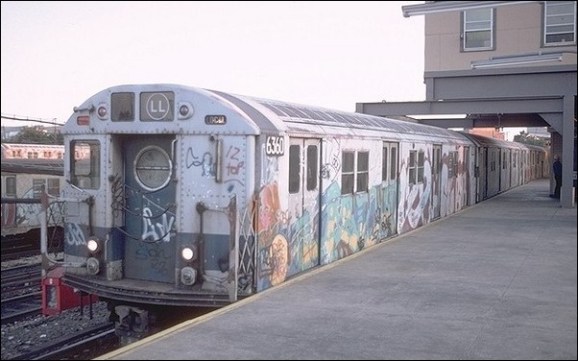
    I knew that Canarsie sat next to a really dangerous neighborhood, East New York. One of the ways to get to the city from Canarsie was to take the LL (now called the L) train. The LL traveled through that neighborhood above ground so you could see the pigeons perched on the fire escapes of the tenements that abutted the subway line. I would watch the subway doors open and look at the people who got on the train from those stations. I wondered how it was for them to live in a neighborhood with so much crime and poverty. Here we were, side by side in one sense, but living in such different worlds.

    recent-bimg_24015
    From the NYC Subway collection circa 1970s. This is how I remember the train looking – in the “good old days.”

    One time I got on the LL to go to downtown Brooklyn to apply for my learner’s permit. There was only one DMV office to service all of Brooklyn and the DMV was spectacularly inefficient so you had to plan to spend hours there. After I got on the train, I realized I had forgotten my birth certificate. I was too afraid to get off the train at any of the stops until Broadway Junction where I would normally get off to change trains anyway. I wouldn’t turn around at 105th St., New Lots, Livonia, Sutter or Atlantic Avenues. Each time the subway stopped and the doors opened, I looked at the platform and thought, “Should I risk it?” Each time I decided I wouldn’t.

    Another time I was riding the LL in mid afternoon when there was an announcement over the PA. Those announcements were usually so garbled and static-y as to be indecipherable, but this one came through quite clearly. “Move away from the windows! There are reports of gunfire. Move away from the windows!” There weren’t very many of us on the train at the time. Most of the people looked incredulous, a few moved to the windows to see! Some ignored the message entirely. I shifted down on the bench so the wall of the subway car was behind my head. Fortunately nothing happened – at least not in the car I was riding in.

    It is amazing to me that some of the areas served by the LL have become hot real estate today. Some of the neighborhoods have gentrified, unfortunately I think the poverty has just moved. Still people live side by side, riding the L, the haves and the have-nots. I’m still reading, trying to understand.

  • Note: I wanted to try something a little different. The following is a kind of hybrid essay – part memoir, part op-ed piece. Please let me know what you think.

    A Lesson Learned

    The job of creating inclusive schools and communities is not simple. Like kindness, being inclusive is both incredibly easy and incredibly fraught and nearly impossible to legislate.

     Mindy was olive-complected, tall and skinny. She was my best friend. Her almond-shaped brown eyes didn’t line up exactly right – neither did mine. We shared the experience of wearing an eye patch to correct muscle weakness. We were, at least to some degree, neighborhood outcasts.

    We were deep into pretending that the narrow strip of dirt and grass between our two houses was a ship. I was the captain; she was the first mate. We were busy battling pirates when Marguerite, Johnny, Susan and Mike showed up. “You stupid, skinny bitch,” they taunted. I was relieved – they weren’t yelling at me. I stood silent.

    Back when I wasn’t retired and worked for the New York State School Boards Association, I attended many meetings on school climate and safety. Anthony Bottar, a member of the New York State Board of Regents, opened one such meeting of the Statewide School Safety Task Force with a statement expressing the commitment of the State, in the wake of the Newtown tragedy, to improving safety in schools. He talked about the broader reform initiatives to get New York State students college and career ready. He suggested that part of that effort included tending to students’ emotional health. He asked for suggestions, “What can the Board of Regents do to help?”

    I immediately raised my hand. I have been thinking about the issue of school climate for what feels like most of my life. I was involved in it in my own school district, serving on my local board of education when Columbine occurred.   Regent Bottar called on me. “I think it would send a powerful message if the Regents changed the tag line for the reform agenda to college, career and citizen ready. It would signal the importance of those other qualities – emotional intelligence, civic-mindedness, etc.” There was some murmuring and some discussion in the hall. Ultimately the people in the front of the room – the Commissioner of Education at the time, John King, and Regent Bottar – were unwilling to pursue that idea. The suggestion was forgotten. That meeting was early in 2013. It was the beginning of the end of my career in education. 

    Not only was I silent while the taunts rained down on Mindy – after a while I joined in. I knew it was wrong. But, it was too tempting; it was exhilarating to be part of the powerful. At least in the moment.  

    We didn’t speak for months – then I got my courage up and I apologized. I asked her, “Can we be friends again?”  Fortunately for me, she said we could, but not until I faced her mother’s wrath.

    At a pre-arranged time, I rang her doorbell and Mindy answered. She ushered me up the stairs. Their apartment was the mirror image of my grandparent’s place next door. Her mother, who was intimidating under the best of circumstances, was seated at the kitchen table, taking a break from making dinner. I told her I apologized and it would never happen again. She told me, in her sand-papery voice, in no uncertain terms that I couldn’t bully Mindy and I couldn’t treat her like a second fiddle, or else I’d be in trouble. She nodded toward the pot of boiling water on the stove.  

    Maybe I imagined that she gestured to the boiling water – but I’m pretty sure she actually did. In my memory she actually said, “I will boil YOU in that pot if you mistreat her!” Whether she uttered those words or not, I clearly got the message. Almost 50 years later Mindy and I are still friends. I learned my lesson. I had learned my lesson even before her mother’s threat.  

    In my mind these stories are connected: my experience at the task force meeting in 2013 and my behavior as a nine-year old. I’m wondering if others see any relationship.

  • If Nana was the heart of our family, I think it is fair to say that Zada was the spirit. The man I knew was in his 60s and had experienced his share of hardship but still had a zest for life. The stories he told and the stories told about him revealed a love of Chinese and Italian food shared with friends and family, a love of baseball and the racetrack, and a capacity to quote Shakespeare from memory despite not graduating from high school. My dad referred to him as a raconteur – an apt characterization. The recurring theme of his stories was that life was an adventure and you should make the best of it.

    I grew up hearing the story of a particular time Zada took my mother to a baseball game – he followed both the New York Yankees and Giants. Noticing an ominous cloud on the horizon beyond the Polo Grounds, Mom pointed to it and asked her father if they should be concerned. Zada gestured to the blue portion of the sky and said she should simply look there. This was advice my mother took to heart. Zada was always looking at the bright side, even when that was difficult to do.

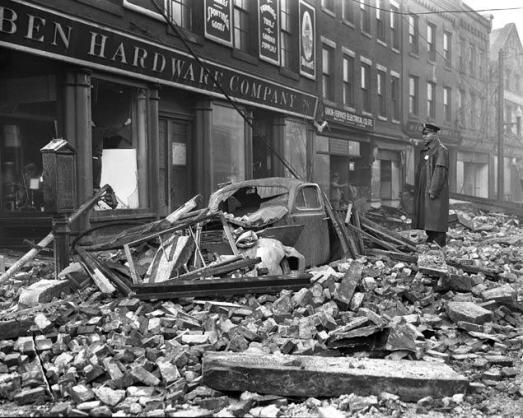
    Another essential part of family lore involved the hurricane of 1938. Nana and Zada, as well as my mother and her sister (almost five and two years old respectively), were living in New London, Connecticut. Zada was working at his father’s bakery when a fierce hurricane of historic proportion came ashore without warning. Nana and the two girls had to be rescued by a Coast Guard boat that plucked them from their second floor apartment, saving them from the floodwaters that had already engulfed the first floor.

    Zada, 34 years old at the time, left work and tried to make his way home during the storm. The wind was whipping at over 100 miles per hour and the rain was relentless. The Thames River had overflowed with a record tidal surge (a record that stands to this day) and was streaming through the streets. Zada clung to a statue of Christopher Columbus to avoid being swept away. Zada maintained that the statue saved his life.

    Eventually he was reunited with his family, but they had lost everything to the storm. The bakery was destroyed, as was their home.

    newlondonct_nydailynews
    A view of the destruction in New London (NY Daily News)

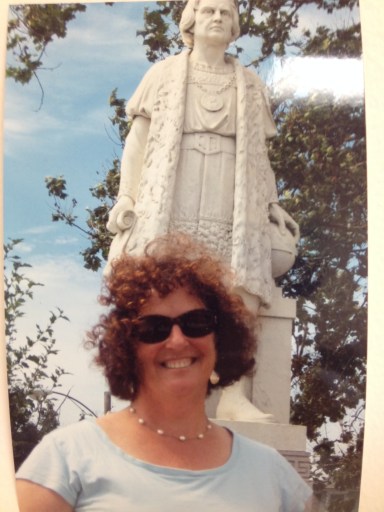
    There were a number of family legacies of that historic storm. Zada started celebrating his birthday along with Christopher Columbus on October 12th . As a child I thought it was his actual birthday. Since Zada came to this country from Russia as a baby, his birth records were in dispute. While the actual Christopher Columbus may be in disgrace today, we are still grateful for the monument to him in New London. In fact over the years I have gone to visit it several times.

    IMG_3151
    Me paying homage in 2011

    Another legacy of the hurricane was Nana’s distrust of the Red Cross. She believed that they unfairly didn’t allow her back to retrieve the family’s possessions from their second floor apartment. She saw her neighbors being permitted back in to get what wasn’t damaged, but she wasn’t given the same courtesy. She grieved the loss of mementos and photos of her mother who had died some years earlier. Nana, who gave to charity generously and regularly, would not contribute to the Red Cross. Our family continues to look for other ways to contribute when disaster strikes.

    Zada was able to bounce back from the losses and disappointments. After some false starts, he and Nana rebuilt their lives in Brooklyn, buying a bakery that they ran for over 20 years.

    Zada always seemed to be impervious to the weather in both the literal and metaphorical sense. I remember a near blizzard in Canarsie that added to the myth that surrounded him.

    Zada was normally home from work at 3:00 pm. This particular day a winter storm was pummeling Brooklyn. When it got to be 5:00 pm Nana asked my uncles and brothers to go look for him in the park. They took gloves, a scarf and hat, knowing that he would have driven to work unprepared. The boys found him and offered him the gloves, scarf and hat, which he promptly refused. He was, after all, already wearing an extra layer, a yellow sleeveless wool vest. I saw him coming down our street. His gray wool coat was unbuttoned, flapping in the wind, his bald-head uncovered. Snowflakes caked his bushy brows.

    As with the hurricane, he was at work as the storm worsened. Zada, now in his early 60s, decided to walk home from the bakery in Greenpoint. It was a long 7-mile trek across the borough, but he made it, bringing with him bags of surplus bread and other bakery items in case we were snowed in.

    When he arrived, much to Nana’s relief, he was perplexed by her ministrations. She hovered over him, suggesting a hot shower and hot drink. He didn’t see it as any big deal – he had been through worse.

    The Spilken family motto may be, as my grandfather said many times, ‘make the best of things.’ This was not a philosophy that came naturally to me. I have trouble looking at the bright side. As a freshman I was walking on the campus of SUNY-Binghamton in the fall of 1976 with my very good friend, Merle. She pointed to a particularly vibrant red leaf on the ground and exclaimed, “Look how beautiful!” “It’s dead,” was my pithy response. Merle just looked at me. To this day we laugh about our differing perspectives. Fortunately, I have Merle and Zada’s legacy to remind me that there is another way.


  • I thought I wanted to be a boy. As I understand gender identity today, I realize I didn’t really want to be a boy. I just wanted the rights and privileges of being a boy. I wanted to play like boys played. I wanted to have the same responsibilities around the house as my brothers (read: very little). I wanted to talk about the stuff boys talked about, sports and politics.

    Title IX came too late for me. The mindset about girls and sports was just beginning to change. In my time girls who played ball were suspect — that is, of being a lesbian. The only real time I got to play any kind of ball, unless you count punch ball during recess, was in gym class, when we weren’t dancing or doing calisthenics.

    Growing up with two brothers and two uncles who were like big brothers, I was obsessed with sports. I loved the big three: baseball, basketball and football. I loved watching them, but I wanted to play them, too. Occasionally I would be allowed to join the boys for touch football. Uncle Terry taught me to watch my defender’s feet and when they crossed, I should make my cut inside to catch the pass. Mostly though I was the official scorer when they played softball.

    One weekend in 1972 when I was 12 or 13, I was sleeping over at my cousin’s house in Port Washington. My aunt, who knew of my love for sports, offered me a book to read while I was there. It was The Open Man by Dave DeBusschere (the forward on the Knicks). I read the book in one sitting. I was officially hooked on basketball.

    This was a case where my timing was perfect. To root for the Knicks in the late ‘60s and early ‘70s was sublime. After reading the book, I became obsessed with Dave DeBusschere. He represented everything good to me. He was a hard-nosed, relentless defensive specialist, a team player, smart about the game, and he was, in my opinion, really good-looking. Some girls my age followed David Cassidy or Bobby Sherman, not me. DeBusschere’s picture hung on my bedroom wall.

    This was the picture that hung on my wall.

    p-478941-dave-debusschere-autographed-hand-signed-new-york-knicks-8x10-photo-hc-0hxrbb6vpd

    I took my passion for him and sports and put all my energy into rooting for the Knicks. I religiously read the sports section of the four New York newspapers (the Post, the Daily News, the Times and the Long Island Press). I listened to every Knick game on the radio, living and dying by Marv Albert’s call. It was a ritual for me. I sat on my bed, in my closet-sized room, only the light of the fish tank on and I listened. Marv Albert would describe the game so that I could visualize Walt Frazier bringing the ball upcourt. I dreamed of being a sportswriter. I wrote my own article about each game and kept stats – some that I invented.

    I didn’t share my obsession with many people for fear of being judged a nutcase. My immediate family knew and one friend, Deborah. Lucky for me, Deborah, one of my two friends on the block, shared my love for the Knicks. I don’t think she was quite as nutty as I was, but we would talk about the most recent game as we took one of our frequent walks to Lofts, the stationary store in the shopping center that sold candy and magazines. We would peruse the magazines until Bea, the owner, invited us to buy something or leave. Sometimes, if we had the money, we’d buy Tiger Beat, even though we loved our Knicks more than any Hollywood heartthrob.

    There were so many instances where my love for the Knicks and DeBusschere, in particular, bordered on insanity. Aunt Clair took me to a charity tennis tournament at Forest Hills. Rather than watch Arthur Ashe and Stan Smith play right in front of me, I had my binoculars trained on the stands where Dave DeBusschere was sitting watching the match! Once when I was invited to a party in junior high school, I took my transistor radio so I could listen to the Knick game. It was the only way I would go to the party. Clearly, I had issues.

    I couldn’t wait to actually play the game myself. When I got to high school I tried out for the girls basketball team. I made it and I actually started, which tells you more about the quality of the team than the quality of my play. I was pretty terrible. Unless you are extraordinary you can’t start learning to dribble a basketball at 14 and be good at it. There was one girl on our team who was motivated and fearless enough to force her way onto the playground courts with the guys; she grew up playing. She had skills. Most of us were just awkward. I don’t remember if we ever won a game.

    I started formally writing about sports in high school. First, I wrote for the school newspaper, then for the local papers (The Canarsie Digest, Kings Courier, Bay News and Flatbush Life). When I got to college I was given the women’s tennis team to cover for the school paper.

    Somewhere along the way in college I lost my passion for sports. It just didn’t seem important any more. Not when compared with Three Mile Island, the Iran hostage crisis and my social life. I couldn’t muster the same enthusiasm for the Knicks, Yankees, or Giants. I still watched the Yankees in the World Series in the dorm lounge, but I wasn’t invested in it. It was time to move on. I didn’t have space for the obsession any more, plus Dave DeBusschere retired and the Knicks were never as good (at least not yet).

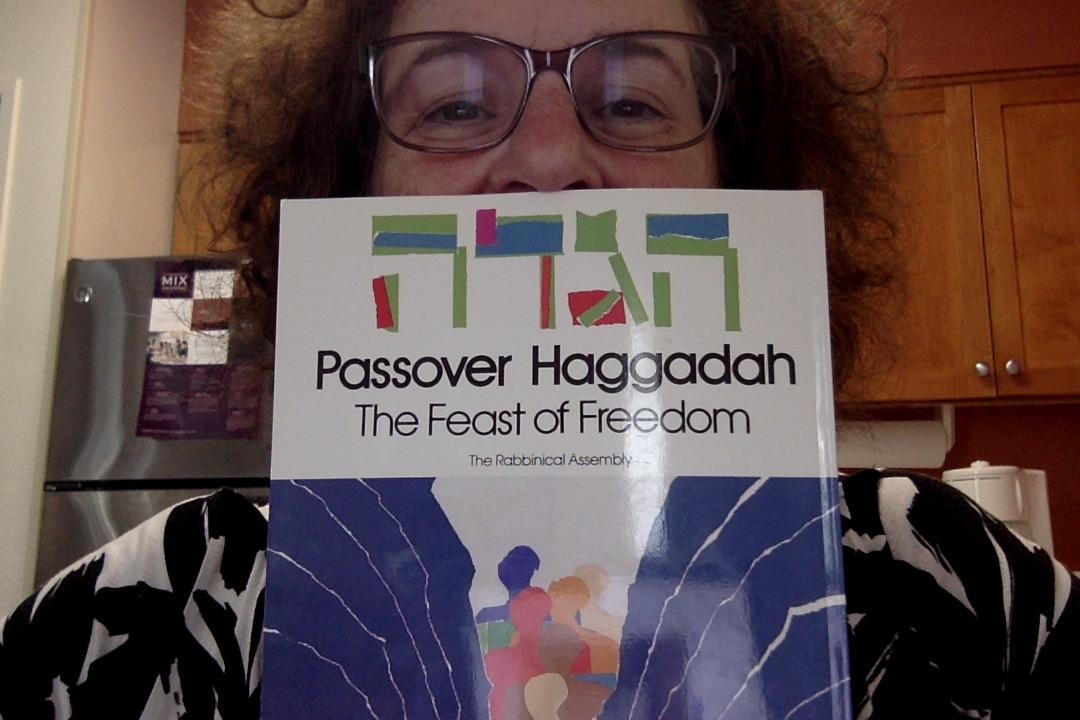
  • Note: Though I originally posted this two years ago, I thought it was appropriate to re-share it. I hope you enjoy! Zissen Pesach, and/or blessings of the season to all!

    Photo on 3-31-18 at 11.48 AM

    Screen Shot 2018-03-31 at 11.46.28 AM

    Jewish holidays were associated with certain traditions when I was growing up. Horrific traffic was often part of it.

    Rosh Hashana was celebrated by going to Aunt Simma’s house in Port Washington for a family dinner. We battled the traffic on the Long Island Expressway. My father never learned to cope with it despite being a life-long resident of Brooklyn – he may have invented road rage. All of us in the car tried to become invisible, silently shrinking into our seats so as not to increase his wrath. We tried to ignore his steady stream of invective. My mother would make excuses for the poor choices of the other drivers. After someone cut us off, she might suggest, ”Maybe his child has a stomach ache and he’s just trying to get home faster.” Somehow this didn’t help.

    Traveling ever so slowly to Long Island, I would look out as the houses changed to single family, larger homes with lovely landscaping. Arriving in Port Washington it seemed a different world from my own with its dirty sidewalks, postage stamp-sized lawns and multifamily, attached homes.

    Although Rosh Hashana is a high holiday on the Jewish calendar that for many meant hours in synagogue, our celebration was an excuse to gather as a family and have traditional foods like chicken soup, brisket and noodle kugel.

    Passover meant dealing with the traffic on the West Side Highway in Manhattan. Aunt Diane’s apartment was on West 104th street between Broadway and West End Avenue. In those days, when New York City was the murder capital of the world, each block was a different neighborhood. 104th west of Broadway was safe, 103rd east of Broadway wasn’t. Gentrification wasn’t even a concept yet. One thing remains the same – looking for parking was, and is, a nightmare.

    Their apartment, on the 16th floor, was overheated so the windows were open. I would stand in front of the window in the bathroom and look out at the city – listening to the traffic and sirens, feeling the cool air, looking at the lights, imagining the lives in the apartment buildings across the way – I relished the feeling of being both removed from and in the midst of the energy of the city.

    One Passover seder in particular was memorable – not really for the seder itself, but for what my family did afterwards.

    The seder was a long, involved affair, filled with ritual and song. Uncle Paul came from a long line of rabbis and his family knew many traditional melodies. It was their custom to discuss the story of the Exodus and its various interpretations. It took a very long time to get to the matzoh ball soup.

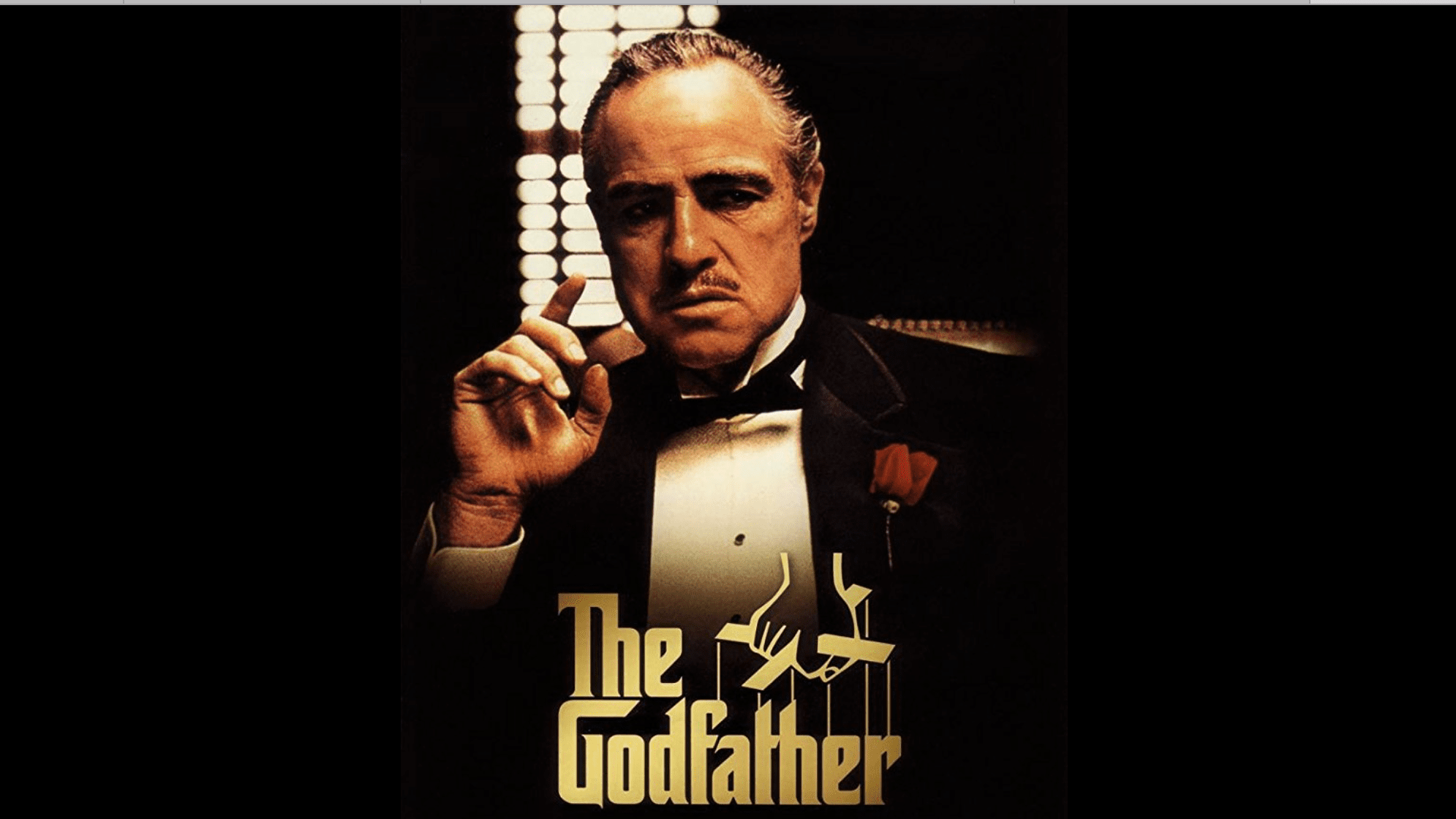
    This particular year the movie The Godfather had just come out, it had opened a few days earlier and was playing to sold out theaters in the city. My Dad was dying to see the movie. He was not a religious man, dubious about the existence of God and not one to enthusiastically partake of Jewish rituals. Attending the seder at his sister’s house evoked many conflicting emotions for him: his relationship with his sisters and parents was strained at best, he hated the traffic, he didn’t exactly get along with his brother-in-law and though the lesson of Passover, remembering our oppression and valuing freedom, was a core value, he probably could have done without the lengthy service.

    Finally, the seder concluded at about 11:00 p.m. When we got to the car, Dad asked my mom, “Feige, what do you think? Can we get in to see ‘The Godfather’ now?”

    The movie was playing around the clock in certain Manhattan theaters.

    My mother, always ready for a movie, said, “Why not? Let’s try.”

    “You kids okay with that,” Dad asked. Mark and I shrugged, okay. (Steven was away working at a hotel in the Poconos.)

    We drove to the east side (getting crosstown through Central Park without traffic!) and were relieved to find that there were seats available. We got tickets for the midnight showing. I was 12 years old. My father, who had grown up in the Red Hook section of Brooklyn, was fascinated by the mob. I teased him about reading “The Don is Dead” multiple times. He read every book that came out about the Mafia. His parents, who owned a small grocery, had personal experience with mobsters who provided protection in the neighborhood.

    I vividly recall certain scenes from the movie – one involving a horse’s head and another Sonny Corleone’s demise. I’m thinking it probably wasn’t a great choice for me at that age and at that hour of the night. But it was memorable.

    The movie ended at about 3 in the morning. As he drove us back to Canarsie, Dad expounded on why he thought it was such a great movie. We hit no traffic. A perfect ending to our seder night.

  • Zada was sitting at the huge mahogany dining room table in his suit and tie. I crossed the room and went to sit with him to wait for everyone else to be ready to leave.

    I was wearing the same dress, brown with white polka dots, cinched at the waist, that I wore a month earlier to my grandparents’ 40th wedding anniversary party. That party, with its frivolity and craziness (there had been a belly dancer of all things) seemed ages ago.

    Zada looked at me and said, “Nana would be so happy to see you looking so pretty,” and his voice broke; he made a strangled sound. His shoulders heaved as he sobbed. I didn’t know what to do. I had never seen a grown man cry. I stood up and ran back down the stairs to my bedroom with the sounds of his grief following me. I was eleven years old and I didn’t know how to comfort him or myself.

    Two days before I awoke to the sound of Uncle Mike calling to my mom. “Feige, it’s mommy. She’s sick.” I heard his panicked voice in the hall outside my bedroom. Then I heard rustling sounds as my mom got out of bed, “I’m coming!” the slap of her slippers on the linoleum as she followed him upstairs. I pulled the covers over my head, trying to block out any more sounds.

    I couldn’t help but hear the voices calling back and forth, the frantic phone calls being made; they were trying to decide if she needed to go to the hospital.

    Despite my growing fear, I got out of bed and slowly climbed the stairs to see what was going on. I stepped into Nana’s kitchen and my Dad stopped me.

    “Nana would not want you to see her like this,” he said.

    “Can I make her some tea?”

    “Okay, why don’t you do that.”

    I did and when it was ready I wanted to bring it to her, but an ambulance was just arriving. I put the cup down on the marble kitchen table and retreated to our apartment. When I heard movement on the steps, I went back out into the hallway to try and see Nana. I couldn’t see her face, just her wavy white hair as they carried her to the ambulance.

    All the adults piled into cars and followed the ambulance, siren wailing. It got very quiet in the house. Mark, my 14 year old brother, an unbelievably heavy sleeper, had finally awoken in the tumult. I explained to him what was going on. Steven, my oldest brother, was away working at a hotel in the Poconos.

    After what seemed an interminable amount of time, though it was still only early afternoon, we heard people at the door. My Dad came in.

    “Come, sit with me,” Dad said. He ushered Mark and me to the couch in the living room.

    He took a deep breath. “Nana died,” he said quietly.

    She was 56.

    “What happened?” I asked, “how??……”

    “We don’t really know – maybe a burst blood vessel or blood clot.”

    Mark immediately burst into tears. How did he do that? How did he understand it so quickly. I was numb. Dad patted Mark’s shoulder and put his hand on mine. “It’s okay to cry.”

    I don’t know if he said that for Mark’s benefit or mine. I’m sure he offered words of comfort but I don’t remember what they were.

    I learned a lot over the course of the next week. I learned about sitting shiva – the Jewish ritual surrounding death. I watched the mirrors in the house get covered with sheets; Mom, her siblings and Zada each wore a black pin and ribbon to signify their loss; mourners used small hard stools instead of regular chairs. Each morning my uncles walked across the park to the nearest synagogue to say kadish. The house was filled with people, day and night; sometimes it felt like a party. Nana loved a party.

    I learned that grown men do cry. Uncle Jack, Nana’s youngest brother, was sitting quietly one moment and then was overcome the next. I didn’t shed a tear, not then, not since. Nana was my comfort and heart, I felt a deep sadness, but tears would not come. It was my first experience with profound loss, but not my last. I learned that I don’t shed tears of grief and I still don’t understand why not.

    IMG_1281.jpg

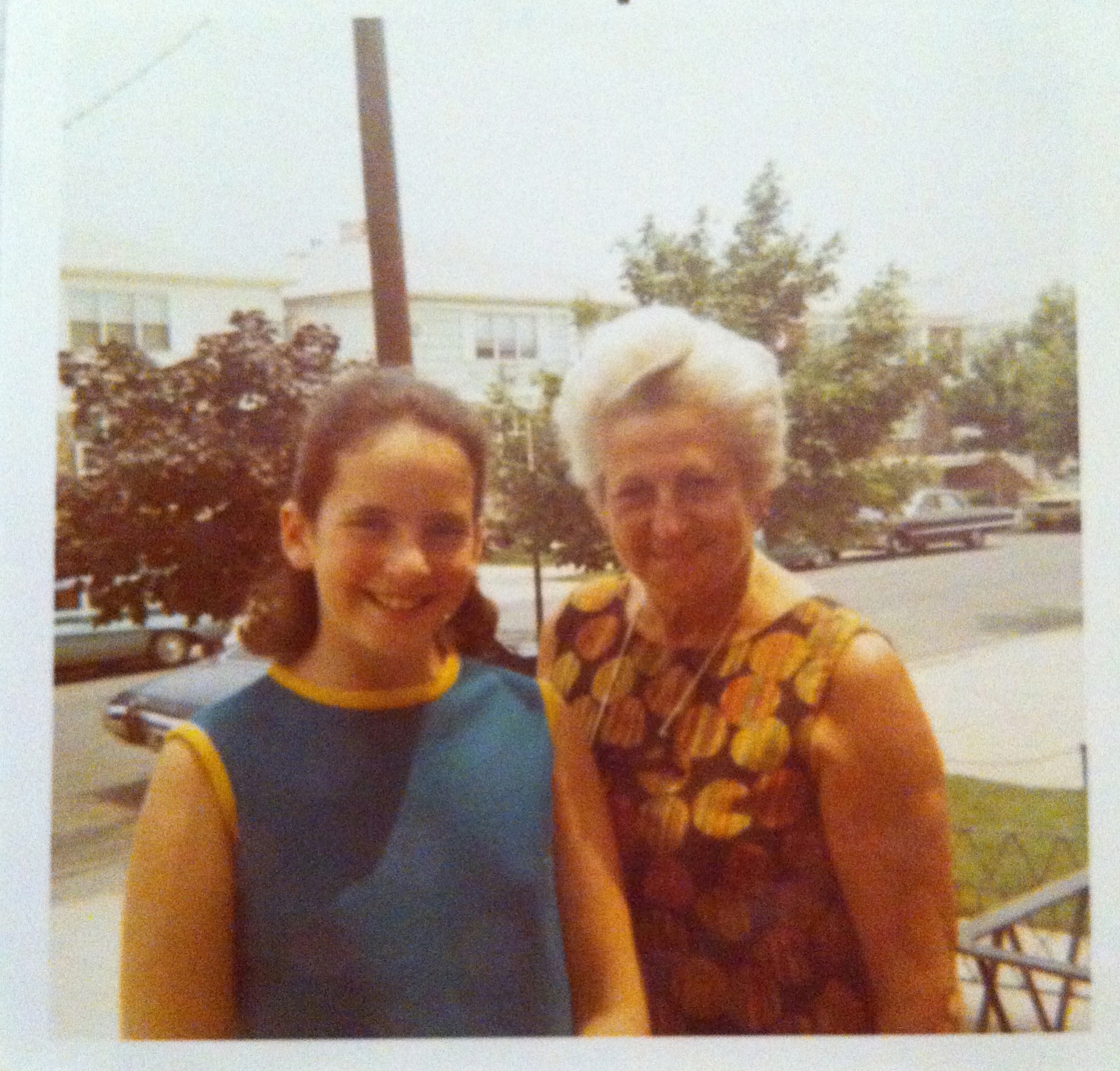
    Nana and me on the porch on East 91st Street in 1969 or 1970