Stories I Tell Myself

Linda Brody Bakst on Brooklyn, growing up, identity and more

  • It was dark out when we piled into the car. The early morning air was still cold even though it was mid-June. I was shivering in my shorts, which I wore because I knew it would get warm and stuffy as the day wore on. I had to coordinate my legwear with my brothers so that our skin didn’t touch while we sat next to each other because that would be too icky for words.

    We were in for a long day ahead. We were driving from our house in Canarsie to the University of Illinois in Champaign-Urbana. This was the third and final time that we would spend the summer there while my father got his Masters degree in Economics.

    It was a tight squeeze in the car. But at least that year we had a roof rack so we weren’t carrying stuff on our laps. The first year we went, I had a laundry basket with pots and pans sitting with me.

    My dad was so intent on getting on the road before the morning rush (even though it was Saturday) that we were ready to pull away from the house at 4:30 am, just as Uncle Terry was arriving back home from his Friday night (or Saturday morning) out. We said our goodbyes, amused that our paths crossed at that hour.

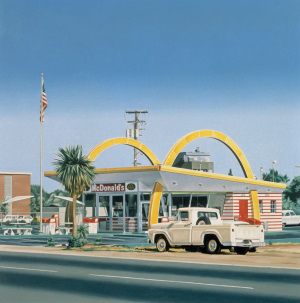
    As was our tradition, as Dad drove down our street, Mom began singing, ”We’re off to see the Wizard, the wonderful Wizard of Oz!” We joined in. One of the things that we were excited to be off to was McDonald’s. Brooklyn didn’t have one yet, but Champaign-Urbana did!
    a0969cc44e12bfb166054f1d0f2cfea0
    Our beloved McDonald’s

    We got on the Belt Parkway and headed toward the Verrazano Bridge. My parents had a plan for the trip and it was the same each of the three years. We would get on the road before dawn, make it to Pennsylvania for breakfast at a Howard Johnsons. Breakfast out was a treat – in 1970 eating breakfast out was rare for our family. Actually eating out at all was rare. After pancakes we got back in the car and drove the length of the Pennsylvania Turnpike. Pennsylvania is a very wide state to drive across, it felt like it lasted forever!

    Then there was a small strip of West Virginia to pass through before getting to Ohio. Many years later, not long after I met Gary, I told him about the trips to Illinois and mentioned driving through West Virginia. He was incredulous. “No way! West Virginia isn’t there!” he claimed, he prided himself on his knowledge of geography. “Really! You are arguing with me when I drove through it!” I was even more incredulous. We pulled out one of those Rand McNally atlases and settled it. I didn’t imagine it, we did drive through a small piece of West Virginia.

    Actually it would be hard for me to forget that because one year we got stuck in horrible traffic just outside Wheeling, of all places. We were practically at a standstill and we didn’t know why. Cars were overheating. This was before the interstate highway had been completed so we were on a small two-lane road that went through the town. I think we eventually came to some construction that narrowed the road to one lane, so traffic had to stop and each way took turns. When you are taking an 800-mile road trip that kind of delay is particularly irritating. Fortunately we didn’t overheat because my father, who wasn’t the most patient man or knowledgeable about cars, would’ve totally blown a gasket.

    We continued on into Ohio where we stopped at a Holiday Inn in the late afternoon. We went swimming in the motel pool, then had dinner and went to sleep. We’d get up early the next morning, but not as crazy early, and drive to a truck stop just over the border in Indiana for breakfast.

    Each year the trip posed a unique challenge. One time, when I went to get my book out of the car after we checked into the motel, I locked the keys in the car. That led to some frantic time trying to break back in. Eventually, after some choice words and advice from some fellow travelers, my father was able to successfully manipulate a coat hanger to pop the lock. Crisis averted.

    One year (before getting the roof rack that included a cover) we had duffel bags strapped to the roof of the car and it poured. It was a miserable time unpacking all the damp clothes when we finally arrived.

    Another year we had a much more serious problem. My mom, who had arthritis, had a flare up and was in terrible back pain. I remember her begging my father to leave her in Indiana. “Just leave me here,” she cried. My father wouldn’t, of course. “Okay, take me to a motel and leave me there! Then you can come back and get me.” That wasn’t an option either, so we just kept going; my mom in agony, and the rest of us not knowing what to do.

    We spent three summers in Champaign-Urbana. Two summers we lived on campus in graduate student housing and one summer in a sublet house. We spent most of the time at the huge outdoor pool, swimming and playing in the water with a whole lot of other kids whose dads were also attending summer school. Sweet Caroline and In the Year 2525 played again and again over the PA system – the soundtrack for that time of my life.

    You know what’s funny? I don’t remember much about any of the trips back home – not where we ate, not where we stayed overnight. The only thing that stands out is recognizing we were getting close when we smelled the sulfur and chemicals – quite a difference from the smell of manure that greeted our arrival in the Midwest. We knew we were coming to our exit of the New Jersey Turnpike when the pungent, unpleasant smell of the refineries welcomed us back home.
  • We were laughing in the snow. Tossing snowballs at each other in front of our house in Canarsie. Sliding around on the snow-covered walkway and driveway, enjoying the horseplay. The way I remember it, my brothers, Uncle Mike and maybe my cousins, Laurie and Ira were there. But, I may be remembering a photograph of us in the snow from a different time. This is clear: I felt a cold snowball smushed into my nose and mouth. Uncle Mike suddenly had me in a headlock and had a mound of snow that he was pushing into my face. I twisted and squirmed to get away. Just as suddenly he let me go. I was shocked. I didn’t know where that came from. It would be some years later, but I would come to understand.

    It seems to me that a significant part of life is luck. The family you are born into, the time and place, the particular constellation of genes that you inherit are all out of your control. That isn’t to say a person can’t overcome a bad hand or those disadvantages mean a life won’t have joy and accomplishment. But some people seem to be blessed with a life of mostly sunny skies, and others not so much. Uncle Mike, my mother’s younger brother, fell into the latter category.

    From the get go Uncle Mike couldn’t catch a break. He was born with a digestive problem that required that he go to the pediatrician’s office regularly for an injection. According to the story my mom told me, she would take Mike in his carriage to the doctor’s office. When he realized where they were going he would start to cry. Mom, not knowing what to do, would mislead him into thinking they were going somewhere else. She felt guilty about this and carries the weight of that to this day.

    Despite the health issues, Uncle Mike grew to be a big man, around 6’3”. He struggled mightily with his weight. Obesity runs in our family and at various points Uncle Mike was morbidly obese. Some big men have a toughness about them, or are a presence in a room. That was not Uncle Mike. He was good-natured and he had a softness that wasn’t just physical. He had many friends, but was also the target of bullies. He carried the scars of low self-esteem.

    Uncle Mike was 13 years younger than my mother, 13 years older than me. He lived upstairs with my grandparents while I was growing up. He graduated from high school but didn’t get a college degree. He was smart, but he didn’t pursue higher education. In contrast, each of his three siblings earned graduate degrees. For a number of years he drove a truck delivering bakery goods in the city (for the same commercial bakery where my grandfather worked). He frequently worked nights and slept during the day. I was careful not to wake him.

    Uncle Mike was fastidious and had no tolerance for anyone who was ill-mannered. Chewing with your mouth open was a favorite target of a zinger. If he heard me chewing gum, he let me know about it. “What are you, Elsie?” his voice dripping with sarcasm, referring of course to the cow, followed immediately by the reminder, “Chew with your mouth closed!” Actually, it was a good lesson – perhaps it could have been delivered more kindly.

    An important part of our family life was sports and Uncle Mike was no exception. He was a fan and he participated, playing football and softball with his friends. Uncle Mike was a Jets and Mets fan. My mother and her two brothers had season tickets to the Jet games at Shea Stadium. One more piece of evidence that my family was a little unusual – my father didn’t go to the games, my mother did!

    My brothers and I relished watching Met games with him in his bedroom. He would have the air conditioner cranked to meat locker temperature – it felt great since the rest of the house was usually stifling. He provided funny commentary about the lovable losers. He always identified with the underdog. He hated the Yankees, which was the team I favored, though I did it quietly. He loved the movie “Rocky.”

    He had a loyal group of friends who visited the house often. I grew up knowing his buddies: Alfred, Philly, Walter and Barry. I was the official scorer at their softball games. I went with Uncle Mike to Staten Island where they played and kept the scorebook for them. While I would have preferred to play, it was fun being there and I learned some colorful language, too.

    During my later teen years, Uncle Mike made a concerted, successful effort to lose weight. He moved into his own apartment. I remember going with him to shop for new jeans. He was looking forward to going out on a date and we picked out some sharp clothes.

    Uncle Mike was trying to turn his life around. Though in that day and age, it wasn’t spoken of, I believe he sought help through therapy. I remember my dad saying that if emotional issues got in the way of your day-to-day life, and you weren’t able to be happy, it was time to seek help. I think he said that in the context of Uncle Mike, but I’m a little fuzzy on that. Either way, I took that message to heart.

    It was around that time that Uncle Mike apologized to me. The way I remember it, we were riding in his car to Aunt Simma’s for dinner. He said he was sorry for teasing me so much when I was younger and for giving me such a hard time. I didn’t know what to say, I was so surprised. He went on to explain that he resented my relationship with Nana, his mom, and took it out on me. I accepted his apology and told him it was okay.

    I didn’t fully appreciate his gesture until I became an adult. The courage it took to be that honest with me. In so many ways life wasn’t kind to him. His marriage didn’t work out and as a result he was separated from his son, various business ventures fell apart, his health deteriorated, diabetes ravaged him.

    Uncle Mike was living in Zada’s apartment in Century Village West Palm Beach when Gary, my husband, and I went to visit him somewhere around 2002 or 2003. At this point his eyesight had deteriorated so that he couldn’t drive and he had parts of his toes amputated because of diabetes. We chatted in his apartment before going to lunch. Uncle Mike wanted to give us a gift. He looked around the apartment, knowing Gary was a huge Met fan. He picked up his mousepad with a giant Met logo in the middle. He insisted Gary take it. Gary was reluctant, but understanding that Mike wanted to make the gesture, he took it.

    Through it all he remained good-natured, he enjoyed a good meal, loved movies and telling stories, rooting for the Mets, seeing family and friends. Uncle Mike died of complications of diabetes when he was 58 years old in 2005.

  • We went to Florida to check on the folks. We left on a cold Spring day from Albany and arrived two hours later to a warm breeze in Fort Lauderdale. We picked up the rental car and got on the highway heading to my mom.

    “Enjoy this ride,” Gary, my husband, said with a laugh, “it’s going to be the best part of the trip.” I sighed and smiled.

    My mother lived in an “active retirement community,” which featured 12 tennis courts, a huge community pool and abundant palm trees. Unfortunately, age, spinal stenosis, lung cancer, and bouts of congestive heart failure took their toll and my 82-year-old mom wasn’t so active anymore. After the latest health crisis, my brothers and I prodded her into accepting the need to move into an independent living facility in New Jersey, closer to family. This was our last visit in Florida before her move – we were, in part, going to help prepare her.

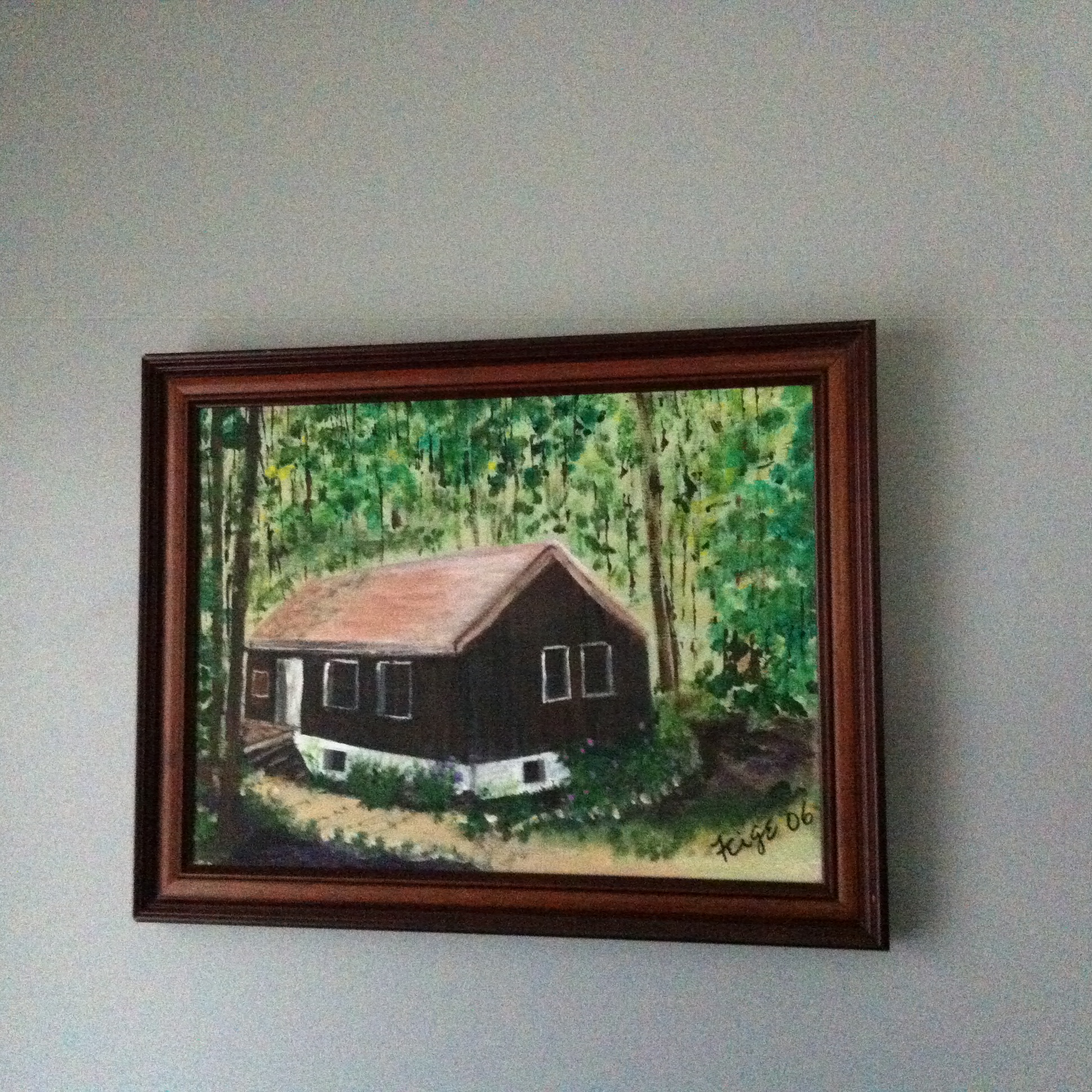
    We arrived at the gate to the community, pushed the buttons to ring her and she buzzed us in on the first try. We drove to her unit and found her waiting outside with a broad smile, happy to see us and proudly showing us the art gallery she set up in her garage. The walls were lined with her creations from the past 20 years. I have some of her paintings hanging in my own house. She doesn’t paint anymore; she got frustrated when she felt she wasn’t improving.

    img_1544
    Mom’s painting of their home in Livingston Manor which hangs on our bedroom wall. Mom and Dad’s ‘happy place.’

    That day was a good one for Mom. Days were measured by pain level. Arthritis and deteriorating vertebrae are unpredictable; the pain can range from debilitating to manageable to nonexistent. My mother’s face lets us know exactly what the pain level is – it registers immediately in her coloring and in the sound effects that accompany any movement.

    We visited with her for two days, ran errands and planned for her move north. We may have gotten in the swimming pool. I promised to come back down to help her pack just before the move.

    Then we got back on the road and drove down to visit my in-laws in their retirement community.

    Paula, Gary’s mom, has Alzheimer’s disease. The changes in her began about eight years ago. We have been fortunate in that it has been a very slow decline – long periods of time pass without further diminishment. But then there are dramatic changes. This visit we notice her eating habits changed. She craves sweets and she forgets that she has already indulged. This could be kind of funny, but it isn’t.

    We ate breakfast and Paula took a Klondike bar for dessert. She enjoyed it thoroughly as she slowly savored the vanilla ice cream wrapped in a chocolate shell. She loves chocolate. We moved to the living room to sit and chat. After a couple of minutes, Paula asked, “Does anyone want an ice cream?”

    “Paula, not now,” David said gently, reminding her that we were going out to lunch later.

    She looked crestfallen, a small pout of her lower lip, but she acquiesced.

    Gary suggested we take a walk. It took a while for Paula to prepare herself to leave the apartment. The four of us walked slowly, it is only about 100 yards to the pavilion with the pool. We found chairs in the shade and sat and chatted for a bit. Paula quickly turned restless, ready to return to the apartment.

    “I think I’ll stay and read for a bit,” I said. Reading by a pool is one of my favorite things to do.

    “Linda, you’ll come with us?” Paula half asked, half stated.

    “Actually I think it will be all right if I stay and read for a little. I’ll be back in less than an hour, ok?” I looked to Gary to see if he was okay with this. He nodded.

    “Ma, it’ll be okay,” Gary reassured Paula as he steered her back towards the apartment.

    I watched them make their way through the gate. I took a deep breath and opened my book.

    About 15 minutes later I heard the squeak of the gate and saw Gary and Paula heading toward me. Gary looked sheepish and said quietly, “I couldn’t distract her. She insisted on coming back to get you.”

    I looked at Paula and smiled, “I’m sorry I worried you.”

    “She thought the Cossacks would get you,” Gary said in my ear.

    “Who would’ve thought that the Cossacks knew about the satellite pool in Pembroke Pines?”

    It was a feeble attempt at humor. If you don’t laugh, you cry. Sometimes you do both.

  • When I was in elementary school I wrote poetry. I did it for a number of reasons. First and foremost, it was assigned by the teacher. I think there was a unit on poetry in each grade. But, there were other reasons, too. When I wrote a poem, I got positive feedback from the teacher and from my family, particularly from my mother and Zada. I responded to that encouragement by getting more interested in poetry.

    As a child I liked reading poetry, too. Thanks to my mom, I grew up exposed to Robert Louis Stevenson’s A Child’s Garden of Verses, among others. I remember checking poetry anthologies, along with fairy tales and Betty Cavanna books, out of the school library.

    Zada, who hadn’t graduated from high school, appreciated the written word. I was in 4th or 5th grade when he asked me to type up my poems so he could keep a copy. I think there were about five poems on two pages. He took them from me, folded them up and put them in his wallet. I believe he shared them with friends and family. He would pull the pages out every so often to remind me that he still carried them. I think he still had them when he moved to Florida.

    When I reached junior high school I had stopped writing poetry. I stopped writing creatively entirely. I’m not sure what happened. Maybe I stopped getting positive feedback. I don’t know if it is coincidence, but I stopped at the same time that my acute self-consciousness fully flowered. I was paralyzed by doubt. I periodically wrote in a journal during that time, but I was totally unwilling to share anything.

    I didn’t write another poem, or share any of my writing, until a little over a year ago. As part of the first writer’s workshop that I took after I retired, we were asked to produce some poems. During that intensive four-day workshop, which was led by a poet, we were asked to not only write poems (and prose, too), but to share it with the group! Much to my amazement I was willing and able to do it. And nothing terrible happened – I didn’t die of embarrassment. It was liberating.

    After that workshop, I focused on writing the stories I’ve been sharing on this blog. Lately, though, I have found myself writing prose that I think may be borderline poetry. I don’t know the definition of poetry, but what I’ve been writing is different than the narratives I’ve been posting.

    Since this is my blog, and I am experimenting with my writing, I thought I would take a risk and put something different out there. So here goes…..two poems for your consideration.


    [Note: I can’t figure out how to post the poems single-spaced! If anyone reads this far and knows how to do this on WordPress, let me know! Thanks]

    Morning Ablutions

    Pop out of bed

    I’m late

    I have nothing to wear

    Fling open my closet

    Pull out a drawer

    Toss stuff on the bed

    Settle on a trusty t-shirt and jeans

    Into the bathroom

    Run a pick through my hair

    Brush teeth, rinse mouth

    Grab my backpack

    Head out to the bus


    I stumble half-awake into her bedroom

    Shhh, shush, it’s okay, little one

    I lift her and hug her to my chest

    She settles a bit

    I carry her to the changing table

    Tickle her belly with my nose

    Remove the wet diaper

    Wash and dry, sprinkle some talc

    Put on a fresh one

    Pick her up and bring her to the kitchen

    Into the high chair

    Some cheerios to munch

    Yawn as I whisk her eggs.


    Open my eyes

    Reach for my glasses and I-phone on the night stand

    Look at the time, peruse email, scroll Facebook

    Nothing of interest

    Sit up and put my feet on the floor

    Get my legs under me

    Shuffle to the bathroom, working out the kinks

    Shake out the pills

    Take some water, throw back my head and swallow

    Apply moisturizer (with sunscreen) to my face and neck

    Brush teeth

    Throw on yoga pants and sweatshirt

    Head downstairs for coffee

    _______________________________________________

    Rosh Hashanah 

    Rosh Hashanah 1991

    We enter the sanctuary

    Before us a sea of curly dark hair

    Dotted with white yarmulkes

    Blue next to gray next to brown suit

    White tallit draped across shoulders

    Heads turn to note our entrance

    I shift Daniel in my arms,

    Grasp Leah’s little hand

    Murmur “sorry” as we climb over congregants to

    Settle into seats

    We wait to hear the shofar usher in the new year.


    Rosh Hashanah 2016

    We enter the sanctuary

    Before us small clusters of people

    Sprinkled throughout the huge hall

    Bald and graying heads

    Covered by white yarmulkes

    Gray, navy and black suits

    Stooped shoulders beneath tallit

    Heads turn to note our entrance

    I follow Gary to the front section

    We settle into our seats

    We wait to hear the shofar usher in the new year.


  • I went on my first trip to Florida with Nana and Zada when I was in fifth grade. I’m not sure why I was chosen to go to Miami Beach with them – I was the fourth of the five grandchildren. It was my first time on a plane. I survived the flight without incident. I was proud of myself so I took the unused airsick bag as a souvenir and pasted it in my scrapbook.

    It was dark when we emerged from the airport terminal in Miami and the three of us got into a checker cab to go to the hotel. The air outside was surprisingly soft. I had never seen a real palm tree before, but there they were: tall, narrow trunks lining the highway median, dark fronds etched against the violet sky. As I looked out the window of the cab, I could hear the music to the opening of the Jackie Gleason Show playing in my head and I wondered where the June Taylor dancers lived.

    sands_a_001

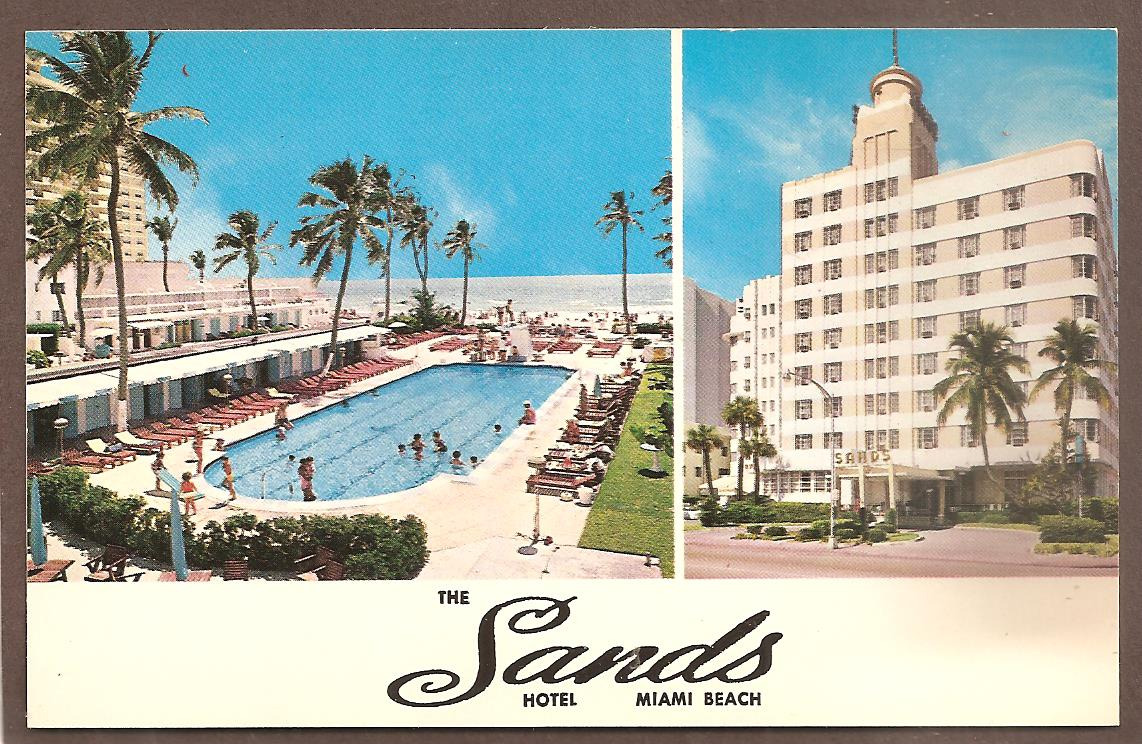
    We stayed at the Sands Hotel. I shared a bed with Nana, while Zada had the other double bed. I was excited to go to the hotel pool and show them my swimming and diving skills. Unfortunately my shoulders got sun burned that first day and it was hard to swim after that. My skin was super sensitive and the tropical sun was a new and ferocious challenge.

    We spent some time visiting family that I didn’t know and friends of Nana and Zada’s who were also on vacation in Miami Beach. Nana and Zada tried to make me comfortable, but I got terribly homesick. I was embarrassed that I was teary-eyed while we visited with Red Rose (Nana’s friends had colorful names – Goldie, Sugar and multiple Roses).

    It got better when Uncle Terry and Barbara, his girlfriend (a year later she became his wife), joined us. Though it was off-season, we went to Hialeah Race Track. Zada, who loved the horses, regaled us with stories about Citation as we looked at the statue of that beautiful animal.

    img_1510
    Uncle Terry, Nana, me and Zada in front of Citation (thank you Barbara for taking the picture; thank you Uncle Terry for sharing it with me!)

    We decided to cut my trip short and I went home with Terry and Barbara while Nana and Zada continued their vacation. I came home sun burnt and disappointed with myself. Miami Beach felt to me like another borough of New York City, just sun bleached and hot.

    I went to Florida with my parents every couple of years after that to visit the elders. Zada moved to Century Village in West Palm Beach in 1973. My father’s parents moved to Century Village in Deerfield Beach in 1974. One year we took a miserable ride on Amtrak (we arrived 24 hours late!), another year we drove. Those trips, usually during our April break from school, didn’t feel like vacations. They felt obligatory. They could also be fraught.

    Zada met and married Laura not long after he moved into Century Village. Laura was no match for our memories of Nana. Even if you took that comparison out of the equation, I failed to see (m)any redeeming qualities. It was later speculated that Zada didn’t want to be a burden on his family, he didn’t have much money, and Laura did, so he did what he thought he had to and married her.

    Laura hailed from Massachusetts and prided herself on her fine manners. I think she was of the ‘children should be seen and not heard’ philosophy. During our first visit with her, Mark and I were sitting by the pool playing some kind of board game while our parents were chatting nearby with Zada and Laura. We could easily overhear Laura grumbling about how crowded the pool got when all the grandchildren descended from the north like locusts during these vacation breaks. My mother responded icily, “Don’t worry, these grandchildren won’t be here again!” This was not the only time that my Dad had to calm Mom’s rage at Laura.

    Despite that threat, we did go back down to Florida in the years that followed. Although I think it came as a surprise to my parents, they ended up becoming snowbirds themselves about 15 years later when they retired from teaching. They bought a place in Boynton Beach in 1988, not far from West Palm where Zada still lived (he outlived Laura by a number of years).

    As an adult, with my own children, we would make the pilgrimage to visit the elders, too. Gary’s parents also wintered in Florida. After renting in various places in the Fort Lauderdale area, they settled in Century Village in Pembroke Pines.

    We wanted our children to see their grandparents so we visited at least once each winter. Both sets of grandparents did their best to make it enjoyable – and it was. Except for one thing. I couldn’t escape the feeling that retirement communities were depressing. My parents were as active as people could be: Mom participated in no less than two book clubs, the cinema club, she learned to paint, she made jewelry and ceramics and more. She said she felt like it was the summer camp she never got to go to growing up. My Dad played tennis twice a day, worked out, played cards and continued to read voraciously. They went out to dinner several times a week. They couldn’t have been happier.

    Gary’s parents were also quite active. David sang in the choir, performed with the Yiddish theater group, and served on the Board of the synagogue. Paula and David went to shul, socialized with a group of fellow Holocaust survivors and played cards several nights a week. They went to the shows at the clubhouse, and they would use the treadmills in the fitness center. Occasionally they went out to dinner, more often Paula cooked or they ate at the cafe on the premises. They too enjoyed their life in Florida tremendously.

    Yet, it depressed me – even before their health started to fail. We would drive into sun-drenched Century Village, the buildings clustered like barracks, the tennis courts empty, the golf course sparsely peopled, the man-made lake with no discernible use just a decorative fountain in the middle, and I would feel the sadness descend. The same thing would happen when we drove into Banyan Springs where my parents lived, though it was less cookie-cutter and usually there were people on the tennis courts. It still felt artificial.

    It felt disconnected from the regular rhythm of life. I had experienced that feeling before. When I moved into Cayuga Hall in College in the Woods at SUNY-Binghamton as a freshman I struggled. College and dorm life were supposed to be the best time of my life. Instead I felt disconnected, as though real life was going on somewhere else. I enjoyed college much more once I moved off campus.

    While some of the melancholy I felt when we visited our parents’ communities stemmed from the constant reminder of our mortality that is a fact of life there, I think it was really that I never did much like summer camp (or dorm life). Too much forced camaraderie, too much pressure to join activities, too much judging of and by others. Maybe we aren’t meant to live only among our own age group at any stage of life – or at least I’m not. Taken all together, memories, associations and my temperament, I’m thinking, when the time comes, retiring to New York City sounds about right.

  •  


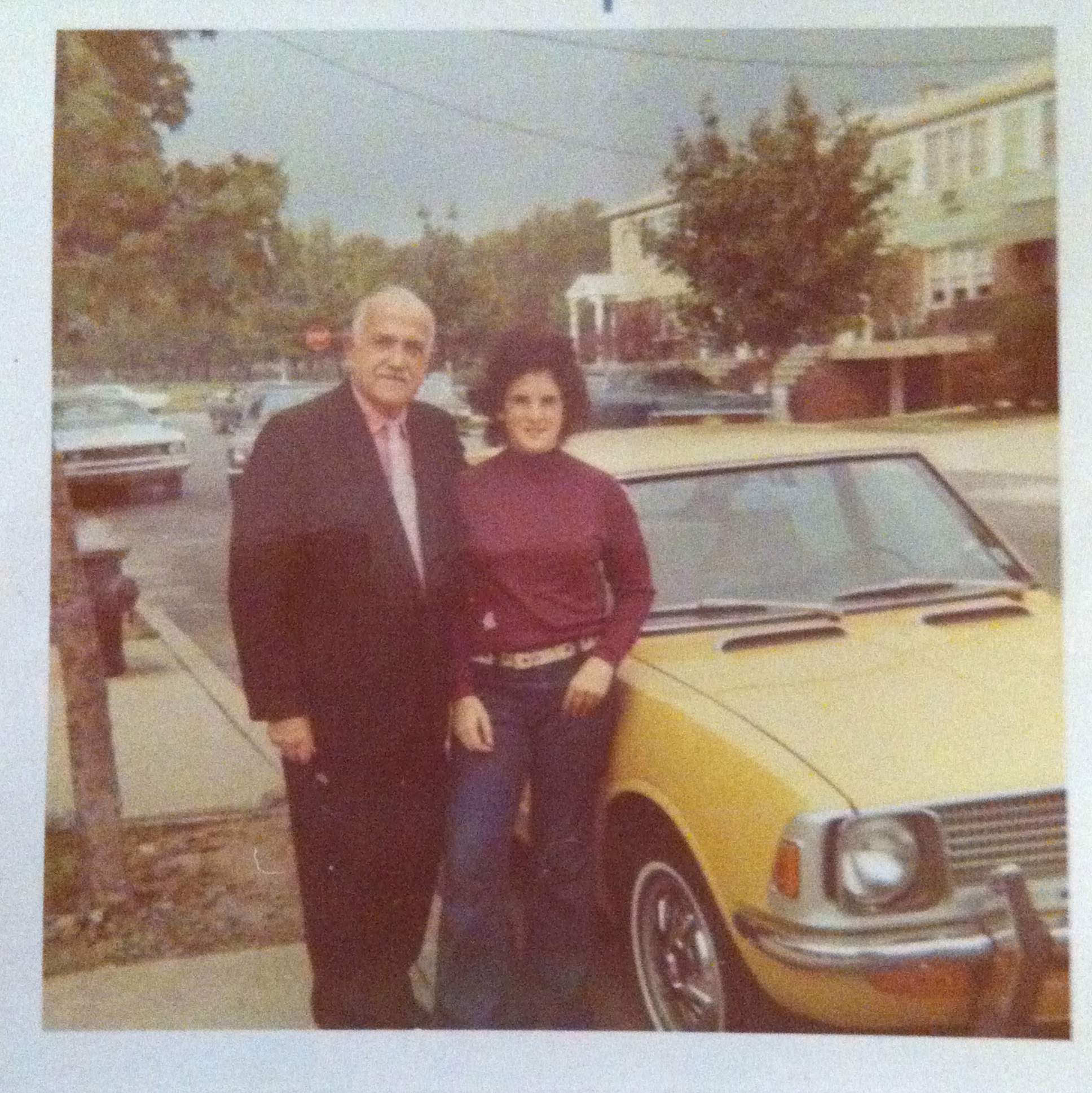
    I was lugging my cello to the bus stop, finally bringing it home from Bildersee Junior High School so I could practice over the weekend. A familiar mustard-yellow Toyota Corolla pulled up to the curb next to me and I saw Zada, my grandfather, roll down his window. “Lindele, let me give you a ride home,” he called out.

    “Thank you! How’d you know I’d be taking my cello home?”

    “Your mother mentioned it to me, so I thought I would see if I could catch you on my way home from work.”

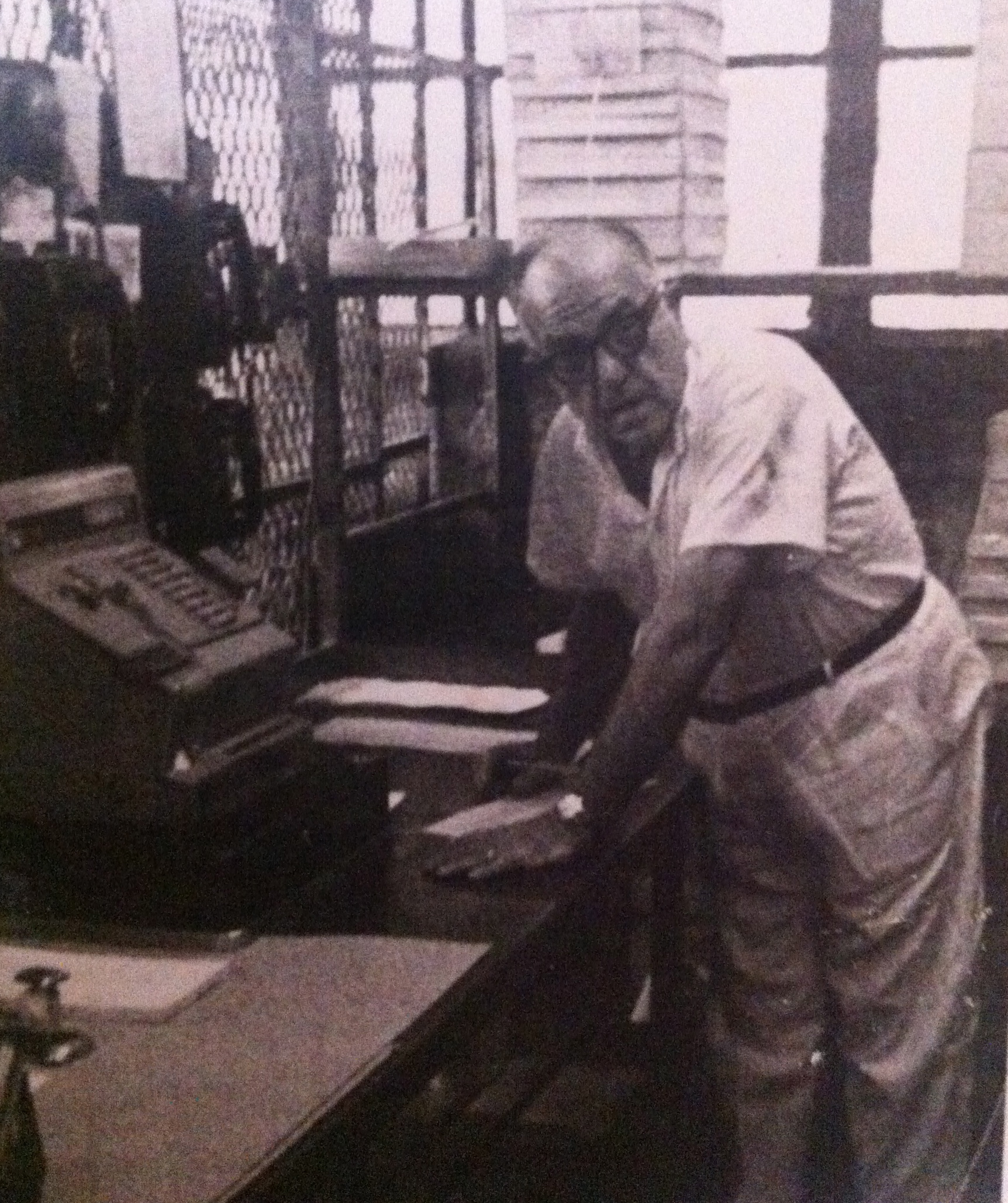
    Zada was coming from Danilow’s, the commercial bakery where he worked, wearing his uniform: a white short sleeved shirt, white pants and black belt. Hunched over the steering wheel, he was nearing 70 years old.

    img_1442

    I carefully manipulated the cello into the back seat and climbed in the front, relieved not to have to manage the cello on the bus – actually two buses and a long walk across Seaview Park to get home.

    “It’s going to rain,” Zada told me. I saw no sign in the sky, so I asked, “How do you know?”

    “I feel it in my bones. Uncle Michael told me he felt it in his leg this morning, too.” I harrumphed dismissively.

    “What? You don’t believe me.”

    “You can’t tell the weather with your bones,” I said, choosing to put my confidence in science instead.

    Uncle Mike had badly broken his leg the previous summer and according to Zada (his father), it would function as a barometer for the rest of his life.

    “Wait, you’ll see, you’re young,” Zada said.

    Conversations with my grandfather often went this way. I could argue about anything with him, including the weather, but I usually didn’t make any headway and neither did he.

    img_1285

  • I have lived a mostly segregated life. It’s not that I wanted that for myself. At least I didn’t consciously make choices that would separate me from people of color, but it has worked out that way.

    I have always been interested in the lives of other people. From a single trailer seen in passing from my car window as we drove through a desolate part of Wyoming to looking at the tenements from the elevated LL passing the New Lots Avenue station in Brooklyn, I have wondered what life was like for the people living in those places. That curiosity led me to books, but it didn’t lead me to friendships.

    I think I would have had to make conscious decisions to seek out relationships with African-Americans or other people of color in order to reach across the barriers. When I thought about making that effort I wondered if it would come across as disingenuous, like George Costanza in the “Seinfeld” episode where he decides to find a black friend.

    I think back to my experiences in elementary school in Canarsie. Classes were grouped ostensibly by academic ability. There was only one or, at most, two black students in my class in any given year, and they were boys. Curtis (not his real name) who was in my fourth, fifth and sixth grade class was very smart but was frequently getting into trouble for talking too much and he was regularly accused of instigating other kids to misbehave. In frustration, one day our fourth grade teacher asked for a volunteer to sit next to Curtis. I raised my hand eagerly, and I was selected. I don’t remember what I was thinking at the time. Did I think I could befriend him? Did I think I could rescue him (as if he needed rescuing)? I honestly don’t recall how it turned out – whatever happened, it wasn’t dramatic enough to make a lasting impression. I can only imagine his humiliation. This was not a strategy used with any other misbehaving student and it certainly didn’t help to bridge the divide.

    In 1972 the New York City Board of Education adopted a plan to bus black students into the two predominantly white junior high schools in Canarsie. My mother supported busing and I did, too. How else would we achieve integration? The plan, though, was received with tremendous hostility by white parents in Canarsie. It resulted in a boycott. Parents kept their children home from Bildersee (my junior high school) and John Wilson (the other junior high school in Canarsie) in protest.

    http://www.gettyimages.com/detail/news-photo/hundreds-of-canarsie-parents-almost-all-white-bloc-k-the-news-photo/537956558#hundreds-of-canarsie-parents-almost-all-white-bloc-k-the-entrance-of-picture-id537956558


    This went on for a couple of weeks. I was literally alone in my 9th grade classes, just my teacher and me. I remember enjoying the one-on-one time with Mrs. Cohen, my English teacher. I also remember walking in the main entrance through a path laid out by the police and their sawhorses. Adults stood behind the barriers, yelling epithets at the few of us who went to school. (The picture above is actually of John Wilson JHS, but this scene was repeated at Bildersee. I don’t recall the policeman blowing his nose quite so ostentatiously.)

    My dad was the administrative dean of Canarsie High School in those years so he was in charge of discipline. He was aware of the troublemakers in the neighborhood and had connections with the police. On one particular day Dad got wind of a planned confrontation between a group of Italian and African-American kids, so he found my brothers in their classes and sent them home. When there were threats of violence during the boycott, I stayed home from Bildersee, too.

    The upshot of the boycott was that the busing plan was implemented and my relationship with one of my closest friends, Pia, was irreparably damaged.

    Like many who lived in Canarsie, Pia’s family had recently moved from East New York to benefit from the better schools and escape the violence that plagued that neighborhood. The plan to bus black students signaled the beginning of the end to them, they believed white flight would certainly follow. I was more hopeful. While nothing was ever said directly, Pia never invited me to hangout at her house again and she was distinctly cool to me at school.

    By the time I got to high school in 1973 racial tensions were at a fever pitch. The way the education system was structured there were very limited opportunities to interact across racial lines. Phys Ed, Health and some elective classes brought us together, though that was all pretty superficial in the scheme of high school life. The thing we could really bond over was rooting for our basketball and football teams. Fortunately Canarsie High School was very competitive. My senior year thousands of us went to the PSAL (Public School Athletic League, New York’s city-wide) basketball championship game between Canarsie and Lincoln High School at St. John’s Alumni Hall. That victory provided a moment of transcendence. While there were other moments, mostly connected to sports, it seemed to me that most of us lived our lives amongst our own.

    It is ironic that my children, who grew up in an upper middle class suburb of Albany, New York, had genuine friendships with people of color and more opportunity for interaction than I did growing up in Brooklyn.

  • It’s funny how I hadn’t noticed it before – the likeness around the eyes. The first time I saw Aunt Diane after my father died, it unnerved me a bit. Now it comforts me.

    My father was the middle child, one sister (Diane) three years older and another sister (Clair) two and a half years younger. They are three of the smartest people I have ever known. It’s kind of amazing that three siblings could each be so sharp. They have different personalities to be sure, but they shared incisiveness, a capacity for insight and intelligence that is quite impressive and could be intimidating. They also shared lively, large, blue-gray eyes. I always wished I had inherited those eyes.

    In a traditional Jewish family, especially of that era (the 1930s), the son was the prize. Typically the family’s aspirations were tied up in the success of the son. Not so in my dad’s family. While I take pride in the fact that it was the eldest daughter who became the doctor, it seems that my father was overlooked. By his description, corroborated by Aunt Diane, he was not given encouragement or attention by his parents. It is a mystery that will never be solved.

    Growing up I didn’t know Aunt Diane that well. We celebrated Passover and Thanksgiving together most years, but those were large gatherings and didn’t provide much opportunity to have intimate conversation. I knew that we all respected Aunt Diane and called upon her whenever there were medical issues that needed to be addressed. I remember her reassuring presence at the hospital when I had eye surgery, by an opthamologist she recommended, when I was 5 years old.

    But the relationship between my father and his older sister, while loyal and loving, could also be tense for reasons I didn’t understand. Or maybe the tenseness related to her husband, Paul. It was not something spoken about, just something I sensed. It would take some unusual circumstances for me to get to know Diane on my own.

    I was preparing to go to Columbia University for graduate school, but housing wasn’t available when the semester started. It was September 1980 and Columbia was rehabbing a building on 80th Street and Columbus Avenue that would be offered to graduate students. I reserved a studio apartment in that building, but since it wasn’t ready, Aunt Diane and Uncle Paul offered to let me stay with them so I wouldn’t have to commute from Canarsie. I lived with them for almost two months, making the easy trip from 104th and Broadway to 120th and Amsterdam where the School of International and Public Affairs was located. And, I got to know Aunt Diane. I can’t say I got to know Uncle Paul.

    I spent any number of hours talking with Aunt Diane about a range of subjects, from national politics (lamenting Ronald Reagan’s nomination to be President) to Israel to health care policy to personal values. I learned she was a lot more liberal than my parents were! I learned about her history, about the challenges of going to medical school as a woman in the early 1950s. She was a trailblazer and a free-thinker; a woman before her time, especially in terms of male and female roles.

    One area where Aunt Diane was distinctly more progressive than my parents was in her attitude toward premarital sex. I knew she and Uncle Paul took a more relaxed view of the subject so I asked her if Gary could stay over with me. Gary and I had already been together for a year at that point and he was working at a lab at Columbia Presbyterian, even further uptown (on 168th street). Gary was living at home with his parents in Rosedale, leaving him with a monumental commute to the lab. Aunt Diane explained that she had no problem with it, but was not comfortable allowing something that would go against my parents’ wishes. While it was true that my parents would not sanction that in their home, I thought they would be okay with it if she was – after all, I had been away at college for the four previous years. I think my parents took an “out of sight, out of mind” approach to the subject. I suggested she talk to my mom about it. I was not privy to that conversation, but a day or two later Aunt Diane told me that Gary was welcome to stay over.

    Aunt Diane was a pediatrician who worked at a clinic in a hospital on the lower east side of Manhattan. During one of those conversations she told me she didn’t believe money should be part of the relationship between a physician and her patient. As a result, she spent her career practicing in the clinic and working for the New York City Department of Health, organizing continuing education for doctors. I always respected that choice, but today as a mature adult fully aware of the implications of that decision, I admire it even more.

    A few weeks ago Gary and I met Aunt Diane for lunch at a diner in her neighborhood. She still lives in the same apartment on the Upper West Side, the apartment I have been visiting since I was a child. Uncle Paul died a number of years ago. She walks slowly with a cane. We sat in a booth and chatted. We talked briefly about her health status; she has a number of medical issues, as any 86 year-old would. But mostly we talked about other things, she told us stories of her visit to Israel with Paul in the 1950s. She invited us to join her that afternoon to see a movie, A Tale of Love and Darkness, based on the book by the same name by Amos Oz. She was meeting a friend to see the movie at 3:00. We would have loved to go, if only we didn’t have another commitment (which we really did, and we really would have preferred to blow off).

    It was a lovely visit. I saw my father in her eyes while we sat in that booth, especially how they crinkle up when she laughs. I am grateful I get to see them still.

  • My mother’s parenting approach can best be described as laissez-faire – not the adjective one tends to think of to describe a mother. My brother says we grew up with a Jewish mother, just in our case it was our father.   He was the one who checked to see if we were wearing a hat before going out into the cold. Although Mom’s parenting was not always a great fit for me as a sensitive and insecure child, she got many things right.

    One muggy August night in 1975 I was tossing and turning, feeling nauseated, my heart pounding. As I lay sweating in my bed in my room the size of a closet, my thoughts were flitting from one unhappy topic to another; taking a mental inventory of everything that was wrong in the world. From the latest crime wave in New York City to more personal worries about Grandma being in the hospital with something serious, but as yet undiagnosed. Earlier that week my father’s friend, someone he had known and played poker with for more than 20 years, committed suicide because of gambling debts that no one suspected. I had also come home earlier that month from a job at a sleep-away camp because it seemed to me everyone on staff was getting high and I wasn’t. All in all I was feeling unmoored, the ground under my feet was shifting.

    I lie in bed looking out my window at the bricks of the house next door and felt the world closing in. After trying to manage alone for a while, I woke my mother up.

    At first she thought I might be physically ill, but after going over my symptoms it became clear that I wasn’t, so she took a different approach. She started a different kind of inventory – reminding me about the good things in my life. My brothers were fine, she and dad were okay, too. I was entering my senior year of high school and would be applying to college soon. Exciting possibilities awaited. Of course that was scary, too.

    Mom had an idea to distract me. She suggested that we plan a sweet 16 party. I would turn 16 in early October. Between having a birthday late in the year and having been part of a New York City program that combined three years of junior high school into two, I was young to be a senior in high school. I had gone to many sweet 16 parties the year before and I thought people would be tired of them. As my mother talked I found myself getting excited in spite of my doubts.

    “You promise people will come?” I knew it was a silly question even as I asked it, but I couldn’t help myself.

    “Yes,” she said with assurance, “we’ll come up with something really great. Maybe a ‘mystery bus tour’? “

    Hmmm, I thought, that sounded interesting.

    Going out on a limb, she said, “I promise it will be a success. And, we’ll have fun planning it.”

    She convinced me.

    Fortunately, the rest of the summer passed without further tragedy.

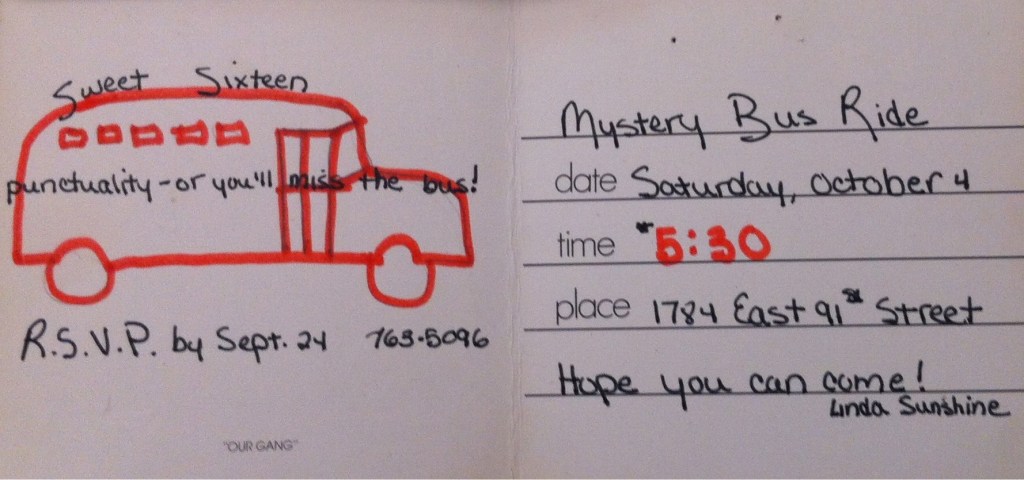
    We chose the off-Broadway show The Fantasticks as the destination for our mystery bus ride. Mom arranged to rent a yellow school bus. I could invite 20 friends. We would have fried chicken from Chicken Galore on the bus and make-your-own sundaes back at the house after the show.

    img_1481
    Amazingly enough, I found an invitation among my memorabilia
    img_1480
    Yes, I drew a bus on each invitation!

    We still had to find something for me to wear, no mean feat given my self-consciousness. After combing the aisles of A&S, we managed to find dressy corduroy overalls. Who knew such a thing existed?! I lived in overalls so it was perfect.

    Now my main worry was about the party once we got back to the house. I actually explained this to my parents: at virtually every sweet 16 I attended, people left the house, went for a walk and came back high. I didn’t like the idea of being alone at my party waiting for people to come back stoned. Of course, if they did, they would be especially appreciative of the make-your-own sundaes.

    My parents reassured me as best they could.

    The big day arrived. Friends and family arrived on time. We boarded the bus and had a little contest with everyone guessing where we were going. The Empire State Building? A bowling alley? A museum?

    Everyone managed to eat their chicken dinner without too much difficulty. I wasn’t wearing my dinner – a personal victory! We arrived at the Sullivan Street Theater in Greenwich Village. I remember worrying about the seating arrangements, but in the end just gave out the tickets and enjoyed the show.

    Afterwards we piled back on the bus and returned to Canarsie. So far, so good.

    To my surprise, the guy I had a crush on gave me the album The Divine Miss M by Bette Midler. He suggested we put it on. The song was Do You Wanna Dance. He asked me to dance! I had precious little experience slow dancing. But, I managed. It was awkward and thrilling.

    Some people did disappear and came back high, but it wasn’t a mass exodus.

    And, I was actually happy at the end of the night! Not all that common of an occurrence in my teenage years. I sat on the couch in the basement, reviewed the night with my mom and read the kind messages in the sign-in book and smiled. My mother made good on her promise.


  • I was fighting a war on several fronts when I was growing up. I wanted to be a classically feminine girl and I wanted to behave like a boy at the same time. I had strong opinions about things, but I wanted to please people, too. I wanted to look pretty but I really wanted to be comfortable.

    Wanting to look pretty created issues because I wasn’t interested in clothes or make-up. I had neither the patience nor the desire to read fashion magazines or talk to other girls about that stuff. It was likely rooted in insecurity – I don’t think I believed I could be pretty and it was far easier to dismiss it as uninteresting than to try and fail or be laughed at for the unsuccessful effort.

    At the same time I wanted to be strong, physically and mentally. But I was afraid of seeming too masculine. I thought I already appeared masculine – I perceived myself as being built like a linebacker. Not to mention the unsightly facial hair that I could never figure out how to handle.

    I absorbed the message that girls were supposed to have Barbie-like figures and mine didn’t look like that. I didn’t have a tiny waist, I didn’t have long, thin legs and I didn’t have a small, shapely butt. And then there was my hair and my eyes. Even when I grew up enough to know that the Barbie standard was ridiculous, I wasn’t able to make peace with my body.

    It didn’t help that I had several experiences of being mistaken for a boy. One time was particularly awkward. I was probably 11 or 12 and I was in Star Value City, the five and dime in the shopping center near my house. I had been sent by my mom to buy sanitary napkins. I hated being sent on that particular errand. In those days, boxes of sanitary napkins were at least the size of a large microwave oven. There was no way to disguise the package – they didn’t make a bag big enough to cover it. It was so embarrassing – I thought everyone would see the monster box of Kotex and think they were for me.

    modess-napkins
    This is what a box of sanitary napkins looked like in the 1960s – just a different brand – and it is only a box of 12! I would buy a box of 48 for my Mom, so you can imagine how huge that was!

    So, I was wandering the aisles, gathering up the courage to go the feminine products section, when a girl who looked a little older than me approached me and smiled. She said, “You’re cute,” in a flirty way. I was attired in my usual uniform: jeans, sneakers and an oversize sweatshirt. I was totally taken aback. I didn’t know how to respond. I couldn’t bring myself to say, “You know, I’m a girl.” Or anything else for that matter. I was speechless. I just tried to move on. She was persistent and followed me, commenting on my curls and freckles. I was dying. Eventually she got the idea that I wasn’t going to speak and she left me alone. And, then I had to go buy the sanitary napkins and walk home with them!

    I imagine that other girls got mistaken for boys and vice versa, but I couldn’t handle it. For me it played into my worst feelings about myself. I couldn’t talk to anyone about it either, it was just too embarrassing.

    This was the source of another deep ambivalence. On the one hand I have always understood that the substance of a person is far more important than their looks. I value humor, insight, sensitivity, generosity, compassion and curiosity in friends. Yet, I weigh my looks so heavily when I take stock of myself.

    I used to take inventory – I got these qualities from my mom (for instance, my smile and my large rib cage) and other qualities from my dad (short legs and strong opinions) – both physical characteristics and personality traits. My mom and dad were so different from each other. My Dad was a manly man – decisive, logical, authoritative, short-tempered, athletic, and strong. I thought I was a lot like my dad. My mom wasn’t exactly a girly-girl, but she certainly put on make-up everyday when she was getting ready for work. Mom was intuitive; she didn’t think in logical steps (at least not a logic that I recognized). She was also preoccupied with physical appearances and commented on that all the time– my eyebrows were a regular source of concern. I internalized that preoccupation.

    I think the mix of personalities worked for them in their marriage, they complemented each other, but those characteristics didn’t coexist so easily in me. I found myself wanting to be decisive and passive at the same time! I simultaneously cared deeply about how I looked and thought it was a shallow conceit. Trying to integrate the competing aspects of myself made for a very confusing and sometimes painful growing up. Making peace has been a life long project, one still in progress.