Stories I Tell Myself

Linda Brody Bakst on Brooklyn, growing up, identity and more

  • Apparently, I set goals for 2024. Who knew? I didn’t remember that I had done that until Facebook brought it to my attention as a memory. It was interesting to review! It probably helps to keep them in mind if one hopes to achieve them! That is probably the first step in successful goal management – review them periodically. Considering that I didn’t, it is interesting to find that some were met.

    So, what were those goals? The first one was to read Moby Dick. Nope – didn’t happen. Totally forgot I wanted to do that. I did read 27 books and the only reason I know that is that I track it on Goodreads. Though I didn’t read Moby Dick, I did get a lot from reading Viktor Frankl’s Man’s Search for Meaning, a very different classic text. As an aside, I also particularly enjoyed Elizabeth Strout’s Abide with Me (I love her books) and The Personal Librarian. I have to admit, I don’t feel bad that I didn’t achieve that particular goal.

    Another item on my list was to write almost every day. I noted that I had only written 29 blog posts in 2023. My unstated goal was to update the blog weekly which would mean 52. Well, I wrote 27 in 2024. (Same number as books I read – coincidence?) I seem to be moving in the opposite direction. In fairness, I also suggested on that list that maybe my goal should be to reassess how frequently I put up a new essay. I didn’t do that either. The truth is I can’t decide if it is good to put pressure on myself to produce pieces, or if I am comfortable taking a more freeform approach and write when I feel like it. I go back and forth – feeling kind of guilty when I don’t post for a while and then thinking that there isn’t any particular standard I need to meet. One concern is that I do want to have a readership, and it is likely to be difficult to build and sustain an audience if there isn’t a continuing conversation. I’m not sure where that leaves me. Not surprisingly, I’m continuing to have an internal dialogue on this with no conclusion. Perhaps 2025 will bring a resolution to this! Knowing me, probably not. Let’s be real.

    Next on the list was to send 10 query letters to literary agents – this is how I will get my book published. I sent eight and entered one memoir writing contest. I’ll count that as a win. Unfortunately, I literally got zero responses to those inquiries, but that brings me to the next goal: Accept rejection and move onward. Fair to say I achieved that, too. I continue to work toward getting my book published. It is slow going and frustrating, but I haven’t given up. Ultimately, I can decide to self-publish, so one way or another, I will put it out there. I’m not ready to abandon my hope of having an established publishing house pick it up, there are still a lot of avenues to explore. Let’s hope 2025 brings progress on this.

    My sixth goal was to stop wanting more. I included a short poem on that topic within the list (https://stories-i-tell-myself.com/2023/12/31/goals-for-2024/). This may be the thing I’ve been most successful with and oddly enough it has happened organically. It wasn’t something I had to work at consciously– something shifted. I let go of some expectations that were not serving me and that was the result of coming to peace with certain realities. Of course that doesn’t mean I wasn’t ever disappointed, but generally I felt more content. I’m glad I reviewed this list and came upon this realization.

    I ended my list with two concrete things: plan a trip and sort through the clutter. I’m batting .500 on those. I planned several trips (and loved them) and am continuing to plan more of them. I enjoy both the planning and execution of travel (not the flying part – there is always such aggravation with airports, delays, crowds, etc.), but I continue to love going to new places and they don’t have to be exotic or far away. We took a long weekend to Ausable Chasm, in the northeast corner of New York State, and had a great time exploring (in fact that led to a blog post).

    A view from our trip to Ausable Chasm

    Sorry to say I made little to no progress sorting through the clutter. I don’t think I’ve added to it, so that is good. I’ve been conscientious about not creating new piles of paper or adding knick-knacks. Gary, with his increased time off, has been cleaning out the garage – can I get credit for that? I’ll take that as a no.

    This review was a good exercise, even if it was unplanned. Maybe this should be my approach: make a list of goals for 2025, forget about them and then be surprised when Facebook reminds me. It worked relatively well in 2024.

    Do you make a practice of setting goals or making New Year’s resolutions? What works for you?

  • Since October 7th when Hamas brutally attacked Israel, committed acts of horrific violence, and all that has followed, I have struggled with a range of emotions. I have always given a lot of thought to my identity as a Jew, but this has been a more challenging time, and it has been hard to sort out my feelings.

    I have attended presentations, in person and on Zoom, to hear what others have to say. I have read books, some recently published, including one entitled “On Being Jewish Now,” edited by Zibby Owens. It is a compilation of 75 essays by authors and advocates, all written in the wake of October 7th. As I write this, I have read about ¾ of them. They offer interesting perspectives, but none, yet, have hit the mark for me. Most of the authors explain how they have been moved to assert their identity as a Jew, even if there is some fear involved. They may not have been particularly observant before but found comfort and meaning in turning to Jewish rituals. They write about the pride they feel and the importance of their alliance with Israel. My feelings are more complicated. I have been thinking about what it means to be proud of being Jewish and about pride in general.

    “Think about times you’ve been proud of yourself. Jot them down. I’ll give you a couple of minutes and then let’s share.”

    This was the prompt from a Weight Watchers lecturer at a meeting I attended about two decades ago. She was urging us to call upon those times when we did hard things and apply those same skills to our weight loss goals.  This exercise sticks with me because I could not think of a single thing to be proud of. Nothing came to mind – certainly not my identity as a Jew. I share this not to elicit sympathy or to fish for compliments. I am writing about this because it was then I realized that this was an issue for me, and there are implications.

    I sat for those few minutes in that meeting bewildered, reviewing various experiences in my life. I was already married, had two children who were still quite young, and I was working for the state. Nothing resonated with being proud.

    When others at the meeting shared their triumphs, it was enlightening. Graduating from college, completing a project, losing weight, finishing a 5K, recovering from addiction, leaving a toxic relationship….some of those things I had done, I just didn’t feel particularly proud for having done them. I realized that I have this tendency to think that the quality of what I do isn’t special or that it was expected. Everyone in my family graduated from college, in fact both my parents had master’s degrees. When I finished a 5K race, I’d look at the time and think, “Could I have gone any slower?” It isn’t a healthy perspective. This exercise made me aware of it. In the years since, I have tried to be fairer in my assessment, but it doesn’t come naturally. Today if I was asked the same question, I would be able to come up with a couple of examples of times I was proud of myself. I’m making progress. But, all of that is different than taking pride in my identity as a Jew.

    One of the essayists in “On Being Jewish,” Lisa Barr, a writer of a number of best-selling novels, who I also saw speak on a panel that was addressing antisemitism in publishing, described how she was motivated to be “loud and proud” of her identity as a Jew in the aftermath of October 7th. I have been thinking about that sentiment.

    I tend to consider accomplishment rather than identity when I think of sources of pride. If you are born something, does that merit feeling proud of it? I asked Gary, my husband, if he was proud to be a Jew. He thought for a moment and said yes.

    “I’m not suggesting you shouldn’t be proud, but can you explain why?” I asked.

    He thought for a bit, which is something I appreciate about him, he is thoughtful in the truest sense.

    “I think Jews have contributed a lot to the world – in science, in medicine, in the arts…in all kinds of ways. It was the first monotheistic religion. Jews have made the world a better place… And, then there is my parents’ experience.”

    As I have recounted elsewhere on this blog, Gary’s parents are Holocaust survivors. This is a source of tremendous pride (and pain) for Gary. Their Jewish identity was the cause of their suffering due to the poisonous hate of the Nazis and their collaborators but was more importantly the basis of the strength and resilience that helped them to survive and flourish.

    I understood what he was saying, and though my parents were not survivors, I am part of that legacy in a larger sense.

    In my heart of hearts, I wasn’t sure if that’s how I felt, especially about the first part of what he said.

    “It’s funny,” I responded, “but I remember as a kid I felt that pride. When a Jewish person did something impressive – whether it was winning a Nobel Prize or Mark Spitz winning all those Olympic medals, I felt a certain satisfaction. But I’m not sure I feel that anymore. I wonder why?”

    I was thinking that in a way it was like how I felt about being an American. As a child I felt proud of my country, now it is much more complicated. I have a clearer understanding of why that has changed – I have been disappointed in our country’s shortcomings often enough to wonder if we can ever realize our foundational ideals. I realize that the story of America that I absorbed as kid is far more complex and not quite as heroic. In a way, perhaps some of the same thing has happened with my Jewish identity– or maybe as one matures into adulthood it is natural to see things in a more nuanced way.

    Being Jewish is complicated. It is an ethnicity and a religion. I don’t believe in the God of the religion, but I do believe in the core values of Judaism. The central theme, as I understand it, is justice – Judaism demands that we do our best to be a righteous person. This resonates with me. But, reconciling my lack of faith in God while accepting the values being espoused is tricky. Frankly, I haven’t been able to do it since I can embrace justice and fairness as a humanist, without the trappings of religion. At the same time, some of the rituals, particularly the ones we practice at home (lighting Chanukah candles as a family and singing the prayers, conducting a seder) are meaningful to me and those traditions are rooted in the religion.

    The ethnicity is part of me. It is engrained in my DNA. I like the humor, the slightly skeptical worldview, the food, the propensity to question anything and everything. I bond over those qualities when I meet other Jews, especially from the New York City metropolitan area. While I take pleasure in my ethnic identity, I’m not sure I would say I’m proud of it, but maybe I should be.

    Adding another layer of complexity to this question of pride is the place of Israel in Jewish identity. Zionism has become a dirty word to many with much undeserved baggage assigned to it. Zionism is simply the belief that Jews should have a homeland. Zionism does not, in and of itself, define the borders of that homeland – that is a disputed subject even among Jews. The idea that we need a homeland is hard to argue with given our long history of persecution, whether that persecution was a result of religious, ethnic or racial hate. As I have expressed in another blog post, I support the state of Israel. It is as legitimate as any other country. It is also between a rock and a hard place in terms of defending itself. There are many forces determined to wipe it off the face of the earth. How it defends itself is subject to widespread criticism, much of it unfair given the existential threat it faces.

    While acknowledging that, I do have concerns about Israel that I can’t deny, even in the wake of October 7th. The first is the rightward movement of the government over the years. I do not support the Netanyahu administration, and it has gotten worse and worse in recent years. However, there are many countries, including our own, where I have not supported the government, but that doesn’t mean that the nation becomes illegitimate. Now that Trump is president-elect, our right to exist isn’t in question. While I can acknowledge that it can be hard to separate the two, Israel seems to be held to a different standard than other countries in this regard.

    The other concern is more fundamental. I worry about the tension between religion and ethnicity in defining the government of Israel. Since being Jewish is both, what is the role of religion in the governance of the state? I am not suggesting it is a theocracy; it isn’t (there is no official state religion) or that it will become one. I do worry, though, that since the Rabbinate does have some official roles – in regulating marriage and divorce, for instance, there can be friction and actions that make me uncomfortable.   

    Most of Israel’s founders were secular Jews, at least that is my understanding. In its initial establishment, Israel was more of a socialist state. Over the 66 years of its existence, it has become more of a capitalist economy. It is also a parliamentary democracy – so the prime minister is selected by either the majority party (if there is one) or a coalition of parties that can agree on an individual. Israel hasn’t had a clear majority party in many years. As a result, the ultra-orthodox Jewish (Haredi) parties have an outsized influence on politics and policies. They have been instrumental in allowing Netanyahu to stay in power. The Haredi, according to the most recent census data, make up only 14% of Israel’s population, but it is growing faster than other segments. Perhaps, my concern that it will drift toward more religious influence is unfounded. I hope it is.

    The bottom line of all of this is that I find it hard to be as full-throated in my backing of Israel as I would be if I supported its administration. That may not be entirely fair, given what I wrote above, but it is how I feel. From what I read and hear, this is not as problematic for other Jews.

    Where does that leave me in terms of being proud to be a Jew?

    Minority groups that are subject to discrimination often encourage taking pride in that identity. Whether it is the LGBTQ community, or Blacks or indigenous people, movements have focused on lifting the esteem of the members of the group. Group members themselves are vulnerable to buying into the negative stereotypes and that is destructive in many ways, so it makes sense to staunch that impulse. Jews are no different. Urging Jews to take pride in their identity can be helpful in the face of the rising tide of antisemitism.

    Going back to the author who said she was ‘loud and proud’ of her Jewish identity; I have no problem being loud about it. Anyone who knows me, or reads my writing, knows I am Jewish. I make no effort to hide it. The more challenging part is expressing pride – but perhaps that has less to do with the complexities of being Jewish and more my personal hesitation in feeling proud of myself. Or, perhaps, it is a perfect reflection of my Jewish identity because it is a quintessentially Jewish characteristic to struggle with different ideas.

  • I went to the Museum of Modern Art. I hesitated before buying my ticket online because it is holiday season in New York City and that means crowds. There are always crowds at New York City’s most iconic attractions: MoMA , the Metropolitan and the Museum of Natural History are among them. But, this time of year is a whole other thing.

    My strategy for any place with crowds, including Disney World, is to take the path of least resistance. I don’t have my heart set on seeing any one particular thing – I will see what I can see. Most of these places have so many choices, so much great stuff, that you can’t really go wrong. With that in mind, I decided to venture forth to MoMA.

    Indeed, it was crowded, but I’ve been to exhibits where it felt like you were packed like sardines, moving slowly along a conveyor belt to see the art, which definitely detracts from the experience. This was not that – at all. In fact, I found galleries where I could sit down and look at the pieces leisurely.

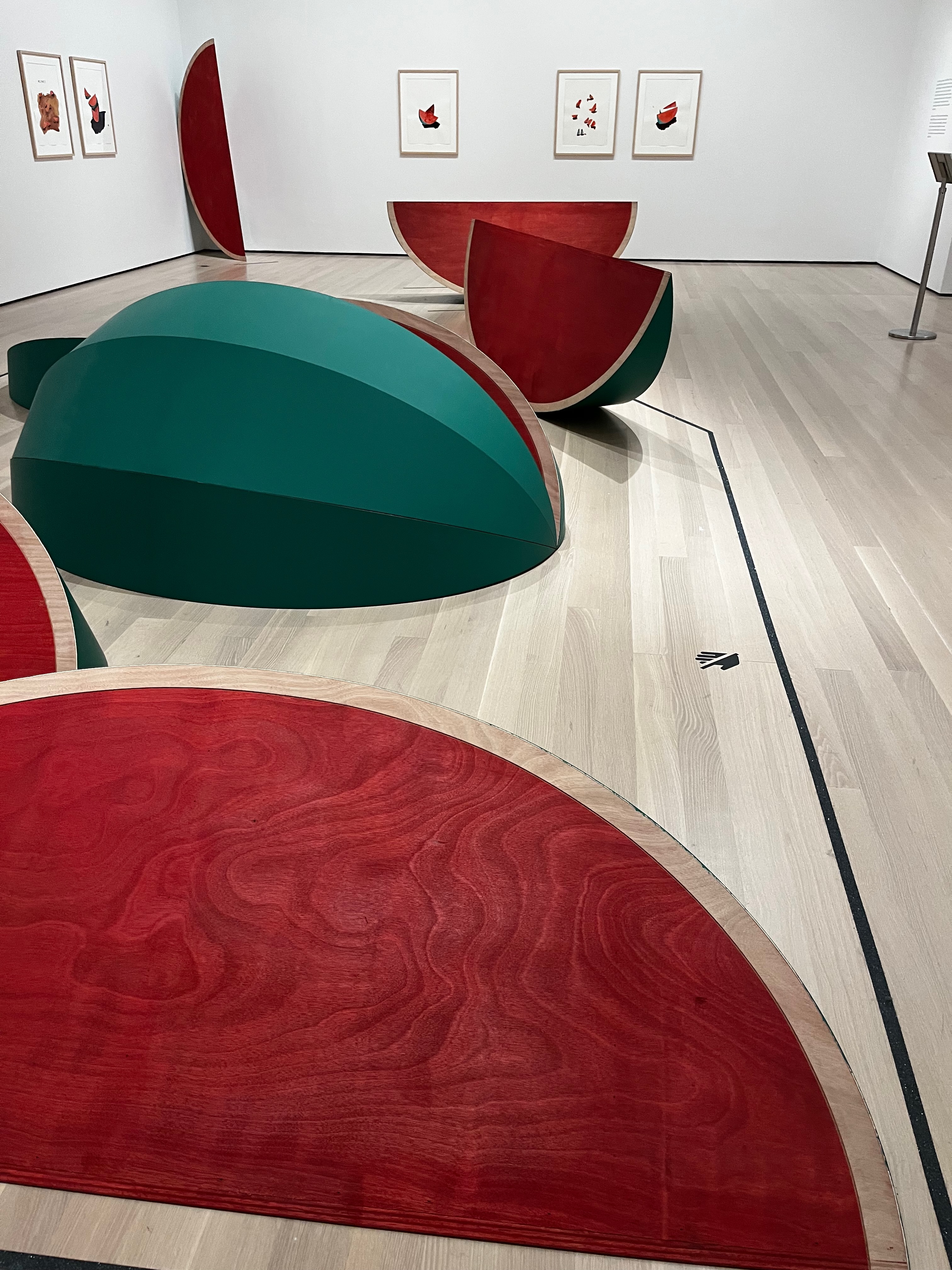
    I’ve commented before on this blog about the fact that works of art, or my response to them, change over time. I find I like things that I didn’t appreciate years ago. I see other works that I loved as a young person that don’t move me as much. I love that about art. These days I gravitate to things that are whimsical – especially in sculpture. For example, this work by Thomas Schutte (an artist I had never heard of before):

    The museum devoted a whole floor to an exhibit of Schutte’s work. It was incredibly varied – paintings of all sorts, sculptures of all sorts. On one card next to a display of drawings, it described a project he had undertaken that I found interesting. “Over the span of one year, Schutte drew his reflection from a round shaving mirror, recording his moods and temperaments in diaristic sketches. ‘It’s the attempt to fathom oneself,’ Schutte remarked, ‘and it failed miserably.’” I was amused and heartened by his willingness to share this. We usually only see an artist’s best work and we aren’t necessarily even aware of their failures. I can’t say I loved all that I saw of the Schutte exhibit, but it got me thinking and I appreciate that.

    I also find now that I have more appreciation of canvases that are saturated with color, like these:

    They made me think about my mother. I remember Mom telling me that she had never appreciated Rothko until someone told her to sit down, take a few minutes, and let the color envelop her – and then she got it. She got what he was communicating. As the card next to the painting explained:

    “For Rothko, art was a profound form of communication, one capable of conveying the ‘scale of human feelings, the human drama,’ as he described. Through works like these, he hoped to create the conditions for silence and contemplation.” I’m not sure I “got it,” the way my mother did, but I saw and felt more than I have in previous viewings.

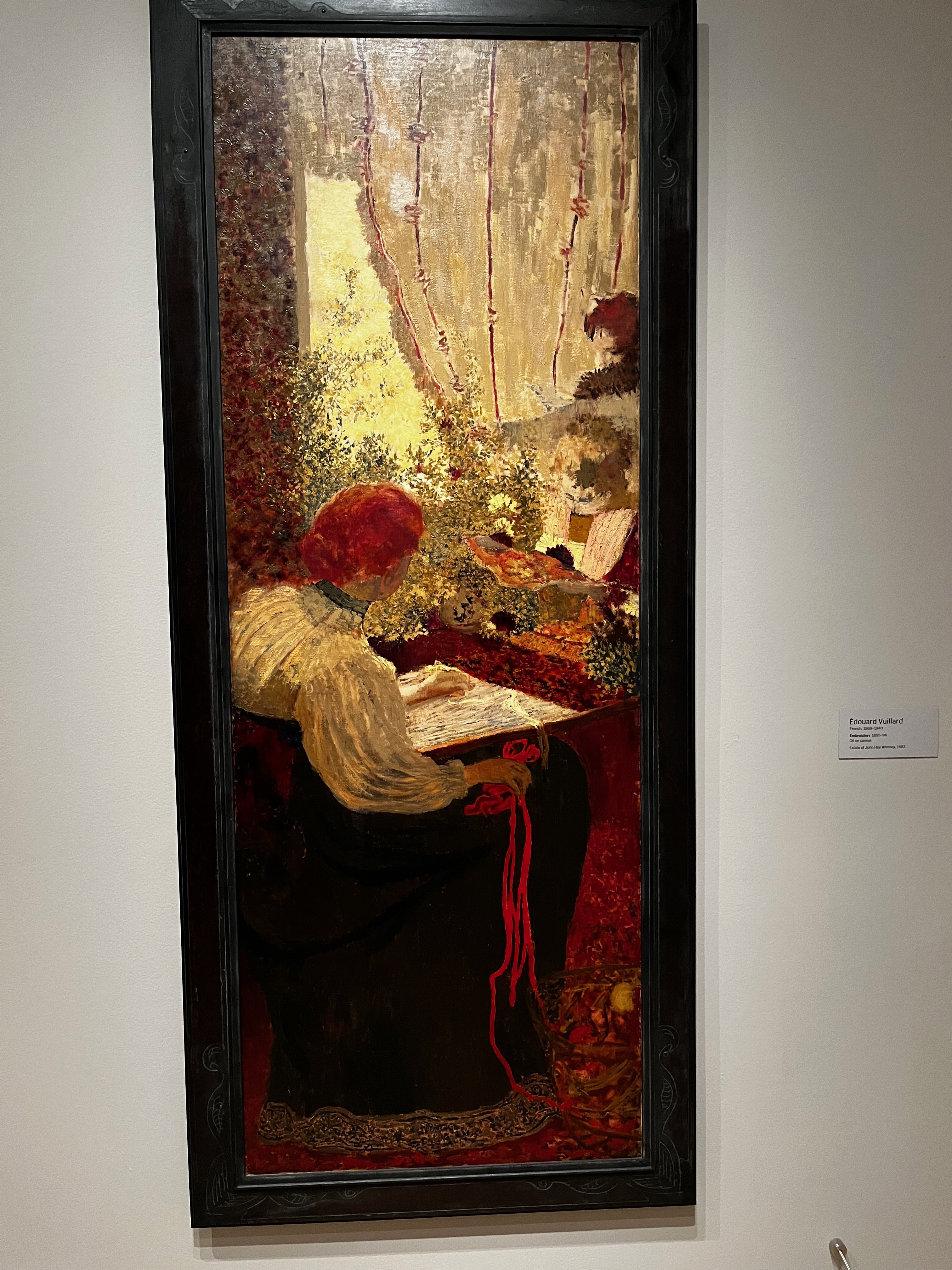
    It was funny to me, as I walked through the galleries, different pieces reminded me of different people. Besides my mom, who is always accompanying me when I go to an art museum, in my mind at least, I worked with a woman, Courtney, who had an appreciation for color. She told me about Pantone – the folks who catalogue colors and tell us the color of the year (for 2025, they just announced, it is mocha mousse, by the way). When I looked at the Matisse exhibit, which highlighted his paper cutouts, you could not help but be struck by his color choices. The display of Matisse’s array of colors, made me smile and think of Courtney.

    No visit to a museum is complete without stopping in the gift shop. MoMA and the Metropolitan have stellar gift shops. I have to restrain myself. I picked up a few Hanukkah presents, but didn’t overdo it.

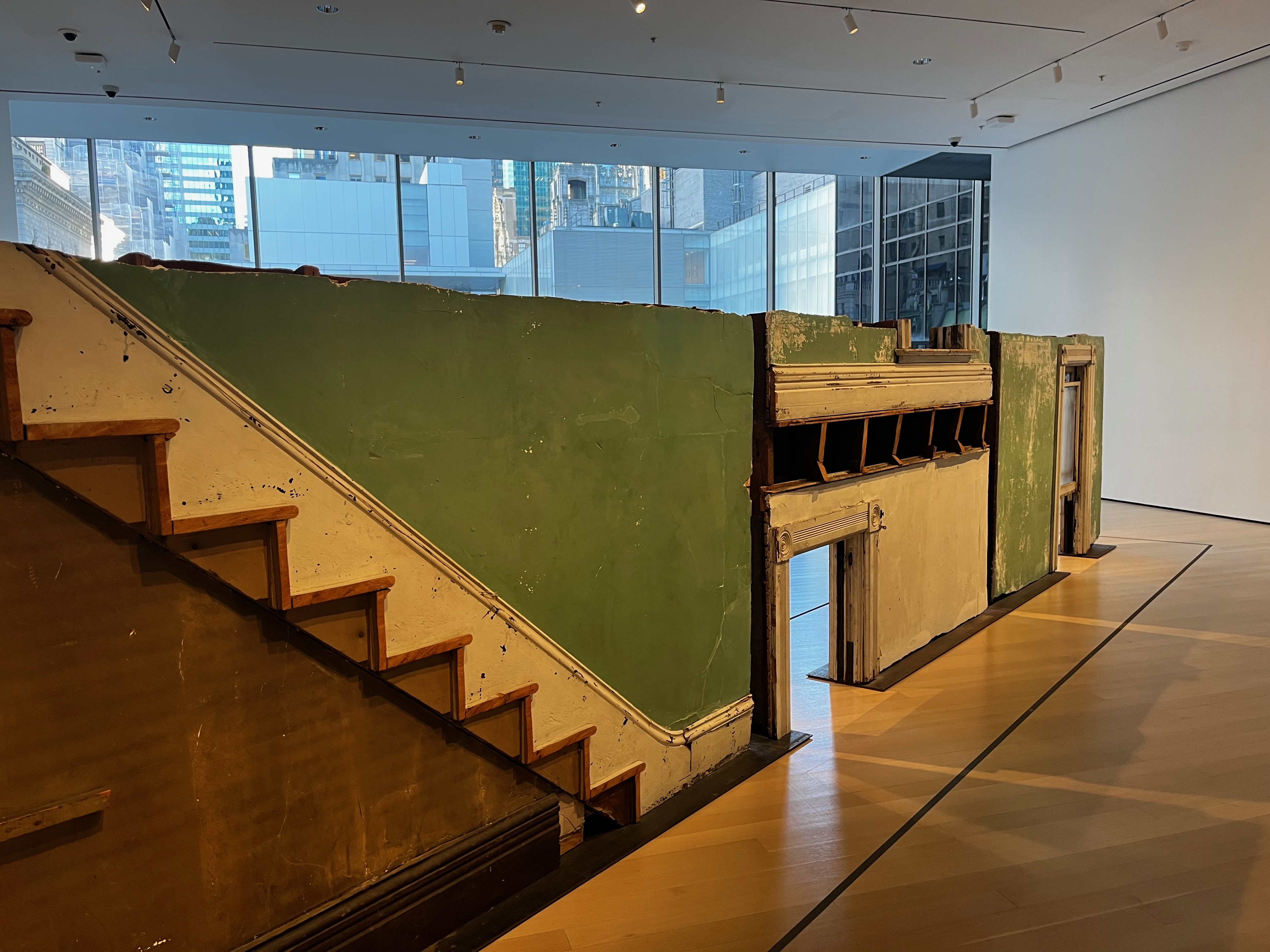
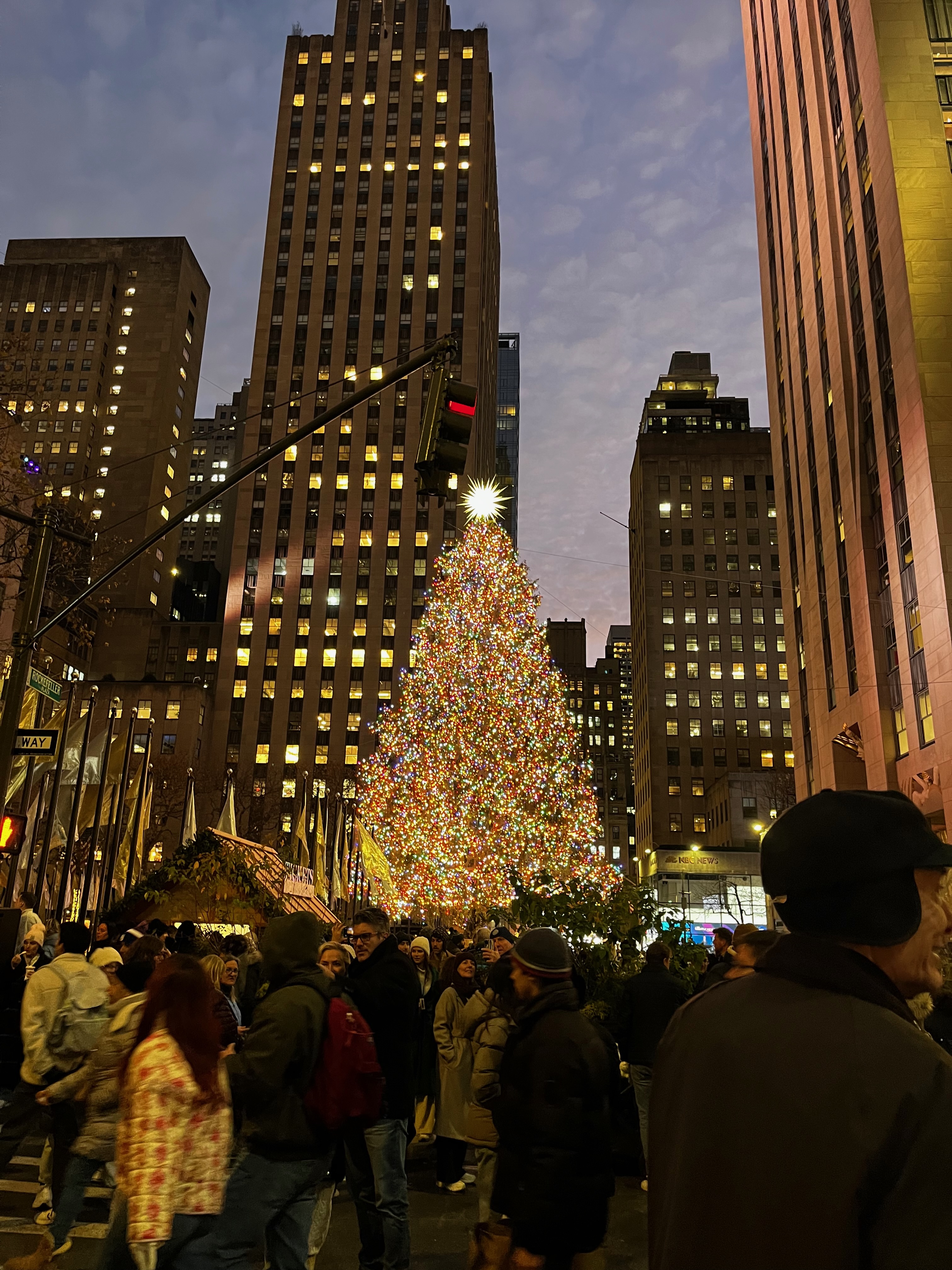
    Here some other shots from my visit. I ended my day by walking, amidst a million of my closest friends, to Rockefeller Center to see the tree. I may not celebrate Christmas, but I can appreciate the twinkling lights that brighten our winter.

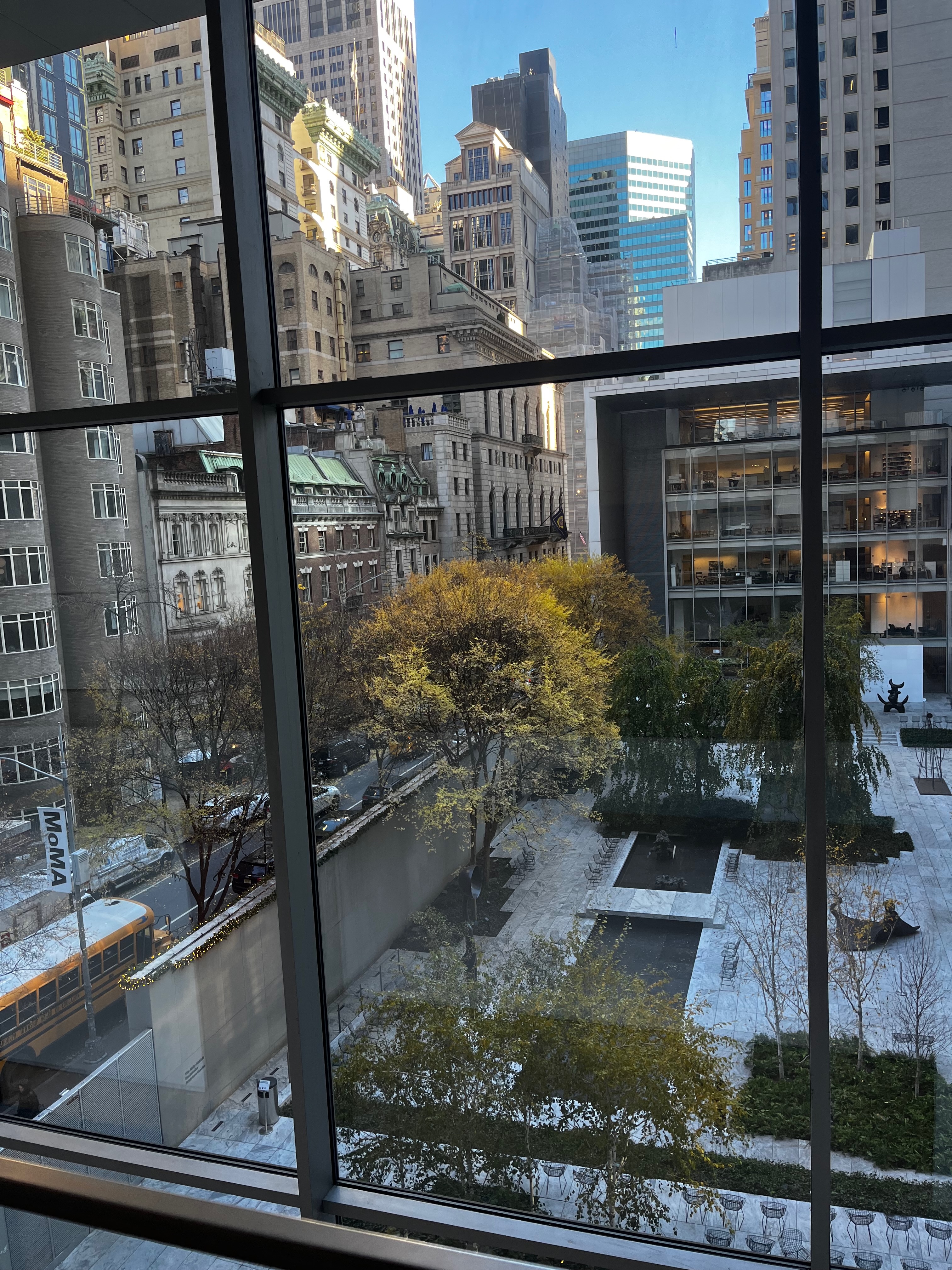
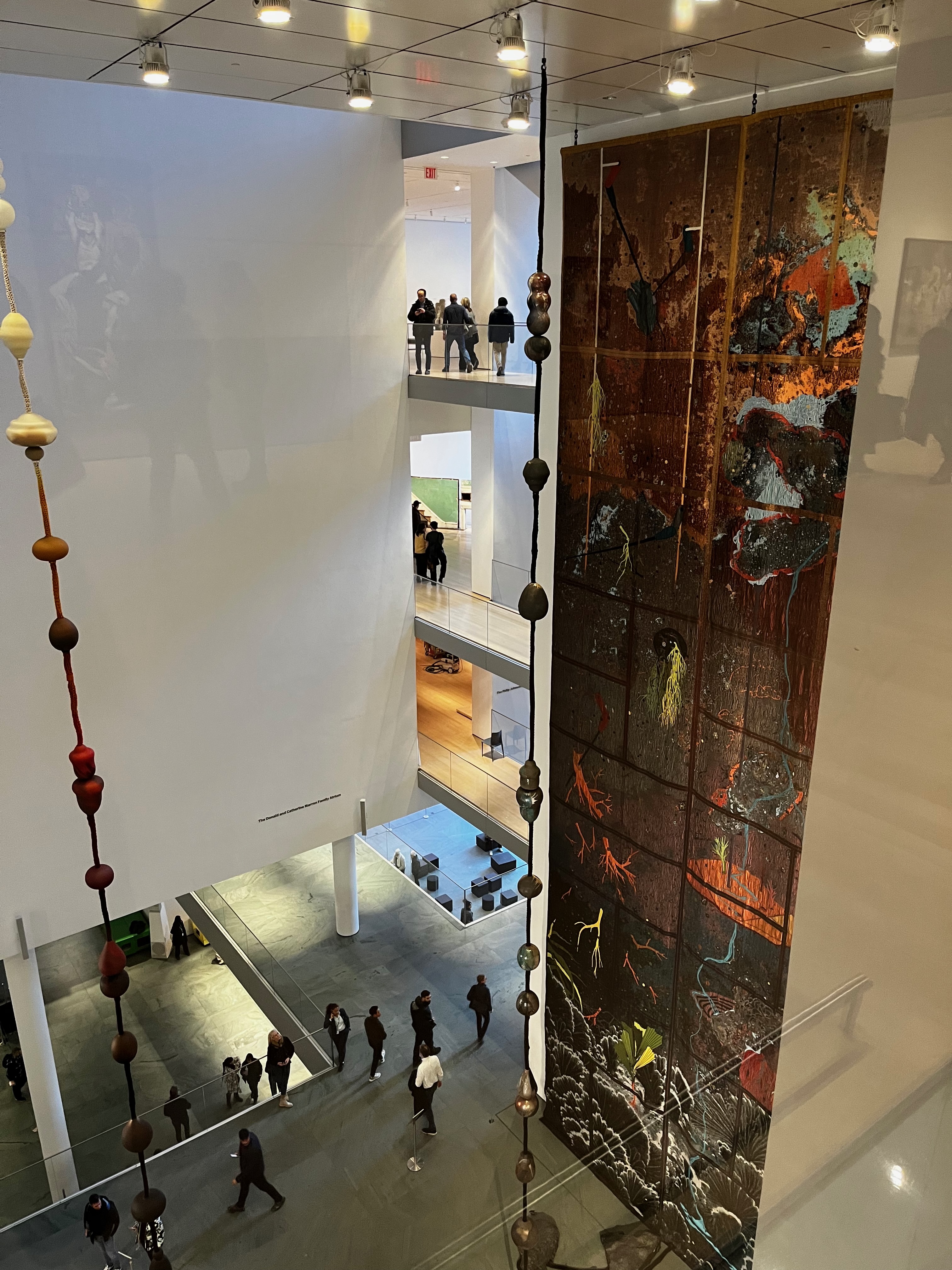
    Views from inside the museum:

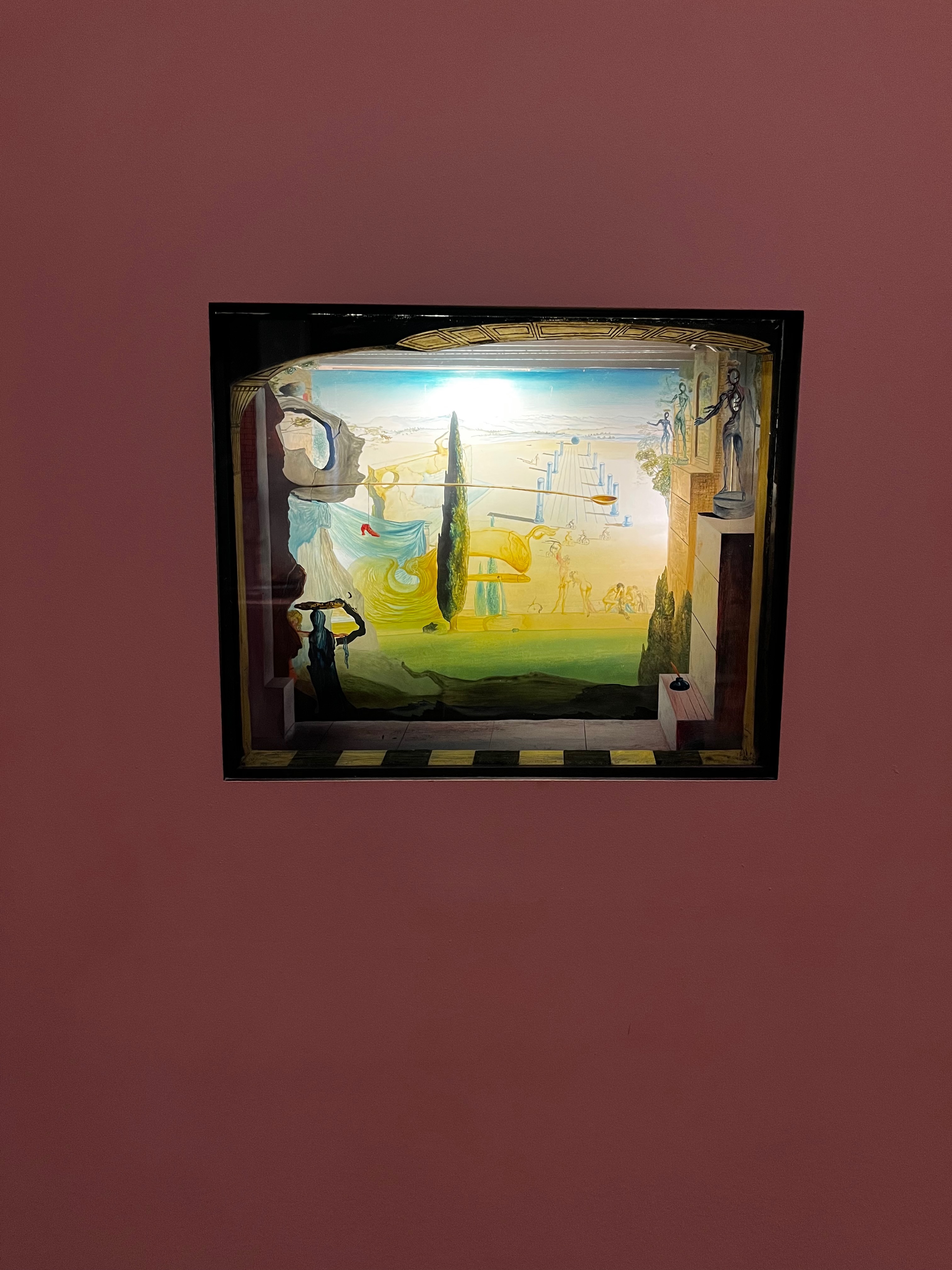
    Some classics:

    Does anyone convey loneliness or isolation more effectively than Edward Hopper?:

    Two more interesting sculptures (at least to me), one on the right by Schutte (which had to do with the influx of immigrants in Germany in the 1990s):

    To top things off – the tree!

  • Aunt Clair’s ashes were sitting in a cardboard canister in the closet of our Manhattan apartment. The third anniversary of her passing was coming up soon. Her final wishes were to have those ashes spread over her parents’ graves. For many reasons, it had not been possible to make that happen, and as her yahrzeit (Yiddish for anniversary) approached, I was distressed.

    When Aunt Clair died, I made the arrangements with the funeral home. She had no spouse or children, only nieces and nephews. I was her health care proxy. I had to identify the body before cremation. It was jarring to see my aunt without her spirit, it almost didn’t look like her, but sadly it was. The representative of the funeral home was kind and explained how things worked.  I wrote about her funeral and shared the eulogy on this blog previously (https://stories-i-tell-myself.com/2021/11/08/a-eulogy-for-aunt-clair/.)

    The first problem with fulfilling her wishes was that when I inquired at the cemetery, I was told it wasn’t permissible to spread ashes there. We could buy a plot and bury the remains, but there wasn’t a spot near her parents, and it was expensive. After consulting with family members and my own conscience, I decided that we would at least spread some of her ashes there discreetly.  I imagine that the cemetery had its reasons, but I doubt it was because it would harm anything. I also didn’t want to take the chance of calling attention to ourselves, so I didn’t want to plan to spread all of the ashes there.

    One of the things I learned through this process is that the amount of ash was more than I had imagined, though I had nothing to base my idea on. The canister was heavy, and it was tall.

    I thought, given her love of biking and the frequency with which she would cycle from her apartment in Greenwich Village to her sister on the Upper West Side of Manhattan, that spreading the rest of her ashes through Riverside Park would be appropriate. I looked on the city’s website and believe it or not, it is legal to spread ashes in city parks*. It is not permissible to spread them in bodies of water within a park.

    So, why were her cremains still sitting in my closet three years later? Life and death happened.

    I recall when I picked up the ashes from the funeral home, the representative said, “You know how common it is for people to move into an apartment in New York City and find an urn with remains buried in a closet?”

    I looked at him incredulously, “No.”

    “You’d be surprised. People don’t know what to do, they put them away out of sight, forget, and they sit there for someone, years later, to discover. I’m just letting you know.”

    “That won’t be the case here” I reassured him, and as I walked away, I thought, “That’s crazy. Who would let that happen?”

    I have a better understanding now.

    I had no prior experience with cremation; it isn’t a common choice among Jews, though apparently more are opting for it according to the guy at the funeral home. Aunt Clair wanted to be cremated, but she also requested that a memorial stone be laid at the foot of her mother’s grave. She had arranged for a footstone at her father’s grave in memory of the family he lost in the Holocaust in Poland, so she thought this was possible.  

    After the funeral, I brought her remains back to my apartment. After a few months passed and thinking that we would have an unveiling for the footstone on the one-year anniversary (and we would spread her ashes at that time), I began the process of ordering the memorial stone. This proved to be complicated to arrange. It was not a typical request. The cemetery didn’t want it to be confusing as to who rested in the plot. After a lot of back and forth that isn’t worth detailing, we came to an agreement about what the stone could say. It wasn’t exactly what Clair wanted, but it was the best we could do. It took more than two years for the stone to come to fruition.

    When the stone was finally available, other things were going on in the family. We were not able to arrange a time for the ‘unveiling’ of the memorial and we didn’t spread the ashes. In the interim Clair’s sister, Aunt Diane, passed away, as did my mother. A whole generation was disappearing. Another year passed.

    As Aunt Clair’s third yahrzeit loomed, I decided I didn’t want to wait any longer to fulfill her wishes. I wrote an email to my brothers and cousin and said I would like to visit the cemetery and spread her ashes on Friday, November 15th. Jewish cemeteries are closed on Saturdays (the Sabbath) and my Mom’s unveiling was planned for Sunday, November 17th. It would be a good time to make this happen. My cousin, who lives in Massachusetts, responded that her daughter’s due date was November 20th so she would not be comfortable traveling to NYC so close to that time. Aunt Clair would certainly understand that, as did I. It turned out the timing didn’t work for anyone but me and thankfully Gary. Despite that, I decided to go ahead with the plan

    November 15th was a cool, sunny day as we drove the Jackie Robinson Parkway, a narrow, curvy roadway that connects Brooklyn and Queens and passes through a series of huge cemeteries. The trees were not yet entirely bare, the yellow and gold leaves shone in the sun. I had the location of my grandparents’ graves written down and we drove to the appropriate section of the cemetery. I thought I remembered my way to their graves. Gary and I combed the rows and couldn’t find them. I checked and rechecked my notes. Finally, I remembered I had taken a picture the last time I was there and maybe that would help. I searched my phone, those smartphones can be quite helpful and in the photograph I found a couple of landmarks that helped – a majestic tree and two large grave markers in front of my grandparents’ more modest ones with the name Feingold on them. We found the spot and now understood why we hadn’t seen them before – they were entirely blanketed in ivy.

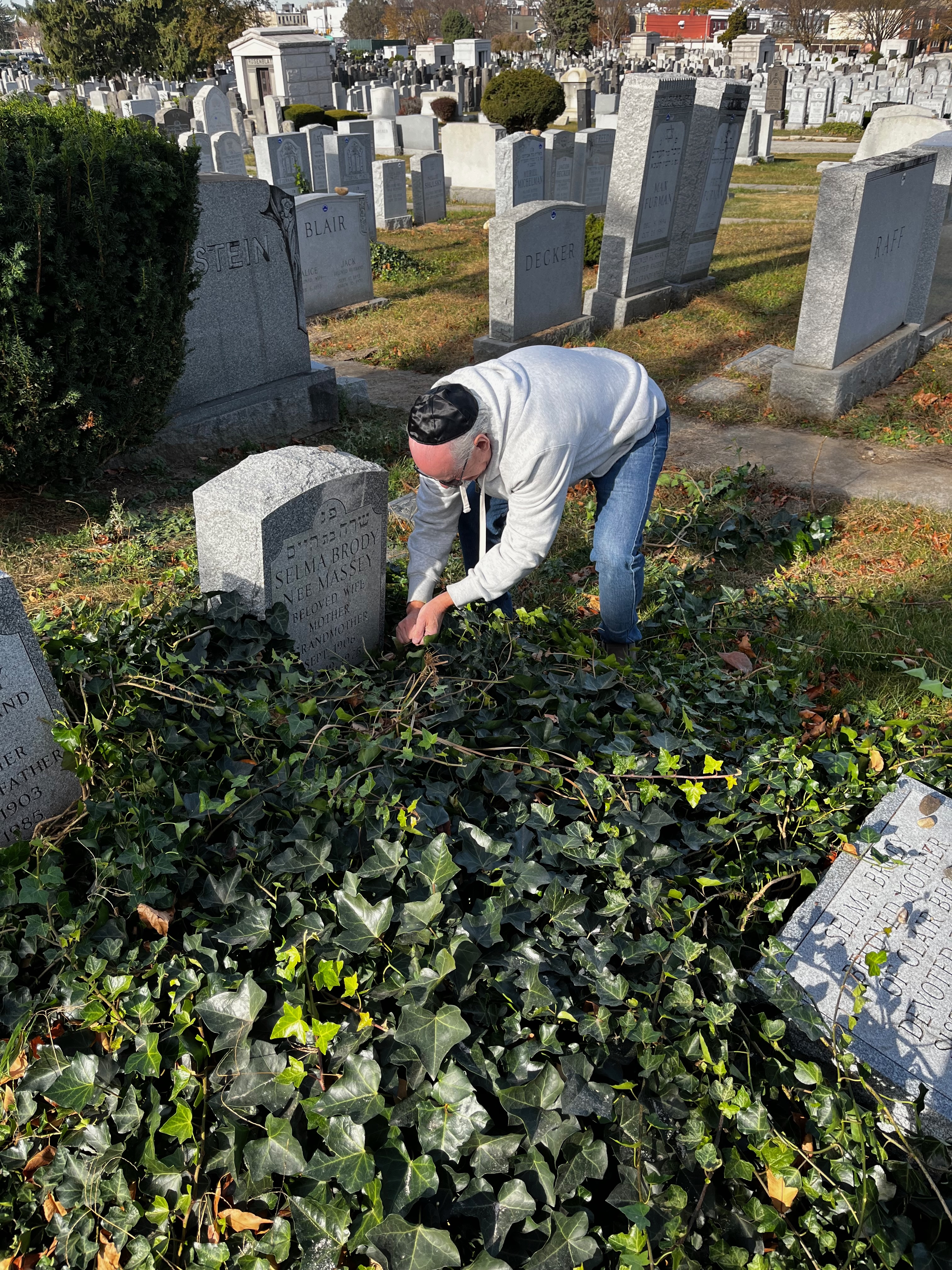
    Gary and I peeled away the ivy and exposed all the markers. Aunt Clair’s stone was there, as expected. I looked around and seeing nobody around, I took the baggie with a portion of Aunt Clair’s ashes out of my pocket and spread them over the graves. “May you rest in peace, Auntie.” I said. Gary and I paused and stood quietly for a bit. Then we got back in the car and headed back to Manhattan. Part one of my mission had been accomplished.

    The sun was still shining brilliantly as we made our way to Riverside Park. It was also quite breezy. I wasn’t sure how I was going to do this. I carried the canister in a canvas bag. As we walked, a plan revealed itself to me. We passed a garden, now gone to seed until the spring, and I thought this was a perfect spot to provide what perhaps could be fertilizer. I looked around and nobody was paying attention – I knew I wasn’t doing anything wrong, but I also worried it might be disturbing to onlookers. I spread a good deal of the ashes throughout the garden, and nobody seemed to notice. There was still a lot of ash left.

    We continued walking through the park and came upon a memorial to the Warsaw Ghetto Uprising. The shrubs surrounding it presented itself as another opportune spot. Though Aunt Clair was not a religious Jew by any means, she was fiercely proud of being Jewish. This would be a meaningful location, as well. Gary reminded me to stand upwind as I poured the ashes over the bushes. I had not been as mindful of that the first time.

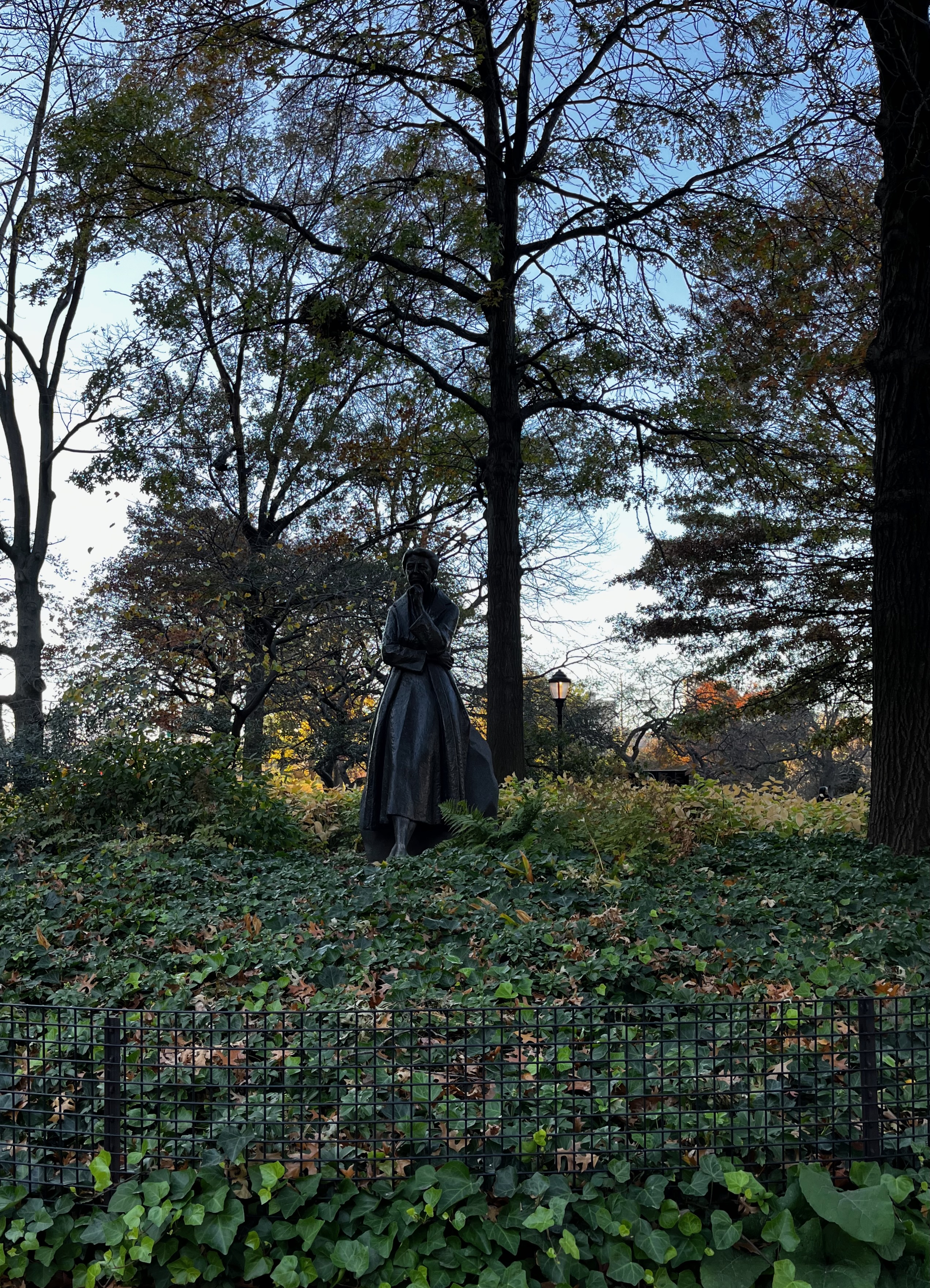
    The canister was still not empty, and I knew of one more spot that I wanted to visit. Aunt Clair was an admirer of Eleanor Roosevelt and there is a statue of her at 72nd Street just inside the park. We continued our walk south to find it. I was pleased to see that there were plantings around the memorial. I spread the remaining ashes there.

    Throughout our walk, aside from talking about mundane things, Gary and I shared memories of Aunt Clair. I felt good about what we were doing. I was grateful to have Gary to share it with. He knew her well and shared his own unique relationship with her. We had come darn close to fulfilling her wishes and I think we honored her spirit. Part two of our mission was now accomplished. I was glad she was no longer sitting in my closet.

    We took a different route through the park back to our apartment, walking along the Hudson River. I felt peaceful. The sun lowered and its rays glistened on the water. The day was fading, and I was satisfied.

    *This is where I found the information: https://portal.311.nyc.gov/article/?kanumber=KA-03480#:~:text=New%20York%20City%20Parks%2C%20including,the%20site%20of%20cremated%20remains.

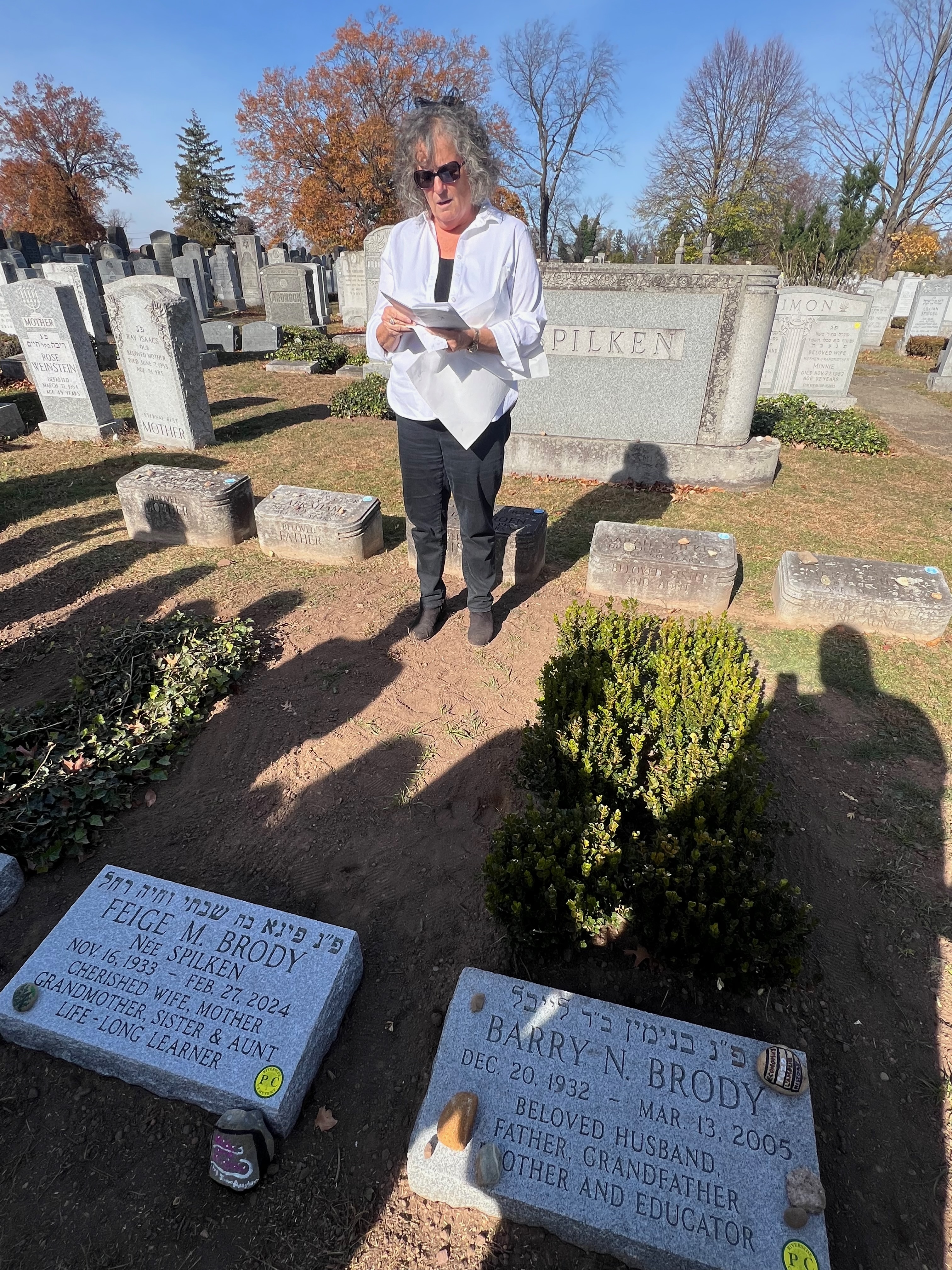
  • We gathered at Riverside Cemetery in Saddle Brook, New Jersey. In Jewish tradition, a year or so after a person is buried, you have an unveiling – literally the unveiling of a headstone or footstone that is the marker commemorating the individual’s life and death. Though it has been less than a year since my mother passed, my family gathered to observe this ritual for her on Sunday, November 17th, one day after what would have been Mom’s 91st birthday.

    Photo by my brother, Mark Brody

    19 of us stood around her grave on a brilliantly sunny day, unusually warm for mid-November in the northeast. It was appropriate weather given Mom’s sunny disposition (she was an eternal optimist, though, for better or worse, she shared her fears and complaints with me). She is buried between her mother, my Nana, and her husband, my father. The plot is part of an area that was established by the burial society founded by immigrants from Strickover, Poland where her father was born. Ironically, he is not buried here, he rests in Florida. But, other family members surround Mom, her brother, grandfather, aunts and uncles. There is something comforting to me about them all being together.

    We began the ceremony by reading the portion of Ecclesiastes that tells us so eloquently that to everything there is a season – reminding us of the cycle of life. Then we uncovered the stone which reads:

    Feige M. Brody

    Nee Spilken

    November 16, 1933 – February 27,2024

    Cherished Wife, Mother, Grandmother, Sister and Aunt

    Life-long Learner

    Standing beside me were representatives of all those roles – her children, brother, sister-in-law, grandchildren ( a great-grandchild, too), nephew, nieces, and great-nephews.

    I read these words: “On behalf of all of us, we consecrate this memorial to Feige Brody as a sign of our eternal love and devotion. May her soul be bound up in the bond of eternal life.”

    The cemetery had provided a booklet with selections that could be read, and it offered the following passage which I am transcribing here because I thought it was insightful, comforting and appropriate and might be helpful to others who are grieving a loss:

    “We gather here today at the final resting place of our beloved mother, sister, grandmother, aunt, Feige to unveil this grave marker dedicated to her memory and to call to mind our cherished memories of her. When Feige passed away, we assembled here to pay our respects. At that time our grief was deep, and we felt intensely the pain of loss. Now, with the passage of time, the pangs of our initial grief have softened, yet we still feel sorrow in our hearts whenever we remember her.

    Jewish tradition teaches us that those memories of Feige, which each of us cherish, can provide us with a measure of comfort. Those memories also serve as a form of immortality that comes to those we love when we remember them, and when we live our lives in emulation of the virtues they taught us by example.

    Our presence here today is already an indication that Feige has achieved that immortality that comes through remembrance. Our presence is also a sign of the respect and admiration in which Feige is held by us. We still feel an emptiness in our lives when think of her because she played such an important role in each of our lives as a beloved family member and friend to many. Feige was devoted to us as we were devoted to her, a relationship of love and affection that we recall today.

    Throughout the months since Feige passed away, we have each had occasions to remember the impact that she had on our lives.

    We are comforted by our memories of the joys she brought to people and by the contribution Feige made to the betterment of our world.

    In the biblical book The Song of Songs we learn that “The bonds of love are stronger than death.” Our memories today prove the truth of that teaching.

    Even though Feige is no longer present in person, the love that we shared and the way our lives were touched by her continue to be felt. The pain of loss and separation is the price we have to pay for the years of Feige’s love and devotion.

    Therefore, it is with sorrow, yet at the same time with a deep sense of gratitude, that we thank God for the years during which we were privileged to have had Feige as part of our family’s life and as a member of our community. We thank God, as well, for the love that bound us together with Feige in life and that inspires our cherished memories. It is with these thoughts in mind that we now pay tribute to Feige by dedicating this grave marker to her.”

    That passage provided comfort to me. I am consoled by the notion that we attain a measure of immortality by being remembered – it helps me to reconcile the loss of my mother and father, as well as other people who I have loved in my life and still think of regularly. And, it is meaningful to me to think of how, by carrying forward their values, by emulating their integrity and generosity, I am helping to preserve their legacy. Those thoughts help me to come to peace with my own mortality. Hopefully I will have touched friends and family in a way that merits remembrance.

    After reading that passage, we said a concluding Hebrew prayer and Uncle Terry read a touching poem he had written in tribute. Aunt Barbara, as a self-described “out-law” welcomed into the family by Mom, offered her heart-felt perspective on Mom (and Dad’s) generosity and the importance of our family bonds. Terry noted that he had Barbara would, when the time came, rest in this same area of the cemetery, just across from where we stood. I said a silent prayer that that would not be any time soon.

    Another Jewish tradition when visiting the grave of a loved one is to place a rock on the marker. This is to signify a visitor’s presence, that the person who has passed has not been forgotten. Several years ago, when we gathered at my father-in-law’s grave, my sister-in-law Doreen painted some rocks with pictures of things that she shared with her Dad or represented him. I thought that was a wonderful gesture. I decided to do that for my parents. I painted one rock to look like a bookshelf with items my dad read regularly: Economics, Puzo (he loved The Godfather and read it multiple times), L’Amour (he loved westerns) and History. I painted another stone with Pride and Prejudice by Jane Austen (my mother’s favorite of her novels, and she read Austen every summer until dementia made that impossible) and a final stone with a blueberry bush (when my parents lived in the Catskills and the grandchildren came to visit, they went blueberry picking and baked muffins). I felt good placing those rocks that embodied precious memories, knowing that they would sit there for a while at least before the elements wear them away.

    No Spilken/Brody gathering would be complete without partaking of food. So, we adjourned to the diner that was just outside the cemetery. Though the service was painfully slow, and we had to wait, and the orders got mixed up (no day goes by without some aggravation), we enjoyed each other’s company before going our separate ways and returning to our lives  – some in New Jersey, some in Massachusetts, some in Connecticut and the rest in Albany, New York. Hopefully our next gathering will be a happier occasion, but I am left with a feeling of warmth, believing that Mom and Dad rest easy knowing that our familial bonds are strong and that we are doing our best to live out their values.

  • A view of downtown from the top of Mount Washington after riding the Duquesne Incline

    I could write a book about our trip to Pittsburgh. We were traveling there for a mini medical school reunion.

    So many thoughts flood my mind:

    • The choices we make in our lives, being reminded of a turning point and what might have been. We could have settled in Pittsburgh but wanted to be closer to family. The road not taken is hard to resist imagining.
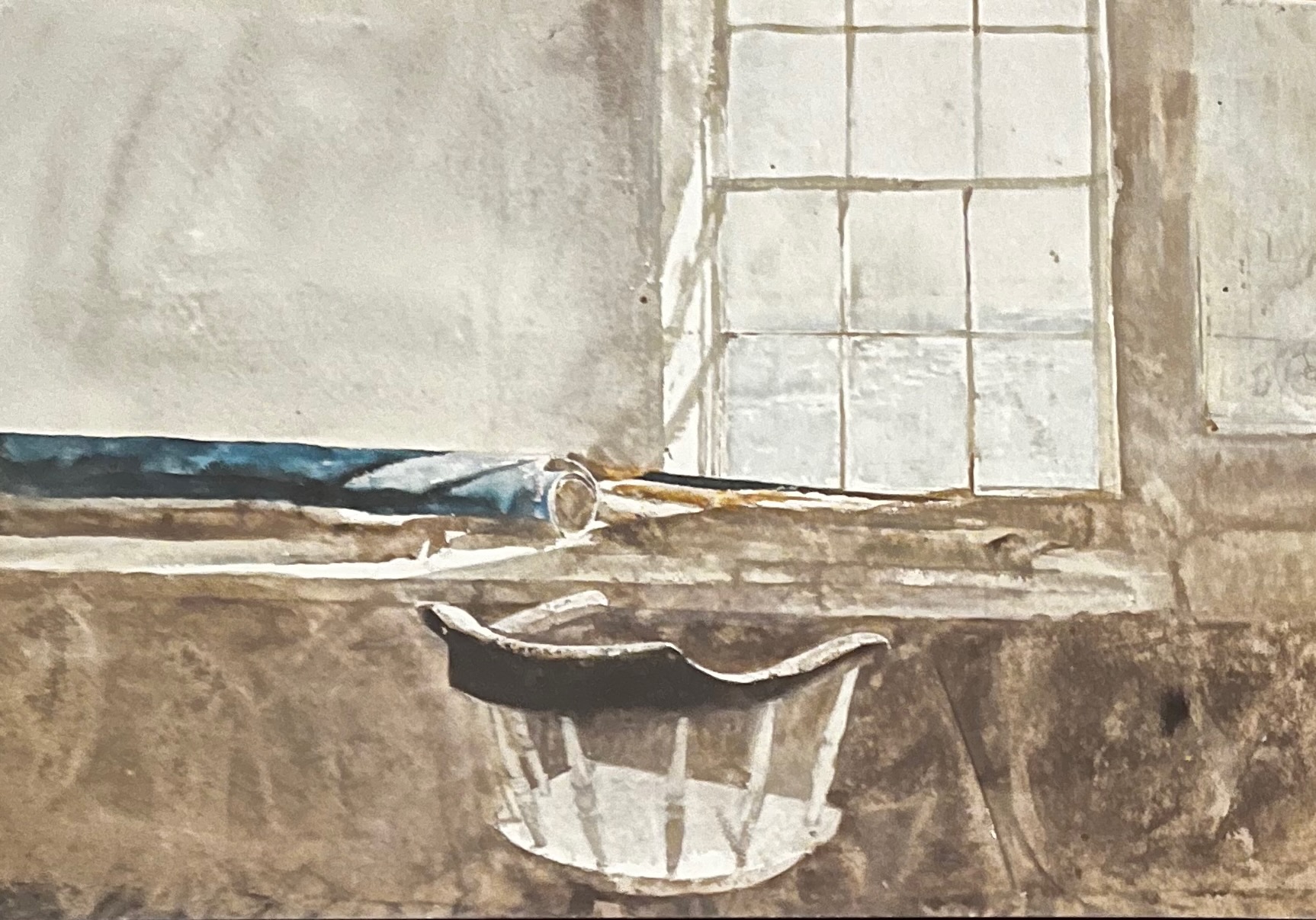
    • The side trip that took us at least 90 minutes out of our way, not to mention the time spent at the stop itself, a museum to see an exhibit of Andrew Wyeth’s paintings. When I suggested the detour, Gary initially didn’t want to take the time knowing what a long drive it was already from Albany to Pittsburgh. Then when we got in the car to start what should be a seven- or eight-hour trip, he said, “What the heck. We aren’t in any rush. Let’s go to the museum.”  I think he took pity on me, knowing my spirits were low from the results of the election and imagining a stop to look at art might help. He was right – it worked…for a while anyway.
    • The juxtaposition of gleaming office buildings, the beauty of the confluence of the three rivers and the unhoused, hurting people on the streets of that same downtown area. It is painful to see folks strung out, young people panhandling, wondering what’s worse: to walk by with a shake of the head and a murmured “sorry,” or to give some money? Our society must do better taking care of its own. The wealth suggested by elaborate skyscrapers, high-end stores and fancy hotels, side-by-side with people whose possessions are held in a bunch of plastic bags begs for a more humane economy. Below is evidence of the issue in Pittsburgh.
    • Gathering with friends from 40 years ago, some we did see eight years ago but others we had not, in the aftermath of an election that broke my heart but likely brought joy to some of theirs, was daunting. I was worried about how it would go.

    It turned out that our reunion was warm, and we avoided politics, but I did have some interesting discussions with the woman I knew best all those years ago. We sat next to each other during the Pitt-Virginia football game that neither one of us was interested in. I knew she was a Trumper, and she knows I’m a bleeding-heart liberal. We would not change each other’s minds about anything. I come away as mystified by how I feel about folks who voted for Trump as I was before. Maybe I understand a bit more about her thought process – she sees the world differently than I do. One part of our conversation I will share because I think it is revealing.

    I explained that I could not forgive Trump for, among other things, his reaction to the unite the right event in Charlottesville where the marchers chanted, “Jews will not replace us” and carried tiki torches. Trump responded saying there were good people on both sides. My friend explained that Trump was referring to the people who were trying to prevent the removal of confederate monuments – that he was sympathetic to their cause –  not to the chant. I said that I didn’t understand his statement that way and if that was the case he needed to make it clearer. She told me that it was obvious to her that’s what he meant. I said that even if that was what he meant, those monuments needed to come down. She disagreed. She asked me if knew anything about Abraham Lincoln. I said yes. She went on to explain that Lincoln supported monuments and naming forts after confederate generals to allow the South to save face. I responded by saying that may well be, and may have made sense in 1865, but it is now 2024, and the country needs to understand that the South lost the war. Those statutes and stories can be displayed and explained in museums and history books. Monuments in public squares should help us to remember and celebrate our better selves – the people honored don’t have to be perfect, but they do have to be on the right side of history. She just shook her head saying history should be preserved. I said, let’s change the subject and we did.

    The game took almost three hours. There was a lot of conversation. Most of it was ordinary stuff about family, travel, health, but we couldn’t help but return to politics every so often, after all some of those subjects involve policy. Every time we did, we had to agree to disagree. At one point she said, amused, “You’re just too woke.” I smiled and said, “Exactly – that’s no insult to me. I work at being woke.” We both laughed.

    I was proud of myself. I didn’t pretend that I didn’t disagree with her, but we didn’t get heated.  I was able to hold on to the good times we shared, aware of the pain she’s had in her life, the disappointments and struggles. I assume she could do the same for me. We hugged when we said our good-byes.

    Gary was sitting next to his friend and former classmate, her husband, who shares her politics. After we left, Gary and I compared notes about our experience of the game. Interestingly, they had not discussed politics at all. Not surprisingly they were more focused on the game, but they talked about other subjects too – work, memories, family, being grandpas. No politics, though. I wondered how they managed that.

    I am still processing the entirety of the trip. It was only 4 days, including all that driving, but it represented so much. I am also still processing the election results. It is going to take a long time to digest it all.

    The best part of the game that Pitt lost – the half time show. The band was terrific.
  • I can’t wait for this election to be over. The relentless ads on tv, the frequent text and email solicitations for money, the anxiety about the country’s future are all hard to put aside. No matter what happens, it will be a relief when it’s over.

    That’s not true, exactly. I will not be relieved if Trump wins and/or if there is a red wave. I will be devastated, as I was in 2016 when I didn’t want to get out of bed for days after. But, I will try to take heart in the surprising closing message of Jon Stewart at his performance at the Palace Theater in Albany, which I enjoyed very much. He pointed out that democracy is work that doesn’t end. Regardless of the result on election day, we need to soldier on, doing our part every day to work for the ideas we believe in, not just on a single election day. He reminded us how shattered we were after 9/11. We thought the world would never be ‘normal’ again, and in some ways, it was forever changed. But we couldn’t give up, we needed to continue to participate in our civic life. We can’t give up hope, hard as that might be. So, I am promising myself, if I need to mourn for a bit, I will, but then I will pick myself back up and keep trying to make this country a better place in whatever ways I can.

    But, before I turn the page on this presidential campaign, I have some thoughts to share. I doubt many of my readers are Trump supporters, though there may be a few. I have always tried to be respectful. I don’t like the crude remarks or snarky takes that insult folks who view things differently than I do and I don’t plan to start now. I do need to ask a few serious questions for those who are planning to vote for him:

    After Trump’s behavior these past few weeks, do you believe he is fit for office? For those who believed in him in 2016 or even in 2020, do you not see the changes? He is more impulsive and less coherent. Those are not qualities a president should have.

    So many of those who served under him have abandoned him. Are they all part of some vast conspiracy? The generals? The cabinet members? His vice president? His daughter? No one is continuing to stand by him. Doesn’t that say something important about what they know about him?

    For those who say ‘policy’ is the reason for voting for him, what policy? Is it about prices in the grocery store? If so, there are many factors that led to inflation (pandemic and supply chain issues to name two) that would have happened even if there had been a different president. Our rate of inflation, aside from the fact that it has been brought under control without a recession, is far less than other countries. Also, just as the health of our economy is more than the Dow Jones Industrial Average, it is more than the price of eggs.

    Is it about the border? Do you really believe immigrants are ruining this country? Where is the evidence of that? How has your life deteriorated as a result of the influx of immigrants? Is crime that much worse and if it is, is it because of immigrants? I don’t believe the data supports that crime is worse, much less that the crimes that are committed are by illegal immigrants (other than sensationalized, or in some cases fabricated, stories on social media). My experience here in Albany and in NYC doesn’t back up those claims either. All of which isn’t to say that illegal immigration isn’t an issue that needs to be addressed. The demands on social services and housing, among other things, are challenging, especially to our cities. We can’t simply have open borders, but exaggerating the problem doesn’t help to solve it (neither did tanking the border bill). And blaming Kamala Harris for it is absurd.

    Trump supporters like to ask if you are better off today than you were four years ago. By what measure? Four years ago, we were in the midst of the pandemic. Before vaccines, before treatments. Well over a million Americans died of Covid. Other than the divisiveness stoked by Trump, I do believe we are better off today.

    Is Israel your reason for supporting Trump? Trump is an opportunist who will support whoever or whatever is in his self-interest at the time – the Saudis, Putin, possibly Netanyahu (maybe not, if he thinks Bibi doesn’t like him anymore). The incidence of antisemitism has soared since Trump came on the scene. How do you square those things? And, in order to support Israel, we need to be a functioning democracy not an oligarchy or monarchy.

    Do you think children are going to school as one sex and coming home another, as Trump claims? Schools can’t apply sunscreen without parental permission. Not to mention that it takes more than a day to transition. Having worked in education policy for many years, I am well aware of the complicated questions posed by students who are trans, especially in regard to the role of parents. But, making trans students, or trans citizens in general, some kind of crisis (it can be a crisis for those individuals and families) that threatens our nation is ridiculous. I urge everyone to watch the movie Will and Harper (it’s on Netflix) to get some perspective on this. These are human beings who face challenges, not freaks who endanger our way of life.

    Do you believe Kamala Harris is ‘dumb as a rock,’ to quote Trump? Really? I hear an articulate, intelligent woman. I see and hear people surrounding her who are competent and educated, not the racist, misogynist venom that spewed at the Trump rally at Madison Square Garden (and not just from that vile comedian).

    Bottom line, for me, isn’t policy, though anyone who knows me, knows policy is near and dear to my heart. The bottom line is that Donald Trump is a despicable human being. He has normalized lying and cheating. I do not want my grandchildren to watch him or hear him. Our president, even if I disagree with their policies, should be someone children can watch without worrying that they will hear or see lewdness or vulgarity. And, I have granddaughters!!!! – I haven’t even mentioned reproductive rights. Or January 6th! I won’t get started on those or I will be writing another thousand words.

    I will get off my soap box now. Honestly, after all of this, if you are still voting for Trump, please, please don’t tell me.

  • The Baksts took Portugal. That isn’t entirely accurate. One Johnson, our son-in-law, Ben, and one Bakst-Johnson, our granddaughter, were with us. And, we didn’t take all of Portugal. Though it is small, relative to other countries, we went to only two locations – Cascais, on the coast, and Lisbon. But, we took in a good deal of those two places!

    The impetus for the trip was a phone call from our daughter. She had an opportunity to present her research at a conference on neuroeconomics (what is that?) in Cascais. She wanted to go and she wanted to extend the trip to do some sightseeing and have her husband and toddler come too. She wondered if we would be willing to go and give a hand so it would be more manageable to travel with the little one. She didn’t need to ask twice.

    I knew the trip would be different from any I had taken before, and I was right.

    After considering staying in the resort hotel where the conference was held, we agreed that taking an Airbnb was a better option. We thought, in general, that minimizing the moving around from place to place would be less disruptive for the little one. We reserved an apartment in Cascais that wasn’t too far from the conference site and another in Lisbon. We spent five nights in Cascais and four nights in Lisbon.

    All of my other overseas travel involved staying at hotels or on cruise ships. And, all of those trips, not that there were that many, were either part of a tour or were organized by a travel agent with local tour guides. This was a departure from that. I was excited to see how that might change the experience.

    Aside from the difference in accommodations, there were some other obvious distinctions. When our children were toddlers, the farthest we traveled was to visit the grandparents in Florida. We were not so brave as to undertake overseas trips with little ones. I admired Leah and Ben’s willingness to give this a try. I think in asking us to join them, there would be more hands on deck and that would hopefully make it less stressful.

    In addition, Yom Kippur fell during the conference. Gary and I had some discussion about that, and we considered joining them after the holiday. It was a little surprising to us that the conference was scheduled to overlap with Yom Kippur, but then again maybe it isn’t surprising. In any event, we decided it would be interesting to observe the holiday in another country. I did some online research and found that there was a Chabad in Cascais! (Chabad is a branch of Orthodox Judaism that includes as part of its mission providing opportunities for Jews to pray and observe the rituals of the religion all around the world. For instance, there is a Chabad in Shanghai.)

    Usually before Gary and I travel, I do research, especially if we have time on our own, looking for museums, points of interest, national parks, gardens, etc. This time I searched for things that would appeal to children. I learned that Lisbon has a world renown aquarium. We learned when we were there that Ben’s father’s architectural firm designed it. How cool is that!

    So what were my takeaways from this trip?

    I loved staying in the apartment(s). We lived among people who were going to work, to school, living their lives. We went to the supermarket – we didn’t cook any meals, but we had breakfasts and lunches mostly at the apartment. I enjoyed walking in the neighborhood and getting to know the streets. Though the word gets overused, it felt more authentic than staying in a resort or hotel.

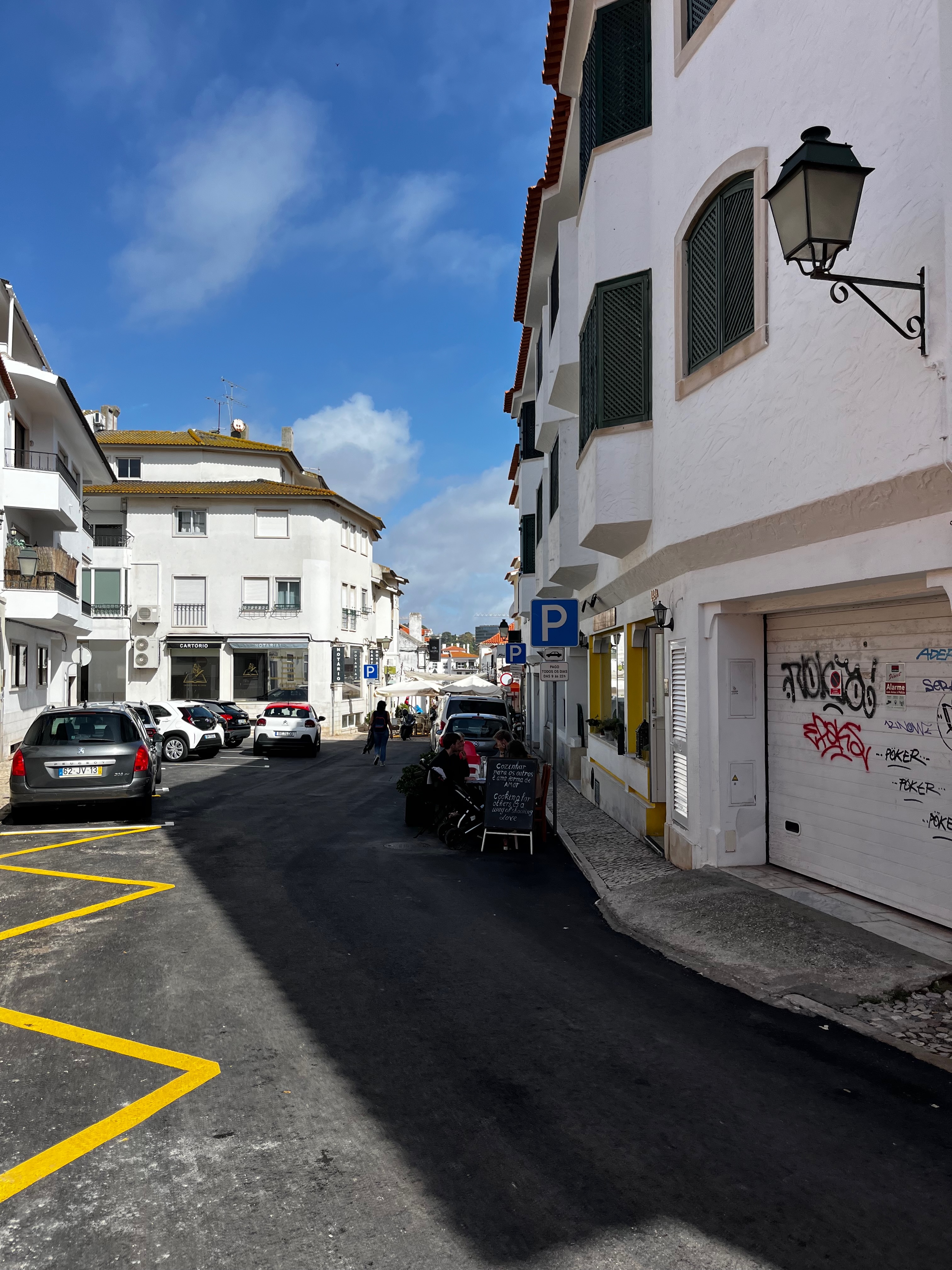
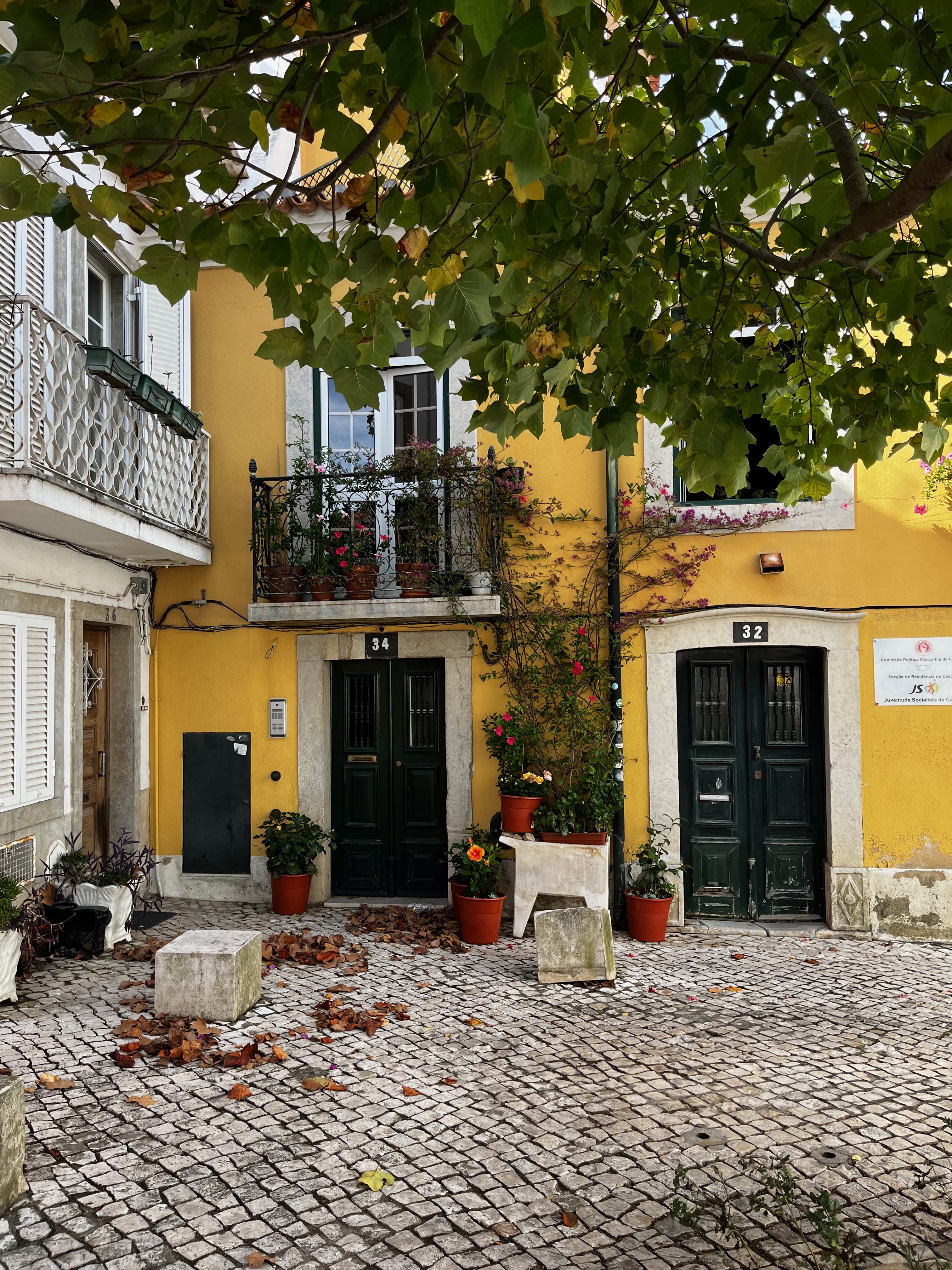
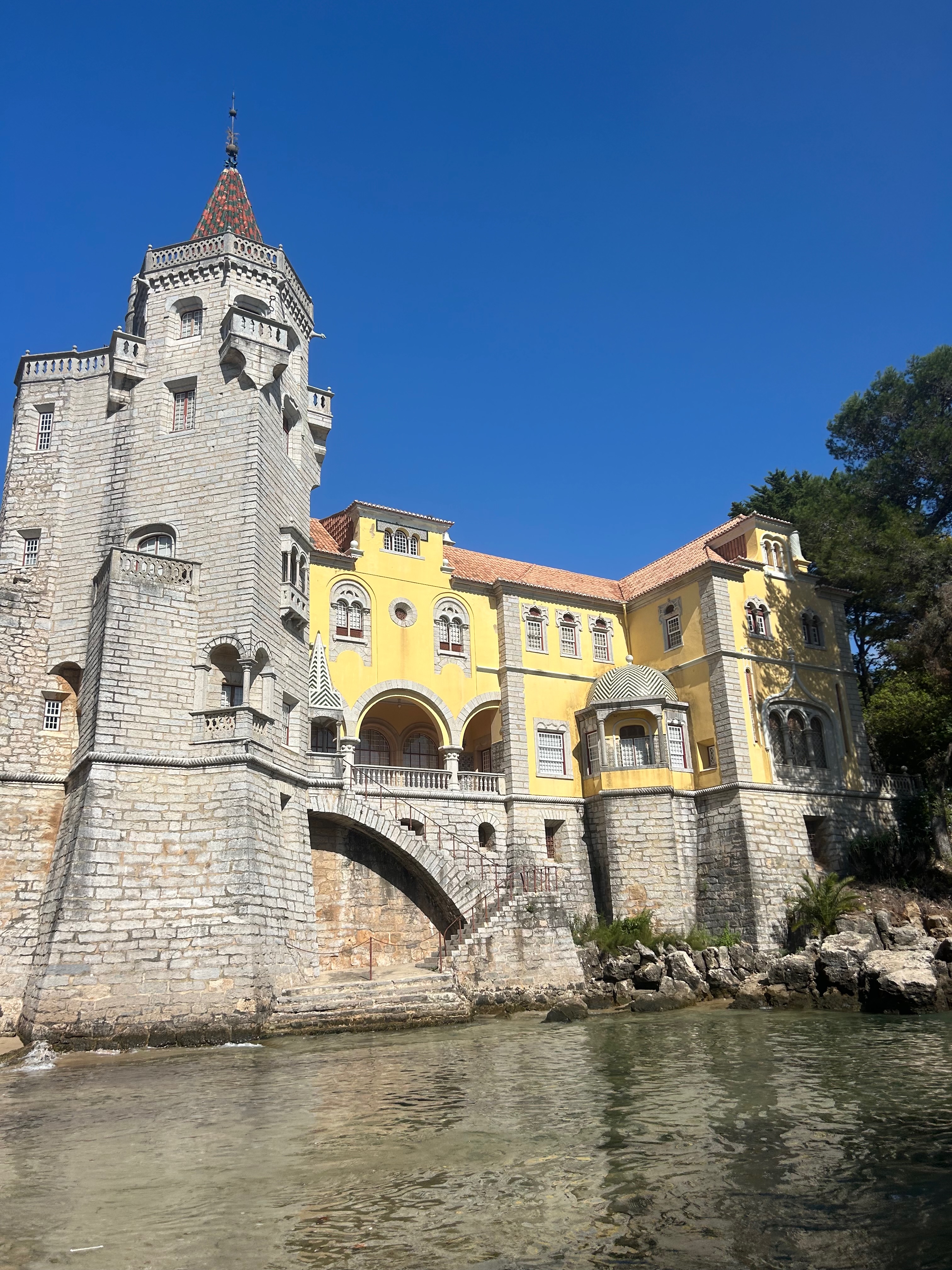
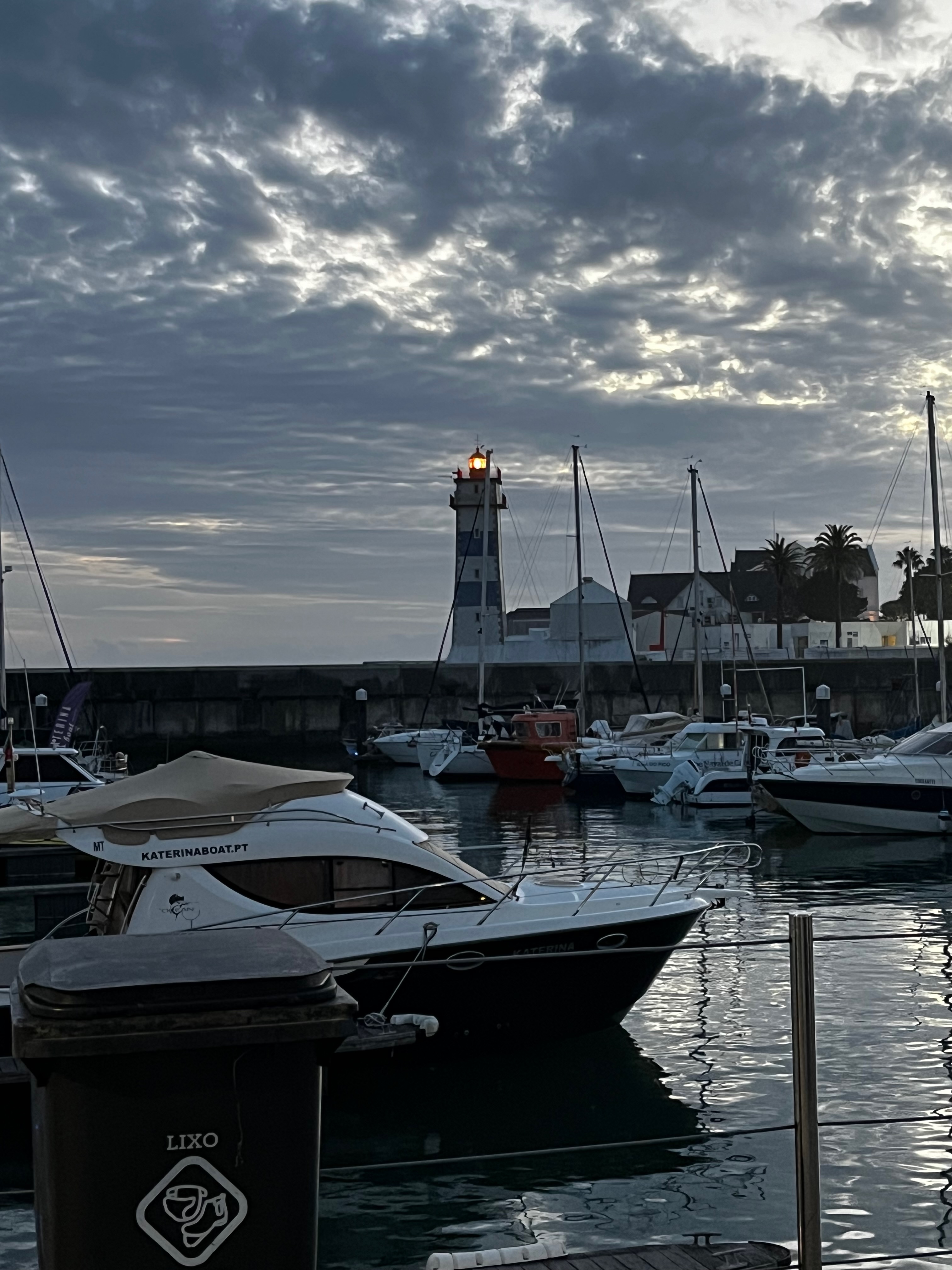
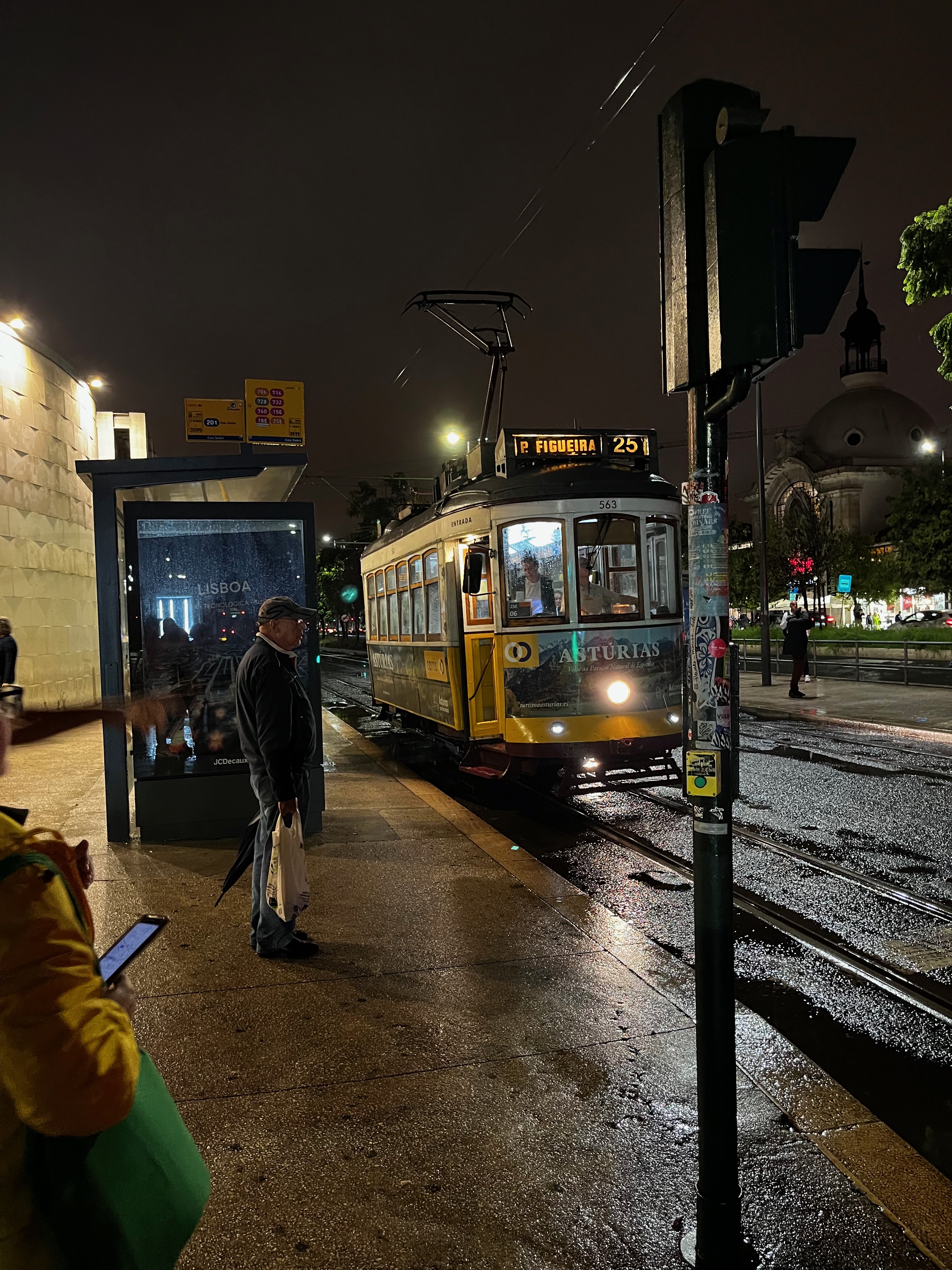
    Scenes from Cascais:

    Though none of us spoke Portuguese, we managed. Not everyone spoke English, but between knowing some Spanish, using Google Translate and a lot of pointing and gesturing, we communicated. Most menus offered an English version. The overlap between Spanish and Portuguese wasn’t as much as we expected, though, and the spoken language sounds more different than I realized. Sometimes Portuguese sounded almost Slavic or Germanic to my ear.

    We visited so many playgrounds! Ben had an app on his phone that located playgrounds wherever we were – now that is a useful app! Our granddaughter had a great time. One playground in Cascais was in a beautiful park that had interesting sculptures and landscaped areas. It also had chickens roaming freely. We were surprised to find wild chickens commonly in parks/playgrounds, even in Lisbon!

    Roosters in parks:

    In general, it seemed that Portugal was more family-friendly than the United States. If you had small children, you could avoid lines. This came in especially handy when we visited Sintra – more on that in a bit. Establishments expected and accommodated strollers. The restaurants we went to had kids’ menus, too.

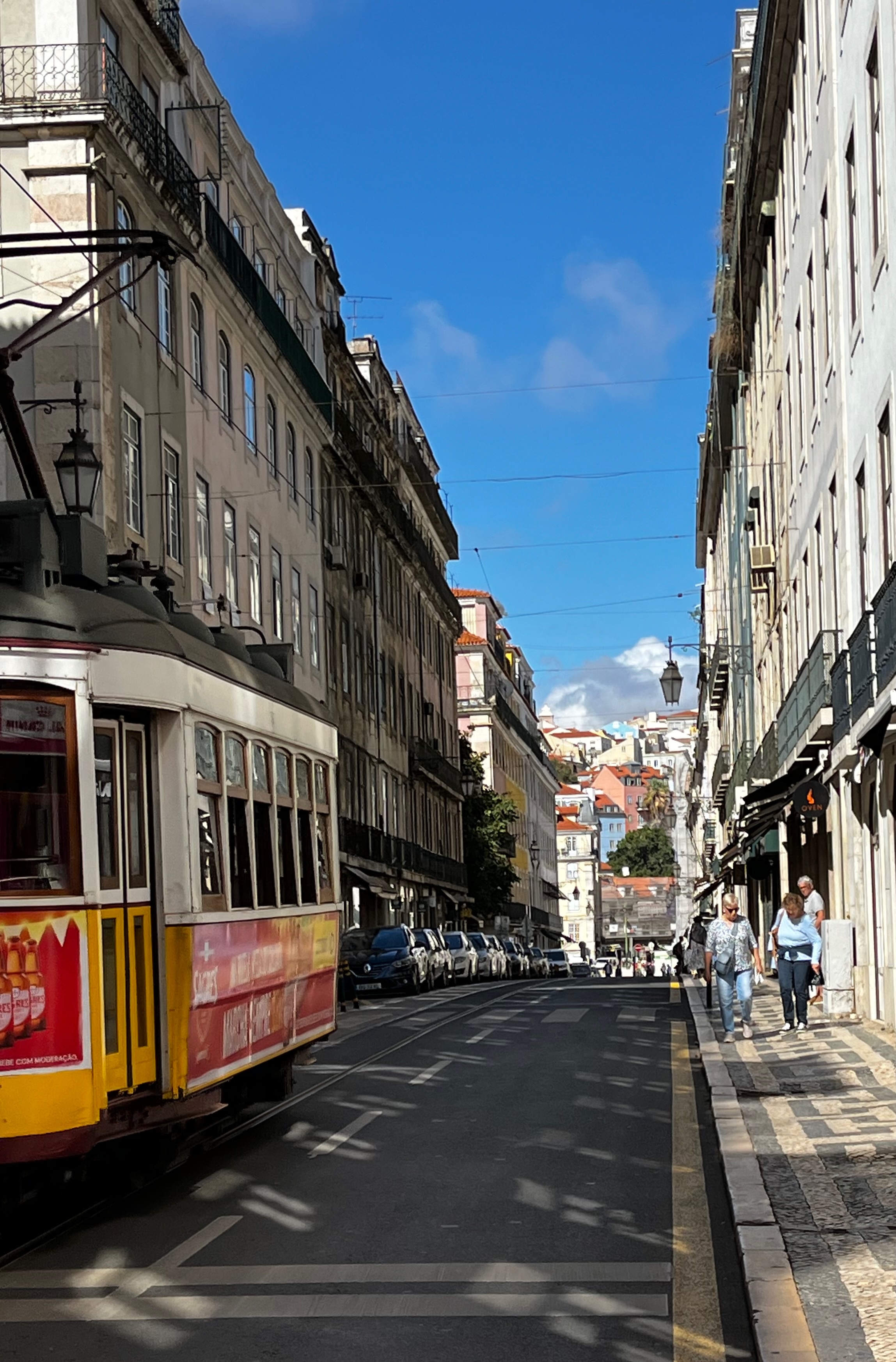
    I don’t know how people who have mobility issues get around safely in these old cities – and they are centuries old. The sidewalks are narrow, and they are cobblestone! It looks charming and pretty but presents obstacles. The surfaces are uneven and the topography is hilly on top of that. It made for a good workout, but if a person was in a wheelchair or if they had balance issues, it would be very challenging. I am grateful that Gary and I do not face those difficulties.

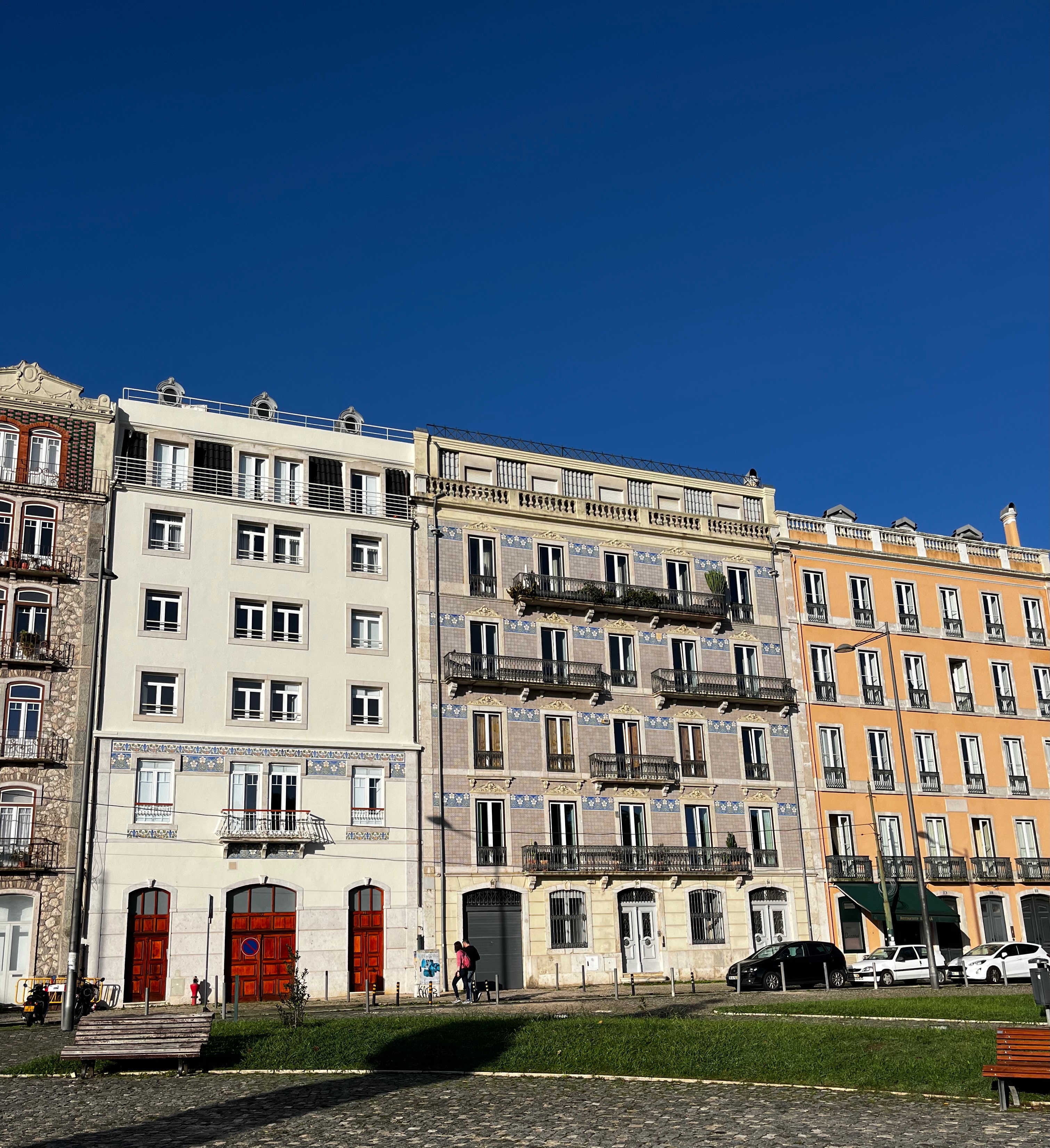
    Views of hilly Lisbon:

    The coast of Portugal is beautiful. The ocean was wild. The currents looked strong. It wasn’t swimming weather anyway, but even if it had been, I’m not sure I would have been willing to venture in. I loved walking by it and listening to the thundering surf.

    Our experience attending services at the Chabad was interesting. Security was tight – there was one entrance. Two men guarded the door and if they did not know you as a member of the congregation, they interviewed you. We were asked several questions and had to show them our passports – this was in addition to filling out an online form in advance. They were nice enough about it and we were allowed in. Not surprisingly, given that it is an orthodox synagogue, men and women sit separately. Though, I would have preferred to sit with Gary, it meant that I spent my entire time observing the women around me. They were a mix of Orthodox women (wearing modest clothes that covered their arms and legs, wearing wigs) and women in jeans and casual tops. In my experience, one doesn’t wear jeans to high holiday services. I was wearing a dress. There were a lot of children running in and out of the women’s section creating a bit of chaos. The prayers were recognizable, and melodies mostly were, too. The rabbi, who greeted us warmly when we walked in, was originally from Crown Heights in Brooklyn. His limited remarks (he didn’t give a sermon) and directions (announcing the page number, to rise or sit, etc.) were in English, he provided page numbers in Portuguese too. The prayers were in Hebrew. All in all, it felt familiar which is kind of amazing given we were in a foreign country. I didn’t get much out of the service in a spiritual sense, but that’s not unusual. I appreciated that they made the services available to us and they were welcoming.

    I can’t say much about the food and drink (not meant to be a comment on our fasting for Yom Kippur, though we did fast for that one day). I enjoyed the little bit of Portuguese wine that I had. Given that most of our meals were with our granddaughter, food and drink were not a focus of our attention. Gary and I aren’t exactly foodies so this wasn’t much of a sacrifice. The food was fine. I was surprised by the number of pizza places! The pizza was good. We had good Indian and Mexican meals, too.

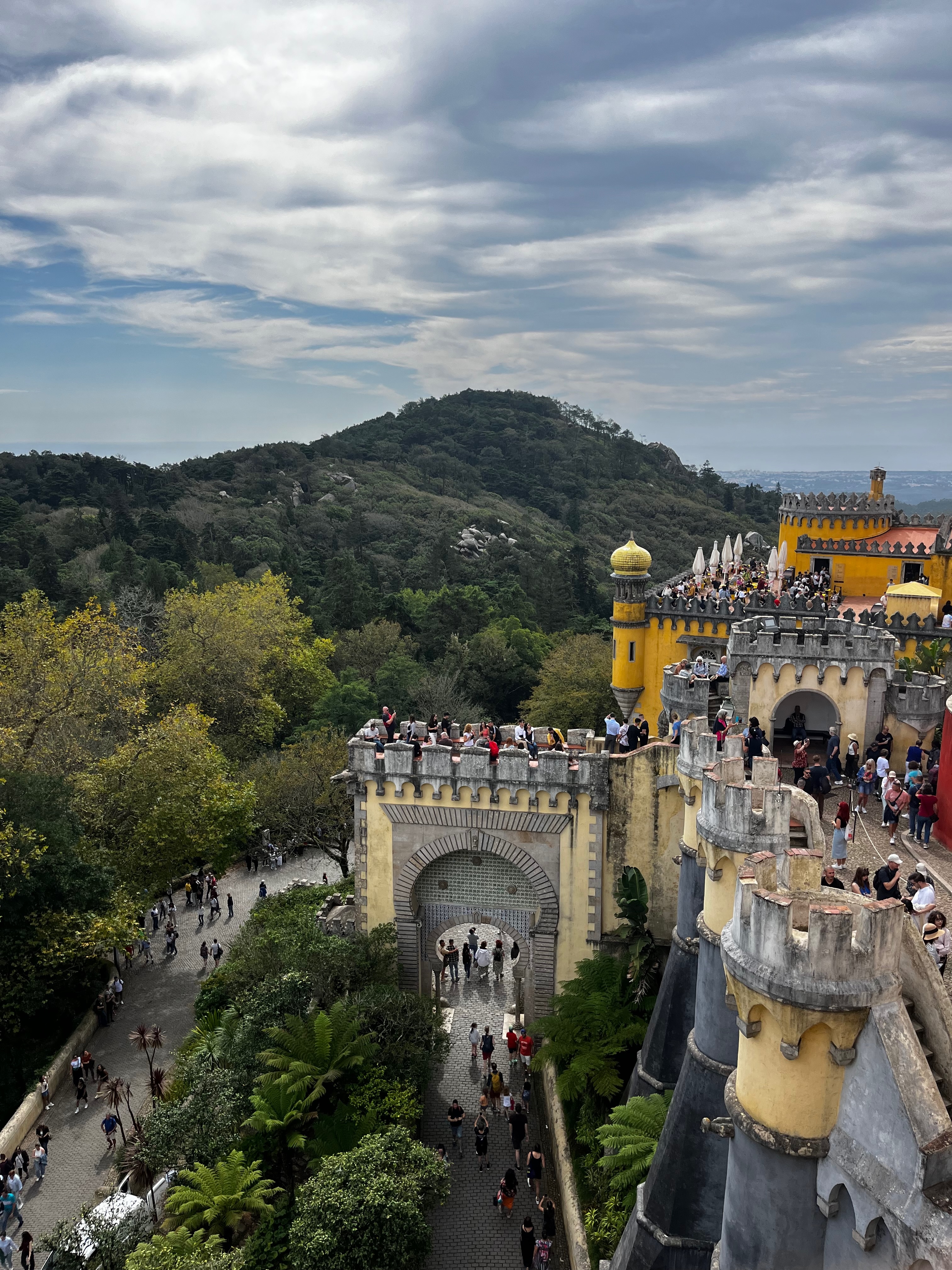
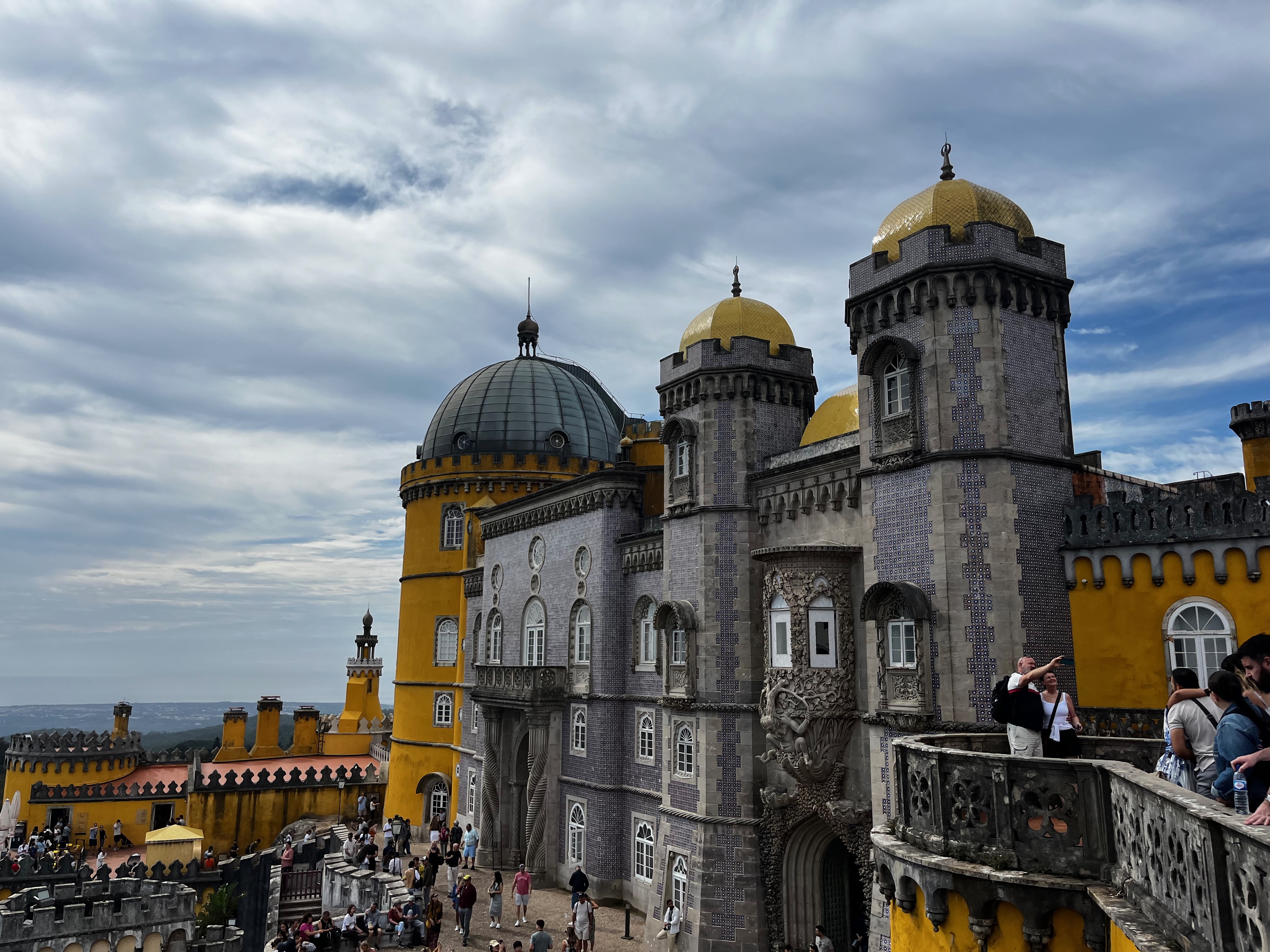
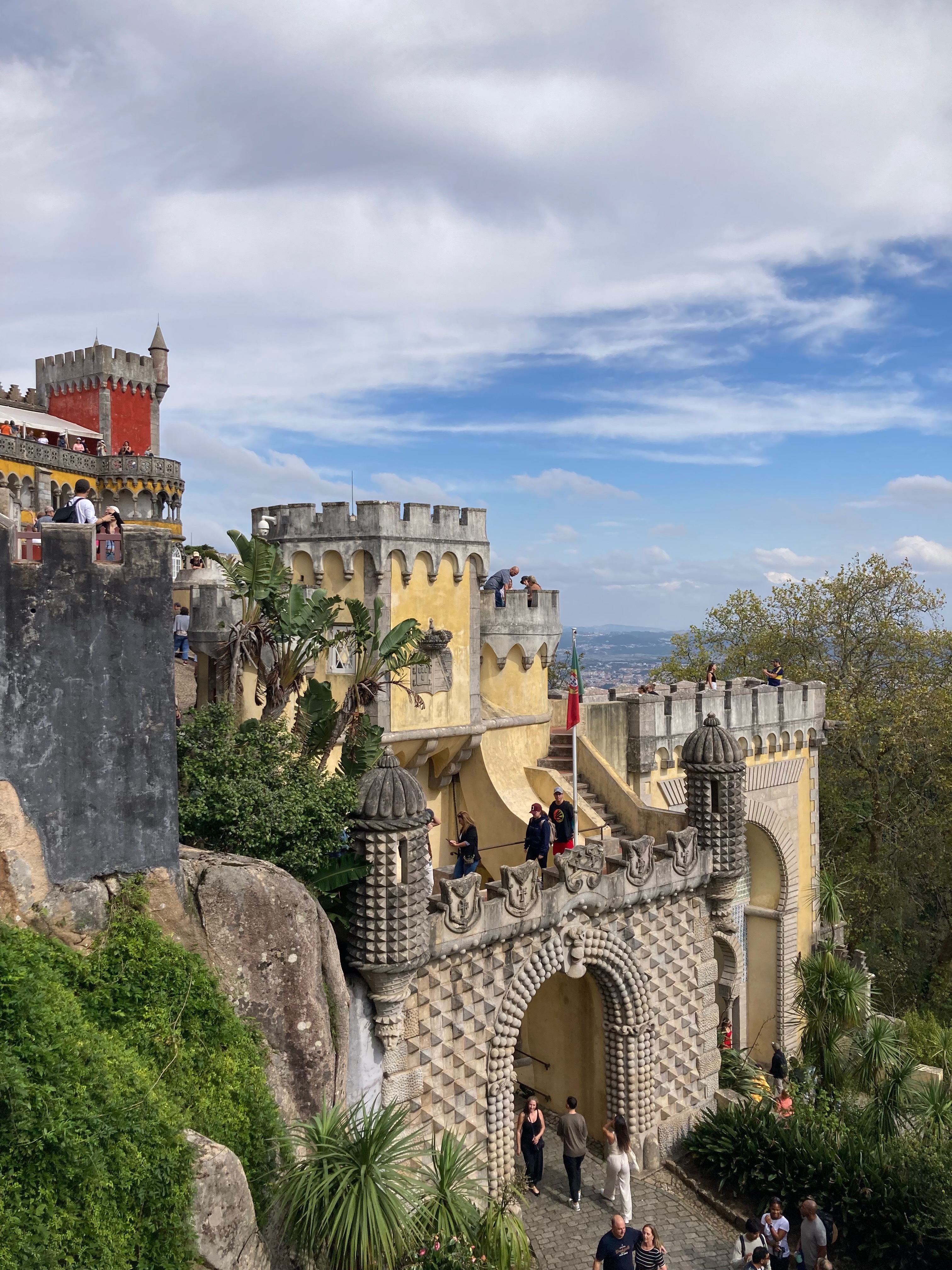
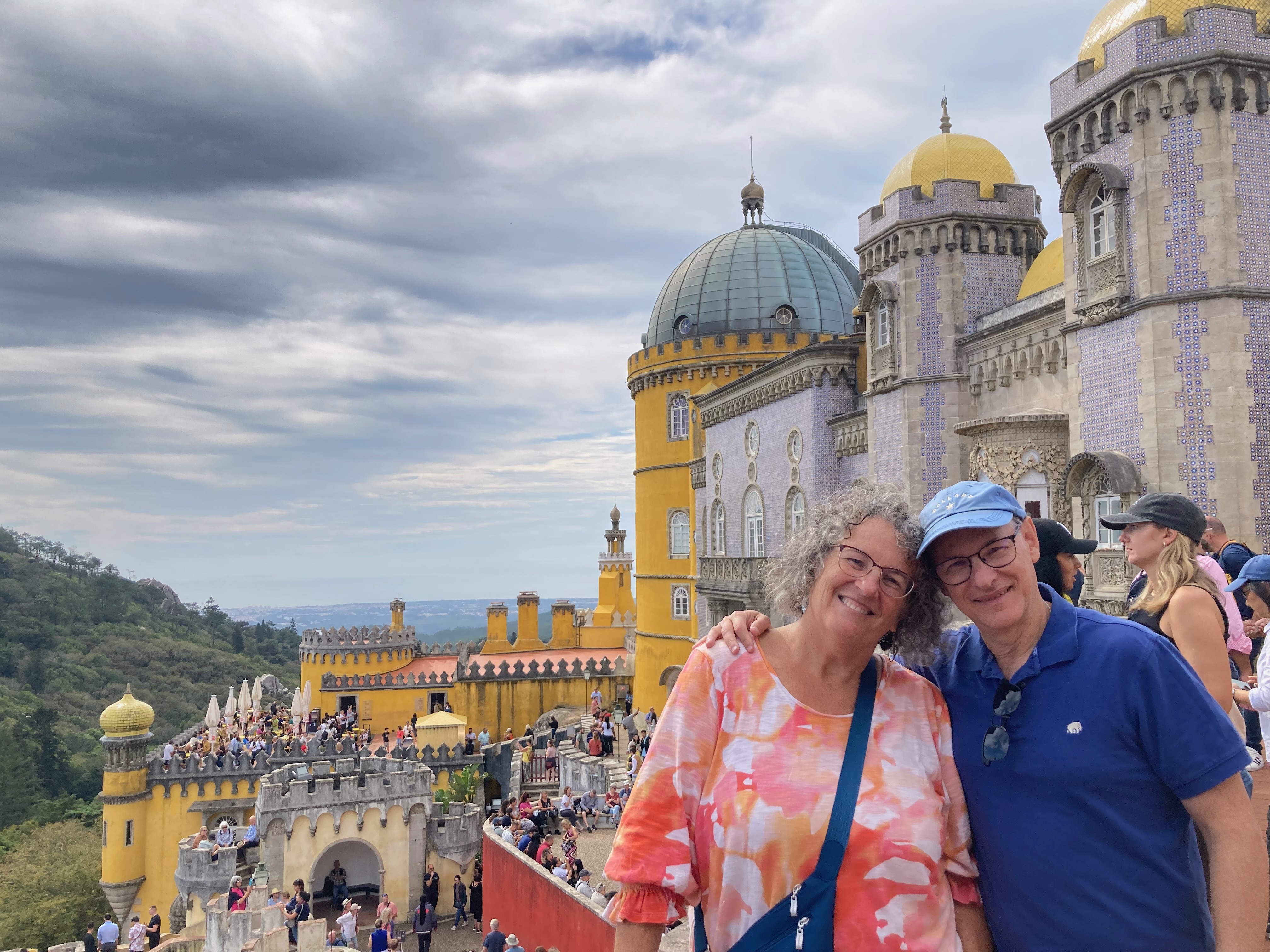
    On our way to Lisbon we stopped in Sintra to see the Palais de Pena. Sintra is a charming, ancient town in the mountains. There are a number of castles there. For the duration of our stay in Portugal we rented a car because we thought that would be most convenient, and it was, except for traveling to Sintra. Should you choose to go, and I do recommend it, take public transit or a tour or some other means, do not drive. There was a prominent sign on the wall of a building that said “Sintra, a traffic jam in paradise,” or words to that effect. They weren’t lying. We were there on a Monday (not a holiday) and not during high season either, so I’m not sure when it might be less crowded. Anyway, the palace was spectacular and so were the views. And this was an occasion where having a toddler got us fast-tracked through the line!

    Views of the Palais de Pena in Sintra:

    Lisbon is a great city – vibrant, with lots of restaurants and shops. It was far more multicultural than Cascais and that was reflected in the types of restaurants and stores. We took the metro to get around and that worked out very well. It wasn’t spotless but it felt comfortable.

    We stayed one extra night after the kids left to go home. We took a hop on/hop off bus. The route was great and we saw a lot, but I don’t know if it was just Gray Line (the brand we used), but the buses didn’t run that frequently. Everything took longer than it should have and the buses were so crowded people were standing in the aisles. In addition, the audio that played, which gave information about the city, wasn’t synched to what we were seeing. Perhaps another bus line would have been better because in our experience it is generally a good way to get an overview of a city.

    More views of Lisbon:

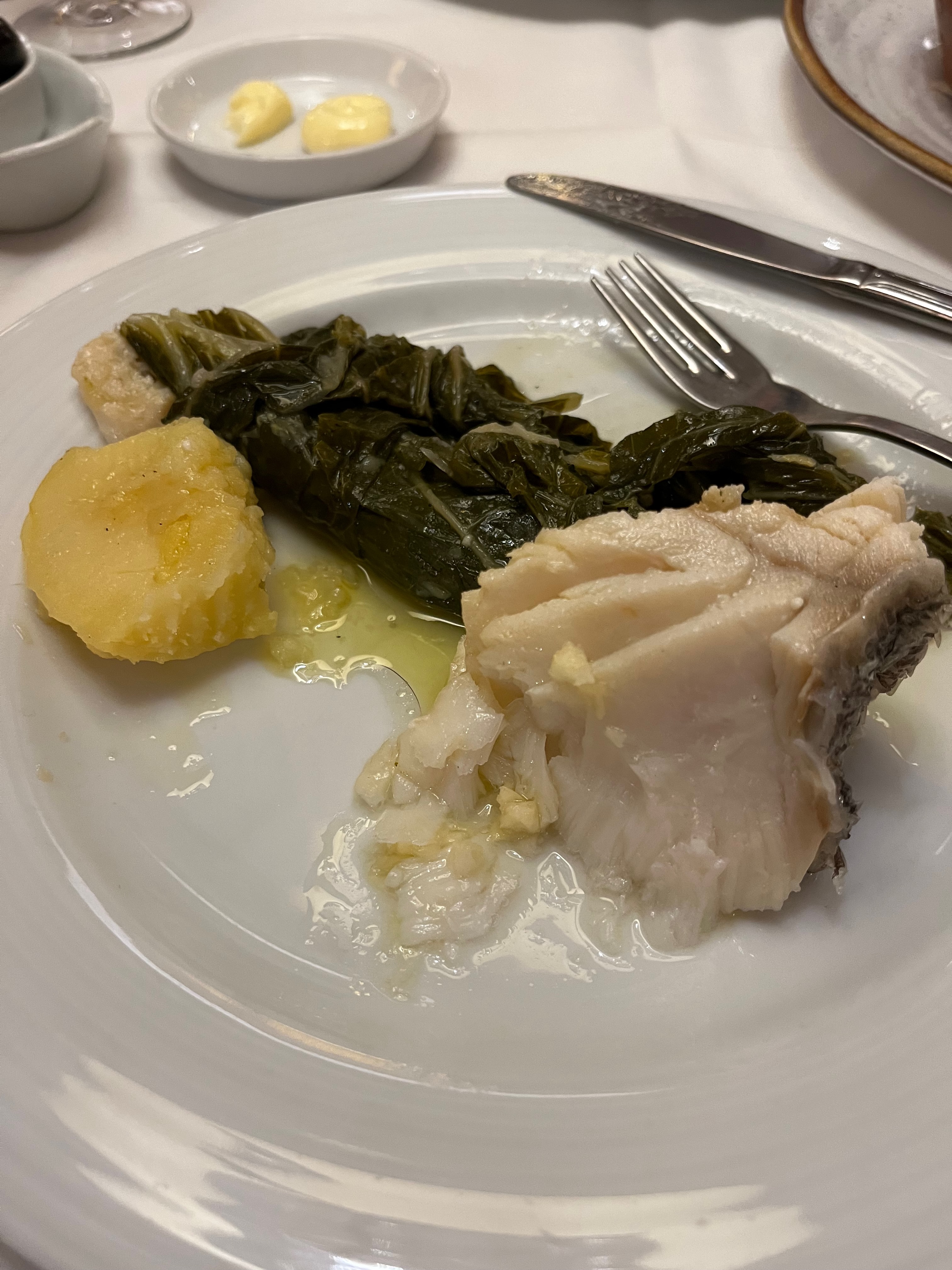
    We decided we would go out for an authentic Portuguese meal for dinner. We asked for a recommendation at the hotel we stayed in for that final night – the Airbnb apartment wasn’t available for that last night. The woman at the desk offered a number of possibilities. Bacalao (cod) is a dish that is considered a national tradition, so we went to a restaurant that specialized in its preparation. I like cod, and the meal was fine, but not something I would need to have again.

    The house special: cod, potato and cabbage

    We were glad we had the experience – the restaurant was lovely, it was busy with folks who did not appear to be tourists, the service was good – but we didn’t love the food. Dessert, I ordered the chocolate cake with strawberry sorbet, was the best part of the meal.

    Our main goal in taking the trip was to bond with our granddaughter and offer support to Leah and Ben. If we got to see some beautiful sights and learn something about Portugal that would be gravy. Given our granddaughter’s delighted reaction to seeing us each morning and her playfulness with us, I think we can say: mission accomplished. And, we did indeed see beautiful places and learned a great deal. I’ll leave it to Leah and Ben to decide if we were supportive, but I suspect we did all right on that count, too.

    Note: Most of the photos were taken by me. Six of them were taken by Leah, Ben or Gary, though I am not sure which ones. Sorry for the poor attribution.

  • Note: The following was written by my husband Gary Bakst, lifelong Met fan, which means 65 years, except the Mets are actually 3 years younger than that. But you get the idea. Anyway, I hope you enjoy his prose as much as I did.

    I put Gameday on my laptop as I saw my afternoon patients yesterday.  I was nervous, anxious, worried.  Dan, my son, texted to ask if I was stressed and that is exactly what I was feeling.  The Mets gave up 2 runs in the 3rd inning and another in the 6th and were down by 3-0 going into the eighth inning.  It was looking like yet another of those miserable late season games in Atlanta.  We have been here before.  We have seen this movie.  And we never liked the ending. 

    Then, out of nowhere, the Mets erupted for 6 runs in the top of the eighth inning capped by Brandon Nimmo’s two run home run way deep into the right field stands.  Finally, a better ending was coming into view.  All of those demons would be erased.  The Mets were just 6 outs from the postseason.  What could possibly go wrong?

    And then came the bottom of the eighth.  Maton came in to pitch it and was ineffective and they brought in Edwin Diaz to try to get a 5 out save coming off a thirty something pitch save Sunday.  Diaz failed to cover first on a ground ball to Pete Alonso and one double later, the Mets were suddenly down by 7-6 heading into the ninth inning.

    Of course.  Of course the Mets couldn’t just lose by 3-0.  They couldn’t just fail in an ordinary way in front of the brainless Braves’ fans.  They had to first get our hopes up with an historic eighth inning only to give it away in the bottom of the inning.  They had to take our hearts out.  They couldn’t just let the patient die mercifully.  They had to make it painful, long and heartbreaking. 

    This could not be an ordinary loss.  This had to be a Mets fan special.  I was almost sure that blood was coming out of my skin, my pores and slowly spilling onto the floor of the exam room.  The ninth inning would surely be just one, final, painful chapter in a sad, tragic story.

    And then.  And then, with one out, Starling Marte got a base hit and suddenly, our guy, our MVP, back from his back, strode to the plate.  Francisco Lindor, batting from the left side, hit a ginormous home run.  Perhaps the second biggest home run in Mets vs Braves history (Piazza, of course).  The ball was well struck and carried deep into the Atlanta late afternoon gloom.  It seemingly broke open a new dimension.  It carried hope and joy and goodness and love and was itself carried by will and determination, by desire and honor and the conviction that, in the end, goodness will triumph over evil.  It was propelled by a force both divine and human and when it landed angels called from the heavens, doves flew overhead and lions lay down with lambs.

    And it sailed over the right centerfield fence and suddenly, out of nowhere, the Mets were up by 8-7 and only three outs separated them from the post season, from an opportunity to celebrate right there on the turf of their most arrogant nemesis.  And it left one giant question:  Who was left to get those last three outs?  It couldn’t be Diaz.  He had thrown a ton of pitches on Sunday and a bunch more in the 8th inning.  And yet, the sad reality is that they really don’t trust any other reliever. 

    And then.  And then, emerging from the dugout with the look of a man on a mission, came Edwin Diaz.  He was back and he was going to find a way to finish the job.  And somehow, despite the fact that it looked like his right arm came onto the field well after the rest of him, he got it done.  

    The Mets were in the playoffs.  A great miracle happened there.  It was not the ending Mets fans have been accustomed to, not the ending we have been trained to expect.  And it was just so sweet and so amazing.  I had to look at the screen on my laptop for a while to make sure that it was real.  Wait, they’re gonna call for some kind of do over, right?  Somehow, they’ll say it can’t be over until the Mets lose.  But it was real.  And it was good. 

    The Mets are in Milwaukee today for a 5:30 PM (eastern time) wild card playoff game). 

    #LGM

    It all started back in Spring Training and we were there.

  • In an unusual turn of events, Gary and I had a free day in New York City. The weather forecast was perfect – sunshine, no humidity, high temperature in the low 70s. I had an idea for what we should do with this unexpected free time. “Let’s go explore Brighton Beach,” I suggested.

    Brighton Beach is a neighborhood in Brooklyn. It has been nicknamed “Little Odessa,” because it is home to many immigrants from Russia and Ukraine and it is by the sea (like its namesake on the coast of the Black Sea in sadly what is now war-torn Ukraine).

    Usually, Gary turns his nose up at Brooklyn – it is a running joke between us. He thinks Queens is the far superior borough since that is where he grew up. It is true that when we were children more of Brooklyn was impoverished and crime-ridden; Queens had some unsafe areas, too, but more of it was middle- to upper-middle class residential neighborhoods. It has been a lot of years though since Brooklyn recovered, gentrified and became the favored place to live among hipsters and artists. Brooklyn still has rough areas, but it is nothing like it was in the ‘70s. So much has changed since I lived there.

    To my surprise, Gary agreed to my proposal. He was curious about it, too. I did a bit of research online about restaurants and sites. We decided to drive, though public transportation is readily available, because it would give us more flexibility. One advantage to visiting the outer boroughs, especially if you aren’t intimidated by the prospect of driving through the streets, is that you can find free parking. Anyone who has had a car in Manhattan knows what an expensive proposition parking can be. We waited until rush hour was over, around 10:00 a.m., and headed to Brooklyn.

    I can’t remember the last time I drove to Brooklyn. We headed downtown along the west side of Manhattan and went through the Hugh Carey Tunnel. Back in the day we called it the Brooklyn Battery Tunnel. I took that tunnel many times with my family when we came to Manhattan to visit either of Dad’s sisters.

    We emerged from the tunnel in Brooklyn and proceeded onto the Gowanus (an elevated highway with a lot of truck traffic). I remember it as a depressed industrial area on one side of that highway and residential on the other. The residential side looked better maintained and the other side seemed to have new developments, some of which was still industrial, but the area looked more vibrant than when I had last seen it.

    The Gowanus took us to the Belt Parkway, the roadway that travels along the edge of Brooklyn, skirting the entrance to New York harbor and then Jamaica Bay. We passed under the Verrazzano Bridge. I thought about how big Brooklyn is and I remembered getting around the borough as a teenager on buses. There was a store not that far from the Verrazzano, Korvettes, that had good prices on records. My brother Steven, who had a huge record collection, would give me a list of albums he wanted for his birthday, and I would go to Korvettes to pick one out for him. It was quite a schlep– involving several different buses. I didn’t mind, though, riding through various neighborhoods and looking at the people and stores. Korvettes is long gone, now a Kohls and Target sit in its spot. Some things change but remain the same.

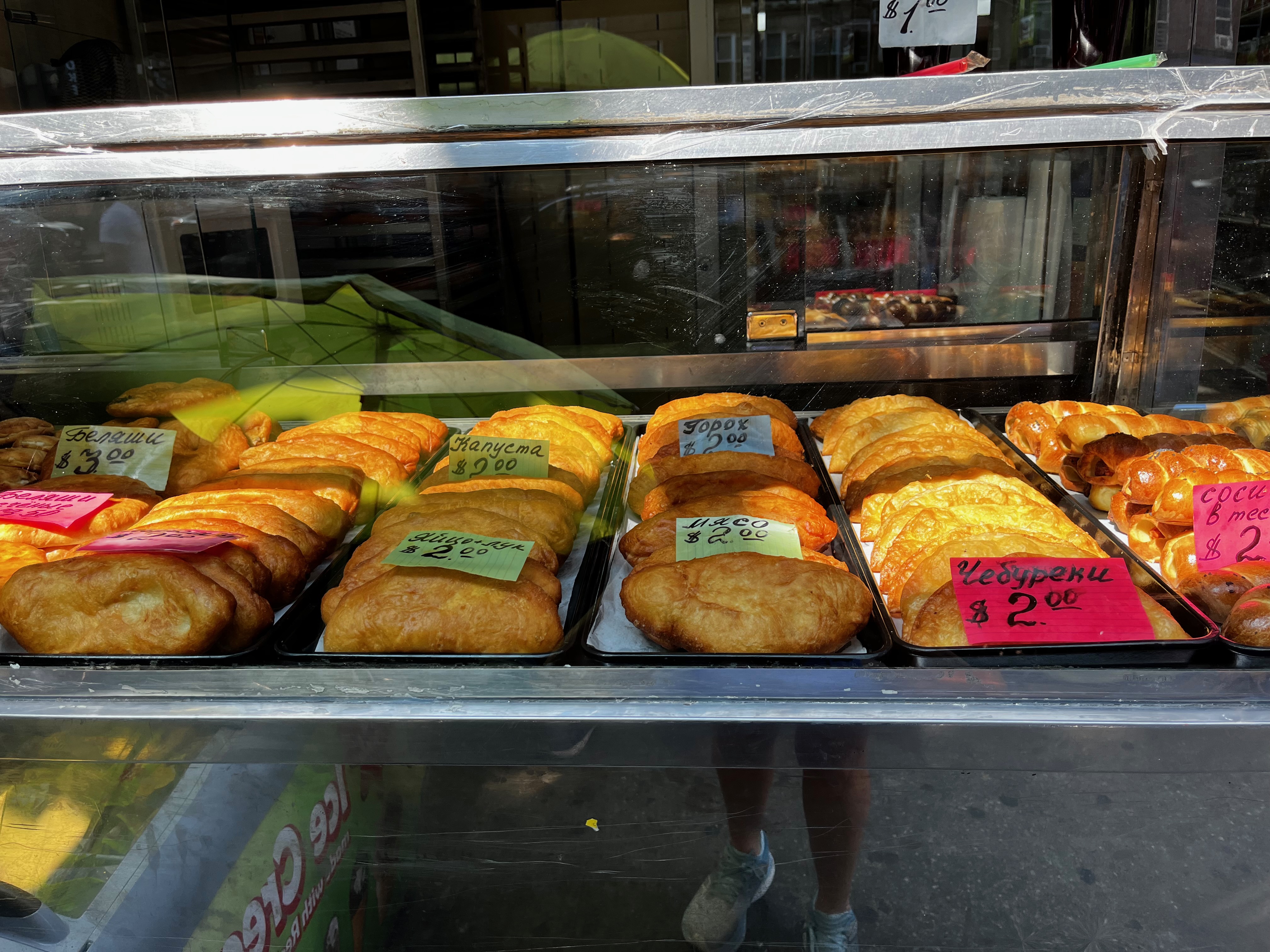
    We exited the parkway and made our way to Brighton Beach Avenue, looking for parking. We noted many fruit and vegetable stands, and spotted a market bearing the name of the capital of Uzbekistan, Tashkent.

    The influx of Russian and Ukranian immigrants to Brighton Beach began a long time ago in the 1970s. When the Soviet Union relaxed its prohibition on Jews leaving, many of them found their way to Brooklyn, especially to Brighton Beach. Then when the Soviet Union dissolved in the early 1990s another wave came – this time from the former Soviet Republics such as Ukraine, Uzbekistan, Georgia, etc. The new immigrants established shops along Brighton Beach Avenue catering to their tastes.

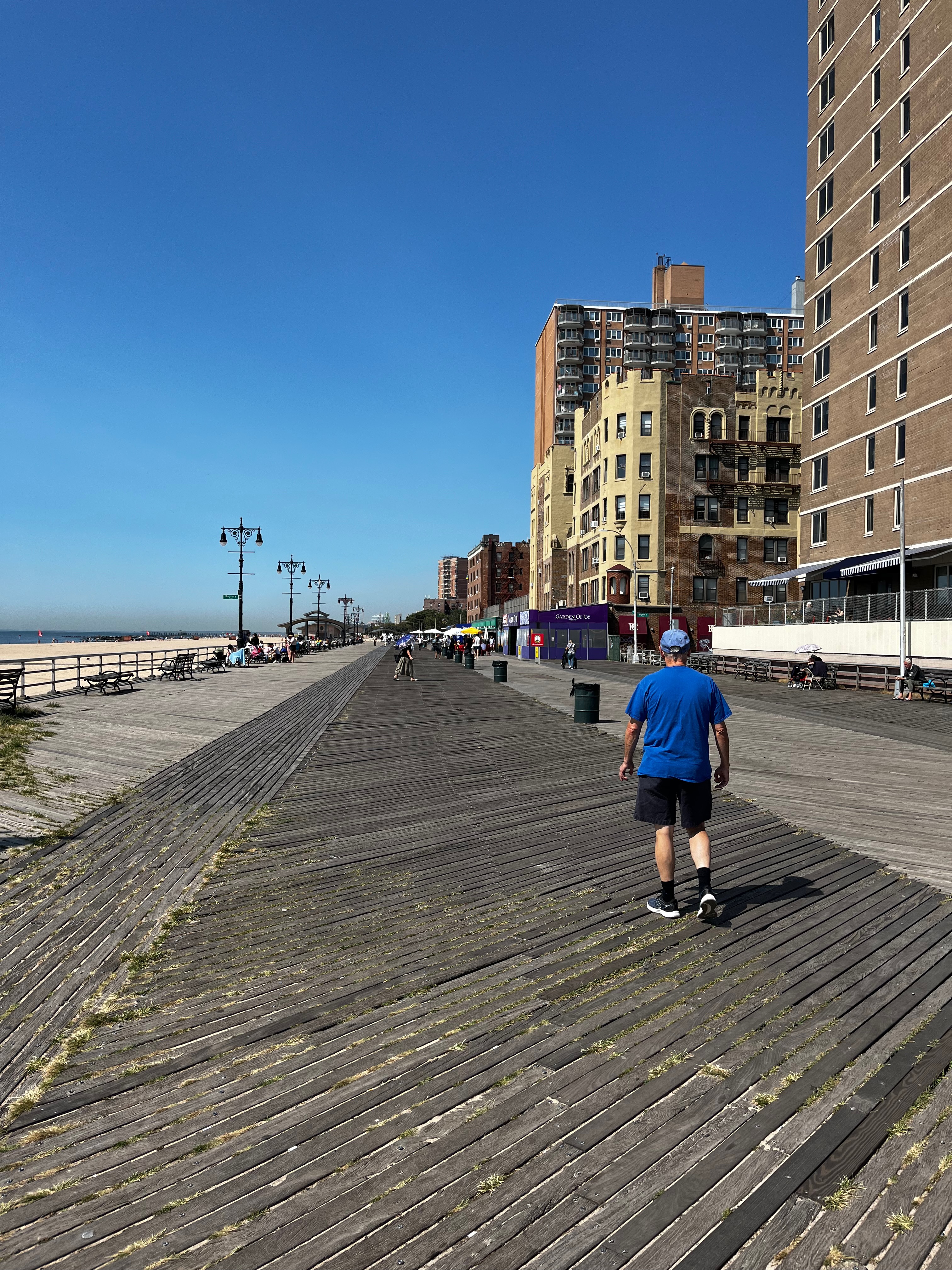
    We found an unmetered parking spot on a residential side street. The Riegelmann Boardwalk runs along the beach –  named after Peter Riegelmann, the Brooklyn Borough President in the 1920s – it stretches almost three miles through Brighton Beach past Coney Island. We got on the boardwalk where it starts and meandered almost the full length of it, passing iconic landmarks like the Cyclone, Nathan’s and the renovated aquarium. It was not yet noon, so it was quiet, everything was just opening. We passed a few fellow walkers, joggers and fishermen/women. We heard a polyglot of languages being spoken, including Yiddish. The sky was clear, there was a warm breeze, and the water glistened in the sunshine. We stopped to watch the waves breaking on the shore. Only a few umbrellas dotted the sand – public schools in New York City had opened that day so there weren’t very many people.

    We reached a very long fishing pier, walked out to take in the view, and then turned around and started back.

    We got off the boardwalk and went up to the avenue to look at the variety of stores and find a restaurant for lunch. The sidewalks were crowded with shoppers and merchandise. Elevated train tracks provided shade for the sidewalk. Periodically we heard the screech of the subway above us.

    We looked at a few menus posted in windows and selected a restaurant that offered traditional Eastern European fare. We decided on the Ocean View Café, the menu was in what we thought was Russian (or maybe it was Ukranian) but it had English translations.

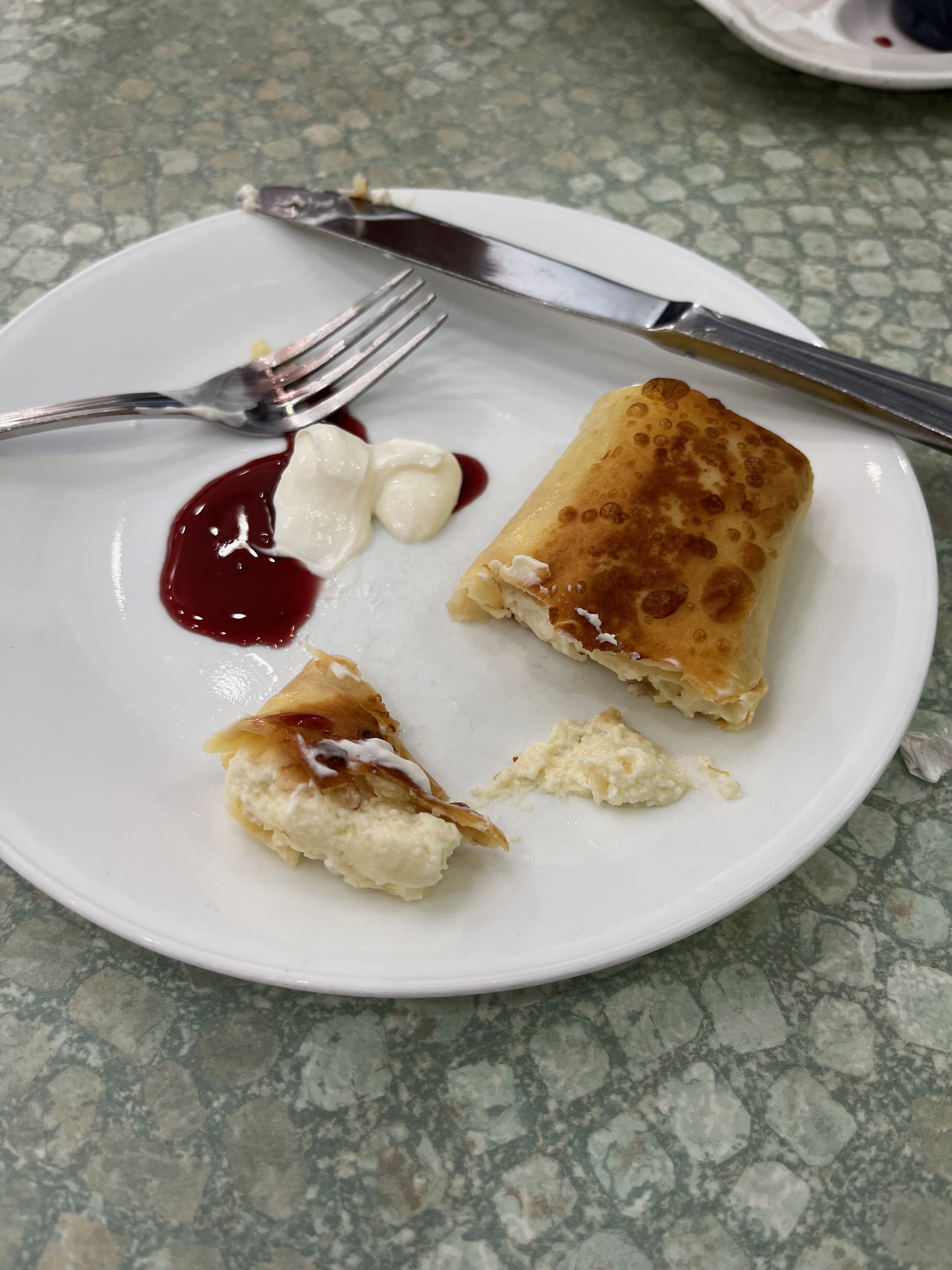
    There were just a few empty tables, so it seemed to be a popular place for the locals who were speaking a Slavic language to the waitstaff. We ordered stuffed cabbage as an appetizer, chicken kebab with mashed potato and cheese blintzes, we shared each dish. The food was excellent.

    We left the restaurant and were grateful to have a bit of a walk to the car. The cherry on top of our great day was that we didn’t hit much traffic heading back into Manhattan, only one bottleneck. Gary and I agreed it was a terrific outing. We timed it just right – nothing was too crowded, but it wasn’t desolate, the weather was an ideal example of late summer perfection, and we felt like we had visited another country – all while in New York City.