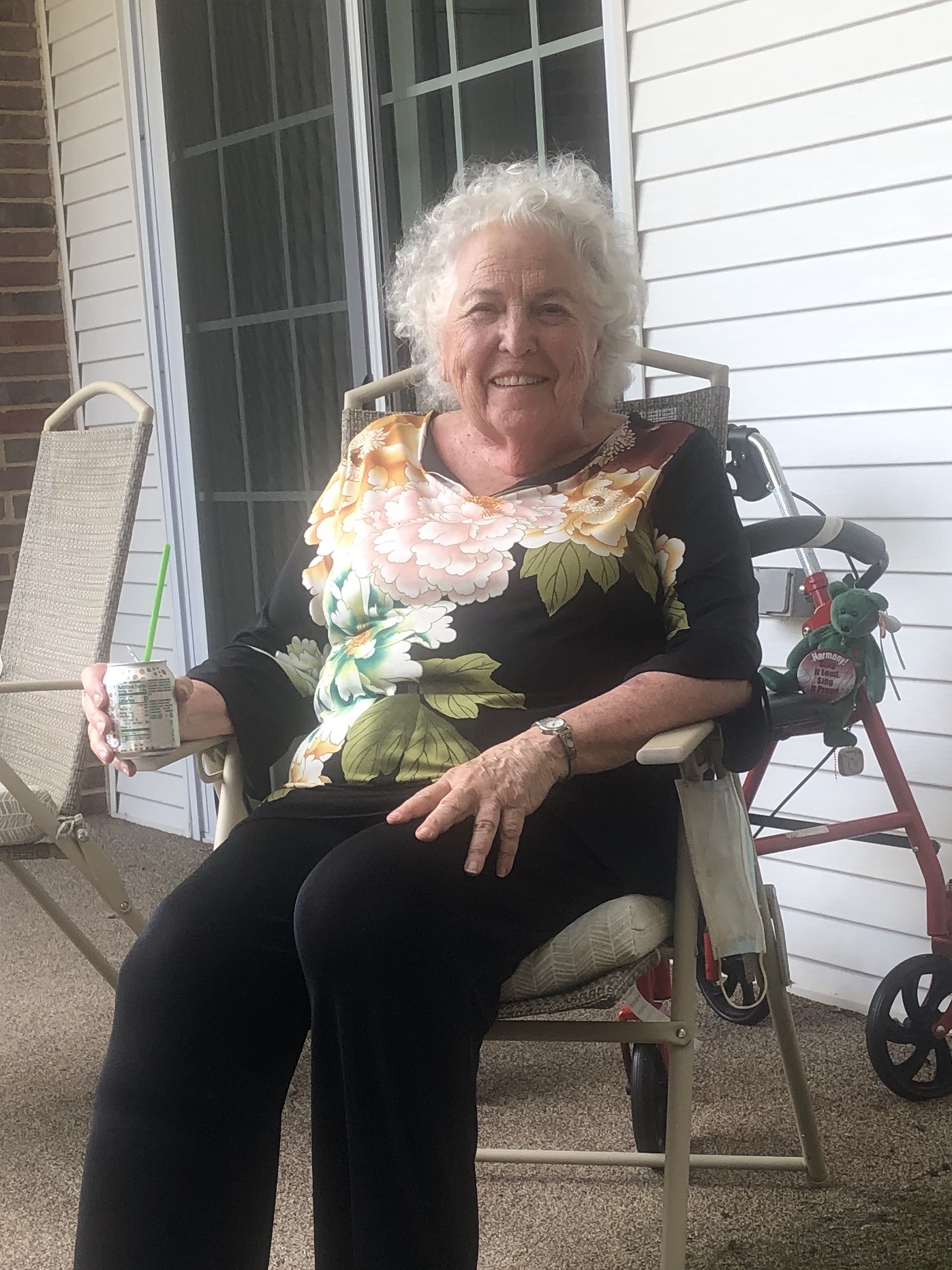
Note: My mom has been trying her hand at writing, too. During this shut down, where she has been almost entirely confined to her one-bedroom apartment, she has been reflecting on her life. She wrote this piece and I thought I would share it. I think it gives some insight into her and some lessons she taught me. Plus, I think it is great that she is putting pen to paper (and in her case it is with pen and paper) and I want to encourage her to continue.
I’ve often heard women complain that their husbands were busy playing cards while they were left alone. I didn’t mind.
This is what I did. I walked the Avenue, Fifth Avenue.
On Thursdays my husband, Barry, and his friends would get together after work, have dinner and then play cards. They always played at our house because it was a central meeting spot.
In the meanwhile, I would finish my workday at school in Brooklyn and take the subway to the city. There is only one city, Manhattan.
I would walk up the avenue, but not like Fred Astaire and Judy Garland (Easter Parade, 1948), more like Bill Cunningham (NY Times Photographer). I‘d go to the corner of 5th Avenue and 57th Street to watch the world go by. The languages I heard, the clothing I observed and the ages of those walking the Avenue were as varied as the cultures they represented.
Since the hour and day was not conducive to seeing a Broadway matinee, I varied my excursions. Sometimes I would go to St. Patrick’s Cathedral. The outside was surrounded by the ever-present sounds of construction and general din of the City, but inside was quiet with magnificent stained glass windows.
Most fun would be visiting the luxurious bathrooms of the very expensive department stores such as Saks 5th Avenue. The restrooms were decorated with silk or satin wall coverings and gold-plated faucets. I got a kick out of my brief moment of feeling rich and pampered.
Other excursions would be to the jewelry stores, Cartiers and of course the crown jewel, Tiffany’s. Tiffany’s had a special room where they displayed replicas of the trophies made for championship teams and marvelous tiaras and necklaces commissioned by famous people. The real jewelry would be in locked cases. Obviously, I never bought anything; but it didn’t hurt to look.
Other times I would go browse in Barnes & Noble – no coffee bar then—and also the Hallmark store which had all kinds of knick-knacks in addition to the wide array of cards and wrapping paper. I strolled past the other famous shops as well.
Getting into the City always excited me, with its energy and hustle bustle.
I would head home, plug in the coffee pot and bring out either the brownies or pie that I had made the night before for Barry and his fellow poker players. After the refreshments the guys would head home. We all had work the next day.
My take: Mom loved the City and she passed that on to me. While I have not ventured into the fancy stores on Fifth Avenue, or tried their restrooms, I have people-watched along that iconic avenue and I have spent hours in its bookstores and that same Hallmark shop.
I also learned that husbands and wives don’t need to be joined at the hip. Mom and Dad had unique interests and that was a good thing – they gave each other space to pursue them. This was a valuable thing to understand and was an important building block for my own marriage.
I well-remember poker nights because the smell of the cigars wafted up from the basement. I was sometimes asked to help clean up the next day and the air was still hazy from the lingering smoke. My dad didn’t partake, but his friends sure did. I always hoped there was leftover brownie as a reward for my efforts.
Also, Mom loved coffee – I believe she must have built an extraordinary tolerance to caffeine because she consumed potfuls (of regular!) in the course of the day when I was growing up. At some point it did catch up with her so that now she has to limit her intake, but she still loves her two cups in the morning, black (no sugar, no milk).
Mom – not with coffee since it was the afternoon. Diet ginger ale will have to do 🙂
What is history? The first time I realized that the word could be broken up as ‘his’ ‘story,’ it was a revelation. Most of what we learned in school was the story of men, of particular men, those in power. One could argue that telling the story of the powerful is appropriate – after all they made the rules, they shaped the future. At least more so than ‘ordinary’ people. If we are studying the founding of America, learning about Washington and Jefferson is imperative. But, of course, that doesn’t tell the full story. Telling the full story is complicated.
So many things go into defining history. First, who is writing or telling the story? Who chooses what is included in the curriculum? Until relatively recently, historians were mostly male and mostly white. While in theory facts are facts (although in TrumpWorld perhaps we have moved into a ‘post-factual’ period), we know that making connections and analyzing information are colored by the biases and assumptions we bring to it. Our understanding is broadened and deepened when a range of perspectives are brought to bear on a topic.
It becomes a matter of balance – history can’t solely be the domain of the privileged. But, we don’t have unlimited time, even if we take into account that we send children to school for 12 years, time is short. Choices are made. It is hard to pack in all the history we want our citizens to know and provide them with a global perspective, too. When I was in elementary school in New York City in the late ‘60s and early ‘70s, we were taught American history by highlighting the contributions of every different group that made up our country (maybe not every different group). We learned about Crispus Attucks, Haym Salomon, Baron Von Steuben, Tadeus Kościuszko, Marquis de Lafayette – I came away proud that so many different people, representing different ethnicities and backgrounds, contributed. We learned about Washington, Jefferson, Franklin, etc., too. The message I took home was that the Revolution was a noble cause, with many contributors.
Looking back, I recognize that there were gaping holes and many things were romanticized. When the values that inspired the American Revolution were taught, the fact that women, Native Americans and Blacks were deliberately left out of the vision of life, liberty and the pursuit of happiness was not given much attention – more of a passing mention. It wasn’t until 11th grade that I learned about our treatment of indigenous people – the deliberate spreading of smallpox via blankets, for example. My children spent a great deal of time in elementary school learning about the native people of New York State – changes in curriculum were made. I don’t know if they learned about the different contributors to the Revolution, as I did. I’m not suggesting there is necessarily a trade-off, I don’t know.
In talking with friends, even friends who were in school with me, not everyone remembers learning the same stuff I recall. I was interested so I paid attention. How does that factor into all of this? Sometimes when I hear criticisms of our education because some subjects weren’t included, I think to myself, but I remember learning about that. Which brings me back to my first point – what is history and who is telling it? Perhaps we can dig up the approved curriculum for 4th grade social studies in New York City in 1968, but that may or may not be what was taught in a given classroom. And, my friend may have been absent the day we learned about Crispus Attucks.
In my limited experience doing research for this blog, I have found it challenging to settle on a ‘truth’ about events. Some are small events, like when Cutie the cat leapt out of the car window. My family agrees that it happened, but not how or why. In a more serious example, when I researched the murder of my paternal grandfather’s family in Poland by the Nazis, the specifics were hard to get a handle on. The fact of their death was indisputable, but where and how many were killed, was hard to establish. It opened my eyes to the difficulty of uncovering history and how it gets reported.
Another question is: who or what is being written about? What resources were available to reconstruct events? Could my blog constitute ‘history?’ Many of my essays are memoir, recounting experiences from 50 or more years ago, or incidents from last week. Diaries and letters are great but need context and corroboration. I don’t imagine that Donald Trump keeps a diary or writes letters, but if he did, he would hardly be a reliable source. What will history have to say about him?
You may be wondering, where am I going with this? I think these questions are central to what we are going through as a country today. We are coming to grips with a fuller picture of our history. We are raising questions about the lessons we were taught. Some feel threatened by that questioning.
We are also addressing the role of monuments and museums in the telling of that history. We are recognizing that our understanding of history evolves and then what do we do with those monuments and museums? Some might argue that our history is being rewritten and resent it because it feels like sand is shifting beneath our feet. But it is always being rewritten – there continues to be scholarship about the fall of the Roman Empire. It is right that it is rewritten and rewritten again. No doubt it can be unsettling, but it is necessary for our growth.
This doesn’t mean that I don’t believe in history, or that we should cast aside all that we learned. But, I do think, like with most things, we need to read critically, ask questions and be open to new interpretations.
I come back to a quote from Maya Angelou, “Do the best you can until you know better. Then when you know better, do better.” I think that applies to where we are now. I think we all need to be on a quest in our lives to know better, so we can do better.
I woke up and grabbed my phone, as I usually do, from the nightstand. I quickly flipped through various apps, just checking to see if anything momentous happened overnight. Nothing of note, just the usual craziness inherent in living in TrumpWorld. Then, the last thing I do before I get out of bed is look at my email. It is formatted so that I can read the first line or two of the body. Imagine my surprise when I saw this:
Hello Linda,
Your submission “Life in the age of coronavirus” has been accepted for publication
Holy smokes! I couldn’t click on it fast enough. Those of you who have been reading this blog for a while know it has been a journey to get published (here is one example). I have wondered whether it would ever happen. I thought about why it was important to me, whether I could or should let go of that idea. Just recently I had recommitted to trying to make it happen ( wrote about that in Another Monday in Quarantine).
On my daughter’s birthday, May 22, I submitted a piece to Trolley, the online journal of the New York State Writers Institute. They were soliciting submissions of poetry, fiction and nonfiction for an issue that would have coronavirus as its theme – they wanted to hear what writers were experiencing during the pandemic. That sounded like a promising topic. I have been posting essays to this blog on just that subject. I chose a recent one and did a bit of editing. When I hit the send button, I remember thinking maybe the date would be an auspicious one. Good things happen on May 22nd. The streak continues!
I forwarded the congratulatory email to my husband and children. I knew they would be pleased for me. It was still quite early, before 7:30 a.m. I would wait to call my mom until a more reasonable hour.
I fought my instinct to downplay the news. I have this way of devaluing things I do – saying to myself it isn’t a big deal; anyone could do it – doesn’t matter what it is. If it is something I accomplished, it can’t mean much. If I lost 20 pounds, I would focus on the fact that I had another 20 to go. If I got excellent evaluations for a presentation, I would think only about the one negative comment. When I finished a 5K or the Five Boro Bike Tour, I would talk about how slow I was. I started down that path this time, too. If a publication accepted my work, it must reflect poorly on them or they took everyone’s submission. For what might be the first time in my life, I shut that down. Instead, I thought, ‘Enjoy this, Linda, just enjoy it.’
I looked again at previous editions of Trolley. It made me smile to think of my essay appearing there. It may not be the New Yorker, but it doesn’t have to be.
Mom was excited, as I predicted, when I shared the news with her. Gary came home after work bearing roses. Shortly thereafter the doorbell rang. Two bottles of red wine were delivered, courtesy of Leah, Dan and Beth. Who knew wine could be ordered online and delivered to our door?!? I opened one bottle and poured myself a generous glass. I savored the full, sweet taste and all the moments of the day.
Now, to keep writing and submitting…perhaps I’ll try submitting on the birthdays of Dan and Gary. Maybe they’ll bring me good luck. But, even if more publications don’t follow, at least this happened.
Is there more birdsong these days or have I just slowed down enough to hear it?
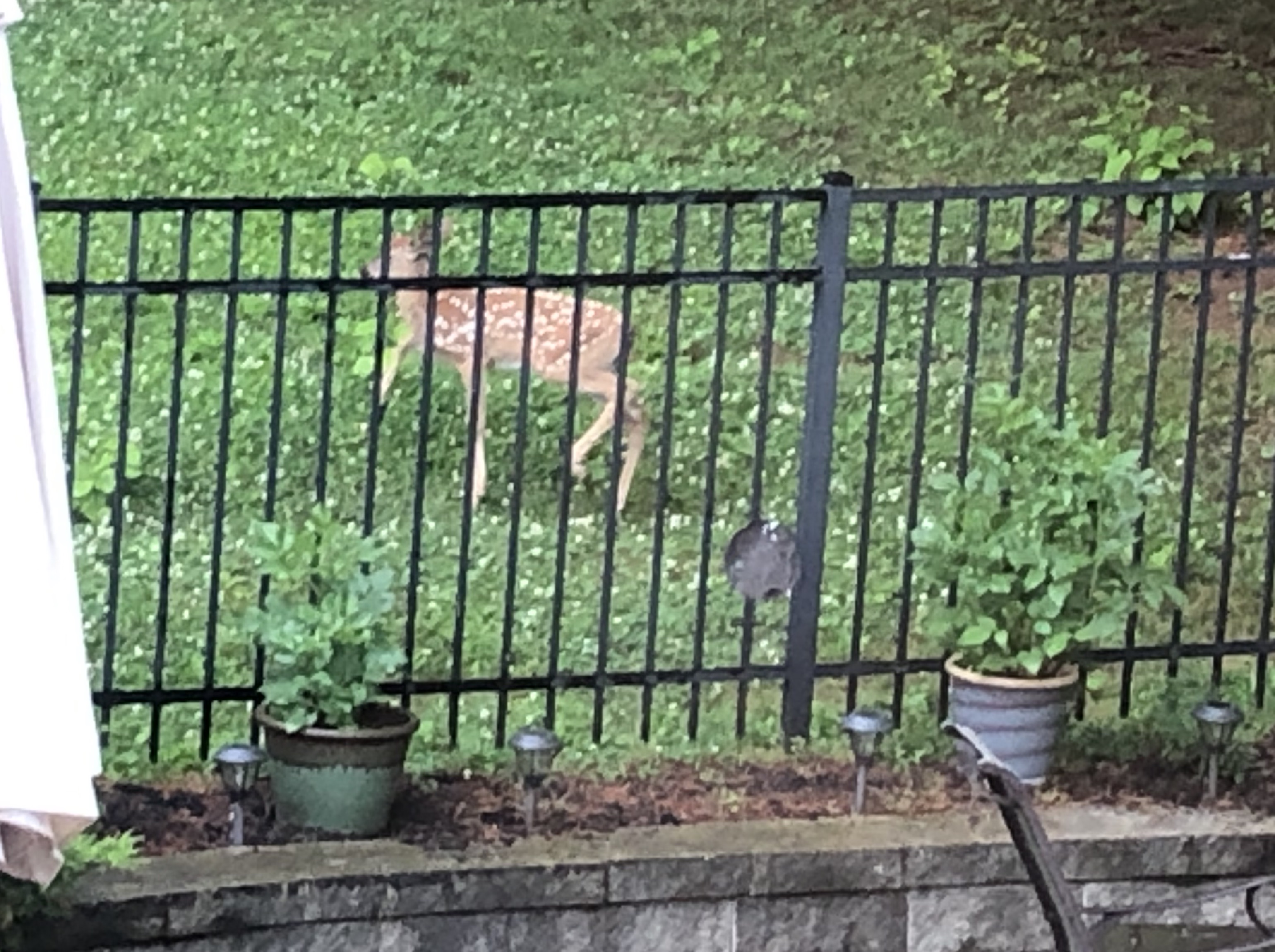
Same question about critters in general – my yard is filled with bunnies, chipmunks, squirrels, deer, woodchucks. Were they always there and I didn’t notice? As I was writing this, a fawn came out of the woods and strolled across our yard!
one of two fawns in our yard this morning
I’m thinking of taking up bird watching as a new hobby.
Why do people bother wearing a mask if they don’t cover their nose with it? Are there any medical conditions that are truly worsened by wearing a mask? And, if they are that compromised, why are they walking through the supermarket in the first place? Though I have been tempted, I have never said anything to anyone who was wearing their mask incorrectly. Should I? I don’t want to police other people’s behavior. I also don’t want to get into an argument. At this point, what is the chance that they don’t know better?
It is hard to ignore the fact that poor people of color have been disproportionately harmed by coronavirus – in the incidence of illness, number of deaths, job loss. Perhaps our awareness of how inequitable our society is will be the one good thing that comes out of this catastrophe. The question remains, how will we respond? Will that awareness translate into structural change?
The number of deaths is mind-numbing. It feels like we have stopped noticing. I guess we have to do that, or we would be paralyzed. Will we ever deal with the enormity of it? Will the New York Times run another front page story listing the names of the next 100,000?
How do you decide how much vigilance in keeping physically distant and washing or sanitizing your hands is enough? Our daughter and son-in-law-to-be visited from Somerville, MA this past weekend. The reason for the trip was to order her wedding dress! A bright spot in an otherwise dreary time – even if we don’t know if the party can go on as planned.
The agreement about the arrangements for the visit (per my husband who is a doctor) was that we would keep physically distant. We didn’t hug. We did most of our visiting either outside or at least six feet apart in the house. We didn’t share serving utensils. They stayed in a bedroom in the basement. Any time he handed something to them, Gary ‘purelled’ before and after. I was not quite as careful, though I did my best. I’m thinking that if any one of us has COVID, we exposed the others just by being in the same house for an extended period. Did it make sense to take all of those precautions? I am thankful they visited, regardless of what happens. Unless all four of us get sick, we won’t know that we got it from each other anyway. All it takes is one virus-laden sneeze from a person on the one occasion you go out to put gas in your car… You can go round and round thinking about this, ultimately you make your best guess after weighing the risks and the benefits. The risks of their visit, given that Gary, the most vigilant among us, is the only one out in the work world on a day-to-day basis, and none of us had symptoms, seemed low. The benefit, especially to my emotional well-being, was huge. How are you dealing with making these calculations? Is it making you as crazy as it is making me?
As this drags on, will we get more lax about it?
My mom called asking my thoughts about getting picked up by her brother, taken to his house, visiting for an hour (so she can participate in our family movie club which is done online), and then getting driven back to her place. Her I-pad is too outdated to support the software for her to join in from her own place. She wanted to go. I thought about how hard the isolation has been on her, how much she enjoys movie club, weighed the risks and the benefits, and told her she had my support.
I hope with all my heart that these are the correct calculations.
Reading was an essential part of my growing up. My parents were both teachers and voracious readers. During the summer we went as a family to the library at least once a week. Wherever we were, Brooklyn, Champaign-Urbana, Worcester, we frequented the library. I remember particularly loving biographies. I believe there was a series specifically for children and I read them all. I was inspired by the stories of Frederick Douglass and Harriet Tubman, drawn to stories of heroes who overcame fear and danger to find freedom. Though my life bore no similarity to them, I wanted to be heroic. I wanted to be part of the fight for freedom and justice.
As I think about it now, there were a number of strands that came together to fuel this passion. I was aware that my paternal grandfather had lost his parents and sister in the Holocaust. My grandfather, Leo…
Not that long ago ‘check your privilege’ was being bandied about. A white male student wrote a piece in the Princeton college newspaper in 2014 calling attention to the use of the phrase. Some were resentful of the comment (including the writer of that column), some were confused by it and others welcomed the dialogue. That conversation seemed to be limited to college campuses, then the moment faded away. Now we are in another moment where this idea of ‘privilege’ has currency – maybe this time it will have more traction. The murder of George Floyd was the latest example of brutality inflicted on an African American man that would be very unlikely to happen to a white one. While it is troubling to label that difference in treatment a privilege because one would hope that any living being would be treated with more respect than Mr. Floyd was afforded, what should we call it if not privilege?
My husband and I were having a discussion the other day about that idea. “I wish there was another way to say it,” Gary commented. “People reject the idea of privilege immediately, like it doesn’t apply to them. They say, ‘no one gave me anything,’ or ‘I worked hard for everything I’ve gotten.’ It’s hard to get people to see it.” Gary was reflecting on his experience talking with a range of people who come through his office – not that it comes up that often, but when it does, he has found resistance. I know he isn’t alone.
People can only see things through their own experience. If they didn’t grow up wealthy, and then they achieved a measure of success after working hard, it can be hard to accept that they were still advantaged (if that can be a verb). We want to believe in a meritocracy and that we earned what we have achieved. But the advantages can be taken for granted, and there is no reward for calling attention to it. The status quo has a lot invested in protecting itself.
The first time I read about the ‘invisible knapsack’ (otherwise known as white privilege) was in 2001. I was participating in training to be a facilitator for the Anti-Defamation League (ADL) in their World of Difference program. The World of Difference program is a multicultural awareness effort that had a number of components, some geared to schools, others to workplaces. I participated in five full days of exercises, each designed to examine our assumptions about all the ‘isms’ (racism, ableism, sexism, etc.) in our society. Though I had always been socially-conscious, or thought I was, I learned a great deal about the insidious ways that our biases impact our behavior. On one of the early days of the training, we were given an article to read (I highly recommend it:
On the one hand, I find this all very discouraging. We have been having the same conversation for most of my life and yet it still comes as ‘news’ to many. I don’t understand that. On the other hand, there finally seems to be more widespread acceptance of the existence of systemic racism. I am hopeful that maybe now we can finally make some meaningful change. In the course of a given day, my mood can shift from optimism on one hand to despair on the other.
I take comfort in the words of our former president, Barack Obama, when he points out that we have made progress – that for all the anger, pain and disappointment caused by continuing tragedies, we have made steps forward. Despite the setbacks, and reminders that there is still much work to be done, there are more opportunities for African Americans in America today than there was when I was born (in 1959). Of course, that isn’t enough, as we see every day, we haven’t made nearly enough progress.
One of the things I have realized over the course of my career as a school board member and as a trainer of school board members is that we need to periodically refresh our knowledge of the fundamentals. We think, since we are doing the work day-to-day, that we know the essentials. But the truth is, we forget, or at least lose sight of them. In the midst of whatever crisis, we are facing, or even when we are carrying out the mundane day-to-day tasks, we stop thinking about the fundamentals. We can easily lose our way. That is why continuing education is critical in every field – medicine, law, every workplace. It isn’t just that we need to learn about new developments, we need to be refreshed on the core values that inform our work. There is always more to learn and more awareness to be had – and this applies to being a citizen of a democracy. I hope Americans are willing to do the work.
My husband and I are creatures of habit. Since we have been empty nesters, unbelievably it has been 13 years since our younger child left for college, there has been a certain predictability to our routine. After Gary gets home from work, we have dinner sitting on the couch in the family room, with the TV on. When we finish eating, we replace the dinner plate with our laptops and the TV drones on. We aren’t watching it exactly, we are doing our respective things on our computers, but the television is providing some background noise. I scroll social media, do crossword puzzles and edit blog posts. Gary reviews patients’ labs, catches up on email, surfs the news and writes his daily missive to the kids.
As background noise, Gary’s preferred TV choices include sports, episodes of Law and Order, World War II documentaries and Seinfeld. The thing all of those have in common is that he can half pay attention and still follow along, he knows them all already (except live sports; baseball, in particular is perfect for watching while doing something else). I can tolerate most of those, though I get tired of all of them (except sports, but even with that I have my limits). I have, in more recent years, gotten him to expand his list to include House Hunters. We do have more then one television. Sometimes I go upstairs and actually watch something else. But since we don’t spend that much time together – given his work schedule and his need to review labs and paperwork in the evening – I more often than not choose to sit with him. We chat here and there; it sustains our connection.
The pandemic is testing the limits of this routine. We have been home together more often for more extended periods of time. Before coronavirus, the routine was interrupted here and there by brief overnight trips I might make to the city (New York City, that is), or helping out with our granddaughter in Connecticut, or consulting assignments or plans with girlfriends. All of those activities have been suspended these past four months.
Gary and I get along great – but even we were getting on each other’s nerves. Gary got angry at me the other day for failing to lock the door between the garage and the house. I got annoyed with him for flipping channels relentlessly and not getting back to Jeopardy in time for the beginning of the second round. Nerves are getting frayed.
His limited viewing options were also getting to me. Since there has been no live sports, SNY (the New York Mets’ station) has been replaying the 1969 and 1986 World Series and other winning playoff games. Gary shows no signs of tiring of them. I, on the other hand, have had enough. Though I am a Met fan, I’ve seen the ball squirt through Bill Buckner’s legs one time too many.
In an effort to broaden our horizons, we decided to watch a TV series that we missed the first time it aired. Our son highly recommended The Wire, a show that he thought would appeal to both of us. We would not treat it as background noise, we would actually watch it. Our daughter joined us beginning in season 3 – we watch at the same time, in our respective homes (she is in Somerville, MA). It has turned out to be an interesting choice to make during this season of unrest and Black Lives Matter protests.
The series, which was originally broadcast beginning in 2002, is a case study of systemic racism. The toxic relationship between the police and the poor, drug over-run Black community in Baltimore is on full display. The lack of trust, the brutality, the disregard for Black lives is evident in episode after episode.
The series explores the impossible choices the characters face and illustrates how people lose their way, disregarding morality for expediency or quick reward or pressure from those more powerful. We are almost done watching all five seasons, we are in the middle of its final season. I hope it offers some glimmers of hope when it wraps up because it paints a pretty bleak picture. While the quality of The Wire is beyond reproach, it may not have been the wisest choice from my mental health perspective. I don’t know that I needed reminding of our societal ills at the same time that they are playing out on the streets of our country. Not surprisingly, I have been reflecting on issues of law and order; particularly the role of the police.
It all reminds me of a course I took in college called Public Law. While much of the material that was covered has receded into the mists of memory, I do recall that it was the first time I heard an argument for ‘defunding the police.’ That wasn’t the phrase the professor used, but essentially, he made a case for it – not for precisely the same reasons as we are hearing today – though racism played a role.
We examined the role of the police in society, exploring its structure and relationship to communities. This was in 1978. The ‘60s era of protest, campus unrest and clashes with the police was over. My fellow classmates were focused on their GPAs and preparing for the LSAT; they weren’t as liberal as the students who preceded us. Our professor, Tom Denyer, had a different agenda. He made the case that the police and the criminal justice system were, in effect, casting people out of society unnecessarily; that we entrusted the system with too much power. As we came to learn by the end of the semester, our professor was an anarchist. Much to his dismay, he wasn’t successful in convincing the class of his position; as I recall, students vehemently rejected his argument. I certainly wasn’t convinced. I believed then, and I believe now, that humanity is not capable of policing itself. There are evil people in the world, and there are also troubled, misguided ones. Society needs to be protected from those who can’t abide by civil society’s rules.
But Dr. Denyer opened my eyes to ideas that I had not considered. I rejected his notion that the police weren’t necessary, but the question of how to do it in an effective, equitable way, and at what cost, was clearly very complicated. It was also clear that the system was flawed. One of the costs that I had not given thought to before was the toll taken on cops themselves. We read articles about the incidence of alcoholism and suicide among police officers – it is higher than other professions. It was also the first time I thought about what exactly we were asking cops to do – solve crimes? prevent crimes? help people in trouble? keep order in the streets? All of the above? Was that reasonable?
I was forced to consider the impact of the fact that police generally see citizens at their worst. Drunk, violent, abusive, carrying weapons, selling drugs, threatening…the list can go on and on. And, even if the 911 call doesn’t involve menacing behavior, they are often seeing folks at their weakest or most vulnerable. What is the impact of that? Day after day, year after year? How does a police officer not become jaded and/or racist?
Recently, as I revisited that issue, I had an idea. Could we restructure the job so that cops rotated to play other roles in the community? Would it be possible for them, as part of their job, not as volunteers, to run recreational programs? Mentor kids? Help with community gardens? Help seniors with technology? (or other structured, concrete, viable community service efforts). My notion is that by bringing police officers, as part of their required responsibilities, into contact with community members on an equal footing, on positive projects – so that they don’t lose sight of the residents’ or their own humanity, maybe the dynamic can be changed. Maybe if, as part of their job, police officers collaborated with citizens, they wouldn’t get so calloused. Just one thought among many that might be considered if we are going to find a better way to approach law enforcement. Thoughts anyone?
Given recent events, I thought this blog entry was important to revisit. I am in the process of writing some additional pieces that involve race and police. I think this piece is a poignant example of our history.
Note: After last week’s entry (“What are you?”) several people shared their experiences with race and ethnicity. I invited them to write them up to share on the blog. Gary, my husband, took me up on the offer. One of the things that Gary and I bonded over when we first met was talking about our experiences growing up in similar neighborhoods – he was just east of JFK airport, while I was just west of it. Here is his story – in his words. Thanks, Gary.
I wanted to share a story about my favorite bicycle. I was in seventh grade when this happened and to me it encapsulates so much about racial issues growing up in New York City in the early 1970’s. At that time, the neighborhood I grew up in, Rosedale, was much like Canarsie. It was largely Italian and Irish and Jewish. There were no…
Note: This is an edited and reworked piece that I thought was timely. I continue to struggle with what is happening in our nation. The combination of Covid-19 and racism is toxic. I can only hope that we come through it to a better place, having begun to reckon with our history. I will look for opportunities to do my part. I think writing about difficult subjects, which many find hard to talk about, is one way. I would like to have those conversations. I’m not sure how to go about doing it other than to post it here. I welcome other perspectives.
In 1980 I was in graduate school. I lived in a studio apartment on West 80th Street and Columbus Avenue in Manhattan in a building owned by Columbia University. Gentrification was taking place right before my eyes as the block transformed brownstone by brownstone. Drug addicts, homeless and working-class people were displaced. Mom and Pop stores were shuttered; boutiques and trendy restaurants moved in. I can’t say I was sad about the changes. Slowly but surely the neighborhood felt safer.
I commuted to campus by subway. I gave careful thought to my route to the station to avoid the junkies and panhandlers. My shoulders hunched, eyes surveying the street, almost always in daylight, I walked quickly. I welcomed the neighborhood changes that allowed me to relax my shoulders.
These issues of community change were being discussed in my grad school classes. The question was: Can the market provide low- and middle-income housing when there is so much more money to be made in high-end housing? What is the incentive to create housing for the poor and working class? Is the government’s role to create that incentive? If so, how should it do it effectively? Almost 40 years later, we are still grappling with those questions. Meanwhile gentrification has marched through other areas of the city, particularly Brooklyn, the borough where I grew up.
I had reason to think about the changes wrought over the last three decades in New York City when I did the Five Boro Bike Tour, cycling through Greenpoint and Williamsburg in Brooklyn in 2018. Those two neighborhoods were off limits in the ‘70s and ‘80s. They were hollowed out, drug infested and crime-ridden. I wouldn’t have considered visiting either one, much less bike through them. In contrast, in 2018 I cycled past art galleries and craft beer breweries.
I thought about how change happens in neighborhoods, and whether the changes were, on balance, positive. Gentrification is understood to be a bad thing especially for poor, immigrant communities. Activists who fight it paint a picture of an invading force that disempowers the current residents. While there is truth to that portrait, I think it is oversimplified.
There isn’t one monolithic army encroaching all at once – there isn’t one homogenous group of rich, white people. We need to acknowledge that when demographics are changing, it is a dynamic process. There can be hostility and an unwillingness to work with newcomers that contributes to the failure to integrate. Some may come to a neighborhood expecting their every need to be accommodated, without regard to those already there. But, not all come with that baggage. Some may come precisely to live and/or raise families in a diverse community.
I may be particularly sensitive to integrating across economic class based on my experience moving into a suburban development outside of Albany, NY. I grew up thinking suburbs were homogenous, but I learned otherwise as an adult. In my subdivision there were those who were stretching to their financial limit to live there, and there were others for whom it was very comfortable (my family fell into this latter category).
Our daughter became friends with a girl down the block. We made overtures to invite the whole family over. We were politely rebuffed. Over time, and as a result of a number of comments, I came to believe that the Mom made assumptions about us because my husband is a doctor. Maybe I was wrong, perhaps she just didn’t like us, but I think there was something more. They were of more modest means. We never got beyond neighborly friendliness. Eventually they moved away. An opportunity was lost to both of us. Economic differences can create awkwardness. It is something that is difficult, if not impossible, to talk about.
Economic status can be one barrier within communities, race is certainly another. Canarsie, the neighborhood in Brooklyn where I grew up, underwent a huge change in racial composition. Canarsie’s story of change is not one of gentrification.
In 1972 the New York City Board of Education adopted a plan to bus black students into the two predominantly white junior high schools in Canarsie. My junior high school was 98% white. My mother supported busing and I did, too. How else would we achieve integration? The plan was received with tremendous hostility by white parents. A group was organized, Concerned Citizens of Canarsie (CCC), to protest. The choice of CCC as a name, which carried echoes of the KKK, was probably purposeful. The CCC slogan ‘neighborhood schools for neighborhood children’ seemed reasonable enough on the surface. A car, with a bullhorn on the roof, cruised through the neighborhood admonishing parents to keep their children home. The vast majority listened. Even though I was only 13, I believed that racism and fear was at the heart of their objections.
A boycott of the schools went on for weeks. I was alone in my 9th grade classes; just a teacher and me. I remember walking in the main entrance through a path defined by uniformed police and sawhorses. Adults stood behind the barriers, yelling epithets at the few of us who went to school. My sense that the parents were racist was born out by their behavior.
Ultimately, the boycott failed and the busing plan was implemented. There was personal fallout; my friendship with Pia got caught in the crossfire.
Like many who lived in Canarsie, Pia’s family had recently moved from East New York to attend better schools and escape the violence. The plan to bus black students signaled the beginning of the end to them. After the boycott, Pia never invited me to hang out at her house again and she kept her distance at school.
In the aftermath, there was some white flight, but the neighborhood remained stable for a number of years. In 1972 Canarsie was about 10% black, by 1990 it shifted to just under 20%. By 2010 the neighborhood was over 80% black. While the racial composition changed, its economic status remained stable as a middle class neighborhood.
Caribbean immigrants who made Canarsie their home were looking for the same things that Jews and Italians sought years before. According to a New York Times article from 2001, “Canarsie had what many Caribbean immigrants wanted: single-family homes with backyards for barbecuing and growing roses or tomatoes, decent schools, affordable prices, quiet streets, proximity to family…”
These were shared values, but the white residents didn’t see it. It is sad that it wasn’t possible for the community to truly integrate. The exodus of white families accelerated in 1991 after the firebombing of a real estate agency that was showing homes to black families. Ironically, the firebombing was intended to frighten blacks away, but white families left. The neighborhood became homogenous again – today it is over 90% black.
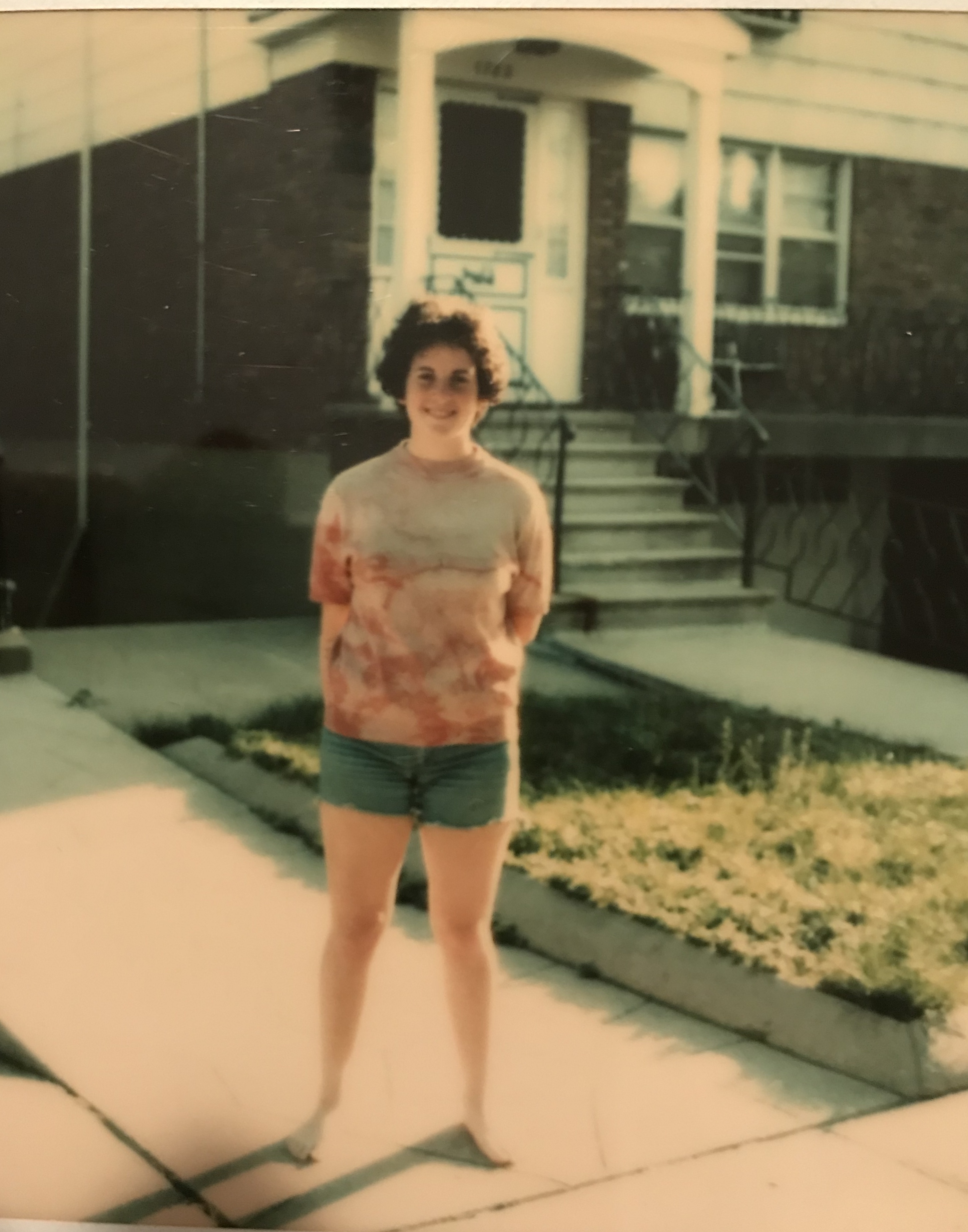
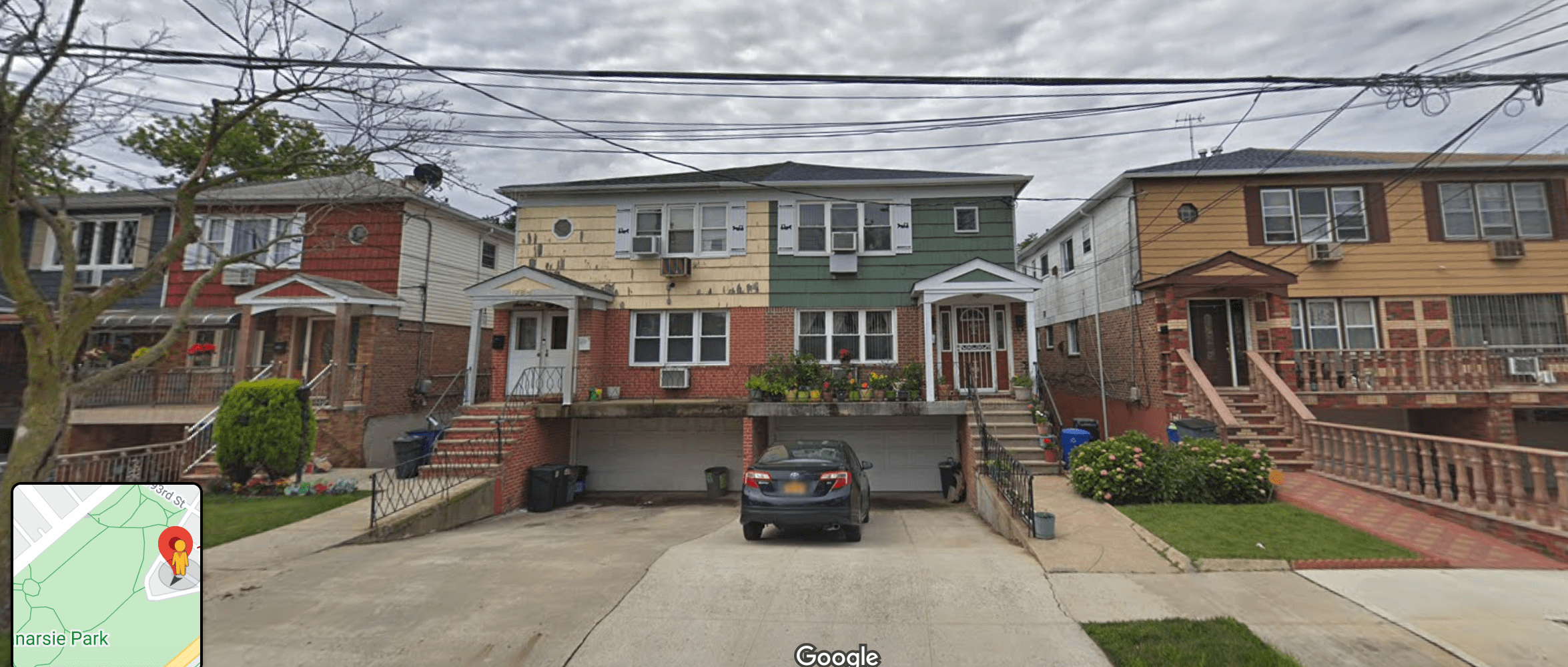
Me in front of our house in the mid 1970s in CanarsieMy block in Canarsie from GoogleMaps taken in 2018
In reading and thinking about the issue of neighborhood change, commonalities emerge. Problems start with assumptions based on stereotypes and ignorance. There aren’t effective mechanisms to get beyond that. We have no language to talk to each other about these subjects. Perhaps that is something we can remedy.
One essay I read analogized different segments of a community living together to ‘parallel playing,’ like toddlers who play with a set of blocks at the same time, building their own structures, but not interacting. This seems like an apt description. Maybe neighborhoods can be helped to mature beyond the ‘toddler’ stage. Perhaps opportunities can be created, by local government structures or nonprofit organizations, to facilitate community conversations, to break down assumptions and stereotypes.
We must find ways to do better. Forty years from now, I hope we aren’t asking the same questions about how to integrate communities across race and economic status.
I thought this would get easier. When the quarantine started, I thought I would settle into the new routine without too much difficulty. After all, it wasn’t all that different from my life before coronavirus. In the beginning I didn’t feel particularly anxious – I had moments where I worried about my husband’s and our children’s health, but I wasn’t terribly fearful of getting ill myself. I was doing what I needed to do, spending more time cleaning and cooking, streaming more movies and t.v. shows, getting out to exercise. I thought, as time wore on, I would get used to it. I am surprised to be finding it harder and harder, even as restrictions are easing.
I’m thinking about why and I don’t have an answer. I have some possible explanations. Though we saw our daughter on Monday, which was wonderful, the ache of missing our kids gets deeper. Not seeing our two-year old granddaughter for three months is beyond painful. Though we FaceTime, I worry that she won’t be comfortable with us when we finally do see each other in person. When I think about it rationally, I don’t believe there will be long term damage to her or our relationship. But, that doesn’t ease the heaviness I feel.
I haven’t seen my mom in months either. On Tuesday the independent living community where she resides began a phased reopening, which is great news. Other than getting outside on her own porch, she has been confined to her one-bedroom apartment for the duration. I can’t imagine how I would have coped with that! Now she will be allowed to walk the grounds in accordance with a schedule (to maintain social distancing). I worry about the toll this has taken on her physical strength and mental acuity. It saddens me that I haven’t been to visit. Now that she can go outside, it is more practical for me to take the 3.5 hour drive to see her. I feel some relief knowing that, but again, we don’t fully understand the damage done or what the future holds. We aren’t out of the woods yet.
Before this happened, we were in the midst of planning our daughter’s wedding in December (2020) – a joyous occasion; an event I take great pleasure in helping to plan. We have not changed the date or arrangements, yet. I so want things to go off without a hitch, she deserves a great, festive celebration. Even if we didn’t have to deal with coronavirus, I would be worried about it all falling into place. Now with the specter of postponing or making major adjustments, all the unknowns weigh on me.
Perhaps more than anything, though, I am troubled by the news; I can’t tune it out. Whether it is the recent reminders that racism is alive and well or the latest effort by Trump to distract from the pandemic, I am sincerely worried about the fate of our country. I know there are good people – many of them. They may, in fact, outnumber the ignorant, ugly ones. But it seems that the latter have more power than their numbers should allow. Our president represents that ignorant, ugly strain of America. While it might be wrong to assume all of Trump’s supporters are of the same ilk, it hard for me to not think the worst. I am aware of Republicans who are ‘never Trumpers,’ but they aren’t in office and wield little power.
If all a Republican can say is that they wish Trump would ‘tone it down,’ as one person I know said recently, then they are blind to the damage being done. Toning it down doesn’t begin to undo the harm. They are unwilling to acknowledge the erosion of the rule of law, ethics and honesty. People may have been cynical about politics before his election, but after 3.5 years of Trump, the idea of virtue in public service appears to be almost dead. Can faith in public institutions be reclaimed?
I want to believe in the potential of our country, in the bedrock values that I thought were at the heart of our founding. Though we may not have fully realized those values – liberty and justice for all – I thought that the vast majority believed in those principles. I find myself asking if ethics, honesty and integrity aren’t part of the foundation of liberty and justice, then how do we achieve those ends? We seem to have forgotten that the ends do not justify the means.
Just a couple of weeks ago, as I was walking with a friend, keeping an appropriate social distance, I was offering her optimism. She was feeling doubtful. I told her that science will triumph. A vaccine and/or treatment would be found, and we would emerge from the darkness. I still believe that scientists will find a solution to Covid-19, but I now fear that will not be enough. We are at a point where we seem to live in different realities, depending on where you get your news and your own predispositions. If a vaccine is found, will people believe in it and consent to take it? Will it be viewed as a hoax? Will it be made available to everyone?
The inequality, the inadequacy of our health care system, the vulnerability of our economy has been laid bare by coronavirus. Do we have the will to face these deeper issues? Do enough of us even see those issues? I never thought I would come to a point where I would ask these fundamental questions.
I need to reclaim my optimism. I’m not sure how to do that, other than to wait for election day and hope for a blue wave. The only thing to do is to keep on keeping on – writing, looking for constructive, productive activities, and caring for family and friends. Hopefully the gloom will lift long before November.
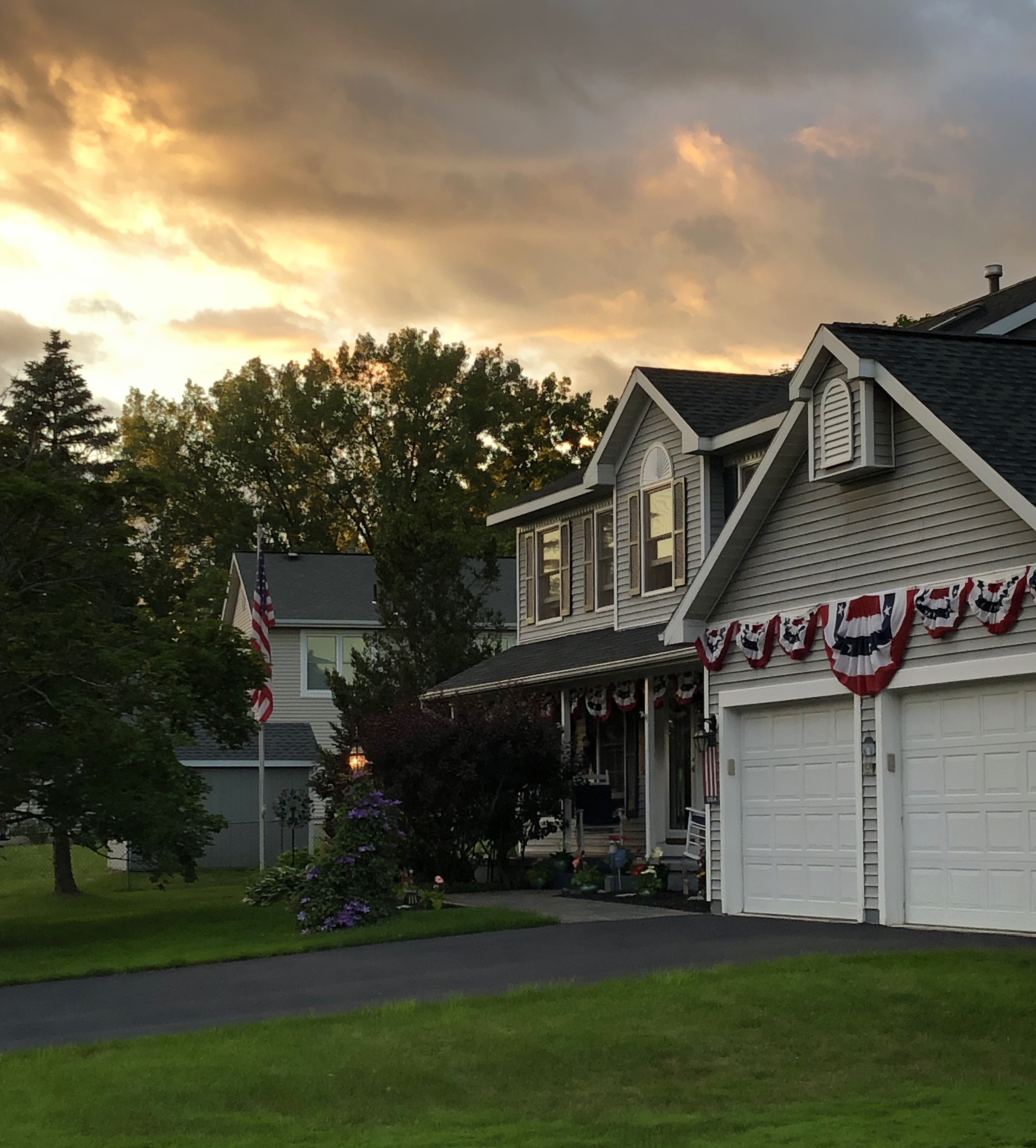
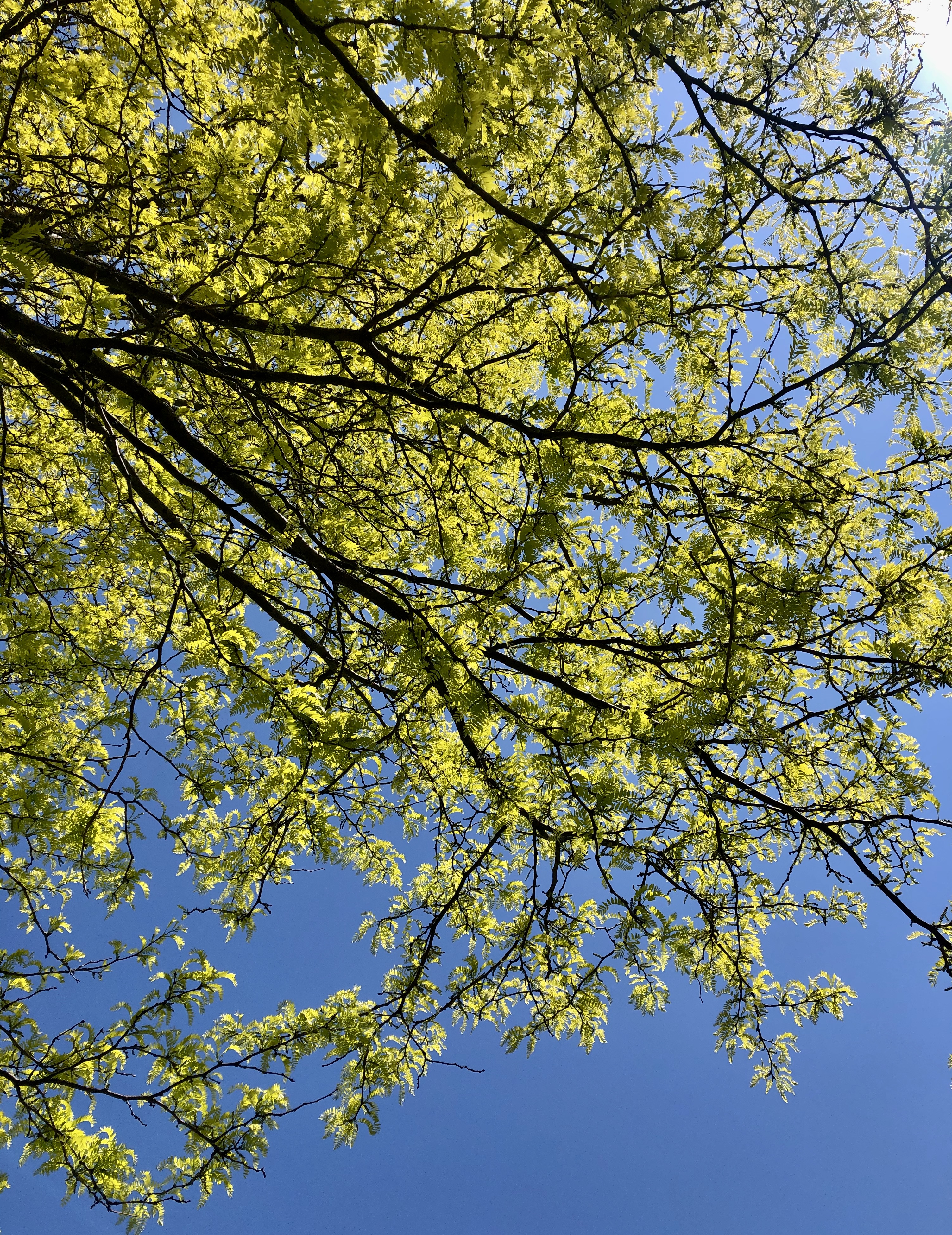
I took this photo on my walk yesterday. Though I appreciated the beauty, it didn’t lift my spirits. That’s how I know I’m not in a good place.