Stories

The Power of History: Insights from Normandy

Note: I wrote a blog post a while ago that asked the question ‘History,’ History In the following post, I take a different perspective.

What is history? When you visit a new city or country and take a tour, the guide often tells you about the history of the place. I love that. Perhaps my enthusiasm is based on being the daughter of a father who was a high school history teacher and a mother who was a reading teacher. So, I have been a student of history for basically my entire life. But that doesn’t answer the question of what it is. What does a tour guide include in their presentation?

I am thinking about this because we just returned from a trip that took us to some very interesting places with long, long histories. It is hard not to conclude that when we learn about history, we are often told about wars, and if not outright wars, then power struggles. Is history really a narrative of power? It appears to be so. And, when you dig into it a bit, you sometimes find that those power struggles and wars are about personal things – insults or slights.

This is a stretch, but if Hitler had been accepted to art school, could that have changed the course of history? Would his ego have been assuaged enough? Would he not have needed to go on a quest to prove himself with such horrific and destructive consequences?

The trip we took was D-Day themed, so perhaps it was inevitable that the places we saw were chosen based on the role played in that momentous event, or in World War II in general. Perhaps my perception that history is often the recounting of conflicts or wars is colored by the type of tour we chose.

We took a Viking river cruise that was organized around D-Day. We visited London, Paris, and Normandy. Each place we visited was the site of intense World War II action. Gary and I share a fascination with the topic. Our families were impacted, if not shaped, by those events. Gary has watched countless documentaries about the military battles. I have read innumerable historical novels set in that era. With that said, I learned so much on the trip, and Gary would say the same.

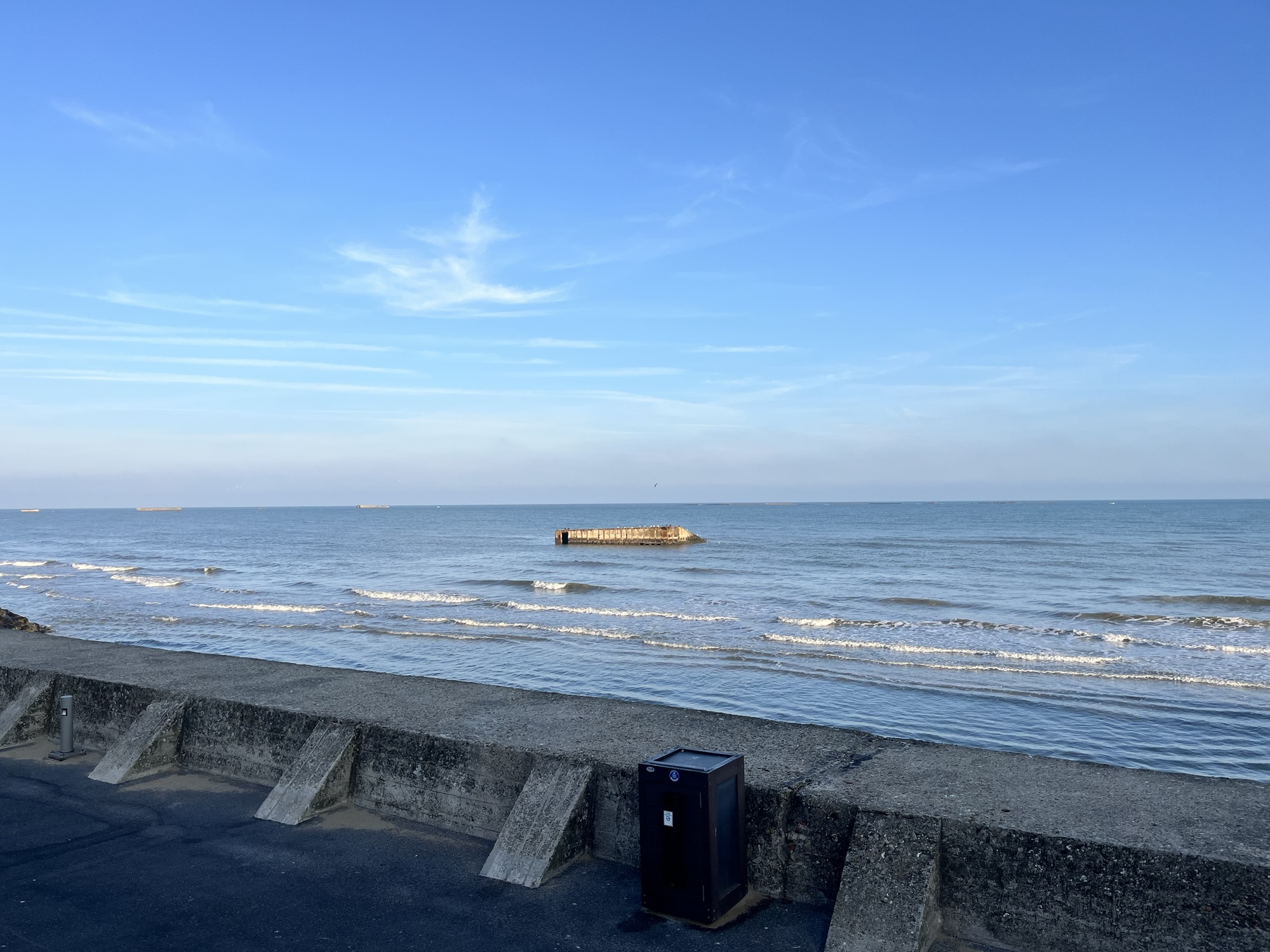
First, I did not understand the scope of the D-Day invasion. It covered 72 miles of France’s coastline. I thought of it as a single beach, perhaps because of the way it was portrayed in movies. In fact, even that beach, Omaha Beach alone, was six miles long. Aside from breadth of the operation, it also involved so much in the way of logistics and coordination among the allies. They built a temporary port to facilitate bringing in more troops and supplies. It was quite an undertaking.

It was also clear that the difference between success and failure was very narrow. The Allies were on the brink of failure. It is scary to think about the consequences of that possibility. One can’t help but be moved by the extraordinary sacrifice made by the young soldiers who carried out that mission. Standing in the cemetery, which overlooks the English Channel, looking upon row after row of crosses and Stars of David, is overwhelming.

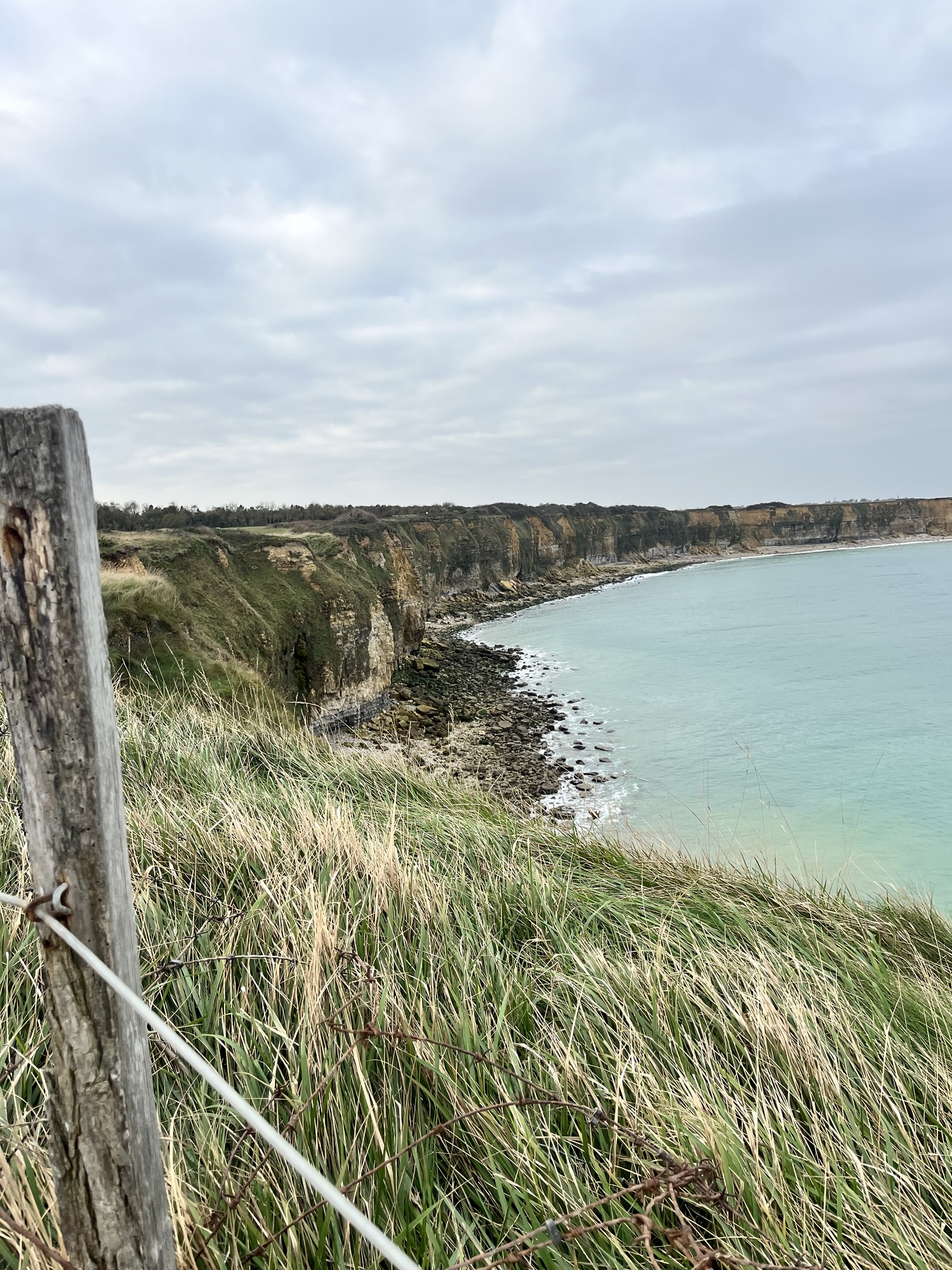
The land in Normandy still bears the scars of the battle, too. There are craters in grassy areas, and they have left the remnants of the German battlements. The coastline is also dotted with monuments. The statues, sculptures, and museums express the gratitude of France and Europe for their liberation and tell the story of how that was achieved.

Perhaps the most powerful aspect of visiting this sacred space is its breathtaking beauty.

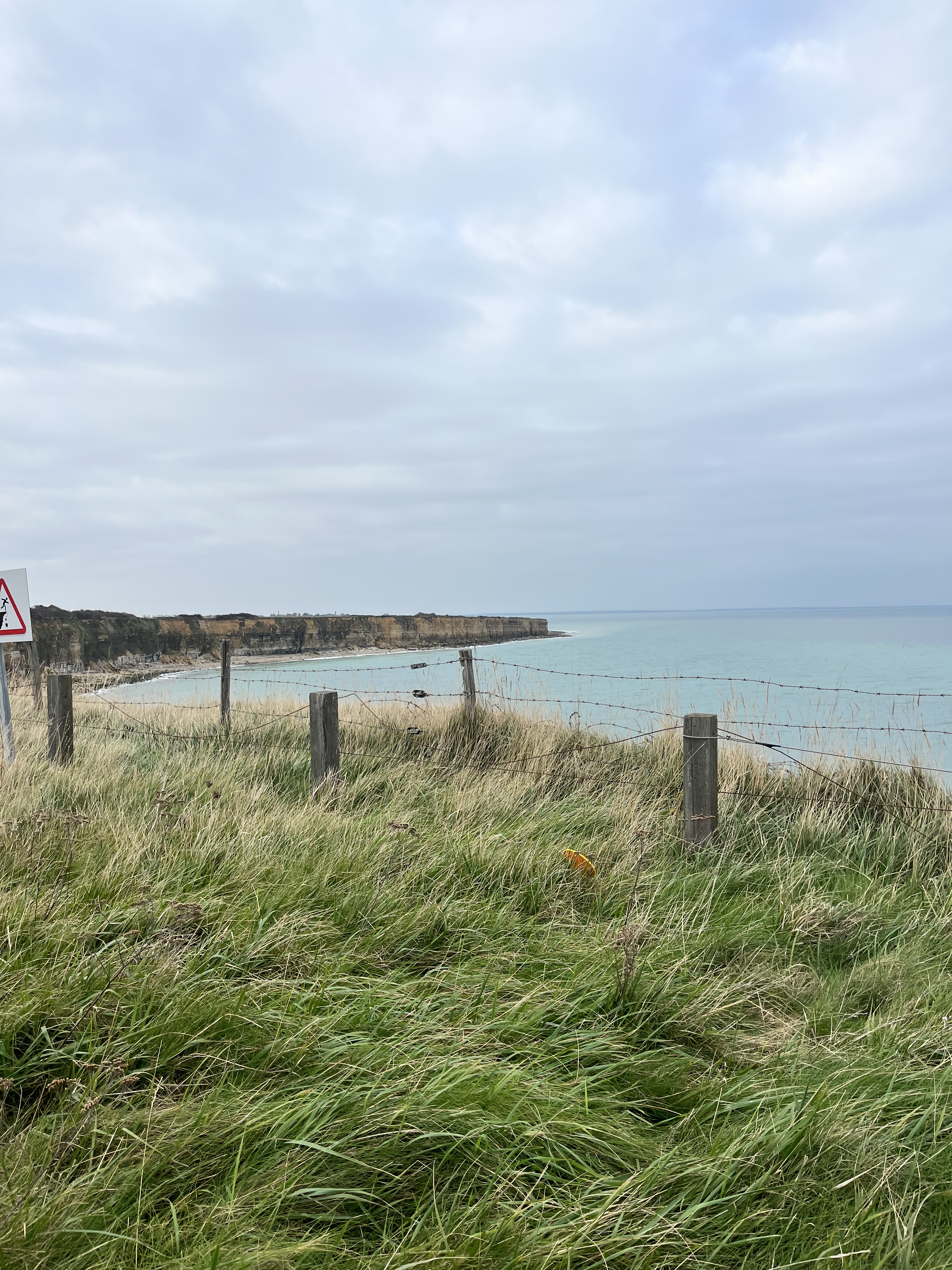
I stood on the cliffs, it was so peaceful, the only sounds were birds and the waves. The stark contrast to what it must’ve been like on June 6, 1944, with the pounding of artillery and bombs falling, is striking. When I looked at the cliffs that the soldiers had to scale, I couldn’t help but be amazed by their strength and bravery.

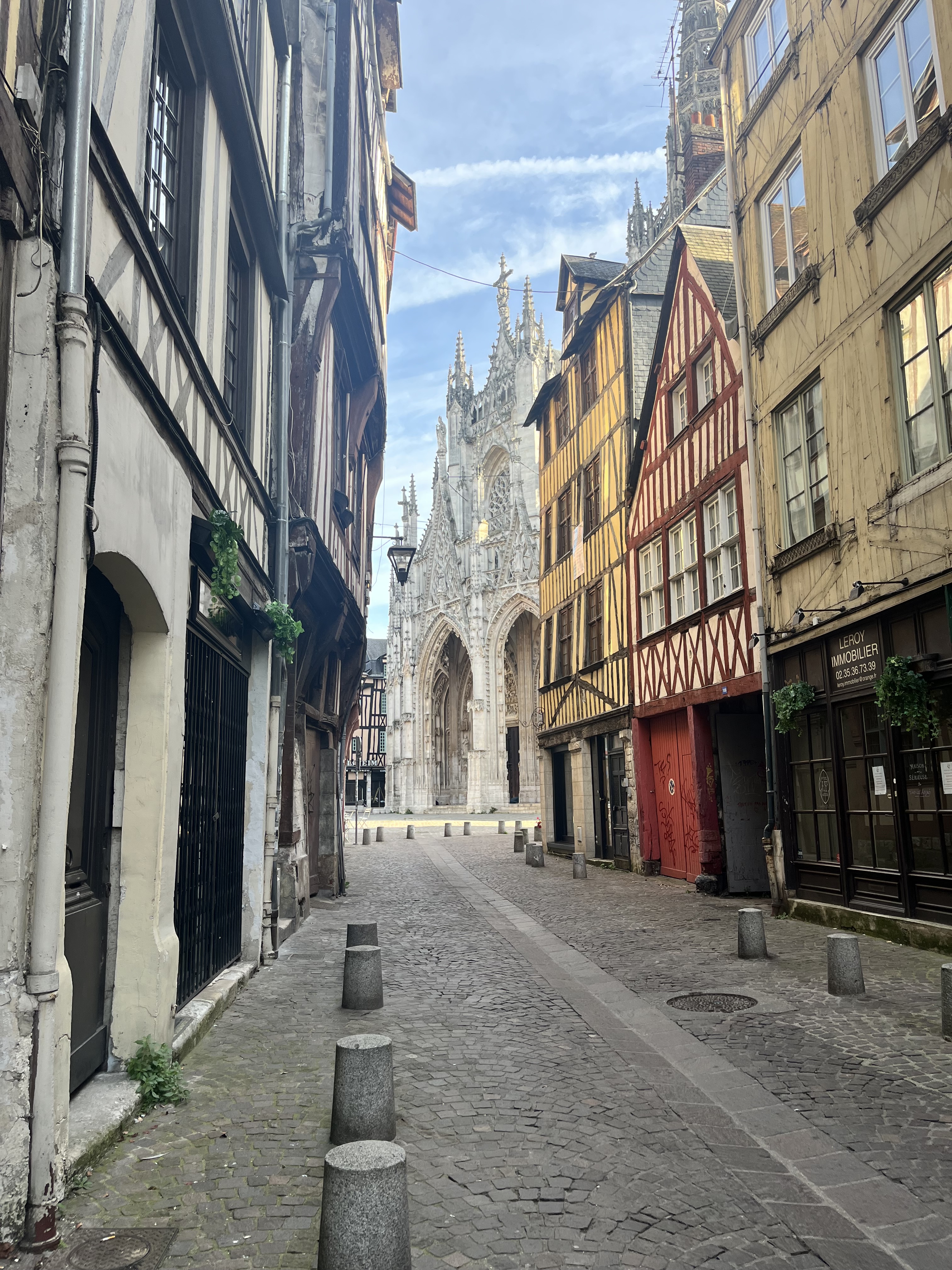
The towns, which withstood the onslaught, are charming. Some have modern elements that reflect the rebuilding effort, but many of the structures, which date back centuries, are still standing. I could have spent a great deal more time there. We visited for two full days, and it didn’t feel like enough.

These photos are from the old part of Rouen, considered the capital of Normandy.

I can’t recommend a visit strongly enough. We need to be reminded of all that went into fighting fascism and what people were willing to sacrifice for freedom. It would be tragic if we allowed our country to continue to slide into authoritarianism. I’m not sure Gary and I needed reminding, but I came away with a renewed sense of responsibility for doing what I can to prevent that from happening.

If one of the reasons we study history is to learn from it and avoid making the same mistakes, I urge everyone to revisit what World War II and the rise and fall of fascism have to teach us. War, even a just one, is brutal and exacts a steep price.

Reflections on Life in America: A Call to Action

We are driving south on the Thruway once again. Heading to New York City for the weekend. Gary will be going to see a Met game with our son on Saturday. I will find ways to amuse myself – not a difficult assignment in the City (in my heart the one and only city :)).

I am struck by the disconnect between my life and the world at large. It is a beautiful day. The green hills of the Catskills are showing hints of color as we approach fall, they still look green and lush. The air is clear, the is sky a cloudless, azure, and the sun is beaming. If I only look at the world right in front of me, it is lovely. But, I know better. If I cast a wider look I think of the tragedies around the world  (in Gaza, Israel, Ukraine, etc.), the crackdown on free speech, the unrelenting gun violence in our country, the degradation of our environment that leads to more and more natural disasters, the fear that immigrant families live with, the extraordinary corruption and lack of integrity of Donald Trump. Most of those realities don’t touch me directly. Not yet, anyway. I am fortunate. I can afford higher prices in the supermarket and at the gas pump. I already own a home. Gary and I have savings – hopefully enough to ensure a comfortable retirement. We are able to make these pleasant plans for the weekend.

I look at the cars streaming down the highway, wondering about the inhabitants. Are they like me, heading off to pleasant destinations? If they aren’t faced with serious illness or job loss/uncertainty, are they just taking things at face value, telling themselves, “It’s all good.”

I worry that people like me, who are in my economic situation more or less, can delude themselves that everything is okay. If your immediate family is okay – they are gainfully employed, aren’t married to immigrants, perhaps own homes, if their children are healthy – you can put your head down and ignore everything that is going in the wrong direction. They may not be paying attention to the larger picture. Maybe they don’t need Medicaid, maybe their employment isn’t impacted by federal budget cuts, maybe the confusion around vaccinations isn’t concerning if they aren’t immunocompromised, maybe they assume that since they have resources, their children and grandchildren will be protected.

But life is fragile, and things can change on a dime.

A mass shooting and/or random violence can strike anyone. A natural disaster can unmoor a whole family. Illness can change everything. We don’t have control over these things, for the most part, but when they happen, we hope to have support to get through it. Some things could help minimize the occurrences – gun control (or see my last essay on repealing the second amendment), more mental health services, steps to slow down climate change could help. But even if we can’t stop these things from happening, we can build supports to help us cope and knowing that support is there, can lessen the anxiety. The current attitude, though, is in the opposite direction. Our social safety net is being decimated. Cutting FEMA, loosening environmental regulations, reducing funding for mental health and pulling government resources from medical research are all disastrous policy choices.

More than that, though, the attitude that is allowing all this to happen flows from our president, his callousness, his thirst for revenge, his selfishness. We, the American people, are being led by someone who is a terrible role model, and we are worse for it. We cannot allow his character flaws to become part of our national character.

The danger is that if our lives are largely blessed, or if our vision is narrow, we can pretend all of this is not happening.

I hope your eyes are open. I hope, as we approach the midterm elections, you pick your head up and use a wide lens to look around and then vote accordingly. It’s not all good and if we continue on this road, we will no longer be the United State of America that I grew up believing in, its values established in the Declaration of Independence: We hold these truths to be self-evident, that all men* are created equal, that they are endowed by their Creator with certain unalienable Rights, that among these are Life, Liberty and the pursuit of Happiness.

*I note the archaic use of the term men and understand it to mean all humans.

Lady Liberty still stands in the harbor of New York City, as viewed from Governor’s Island on a recent visit.

Repeal the Second Amendment

Repeal the second amendment! I know that is an inflammatory statement, and maybe unpopular, too, but I need to put it out there.

It would be the ultimate irony if we made progress on gun control after Charlie Kirk’s assassination. My heart does go out to his family, and all those affected by gun violence. Charlie Kirk, though, does not deserve martyrdom. He did a great deal of damage, bringing a message of intolerance and divisiveness to young people on college campuses. I watched a number of videos of him espousing his beliefs. In some instances, I actually agreed with his point (I don’t think Cardi B is a great role model). However, even in those instances, he did it in a disrespectful, one-sided way. I don’t think Britney Spears or Madonna were great role models for little girls either – and for the same reason. We shouldn’t be sexualizing young girls. Why focus only on a Black star? But that isn’t my point, it is just illustrative of the problem with how Kirk approached things. His racism ran deep, and he was oblivious to his privilege. He shouldn’t be lionized in death.

Now back to my main point: we should repeal the second amendment. I welcome arguments to the contrary, but please don’t bother explaining the meaning of the second amendment to me – whether it was intended only for militias or individuals. I don’t care what our forefathers intended, just as I wouldn’t accept the argument that because our forefathers tolerated (supported? profited from? believed in? were indifferent to? – pick your verb) slavery, holds no water today. We know better. We should know better about guns.

For those who require guns to hunt, to protect livestock, to protect us, we can make provisions in law; we can set up mechanisms to allow for that. But, we have to let go of the notion that owning a gun is a God-given right. Some of us don’t believe in God, for one thing, but that aside, even if we can all agree in a common morality –  like ‘thou shall not kill’ – I don’t understand how that morality includes gun ownership.

The Bill of Rights protects our freedom. How do guns protect our freedom? I could more effectively argue that owning a car is more connected to being free in this country than having a gun. We don’t believe that owning a car is a God-given right. Someone explain to me, in the context of the world we live in now, how possessing a gun enhances your freedom, or is essential to your freedom.

Somewhere along the line we got things twisted in this country. There may have been a time when settling the ‘wild west’ or living a pioneer life, folks needed guns for their survival. That time has passed. As time went on, though, the gun became symbolic of something else (of rugged individualism, of strength, of masculinity…) – not just a tool to hunt or even to protect oneself. If we have gotten to the point where every man, woman and child needs a gun to protect themselves, we are lost.  

Most Democrats are not willing to say that the second amendment should be repealed. The attachment to guns is too strong, the gun lobby is too powerful (still! – despite the fact that the NRA has been discredited). I believe we need to be bolder. If we start from the presumption that we don’t have a God-given or forefather-given right to have a gun, so much becomes possible. We can still have shooting ranges. People can still hunt, though unless you hunt for food, I don’t understand the pleasure in that – but that is just me. Police and other security-related people can be armed. But it can all be regulated. And, it moves the question of regular folks having automatic weapons off the table – we wouldn’t need a special law to prohibit it. Think how much simpler it would be – we wouldn’t have to argue about what the second amendment actually means! We’d save millions of dollars in litigation costs.

I understand how freedom of speech, assembly, press and religion relate to freedom. It is a direct connection to the way we live our lives. I get why we have the Bill of Rights. Those activities are central, crucial to our liberty. It is not a slippery slope if we were to remove the second amendment. The right to bear arms has not made us more free and won’t make us more free. Hasn’t that point been made again and again over the last 25 years!?

I believe the exact opposite of what Charlie Kirk espoused. The second amendment is not worth the loss of life we as a country have endured. The rate of gun violence is too high a price to pay for the right to bear arms.

Another Journey: Minnewaska Take Two

Almost two years ago, September 4, 2023 to be exact, I posted a blog entitled “Walking or Hiking?” It recounted an experience Gary and I had at Minnewaska State Park. We took a trail that was more demanding than expected and it was a hot day. We made it, but not without struggle, and not without Gary providing me necessary support. You can read that account here.

This past Friday we went back to the same park with the intention of doing the same trail. When we got to the visitor’s center and asked about the condition of the trail, we were told it wasn’t a wise choice because they had gotten over three inches of rain the day before and that route, which crossed a stream, would have taken a beating. We decided to take a different trail that would end at the same view but would likely be in better shape.

The reason we returned to the scene of that challenge was that some things were different this time around. I am 52 pounds lighter and more fit. I wanted to test myself. I told Gary a few months ago that when I had reached the 50-pound milestone I wanted to try the demanding hike again.

This weight loss journey has been an interesting one. A little over a year ago my bloodwork revealed I was prediabetic. I was not especially surprised given my family history. Diabetes is epidemic in my family. In some ways I knew it was just a matter of time. I hoped the fact that I was always active would stave it off, but the Covid lockdown had added yet more weight to my already heavy body, so I was losing the battle. I needed to do something.

I have done many diets over the years and found some success with Weight Watchers but I had never been able to sustain it. The Covid shutdown, which wreaked havoc with my emotional state and limited my exercise, did me in and I never recovered. It was time to consider a new option. In the past I had always been leery of fad diets, surgery or meal replacement approaches because I didn’t think any of them addressed the root problem. Now the weight-loss landscape has changed with the introduction of medications (GLP1’s). My doctor recommended Wegovy. After much consideration, and consulting with my husband who has hundreds of patients using these drugs, I decided to try it.

The first hurdle was getting preapproval from my insurance company. There were hoops and loops to jump through, but the reality was that I met the criteria, and they did ultimately approve me.

The second hurdle was that it is an injection. That turned out to be a non-issue. The medication is not delivered by syringe, it is a pen. You barely see the needle and it comes pre-measured. It wasn’t particularly painful either. That was a relief.

Next issue, was side effects. This I did have to deal with. When I started, I felt some queasiness, but that resolved. The bigger issue, and this may be TMI for some readers, was constipation. I am prone to that to begin with and this made it worse. Some folks have the opposite problem on these drugs. Anyway, it took a while to work that out – making good dietary choices and generous amounts of Metamucil or sometimes MiraLAX helped. Eventually I got to a tolerable place.

But there were other side effects that built up. I have reflux (heartburn). These medications slow digestion. Again, I have a slow system to begin with. The food sitting in my stomach created more reflux. That is my unscientific explanation for what was happening. For a while this was manageable. As time went on, it became worse. The low point was when I experienced episodes of water brashing, a situation where your glands overproduce saliva not unlike what happens before you vomit in order to neutralize the acid in your esophagus. (My doctor explained this to me when I asked what was happening.) It was very unpleasant. Three weeks ago, I decided to stop taking Wegovy even though I believe I still need to lose weight – at least 15 pounds. But the discomfort was too intense to continue. Thankfully, within a week I was so much more comfortable! I had been on Wegovy a little over a year.

For me, Wegovy was not a miracle drug, even in terms of the weight loss. Yes, I lost 54 pounds and my recent bloodwork showed that I was no longer prediabetic. But it wasn’t magic. Aside from the side effects, it didn’t entirely change my appetite or remove my issues around food. I still wanted more pasta than protein or vegetables. I still have a sweet tooth. And, the impulse to eat for emotional reasons is still present.

It is interesting to me how this drug has different impacts on people. According to Gary, who has prescribed GLP1s for soooo many diabetic patients, some folks entirely lose their appetite and are unable to eat. They have to stop taking it since it becomes risky. Some folks have no impact on their appetite and experience little weight loss. Others report that the noise in their head about food, the craving or the urges, are greatly reduced or for some is gone entirely. I had the experience of the noise lessening. If there were cookies in the house, they were no longer calling to me, at least not loudly, more of a whisper.

I still had to make choices about my diet. I have heard from some friends that they know people who took Wegovy (or Zepbound, another weight loss drug widely prescribed) and would order mozzarella sticks or some other similarly unhealthy item for dinner, but just not eat the whole portion. In other words, they made poor choices, but lost weight. Or other people who only ate one meal a day. I didn’t do either of those things and wasn’t tempted to. The biggest change for me was in portion size. I am a carb addict. This is where I have my toughest challenge. I love carbs in all their forms, particularly pasta, bread and rice. Potato is low on my priority list, but I still love me a baked potato with butter. Anyway, controlling the amount of intake is a major hurdle for me. This is where Wegovy was most successful. I could have a reasonable amount because I would get full more quickly, I could feel that I was full (before taking the medication, I didn’t necessarily perceive fullness until it was way too late), and I knew that I would be terribly uncomfortable if I continued eating beyond fullness.

In sum, from my experience, the medication helped me to adhere to a Weight Watcher style eating program. I ate what I wanted, more or less, but modestly. Before Wegovy I had a relatively healthy diet, just too much of it, with the added bonus of having a sweet tooth. If it was up to me every meal would include dessert. With medication, since I was feeling full and the noise around cravings had quieted, I was able to control the sweet tooth. That’s how I found success.

When the side effects became too much, I stopped taking it. Now it remains to be seen if I can sustain the good habits. I already am aware of the increase in wanting sweets. I am trying to keep the portion sizes moderate. So far, and it is way too soon to reach any conclusions, I am managing it.

I am continuing to weigh myself. It isn’t hard to weigh yourself regularly when you are seeing weight loss. Other than going to the doctor, when I couldn’t avoid it, I probably hadn’t weighed myself at home for five years or more until I started taking the Wegovy. I was in denial. I can’t let myself do that again. After a week of being off the medication, I had gained two pounds. I freaked out. I told Gary I needed a pep talk. He is very good at that. He said some very useful things.

First, he pointed out that two pounds is a small fraction of what I lost. He told me not to panic; it was to be expected. He reminded me that I needed to give myself more time to adjust – that I had spent a year developing good habits, not only making healthier food choices, but incorporating more exercise (I took up yoga, as I also have written about). Even if I gained some of the weight back, I would still be better off than I was before. He reassured me that regardless of my size, he loved me (yes, he said that, and I needed to hear it). And, he suggested we go to Minnewaska and see how different I felt climbing that mountain.

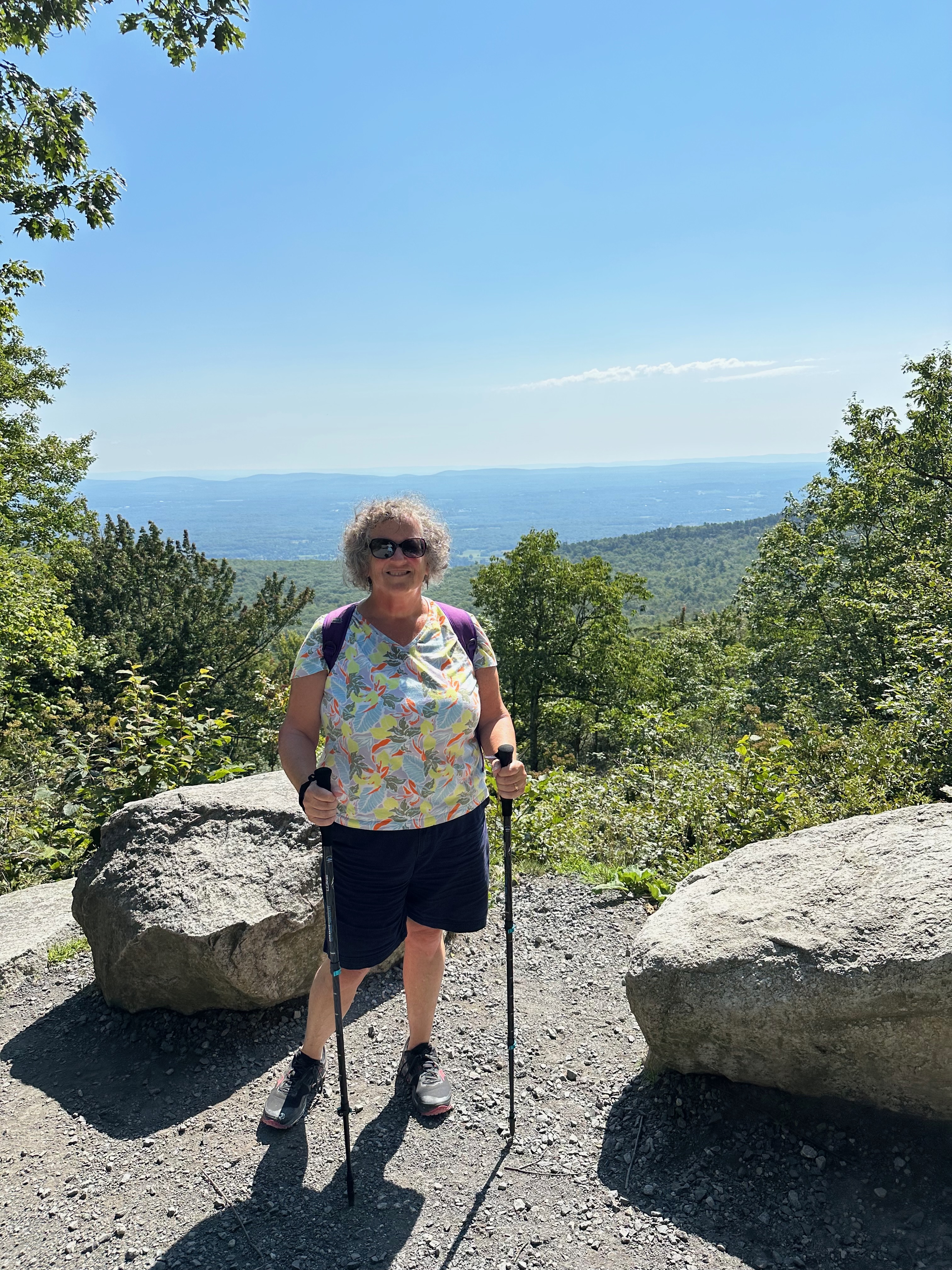
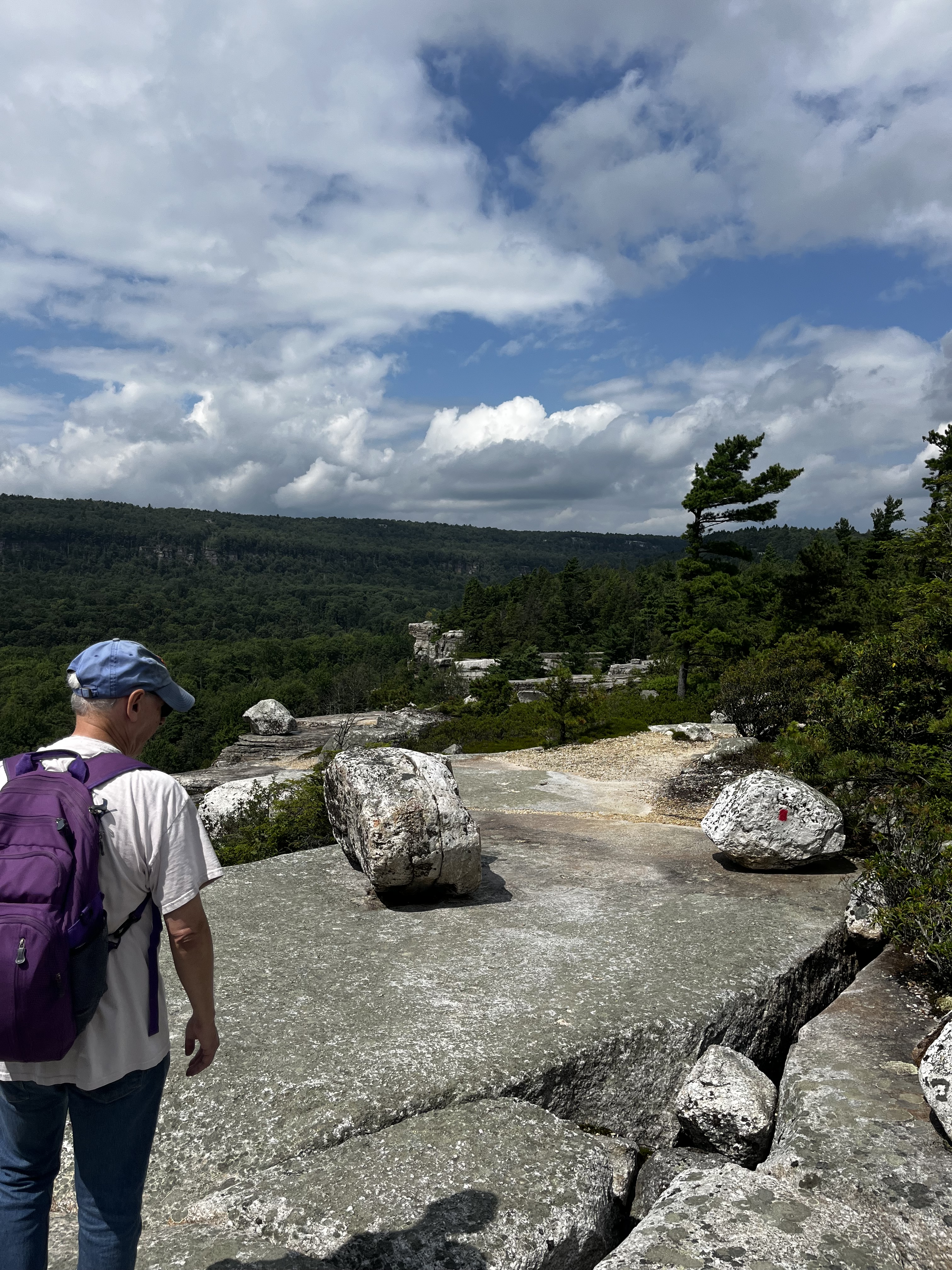
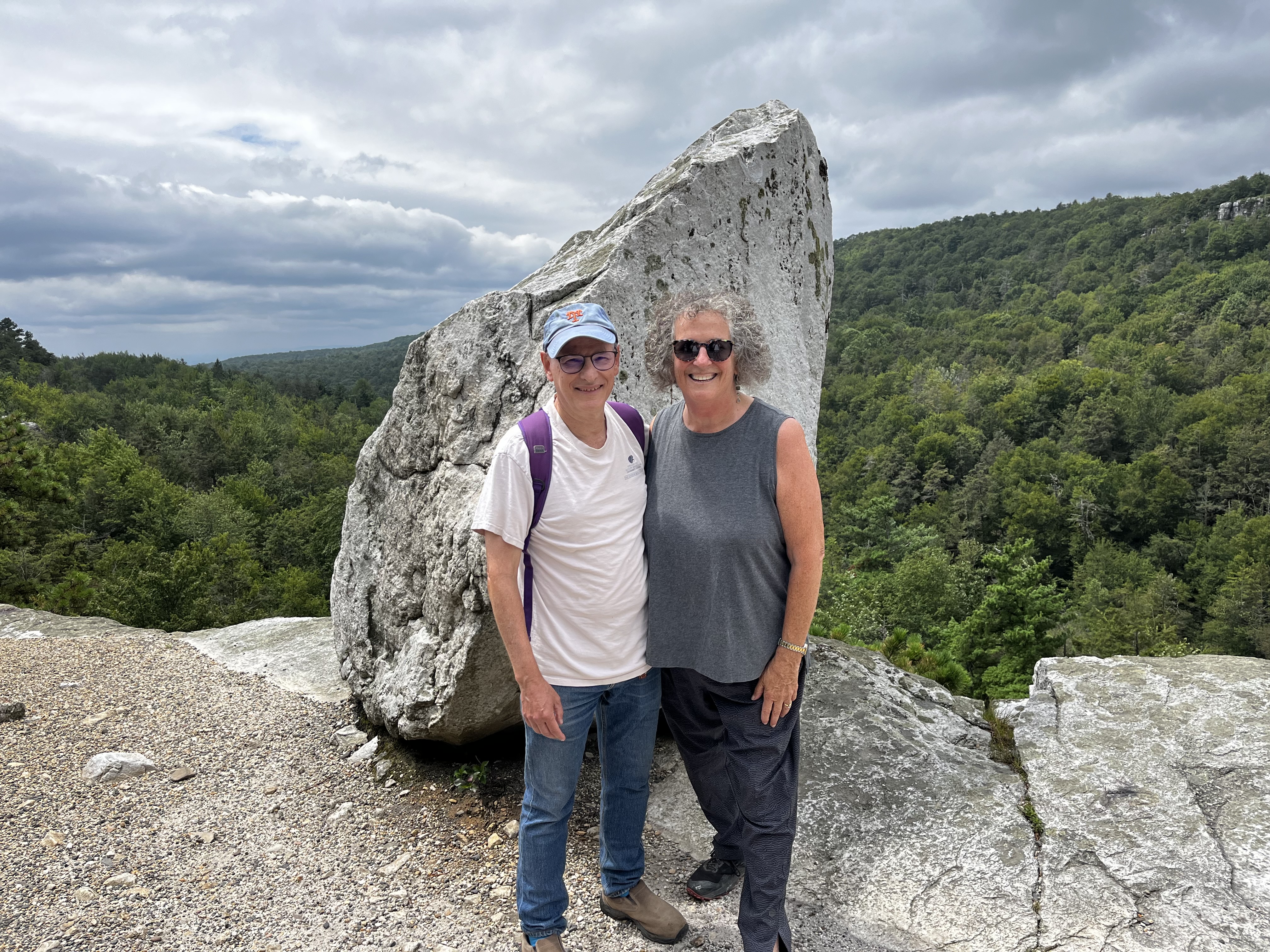
Last Friday we went. Though we didn’t do the Millbrook Mountain footpath that we had done before, we took the carriage road to another footpath, Gertrude’s Nose, which was higher up and involved fewer streams/creeks. It was a demanding hike that was about 6.5 miles round trip. It was not as hot as it was two years ago, but it was probably longer and certainly as physically demanding with a couple of scrambles. I managed to sweat profusely. We brought more water this time. We reached Gertrude’s Nose, which has a great payoff with a beautiful view, and I was in good shape. I wasn’t winded and my legs were strong. Very different from how I felt the other time.

The view from Gertrude’s Nose

We returned the way we came. We stopped twice briefly to sit but otherwise got back to the car without issue. It was a spectacular hike, and I felt proud of myself. My body was tired, but it should have felt tired.

Hopefully the reward of being more fit, of fitting into my clothes and feeling overall better about my body will provide enough motivation to stay on the course.

I am continuing to navigate this path – I have weighed myself and it bounces around. I lost the two pounds I gained, then went up a pound. Maybe these are normal fluctuations. The weight loss wasn’t a straight line downhill either. I am trying to be honest with myself about portion sizes. I am trying to listen to my body to recognize fullness. It isn’t simple. And, I reserve the right to try the other weight loss drug, if I need to (and insurance approves it). Please don’t judge me.

Use of weight loss drugs is a sensitive subject. I see no reason to keep it a secret, but it is something people have opinions about. I could write a whole other essay about that and maybe I will. For now, I will end with this thought: taking care of yourself can be a complicated issue. Most of us struggle with it one way or another. Let’s wish each other well on our journeys. If we have something genuinely helpful to say, great; if not, spare the judgment.

Parenting Philosophies: What Was I Thinking?

What was I thinking? That was the question I was left with after a conversation with some family members. What was I thinking when I didn’t assign my kids chores when they were growing up?

A small group of us were talking about how old we were when we learned to cook, if we learned to cook. Some of us, myself included, learned quite young. I remember being in third grade when I made my first roast chicken. Mom was bedridden, either because of ongoing menstrual problems or a flare of arthritis, and she gave me instructions how to prepare it. Others in our conversation came to it early, too, most learned as they helped their mom, and some didn’t recall being taught at all.

In the context of this discussion, my son asked, “Mom, you knew how to cook. Why didn’t you teach me?”

“I don’t know. I didn’t teach your sister either, so it wasn’t a sexist thing,” I responded.

The topic moved to the broader subject of all types of household chores. One person commented that their father viewed his children as worker bees, thus they had a myriad of responsibilities that were rotated among the siblings.

In the house I grew up in, we had chores, but they were unevenly divided. Things were assigned based on sex – I did the tasks that were thought of as women’s work, my brothers took out the trash, moved the garbage pails, and swept the driveway. I set the table and did the dishes after dinner daily. I was in junior high school when I staged my rebellion. It was clearly an unfair distribution of labor. At least my parents were persuaded by my argument and things changed. My brother Mark has still not forgiven me.

I admitted to the group that Gary and I had not required our children to do chores. Before they went to college, I showed them each how to do their laundry. We were fortunate in that for most of the years they were growing up, we had a person come to clean the house either weekly or every other week so the cleaning of bathrooms, washing or vacuuming floors, changing bedding was taken care of. I did the day-to-day straightening, laundry, dishes, etc. Gary did the gardening – the kids would sometimes help him with that. If I asked my son to help me bring in the groceries from the car he did so willingly.

As I sat there, I wondered: why didn’t we give them some responsibilities? I don’t think I did them any favors by not having them know how to cook, iron, clean, etc. Of course, I wasn’t particularly good at those tasks myself. I didn’t believe in ironing, unless absolutely necessary (still don’t). I don’t know how to sew. I can sew on a button in an emergency, but Gary takes care of that for himself. Cooking was probably the only area I really could have offered them something.

As I look back, I think I wanted to spare them the drudgery. I resented the chores I did as a child, though my father had explained to me that as a family, we each needed to contribute. I understood his point and accepted it, but I didn’t like it. I must have also carried some resentment for the years that things were so unbalanced with my brothers.

Another element was that starting when my kids were in first and third grade respectively, I stopped working. I took on some freelance jobs outside the home here and there, but I was essentially a homemaker for a dozen years. Gary worked long hours, and we were well provided for thanks to his efforts. I almost felt guilty, even as I intellectually knew that I was supporting Gary’s career by doing all the housework and managing our family. Emotionally, though, it felt ‘less than,’ or not particularly valuable or admirable. I figured children only get so many years to be carefree so I’d let them be and I would take care of the chores.

It occurs to me now that I may have also been avoiding the inevitable conflict that goes along with assigning chores. It wasn’t a conscious thing at the time, but I was probably unwilling to take on the fight. This thought doesn’t make me proud but there is likely some truth in it.

Interestingly, both kids are well functioning adults. They might not have come into adulthood having a lot of the skills or knowledge necessary to take care of a home, but they are doing it, they are quite competent. They would have to say whether they feel they were ill-prepared and if it created problems for them, though they haven’t complained to me. They make good use of Google and YouTube. Somehow, they are both figuring it out with their respective partners.

I come away, after thinking about this, believing that there isn’t one right way to handle this issue as a parent. Children becoming competent adults involves a lot of things falling into place beyond how this one thing is handled.

I understand the value of giving children responsibility and having them appreciate the importance of helping as members of a family. Perhaps, my children would be better off today if I had assigned them chores, but we will never know. Each of them got the message that a work ethic was important, and more than that, they don’t exhibit a sense of entitlement. Maybe the behavior they saw modeled was the most powerful factor in shaping them into adults – that and good luck (being lucky in health and not experiencing trauma are immeasurably important).

One last thought: Gary would remind me periodically that our respective parents raised us very differently, yet we function in the world pretty well. I found that thought comforting. There is room for a range of philosophies and a range of mistakes.

Carefree days

Please feel free to share your experiences as a child with chores and/or your parenting approach. I’d love to hear!

Moments of Joy

I love yoga. I know it isn’t for everyone and that’s fine. I’m not proselytizing for it. To each their own. But for me, it is helpful. I don’t always have the experience I had this last session where I had a moment of joy, but even when I don’t it is well worth the time.

I started going regularly, two or three times a week, last November, so it has been a solid seven months. I have done yoga before, but never this consistently and for this length of time. I think the last time I did it, I had some issues with my wrist, and I stopped and never went back. Now I am more aware of how to work around the various aches and pains and am willing to accept my limitations. It feels more important for my mental and physical health to stay committed to going.

So where do the moments of joy come from? Usually it is during the last part of the class, when we take a comfortable pose and just let everything go. It is called shavasana. You’ve done the harder work of the different stretches and positions and now we rest. The leader will often give a prompt – a thought, an idea – that you can ponder (you certainly don’t have to!), but then we sit or lay in silence for a few minutes with only some soft music playing.

This last time the instructor had started the class by noting that soon we would be starting a new season, and it was a good time to consider letting go of something that no longer serves us. She pointed out that it could be as simple as a sweater that has been sitting in our closet unused for too long, or something major like a relationship. Sometimes when the instructors talk about new months or new moons, it doesn’t resonate with me. It doesn’t bother me – it can get a little woo-woo – but at this school of yoga it doesn’t go too far in that direction. I can appreciate a little spirituality, but if they go too far into the chakras and energy and planets and all of that they lose me. Anyway, in this case, her message did resonate. I do have stuff to rid myself of – and actually it does involve clothing. I have drawers stuffed with things I don’t wear and no longer need. It is a good time to purge, and I know it will feel good to do it – it feels cleansing, like I’ve lightened my burden. Things that don’t get used are clutter and when you see them every day it can feel suffocating. So, in that moment I pictured sorting through my drawer of workout clothing and t-shirts, putting the stuff in bags and either throwing them out if they are too worn or donating them. I felt better already.

But that wasn’t my moment of joy. Once I had decided on that, and I felt lighter, I thought of all that I am grateful for: that my body works well enough that I can get down on the yoga mat (and get back up!) and do many of the poses, and that feeling of gratitude led me to  thoughts of my family. Part of the reason I am motivated to be here in yoga class is to be in as good health as I can muster, being with my children and grandchildren for as long as possible. As I thought of my kids an image came to me from my granddaughter’s birthday party from last week. My son and his daughter were playing Bananagrams. Some of the older kids at the party joined in. They were just playing the game, laughing, having fun, looking healthy and happy. I was proud of my boy – he’s a good father and a good man. We were all together for a celebration. As I lay on my yoga mat with my eyes closed, I saw their faces and it brought me joy.

It isn’t that I couldn’t have that image come to me at another time. It can and it has. But, most of the time it is in the midst of other things, other tasks, other responsibilities. After doing about 50 minutes of yoga, when we wind down and relax into shavasana, my mind is clear and my body feels good – having stretched and exercised to the extent that I am able. There is more space to reflect and cherish the image. It is a gift I give myself to make the time to go to yoga. While I can’t say that when I leave, I carry that positive feeling with me for the whole day, it does help. I need moments of joy to get through the many challenges we all face.

Maybe yoga won’t do it for you, but I highly recommend finding ways to claim that moment of joy for yourself.

flowers bring me joy, too

Finding Balance as a Grandparent: A Personal Journey

What are my priorities?

I am a grandmother, called Nana by my granddaughters, which makes me smile.

I ask myself, how much of my life do I want to shape around theirs?

I grew up with my Nana living upstairs in the apartment above mine in a two-family semi-attached house. She was a gift to me.

I am not in the same situation. I am 2 and ½ hours from one granddaughter, three hours from the other. My children did not grow up in the situation I had either. They saw their grandparents maybe monthly in the summer, once in the winter months when we would fly down to Florida during the February break from school. They still knew their grandparents, and knew they were treasured. Most summers my kids would spend a week at my folks’ house in the Catskills. I think that was an especially bonding experience.

Is that enough for me?

These days we have FaceTime. We can see each other more frequently – in between in-person visits. What will that mean to them?

Then there is my relationship with my children. There are rare occasions when I see each of them separate from their families. It is precious time when I get to see them one-on-one. Do I shape my life to maximize the opportunity to visit them?

Or do I lead my life?…commit to volunteer work, commit to writing, commit to political activism – instead of filling in with those activities.

I don’t know how to balance it.

And then there is the mundane business of life. It is common to hear people who retire say, “I don’t know where the time goes. I’m always so busy. How did I fit in a full-time job?”

I am finding that taking care of myself as I age has become a full-time job. More frequent doctor visits, more frequent medical tests, physical therapy, exercising multiple times a week, picking up prescriptions, and all the paperwork that supports that stuff. Then there is the expansion of household tasks, some of which I crammed in or let fall by the wayside when I worked so there is catching up to do. Between taking care of the house, the car and my body, there isn’t that much extra time. Plus, my capacity or energy for all of it isn’t what it used to be.

I admit I am disappointed in a way; retirement isn’t quite a free as I thought it would be. I know I am lucky – unbelievably so in that I am not facing serious illness, just the nagging things that happen as the bones, joints and systems wear. I am even more blessed that my children are independent, capable humans who have families of their own. They live very full lives without help from me.

Some of my peers appear to be happy to center their lives around their children and grandchildren; others appear to be happy centering their lives on their own activities and maybe some have found the secret of balance. If you have, please share! Or maybe I assume folks are happy because that is the face they put on, especially on social media.

Between my own desire to remain engaged in meaningful growth, contributing to the world, and to have fun (which for me means traveling, being active, walking among trees, smelling flowers, being social, and, most importantly, deeply connected to my family), I feel like I don’t know what I am doing.

But, maybe I am doing it. This is it. I answer a call from my son who has an extra ticket to a Met game on a Monday night and I figure out how to make that work (it was a great game and we had a blast!). I schedule my various medical appointments and follow their instructions as best I can. Babysit for grandchildren and grandnephews when asked. Fit in yoga and tennis where I can. Take a walk with a friend. I write when I can, post a blog when I can. I don’t worry about getting published (easier said than done!). Let tasks in the house sit a while longer. I have lunch with a friend here and there. Plan a trip or two each year. Celebrate my granddaughters’ birthdays. Sounds pretty awesome really. So why do I feel uncentered? Perhaps it is just a matter of accepting it – the fragmented nature of it, the unpredictability of my schedule (or the absence of one) and the idea that I write mostly for myself and whatever audience reads my work. And most importantly, to believe that in being there for friends and family, I will have done something worthwhile even in the face of this very troubled world.

Looking for perspective in the woods of Central Park or maybe just admiring the birds.

“Field of Dreams” – Some Thoughts

My family has a movie club. It functions the same way as a book club. A member picks a movie, and we get together on Zoom to discuss it. The person who picks the film moderates the discussion. The number of participants varies from month to month, but typically there are about 19 of us. This month we discussed Field of Dreams.

I had not watched Field of Dreams in many years. I remembered enjoying it in the theater when it came out in 1989. I have caught bits and pieces of it on television since it airs frequently, but I am not someone who watches it whenever they come upon it, and I certainly had not watched it all the way through in decades.

For many this film is a touchstone. It is a perennial favorite because it speaks to universal themes: dream fulfillment, regret, father-son relationships, nostalgia for baseball, and redemption. It also features some wonderful actors, James Earl Jones, Burt Lancaster to name two and Kevin Costner qualifies as a genuine movie star (I think he is a fine actor and does a good job in this).

Somehow watching it yesterday afternoon, I was not as moved as I remember being. I wasn’t drawn into the fantasy. I liked it well enough and could appreciate aspects of it, but I found myself doubting the premise. I wasn’t buying it. When we gathered for our discussion, I was in the minority, though there were a few who were also less than impressed. I wondered if I have become too cynical to relax and give in to the sentimentality. One of the premises of the movie is that we long for a simpler, more innocent time. My problem with that idea is that I don’t believe that simpler, more innocent time exists.

I also think that the father-son dynamic, which is central to this story, didn’t resonate with me and I don’t believe that is a matter of gender. Anyone can relate to the idea of having regrets over a parental relationship that wasn’t what you wanted it to be – and having the chance to make amends would be an unbelievable gift, as happens in the movie. While I can relate to that idea and would welcome a chance to reconnect with my parents, I am lucky in that I don’t feel a lack of closure with either my mother or father. I miss them, but I don’t have much in the way of regret. I am grateful for that.

While intellectually I get the potential for how baseball can connect a father and son and how meaningful a catch could be, it still didn’t resonate. My parents were not of a generation where they played with their kids. My dad never had a catch with me – and I have no memory of him having a catch with my brothers. Maybe he did, or maybe they wanted him to. They certainly had catches with their own kids when they became fathers. I think it was a generational thing, though Gary, my husband, would toss a ball with his dad. What’s funny is that my dad was an athlete. He grew up playing ball – all kinds – baseball, basketball, stickball. He continued to be active as an adult, playing tennis and paddleball. But, he didn’t play with us. I think the mind set was different. He didn’t think it was his job to play with us. I had no expectation that he would. I can’t speak for my brothers – they may have felt a longing for that, or maybe they felt as I did that it just wasn’t something to be expected of him. Mom didn’t play with us either – not board games, not sports. We were expected to entertain ourselves.
Aside from the difference in expectation about parental roles that may explain my tepid reaction, the movie relies on nostalgia for baseball. I love baseball. It is a sport I have always enjoyed. I was a huge fan of Ron Bloomberg of the New York Yankees when I was a kid. You can probably guess why. But, I associate baseball with my brothers, my uncles and my Zada (my maternal grandfather), more than my dad. Dad followed the sport but after the Dodgers left Brooklyn before my birth, he was no longer a fan. He grew up as a die-hard Dodger fan and was angry and resentful that they left. In the years that followed he kept track of players, he read the sports page, but he didn’t root for a particular team and had no interest in going to games. If my brothers and I went to a game, it was with our uncles. I do recall a particularly memorable time my dad took us as a family, and it may explain why we went so rarely.
We went to see the Mets play the San Francisco Giants at Shea stadium. It was August of 1969, an auspicious year. Dad was no fan of New York City traffic, so he wanted to leave the game early. It was a close game, no runs had been scored, and we made our way to the exit after the 7th inning. Except when we got outside the stadium, we couldn’t find our car. We combed the aisles. This was long before we had fobs with a panic button. We had no way of flashing the headlights to help us locate the car. I don’t know why none of us had noted the section where we parked. We just kept walking up and down – every aisle looked the same, every section looked the same. Meanwhile the game went into extra innings. I believe we found our car after about an hour. The game went 14 innings before the Mets won, 1-0, so we still beat most of the crowd to our car where we listened to the last inning on the radio. It turned out to be a classic game. Gary Gentry, the Mets pitcher, held the Giants scoreless for 10 innings and was relieved by Tug McGraw who finished out the game. Juan Marichal, the opposing pitcher who went on to be a Hall-of-Famer, took the mound for 13 innings! So not only were we roaming the parking lot for a very long time, but we also missed the end of a truly great game.

It was not the happiest of experiences. Dad was not the most relaxed person under the best of circumstances. He had a temper and a short fuse. You can imagine his fury at not finding the car. Plus, with a family of five, though it was far less expensive than it is today, it was still a lot of money to buy tickets, park and feed all of us. I’m not sure we ever went to a game as a family again. It became an amusing anecdote, but not until many years passed.

[I will rely on my brothers to correct me, if I got this episode wrong.]

The point is that my affection for baseball was not nurtured by my father. So, when I watch Field of Dreams it doesn’t evoke the heartfelt emotion that it does for other folks. I know my brothers feel differently. They participated in the movie club discussion, and the film clearly struck a chord with them. I invite them to comment or write a blot post about the notes that struck home.

If you want to chime in with your feelings about Field of Dreams, please do. I will say that unlike many movies made in the 1980s, it aged well. It wasn’t offensive in any way that I perceived and, in fact, got a lot right. It just didn’t move me the way it does many others. I didn’t choke up and I shed no tears during the final scene. Did you?

American Portraits

Does anyone get their portrait painted anymore, other than presidents and first ladies? I was thinking about that after going to two exhibitions, one at the Metropolitan Museum of Art, the other at the Whitney.

The first one was entitled Sargent in Paris, and it explored the emergence of John Singer Sargent as one of the premier portrait painters in the 1880s. He was commissioned by people in high society to paint themselves, their wives and children. I don’t travel in high society, so it is possible that old money, or the richest folks among us, still do that. If they do, I haven’t heard of the artists who do it or seen exhibits of their work. I am more familiar with hiring a photographer to do a shoot, but even that isn’t common, though some do it for an engagement or new baby. Back in the day, and I’m referring to the Guilded Age, it was apparently a sign of status to engage someone like Sargent to do a portrait.

From what I read while I walked through the galleries, Sargent was quite adept at nurturing the relationships one needed to sustain his career. There is no denying Sargent’s artistry, I love his work, but I think his ability to hobnob with the circles that could pay him enhanced his career and reputation. I wonder if he liked that part of his job. Maybe it came naturally to him. I would hate it. It is possible, like Michael Jordan who had both talent and tenacity, Sargent had both the social skills and the exceptional talent that allowed him to achieve the heights of success as a portrait artist.

Though Sargent was an American, he only visited here. His parents were ex-pats who moved around Europe. He was born in Florence, and he died in London. Despite spending a good deal of time overseas, he did leave his mark here in America, particularly in Boston where his murals decorate the ceiling and walls of the main branch of the public library. He, unlike some artists, was celebrated in his lifetime. There was a period after he died where his work was less respected because it was viewed as the work of a mere illustrator, without much creativity. Then his reputation rose again as the art world took another look at the nuance of his portraiture and skill of his brushwork.

Here are some examples of the range of his work from the exhibit:

I love Sargent’s canvases – his formal portraits and his paintings of nature. He was so versatile. He could do watercolors, and he could paint in the Impressionist style. Whatever he did, his use of color was so vibrant, you can feel the texture of the fabric of the dress his subject wore. He also makes white come alive, which is unique – not everyone can make white an interesting color. And, even though he was often simply painting a portrait of someone I never heard of nor cared about, he manages to make them compelling.

This is the one commonality I found between the Sargent exhibit and the other show I attended, Amy Sherald: American Sublime at the Whitney. You may know Amy Sherald as the artist who painted Michelle Obama’s portrait, and that canvas is included in the exhibition at the Whitney. That work got some attention, but of the pieces on display that one was the least interesting to me.

Like Sargent, Sherald paints ordinary people but makes them notable. I suppose it isn’t accurate to say Sargent portrayed “ordinary” people, since they were, with few exceptions, very rich, but they weren’t famous in the way we understand fame today. Sherald’s subjects, with the exception of Michelle Obama, aren’t rich or famous– they are regular people. Sherald is interested in presenting people of color, offering less emphasis on their skin tone and more on their everyday lives – reflecting their joy, their dignity, their pride. She also plays with our expectations of gender and race, showing people in surprising settings.

Sherald’s work is also a celebration of color, but in an entirely different way than Sargent. Her canvases are bold, and while Sargent may have been considered bold, it was in the context of the Victorian era. Sargent’s most controversial painting, Madame X, presented a woman with the strap of her evening gown off her shoulder, which he later fixed to appease the sensibilities of the time. Sherald is far more daring, pushing the boundaries of our expectations. I’m sure some viewers, I’m thinking of social conservatives, would not appreciate her perspective. I love that her work makes you stop, think and reconsider assumptions.

Here are some examples of her work:

Sherald’s canvases, with the notable exception of the Obama portrait, are not on commission. She spots people on the street that she finds interesting for one reason or another, or she has an inspiration, and she asks permission to photograph that individual and then paints from the photograph. Unlike Sargent, she was not able to make a living as an artist until later in her life. She waited tables until she was 38 years old.

Though I did not set out to see these two exhibits to compare and contrast them, it turned out to be an interesting exercise. If you are in NYC, I recommend seeing either one or both. You can expect huge crowds at the Metropolitan. I went on a member preview day and there were lines. I’m not sure if that was due to the popularity of Sargent or the popularity of the Met. It was far less crowded at the Whitney which made for a more enjoyable and relaxed experience. There are plenty of other things to see at each museum, obviously, and if you haven’t been to the Whitney since it moved downtown, the building itself is worth a visit. The Sherald exhibit runs through August 10th, while the Sargent is open through August 3rd. If you see either one, feel free to come back here and comment. I’d love to hear other perspectives.

Here are some photos I took of other exhibits that I particularly enjoyed at the Whitney:

From Generation to Generation

Editor’s note: I received the following email from my brother, Mark Brody. With his permission, I thought it merited sharing.

I just read a headline, I only read the headline as that is all I can tolerate, which indicated that federal funding is being cut to the programs which provide tutoring to children.  After reading that, or you can substitute any other recent news, such as how research into the cures for Alzheimer’s or cancer, etc. are being eliminated, and I decided that my sensitive, far too brilliant for her own good, sister could enjoy the following essay which, if she chooses, she might wish to post on her blog.

The Hero of Our Own Lives

“Whether I shall turn out to be the hero of my own life, or whether that station will be held by someone else, these pages must show.”  (Opening sentence of David Copperfield by Charles Dickens).

Last night Pam, my wife, and I were babysitting our 5-year-old twin grandsons.  After the boys had a bonus 8-minute episode of an animated, parentally approved TV show called Grizzy and the Lemmings, we all scurried up to their bedroom.  I declared I would outrun them to their room and for the 156th consecutive time (we babysit frequently) both Connor and Lucas outran their ancient grandpa.

Our usual nighttime reading ritual is that Connor will select books for me to read and Lucas, exhausted from a long day, will lie in his bed and be satisfied with just hearing the story as Connor plops himself in my lap.  Before the last book is concluded Lucas will be sound asleep.

Last night, however, Lucas hands me a particular book and asks me to read it. 

The first problem with reading to Lucas at night is that he is usually so tired that he needs to lie in bed, and I need to place my old, creaky body on the floor next to his bed so he can see the pictures as I read the story. 

The second, potentially equally vexing challenge, is that Connor whose bed is at the opposite end of the room “needs” to climb into Lucas’ bed so he can get an equally good view of the book, or perhaps more cynically, to make sure that Lucas does not get a better view of the book than he receives.  This in and of itself is fine, but when reading comes to an end and Lucas is an inch away from being asleep, Connor will invariably decide he should stay in Lucas’ bed and endeavor to keep Lucas awake as there is still much playing and gabbing to be done.  Extricating Connor from Lucas’ bed is often an ordeal.

Last night, however, I was delighted that Lucas decided to climb into my lap as I started to read to him.  Connor then took his usual perch in my lap (the boys are still young and my lap, unfortunately or not, is quite ample).  We read the story. The boys genuinely helped decipher some of the words as the lighting is dim and when the color of the word is red, and the background is black, I have difficulty making out the letters (I am color blind).   The bedtime ritual was completed, and Lucas went right to sleep.  I tucked in Connor and said, “Good night.” 

As I left the room Connor commenced a debate with Pam.  Was Grandpa’s “good night” sufficient?  “Nana, when I wake up tomorrow Grandpa will not be here, don’t you think you should get Grandpa to come back and say ‘goodbye’?”  Despite the debate I did not believe it wise to return to the bedroom. 

First, debates with Connor (always Connor, as Lucas is not afflicted with the need/desire to question/analyze absolutely everything) can sometimes be lengthy (remember they already had an extra episode of Grizzy).  I could envision much time elapsing before I would again leave the room.    

Second,  and much more importantly, I recall the infamous evening when I was babysitting sans Pam and her adult oversight. I recall the look of terror in Josh’s face when I showed up alone, and the parents got home to discover Grandpa in the twins’ room well after bedtime, reading/gabbing with Connor. The formerly always serene Mama demonstrated a countenance which can be generously described as something other than serene.  As an aside, the Daddy of the twins, who has not yet to my knowledge been described as serene, voiced his considerable displeasure with my judgment that Connor did not need as much sleep as the parents thought necessary.

 With that experience in mind and armed with the ability to learn from the past, I promptly made my exit and left Pam to handle the debate with Connor. For some reason, unbeknownst to me, Pam does not seem to test the Mama’s serenity. 

Later that evening Pam explained that Connor’s thesis that Grandpa’s saying “good night” was insufficient was predicated on Connor’s observation that upon his saying “goodbye” to me, I should also say “goodbye” to him because when he wakes up in the morning I would not be there. Hence, just saying “good night” is not sufficient. Note taken.

Both grandparents, having safely bid the boys good night or goodbye as the case may be, await the parents return home which they do at a reasonable hour.  Pam and I head to our own abode. 

We discuss how I used to read to our boys when they were the twins’ age so many decades ago.  Perhaps that is why I decided I should re-read David Copperfield.   Having made a little headway in the tome, I went to bed at 6:00 a.m.

When I awoke the next afternoon, Pam and I discussed how 35 years ago I would read one chapter of the Dickens’ classic a night to Josh. If memory serves me correctly Sam – age 4 or 5- would be snuggling with Josh and me.  She suggested that perhaps one chapter a night might still be a good idea for me. Another note taken, but likely ignored given my track record.

This made me think- about how long it would have taken me to complete the 64-chapter book (each chapter averaging 15-20 pages). 

…..And then a memory arose which I had not thought of for many years.  I now recall having been so enthralled by the elegant writing, humor and pathos of the novel, one summer afternoon, while we were on vacation in a time share in California, I simply had to read the book to myself.  This decision did not end well because Joshua spotted me reading the book…without him! He was outraged and demanded that I not “go ahead of him in the book.” 

Three plus decades later, I recall vividly Josh explaining how my betrayal stung him.  He probably has no memory of this.  My argument that I was going to read everything to him were to no avail.  7 (or 8?) year old Josh’s thesis was that this was a shared experience for the two of us (Sam’s presence was either tolerated or perhaps cynically he did not notice Sam on the other side of me as we read) and my proceeding without him was a grievous abdication of parental responsibility.

…And now a more recent memory- about 4-5 years ago, I am in Josh’s house and he is on the living room floor (he is not yet as antiquated as is his father and can sit comfortably on the floor) with one of the twins and he is reading to his son, not yet one, from one of Tolkien’s Lord of the Rings books.

…..And then another memory from two years ago- Sam reading to his then 5-year-old son (Ted) from the Hobbit.

…..And yet another memory rushes in from 60+ years ago  of Mom reading to me. I struggle to recall whether it was Treasure Island or maybe The Three Musketeers– perhaps my older brother, Steven will know.

…So, to conclude my essay, my dear sister, as our great expectations (pun intended) of our government is under constant assault, perhaps there can still be a calming perspective about how rich it is when we have the opportunity to share literature (great or otherwise) with children.  And perhaps by doing so we can be the heroes of our own lives.

Note from your sister: Thinking about reading stories to our children and grandchildren, or reading literature in general, is far better than absorbing the news. So thank you for sending this to me. I too have fond memories of reading to my children each night, but I was not so ambitious as you. Though I read them chapter books, I never took on Dickens.

I also think about the role books had in our shared childhood. Wherever we were, and, as you know, we spent summers in different college communities while Dad pursued his education, we took a weekly trip to the library. Mom and Dad set us up for an enriched life. As they say in one of our prayers, not that we are religious, l’dor v’dor, from generation to generation. I think we have done just that. Mark, thank you for sharing this.