From Generation to Generation

Editor’s note: I received the following email from my brother, Mark Brody. With his permission, I thought it merited sharing.

I just read a headline, I only read the headline as that is all I can tolerate, which indicated that federal funding is being cut to the programs which provide tutoring to children.  After reading that, or you can substitute any other recent news, such as how research into the cures for Alzheimer’s or cancer, etc. are being eliminated, and I decided that my sensitive, far too brilliant for her own good, sister could enjoy the following essay which, if she chooses, she might wish to post on her blog.

The Hero of Our Own Lives

“Whether I shall turn out to be the hero of my own life, or whether that station will be held by someone else, these pages must show.”  (Opening sentence of David Copperfield by Charles Dickens).

Last night Pam, my wife, and I were babysitting our 5-year-old twin grandsons.  After the boys had a bonus 8-minute episode of an animated, parentally approved TV show called Grizzy and the Lemmings, we all scurried up to their bedroom.  I declared I would outrun them to their room and for the 156th consecutive time (we babysit frequently) both Connor and Lucas outran their ancient grandpa.

Our usual nighttime reading ritual is that Connor will select books for me to read and Lucas, exhausted from a long day, will lie in his bed and be satisfied with just hearing the story as Connor plops himself in my lap.  Before the last book is concluded Lucas will be sound asleep.

Last night, however, Lucas hands me a particular book and asks me to read it. 

The first problem with reading to Lucas at night is that he is usually so tired that he needs to lie in bed, and I need to place my old, creaky body on the floor next to his bed so he can see the pictures as I read the story. 

The second, potentially equally vexing challenge, is that Connor whose bed is at the opposite end of the room “needs” to climb into Lucas’ bed so he can get an equally good view of the book, or perhaps more cynically, to make sure that Lucas does not get a better view of the book than he receives.  This in and of itself is fine, but when reading comes to an end and Lucas is an inch away from being asleep, Connor will invariably decide he should stay in Lucas’ bed and endeavor to keep Lucas awake as there is still much playing and gabbing to be done.  Extricating Connor from Lucas’ bed is often an ordeal.

Last night, however, I was delighted that Lucas decided to climb into my lap as I started to read to him.  Connor then took his usual perch in my lap (the boys are still young and my lap, unfortunately or not, is quite ample).  We read the story. The boys genuinely helped decipher some of the words as the lighting is dim and when the color of the word is red, and the background is black, I have difficulty making out the letters (I am color blind).   The bedtime ritual was completed, and Lucas went right to sleep.  I tucked in Connor and said, “Good night.” 

As I left the room Connor commenced a debate with Pam.  Was Grandpa’s “good night” sufficient?  “Nana, when I wake up tomorrow Grandpa will not be here, don’t you think you should get Grandpa to come back and say ‘goodbye’?”  Despite the debate I did not believe it wise to return to the bedroom. 

First, debates with Connor (always Connor, as Lucas is not afflicted with the need/desire to question/analyze absolutely everything) can sometimes be lengthy (remember they already had an extra episode of Grizzy).  I could envision much time elapsing before I would again leave the room.    

Second,  and much more importantly, I recall the infamous evening when I was babysitting sans Pam and her adult oversight. I recall the look of terror in Josh’s face when I showed up alone, and the parents got home to discover Grandpa in the twins’ room well after bedtime, reading/gabbing with Connor. The formerly always serene Mama demonstrated a countenance which can be generously described as something other than serene.  As an aside, the Daddy of the twins, who has not yet to my knowledge been described as serene, voiced his considerable displeasure with my judgment that Connor did not need as much sleep as the parents thought necessary.

 With that experience in mind and armed with the ability to learn from the past, I promptly made my exit and left Pam to handle the debate with Connor. For some reason, unbeknownst to me, Pam does not seem to test the Mama’s serenity. 

Later that evening Pam explained that Connor’s thesis that Grandpa’s saying “good night” was insufficient was predicated on Connor’s observation that upon his saying “goodbye” to me, I should also say “goodbye” to him because when he wakes up in the morning I would not be there. Hence, just saying “good night” is not sufficient. Note taken.

Both grandparents, having safely bid the boys good night or goodbye as the case may be, await the parents return home which they do at a reasonable hour.  Pam and I head to our own abode. 

We discuss how I used to read to our boys when they were the twins’ age so many decades ago.  Perhaps that is why I decided I should re-read David Copperfield.   Having made a little headway in the tome, I went to bed at 6:00 a.m.

When I awoke the next afternoon, Pam and I discussed how 35 years ago I would read one chapter of the Dickens’ classic a night to Josh. If memory serves me correctly Sam – age 4 or 5- would be snuggling with Josh and me.  She suggested that perhaps one chapter a night might still be a good idea for me. Another note taken, but likely ignored given my track record.

This made me think- about how long it would have taken me to complete the 64-chapter book (each chapter averaging 15-20 pages). 

…..And then a memory arose which I had not thought of for many years.  I now recall having been so enthralled by the elegant writing, humor and pathos of the novel, one summer afternoon, while we were on vacation in a time share in California, I simply had to read the book to myself.  This decision did not end well because Joshua spotted me reading the book…without him! He was outraged and demanded that I not “go ahead of him in the book.” 

Three plus decades later, I recall vividly Josh explaining how my betrayal stung him.  He probably has no memory of this.  My argument that I was going to read everything to him were to no avail.  7 (or 8?) year old Josh’s thesis was that this was a shared experience for the two of us (Sam’s presence was either tolerated or perhaps cynically he did not notice Sam on the other side of me as we read) and my proceeding without him was a grievous abdication of parental responsibility.

…And now a more recent memory- about 4-5 years ago, I am in Josh’s house and he is on the living room floor (he is not yet as antiquated as is his father and can sit comfortably on the floor) with one of the twins and he is reading to his son, not yet one, from one of Tolkien’s Lord of the Rings books.

…..And then another memory from two years ago- Sam reading to his then 5-year-old son (Ted) from the Hobbit.

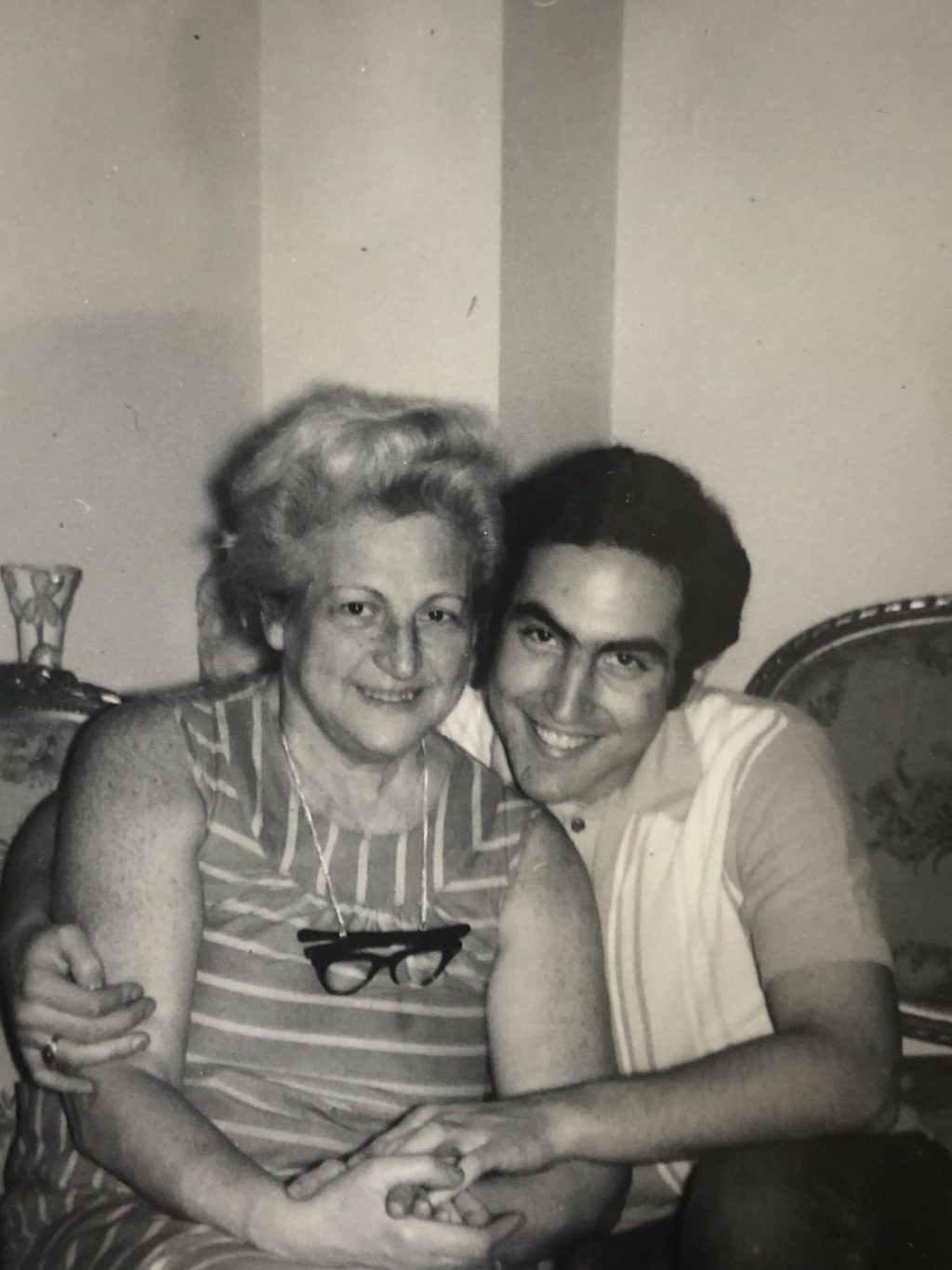
…..And yet another memory rushes in from 60+ years ago  of Mom reading to me. I struggle to recall whether it was Treasure Island or maybe The Three Musketeers– perhaps my older brother, Steven will know.

…So, to conclude my essay, my dear sister, as our great expectations (pun intended) of our government is under constant assault, perhaps there can still be a calming perspective about how rich it is when we have the opportunity to share literature (great or otherwise) with children.  And perhaps by doing so we can be the heroes of our own lives.

Note from your sister: Thinking about reading stories to our children and grandchildren, or reading literature in general, is far better than absorbing the news. So thank you for sending this to me. I too have fond memories of reading to my children each night, but I was not so ambitious as you. Though I read them chapter books, I never took on Dickens.

I also think about the role books had in our shared childhood. Wherever we were, and, as you know, we spent summers in different college communities while Dad pursued his education, we took a weekly trip to the library. Mom and Dad set us up for an enriched life. As they say in one of our prayers, not that we are religious, l’dor v’dor, from generation to generation. I think we have done just that. Mark, thank you for sharing this.

Joy in Mud(Met)ville

Note: The following was written by my husband Gary Bakst, lifelong Met fan, which means 65 years, except the Mets are actually 3 years younger than that. But you get the idea. Anyway, I hope you enjoy his prose as much as I did.

I put Gameday on my laptop as I saw my afternoon patients yesterday.  I was nervous, anxious, worried.  Dan, my son, texted to ask if I was stressed and that is exactly what I was feeling.  The Mets gave up 2 runs in the 3rd inning and another in the 6th and were down by 3-0 going into the eighth inning.  It was looking like yet another of those miserable late season games in Atlanta.  We have been here before.  We have seen this movie.  And we never liked the ending. 

Then, out of nowhere, the Mets erupted for 6 runs in the top of the eighth inning capped by Brandon Nimmo’s two run home run way deep into the right field stands.  Finally, a better ending was coming into view.  All of those demons would be erased.  The Mets were just 6 outs from the postseason.  What could possibly go wrong?

And then came the bottom of the eighth.  Maton came in to pitch it and was ineffective and they brought in Edwin Diaz to try to get a 5 out save coming off a thirty something pitch save Sunday.  Diaz failed to cover first on a ground ball to Pete Alonso and one double later, the Mets were suddenly down by 7-6 heading into the ninth inning.

Of course.  Of course the Mets couldn’t just lose by 3-0.  They couldn’t just fail in an ordinary way in front of the brainless Braves’ fans.  They had to first get our hopes up with an historic eighth inning only to give it away in the bottom of the inning.  They had to take our hearts out.  They couldn’t just let the patient die mercifully.  They had to make it painful, long and heartbreaking. 

This could not be an ordinary loss.  This had to be a Mets fan special.  I was almost sure that blood was coming out of my skin, my pores and slowly spilling onto the floor of the exam room.  The ninth inning would surely be just one, final, painful chapter in a sad, tragic story.

And then.  And then, with one out, Starling Marte got a base hit and suddenly, our guy, our MVP, back from his back, strode to the plate.  Francisco Lindor, batting from the left side, hit a ginormous home run.  Perhaps the second biggest home run in Mets vs Braves history (Piazza, of course).  The ball was well struck and carried deep into the Atlanta late afternoon gloom.  It seemingly broke open a new dimension.  It carried hope and joy and goodness and love and was itself carried by will and determination, by desire and honor and the conviction that, in the end, goodness will triumph over evil.  It was propelled by a force both divine and human and when it landed angels called from the heavens, doves flew overhead and lions lay down with lambs.

And it sailed over the right centerfield fence and suddenly, out of nowhere, the Mets were up by 8-7 and only three outs separated them from the post season, from an opportunity to celebrate right there on the turf of their most arrogant nemesis.  And it left one giant question:  Who was left to get those last three outs?  It couldn’t be Diaz.  He had thrown a ton of pitches on Sunday and a bunch more in the 8th inning.  And yet, the sad reality is that they really don’t trust any other reliever. 

And then.  And then, emerging from the dugout with the look of a man on a mission, came Edwin Diaz.  He was back and he was going to find a way to finish the job.  And somehow, despite the fact that it looked like his right arm came onto the field well after the rest of him, he got it done.  

The Mets were in the playoffs.  A great miracle happened there.  It was not the ending Mets fans have been accustomed to, not the ending we have been trained to expect.  And it was just so sweet and so amazing.  I had to look at the screen on my laptop for a while to make sure that it was real.  Wait, they’re gonna call for some kind of do over, right?  Somehow, they’ll say it can’t be over until the Mets lose.  But it was real.  And it was good. 

The Mets are in Milwaukee today for a 5:30 PM (eastern time) wild card playoff game). 

#LGM

It all started back in Spring Training and we were there.

It Shouldn’t Be This Hard

NOTE: Another view from the frontlines written by my husband, Gary Bakst.

I saw a patient for a physical exam and there was a lump found on that exam.  It was not one of those lumps that make you immediately think the worst.  But it also wasn’t a lump that felt obviously innocent.  It would require investigation.  I was concerned but in my gut I thought this is probably going to turn out to be benign.  I also knew that what I needed to do was fairly straightforward.  The work up should be easy.  However, what should be easy is hardly ever easy these days.

I knew he needed a CT of the pelvis with and without contrast to better understand what we were looking at.  However, when I searched our electronic medical record system, there was no option for a CT pelvis with and without contrast.  There was CT abdomen with and without.  There was CT abdomen and pelvis with and without.  There was CT pelvis without any specification as to whether or not it included contrast and there was CT pelvis with contrast.  I have no idea why they made the choices so weird.  Ultimately I decided they must have intended that the CT pelvis (without specifying) was without contrast.  So I ordered CT pelvis with contrast and CT pelvis. 

This electronic medical record system was imposed upon our office.  We did not ask for it and we surely did not want it.  We had an electronic medical record system that was working very well but the larger organization that we are now part of felt it was important to get everyone in the organization on the same platform.  They switched us over a bit more than a year ago knowing they were going to again switch systems for the entire organization in early 2024.  We explained to them that our office is particularly busy and they did not have enough support staff to make this cumbersome system work in the setting of such a busy practice.  They weren’t impressed with that argument. 

When the switchover came, they sent in people to help us with the transition and they were great but the underlying issues were too much to overcome.  Our office became less productive, we were less able to accommodate our patients and new referrals.  The larger organization lost money when they thought they would save money.  Some of our doctors and PA’s became frustrated.  Two have left and one went from full time clinical to half time clinical practice.  We have been able to hire a PA and a nurse practitioner and we hopefully have another physician joining us soon.  Still our productivity is well below where we were before the change.  Belatedly the higher ups came to understand that the transition was a failure and allowed us more staff to deal with it.  Unfortunately, that happened just as the economy got weird and you couldn’t hire anyone.  However, as time went by, we have been able to increase our staffing and it has gotten better. 

We submitted the plan for the CT pelvis to the patient’s insurance company and they rejected it.  We appealed and they again rejected it and said I needed to speak to one of their reviewers.  Ultimately, they finally approved the CT.  Thankfully, it showed nothing terrible.  I had also ordered some lab work for this patient.  Previously, we drew the blood in the office and we also had a very efficient office lab that processed the blood work.  It was accurate and very fast.  The overwhelming majority of lab work was available to me on the day that the blood was drawn.  I would go home from the office and be able to review all of that lab work, call the people who had a problem and create letters to those who had good results so they could know they were fine.  Each evening, that day’s blood work was essentially all dealt with. 

However, the larger organization closed our lab.  We still draw the blood but the plan was to send it to their lab to save money.  We explained that it would lead to delays and be less efficient and not allow us to do as well in dealing with issues that come up with lab work.  However, they felt very strongly that it would be a major savings in lab costs.  To be fair, the higher ups listened to our objections and we were able to speak with them at length about it.  But the decision was made and was not going to be undone.

On the same day that they changed our electronic medical record system, they also closed our lab.  Specimens were to be sent to the hospital but at the same time, the pandemic related supply chain issues got us. There was a shortage of vacutainer tubes needed for blood draws so we had to send all of our labs to Lab Corp except for those patients who have Blue Shield which does not accept Lab Corp.  Lab Corp did pretty well getting us timely results.  They took one day longer than our lab but they were not too bad.  We lost much of our ability to have the lab add on tests as needed or re-run results that were questionable.  Still, it was a moderate, not severe, drop in our function.  For the Blue Shield patients, they had to go to either St. Peter’s labs or Quest labs, both of which were quite slow.  Sometimes we just never got any results and we had to call for them.  Sometimes patients would tell me their results off their portals for those labs and that is how I found out how they were doing.  

Finally, in November, the shortage of vacutainer tubes was over and our hospital lab said they were ready to accept our labs rather than sending them to Lab Corp.  But they were not ready.  We saw labs taking 4 or 5 days to come back.  In quite a few cases, by the time they got to our specimens, they had timed out and it was too late to run them.  For reasons I cannot fathom, they denoted this as “lab accident” and that showed up on patient’s portals.  Patients were naturally concerned about the lab accidents involving their results.  I started sending them to Lab Corp again until the hospital was able to get enough staffing to actually process the labs properly.  They are finally doing better but not great.  

In my patient’s case, there were lab abnormalities that required follow up.  I asked them to add the follow up labs from the blood that we had already collected but they could not do so.  Previously that would have been easily accomplished.  The patient came in for repeat blood work and they did much of what I asked for but somehow left out the most important follow up test.  I am capable of making mistakes but I had correctly ordered it-they just didn’t do the test.  Fortunately, in this case, they were able to run it and it also turned out to be good news. 

I have spent a fair amount of time criticizing the larger organization that owns our practice but I want to make the important point that they are actually pretty good as larger organizations go.  The problem with them is that they are a larger organization.  Speak to doctors anywhere in the country and you will hear similar stories.  Mostly you will hear worse stories.  These guys are really only guilty of being a bit too smart to realize that sometimes when something works, you should let it keep working rather than fix it.  Other organizations do far worse and have more concerning priorities.  The main point is that we now live in a landscape of practices owned by large organizations in which the decision makers are removed from the people taking care of the patients.  They have their own data and jargon and don’t answer to us.  Another part of this is the insurance companies which are increasingly difficult to deal with.  Then there are the ridiculous costs of pharmaceuticals and the shortages of all kinds of common products from blood pressure medications to amoxicillin liquid. 

Ultimately, this patient is well and that is the most important piece of news.  And in the end, we were able to get done what we needed to get done.  But, comparing what it took to make it happen to what that would have involved just a few years ago, the difference is quite stark.  People talk about the problems in health care these days.  You are not imagining them.  This was a fairly straightforward case.  Nobody was hospitalized; nobody had surgery.   It was just a CT and a couple of labs.  But it shouldn’t be this hard. 

Seems Like Old Time(r)s

Note: This essay was written by my husband, Gary Bakst. Thank you, Gary!!! I will be sharing my take on this same event tomorrow.

It had been 2 and ½ years since I attended a live sporting event, a concert, a movie in a theater, any sort of in person event.  I surely don’t have to tell any of you why – everybody knows.  We have all made our own decisions about how to deal with the threat of Covid.  Some have been yet more cautious than I have but many more less cautious.  And I accept that there is a range of choices people can make that may fit for them. 

For me, it was time to go to a Mets game.  Linda looked ahead and noticed months ago that Saturday, August 27th, was Old Timers’ Day at Citi Field where my beloved Mets play their home games.  I have been a Mets fan since my father taught me about baseball.  We watched ballgames together, making the occasional pilgrimage to Shea Stadium to see our favorite players win or lose.  I remember one game in which Willie Mays -yes, that Willie Mays – was playing for the Mets.  He was old for a ball player and no longer capable of the elite level of performance that defined his many years with the Giants, but he was still that legend. 

I have fashioned my children into Mets fans, cajoled Linda into supporting them and now my grandchildren are being educated early about the importance of supporting our Mets.  I figure, if I can suffer, so can they.  Most years, being a Met fan does involve quite a bit of suffering.  It makes one tougher,  better able to deal with other disappointments in life. 

This year has been different.  The Mets have had other good years in their history, most notably 1969 and 1986.  But, unlike their crosstown rival Yankees, they are not perennial contenders for a championship.  It is a rare and exciting moment, a meteor streaking through the sky ever so briefly, not an annual expectation.  Perhaps with our new and improved ownership, that could be changing. 

After being away for such a long time, it seemed like the right time to head back to the stadium.  Covid surely remains a risk, but the risk of severe disease has diminished, it is an outdoor event and the special occasion of Old Timers Day combined to convince me to purchase tickets.  I went online and bought 8 tickets for the game.  I was not sure which family members would be able to make it, but the limiting factor was not going to be too few available seats.  

As an aside, the Mets have a policy for getting these online tickets that I found cumbersome and less than straightforward, so I tasked Linda with converting their emails into actual access to the stadium.  She found it easy and quick which did not surprise our children. 

My new-fangled ticket to the Old Timers game

Ultimately, we had a nice group coming to the game.  We had Linda and I, our son Daniel and his wonderful daughter, Linda’s brother Mark, his lovely wife Pam and their very nice son Sam who is also a Mets fan.  And Linda’s good friend Steven who I enjoy talking Mets baseball with over the many years we know each other.  The only person missing was our daughter, Leah, (who I have also successfully indoctrinated into Mets fandom, too) but having just had a baby three months ago, and living in the Boston area, made her attendance impossible.

Linda and I drove down to the city; we took the number 7 subway line to the stadium.  It was filled with orange and blue clad Mets fans.  The vibrations were all positive, the sun was shining and the world was a happy place.  

We all arrived in time for the Old Timers’ game.  They had assembled quite a large number of former Mets from players who were there for the Mets first season in 1962, to the 1969 Mets and the 1986 Mets and more or less every era of their existence.  The introductions themselves were fun and the former players exulted in the attention and adoration which the packed stadium poured out upon them. 

At the end of the introductions, there was a surprise.   The Mets were retiring uniform number 24 which Willie Mays used to wear.  It was a heartwarming moment and surely a signal that current owner Steven A. Cohen was ushering in a different era compared with the Wilpons who are widely despised by Mets fans.  He is doing so many things the right way, and this was just one lovely example of that. 

The Old Timers game itself was so much fun.  Some of those guys can still move pretty well and some really cannot.  Most still retain the amazing hitting and throwing skills that separate them from we ordinary humans.  It was pure joy watching them out on the field again.  We were enjoying the action on the field, the food, the drinks, the opportunity to spend time together chatting.  Baseball is unlike football and basketball.  It is slower.  Many people keep trying to make it faster.  Perhaps that is a good thing but sometimes slower has its merits.  I loved the slowness of the game. 

When the real game with the current crop of Mets began, it was more fun.  They led by 1-0, then 2-0, then 3-0.  It was a low scoring and well-played game.  They made enough good plays to overcome the visiting Colorado Rockies and the crowd exulted as the final out was recorded.

Our granddaughter spent about 4 hours there which is remarkable for a child not yet old enough to have any idea what a ball or strike is.  She was delightful and in great spirits and eventually Daniel left with her and they made it home without issue.  

The rest of us found our way onto the 7 train when the game ended, and we caught an air conditioned express train back to Manhattan.  While on the train, we learned from one of the many Mets fans crowding that subway car that our main opponents, the Atlanta Braves, had lost in the bottom of the ninth inning and the subway car erupted in joy. 

We got back home late and tired and sweaty but very happy.  Getting back out and doing something to divert my attention from my daily concerns was such a pleasure and going to a baseball game and watching my favorite team win was exactly the right salve.  I can enjoy watching any team play but if it is my Mets, then I really want them to win.  If the trip is easy and the weather is great and the food is delicious and they lose, then the bottom line is they lost.  It is unlike a movie or a show where I might say it was very good or pretty good.  This is binary: win/lose.  And they won. 

I wonder how you have made decisions about such entertainment options.  Have you been going all along, have you picked some events as appropriate and others as not a great idea?  And which types of events take you away from your worries?  

#LGM

A Simple Guide to Breastfeeding

Note: The title of this piece might be surprising – given my usual topics. Fortunately, I have been rescued from my writer’s drought by my daughter. Today Leah returns to work after her 12-week maternity leave. As she was concluding her leave, and exploring her options for continuing to provide breast milk to her baby, she was motivated to write this piece. I am grateful that she chose my blog to share it. Readers, if you have new mothers in your life, I hope you will share it with them. I think it will resonate. Meanwhile, please join me in wishing Leah good luck as she moves into this next stage of motherhood.

So you’re thinking of breastfeeding? Great!
Here are some things to consider before you begin:

First, you might as well go ahead and start crying now. Why wait until later when you can get a head start on this essential part of your journey.

Next, just to check: do you like your nipples the way they are? I hope not! You can expect all sorts of weird nipple shit. They’ll stretch, dry out, turn redder or maybe whiter. They’ll bleed. Did you know you can get scabs on your nipples? Pretty cool, huh!

Definitely count on nipple pain: some pain is normal. But too much pain means something is wrong. What is too much pain? Probably somewhere between searing and all-consuming. Anything less than that and you can skip this section.

But, on the off-chance you don’t like your particular amount of pain, don’t worry, there are many products available to help! As long as you don’t mind doing hours of research on which exact product is right for you, and you have an enormous disposable income, you can make use of any number of creams, gels, ointments, balms, pads, cups, and shields to alleviate your pain.

Pro tip: Do your research while the little one is chomping on your nips! It’s a great distraction.

All those products you panic-ordered from Amazon not working? Don’t worry. Just go see a lactation consultant! It probably won’t be covered by your insurance, or if it is, you’ll probably have to submit the claim yourself, but you can easily do that in your spare time. The lactation consultant will provide lots of helpful suggestions of more products to buy, different positions to nurse in, and maybe even diagnose a lip or tongue tie—just pop over to the doc to get your kid a little snip – yes, they actually snip part of the lip and/or tongue! And then you can restart learning how to nurse all over again.

Aha! Now you’re breastfeeding!

It’s the most natural thing, isn’t it? You’re doing so great. Isn’t having a baby everything you ever dreamed?

Oh, don’t go yet! There are a few other things we should cover:

How’s your supply? Not enough? That’s fine, you’re just inadequate! Your baby isn’t gaining enough weight and you’re a terrible mom. Remember I told you to start crying? See, now you’ve already gotten that out of the way and you can move onto the solution: Just find some formula. You can work on upping your supply in the meanwhile! Wait, there’s a dire, nationwide shortage of formula, so you can’t find any? You went to twelve stores and they were entirely out of stock? You tried asking five of your local online moms’ groups? Well, there are no other options but whatever you do, don’t make your own formula.

If you do decide to try upping your supply, have I got the solution for you: Try power pumping! It’s relentless pumping for an hour. It’s only partially soul crushing.

Pro tip: If your soul has already been crushed, you don’t need to worry about this!

Or you could just pump every two hours day and night for a while. That doesn’t sound good either? Did I mention the option of buying formula and feeling inadequate?

Maybe you have an oversupply. That’s awesome! Enjoy those rock-hard breasts! If you somehow don’t like feeling so engorged that you can’t lift your arms, try pumping to relieve the pressure. But not too much! That will only make you even more engorged! It’s a real goldilocks situation here.

Phew! I’m sure you have your supply figured out now. Congratulations!

But in the future, you might find small white droplets on your nips that won’t wipe away. Isn’t that neat? You either have milk blebs or thrush. No biggie. These conditions are virtually identical: in one case do nothing, in the other make doctors’ appointments for you and the kiddo and pick up medication, and make sure you both take all the medication or you’ll just pass it back and forth in an endless, terrible loop. Good thing you enjoy ruminating and scrolling through online forums to figure out which you have.

Pro tip: Try ruminating and scrolling during night feeds, the stress it creates will wake you right up!

Now, on the off chance you ever need to return to work or for some other totally unfathomable reason aren’t breastfeeding with complete satisfaction, you might consider a breast pump. Good news: there are so many to choose from!

Have you figured out which pump you want yet? No? Well it’s really great that you’re a control freak who loves doing extensive research yourself, totally by yourself, no assistance whatsoever. Did you think there would be some expert to help you? Some medical professional whose job it is to help with this medical device? Silly you!

You will find all your answers on Instagram. Yes, Instagram. Just scroll through years of posts and reviews from many different accounts and poll all of your friends with young kids. That’s a great start!

Of course, you’ll also want to figure out whether your insurance will cover a breast pump at all – if you even have insurance – and if so which one. They’re only a few hundred dollars out-of- pocket anyway. And you love calling your insurance company, so that’s a treat! You’ll also want to determine your pumping needs. Do you want to be able to move when you pump? What luxury! Consider one with a rechargeable battery. There are also wearable and portable options. Yes, those are different.

Oh! Don’t forget to measure your nipples! You need the right size. No, they don’t do that for you at the hospital.

Do you want the silicone flanges or are you cool with hard plastic?

Do you want in-bra collection cups or the regular kind? Need longer or shorter tubing? Oh, and make sure you have a pumping bra unless you prefer not to have access to your hands.

And don’t forget to replace your pump parts regularly. Good thing you have that disposable income; none of this is covered!

Are you comfortable with the fridge hack? Pitcher method?

Make sure you work on building up your freezer stash if you ever plan on being away from your child for any length of time. Just add in a few extra pumping sessions in your down time. It’s no trouble.

And I hope your child takes a bottle. Do they take a bottle? Try these 20 different types of bottles, maybe they’ll like one.

Now that you’ve got all that figured out you’re so close to breastfeeding worry-free!

Just keep an eye out for clogged ducts. They can come on fast and develop into mastitis, which is no bueno, my friend. That requires a doctor’s visit and antibiotics. But I know you love parenting and running errands when you feel like absolute human garbage.

If you do think you have a clogged duct, there are many easy at-home remedies! Try taking sunflower lecithin. It should make your milk slippery-er. We all want slippery milk. You could also try massaging the clogged area while taking a hot shower. It will likely be very painful!

That didn’t work? Okay, load up your haakaa breast pump – you have one of those don’t you? – with warm water and Epsom salt. That might do the trick.

Do you have an electric toothbrush? Turn it on and place the back of it on the area with the clog. It just might vibrate the clog right out of you – a handy second use for your toothbrush!

Repeat all of these steps until the clog is gone and make sure to be increasingly frantic as you go. That always helps.

By now I’m sure your milk is flowing in exactly the right amounts, with exactly the right amount of pain! However, you might still find your baby refuses to drink your milk. This could be due to high lipase: it makes your milk taste and smell bad! Isn’t that so funny – your milk tasting bad! I’m laughing so hard I’m crying.

But there’s a simple remedy for high lipase. For all of the milk you pump, just scald it before putting it in the fridge. So easy! You were wondering what to do with all your down time anyway. But be careful not to boil it! Never boil it. You want bubbles to form but not the boiling kind of bubbles.

I’m sure there are other things we could cover, but I’m guessing by now it’s time for another feed.

Oh, you were reading this while you nursed or pumped? Who’s the pro now!
Just keep in mind that whatever choices you make, however your journey goes, others will judge you for it! Welcome to motherhood.

Upward Mobility

Note: The following essay was written by Gary Bakst, my husband. Thank you, Gary, for you thoughtful, insightful piece.

The American dream is you work hard, and you get ahead.  Your children should have a better life than you have.  Their children should have a better life than theirs.  And, to be fair, this country has lifted millions of people into the middle class over the years, especially during the post-World War II years.  While there are all kinds of questions about how you measure this, the middle class is mostly estimated to comprise over 50% of our total population and has been over 60% at times. 

That is the dream.  Then there is reality.  Many people are struggling to achieve that goal.  Many others are struggling to hold on to that achievement.  The share of Americans in the middle class has gradually diminished over the last 5 decades according to most estimates and the percentage living in poverty has gone up.  People have fallen out of the middle class showing us that mobility can go down as well as up. Income inequality has risen.  The wealthiest Americans have seen their share of wealth grow ever larger while most people struggle to meet their expenses for food, fuel, heat, medicine. 

The myth of upward mobility is the real world for so many people.  Not that nobody is able to achieve a better life, a more comfortable financial situation.  Some do.  But, I am writing this because I am thinking about the people I see every day.  I see patients and I see staff working in our office.  So many make decisions about their care that would be different but for the cost of their medications. 

So many patients tell me about their children.  Some are doing amazing things and it is so nice to hear those stories.  I think about the kids who are accomplished professionals, or well on the way to becoming that.  Children who have their own lives, homes, families and are such sources of joy and pride to their parents. 

But it feels like many more of my patients describe children who live in a different reality.  They are dealing with unstable job situations, unstable relationships.  Some deal with addictions, depression.  Some have children but need help taking care of those children.  Many are adults living in their parents’ homes. 

As I have thought about these people, I have tried to make associations.  What is the common denominator that explains who has done well?  Of course, there is no perfect predictor, but I do think that stability in the parents sure does help the children.  I think of some of the married couples I take care of who are just such fine people.  Maybe they are not particularly wealthy, but they are terrific role models.  It seems to me that this, along with the expectation that their children will get a college education, goes a long way. 

But some other people are also fine people, hardworking and with wonderful values.  But life perhaps has just not gone the same way for them.  Perhaps they have had children but a relationship that did not last.  Perhaps they have had career setbacks.  It seems to me that it is so hard to recover from those setbacks in this country.  I know these people hold their children just as close to their hearts as others do.  But I wonder if their expectations for them are different. 

I remember when I graduated from high school, there was a mother who was crying with joy saying she never imagined she would have a child who would graduate from high school.  I recall thinking how different that was from my parents’ expectations and from my own.  Perhaps the child internalizes those expectations, and their goals and decisions are likewise impacted.  My parents had little education, but they sure did believe in its power and were determined that their children would go to college.  

It seems to me that community has an awful lot to do with these expectations.  I see people who live in small towns and may not have the same opportunities that others do.  There may not be a tradition of people going on to higher education there.  That same issue can often be true in urban areas.  While we are nearly all connected virtually, we still live in a concrete world that we see, walk on and experience.  It is a powerful message about what is possible.  

I did not intend this essay as a dissection of American public policy, but I do think that we need policies that encourage that upward mobility and the factors that promote it.  I think we should look at what personal characteristics and family dynamics are most helpful and do more to encourage them.  And I believe we need to break down barriers that prevent people in specific localities from reaching their dreams. 

I am not suggesting that money is everything.  There is so much more.  We should not equate money and success, money, and happiness.  And there are surely lots of paths to a happy and fulfilled life.  It does not have to be, it really cannot be, the same path for everyone. 

But it is hard to imagine that having the means to live a healthy and comfortable life is not better than not having those means.  Money for many of my patients is a direct barrier to health.  It seems like that ought to matter to somebody.  

It is also worth pointing out that I am not suggesting upward mobility means everyone should be richer than their parents.  For one thing, some parents are already doing quite well and there may not be that much room to go up.  How rich would a child of Bill Gates need to be if we used that definition?  For another thing, the goal is surely not endless wealth.  That seems like a bizarre set of values. We are hoping for people to be secure and happy; healthy and safe.  Money is part of that but is not an end in itself.  

I wonder if anyone else out there has thought about this issue.  What factors do you see as positively or negatively affecting these outcomes, be it at the family, neighborhood or even at the public policy levels?  How do we make the dream attainable for more Americans?

Food Firsts

by Leah Bakst

Note: Last week I was chatting with my daughter Leah and somehow the subject of the first time we tried new foods came up. I’m not sure what brought it up, but Leah explained that she had particularly vivid memories of some of her experiences. The conversation took an interesting turn.

“If that were me, it might be a blog post,” I commented

Are you asking me to write a blog post?” She knows her mother well.

Would you?” I asked, not managing to conceal my hope.

“I’ll think about it.”

A couple of days later, during our next conversation, Leah reported, “I wrote something. I couldn’t sleep, it was 1:30 in the morning, and I thought I would make use of the time.”

While I was sorry that she had a poor night’s sleep, I was delighted with the product. I think you will be, too.


Growing up keeping kosher, there were things my family would never eat. Then there were other completely unrelated foods we’d never eat strictly due to family idiosyncrasies. As an example, my father considers green peppers spectacularly offensive and calls them ‘vile fruit.’ It’s a pretty great name, but an unconventional take on a fairly standard vegetable. Given these family proclivities, there were a number of common foods I had never tried as I approached adulthood. Maybe it was all the anticipation, maybe it was just being a bit older, but I have several particularly strong memories of some of my “food firsts.” I thought I’d share a few.

I don’t think there’s a deeper meaning or some lesson here (other than the fact that I really love food). But newness can make even the most mundane things an event. What are some memorable food firsts for you? I know my mom and I would both love to hear.

~~

The thing about a ham and cheese sandwich is that when done right it sticks to the roof of your mouth. I love that. It’s so American.

In high school I’d have them at friends’ houses. I might get offered some snack options: “We could have cereal, or chips, or we could make a sandwich…”

“Oh. Hmm. A sandwich? Yeah I guess I could go for that.” As if I hadn’t been mentally preparing my ham and cheese already.

Every time I ate one, I’d have to surreptitiously insert a finger into my mouth to dislodge the gummy amalgam that collected at the roof of my mouth. It was at once gross and wonderful.

And somehow every household had the same ingredients, as if they had all gotten some goy instructional booklet. Thinly sliced ham and white American cheese, each in their own clear plastic zip bag with that deli paper around it. In my mind, it was magic.

~~

I didn’t realize that actual regular people ate their eggs with runny yolks until college. Before then I thought “sunny side up” was just something characters ordered in the movies. I pictured Meg Ryan in “When Harry Met Sally,” feigning an orgasm in the middle of a crowded diner. “That’s the kind of person who gets runny eggs,” I thought. Wild, brazen.

“Over medium” eggs were my gateway. I progressed from there. Perhaps my father – with his protective and slightly dogmatic tendencies – would not approve of my current predilection for soft-boiled eggs. (Seven minutes and forty-five seconds at a brisk boil.) But every morning I get a little thrill as I fork open my egg and the sumptuous golden yolk seeps onto the toast and greens. It’s rich on my tongue, and I’m willing to take my chances.

~~

Oysters are not only unkosher, on their face they’re incredibly unappetizing. The outside looks like a barnacle suctioned to some long-lost shipwreck; rough and knobby, cold and wet. Inside, they look mucosal.

It was a gray day on the Washington coast when I had my first. A group of us combed the shore, bedecked in colorful rain gear. I found a promising shell and bounded over to a friend to show off my bounty. As she confirmed that I had indeed found an excellent oyster, it dawned on me that I was expected to eat the thing. This wasn’t fishing; no one catches and releases an oyster!

She instructed me to insert the shucking knife near the hinge, and with a twist I revealed my mucosal snack. There was no backing down now.

I ate the oyster in one gulp. It was bright and briny. Salty and slick, but gritty with sand from a poor shuck job. It was as primal and energizing as the ocean itself.

I’m not sure I even liked that first oyster. Or my second or third for that matter, though I like them now. But in that moment, it didn’t matter. I felt brave and capable and sublimely connected to our vital, living world.

~~

One note: Many of my adult food firsts are definitionally unkosher because I grew up in a kosher household. This brings up some complicated feelings, and for me, this meditation on new food experiences would be incomplete without recognizing that fact.

You never forget which foods are unkosher. Before each carnitas burrito, each cheeseburger, each cup of New England clam chowder, there’s a tiny moment when your breath catches in your chest, and you renew your decision to step away from your ancestors. At least that’s how it feels to me.

I feel guilty every time. But I also can’t imagine going back. If I did keep kosher, it would assuredly be for my father. (Frankly, there are worse reasons to do something.) But I don’t believe in a higher power, I don’t believe in a spirit, a soul, a metaphysical anything. I certainly don’t believe there is a moral mandate to eat or not eat certain foods based on the laws of kashruth – if there were a god, I cannot believe they would care one iota about which foods I consume.

If my family is disappointed I’m not keeping kosher, I can’t imagine my lack of belief in a higher power is any kind of salve. Is this just adding insult to injury? I honestly don’t know.

I do know that it has taken years of wrestling with what I owe my heritage and what I owe myself to arrive at a tenuous equilibrium. Perhaps time will grant me more clarity. For now, I will at least be sure to savor all of the wonderous things I am lucky enough to experience, and cherish the strong ties to my heritage I am lucky enough to have.

This picture isn’t really relevant to the story, but I like it. Leah and I looking triumphant!

Remembering Ray

by Barbara Spilken

Editor’s Note: Today’s post is written by my aunt, Barbara Spilken. It is about my grandmother, Nana. I have written many blog posts about her. Thank you, Barbara, for sharing your tribute to her. The photos come from the Spilken family collection.

I woke up in tears this morning. April 18, 2021 marks 50 years since my mother-in-law’s death. Not many people are fortunate enough to find inspiration to last that many years from anyone much less their mother-in-law. Most in-law relationships, if we are to believe Hollywood, are strained at best. I was blessed with a different reality.

Though I only knew Ray (Rachel Spilken) for three years before her untimely death, she shaped how I live my life and the values I strive to uphold. I was 18 years old when I first met her.

Ray was the sun to family and friends that orbited her. She welcomed people to her home, regardless of their station in life or if they had a disability or lived on the margins of society. My family of origin did not offer such a generous and loving atmosphere. I drank in this alternative and vowed to try to live her values.

Whether I have accomplished that is for others to say. I believe Ray’s legacy is going strong in our family. Her children, grandchildren and great-grandchildren are caring human beings, loving their families, involved in philanthropy, each trying to make the world a better place in their own way.

Everyday I wake up to see Ray’s large, beautiful mahogany dining room table in my house. It is a reminder to gather those we love, to share our burdens and our celebrations, to break bread as often as we can  –  to stay connected to each other.

I was welcomed by my husband, Terry, into his world. His mother extended to me every kindness and taught me these values. I hope I have done and continue to do them honor.

Terry and Ray in 1969

This year in which we have sustained many losses has inevitably led me to think about the meaning of life, I am comforted by my reflections on Ray. Her legacy of love and care continues to ripple through the generations that have followed. What more can one hope for?

At my wedding – January 10, 1971

A View from the Vaccine Front Lines

Note: The following essay was written by my husband, Gary Bakst, a physician in New York’s Capital Region. Thank you, Gary, for sharing your experience and insight.

It has been a miserable year for all of us dealing with COVID-19.  The virus has killed over 500,000 Americans and infected about 30 million of us.  Some are still dealing with “long haul” symptoms, ongoing effects of the virus.  Sadly, many have lost loved ones to this scourge.  By now, very few of us do not know someone who has had it. 

Beyond the illness itself, the precautions being taken to prevent infection have entirely changed the way most of us live.  We are mostly staying home, working remotely, and avoiding gatherings.  There are no concerts, no theater, no ballgames.  Many of us are not willing to go to restaurants, bars, health clubs or yoga studios. 

For those of us still working in person, teachers, grocery workers, and health care workers, etc., there is the real risk of infection.  And in our office, that concern has similarly been significant.  There are about 90 employees in our office.  We represent substantial diversity in all kinds of ways:  race, age, religion, rural vs. urban, health status, educational and economic status. 

And we have about 300 people who come into our office on a daily basis for doctor’s appointments, to see physician assistants, nurse practitioners, diabetes educators, podiatrists or our surgeon.  They come in for labs and ultrasounds and bone density measurements.  It is a lot of people and a lot of appointments.  Altogether, since the beginning of the pandemic, it represents about 80,000 visits. 

Given the prevalence that COVID has had in our community, it was inevitable that, at some point, people who work in our office would test positive for the virus.  Yet, through the end of November, we had not had one employee test positive.  Our precautions were working. After the Thanksgiving vacation, that started to change. We had first one and then several and then a substantial number of employees test positive.  By and large, it did not feel like transmission was happening within our office although there was quite a bit of worry over that possibility.  Mostly, it was people who presumably became infected outside of work, possibly via contact with asymptomatic people who did not know that they were carrying the virus.

We had at least one example of a physician acquiring infection from contact with a patient who did not know they had the virus.  Personally, I had two consecutive Fridays in which a patient called (or a family member of that patient) that they had tested positive the day after their visit.  Sometimes people just don’t really think they have COVID – maybe they had minor symptoms and got tested but they answered our prescreening questions indicating no such issues. Getting those Friday calls led me to quarantine apart from Linda and certainly raised my anxiety level. Fortunately, I didn’t get the virus and neither did Linda.

Unfortunately, some of my patients have been very seriously ill with COVID-19 and several have died from it.  Many of them were lovely, sweet people with wonderful families.

Most of the employees who tested positive had minor symptoms or were asymptomatic.  Several were more significantly ill.  Several had to miss work for weeks or even months.  Those who were sicker longer have had some issues in terms not feeling entirely themselves even after returning to work. One of the many frustrating things about this pandemic is the unpredictability of the disease.

By early January, I had reached the point where I was seriously thinking that we needed to shut down the office for 10 days.  Then, the vaccine took effect.  I got my first dose on December 28th. It was 2 weeks after we received the first dose that all of this stopped.  Not all of our employees chose to get vaccinated, but the overwhelming majority did. 

Up until that point, the tension, the fear, in the office was palpable among many of our staff. Everyone handled it in their own way.  Some were clearly less concerned, and a few had to be repeatedly reminded to keep their masks on. 

Albany Medical Center saw up to 38 employees test positive on a single day in that period.  After vaccination – just over 90% of their employees chose to receive the vaccine – that number fell to either zero or one positive test per day.  Most of the employees who tested positive were those who chose not to get vaccinated. 

In terms of side effects, many of our staff did have some side effects.  Half of us received the Pfizer vaccine and half Moderna.  I did not notice any difference between those two vaccines in terms of side effects.  I personally only experienced mild arm pain with both doses (of Moderna).  But many in the office had more side effects with the second dose.  Some had fever and chills, some were achy, some had nausea, some were exhausted.  These effects generally lasted typically 12 to 36 hours.  I do not know of anyone in the office who had anything worse or anything that lasted longer.

There have been several concerns that people have raised regarding getting vaccinated.  I want to briefly comment about them:

  1. “They were developed too quickly – something must not be up to standards.”  Actually, they were subjected to exactly as much testing as all of the other vaccines that are produced, it was just that certain steps were done in parallel rather than sequentially.  While all kinds of factors allowed it to be brought to the public more quickly including the promise that our government would pay for many doses, no vaccine went to market until all of the usual safety and efficacy studies involving tens of thousands of people were completed. All three vaccines have been authorized by the FDA.
  2. “Since political pressure was brought to the process it must be tainted.”  While there has been all too much politics involved in so many aspects of our response to the pandemic, those in charge of the vaccine process, thankfully, resisted pressures to short cut the steps we take to ensure that these vaccines work and that they are safe.
  3. “The new technique of using RNA to make a vaccine means that my DNA will be altered or somehow there will be long term effects of the vaccine”.  The messenger RNA does not get into the cell nucleus and does not ever do anything to our DNA.  It is degraded fairly quickly and does not persist in our bodies.  mRNA vaccines have been used before and have been safe and effective.  However, never before has an RNA vaccine been used on this scale so it is absolutely reasonable to continue to monitor for potential adverse effects. 

We are now many months since the first volunteers received the vaccines and their safety record has been very impressive.  Their efficacy has similarly been very impressive as seen in our office.  And the disease that we are combating is dangerous.  We will not overcome it without vaccine.  More than 500,000 Americans have died from it.  With over 50 million Americans vaccinated, not one person has died from vaccine.  The risk of vaccine is so clearly low and the risk of being unvaccinated so very clearly intolerable, even tragic. 

Personally, I am so very grateful to be vaccinated.  I feel less vulnerable and less likely to infect other people.  Being vaccinated has not yet had much effect on the things I choose to do or not to do.  I am still quite careful at work and reluctant to go to places where people gather.  But I am hopeful that much of this will change as more of the people I know receive vaccines and I am encouraged that the availability of those lifesaving shots is increasing week by week.  I hope you are able to access a vaccine soon or have already had one and that it makes your life better and safer. 

A Different World: Wichita Falls, TX 1954

Note: This is another essay by my mother, Feige Brody. Here she looks back on her time accompanying my father to Wichita Falls, Texas, where he served in the U.S. Air Force. Mom was newly married and just 21 years old.

I walked into Idlewild airport (now JFK) in New York in 1954. I was taking a flight to join my husband who was stationed at Sheppard Air Force Base in Texas. Hours later I landed in Dallas, a whole different world. Signs jumped out at me, ‘No Colored Allowed’ above water fountains, bathroom entrances and restaurants. ‘Whites Only’ plastered along the brightly lit walls. It shocked me like a slap in the face. I felt revolted, but why was I so appalled? I read books, I saw movies, read newspaper articles, I knew segregation existed. So why was I so upset?

I lived in a different world. My neighborhood in Brooklyn was integrated. I went to elementary, junior high, high school and Brooklyn College with Negroes, as African-Americans were called at that time. We had one Chinese student whose father owned the laundry around the corner, and I knew Hispanic kids, too; my classmates were all colors from different countries around the world. It seemed to me that they joined school clubs and played team sports, in fact some went on to play on professional teams. We took pride in that. This was a time when Jackie Robinson was a beloved member of the Brooklyn Dodgers. The ballparks and arenas that I went to weren’t segregated – watching games at Ebbetts Field, Madison Square Garden, and the Polo Grounds we all sat together. On the surface, at least, it seemed to be an integrated society.

When we went to the movies, we saw famous white actors in black-face, where Fred Astaire imitated Bojangles, and we didn’t think anything of it.  I was oblivious to the racism implicit in those movies or the wider culture. I didn’t see the subtler signs of racism in Brooklyn. When I arrived at the airport in Dallas, it was blindingly obvious.

Barry picked me up in a beat-up blue Pontiac with 150,000 miles on the odometer. It had dings, scars and scratches from battles won and lost. Riding to the air force base we struggled with the balky car fan which provided little relief from the oppressive heat and the erratic radio reception.

The ride was even more nerve wracking because Barry did not have his driver’s license yet. He had just learned to drive, my father taught him in Brooklyn before he left, and this was the very first car he ever bought; no one in his family had one before. Barry was waiting for his license to come in the mail. I kept my fingers crossed that we didn’t get pulled over by the police.

We started our slow drive to Wichita Falls through a landscape totally new to me. I expected to see oil derricks, but they weren’t anywhere to be found. Instead I saw houses with what looked like water pumps in their yards but were in fact oil pumps. I later learned that the derricks wasted too much oil and were replaced by numerous, smaller pumps.

Our trip took us past small towns – some had signs “No Colored Allowed.” Another shock to my system.

As we got closer to the air force base the air quality changed. An odor of rotten eggs and something metallic overwhelmed us. I learned that Texans say they blow the odor to Oklahoma overnight and they return the stench to Texas in the morning. I didn’t realize until then that Oklahoma was just a stone’s throw away from Wichita Falls.

We arrived at our rented apartment in town as they had no room for us on the base. Unable to open the door with the key we had been provided, a neighbor came over saying, “You have to poosh and pool.” Barry translated, he pushed and pulled and got the door open.

That first day, Barry drove me to do some basic shopping. I had to learn the lingo: I got a sack, not a bag, and pop, not soda. I was coming out of the store as a young Black woman walked toward me and she stepped off the wide, shady sidewalk into the sunny, dirty gutter. She never looked up and I couldn’t catch her eye. I was confused. That’s when I noticed the “Whites only” sign on the supermarket. The woman went through an alley to place her order at a side window. She wasn’t permitted in the store. I rarely went into town again. I lived in an all-white neighborhood and went to a small store on the corner. I didn’t see a Black person unless I went to the base.

On Wednesday, April 20, 1955 I went into labor and had my first child, Steven, at the air force base hospital. I went in at noon and delivered at 3:00 p.m. and I came home on Friday. I was prepared to give birth without family or friends present, but I was not prepared for natural childbirth! It was without any drugs for pain because the hospital staff were on their lunch break and when they returned at 1:00 it was too late; it would have been dangerous to the baby.

I called my parents on Sunday I told them we had the bris. Mom corrected me, telling me it was a circumcision (since it wasn’t officiated by a rabbi or performed by a mohel).

Barry and I survived being new parents with Dr. Spock, Mother’s telephone advice and a caring pediatrician. The pediatrician advised bringing Steven out in the fresh air. On a sunny, mild day I took Steve out with a blanket and put him on the grass. A neighbor came running out, shouting, “No, no! Chiggers!” She explained that chiggers were tiny bugs living in the grass and similar to mosquitoes, but they bit you and stayed under your skin. You have to light match at the site of the bite and watch it crawl out. It was the last time we walked on the grass. I never heard of that in Brooklyn.

My parents flew to visit us one long weekend. Barry went to the base with a friend and gave Dad that beat up blue Pontiac. Dad couldn’t get over the way he was treated when he went to the base or the PX. He was waved through security without needing to stop. After my parents left, the airmen were in formation as the general passed. Barry had to smile because the general was the spitting image of my father. Calling home, my father said, “No way, they were just being polite.” The thought on base was that the general came to do his inspection early, in disguise. The beat-up blue Pontiac was a ruse.

There were good things about our time in Wichita Falls, besides the birth of Steven. We made a life-long friend in Oliver Hailey (who went on to become a playwright with a show on Broadway). And our neighbors did help, especially the one who took a huge scorpion out of my bathtub. We were glad to leave and looked forward to our next assignment at Westover Air Force Base in Chicoppee Falls, Massachussetts.

We packed up the car. They didn’t make car seats for babies yet, so we put a small mattress across the back seat and tucked Steven in. Leaving at midnight, we drove until 3:00 a.m. and were somewhere in Arkansas when we realized we were hungry. We pulled into a small shack that said ‘Eats’ in big letters.

Stopping, leaving Steven sleeping the in the back seat, we walked into an all-Black restaurant. We saw no outward sign; we had no idea. They served us politely and one of the patrons kept an eye on Steven, looking out the door and telling us that all was well. As we left, I knew if the opposite had occurred, a Black family stopped at a white restaurant, it would not have gone the same way.

We arrived in Brooklyn for a brief stay between assignments. It was good to be back. Home is where the heart is.